
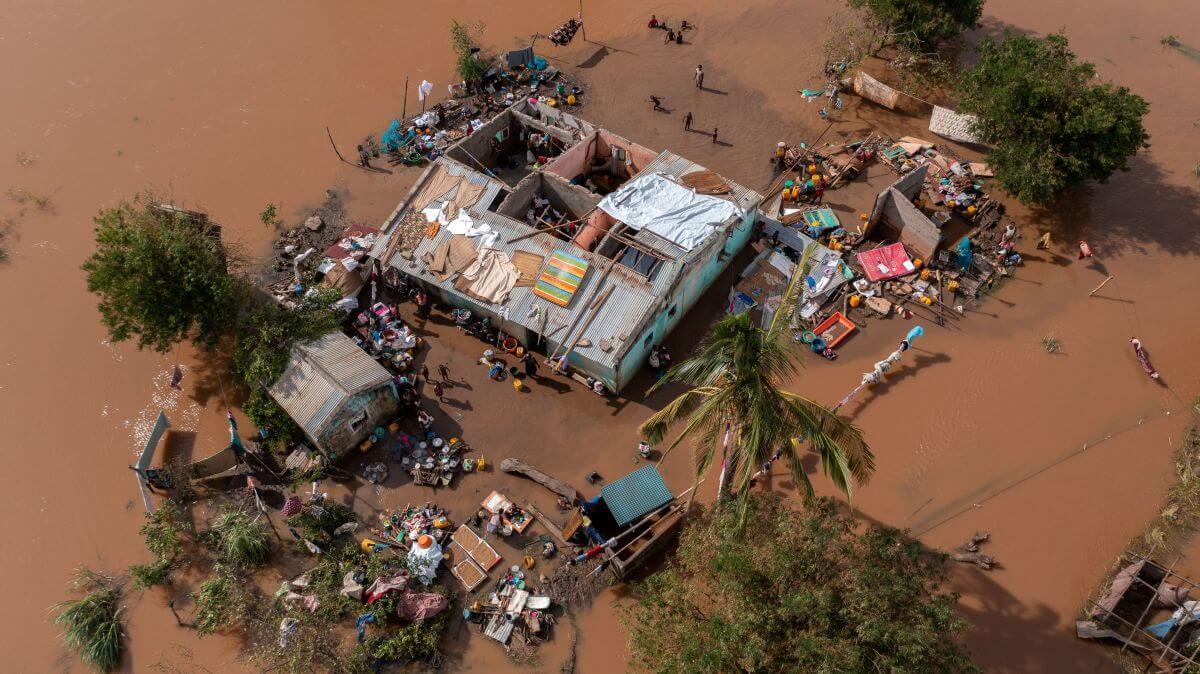
Seen from afar, the Burkinabe village of Ouako appears almost idyllic. Its low clusters of houses are half-hidden among the tamarind trees. Hulking Zebu cows trim the surrounding grasses into neat, suburban-style lawns. Draw closer, however, and its problems quickly come into focus.
Around the trees, the fields lie fallow, the soil too poor to sustain strong crop growth for much of the year, and the rains often insufficient to keep alive even those that could thrive. The cattle are really a sad, sickly-looking lot. Underfed, underweight, and under-inoculated, they’re too slim to command much interest at market, or, with shrinking milk yields, to pay for their own upkeep. Even the village’s houses, a patchy mix of mud and concrete, are almost all in some state of disrepair. The disasters simply strike faster and more fiercely than the village’s longtime brickmaker, Fulgence, can mold replacement materials. “I work alone because there are no more young people left here,” he said.
But it’s the remaining residents who most keenly speak to Ouako’s desperation. Having experienced years of weakening incomes, worsening conflict, and proliferating sickness, many of them are at their wits’ end. This man “only ever talked of food,” as those with little of it are prone to do, said one villager of another. That man, who had previously been “too dignified to ask anything of anyone,” had been reduced to begging in the nearest city. Initially, he even wore a mask to conceal his face, such was his embarrassment. In this morass of poverty and minimal prospects, the only things that don’t appear to be in short supply, Fulgence the brickmaker said, were “misery and hopelessness.”
A Crisis in Plain Sight
Ouako is just one unhappy village, but it’s no outlier, and in many thousands of poor rural communities, variations of this challenge are playing out on a scale and with a significance that few global policymakers appear to grasp. Whether in Yemen, Chad, or Haiti, most people in these poor rural communities depend on an economic sector, agriculture, that is ever-less capable of sustaining them. Around them and responsible for them, stand states too encumbered with other weighty problems to spare sufficient thought or energy or resources to temper residents’ troubles. Officials refer to themselves as “firefighters,” first responders leaping from one attention-sapping crisis to the next.
Predominantly arrayed across ecologically decaying and geographically peripheral parts of Africa, South Asia, and the Middle East, these communities have suffered such extended periods of underinvestment — or worse — that they generally lack the tools to help themselves, even if or when opportunities arise. They are, to put it bluntly, trapped in a web of seemingly intractable problems, an embattled cohort of left behinds at the sharp end of humanity’s greatest climate, environmental, and broader governance failures.
In its most immediate form, this is a very human tragedy for the people of these communities, many millions of whom struggle daily to feed, shelter, protect, and, in the general absence of government, educate and nurse themselves, among other challenges. Unlike much of the global poor — whose lives have, however unevenly, improved over the past three decades through gains in health, education, and income — these populations have seen little sustained progress. Some have even experienced reversals.1Eduardo Olaberria and Carmen Reinhard, “The Reversal Problem: Development Going Backwards,” World Bank Blogs, April 15, 2022, https://blogs.worldbank.org/en/developmenttalk/reversal-problem-development-going-backwards. The World Bank estimates that extreme poverty rose for the first time in a generation during COVID-19, pushing roughly 70 million additional people into deprivation, disproportionately in fragile and conflict-affected states.
To riff off economist Paul Collier’s concept of the “Bottom Billion2Collier, Paul. 2008. The Bottom Billion: Why the Poorest Countries Are Failing and What Can Be Done about It. First issued as an Oxford University Press paperback. Oxford University Press.,” (those trapped in poverty due to the confluence of bad geography, bad governance, natural resource mismanagement, and chronic conflict), these communities represent the “Bottom Millions”: rural, agriculture-dependent populations living in fragile and conflict-affected settings where state presence is weak, insecurity is chronic, and climate stress compounds economic vulnerability.
While the category is necessarily imprecise, several indicators help approximate its scale. According to the World Bank, nearly 40% of people living in extreme poverty reside in fragile and conflict-affected settings. The UN Food and Agriculture Organization estimates that about 80% of the world’s extreme poor live in rural areas and rely heavily on smallholder agriculture.3Growing the rural non-farm economy to alleviate poverty – an IEG evaluation of World Bank Group support 2004-2014 (Approach Paper) (English). Independent Evaluation Group (IEG) approach paper Washington, D.C. : World Bank Group. http://documents.worldbank.org/curated/en/315411467994686528 Meanwhile, there are an estimated 200 million people living in rural parts of the 10 countries rated as “very high alert” or “high alert” by the 2024 Fragile States Index.4Fund For Peace, “Fragile States Index: Annual Report 2024,” Nate Haken, (2024). https://fragilestatesindex.org/wp-content/uploads/2025/02/FSI-2024-Report-A-World-Adrift-2.pdf. Taken together, these data suggest that between 300 and 500 million people — primarily smallholder farmers and pastoralists in fragile settings across Sub-Saharan Africa, parts of the Middle East, and South Asia — fit the profile of what might reasonably be termed the “Bottom Millions.”
These are not simply the poorest of the poor. They are those whose poverty is reinforced by geographic isolation, environmental degradation, weak governance, and chronic insecurity, and who are structurally excluded from the development gains experienced elsewhere.
As cases from Afghanistan to Syria show, however, embattled rural peoples are understandably unwilling to confine their struggles within local or national boundaries. For many of the economically and politically paralyzed states in which these communities are clustered, the options are few and unsavory. If the Bottom Millions migrate — and migrate in much greater numbers than they have to date — they could overwhelm nearby cities, such as Lagos and Baghdad, many of which are struggling to provide for the needs of existing residents, let alone those of new arrivals. That is a clear recipe for dangerous degrees of anti-state sentiment, with urbanites both more likely to express that fury because of their generally higher expectations of state, and more able to make that displeasure felt by dint of their proximity to power centers.
Equally, if many of the left behinds remain in situ, getting poorer, more resentful of government for its failure to help, and hence more vulnerable to violence major and minor, the more likely it is that these areas will become nodes of significant, possibly nation state-destroying discontent. Indeed, as also seen from recent experience with ISIS in Iraq and Al-Shabab in Somalia, a state is only as stable as its least peaceful parts.5International Crisis Group, “Fighting Climate Change in Somalia’s Conflict Zones,” (December 2024). https://www.crisisgroup.org/rpt/africa/horn-africa/somalia/316-fighting-climate-change-somalias-conflict-zones.
Finally, and with the propensity for global crises to explode outwards in mind, there’s a lot riding on this for the United States and Europe, too. Failed states, as so many of these countries are liable to become in the absence of effective rural administration, may emerge as attractive springboards for transnational terror and criminal groups. They may morph into easily exploitable pawns in an escalating Great Power game. They may, and this could be key, produce more migrants. Because even if a significant majority of the rural displaced remain in or near their countries of origin, as is currently the case, elevated numbers on any scale could still further brutalize American and European political discourse just as growing percentages of their populations sour on migration period. As such, this is a challenge that Western policymakers cannot ignore.
This paper articulates a challenge that, while well understood in its constituent parts, remains dangerously under-explored when carried to its logical conclusions. While there’s an increasing recognition that many poor, low-lying coastal communities cannot — or will not — be protected from rising seas, that’s seldom the case with their inland equivalents for whom the limits of habitability are less clear cut. In short, we have lacked the vision to see that places where land no longer yields crops, and livelihoods have no substitute, can be as inhabitable as those sinking beneath the waves. This is likely true even in improbable-looking scenarios in which we keep warming to under 1.5 C. Simply put, a tremendous amount of suffering is already “locked in.”
And while there’s some awareness that plenty of these places are indeed being left behind, the possibility that they may not be salvageable, or at least salvageable in their current political contexts, is arguably a taboo topic. Why? It’s an unequivocally dispiriting narrative, one that we, with our clamor for happy endings and silver linings, are not necessarily wired to accept. Further, it’s frequently unpalatable to the authorities of afflicted nation states for whom neither the “stick” scenario in which people remain in increasingly unstable — and destabilizing — rural areas nor the “twist” one in which they emigrate en masse hold any appeal.
Above all perhaps, there are a lot of scarily big, highly consequential questions that lead on from this conversation. For example, given that the Bottom Millions are generally the most in need of help and simultaneously least likely to receive it from domestic sources, then surely they ought to be prioritized by global humanitarians? Conversely, were one to accept that many of these communities aren’t viable in the long run, then can one justify expending scarce climate adaptation funds to buy residents what may only be a few more years at home? What’s more, in an increasingly violent world which has the potential to get a good deal more conflict-ridden,6“New date shows conflict at historic high as U.S. signals retreat from world stage,” Peace Research Institute Oslo, June 9, 2025, https://www.prio.org/news/3616. can poor and rich country officials alike hold their nerve in the face of calls for mostly or wholly securitized responses?
Still, such is the outsized role that these communities are likely to play in shaping global stability that broach these questions we must. Below is a broad-brush and very non-exhaustive encapsulation of the challenge, one largely drawn from years of fieldwork across afflicted communities, and one which will, in a world that continues to foul its climate and deconstruct its governance systems, manifest itself in some form across increasing swathes of the world’s drylands.
The Nature of the Challenge
It’s the Jobs, Stupid
At its core, the challenge facing the Bottom Millions is a jobs crisis — one in which agriculture, the economic backbone of poor rural communities, is under assault from nearly every direction. First, there are the climate and environmental trials. Many of the communities that are home to the Bottom Millions cultivate farmland so marginal that they’d always struggle to eke out bountiful returns. But time, circumstances, and policy have done them few favors.
Already unreliable rainfall is becoming even more erratic as droughts grow more frequent and intense. In arid and semi-arid regions, scarce surface water and limited capacity to extract groundwater leave most of the Bottom Millions reliant on meager rainfall.
Intense heat is peaking, too, making summers even longer and harder for people, plants, and animals. But with little access to more heat resilient seeds, many of which take years to circulate to their countries’ peripheries, and few agricultural programs that help farmers to learn more climate-resilient growing practices, their yields suffer. Climate, conflict, and the poverty that both of the first two forces compound have left farmers dependent on seeds so shoddy that they’d struggle to generate strong returns in any conditions.7International Rescue Committee, “Farmer Seed Stewardship Network (FSSN): A New Approach to Rooting Climate-Resilient Futures in Fragile Contexts,” (2025). https://www.rescue.org/sites/default/files/2025-03/R%26I2502_Report_Updated%20Seed%20Security%20Case%20Study_FINAL.pdf. Many of these people, made wary of risk by their lack of safety net, also aren’t necessarily inclined to try better varieties even when they are available and affordable. In the words of a Senegalese farmer who’d passed up the potential to plant more drought-tolerant peanut seeds, “If they fail, what will I tell my family?”
Alongside other environmental and climate shocks, these communities are simultaneously more exposed to extreme weather events and less able to withstand it, given minimal adaptation measures and negligible post-disaster support. The net result: regular crop-expunging crises, which exhaust whatever resources locals have left and throw them into economic tailspins from which they, almost entirely devoid of insurance and access to loan-giving agricultural banks, cannot easily recover.8Horvey, Sylvester Senyo, Jones Odei-Mensah, and Andre P. Liebenberg. 2024. “Insurance Market Development and Economic Growth in Africa: Contingencies and Thresholds of Structural Transformation.” Heliyon 10 (21): e40046. https://doi.org/10.1016/j.heliyon.2024.e40046.
A State Presence in Name Only
Into this unfortunate mix comes the infrastructure factor, or more appropriately, a lack thereof. Most of these communities have limited or no electricity, the roll out of which has stagnated in much of Africa — and so minimal capacity to power machinery or tools.9AfroBarometer, “Energy gaps: Slight, uneven progress still leaves many Africans without electricity,” Derick Msafiri and Richard Adjadeh, (April 2024). https://www.afrobarometer.org/wp-content/uploads/2024/04/AD79-PAP13-Slight-and-uneven-progress-still-leaves-many-Africans-without-electricity-Afrobarometer-8april24.pdf. Very few of them have refrigeration to preserve high value produce, or adequate agricultural extension services, such as livestock vaccinations or fertilizer distribution. Up to 50% of food produced in sub-Saharan Africa is lost to spoilage, mostly due to a lack of cold storage.10FAO. 2011. Global food losses and food waste – Extent, causes and prevention. Rome Certainly, there’s no piped water.11Winter, J.C., Darmstadt, G.L., Boehm, A.B. et al. The impact of on-premises piped water supply on fecal contamination pathways in rural Zambia. npj Clean Water 4, 47 (2021). https://doi.org/10.1038/s41545-021-00138-x. Frequently ranged along their countries’ geographic margins, most of the Bottom Millions don’t even have good roads, or during rainy seasons, sometimes any roads at all. That means high transport costs and even worse market access. In the case of Ouako, residents often have to wait weeks to regain easy access to the outside world during the rainy season, the adjacent river shaping itself into new, unpredictable obstacles after each monster deluge.
In other places and at other times, governments could or would swoop in to buttress farmers and sponsor the development of alternative professions in contexts where agriculture is no longer wholly viable. The private sector is seldom a first mover in poor places with high risk and low purchasing power. Many of the Bottom Millions receive fewer of the remittance payments that have enabled employment transitions in other rural areas, their generally lesser histories of out-migration meaning they have smaller or less established family networks to tap; and they’re simply too poor to diversify themselves. With such low crop or livestock returns, they generally lack the profits required to invest in more climate resilient forms of agriculture or to segue into alternative trades.12Growing the rural non-farm economy to alleviate poverty – an IEG evaluation of World Bank Group support 2004-2014 (Approach Paper) (English). Independent Evaluation Group (IEG) approach paper Washington, D.C. : World Bank Group. http://documents.worldbank.org/curated/en/315411467994686528 Across Sub-Saharan Africa, “rural nonfarm activities,” like manufacturing, services, and mining, account for less than a quarter of household income, a figure which is likely significantly lower among the poorest of the poor.13Ibid.
But few left behind peoples place much or any hope in their authorities, who’ve often been more hindrance than help. These communities are up against uneven regulations and prolific corruption, both of which they’re particularly exposed to because they must cross different jurisdictions and regular bribe-heavy checkpoints to reach distant markets. They grapple with insecure land tenure, a pervasive problem in poor rural areas and especially severe in marginalized communities, which disincentivizes farmers from taking investment risks on land they fear could be appropriated. Tenure or no tenure, those that do own land sometimes have to sell it following failed harvests, which can cripple family earnings — and self-respect — for at least a generation.
Schools, where they exist, are understaffed, with teachers sometimes unwilling to accept postings to distant areas with worse living conditions, and buildings unfit for purpose. How, one pupil in a Burkinabe village asked, am I supposed to learn in this? He gestured at the oven-like classroom, its walls radiating so much heat that kids there, as in so many other places, struggle to focus. Lessons may also be conducted in languages that children in peripheral areas do not comprehend, such as French in parts of West, North, and Central Africa.14Cecilia Macaulay, “Nigerian Schools: Flogged for speaking my mother tongue,” BBC News, January 7, 2023, https://www.bbc.com/news/world-africa-63971991.
Other public sector jobs are scarce because poor countries lack the resources to employ sufficient administrators — Niger, for example, has about one-thirtieth as many administrators per capita as France15Alex Thurston, “The Hollowness of ‘Governance Talk’ in and about the Sahel,” Italian Institute for International Political Studies, April 12, 2021, https://www.ispionline.it/en/publication/hollowness-governance-talk-and-about-sahel-30026. — and because patronage networks channel available jobs to politically connected groups elsewhere.
To render a dangerously difficult challenge near-impossible for many communities, so many of these constraints limit people’s decision-making power in ways that only amplify the challenge. Birth rates among the Bottom Millions are generally greater than already high rural African and Middle Eastern averages.16Jakkie Cilliers (2026) Demographics. Published online at futures.issafrica.org. Retrieved from https://futures.issafrica.org/thematic/03-demographic-dividend/ [Online Resource] Updated 11 February 2026. The reasons for this are manifold and contextual, but among them is the lack of access to health services and family planning resources that many women and girls in these communities face. Families are also incentivized to have more children than they can realistically afford in order to work fields and to hedge against high infant mortality.17“High infant mortality rates and global human population rise,” ScienceDaily, February 23, 2023, https://www.sciencedaily.com/releases/2023/02/230222141108.htm. People living hand-to-mouth frequently sacrifice future prospects for the sake of immediate need in, for example, downing trees for charcoal production, despite the longer-term pitfalls. “I have children to feed today,” an Iraqi farmer said when warned of the drawbacks of razing a forest to free up more arable land. “I deal with tomorrow’s problem tomorrow.”
Then there’s the impact of individuals’ rational response to the apparent impossibility of their situation — out-migration. Generally speaking, it is the best and brightest who are most inclined to leave first and to leave in greatest numbers. As a result, communities are forced to face the toughest conditions with minimal government assistance and without the talents and direction of their own leading lights. “It really isn’t any wonder,” a Sudanese environmentalist concluded, “that so many of these places feel so hopeless.”
(This phenomenon is part of what I term “termite theory,” the many ways in which climate and other stresses gnaw away at the very coping mechanisms that individuals and communities need to resist further crises.18Center for Climate and Security, “Destabilization from ‘Within’: A ‘Termite Theory’ of Climate’s Pathway to Violence,” Peter Schwartzstein, (2025). https://councilonstrategicrisks.org/2025/04/23/destabilization-from-within-a-termite-theory-of-climates-pathway-to-violence/. )
The Perils of Inaction
Militants Take the Wheel
Mired in poverty that within many afflicted communities is only deepening, the contours of impending trouble among the Bottom Millions are becoming jarringly apparent. Already, many of these areas across the Sahel and farther afield are riddled with violence, as non-state armed groups, many of them jihadi, stake their claim to loyalties in places where many locals feel the state has long since relinquished its own. For instance, Afrobarometer has recorded a near-continent-wide drop in popular trust in state institutions since 2010.19AfroBarometer, “AD891: Across Africa, public trust in key institutions and leaders is weakening,” Koffi Amessou Adaba and David Boio, (2024). https://www.afrobarometer.org/publication/ad891-across-africa-public-trust-in-key-institutions-and-leaders-is-weakening/. What, villagers suppose, entitles distant, neglectful governments to rule when they can’t or won’t extend to rural dwellers a fraction of the rights or services enjoyed by urbanites? In these under-governed voids, terror and some secessionist movements are thriving, their success often somewhat evenly mapped onto Bottom Million community locations across the globe.
Unsurprisingly, no good comes of this for anyone, but least of all for the hyper vulnerable. Central governments, fearful of uncontrollable peripheries but unable or unwilling to address the root causes of their rage, frequently fall back on heavy handed and punitive responses to violence in rural areas, which can pitch Bottom Million economies even deeper into the red. (Think bans on the distribution of agricultural chemicals for fear that they’ll be repurposed into bombs, as in parts of Iraq liberated from ISIS.20“Cleaning up after ISIS: how Iraq’s new chemicals team is trying to undo years of conflict pollution,” UN Environment Programme, December 5, 2018, https://www.unep.org/news-and-stories/story/cleaning-after-isis-how-iraqs-new-chemicals-team-trying-undo-years-conflict. )
Even when losing ground, militants escalate violence in Bottom Million communities, sabotaging infrastructure and prospects alike to sustain grievance and recruitment. Per recent research, it takes communities around 20-30 years to recover from the environmental damage wrought by warfare, yet another economic cross for them to bear.21Krampe, F., Kreutz, J., & Ide, T. (2025). “Armed conflict causes long-lasting environmental harms”. Environment and Security, 4(1), 3-17. https://doi.org/10.1177/27538796251323739 (Original work published 2026) In this unvirtuous circle of reaction and resentment, the Bottom Millions’ compulsion to hitch their fortunes to quixotic or desperate causes can reach fever pitch, especially when, as is the case in much of the Sahel, actors such as Russia harness low trust in the state to drip feed disinformation to eager audiences. According to one study, Moscow alone sponsored 80 disinformation campaigns in more than 20 African states in 2024.22Africa Center for Strategic Studies, “Mapping a Surge of Disinformation in Africa,” (2024). https://africacenter.org/spotlight/mapping-a-surge-of-disinformation-in-africa/.
(In addition to anger at poor and corrupt service provision, rural peoples are also frequently antagonized by the rare occasions when government does involve itself in their communities. Predatory states tend to center mining and other forms of dirty resource extraction within these politically unconnected communities,23Atlantic Council, “Chinese mining in West Africa: Responding to the environmental and social impacts,” Abosede Omowumi Babatunde et al., (2025). https://www.atlanticcouncil.org/in-depth-research-reports/issue-brief/chinese-mining-in-west-africa/ saddling residents with the crop-polluting costs while delivering few of the rewards — jobs, royalties, or infrastructure. For example, as I found on one Sudan trip, tailings from gold mines had so sullied local water sources that local farmers had little choice but to abandon their fields and turn to mining themselves. As I have frequently been told, the pattern is consistent: Officials are seizing local wealth without compensation, imposing taxes without granting services, and preaching national unity while pitching communities against one another.)
A Fraying Social Fabric
In the meantime, more Bottom Million communities are grappling with disorder of a less dramatic but ultimately equally consequential nature. Penniless villages that have lost their best and brightest to migration are prone to lose their cohesion and sense of self, too. With that can come crumbling norms against theft, such as livestock rustling,24Peter Schwartzstein, “Out of Place, Out of Time: The Experience of Senegal’s Migratory Pastoralists,” The Wilson Center, January 27, 2023, https://www.wilsoncenter.org/article/out-place-out-time-experience-senegals-migratory-pastoralists. and substance abuse,25Peter Schwartzstein, “How Jordan’s Climate and Water Crisis Threatens its Fragile Peace,” Center for Climate and Security, September 9, 2019, https://climateandsecurity.org/2019/09/climate-water-security-and-jordans-fragile-peace/. such as consumption of Tramadol and Captagon, both of which are proving particularly popular among farmers battling hostile working conditions. This “localized” violence can be doubly pronounced if, as is often the case in poor, neglected areas, there are existing cleavages for climate and governance woes to exploit. Communal relations may be unsettled by the sedentarization of unfamiliar and previously nomadic peoples; inequalities, so often a flashpoint, can be aggravated by the greater success that richer residents enjoy in fortifying their farms against climate shocks.
Villages at this coalface of conflict and climate frequently wrestle with more intense hunger, their own compromised growing efforts frequently meshing with the fallouts from violence, which is poison for farming, and global commodity price shocks, to which they, the poorest of the poor, are uniquely vulnerable. A small hike in the cost of imported wheat or fertilizers may mean the difference between three daily meals or none, with a 5% increase in real food prices associated with a 9% increase in child wasting.26Derek Heady and Marie Ruel, “The global food price crisis threatens to cause a global nutrition crisis: New evidence from 1.27 million young children on the effects of inflation,” IFPRI Blog, December 14, 2022, https://www.ifpri.org/blog/global-food-price-crisis-threatens-cause-global-nutrition-crisis-new-evidence-127-million/#:~:text=The%20study’s%20authors%20also%20found%20that:%20*,*%20Children%20from%20asset%2Dpoor%20and%20landless%20households. That is naturally bleak in itself. But the very fact that food and the ritual around it has traditionally served as a balm through hard times magnifies the pain.
These communities struggle with ill-health and the accompanying costs and consequences for their capacity to work. Undernourished, poorly nourished, and with little to no access to medical care, residents grapple with treatable conditions that often metastasize into sicknesses that are anything but. And that’s without reckoning with the health impacts of a changing climate. In addition to the direct effects of heat exposure, from which farmers laboring in the fields are up to 35 times more likely to die than other workers,27 El Khayat, Moussa, Dana A. Halwani, Layal Hneiny, Ibrahim Alameddine, Mustapha A. Haidar, and Rima R. Habib. 2022. “Impacts of Climate Change and Heat Stress on Farmworkers’ Health: A Scoping Review.” Frontiers in Public Health 10 (February): 782811. https://doi.org/10.3389/fpubh.2022.782811. Bottom Million communities are reporting everything from malaria in places where it was seldom previously a problem,28Rachel Chason et al., “Where Malaria is Spreading,” The Washington Post, October 23, 2023, https://www.washingtonpost.com/climate-environment/interactive/2023/malaria-disease-spread-climate-change-warming/. to more snake and scorpion bites from critters seeking sanctuary in their homes as extreme weather events intensify.29Rob Spahr, “Rising Temperatures Bring Greater Risk of Venomous Snake Bites,” Emory Rollins School of Public Health, July 12, 2023, https://sph.emory.edu/news/snake-bites-climate-change. As with rural food woes, which can translate into higher prices in the cities, village health struggles frequently reverberate well beyond afflicted areas. Zoonotic diseases are proliferating in areas where villagers are boring deeper into surrounding woodland and other habitats for reasons that include the pressures exerted by poor harvests.30Morand, Serge, and Claire Lajaunie. 2021. “Outbreaks of Vector-Borne and Zoonotic Diseases Are Associated With Changes in Forest Cover and Oil Palm Expansion at Global Scale.” Frontiers in Veterinary Science 8 (March): 661063. https://doi.org/10.3389/fvets.2021.661063.
To namecheck just one of many other perils: These communities must contend with wavering female empowerment efforts, which are one of the most proven pathways to greater prosperity and which represent yet another instance in which reactions to crisis enmesh people in even deeper poverty. Though the outmigration of men, who are more likely to migrate seasonally, can open up more leadership roles for women,31Suhasini Raj, “Facing Disastrous Floods, They Turned to Mangrove Trees for Protection,” The New York Times, April 10, 2022, https://www.nytimes.com/2022/04/10/world/asia/sundarbans-mangroves-india-bangladesh.html. that boon is often more than balanced out by upticks in child marriage from families desperate to unburden themselves of mouths to feed,32“Bangladesh: IRC study reveals a staggering 39% surge in child marriage due to climate change,” International Rescue Committee, December 6, 2023, https://www.rescue.org/press-release/bangladesh-irc-study-reveals-staggering-39-surge-child-marriage-due-climate-change. among other ills. More generally, women’s health, education, and nutrition are often deprioritized during periods of strife, men and boys favored for scarce food, and women’s safety almost always deteriorating in line with chaos.
A Solution That’s No Solution At All
To the Cities
Even limited internet connectivity has intensified perceptions of inequality among the Bottom Millions, amplifying their sense of exclusion and marginalization. Their youth, especially, is looking for ways out, and by hook and by crook and in ever-greater numbers, many of them are making good on that ambition. To journey through communities in the Sahel and other parts of Africa is to find few families that don’t have one or many more migrant members, despite the often-formidable obstacles that they must navigate to move. (Residents of the hardest hit communities may find themselves trapped by the very phenomena they’re desperate to flee, those climate shocks and stresses depriving them of the means or ability to up sticks33Caroline Zickgraf, “Where Are All the Climate Migrants? Explaining Immobility amid Environmental Change,” Migration Information Source, October 4, 2023, https://www.migrationpolicy.org/article/climate-change-trapped-populations. ).
The trouble is that not even this, a normal and longstanding rural coping mechanism, is necessarily to be welcomed when it plays out at scale and within the ineptly governed or overwhelmed nation-states in which most Bottom Millions live. Flummoxed by the volume of new arrivals, many of the cities at the receiving end of most rural in-migration are struggling in ways that are scarcely conducive to urban peace and security either.34Tegan Blaine et al., “Climate change, migration and the risk of conflict in growing urban centers,” PreventionWeb, June 27, 2022, https://www.preventionweb.net/news/climate-change-migration-and-risk-conflict-growing-urban-centers. The toll is already clear.
Housing pressure is on the up, with prices soaring in destination cities, and new neighborhoods sprawling across vulnerable flood plains and through sandstorm-stifling greenbelts, to unsurprising effect. In the Bangladeshi city of Bhola, house prices have doubled in less than a decade, with many of the poorer new arrivals settling in its low-lying, easily inundated outskirts. Service provision is generally down because water supply, wastewater disposal, and other generally mismanaged amenities struggle to keep pace with demand. And jobs? Competition for the day labor roles on which many migrants rely, having arrived with few city-appropriate skills, can become so intense that disorder frequently follows. For example, construction sites in Baghdad witness periodic fights between new and more established workers, the latter of whom unsurprisingly begrudge the depression in wages that increased labor supply so often brings.
Predictably, too, few urbanites, in these swelling cities, are inclined to accept the “blows” that prolific in-migration has inflicted on their generally higher standards of living. Taking advantage of their superior access to the centers of power, they haven’t been shy about articulating their unhappiness. Indeed, the military juntas that have toppled a half dozen civilian governments across West Africa since 2020 have gleaned much of their support from disillusioned city dwellers, many investing in these officers the same almost-always-vain hopes that rural peoples place in non-state armed groups. “The only solution is army rule,” said one camo-clad shopper in a Ouagadougou market in 2021, foreshadowing two successive coups in Burkina Faso over the following eighteen months.
Debt Straightjackets
Yet, as seen in each of these Sahelian states and in others elsewhere, neither replacement regimes nor the “old guard” remnants have much of an answer to the challenge of the Bottom Millions. State budgets, already insufficient, are getting further squeezed by fiercer, more frequent climate crises, and by debt repayments that can feel more straitjacket-like with every passing year. At least three-quarters of all low-income countries spend more on servicing debt than they do on healthcare, according to one study.35ActionAid, “The Human Cost of Public Sector Cuts in Africa,” (May 2025). https://actionaid.org/sites/default/files/publications/The%20Human%20Cost%20of%20Public%20Cuts%20May%202025.pdf. In so many instances, it’s the most miserably serviced communities which are among the first to suffer when public sector cuts come, which only adds to their difficulties — and their resentment of state.
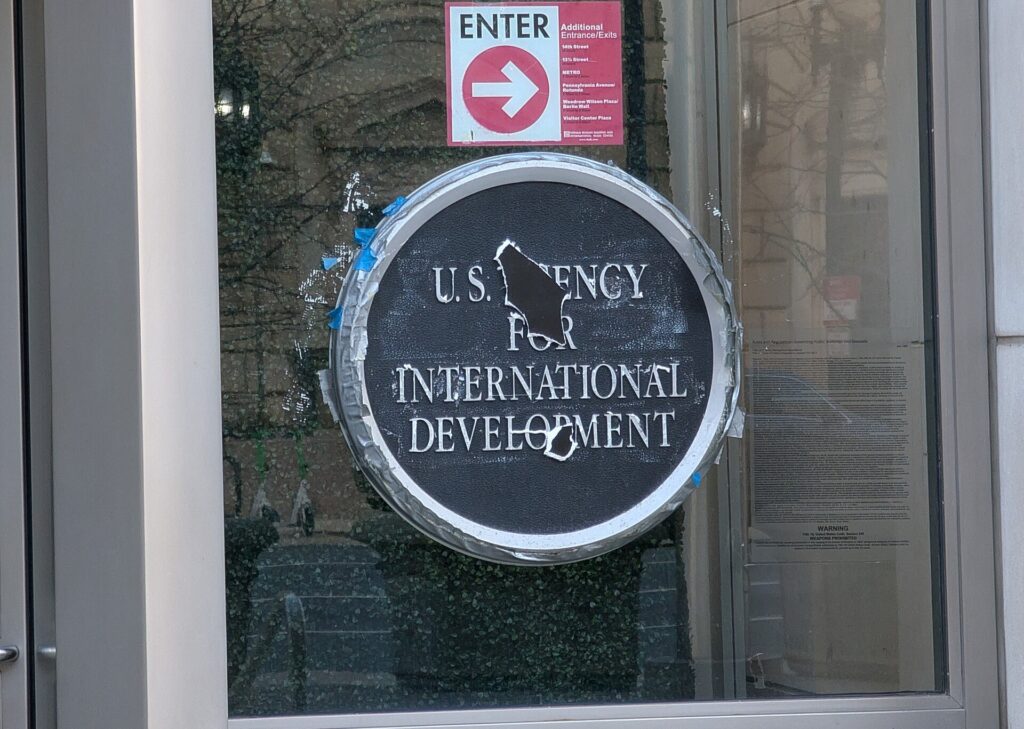
Foreign assistance, some of which was explicitly designed to help stumbling agrarian communities and allow those in the community to stay rather than migrate out, has dropped off amid U.S. and other donor country aid reductions.36Disha Shetty, “How US aid cuts hurt migrant and refugee programs,” Devex, April 24, 2025, https://www.devex.com/news/how-us-aid-cuts-hurt-migrant-and-refugee-programs-109903. The Trump administration’s cuts to foreign assistance included $200 million intended to bolster resilience in rural Central America, for example, a significant source of undocumented migrants to the United States. Though only a small portion of USAID’s roughly $30 billion annual budget directly targeted the Botton Millions (in part due to donors’ reluctance to operate in conflict-affected areas), even cuts to programming elsewhere have had spillover effects on these communities. A recent study from The Lancet suggests that global aid cuts could cause up to 10 million additional deaths by 2030, with many of the heaviest losses centered on poor rural areas with few alternatives to internationally-supported healthcare.37 Da Silva, Andrea Ferreira, Rodrigo Volmir Rezende Anderle, Gonzalo Barreix Sibils, et al. 2026. “Impact of Two Decades of Humanitarian and Development Assistance and the Projected Mortality Consequences of Current Defunding to 2030: Retrospective Evaluation and Forecasting Analysis.” The Lancet Global Health, February, S2214109X26000082. https://doi.org/10.1016/S2214-109X(26)00008-2. As the biggest global donor, the U.S. cuts have been particularly deeply felt in the peacebuilding sector, in which USAID supported at least 330 projects in more than 40 countries.38InterAction, “Conflict Mitigation & Peacebuilding,” (2023). https://www.interaction.org/aid-delivers-2023/conflict-mitigation-peacebuilding/.
Compounding the Challenge
Most importantly, the capacity of Bottom Million communities to safeguard their own livelihoods is also less certain than ever, in part becauseof regime responses to rural instability. Despite largely justifying their seizures of power on security grounds, most Sahelian dictators have performed even more poorly on the battlefield than their predecessors.39Miles Charles and Liam Karr, “Salafi-Jihadi Areas of Operation in West Africa Interactive Map and Campaign Analysis,” Critical Threats, November 24, 2025, https://www.criticalthreats.org/analysis/salafi-jihadi-areas-of-operation-in-west-africa-interactive-map-and-campaign-analysis. The ensuing losses of territory have stifled the activities of NGOs, many of whom provide services in states’ stead. Those conflicts have throttled some of the limited climate adaptation work taking place in these settings, and, in fueling intense economic desperation among the generals, saddled rural areas with even more polluting extractive industries. For example, whatever regulation of the Burkinabe gold and other mining sectors that previously existed has vanished with the deteriorating security situation.
(In attempting to see off fury in those all-important cities, states are also concentrating resources in urban areas to an unprecedented extent, once more to predictably destabilizing effect in the peripheries. This practice takes many forms but in Sudan has included the displacement of tens of thousands of people around the Roseires dam, their lands and communities being inundated to provide for the electricity needs of distant Khartoum.40Veilleux, Jennifer C. 2013, “The Human Security Dimensions of Dam Development: The Grand Ethiopian Renaissance Dam” Global Dialogue 15(2), https://transboundarywaters.ceoas.oregonstate.edu/sites/transboundarywaters.ceoas.oregonstate.edu/files/Publications/Veilleux_GLOBAL%20DIALOGUE_V15_GERD.pdf. )
More, these responses have generally entailed “shoot first and ask questions later-style” military strategies that have, by virtue of where jihadi and other non-state armed groups have concentrated their campaigns, disproportionately affected the Bottom Millions. As a consequence, these people face even more discrimination, even more limited supply chain access, and even more damage to their fields, homes, and surrounding infrastructure. In this unhappy cycle, the Bottom Millions are on the move in ever greater numbers. In the absence of genuine solutions, authorities have dialed up the anti-migrant rhetoric, in the case of cities such as Johannesburg, where the former mayor singled out Zimbabwean and other foreign migrants as supposedly criminal elements,41Fred de Sam Lazaro, “Why immigration is a focal issue in South African election,” PBS News, May 6, 2019, https://www.pbs.org/newshour/show/why-immigration-is-a-focal-issue-in-south-african-election. and outright denied villagers residency rights, as the Governor of Basra in Iraq has repeatedly attempted,42“محافظ البصرة يتحدث عن بطاقة السكن وحصرها باهالي المحافظة,”AlMirbad, January 4, 2022, https://www.youtube.com/watch?v=9nRyyfj-PsM. among other cities. All the while, the gyre of mutual assured insecurity is spinning ever faster.
A Crackable Nut?
Tuchman’s law dictates that “disaster is rarely as pervasive as it seems from recorded accounts.” A variation of that statement, coined half-jokily by the great historian of the same name, suggests that things seen from up close are seldom as bad as they might appear from afar. And it’s true of course that life in most Bottom Million communities goes on, residents getting by day to day and making the best of their trying circumstances. But it’s also true that there’s a limit to how far individual resilience can carry people in the face of overwhelming odds and weakened communal “defenses.” Many of the left behinds are understandably reaching their breaking points.
Given the inapplicability of some of the “classic” development tools in these hyper-complicated scenarios, our capacity to assist the Bottom Millions will be different, generally more restricted, and perhaps less likely to look like genuine “success” than in other contexts. But powerless, we’re not.
1. Much of this starts with recognizing that there are some communities that cannot and, because of their exposure to intense climate shocks, should not be preserved. This is no easy task, of course. After all, who is to determine which ones are salvageable and which ones aren’t? Moreover, if people are to be displaced, how is that to be done in an even half-way equitable manner? Governments’ recent record of managed displacement is very poor where resources are abundant,43Scott Dance and Katie Baslie, “An Alaskan Village Confronts Its Changing Climate: Rebuild or Relocate?” The New York Times, December 5, 2025, https://www.nytimes.com/2025/12/05/climate/an-alaskan-village-confronts-its-changing-climate-rebuild-or-relocate.html. let alone in poorer parts of the world. Still, if we’re to effectively deploy remaining donor and national government funding, then we need to prioritize the places that seemingly stand a chance of weathering new climate realities — and begin formulating alternatives for those who don’t.
2. We must also equip “salvageable” communities with the tools and knowledge that have proven useful in challenging contexts. This includes the roll out of small scale, decentralized, and community-owned solar fields, many of which have simultaneously fueled development and a reduction in violence when introduced to under-electrified parts of Africa.44Energy Peace Partners. “Our Work.” Peace Impacts. Last modified 2024. https://www.energypeacepartners.com/peace-impacts. This also includes various forms of predictive technology, which has a very spotty record in the climate space but has shown its worth in places. For example, Rainwatch tracks rains across the Sahel and then transmits warnings to locals with little access to other meteorological forecasting.45The Pearl. “Rainwatch.” Projects. https://pearl.reading.ac.uk/project/rainwatch/. Among many other possible interventions, development practitioners should foster agricultural cooperatives and mutual aid networks to increase Bottom Million bargaining power and thereby help them overcome the difficulties that come with minimal state support and private sector presence.
3. Cognizant of the near inevitability of large-scale rural migration, we must help reinforce the cities — and neighboring states — that will be on the receiving end of much of the movement. This assistance could range from helping municipal authorities to draw up better urban plans, many of which are effectively non-existent in the outer districts in which new arrivals generally cluster, through to establishing labor migration schemes to bring skilled workers to aging high income countries in order to alleviate pressure on local job markets.
In certain contexts, donors ought to encourage or help plan for the redirection of rural migrants to secondary or tertiary cities, many of which are not as overwhelmed as the metropoles and hence may be better placed to absorb new people without compromising the living standards of existing residents. Though contentious and imperfect, Brazil’s “interiorization” policy in which it relocated Venezuelan refugees to smaller inland cities could be a model of sorts.46Elizabeth Ferris, “Refugee Relocation Can Be a Positive Experience,” Bake Institute for Public Policy, March 15, 2024, https://www.bakerinstitute.org/research/refugee-relocation-can-be-positive-experience. Uganda’s decision in late 2025 to stop granting refugee status to Ethiopians, Eritreans, and Somalis may be a harbinger of things to come, with stabler states pulling up the drawbridge in the face of more arrivals and less support.47Samuel Okiror, “Uganda stops granting refugee status for Eritreans, Somalis and Ethiopians,” The Guardian, December 4, 2025, https://www.theguardian.com/global-development/2025/dec/04/aid-cuts-africa-uganda-stops-refugee-status-eritreans-somalis-ethiopians.
4. Finally, if donor countries aren’t willing to meaningfully fund climate action in the states that are home to most of the Bottom Millions, with just 15% of adaptation finance going to low income countries between 2019 and 2023, then the least we can do is bolster their own efforts through concerted debt relief.48Fondation Pour Les Etudes et Recherches sur le Développement International, «La finance internationale pour l’adaptation au changement climatique face aux besoins des pays en développement,» Sylvaine Jeanneney, Tomáš HOS, and Clara Pugnet, (December 2025). https://ferdi.fr/en/publications/4831cdf8-ac43-4d73-b9dc-2a77b9e345c2. In 2025 alone, African states spent just shy of $100 billion servicing their debts, enough to fund three or more times the continent’s projected annual climate adaptation needs.49Rafiq Raji, « Time to reprice African debt,” Italian Institute for International and Political Studies, April 4, 2025, https://www.ispionline.it/en/publication/time-to-reprice-african-debt-204608. The imperative to do so may be extra strong because polling shows that Africans primarily expect their authorities, not rich emitters, to tackle climate change.50Andrews, T.M., Simpson, N.P., Krönke, M. et al. Most Africans place primary responsibility for climate action on their own government. Commun Earth Environ 6, 260 (2025). https://doi.org/10.1038/s43247-025-02244-x By granting them more of the capacity to do so, they could gain a fillip of legitimacy at a time when fewer of their citizens have much faith in them.
In one of his first addresses as Secretary of State in January 2025 — and mere days after almost all U.S. foreign aid was frozen, Marco Rubio said that any future American assistance would have to fulfill three criteria: “Does it make America safer? Does it make America stronger? Does it make America more prosperous?” In this context, as in so many others, the answer to all three is a resounding “yes.”






Community Adaptation for a Water Festival Without Clean Water