
Amid ongoing and rapidly evolving conflict, actors in Myanmar are restructuring to attempt to gain the upper hand. Myanmar’s military regime organized highly flawed elections to form a new government in early 2026 and has ramped up regional diplomacy efforts since then in a bid for legitimacy. Meanwhile, several high-profile resistance actors established a new collective political platform, the Steering Council for the Emergence of a Federal Democratic Union (SCEF) in March. Consisting of the National Unity Government (NUG), Committee Representing Pyidaungsu Hluttaw (CRPH), the “K3C” ethnic resistance groups — the Kachin Independence Organization (KIO), Karen National Union (KNU), Chin National Front (CNF), and Karenni National Progressive Party (KNPP) — and recent additions the Interim Sagaing Federal Unit, Mandalay Region, and the Interim Magway Federal Unit, the coalition seems to point to a new direction for the resistance movement. Against the backdrop of the new government’s push for regional recognition, the emergence of the SCEF raises questions about the NUG’s future as a distinct entity and resistance actors’ new prospects for engagement with the United States and China, two great powers capable of influencing political and conflict developments in Myanmar.
The Rise of the SCEF and the NUG’s Repositioning
The SCEF aims to foster both political unity and military coordination among resistance actors. Representatives of SCEF members, including the NUG, make up the SCEF’s Strategic Leadership Committee, Secretariat, and Military Affairs Coordinating Body. Below these bodies are working-level groups covering foreign affairs, finance, federal affairs, security, and interior affairs. Beyond NUG representation, responsibilities of some NUG ministries have also been transferred to the SCEF. This new structure has implications for the NUG’s role in foreign affairs and its broader relevance.
First, the SCEF formation ties the NUG’s future to the fate of the SCEF. The NUG has positioned itself as the driving force behind the new face of the resistance, instead of being that face itself.[1] As of now, the NUG and CRPH are the federal-level authorities and representatives of the SCEF and provide legal continuity and funding that the grouping will need to convert rhetoric into action. A successful SCEF with the NUG at its core could elevate the NUG’s status and drive outcomes the NUG could not achieve on its own. However, if the SCEF fails or the NUG’s voice and leadership role are diluted or overtaken by other actors within the SCEF structure, the NUG’s reputation and relevance as a standalone entity could be negatively impacted.
Second, the SCEF is increasingly shouldering external engagement and becoming the entity international resistance support is directed to. While the NUG has long been criticized for its ineffectiveness in unifying resistance actors and lackluster external engagement strategy, the SCEF has already conducted intensive domestic and international outreach, including recent meetings with the Arakan Army (AA), the Spring Revolution Alliance (SRA), Pa-O groups, Mon groups, and Anyar federal unit representatives. The SCEF met with the Canadian government in June, and SCEF members met with Philippine Secretary of Foreign Affairs and ASEAN Special Envoy on Myanmar Theresa Lazaro and Thai Foreign Minister Sihasak Phuangketkeow in Thailand in mid-July. Though ASEAN did not invite the SCEF itself to attend meetings, SCEF members pre-coordinated common stances to convey in their respective ASEAN meetings. Immediately after the SCEF formed, statements and letters by Permanent Representative of Myanmar to the United Nations Kyaw Moe Tun, the NUG-aligned representative appointed by the National League for Democracy government before the coup, began urging the international community to support the SCEF, highlighting the SCEF’s positioning as an emerging externally oriented face of the resistance. Though the NUG significantly contributes to and benefits from the SCEF’s achievements, these developments reflect that responsibility for foreign affairs and support are to some degree being transferred from the NUG to the SCEF.
New Structure, Same Challenges
Though the SCEF structure creates new opportunities for the NUG and the resistance, the SCEF has not yet addressed several longstanding challenges faced by the NUG and local resistance structures.
While the SCEF unites a broader coalition of resistance actors than the NUG alone has, it still lacks buy-in from many key groups and cannot claim to fully represent the resistance. Key northern groups such as the MNDAA, TNLA, and UWSA are under significant pressure from both China and the regime and have leaned more towards a separate track of Chinese-mediated bilateral ceasefires and even peace talks with the regime in Naypyidaw than SCEF alignment. The AA, a crucial resistance actor fighting intensely with the military in Rakhine State, has not committed to joining despite meeting with the SCEF and could still be influenced to distance itself from the SCEF by external pressure. The SCEF is a step towards resistance unity but is still far from achieving this longstanding aim.
The SCEF also does not address major internal governance and capacity issues that continue to pose dire challenges to the NUG and local resistance-aligned government structures. While the SCEF aims to unify military command, People’s Defence Forces (PDFs) still operate under the NUG Ministry of Defence and face manpower, arms, ammunition, and funding shortages that have long constrained the NUG’s ability to effectively coordinate local forces under its control. Concurrently, NUG-aligned local government structures face serious governance challenges amid social instability, economic turbulence, and limited resources. Evolving and increasingly decentralized scam operations and other criminal and war economy activities further threaten stability and test already stretched local governance units. The SCEF is unlikely to catalyze solutions to these issues and may even hinder or distract from much-needed reform efforts within the NUG and other existing resistance structures.
SCEF: Implications for Great Power Engagement
The SCEF’s rising prominence and the NUG’s adjusted role in foreign affairs may have opposite effects on prospects for engagement with great powers, namely the United States and China.
From the perspectives of U.S. stakeholders, the SCEF formation addresses several key issues associated with engaging the NUG alone. The SCEF maintains ties to NLD-era legitimacy claims through NUG and CRPH involvement but also boasts broader membership. This coalition appeals to U.S. stakeholders searching for a clearer face of the revolution, and the prominent role of multiple ethnic groups addresses concerns over the NUG being too Bamar and NLD-centric. The NUG will still play an important role in the SCEF’s outreach in the West given its established liaison offices in the United States, relationships with diaspora communities, and efforts already underway to call for SCEF support in Washington and elsewhere. Increased U.S. support for resistance groups could take different forms, from material support to maintaining pressure on the new government to U.S. coordination with regional allies and partners on their approaches to Myanmar.
However, the SCEF’s emergence does not bode well for relations with China. China has long been suspicious of the NUG as closely aligned with the West, and the NUG has directly challenged Chinese interests in Myanmar, including public statements opposing a Chinese-mediated TNLA-junta ceasefire and the Chinese-backed Myitsone Dam project. United Wa State Party Vice Chair Zhao Guo’an suggested in August 2025 that China has prohibited EROs in Myanmar from contacting the NUG, primarily because of China’s opposition to “external forces’” involvement in Myanmar’s politics. The K3C groups firmly aligning with the NUG via the SCEF reinforces Beijing’s existing views of these groups as pro-West. Beijing could apply pressure on the groups to backtrack — especially the KIA given its proximity to the Chinese border — or drive undecided groups away from the SCEF and instead towards China-supported negotiations with the regime, which Chinese analysts view as having far more to offer to those on the fence than the SCEF. Though the KIA has shown that northern groups can join the SCEF despite the prospect of Chinese pressure, its case is relatively unique since it is not bound by a Chinese-mediated bilateral ceasefire, was already viewed by China as more pro-West than other groups near the border, and holds some leverage of its own through control of sources of rare earth elements in Kachin State. Beijing’s particularly entrenched distrust of the NUG makes it unlikely any SCEF member will improve relations with China while the NUG remains its driving force.
Where China Stands on the Resistance
Resistance actors must consider China in their strategic calculus, as China boasts vast influence on the ground in Myanmar, and incremental U.S. support the SCEF may or may not be able to gain is unlikely to outpace any concerted Chinese effort to further expand its support for the regime. China has made the conscious choice to support Min Aung Hlaing at this stage. In readouts of meetings between Xi Jinping and Min Aung Hlaing in May 2025, August 2025, and June 2026, the title China’s Ministry of Foreign Affairs used to address Min Aung Hlaing shifted from Myanmar’s “leader,” then to its “acting president,” and finally now its “president.” Beijing dispatched Special Envoy Jiang Xinzhi to Min Aung Hlaing’s inauguration, sent Foreign Minister Wang Yi to Myanmar after the establishment of the new government, and granted Min Aung Hlaing meetings with China’s top three leaders and other officials during his June 2026 state visit. China’s conflict mediation has also benefited the regime, especially two major Chinese-brokered ceasefires with the MNDAA and TNLA, respectively, and Beijing’s pressure on the UWSA to cease providing arms and other support for resistance groups. This support has already driven diplomatic and military outcomes that strengthen the new government’s hand and that resistance actors cannot realistically replicate under current conditions, even with increased U.S. support.
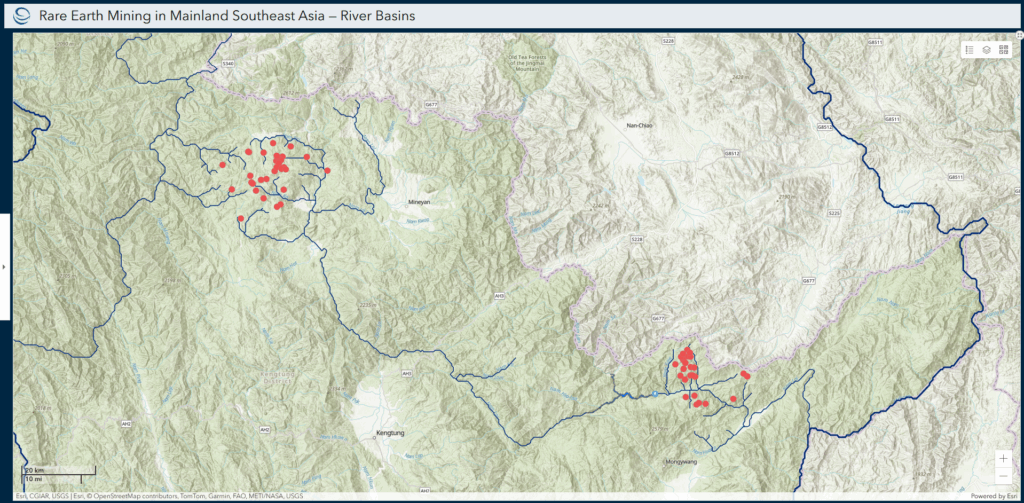
However, China’s support for the regime is results-oriented and could quickly moderate if Min Aung Hlaing’s regime does not deliver. China prioritizes stability in northern Myanmar, which high-level statements have emphasized for many years. For China, stability in northern Myanmar directly impacts border stability, strategic access to the Indian Ocean, trade, rare earths supply, and transnational crime that harms Chinese citizens. The regime’s lack of territorial control of Chinese transport and trade corridors, border ports, and rare earth mining and scam hubs limits its capacity to deliver the stability China desires. Ultimately, Beijing will work with whomever it must to secure these crucial interests, so resistance actors would be unwise to consider China married to any one path.
Threading the Needle
Resistance actors cannot ignore or fully distance themselves from Beijing but will also struggle to engage China due to its distrust of them. Within these constraints, however, it is still possible to improve their positions and demonstrate value to both great powers.
The SCEF and NUG must increase Beijing and Washington’s confidence in resistance groups relative to the new government. Expanding territorial control, demonstrating improved governance capacity, and credibly representing the will of the people would catch the attention of both great powers, especially in light of Naypyidaw’s governance deficiencies and ongoing atrocities. Even if they cannot claim to be guarantors of Chinese interests themselves, SCEF members can coordinate to identify regime-related delays, hidden costs, and pushback against Chinese projects. As the new government directs resources into lobbying in Washington, the NUG can use its presence in Washington to counter regime narratives and direct attention instead to supporting the SCEF and upholding U.S. sanctions. On the ASEAN track, collective action among SCEF members can help counter calls for regime re-engagement.
The SCEF and NUG can help both great powers address shared concerns in Myanmar, especially relating to transnational crime, while also benefiting local communities. Chinese public security and law enforcement organs are actively involved in combating crime in Myanmar but may welcome a better partner on scams since the regime’s efforts are not genuine or effective. In 2023, Beijing even allowed the formation of a resistance military counteroffensive, Operation 1027, to better crack down on scam centers in border areas. Meanwhile, the United States has established a Scam Center Strike Force and increased its regional law enforcement presence, but it still lacks access on the ground. Resistance actors could use their networks and ground presence to bolster both nations’ efforts to combat transnational crime while monitoring and preventing the proliferation of criminal networks in their vicinities. The United States and China are both especially focused on scam operations specifically targeting their citizens, so identifying these and notifying relevant actors would help build a foundation of credibility. While Beijing does not trust many resistance actors, it is also highly concerned by U.S. influence and presence. However, local groups providing information to aid law enforcement efforts could actually reduce the need for sensitive in-country U.S. presence. Beijing would be suspicious of any US-resistance collaboration, but transparency measures and offering to cooperate with China on the same issues could assuage concerns over time.
Conclusion
The SCEF and NUG are faced with multi-dimensional challenges. The two must work out their own respective roles in evolving resistance structures, and SCEF members must balance local needs in their territories with coordinated political and military struggle against the regime, all while managing relations with two great powers with vastly different strategic interests and approaches to Myanmar. The emergence of the SCEF aligns well with the priorities of potential sources of support in Washington but is not well-suited to addressing the influence and impact of China, a far more proximate great power. If the SCEF and NUG are to gain ground on the regime, they must address internal and domestic challenges while also increasing their relative appeal to both great powers compared to the new government. The SCEF and NUG cannot delay in calibrating and executing this difficult balancing act, especially if Min Aung Hlaing’s regime continues to benefit from Chinese support, entrench its own government structure, and edge closer to regional recognition.
[1] Conversation with Myanmar conflict mediation expert, July 2026.




Community Adaptation for a Water Festival Without Clean Water