
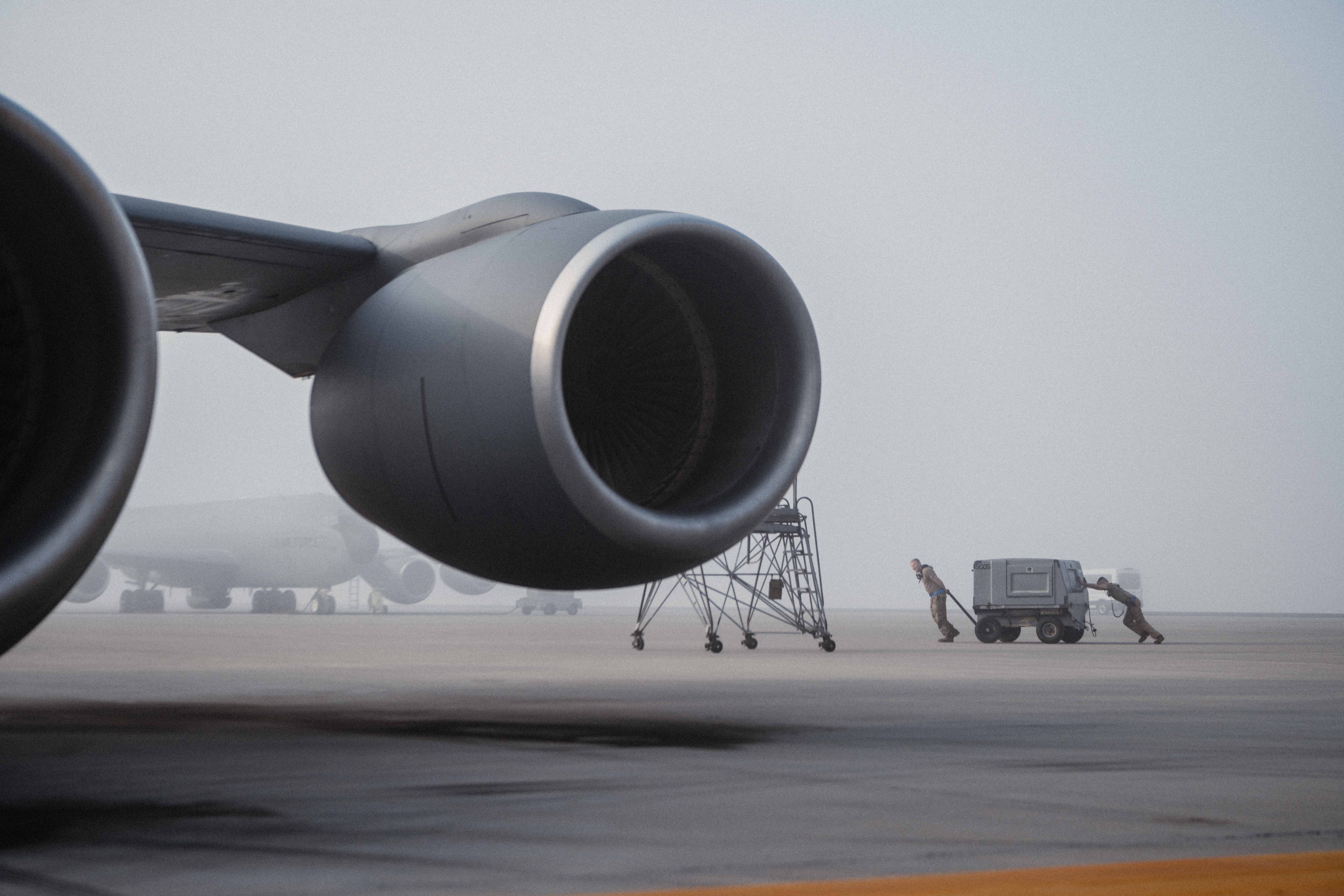
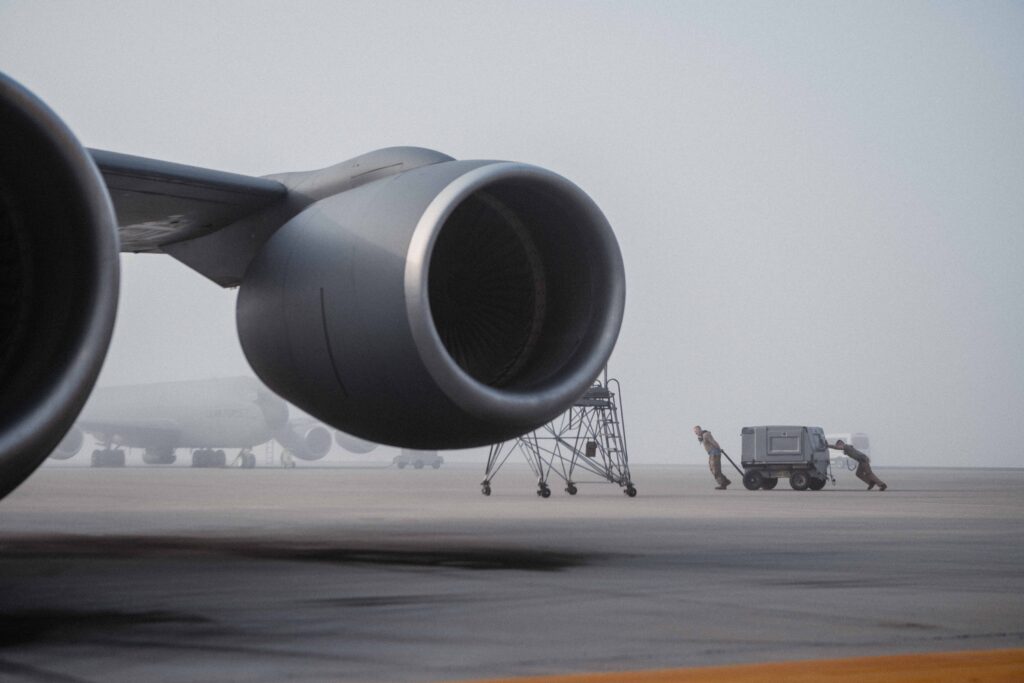
The war on Iran has been a wakeup call for U.S. policymakers in many areas, from availability of U.S. missile stocks to the plausibility of regime change in Iran. Perhaps the most shocking revelation has been the destruction wrought on America’s Gulf bases, where Iranian attacks have pierced the notion of American military invulnerability. From Kuwait to Qatar and the United Arab Emirates, once-bustling bases are now ghost towns, with overhead imagery showing empty runways and buildings, their personnel and equipment evacuated in the face of Iranian missile and drone attacks.
We do not yet have a full picture of the costs of this war, which is ongoing, though Moody’s estimates it may have cost the average American household as much as $2,000. But quite aside from the costs of munitions or operations, in the aftermath of the conflict, the Trump administration and Congress will be faced with a decision: whether to fund base reconstruction or attempt to pass such costs on to host nations in the Gulf. They should do neither.
Instead, policymakers should take this opportunity to rethink America’s force posture and basing infrastructure in the Gulf. At the most basic level, what America needs is military access to the region in a crisis. This is not necessarily the same as a large, permanent presence, and the latter carries significant costs that mere contingency access does not. As Kelly Grieco and Max Bremer put it in Foreign Policy, we should “think of access as buying options on the stock market: For a relatively small premium, Washington can preserve choices for a crisis without paying the political, economic, and military costs of maintaining forces at every deployed location in peacetime.”
As policymakers consider how best to adapt after the end of this war, they should prioritize access over presence, and bear in mind the evidence of the last nine months, which suggests that bases are not needed even to effectively wage war in the region. Because they are so close to Iran, personnel stationed at these bases run a significant risk of death and injury from missile and drone strikes. And U.S. interests in the region remain relatively narrow; U.S. defense requirements in the region could easily be met by a small selection of bases outside the Gulf.
A Basing Posture Built for Another Era
The United States has had a major military presence in the Persian Gulf since the 1980s, though the nature of that presence has fluctuated with changing requirements, from the naval convoys of the 1980s to dual containment in the 1990s and the War on Terror in the 2000s. For much of the last decade, this presence has looked similar: around 30-50,000 U.S. troops, including a naval presence primarily located in Bahrain, air bases in the United Arab Emirates and Qatar, and an Army presence predominantly in Kuwait. These bases have been used for everything from reconnaissance to air strikes against militant groups such as ISIS, partner training and security assistance, and most recently, the war against Iran.
There has also been an active debate in recent years about the extent to which any of this U.S. military presence in the Persian Gulf is strategically necessary. The need for troops in the region has declined substantially with the end of the War on Terror campaigns. Even mainstream analysts now tend to acknowledge that America’s Middle Eastern wars have often produced poor results, and American political opinion has turned decidedly against wars of regime change, humanitarian intervention, and democracy promotion. Yet a combination of inertia and repeated military flare-ups has kept the U.S. presence in the Gulf similar for much of the last decade.
The Trump administration’s choice to engage in war with Iran beginning in February 2026 has exposed how unsustainable America’s existing base structure in the Persian Gulf has become. The war has revealed four primary problems with that posture, each of which suggests that Washington should not return to the status quo in the aftermath of the Iran war. In ascending order of importance, these problems are: 1) the destruction wrought on bases and infrastructure by the war will be expensive and challenging to repair; 2) existing bases are increasingly vulnerable to new technologies that enable long-range and precision strikes; 3) attacks on these bases during the war have altered their benefits and costs for local partners, whose willingness to host them may decrease over time; and 4) the war itself has demonstrated that these bases are not necessary, even to wage war within the region itself.
The Bill for Rebuilding
Since the start of the American and Israeli war against Iran in February 2026, American bases in the Persian Gulf have suffered widespread destruction; Iran has hit at least 20 U.S. military sites across the Middle East. These range from the U.S. air base in Qatar (Al Udeid) — which suffered damage to its runways and communications infrastructure, and which found its Combined Air Operations Center unusable during the early days of the war — to a significant CIA installation in Saudi Arabia destroyed by drone attack.
As of May, Iran had damaged or destroyed an estimated 217 structures at U.S. facilities across the region. And while imagery has been limited, meaning that open-source analysis is challenging, it is now well-documented that these strikes were not random. Instead, Iranian projectiles specifically targeted infrastructure and systems critical to sustaining U.S. operations, including air defense and communications. These attacks also targeted equipment at these bases, with the Pentagon reporting $3.7 billion in equipment losses, including over 80 damaged or destroyed aircraft. In order to prevent further significant damage to equipment, many aircraft were removed from their host bases and sent to American bases in the Mediterranean or the Indian Ocean.
Personnel at these bases were forced to repeatedly take shelter against incoming missile and drone barrages, while the threat of air attacks rendered many bases too dangerous to staff at normal levels. As with equipment, during the early months of the war, personnel often had to be relocated: Many were moved from bases to other sites in their host countries, including hotels, where they had to “work remotely.” The costs have been high: At least 21 service members have died during the conflict so far, and over 865 have been wounded in these attacks.
Damage to America’s main regional naval base, Naval Support Activity Bahrain, demonstrates the problem. This base was repeatedly targeted from the outset of the war; located less than 140 miles from Iranian territory, it was within easy range of both missiles and drones. News analysis suggests that strikes caused extensive damage to at least a dozen buildings, including the command headquarters, and to critical satellite communications terminals, forcing the relocation of nearly all personnel. Seven months later, servicemembers and their families relocated due to the danger have still not been permitted to return, with Chief of Naval Operations Adm. Daryl Caudle saying in September that the Navy will not be “getting back in there anytime soon.”
Thus far, we do not have a good understanding of the full costs of base damage across the region. The Pentagon has pressured satellite firms to delay the release of high-resolution imagery and refused to make its damage estimates public or include them in its accounting of the war’s costs. After learning of the Pentagon’s reconstruction estimates in a classified briefing in October, five members of the Senate Armed Services Committee called on the department to make them public, writing that “disclosing these costs represents the bare minimum transparency DoD owes the public.” But with U.S. officials reportedly estimating that rebuilding damaged bases could cost as much as $30 billion — with repairs to NSA Bahrain alone costing upwards of $400 million — the overall regional bill for damage will be significant.
Ongoing Vulnerabilities
The extensive damage to U.S. bases throughout this conflict is a reflection partly of their close proximity to Iran, but also of a shifting military balance in the region, and the growing salience of technology that allows for longer-range and precision strikes, even by weaker powers. In short: America’s basing architecture in the Gulf was built for a substantially different military environment. During prior decades, the United States enjoyed almost overwhelming regional military superiority, particularly in the air, while Iran’s capabilities were far more limited and easier to defend against.
This balance has been changed by modern technology. In recent years, Iran has fielded increasingly capable missiles and innovative drones capable of striking targets accurately across the Gulf. The United States may retain air superiority in its classic sense — that is to say, the Air Force has been able to operate effectively across Iran, destroying much of Iran’s air defenses, since the early days of the conflict. Despite this, both missiles and drones are still able to target U.S. bases. Drones are particularly easy for Iranian forces to disperse, hide, and launch within their territory.
This is not to say that U.S. air defenses are ineffective. American and allied defense systems intercepted more than 7,500 projectiles through the end of June. But the large number of low-cost projectiles produced by Iran almost inevitably means that some will get through. One estimate — that U.S. and partner air defenses have missed up to 10% of incoming projectiles — shows how even a relatively small number of interception failures can produce significant damage.
One way to characterize this problem is cost disparity. Defending America’s regional bases is expensive; attacking is comparatively cheap. Missiles and drones can be intercepted by fighters, or by costly, scarce air defense interceptors. For instance, during an Iranian attack on Jordan in early September, the United States used up to 70 Patriot interceptors — each costing around $4 million — to defend against 20 Iranian ballistic missiles. The cost disparity is made worse by Iran’s large stockpile of cheap Shahed drones, which it uses in high-volume attacks meant to overwhelm air defenses.
Indeed, scale is perhaps the most significant problem. By August, the U.S. military had reportedly expended around 80% of its THAAD inventory and around half of its Patriot interceptors, a number that will take around 3 years to backfill at pre-war production levels. With stockpiles running low, forces in the region have sometimes been forced to choose whether to use an interceptor or to absorb the damage on a case-by-case basis. Though the United States could undoubtedly mitigate some of this effect in the future through expensive base hardening, this cost asymmetry and the growing sophistication of Iran’s drone and missile systems make this an unpalatable option.
Allied Risk-Reward Calculus
The war has highlighted another notable problem: the risks of hosting a U.S. base for partner countries in the region. This is, in many ways, the opposite of what had long been assumed: that a U.S. base would act as a deterrent to Iran and a defense for the host country. This impression has been bolstered by the fact that Iran has traditionally refrained from direct, large-scale attacks on its neighbors in the Gulf, perceiving that the risks from doing so are higher than the benefits. Even when regional bases were used for more limited U.S. strikes, Iran had largely avoided striking America’s regional partners.
Given the high stakes of this war, however, Tehran appears to have decided that restraint was no longer sufficient. During the first active phase of the war, Tehran struck at least eight countries in the region hosting U.S. forces — the Gulf Cooperation Council states, as well as Jordan and Iraq. Though the primary targets were the bases themselves, the Gulf states also suffered attacks more broadly, including civilian infrastructure and energy production facilities.
These attacks have generated significant discussion within the region about the benefits and risks of hosting U.S. bases. For instance, Emirati commentator Abdulkhaleq Abdulla, who is close to the UAE leadership, wrote: “It is time to think about closing the American bases … they are a burden and not a strategic asset.” Hundreds of public figures in Jordan signed an open letter in late July calling for the withdrawal of U.S. forces from their country. Thus far, there has been no overt indication that governments in the region seek to remove U.S. forces from their countries or would be willing to abandon their security ties with the United States, but these debates pose several problems for the future of U.S. basing in the region.
The first is related to access. Host countries may in the future demand greater say over the activities that are conducted from bases on their territory; they may reconsider whether they are willing to accept the risks posed by U.S. military action. Many Gulf states were opposed to this war, yet had to bear its risks nonetheless. Access and overflight restrictions are one way in which these states can make their voices heard in the future. Indeed, during the conflict itself, the Saudi government refused to grant airspace access rights to U.S. forces to engage in the abortive Project Freedom, an effort to escort ships through the Strait of Hormuz under U.S. military protection.
A second problem is financial. Host governments in the Gulf have long paid a significant share of the cost of building military infrastructure, along with maintenance and upkeep. Al Udeid Air Base in Qatar, for example, is a joint air base shared between American and Qatari forces and paid for in large part by the Qatari government. There have been open discussions in regional media about whether governments should be willing to pay the high costs of rebuilding bases after this conflict is done — or whether these costs should be passed on to the United States. One easy way for such states to get around the political difficulty of offending the United States by limiting base access would simply be to demur when asked to pay for repairs. Pentagon officials have said that decisions about which installations to rebuild will be determined by host governments’ willingness to help pay.
Shifting Strategic Needs
Thus far, we have largely discussed the vulnerabilities revealed by the war. Yet the conflict has also revealed other strategic shifts. One such shift is that unlike other recent Middle East campaigns, much of this war was conducted without the use of Gulf bases. Assets were often moved out of the region or elsewhere within it, and with long-range bombing and precision strikes remarkably effective on a tactical level even from a longer distance.
As one New York Times story described this dynamic: “Much of the land-based military is, in essence, fighting the war while working remotely, with the exception of fighter pilots and crews operating and maintaining warplanes and conducting strikes.” Even air assets have typically been deployed from longer distances, meaning that the United States was able to continue major operations in the region even after personnel and equipment were dispersed in the early days of the war.
The case of Al Udeid in Qatar is again instructive here. The base hosts the U.S. Air Force’s Combined Air Operations Center, which was rendered inoperable by Iranian strikes early in the conflict. Yet the Air Force had anticipated this, moving management operations for the war to Shaw Air Force Base in South Carolina, where many of the formerly deployed personnel had been shifted before the war began. Likewise, with America’s naval base in Bahrain seriously damaged, the bulk of the Navy’s logistics and supply functions were moved out of the Gulf to Diego Garcia in the Indian Ocean.
Certainly, each of these shifts created some logistical and practical problems, such as the reported issues with supplying U.S. aircraft carriers and other surface ships, some of which arose from the shift to Diego Garcia. These issues, however, were mostly created by the sudden shift of facilities during wartime, rather than any inherent problem with using these more distant facilities, and can likely be mitigated with proper planning. Whether these challenges are long-term problems for military effectiveness must be weighed against the significant vulnerabilities of Gulf bases. The war, in short, offered a real-world test of the argument that large permanent U.S. bases in the region are indispensable if the U.S. needs to engage in conflict there.
Rebuilding in the Gulf?
This lesson matters because Congress and the Pentagon are approaching an expensive, consequential decision about what happens next. Estimates of physical damage to U.S. bases already run into the billions. CSIS puts the cost of repairing damaged bases and fixed infrastructure at up to $9.4 billion. Since that figure was published in June and is based only on publicly identifiable damage, it likely understates the real total.
These costs are on top of an already expensive war. In late October, the Pentagon estimated that the cost of the war was already over $47 billion, a number that will likely only grow as the war rumbles on.. The war has also hit the U.S. consumer economy hard, increasing inflation and energy prices, costing the average household several thousand dollars in extra expenses.
The Pentagon itself has not decided what it intends to rebuild. According to a recent Inspector General report, the Pentagon “did not include the cost of military construction for damaged infrastructure in its estimate because the DoW has not determined what its future posture will be in the region [and] how it will construct its bases.” That uncertainty is therefore an opportunity.
In August, the Pentagon launched a review of the U.S. presence in the Middle East, with a particular focus on whether to scale back the U.S. footprint in the Gulf. As a Washington Post report put it, the war has created a “once-in-a-generation” chance to rethink a basing structure that has otherwise persisted mostly out of inertia.
Washington should take full advantage of this opportunity. For its part, Congress should require a broader, formal reassessment of the regional posture before appropriating billions to rebuild a basing architecture whose risks and downsides the war has already made plain.
In-region Relocation
If Congress were to decline to rebuild Gulf bases, one option would be moving U.S. forces westward within the region to Israel and Jordan, which are both farther from Iran and perceived as more supportive of U.S. operations during the war. The Pentagon appears receptive to this idea, and on its face, the notion has some appeal. But simply relocating the Gulf basing network a few hundred miles farther west or hardening existing facilities in place misses the larger lessons of the war and would do nothing to address the underlying problem of large, fixed installations sitting in Iran’s backyard.
For one thing, there is little reason to assume that facilities that are comparatively safer today will remain so indefinitely. Iranian missile and drone capabilities continue to improve, just as they have over the last decade, and while the longer distance between these bases and Iran makes it easier to intercept incoming missiles and drones, it is not a guarantee. Even during this conflict, as the United States shifted more aircraft and personnel to Jordan, Iran increasingly targeted facilities within the country; three U.S. servicemembers were killed there in July.
Basing in Israel also carries political problems. It would tie U.S. force posture to a partner whose decisions Washington does not control, and whose conduct in the region has been increasingly destabilizing. Israel’s declining popularity in the United States has become a hot button issue, particularly among younger voters incensed about the Israeli war in Gaza. Increasing the U.S. footprint in that country would further entangle U.S. forces with Israeli forces as they continue to pursue military action in Gaza — and would likely become a point of political contention in future elections, making it fundamentally unstable as a long-term option for U.S. presence.
Rather than simply relocating bases within the region, Congress and the administration should instead interrogate the idea that the United States needs a large permanent footprint in the Middle East. The war with Iran has only strengthened existing arguments that large bases and forward presence are unnecessary for America’s limited interests in the region. Washington’s core regional interests are relatively narrow and do not require permanently stationing tens of thousands of troops across the Middle East.
For one thing, a large base network is not required to maintain a favorable regional balance of power. The Middle East is politically fragmented, and regional states have repeatedly shown that they will balance against one another. No state, inside the region or out, is positioned to dominate it. Iran has been weakened by the war, and other major regional powers have ample reason and ability to resist any state that tried. The same is true for the protection of energy flows. If a large permanent presence were the key to protecting energy flows, Washington’s sprawling collection of bases should have prevented the most severe disruption to global energy markets in recent history. Ironically, U.S. regional presence intended to protect the flow of oil lowered the barriers to a war that ended up disrupting it.
Counterterrorism is another weak justification for America’s existing regional posture. The War on Terror should have put to rest the idea that large conventional deployments are an efficient way to deal with terrorist organizations. Where large deployments were used, such as in Afghanistan, they proved costly, politically corrosive, and, in some cases, counterproductive. Meanwhile, the threat posed by terror groups to the American homeland has fallen sharply. What threat remains can be managed through “over the horizon” strikes, cooperation with local partners, and smaller special operations raids when necessary.
A final point is worth emphasizing: A lighter U.S. presence in the region would be less a departure from tradition than a return to it. During much of the Cold War — when preventing Soviet domination of the Middle East was arguably a more important U.S. interest than anything at stake there today — the United States kept a comparatively light footprint. Washington relied heavily on regional states to balance one another and retained the ability to intervene when the balance broke down. Washington is well positioned to return to this kind of regional strategy.
Access, not Garrisons
The key question for policymakers is thus what structure or system should replace the U.S. bases damaged during the war with Iran. The United States may well need military access to the Middle East in the future (i.e., the ability to operate there when it chooses). Policymakers should thus focus on access, and not on presence – the maintenance of permanent bases in the region – when making decisions about the future of the U.S. in the Gulf.
A focus on access over presence would suggest not rebuilding existing facilities and instead relocating necessary functions and units to logical alternative locations. Command and support functions should be a priority, as they are both the easiest to move and among the most exposed. During the war, these functions quickly shifted to Shaw Air Force Base in South Carolina and to Diego Garcia in the Indian Ocean, respectively. Such moves should be permanent. Functions that can be performed from South Carolina or the Indian Ocean do not require U.S. forces to be concentrated mere miles from Iranian territory.
Extra-regional facilities can also absorb most of the necessary remaining military functions. Diego Garcia, Djibouti, and existing bases in Europe can provide effective locations for intelligence, sustainment, and long-range strike capabilities, all while sitting outside the reach of most Iranian systems. Although the war in Iran has been a strategic failure, the military campaign was tactically successful, despite the need to use extra-regional bases to host forces involved in Operation Epic Fury. U.S. forces flew 5,000 sorties from European bases in the war’s first wave of fighting, with Europe serving as “the launch platform and sustainment backbone” of the war effort, according to the Pentagon’s Inspector General. Even if U.S. forces in Europe were to be dramatically downsized as part of the administration’s NATO 3.0 push, some air facilities in Western Europe would likely remain to fulfill such needs. And the need for even extra-regional bases would be dramatically lessened if future administrations finally swear off America’s addiction to Middle Eastern regime-change wars.
This then leaves the question of what should be done with existing Gulf facilities. For the most part, this should be decided on a case-by-case basis, with an eye to damage suffered during the war. The naval facilities at NSA Bahrain could be replaced or significantly downsized rather than rebuilt in their previous form or “revamped,” as the Pentagon is considering. If it is retained at all, Bahrain should serve as a modest port facility for sustaining naval forces, rather than the region’s principal naval hub.
Similar logic applies to air bases. There is some merit to sustaining a transit hub in the Gulf that can offer peacetime use, contingency access, and prepositioning, rather than permanent combat capability. If Washington wishes, a smaller facility in Qatar or the UAE could fulfill this role. For the Army, the most obvious candidates for closure are its facilities in Kuwait, largely holdovers from the Iraq wars, and among the sites Iran hit hardest. There is no real benefit to sustaining even a smaller base in this case.
For the United States, a posture built on access rather than presence would preserve military flexibility, allowing the United States to surge forces when needed without keeping them permanently exposed when they are not. It would be strategically sound, leaving Iran fewer American targets and reducing the risk of U.S. forces becoming tripwires. And in a resource-constrained environment, it could free up billions in reconstruction spending for more pressing challenges.
It is cliché to note that crises often offer opportunities. Yet the damage done to America’s bases during the war with Iran this year does offer an opportunity for policymakers to rethink U.S. posture in the Middle East from first principles, rather than falling back on our existing network of bases due largely to inertia.





Community Adaptation for a Water Festival Without Clean Water