
Executive Summary
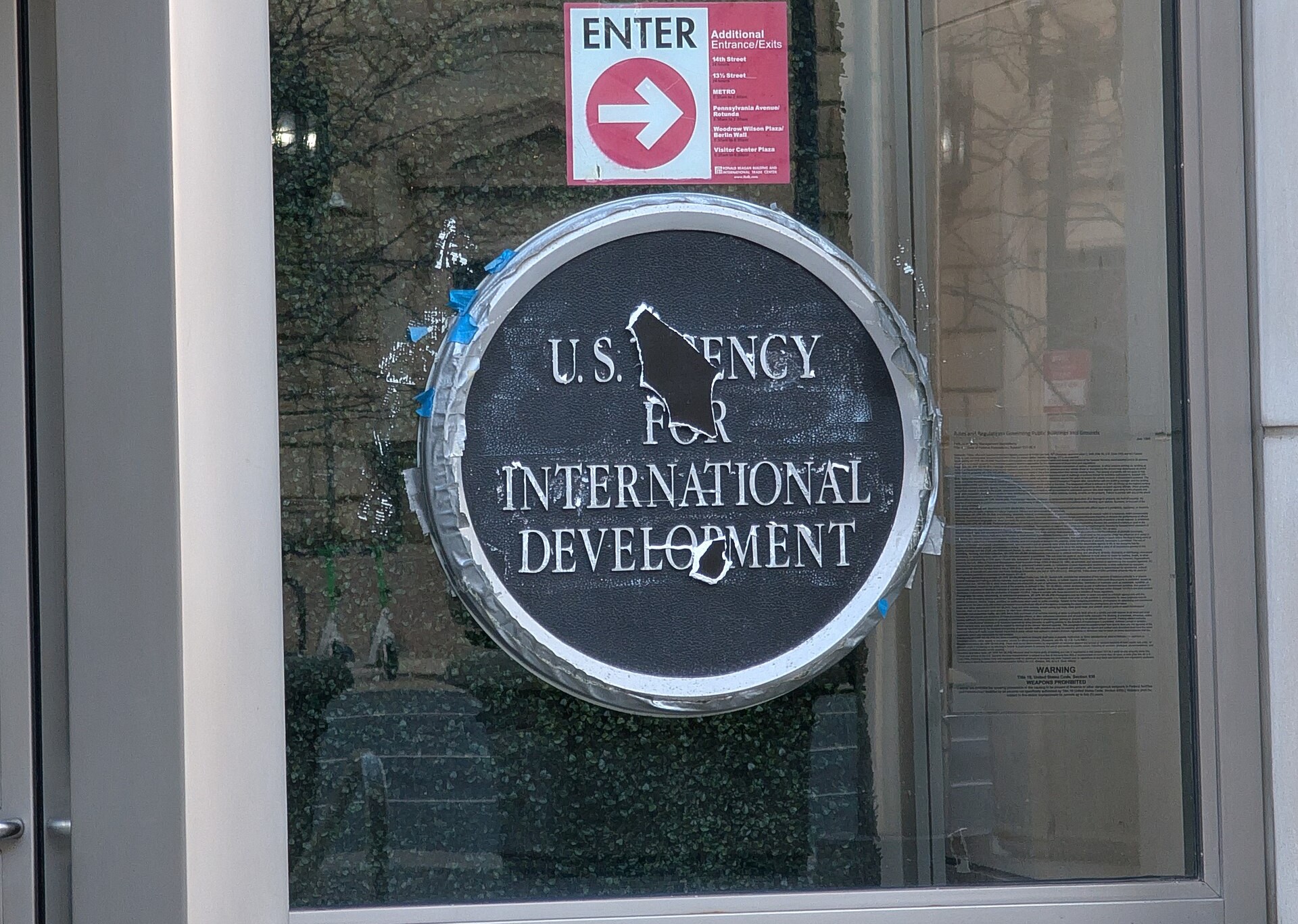
The Trump administration’s decision to cut foreign aid and restructure the U.S. Agency for International Development (USAID) was done under the auspices of advancing U.S. interests by eliminating wasteful spending and focusing on more effective forms of engagement. Critics of these cuts have argued that reductions to U.S. foreign aid harm the United States by ceding ground to China, abandon effective forms of development, damage American soft power, and will lead to a less safe world. Many of these defenses of the previous foreign aid paradigm rest on assumptions that it was effective for advancing U.S. interests in ways both big and small — that those billions of dollars in aid ensured that the United States was the preferred partner for dozens of countries and provided political influence, market access, and stability. While there have been instances in which U.S. foreign aid supports these ends, proponents have overstated what assistance can accomplish, which has paved the way for political attacks against the tool. Ultimately, the assumption that the cuts to U.S. foreign aid will harm U.S. standing in the world is likely correct but not across all claims that those opposed to the cuts have put forward. While the moral defense of aid is strong, with evidence that assistance can improve conditions of those in extreme poverty and save lives, the geostrategic benefits of providing foreign aid remain ambiguous.
Acknowledgements
The authors would like to thank Vahe Mirikian, Founder and President of McCree Mirikian Strategies and Managing Director, U.S. Office, at Peace Direct, for his review of the report. We would also like to thank Christopher Preble, Senior Fellow and Director of the Reimagining U.S. Grand Strategy program at the Stimson Center, and Kaitlyn Hashem, editor at the Stimson Center, for their editing of the report.
Introduction
The humanitarian and political effects of the Trump administration’s sweeping cuts to foreign aid have led to a charged debate.1For the purposes of this paper, “aid” and “foreign assistance” are used interchangeably to describe development assistance as well as humanitarian aid. This is not intended to include security sector assistance or other forms of assistance. For cuts see: https://www.cgdev.org/blog/usaid-spending-country-and-sector-level-what-happened-fiscal-2025 This discourse has been muddled, largely because of disagreements about the actual goals of aid and the rationale underpinning it as a foreign policy tool. The most common defenses of foreign aid fall into two categories. The first can be described as instrumental, arguing that aid is important because it creates soft power for the United States that outweighs its monetary costs. Samantha Power, the USAID administrator under Biden, wrote an editorial for the New York Times after the Trump administration’s cuts that articulates this argument as follows: “USAID has generated vast stores of political capital in the more than 100 countries where it works, making it more likely that when the United States makes hard requests of their leaders — for example, to send peacekeepers to a war zone, to help a U.S. company enter a new market, or to extradite a criminal to the United States — they say yes.”2Samantha Power, “Opinion | Killing U.S.A.I.D. Is a Win for Autocrats Everywhere,” The New York Times, February 6, 2025, https://www.nytimes.com/2025/02/06/opinion/usaid-trump-samantha-power.html. The second, which can be described as liberal, defends humanitarian aid on its own grounds as a moral necessity for the United States and is often accompanied by arguments that lifesaving assistance may have the byproduct of promoting stability and improving market access for the United States.
The Trump administration’s massive cuts to aid have been politically viable at least in part because high-cost aid projects were implemented in places that had little connection to U.S. strategic interests, while justified as bolstering U.S. power.3Barack Obama, “Fact Sheet: Obama Administration Efforts in Sub-Saharan Africa,” Online by Gerhard Peters and John T. Woolley, The American Presidency Project, June 14, 2021, https://www.presidency.ucsb.edu/node/323441. Though there are some reasons to believe the provision of aid to countries of less strategic importance might eventually bring about some benefit to the United States, that causal chain is long and inherently speculative, while the monetary costs are not.4One notices, for instance, Power’s editorial does not cite any specific instances in which USAID actually did influence any leader’s decision to assist the United States, phrasing her argument instead as a hypothetical Indeed, the Trump administration has largely dismissed the humanitarian notion underpinning the liberal defense as irrelevant to the United States and contests the instrumental defense on its own grounds — a recent State Department email articulated the rationale behind cutting aid by stating that “there is no strong nexus between the humanitarian response and U.S. national interests.”5Hana Kiros, “The Trump Administration Is Ending Aid That It Says Saves Lives,” The Atlantic, February 22, 2026, https://www.theatlantic.com/health/2026/02/trump-state-department-ending-aid-seven-african-countries/686106/.
Some skeptics of aid instead focus their disagreement on the liberal defense, arguing that aid reduces development and prosperity for recipient countries through a variety of channels. The question of whether foreign aid actually promotes growth has been a subject of much empirical and theoretical research, and the evidence of foreign aid’s effectiveness — at least over the long run — is not nearly as decisive as advocates would like.
The uncertainty over what the future of the aid world will look like further complicates this debate. The United States has historically been the leader in the humanitarian aid space, though it spent less than 1% of the federal budget on aid even before Trump’s cuts; in fiscal year 2024, USAID managed $35 billion in appropriations, and the United States was responsible for 38% of the world’s total emergency assistance.6Emily McCabe, U.S. Agency for International Development: An overview (CRS Report No. IF10261), Congressional Research Service, September 5, 2025, https://www.congress.gov/crs-product/IF10261; Allison Lombardo and Stewart
Patrick, “The Painful, Seismic Shift in Humanitarian Aid—And What’s Next,” Carnegie Endowment for International Peace, Dec. 10, 2025, https://carnegieendowment.org/research/2025/12/the-painful-seismic-shift-in-humanitarian-aidand-whats-next. The scale of cuts under Trump is enormous — shuttering USAID completely and rolling its remaining functions into the State Department, terminating 83% of its programs, reducing current outlays by 23%, and cutting future spending obligations by 43%.7Charles Kenny and Justin Sandefur, “USAID spending at the country and sector level: What happened in fiscal year 2025?” Center for Global Development, April 23, 2026, https://www.cgdev.org/blog/usaid-spending-country-and-sector-level-what-happened-fiscal-2025. U.S. reductions in assistance naturally leave a vacuum, and it is worth considering whether other actors will fill it. Many instrumental defenses of aid have focused on the possibility that China will replace the United States as the leader in the humanitarian world and derive soft power benefits as a result. For those who are concerned about humanitarian consequences, European countries’ decisions to increase, maintain, or cut their own foreign aid programs could significantly affect the importance of the United States’ cuts. South-South cooperation, championed as the future of assistance by some, could replace Western contributions in theory, but is beset by its own constraints. Perhaps most importantly, current cuts to foreign aid could be either the beginning of a new strategy of engagement — one that will invariably be more transactional and narrower — or signal near-total abandonment of the Global South by the United States.
This paper, therefore, will assess the assumption that the cutting of U.S. aid harms American interests. To address this claim, we look at four sub-assumptions. The first is that other actors will fill in to replace the United States in the traditional aid space, gaining geopolitical benefit. This theory is likely untrue, as China prefers a different model of foreign assistance and European countries have already been implementing drastic cuts to their aid budgets. The second is that traditional development and humanitarian aid will not be substituted by a more effective replacement (e.g. South-South cooperation or transactional development projects). This possibility is mostly true, although the coming years could prove essential in determining whether viable alternatives to traditional aid develop. The third sub-assumption is that aid buys the United States significant soft power (i.e. the instrumental defense). The evidence for this claim is more mixed. While aid cuts will likely harm U.S. soft power, the instrumental argument for aid has been stretched beyond what it can bear. The final sub-assumption is that cutting aid will cause humanitarian catastrophes in the Global South, ultimately resulting in a more unsafe world for Americans. While it is too early to evaluate this assumption with total certainty, the first signs suggest that violence and disease will both surge in the wake of USAID cuts — and there is a risk these crises could spill over and affect the United States. USAID provided the United States with both information and influence over key security and health issues in much of the world. Forfeiting those advantages is ill-considered and could undermine other components of U.S. strategy in the Global South.
Will Other Actors Fill In?
Among those who believe that aid has the potential to deliver significant strategic benefit for donor countries, one of the major concerns of the last decade has been China’s expansion of development financing across the Global South through the Belt and Road Initiative (BRI). While there are many critiques of the economic model China promotes, it is certainly true that China has expanded its influence and global relevance through these projects, and the United States has struggled to keep up. In the 10 years of BRI from 2013 to 2023, U.S. foreign aid spending was largely stagnant while China spent upwards of $1trillion on more than 3,000 projects throughout the Global South.8Joe Leahy, James Kynge, and Benjamin Parkin, “Ten years of China’s Belt and Road: What has $1tn achieved?” Financial Times, Oct. 22, 2023, https://www.ft.com/content/83501dd5-fe6d-4169-9d83-28a8cf46e681. In 2023, China’s Foreign Minister Wang Yi taunted U.S. policymakers by remarking, “Maybe we could have a competition globally about who can build more roads, railways, and bridges for developing countries, who can build more schools, hospitals, and sports stadiums for the ordinary people in low-income countries…We have the confidence that we are able to deliver.”9Ibid. U.S. cuts to its foreign aid has left China as the world’s largest bilateral development partner by commitment volume according to the Lowy Institute.
10Riley Duke, “US aidcuts are a soft power surrender to China,” The Interpreter, Lowy Institute,
March 18, 2025,
https://www.lowyinstitute.org/the-interpreter/us-aid-cuts-are-soft-power-surrender-china.
Many instrumental defenders of aid are thus particularly concerned about USAID cuts because they could open a significant space for China to fill the gap, allowing it to accrue increased soft power influence across the Global South. Huang Yanzhong, senior fellow for global health at the Council on Foreign Relations, raised the alarm that the Trump administration is, “basically providing China a perfect opportunity to rethink, to renew soft power projects, and get back on track to transglobal leadership.”11Helen Davidson and Amy Hawkins, “US cedes ground to China with ‘self-inflicted wound’ of USAID shutdown, analysts say,” The Guardian, February 6, 2025, https://www.theguardian.com/world/2025/feb/07/donald-trump-usaid-shutdown-impact-china-relationship-funding.
These concerns are plausible but likely overstated. There are three reasons for this. Firstly, China’s model is quite different from that of the United States, being much more centered on development loans to governments rather than humanitarian assistance on the ground. There are no real signs that this is going to change, as China has pursued this model for more than a decade now and seems to be reaping more political benefit from it than the United States does from its own strategy. While development loans can be important in stimulating economic growth or constructing infrastructure, they do not provide immediate on-the-ground assistance to those suffering from famine or disease. Secondly, China’s economic trouble at home makes it unlikely that Chinese leaders will replicate the largesse of the early 2010s, when China was booming. Even though Xi’s promised figures for economic assistance in Africa seem impressive, they are substantially smaller than the amount China was spending during the peak of the BRI. Thirdly, the gap between the United States and China in foreign aid is extremely large. Between 2013 and 2018, China spent 14.6% of what the United States spent on foreign aid. Even if China did decide to ramp up its humanitarian efforts, which is a possibility, it is very unlikely Beijing will increase its budgets as much as is needed to fully replace the United States.12Yun Sun, “Can China fill the void in foreign aid?” Brookings, March 11, 2025, https://www.brookings.edu/articles/can-china-fill-the-void-in-foreign-aid/.
One might wonder whether other countries who already dedicate substantial funding to humanitarian issues (namely major European countries) could step up their role in the wake of the United States’ departure. Evidence so far suggests the contrary. Aid cuts by European countries have been exceptionally steep over the past couple of years, and there is little to suggest that this trajectory is likely to shift. Germany, the largest European donor state, cut its Official Development Assistance (ODA) in both 2024 and 2025, and the total cuts to development spending by all donor countries has left ODA at levels not seen since 2015.13“A historic decline in foreign aid: Preliminary 2025 ODA data,” OECD, April 9, 2026, https://www.oecd.org/en/data/insights/data-explainers/2026/04/a-historic-decline-in-foreign-aid-preliminary-2025-oda-data.html. The focus on financing Ukraine’s defense against Russia, low growth rates, and increasing right-wing populism all make it difficult for European governments to justify even their past foreign aid budgets, much less the significant increase that would be needed to make up for the shortfall from the United States’ cuts. A 2026 study from the Lancet Global Health journal estimated that there would be 9.4 million additional deaths by 2030 if only mild defunding of ODA budgets occurs, with up to 22.6 million under a scenario in which severe defunding takes place.14Andrea Ferreira da Silva et al, “Impact of two decades of humanitarian and development assistance and the projected mortality consequences of current defunding to 2030: Retrospective evaluation and forecasting analysis,” The Lancet Global Health, 14(5), e690–e701, May 2026, https://www.thelancet.com/journals/langlo/article/PIIS2214-109X(26)00008-2/fulltext.
It also is the case that non-governmental sources are unlikely to meaningfully fill the gap left by U.S. aid cuts. The private sector has played an increasingly important role in the aid world over the past decade, and some individual philanthropists have the capacity to give billions of dollars to humanitarian and development initiatives. Indeed, some major private humanitarians have made even larger commitments in the wake of USAID’s budget cuts.15Jordan Novet, “Bill Gates says Trump’s cuts to USAID are devastating: “It’s not too late to reverse them,” CNBC, July 11, 2025, https://www.cnbc.com/2025/07/11/bill-gates-trump-usaid.html. There are, however, three reasons why private sector humanitarianism cannot be viewed as a sufficient replacement for USAID and other government-led efforts.
Firstly, there is a capital constraint. Bill Gates, who chairs one of the wealthiest private philanthropic groups in the world, has warned the Trump administration that his foundation will be unable to make up for the shortfall in funding from USAID cuts.16Sasha Rogelberg, “Bill Gates reportedly warned Trump his foundation won’t be able to fund global health gaps if the administration keeps making major cuts,” Fortune, March 18, 2025, https://fortune.com/2025/03/18/bill-gates-warned-trump-administration-foundation-usaid-foreign-aid-funding/. USAID’s annual budget before cuts, which hovered around $25 billion, is simply unrealistic for any private philanthropist to make up for. The Gates Foundation has moved up its timeline for ending its operations and is now planning on shuttering by 2045, promising to increase its spending in the meanwhile but leaving the philanthropic space without a sustainable partner that can administer projects and direct coalitional spending.17Bill Gates, “My new deadline: 20 years to give away virtually all my wealth,” Gates Notes, May 8, 2025, https://www.gatesnotes.com/work/save-lives/reader/20-years-to-give-away-virtually-all-my-wealth.
Secondly, the assumption that the private sector can simply “fill in” where the public sector has left misunderstands the relationship between the two. A World Economic Forum publication, published in the aftermath of the shuttering of USAID, stated that “we need a ‘people and planet’ fund of $2.4-3 trillion annually by 2030 that provides opportunities for the private sector to step up and answer the call for financing to support poverty reduction, climate resilience and greater equity.”18Cheri-Leigh Erasmus and Blair Glencorse, “Why businesses must step up to sustain global civil society,” World Economic Forum, February 24, 2025, https://www.weforum.org/stories/civil-society/why-businesses-sustain-global-civil-society/. That funding is needed, the authors argue, because the private sector relies on stable civic ecosystems that are dependent on aid funding. Many of the most ambitious projects private foundations have undertaken — like GAVI, the global vaccine alliance set up by the Gates Foundation, which received a $2.53 billion dollar grant from the Biden administration — are collaborative projects that at least in part rely on USAID.19“Gates Foundation,” Gavi, the Vaccine Alliance, May 13, 2026, https://www.gavi.org/about-us/our-partners/gates-foundation. The Trump administration’s cuts to GAVI, while not fatal to the organization, will severely imperil its ability to provide vaccination support to millions, and it is easy to imagine that the threat to smaller, more vulnerable partnerships is even larger.20Fran Kritz, “Gavi, the Vaccine Alliance, has its billion-dollar grant cut by Trump administration,” NPR, March 28, 2025, https://www.npr.org/sections/goats-and-soda/2025/03/28/g-s1-56881/vaccines-gavi-usaid-rubio. Often, the funding provided by USAID and other development agencies act as an anchor to bring in private capital or money from development banks that can fund projects that are meant to provide a return on investment. Without the initial seed funding to administer the types of projects that facilitate stability, prevent conflict, or have low financial return on research and development, there are fewer opportunities for projects that would provide the type of return on investment needed for major private sector involvement.
Thirdly, governments have certain non-monetary advantages and unique capacities as compared to private institutions. For those that believe in the instrumental defense of humanitarianism (that is, the idea that aid improves American national security by cultivating positive attitudes about the United States abroad), private philanthropy can never be a substitute because recipients do not make the same positive association with the United States if they receive aid from foundations rather than USAID — especially given the explicit labeling of every USAID bag of flour and crate of supplies with the text “from the American people.” Moreover, the nature of humanitarian aid is that it is most needed in the most difficult settings. In these places, the assistance and guidance of governments is often essential, as NGOs are forced to deal with labyrinthine approval processes to gain access to vulnerable populations and face dangerous operating environments once they are there.21Charlotte Slente, “Funding cuts and crises: Struggles and hopes of humanitarian NGOs [Interview with Charlotte Slente],” In Mixed Migration Review 2025: Migration in the context of geopolitical turmoil, Nov. 20, 2025, https://mixedmigration.org/publications/mmr/2025/humanitarian-ngos-funding-cuts-and-crises/.
Will The Mode of Aid Change?
Much of the criticism of USAID and the development industry holds that the current form of aid is not effective and that the Trump administration’s decision to eliminate USAID opens new modes for development. Three critiques will be discussed here. Firstly, some academics and policymakers have argued that aid enshrines colonial or hierarchical relationships between donor and recipient countries. Many of these critics argue that South-South cooperation, in which countries from the developing world engage in mutual assistance, is a more desirable model for humanitarianism. Secondly, there has long been a push to reform what some critics view as an unaccountable and overly bureaucratic USAID structure, with these technocratic critics arguing for new procurement procedures, better methods to evaluate projects, and the adoption of all matter of technocratic changes to address bloat and inefficiencies. Thirdly, a view articulated predominantly on the political right is that replacing USAID with commercial relationships and trade would make for a more sustainable solution, reducing the moral hazard problems posed by humanitarian aid and amplifying American economic gains.
Academics, policymakers, and even the New York Times Editorial Board, have argued that humanitarian aid reinforces harmful hierarchies between donor and recipient states.22The Editorial Board, “Foreign aid is having a reckoning,” The New York Times, February 13, 2021, https://www.nytimes.com/2021/02/13/opinion/africa-foreign-aid-philanthropy.html. These criticisms are common among civil society in the Global South. Aid practitioners from recipient countries have frequently commented on racism within aid organizations, which privilege the knowledge of Western experts over the experience of local ones and the desires of donor countries over the needs of recipients.23“Time to decolonise aid: Insights and lessons from a global consultation (2nd ed.),” Peace Direct, May 12, 2021, https://www.peacedirect.org/content/uploads/2023/09/PD-Decolonising-Aid_Second-Edition.pdf. There is also frustration over what Global South policymakers see as unnecessarily patronizing attitudes taken by Western donor countries: One oft-cited apocryphal quote from a Kenyan official expresses this sentiment as “every time China visits we get a hospital, every time Britain visits we get a lecture.”24Morgan Godfery, “New Zealand must engage in Pacific with humility, not entitlement,” The Guardian, June 16, 2022, https://www.theguardian.com/commentisfree/2022/jun/16/new-zealand-must-engage-in-pacific-with-humility-not-entitlement. The diagnosis that aid is neo-colonial, and used to control poor states, leads critics to instead advocate for a system of South-South cooperation in which Global South countries form partnerships to mutually assist each other’s development.
The first part of the argument — that the traditional humanitarian aid model reinforces divides between donor and recipient countries and gives wealthy nations undue influence over the politics and economics of poorer ones — has real force to it. In the case of the African continent, huge sums of money have been provided by donor states, particularly the United States, under the auspices of supporting the growth of liberal governments. But the amount of funding has not correlated with the level of democratization.25Mathew Burrows and Evan Cooper, “Assumption #4: The United States should prioritize the promotion of democracy around the world over other key US objectives,” Atlantic Council, December 9, 2021, https://www.atlanticcouncil.org/content-series/assumption-testing-series/assumption-4-the-united-states-should-prioritize-the-promotion-of-democracy-around-the-world-over-other-key-us-objectives/. While there is mild evidence that providing aid incentives can support ongoing democratization, there is less evidence that aid can reduce corruption or create lasting liberal institutions.26Erasmus Kersting and Christopher Kilby, “Aid and Democracy Redux,” European Economic Review, April 2014 (67), 125-142, https://www.sciencedirect.com/science/article/abs/pii/S0014292114000245; Victor Mlambo, Mfundo Mandla Masuku, and Zinhle Mthembu, “The new scramble for Africa in a post-colonial era and the challenges of inclusive development: a semi-systematic literature review,” Development Studies Research, 11(1), Jan. 24, 2024, https://doi.org/10.1080/21665095.2024.2306387; Jamie Bologna Pavlik and Andrew T. Young, “Sorting out the aid–corruption nexus,” Journal of Institutional Economics, Volume 18 , Issue 4 , August 2022 , 637 – 653, https://www.cambridge.org/core/journals/journal-of-institutional-economics/article/abs/sorting-out-the-aidcorruption-nexus/A67B93137BFE72D1A01EDA203973D473.
Unfortunately, hopes that South-South cooperation can present a replacement of the traditional aid model at scale are likely misplaced. United Nations reports laud the transformational potential of South-South cooperation, but their arguments are aspirational rather than empirical.27Ezzat El-Ferri, “What is South-South cooperation, and can it be the gateway to a fairer world?” UN News, September 11, 2025, https://news.un.org/en/story/2025/09/1165828. Prior to the move by the United States to slash its foreign aid contributions, South-South aid was seen not as a substitute to aid from wealthy countries but rather, as a 2011 Task Team on South-South Cooperation stated, “a valuable complement to North-South development cooperation, particularly when addressing emerging development challenges, like climate change, food security, social protection and public security.”28“Unlocking the potential of South-South cooperation: Policy recommendations from the Task Team on South-South Cooperation” Task Team on South-South Cooperation, July 2011, https://www.cbd.int/financial/southsouth/policy-recommendations.pdf. There is a long history of leaders in developing countries vaunting South-South cooperation, but such programs have consistently fallen short of their potential and, in any accounting, have failed to supplant the classic humanitarian aid model.29David Engerman, “The Problem With the Global South’s Self-Help Push,” Foreign Policy, September 8, 2025, https://foreignpolicy.com/2025/09/08/development-aid-global-south-economic-cooperation-trade-finance-power-un-sustainable-goals__trashed/. There is a glaring impediment to this form of aid replacing the traditional North-South model: Developing countries rarely have the capital necessary to set up programs of public assistance elsewhere. South-South cooperation is inherently non-redistributive and has failed to spark the type of major private sector investment that is seen as critical for sharply reducing poverty in these countries.
In the United States, a more politically viable approach to changing humanitarian aid has been to reform the processes and institutions that deliver aid. USAID has long been criticized for inefficiency, excessive bureaucracy, unaccountability, and politicization, even by its supporters. Trump is hardly the first president to attempt to overhaul the agency since it was created during John F. Kennedy’s presidency. In the aftermath of the war in Vietnam and with the agency’s mission facing increasing public skepticism, Richard Nixon proposed eliminating USAID, which led to compromise under the 1973 bill that refocused the agency’s mission on addressing extreme poverty and rural development.30John Norris, “USAID at 60: An enduring purpose, a complex legacy,” The Foreign Service Journal, American Foreign Service Association, November 2021, https://afsa.org/usaid-60-enduring-purpose-complex-legacy. Under Jimmy Carter, USAID went from attempting economic modernization to focusing on the provision of basic needs, and during Ronald Reagan’s administration, the agency began to promote economic liberalization and resolved to make cuts in countries that did not follow market-based policies.31Christian Ruth, “How Reagan’s USAID Reforms Compared to Trump’s,” Time, May 12, 2025, https://time.com/7277037/usaid-reform-history/. Under George W. Bush, the agency was again expanded after shrinking in the 1990s, taking on major public health initiatives like PEPFAR.32Norris, 2021. Trump’s first term, too, saw changes to USAID, with an expectation that the agency would become more transparent and focus on creating self-sufficiency in recipient countries.33Marian Lawson, Nick Brown, and Emily Morgenstern, “Transformation” at the U.S. Agency for International Development (CRS Report No. R45779),” Congressional Research Service, June 20, 2019, https://www.congress.gov/crs_external_products/R/PDF/R45779/R45779.6.pdf. And outside of official policymaking spheres, researchers have written thousands of briefs, papers, and reports arguing for changes to USAID, from using compacts to structure aid deals to rolling USAID into the rest of the State Department.
Most recently, there has been a rich debate among aid practitioners and politicians who generally support U.S. provision of aid about how to best advance localization — the idea that Global South countries should drive their own development, with donations from the West largely being directed towards local organizations which can decide their own priorities rather than to large NGOs.34“Practical guidelines for supporting locally led development: Menu of options for shifting agency and resources to local actors,” OECD, May 28, 2026, https://doi.org/10.1787/eaecf72b-en. Under administrator Samantha Power, the Biden administration set a target of 25% of U.S. aid being programmed to local organizations.35George Ingram, “Development interdependence: Locally driven, globally informed,” Brookings, Sept. 9, 2024, https://www.brookings.edu/articles/development-interdependence-locally-driven-globally-informed/. Critics of localization tend to focus on increased opportunities for corruption and disconnect between donor and recipient priorities as reasons to be skeptical of reform. But the effort to localize implementation does provide a potential pathway towards reducing the disruptive economic effects of aid, cutting down on bureaucratic costs, and eventually establishing self-reliance, all of which could mitigate many of the issues critics cite about USAID.
It is beyond this paper’s scope to survey the other potential reforms to USAID, but two comments are in order. Firstly, it is unlikely that any specific reform is a silver bullet that can cure what is wrong with aid, in part because even critics do not agree on what the agency’s focus or approach to issues should be. Moreover, there are measurement problems intrinsic to aid that will vex any attempt to comprehensively evaluate reform programs, and attempting to resolve these issues through detailed monitoring risks the creation of even more of the inefficiencies that critics attack. Diligent policymakers have attempted to streamline USAID’s operations for decades. It is implausible that a simple panacea exists that has somehow eluded them all. Scholars and policymakers should reject unrealistic expectations and accept that reform will take time, energy, and feature previously unforeseen inefficiencies and challenges.
Secondly, although both the Trump aid cuts and past USAID reforms based themselves on the idea that USAID is bloated and suffers from mission creep, the two are very different in practice. Under George W. Bush, USAID was accused of being hopelessly tangled in red tape, but the response by the administration was to ramp up enormous projects through separate foreign assistance initiatives, like PEPFAR — a program focused on combating AIDS, especially in Southern Africa — or the Millennium Challenge Cooperation, which funded public sector-led infrastructure projects in developing countries.36Noam Unger, “Foreign assistance reform: Then, now and around the bend,” Brookings, July 1, 2007, https://www.brookings.edu/wp-content/uploads/2016/06/200707unger.pdf. Reforming USAID does not require sweeping cuts, and even Republican presidents have appreciated the value of foreign assistance despite recognizing its bureaucratic failures. It should come as no surprise that many scholars who decried the state of USAID and pushed for reforms were still harshly opposed to the 2025 cuts. William Easterly, one of the sharpest critics of the USAID approach to development assistance, told the New Yorker, “Even if I like the idea of moving away from aid, I cannot condone this horrific way to go about it.”37John Cassidy, “Elon Musk and Donald Trump Are Not Fixing U.S. Foreign Aid but Destroying It,” The New Yorker, Feb. 8, 2025, https://www.newyorker.com/news/the-financial-page/elon-musk-and-donald-trump-are-not-fixing-us-foreign-aid-but-destroying-it. To borrow a phrase from Frank Zappa’s testimony to the U.S. Senate, attempting to fix what ails USAID with cuts of this severity and size is the equivalent of treating dandruff by decapitation.38Bud Newman, “Singer Frank Zappa told a Senate committee today that…,” UPI, Sept. 19, 1985, https://www.upi.com/Archives/1985/09/19/Singer-Frank-Zappa-told-a-Senate-committee-today-that/6248495950400.
The second Trump administration’s decision to cut USAID was revealing of the most fundamental debate regarding how to advance U.S. interests through foreign assistance. The administration’s focus on expanding commercial deals in poorer nations, especially when critical minerals are involved, reveals its view that foreign assistance is to be used as a bargaining chip for resource access and influence, not as a transformative implement. The 2025 National Security Strategy’s section on Africa explains this approach as follows: “The United States should transition from an aid-focused relationship with Africa to a trade- and investment-focused relationship, favoring partnerships with capable, reliable states committed to opening their markets to U.S. goods and services.”39“National security strategy of the United States of America” The White House, November 2025, https://www.whitehouse.gov/wp-content/uploads/2025/12/2025-National-Security-Strategy.pdf. Trump invited several African leaders to the White House after USAID cuts and the imposition of tariffs to describe the possibility of new joint commercial opportunities, commenting that “in the long run this will be far more effective and sustainable and beneficial than anything else that we could be doing together.”40Jewel Bright, “Trump courts African leaders at White House,” NPR, July 9, 2025, https://www.npr.org/2025/07/09/nx-s1-5462613/africa-leaders-trump-white-house-china-minerals-oil. This has not just been a rhetorical shift. As part of peace negotiations between Rwanda and the Democratic Republic of Congo, the Trump administration included stipulations that granted the United States extensive mineral rights in the Eastern D.R.C.41Farouk Chothia, “DR Congo-Rwanda peace deal: How Trump wants US companies to cash in,” BBC News, July 27, 2025, https://www.bbc.com/news/articles/cew0vzl7rwjo. Senior Official at the Bureau of African Affairs Nick Checker, in a speech titled “America First in Africa,” cited a 23% year-over-year increase in trade with the continent from 2024 to 2025 and Trump’s record number of meetings with African heads of state in the past year as evidence for the seriousness of the administration’s engagement in Africa.42Nick Checker, “America First in Africa [Remarks],” U.S. Department of State, Bureau of African Affairs, March 19, 2026, https://www.state.gov/releases/bureau-of-african-affairs/2026/03/america-first-in-africa.
There are, however, several reasons to believe the “trade, not aid” approach will not be a genuine replacement for aid — both as a component of U.S. foreign policy and as an engine for development and poverty alleviation. It is still unclear whether commercial deals will be pursued as a systematic strategy or as ad-hoc opportunistic arrangements. If trade agreements become the primary method of connecting with Global South countries, it will curtail where the U.S. ultimately engages. While some Global South countries do have large natural resource endowments, there are many that do not. Extractive deals with these countries lack the commercial incentive for American companies to meaningfully invest, complicating the notion that they can deliver to the United States useful influence or financial benefit. Even in nations where such commercial opportunities could exist, political conditions can make it very difficult for economic collaboration to take root. In Venezuela, where the Trump administration installed interim president Delcy Rodriguez on the condition of allowing U.S. access to Venezuelan’s oil, gas, and gold reserves, U.S. firms were skeptical that the economic conditions supported major investment.43Mary Cunningham, “Venezuela oil industry too shaky for U.S. companies to rush to re-enter, experts say,” CBS News, January 2026, https://www.cbsnews.com/news/venezuela-oil-maduro-chevron-exxon-mobil-conocophiillips/.
The Trump administration has not yet offered a substantive argument to explain how commercial deals can serve as a replacement for humanitarian aid, rather than a complement as they were seen by prior administrations. To be sure, it is plausible, even likely, that the entry of U.S. companies into foreign countries will have spillover benefits on development. There are even some reasonable arguments for why a trade model could be superior, in specific respects, to a focus on aid. In Checker’s remarks, for instance, he cites African leaders’ preference for a policy that respects their economic sovereignty. But the administration has not made a compelling argument for how these advantages outweigh or nullify the humanitarian costs of no longer targeting tens of billions of dollars in direct assistance to the poorest and neediest people in the world. Nor has the administration answered how greatly reducing aid facilitates the type of bilateral deals that it champions.
The Trump administration has not totally abandoned foreign assistance as such. However, its defense of an overhauled approach to aid allows the possibility of humanitarian catastrophe. As Checker puts it, “Countries that haven’t acted in ways that support U.S. interests are looking at reductions in assistance. We also do not want emergency assistance to be a substitute for governance and exploited by predatory rent seeking… we should not throw good money at places where aid will not reach the intended recipients given finite resources and competing demands.” These may well be reasonable principles if the sole interest being considered is American national security. But there are many states with anti-American regimes (or that, at the very least, have little interest in complying with American directives) in which humanitarian need is immense, and the citizens who die from disease or starvation in those states often have no say in their governments’ decisions. And while it is true that avoiding rent-seeking and corruption in aid provision is important, these unfortunate phenomena are often outgrowths of war or a collapse in state authority, which can make humanitarian assistance even more essential.
In sum, the assumption that the decline in American foreign assistance is unlikely to be compensated for by other countries, private actors, or modes of economic engagement, is well-supported.
Will The United States Lose Soft Power?
One of the most common criticisms of the Trump administration’s USAID cuts, especially from moderates and conservatives, has been that USAID was an important instrument to cultivate American soft power abroad. The United States’ image around the world has been hotly contested even at the best of times, and public opinion about the United States has suffered greatly in recent years.44Nico Jaspers, Federick DeVeaux, and Ekaterina Golovanova, Democracy Perception Index 2026, Alliance of Democracies, 2026, https://146165116.fs1.hubspotusercontent-eu1.net/hubfs/146165116/DPI%202026.pdf. It is easy to imagine how the Trump administration’s choice to cut off lifesaving assistance for millions of the world’s poorest could contribute to negative perceptions of the United States. This section considers what strategic impact aid cuts could have.
For starters, it is remarkable how little evidentiary support is provided for the argument that USAID cuts will devastate American soft power. To be sure, there is evidence that humanitarian aid provided in the aftermath of a disaster can improve perceptions towards the donor country, especially in the immediate term. Views of the United States in Japan improved significantly following its assistance to the country in the aftermath of the 2011 Fukushima earthquake and tsunami.45Richard Wike, “Does humanitarian aid improve America’s image?” Pew Research Center, March 6, 2012, https://www.pewresearch.org/global/2012/03/06/does-humanitarian-aid-improve-americas-image/. But the effect on public perceptions from longer-term aid projects is far more ambiguous. Crucially, existing tensions between the donor and recipient country interfere with public diplomacy benefits from aid projects.46Eunji Kim, and Sijeong Lim, “Can foreign aid improve the donor country’s image among a third-party country’s public? The case of a world heritage site restoration project,” Japanese Journal of Political Science, 24(1), 153–167, https://www.cambridge.org/core/journals/japanese-journal-of-political-science/article/can-foreign-aid-improve-the-donor-countrys-image-among-a-thirdparty-countrys-public-the-case-of-a-world-heritage-site-restoration-project/37CD48AE013CF291CA92FA9E385D4904. In other words, if the United States is viewed unfavorably in a given place, the provision of aid is unlikely to change that, even in cases of humanitarian disaster assistance.47Wike, 2012.
Another assumption inherent in many defenses of USAID is that its soft power inherently serves U.S. interests, rather than being a type of power that must be strategically utilized. The two do not automatically go hand in hand. It is right to ask to what extent $289 million in funding to Benin in 2025 increased U.S. influence and what that influence is intended to be used towards.48“Benin (Fiscal Year 2025 data),” United States Department of State, https://foreignassistance.gov/cd/benin/2025/obligations/0. It seems plausible that the United States should continue to buy itself goodwill in regions of the world where it is actively engaged in a struggle for hearts and minds, but what exactly does the United States buy itself by shifting perceptions of the United States in countries with little to no bearing in American strategic goals? The Trump administration dedicated three paragraphs at the very end of its 2025 National Security Strategy to Africa — it cannot be accused of falling short of its strategic vision for the continent by slashing aid.
One retort to this line of argument might be that while providing aid does not buy instrumental power, the Trump administration’s cuts to aid programs does lose the United States useful influence. Foreign publics may come to see competitors as more reliable and benevolent, and governments may see the United States as too volatile to enter into compacts with. While the decline of the image of the United States globally may lend credence to this critique of the administration’s approach, it does not serve to defend the aid regime that it destroyed. And it raises a second concern: How can the effect of aid cuts be disambiguated from the shifts in perception due to the Trump administration’s broader foreign policy? Suppose the Trump administration had continued to fund USAID at the level of its predecessors. Would the perceptions of the United States be meaningfully more positive than they are now considering the globally unpopular Iran War, constant saber-rattling with European allies, squabbles over Greenland, and derogatory comments about a variety of African countries?
And, perhaps most importantly: What does this soft power buy the United States? The difficulty with the instrumental defense of aid is that it is very challenging to connect vague notions of favorability towards the United States with actual policy consequences. As discussed in the introduction, aid advocates are often left grasping at hypotheticals. And to the extent that there is real-world evidence on this subject, it does not support the strongest version of the claim that aid buys influence. Despite billions spent on American assistance to the Global South in the last couple decades, China — the United States’ main strategic rival — has vastly increased its political and economic influence in the very same countries using a significantly different model. Of course, this evidence is not dispositive: One could argue that the loss of American influence in the Global South would have been worse but for USAID, or that USAID funding levels were not high enough to compete effectively. But both of these arguments are difficult to prove conclusively or to sell politically.
A final point that illustrates the weakness at the core of the instrumental defense is that money is fungible. Each dollar that is not spent on USAID could, in theory, be spent on some other political or military initiative meant to advance the interests of the United States. Even if policymakers can persuasively prove that the United States’s influence abroad benefits from spending on aid, they must make the case that dollars spent in that manner are more effective for advancing U.S. interests than other foreign policy expenditures (or appropriations more broadly). One can make the reasonable point that the Trump administration’s determination of what is in American interests is deeply flawed. Still, a central point remains: Foreign aid spending saves lives far more effectively than other forms of U.S. spending, but it does not necessarily buy influence far more effectively than other forms of U.S. spending (if it does at all). This is a simple reason to believe the liberal defense of aid as a moral good is a better foundation for aid advocates than defenses based on American soft power.
Will Aid Cuts Create a More Unsafe World for Americans?
How USAID cuts affect Americans will inevitably depend, at least in part, on how they affect aid’s actual recipients. And while it is too early to say exactly how USAID cuts will reshape the Global South, the outcry over the humanitarian toll of USAID cuts was immediate and sharp. Researchers of all political stripes forecast disastrous effects on growth and human well-being, and some journalists published detailed reporting of the ghastly toll that the very first cuts were already exacting.49Charles Kenny and Justin Sandefur, “Update on lives lost from USAID cuts,” Center for Global Development, December 16, 2025, https://www.cgdev.org/blog/update-lives-lost-usaid-cuts; Karen Feldscher, “USAID shutdown has led to hundreds of thousands of deaths,” Harvard T.H. Chan School of Public Health, November 20, 2025, https://hsph.harvard.edu/news/usaid-shutdown-has-led-to-hundreds-of-thousands-of-deaths/; The Editorial Board, “What we lost when we lost U.S.A.I.D.” The New York Times, February 8, 2026, https://www.nytimes.com/2026/02/08/opinion/usaid-humanitarian-aid-america.html. This prompted a response, including by publications as prominent as The Economist, that aimed to temper claims of aid’s efficacy.50“Aid cannot make poor countries rich,” The Economist, March 6, 2025, https://www.economist.com/finance-and-economics/2025/03/06/aid-cannot-make-poor-countries-rich. While stopping short of endorsing the Trump aid cuts, they called into question the idea that American foreign assistance was fulfilling its stated purpose of bringing about economic development in the Global South. What to make of this debate? The scholarly discourse on this topic is vast, and there are too many countervailing causal pathways and mechanisms to address in this paper. Nonetheless, two clarifications are helpful. Firstly, aid has both humanitarian (i.e. immediate lifesaving) and development purposes. It does not necessarily accomplish these ends with equal effectiveness and is dependent on context and mode. Secondly, believing that aid can do considerable harm — or even that it does more harm than good, on balance — does not logically imply that the Trump aid cuts will be beneficial for the Global South. The manner of aid cuts matters.
Most studies of foreign aid find either a negligible or positive effect on economic growth, with significant variance in results depending on methodological and data differences between studies. A widely cited 2000 paper by Craig Burnside and David Dollar found a positive effect of aid in places with otherwise sound economic policy, only for a comment by Easterly, Levine, and Roodman to find that, with additional data incorporated, the positive effects were significantly attenuated and even vanished completely depending on the specification.51Craig Burnside and David Dollar, “Aid, Policies, and Growth,” American Economic Review, 90(4), 847-868, Sept. 2000, Retrieved August 31, 2026, from https://www.aeaweb.org/articles?id=10.1257/aer.90.4.847; William Easterly, Ross Levine, and David Roodman, “Aid, Policies, and Growth: Comment,” American Economic Review, 94(3), 774-780, June 2004, Retrieved August 31, 2026, https://www.aeaweb.org/articles?id=10.1257/0002828041464560. A 2008 meta-analysis of 97 studies of the macroeconomic effects of foreign aid, by Hristos Doucouliagos and Martin Paldam, found a statistically insignificant positive effect on economic growth and estimated that foreign aid has raised the standard of living in poor countries by about 20% since the 1960s as compared to a scenario without aid.52Hristos Doucouliagos and Martin Paldam, “Aid effectiveness on growth: A meta study,” European Journal of Political Economy, 24(1), 1–24, March 2008, https://doi.org/10.1016/j.ejpoleco.2007.06.002. More recently, a study by Galiani et al. utilizing a GDP per capita threshold for aid eligibility as an instrumental variable to estimate foreign aid’s effect on growth found a sizeable positive relationship between aid flows and per capita growth.53Sebastian Galiani et al, “The Effect of Aid on Growth: Evidence from a Quasi-Experiment (No. W22164),” National Bureau of Economic Research, April 2016, https://doi.org/10.3386/w22164. This topline empirical picture in and of itself suggests that aid is somewhat beneficial, but it casts some doubt on the strongest case for it, at least as a vehicle for development.
There are several plausible pathways by which aid might impinge development. Firstly, aid creates the potential for moral hazard — that is, allowing governments to evade responsibility for their imprudent actions. Even the strongest advocates of aid admit that many major aid recipient states have remained poor and reliant on external assistance despite decades of cash inflows. Some argue that this can be explained by foreign aid supplanting many features of the state, allowing governments to neglect the development of strong and independent social services and infrastructure. Causal effects are difficult to determine, but it is hard to disagree with the claim that governance in aid recipient countries has been frustratingly weak for too long.
Secondly, aid can damage domestic markets in recipient countries. In instances where local producers cannot compete with aid, they may exit the market altogether. An enormous flood of free food into a country, for example, can put local farmers out of business, jeopardizing food security in the longer run. A 2017 study that reviewed the effects of American food aid on agricultural production in 118 countries found that a doubling in U.S. food aid decreases domestic cereal production by 1.5%.54Simin Gao and Barrett Kirwan, “Does U.S. Food Aid Crowd Out Local Food Production?” Agricultural and Applied Economics Association, July 3, 2017, https://doi.org/10.22004/AG.ECON.258406. This issue is not restricted to food aid. The President of Botswana warned in 2003 that NGOs and development organizations which had flooded into the country to combat AIDS paid more than the Botswanan government and therefore drew away medical practitioners and other skilled workers, which could weaken Botswana’s healthcare system in the long term.55 “Foreign AIDS assistance negatively impacting Botswana, says president,” Voice of America, November 13, 2003, https://www.voanews.com/a/a-13-a-2003-11-13-12-foreign-67589132/389406.html. These effects should not be seen as canceling out the positive impact of aid, but they do create important tradeoffs for policymakers to consider.
Practitioners and academics have done significant work to develop aid programs intended to minimize harm to recipient markets. Over the past two decades, USAID increasingly deployed cash and voucher assistance, or CVA, instead of in-kind aid like food, which minimizes harm to markets and prevents siphoning of money into corrupt practices.56“International cash-based food assistance: USAID has established processes to monitor cash and voucher projects, but data limitations impede evaluation (GAO-16-819),” U.S. Government Accountability Office, 2016, https://www.gao.gov/products/gao-16-819. Instead of replacing domestic producers, such policies allow more individuals in need to buy from them, providing the funds intended to both provide for acute needs and kickstart market growth. However, CVA has undermined political support in the United States. For decades, one of the justifications for continued investment in USAID was that it had the benefit of supplementing U.S. agriculture, but the shift to CVA has meant a smaller portion of USAID funding goes to American farmers. This phenomenon led the Trump administration to move Food for Peace, the oldest U.S. humanitarian aid program, under the Department of Agriculture and attempt to shift to direct purchases from American farmers, which threatens market disruption (among other significant administrative issues from the move).57Sam Vigersky, “Trump’s Revamped Food for Peace Bypasses the Countries Closest to Famine,” Council on Foreign Relations, June 9, 2026, https://www.cfr.org/articles/trumps-revamped-food-for-peace-bypasses-the-countries-closest-to-famine.
The above arguments about aid should not obscure the field’s remarkable successes. To name one example, PEPFAR has saved 25 million lives from HIV/AIDS since the early 2000s, contributing to an 80% cut in worldwide AIDS mortality. Eswatini, one of the hardest hit countries, saw its life expectancy rebound from 44 in 2005 to 64 in 2024. These are genuinely staggering numbers. They have not come without cost: The U.S. government has poured more than $100 billion into PEPFAR. But saving a number of lives equivalent to the population of Australia for less than 10% of an annual Pentagon budget, spread across 20 years, seems a bargain for any Americans who believe in some moral responsibility for suffering beyond U.S. borders. And while foreign aid’s relationship to overall development has been mixed, it does an excellent job at reducing the burden of infectious disease. The 2026 Lancet Global Health study estimated that higher levels of official development assistance reduced overall mortality in recipient countries by 23%, including a 56% reduction in death from malaria.58Andrea Ferreira Da Silva et al, “Impact of two decades of humanitarian and development assistance and the projected mortality consequences of current defunding to 2030: Retrospective evaluation and forecasting analysis,” The Lancet Global Health, 14(5), e690–e701, May 2026, https://doi.org/10.1016/S2214-109X(26)00008-2. A 2025 study published in the Lancet found that between 2001 and 2021, approximately 91 million all-age deaths, including 30 million in children younger than 5 years, were prevented by USAID funding.59Daniella Medeiros Cavalcanti et al., “Evaluating the impact of two decades of USAID interventions and projecting the effects of defunding on mortality up to 2030: A retrospective impact evaluation and forecasting analysis,” The Lancet, 406(10500), 283–294, July 19, 2025, https://doi.org/10.1016/S0140-6736(25)01186-9.
While the Trump administration claims it is maintaining PEPFAR and other “lifesaving” programs, the evidence says otherwise. Congress has continued to allocate funds for PEPFAR, but the State Department has delivered that money only sporadically, causing significant delays and disruptions. The CDC, which oversees a large part of the on-the-ground operations, has especially suffered. On May 5, the Trump administration announced that the CDC’s support for PEPFAR in most countries would end by September of this year, a policy change which public health experts have described as an existential threat to the program. The administration has moved instead towards disbursing funding through MOUs with recipient countries, but many countries have resisted the terms of these agreements (which often include U.S. demands like access to mineral rights and require CDC technical assistance to be purchased separately). In any case, the inter-agency coordination, technical expertise, and close cooperation with governments that made PEPFAR so effective have been seriously undermined by the Trump administration.60Gabriella Emanuel, Jonathan Lambert, and Fatma Tanis, “Congress gave money for global HIV work. The Trump administration isn’t spending it,” NPR, April 4, 2026, https://www.npr.org/2026/04/04/nx-s1-5763938/hiv-aids-pepfar-funding-delays-may-shut-down-lifesaving-aid. Recent data shows an 86% decline in foreign assistance awards and a 93% decline in foreign assistance contracts (the former are generally to nonprofits and international institutions, while the latter are to private sector firms), though the value of individual awards generally increased.61Charles Kenny, “Who is getting new US foreign assistance contracts and awards?” Center for Global Development, April 14, 2026, https://www.cgdev.org/blog/who-getting-new-us-foreign-assistance-contracts-and-awards. It is still hard to say whether the severity of these cuts will persist, but the initial numbers suggest an approach that is far wider than the cuts to specific, politicized, and inefficient programs that became a target for many conservatives — indeed, they would make it impossible to maintain most of the United States’s lifesaving efforts abroad. The 2025 Lancet study found that funding cuts could lead to upwards of 14 million excess deaths globally by 2030.62Cavalcanti et al., 2025
The PEPFAR saga is illustrative of a broader point. Some have defended the Trump aid cuts by invoking the argument that humanitarian assistance makes the developing world poorer. This is a misunderstanding. The Trump aid cuts are fundamentally based on the belief that aid does not advance the specific national security interests of the United States, and they have been conducted accordingly. Defending these cuts on the basis that these cuts would improve the prospects of the global poor is logically flawed because the Trump administration’s position is that improving the prospects of the global poor is not a compelling strategic end for American foreign policy. When deciding what aid programs to keep or cut, the State Department has not asked about long-run moral hazard effects or domestic market disruption; it has asked whether those programs make America safer, stronger, and more prosperous.63Tammy Bruce, “Implementing the President’s Executive Order on reevaluating and realigning United States foreign aid,” U.S. Department of State, January 26, 2025, https://www.state.gov/implementing-the-presidents-executive-order-on-reevaluating-and-realigning-united-states-foreign-aid These are different goals with different solutions, and even the strongest skeptics of foreign aid must admit that, at least in the short run, serious humanitarian consequences from the USAID cuts are inevitable.
For those who believe the United States has a moral responsibility to the global poor, these points should suffice as reason to oppose these USAID cuts. But even those who disagree with that belief should be concerned about the consequences of USAID cuts. To be sure, the U.S. relationship with the Global South is not doomed because of cuts to aid. The United States has plenty to offer in the form of trade agreements, military cooperation, and diplomatic support. Global South countries maintain comparative advantages as well. They offer low-cost labor and large and often growing consumer markets, and some have key natural resources. Cooperation between these countries and the United States has historically fluctuated due to a variety of factors; aid never secured these countries as formidable allies. However, USAID cuts may still harm the United States in two ways.
Firstly, excess deaths and instability caused by disease outbreaks, natural disasters, and social unrest could threaten Americans’ security. Severe humanitarian effects have already been observable even just a year after aid cuts. An outbreak of Ebola has hit the Democratic Republic of the Congo (DRC) at a time when the country has fewer public health resources available because of U.S. cuts, and a lack of disease surveillance early on led to a rapid acceleration of the epidemic, which is now the third worst in history.64“Disease outbreak news: Ebola disease caused by Bundibugyo virus, Democratic Republic of the Congo & Uganda,” World Health Organization, June 8, 2026, https://www.who.int/emergencies/disease-outbreak-news/item/2026-DON606; Marianna Lunardini and Darlington Tshuma, “The Lobito Corridor and Africa’s
development agenda: Synergies with the Mattei Plan and Global Gateway,” Istituto Affari Internazionali, January 26, 2026, https://www.iai.it/en/publications/c41/lobito-corridor-and-africas-development-agenda; Nicholas Kristof, “This is why you don’t slash humanitarian aid,” The New York Times, June 3, 2026, https://www.nytimes.com/2026/06/03/opinion/ebola-disease-trump-musk-usaid.html. There is also evidence to suggest that cutting USAID funding has heightened instability. A recent study found that the withdrawal of USAID caused an abrupt 6.5% increase in the probability of conflict events (battles, riots, and protests) in countries that had received the most assistance from USAID.65Dominic Rohner et al., “Aiding peace or conflict? The impact of USAID cuts on violence,” Science, 392(6799), May 14, 2026, https://doi.org/10.1126/science.aed6802
Some might object that these problems are distant from U.S. borders and therefore pose little threat to Americans. That may be true for now, but the effects of conflict and disease are rarely well-contained by borders. While it is still quite unlikely that this Ebola epidemic will pose any threat to the United States, the same may not be true of future disease outbreaks — the experience of Covid-19 should be a sobering reminder of how quickly pandemics can accelerate throughout the world. New world screwworm, a parasite confined to South America just a few years ago, has returned to the United States in the last months, posing a severe threat to the U.S. cattle industry. Some have argued that DOGE cuts to screwworm monitoring programs in Central America are to blame for the parasite’s resurgence.66Hugh Cameron, “DOGE or Biden? New World screwworm blame game erupts,” Newsweek, June 9, 2026, https://www.newsweek.com/doge-biden-new-world-screwworm-blame-12049389. And even faraway conflicts can create power vacuums in which terrorist groups, criminal organizations, and other vectors of global instability form and thrive; such chaos typically generates refugee flows. When these crises get worse, the United States is often forced to respond regardless (see, for instance, the United States’s nearly permanent military presence in Somalia), but at a much higher cost and facing a much more complex situation. The United States benefits immensely from its privileged geographical position and is less exposed to many of these risks than most of the world, but that does not make it tenable for policymakers to simply ignore what lies beyond U.S. borders. The world is far too interconnected for that.
Secondly, the elimination of aid removes a useful tool for U.S. engagement with the Global South, one that provided not just life-saving programming but placed Americans in communities around the globe, developing ties and helping inform policy back in Washington. Losing access to health and development diplomacy ultimately undermines the ability of the United States to pursue its interests abroad. To cite just one example, the mineral supply chains in the DRC that the United States has sought to access with much-touted commercial deals — including the Lobito Corridor, into which the United States has invested billions of dollars — have been put at risk by the current Ebola epidemic.67“Ebola Outbreak in DRC Threatens Critical Mineral Supply Chains,” Exiger, June 9, 2026, https://www.exiger.com/perspectives/drc-ebola-outbreak-3tg-critical-minerals-supply-chain-risk/. With more on-the-ground presence in the country, U.S. policymakers may have had earlier information on the outbreak, providing the opportunity for a quicker and more effective policy response.
Aid skeptics have seized on two truths to undermine the assumption that aid cuts will harm Americans: that aid is not perfect, and that many of the humanitarian issues brought about by U.S. aid cuts are not directly tied to U.S. interests. However, these points do not provide sufficient reasons to disprove the argument. Isolationism might be alluring, but it is not a prudent strategy for policymakers. Even if the probability that any individual epidemic or faraway conflict affects the United States is low, the accumulation of these risks over time should concern policymakers. USAID provided a rapid and mostly cost-effective platform to monitor these concerns and address them; forfeiting it is likely to be a strategic error.
Conclusion
Though the future of American foreign aid is uncertain, it is clear that a paradigm shift has occurred. Some programs will continue, even under the Trump administration, but their operating logic has shifted — from prioritizing humanitarian concerns to focusing on how these programs deliver a strategic advantage to the United States. This change has been both criticized as providing a geopolitical opening to China, harming American soft power, and leading to a more dangerous world. Taken as a whole, the assumption that the end of USAID will harm the United States is at least partially true, though not for some of the reasons that critics of the cuts argue. It is the simplest argument that is most salient: Aid cuts will cost millions of lives. It is up to Americans to decide if they feel that they have a moral duty to help the world’s poorest and if some of their tax dollars should be directed towards the fulfilment of that duty.
Attempting to persuade Americans who disagree with this duty is a more challenging task, and the current focus by some aid advocates on arguments about soft power or competition with China is unlikely to be effective as the assumptions their arguments hinge on are, in many ways, unproven and speculative. While there may be some opportunity in the humanitarian space now open for China, it appears unlikely to seize upon it, and even if it were to, the benefits to China’s standing are not obvious. The Trump administration’s decision to cut foreign aid may impinge on American soft power, but this is more because of how the decision reinforces already negative views towards the United States rather than because the aid was purchasing utilizable influence. The notion that U.S. ties with the Global South will be inextricably harmed by cutting aid is overstated — the United States maintains plenty of additional tools to engage these states, if it chooses to use them.
Instead of framing foreign aid as a targeted process to gain geopolitical influence, it should be understood as a vehicle for the United States to prevent, mitigate, and monitor crises of various types around the world. Much as some politicians would like to pretend the United States is a castle that can disregard the world outside its walls and moats, this idea is a delusion. What happens elsewhere will often affect Americans at some point, for good or for ill. USAID served to better ensure these interactions happen on the United States’ terms. The consequences of cuts to it will affect the world’s poorest far before they will affect Americans, but a poorer, sicker, and more dangerous world will eventually result in a poorer, sicker, and more dangerous United States.






Community Adaptation for a Water Festival Without Clean Water