
The Canadian government wants to replace its aging fleet of four Victoria-Class submarines with 12 new ones that are versatile enough to conduct sustained and extended operations in the Arctic, Atlantic, and Pacific with the capacity to “detect, track, deter, and, if necessary, defeat” potential adversaries. Ottawa has narrowed down its choice to two companies – South Korean Hanwha Ocean and a German-Norwegian consortium of ThyssenKrupp Marine Systems and Kongsberg Defence and Aerospace (TKMS) – in the bid, which is being valued at upwards of CA$60 billion. The overall value of the package, however, could be considered two to three times that amount after accounting for promises of additional investments and partnerships.
Both Germany and South Korea have added a set of industrial offsets that could generate thousands of new jobs and facilitate technology transfer to strengthen Canada’s economy and national security. At its core, however, the contract requires the selected vendor to deliver up to 12 vessels to enhance the Royal Canadian Navy’s (RCN) undersea warfare capabilities and provide globally deployable naval assets, as well as 30 years of maintenance support.
There is a lot at stake for all parties involved, which is why both the German and South Korean governments have pulled out all stops. But the totality of this decision extends beyond dollars and cents. It has important implications for Canada’s strategic vision and its long-term trajectory within the context of broader U.S. strategic priorities and approach to alliance management in the Indo-Pacific and North Atlantic.
KSS-III Batch II vs. Type 212CD
The platforms showcased by the two competitors in the Canadian Patrol Submarine Project (CPSP) are different yet comparable enough to divide expert opinion and complicate government decision making. However, not all differences between the two proposals carry equal weight — some reflect trade-offs that can be managed while others involve structural uncertainties that merit closer scrutiny.
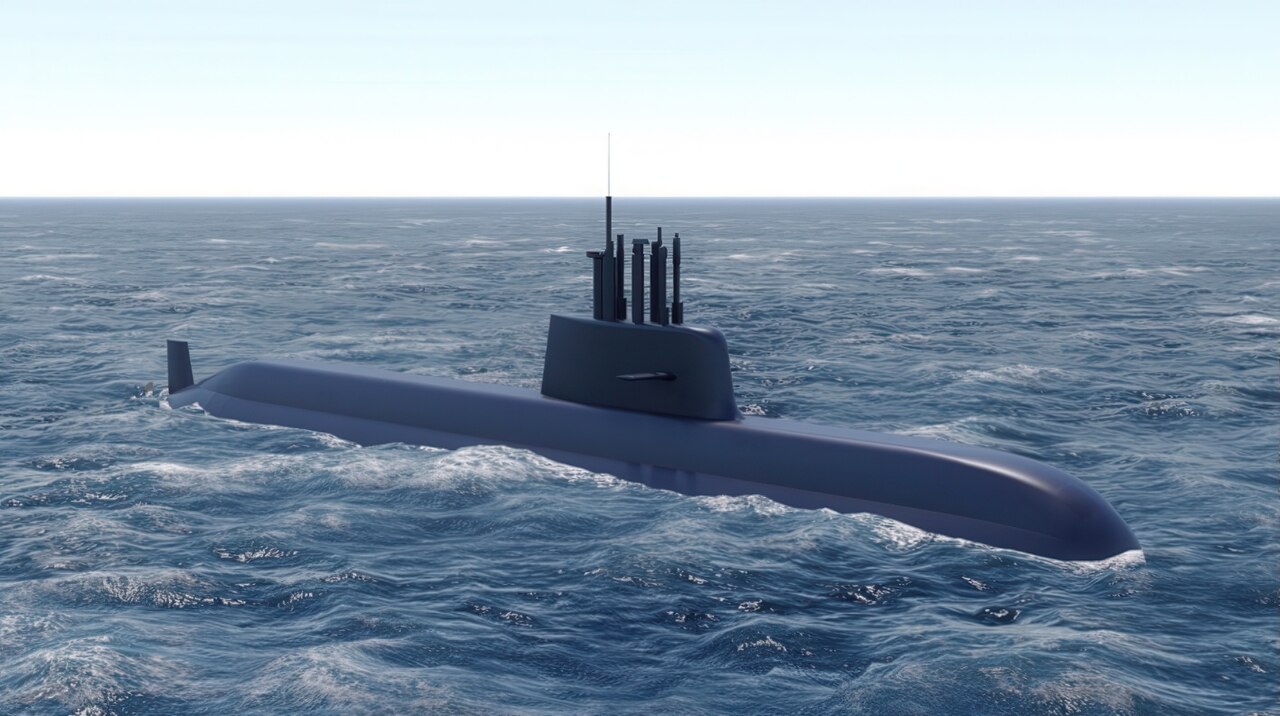
The South Korean KSS-III Batch II is the larger of the two platforms, featuring a roomier hull and greater displacement of 3600 tons. It includes both horizontal launch systems for torpedoes and anti-ship weapons and vertical launch system (VLS) for cruise or ballistic missiles. Proponents argue that its larger size makes it better suited for systemic adjustments, and improving crew habitability during long-range ocean operations accommodates a longer range of 7,000 nautical miles and extended deployment of over 60 days.
KSS-III uses diesel and lithium-ion battery-based fuel cell air-independent propulsion (AIP) and achieves acoustic stealth through a combination of anechoic hull coating, raft-mounted machinery, and advanced vibration-damping design. The combat management system developed by Hanwha is paired with electronic support and communications provided by Indra’s Pegaso SIGINT and LIG Nex1’s sonar.
One criticism of the KSS-II is the value proposition of the VLS for the RCN; however, others have argued just as forcefully that this feature significantly expands the range of operations that the RCN can undertake.
By contrast, 212CD is described as the next generation of the German-Italian 212A, but it is effectively a new submarine design with substantially different dimensions and tonnage. For this program, the TKMS have partnered with Norway’s Kongsberg Defence and Aerospace to jointly develop, produce, and maintain an active sonar suite and ORCCA combat systems. The 212CD has a smaller displacement of 2,800 tons, employs a diamond-shaped hull and anechoic coating for sonar evasion, and uses a PEM fuel cell-based AIP propulsion system.
The United States has recently called upon Europe and Canada to expand their air and naval capabilities as part of a rebalancing of roles within NATO. This underscores the challenge facing Canada: the need to rapidly strengthen maritime operational capability across its three key theatres (i.e. Arctic, Atlantic, and Pacific) while reducing dependence on U.S. security guarantees. Canada’s choice of its next submarine fleet must therefore be a strategic one that can address potential capability gaps and sustain credible deterrence, surveillance, and operational presence across all three maritime zones.
Proven Performance vs. First-of-Class
While the KSS-III and 212CD each have distinct characteristics, the core value propositions emphasized by their respective manufacturers differ considerably. The KSS-III leads with reliable delivery timelines and proven performance; the 212CD emphasizes its new design.
The KSS-III’s defining strength is that it is already in active service with the Republic of Korea Navy (ROKN). For Canada, this translates into significantly reduced technical, financial, and operational risk from an acquisition point of view. The KSS-III’s range, operational endurance, and NATO interoperability were also demonstrated through the trans-Pacific voyage of KSS-III Batch I by ROKN earlier this year. Departing from its home port of Busan, the submarine completed a voyage of approximately 15,000 km via Guam and Hawaii to Victoria, Canada. During the transit, it successfully established communications with Canadian Pacific Fleet Command from the middle of the Pacific Ocean and participated in joint exercises with the RCN, dispelling doubts about interoperability between Korean and Canadian submarine forces.
On the other hand, 212CD’s defining characteristic is its novelty — a new hull form and combat systems. 212CD has completed its Critical Design Review (CDR) in 2024 and entered the production phase, with Norway and Germany positioning it as NATO’s next-generation conventional submarine. TKMS emphasizes the platform’s stealth capability, ORCCA combat system, and new sensor and electronic warfare technologies. Realizing the benefits of this platform, however, would depend on both timely delivery and demonstrated performance.
TKMS announced that it will deliver four vessels by 2036 by reallocating production slots originally assigned to the Norwegian and German navies — which would make Canada the recipient of the first-of-class. Operational test reports and acquisition studies show that first‑of‑class naval platforms and major new configurations frequently encounter significant performance problems and defects during initial operational testing and commissioning.
A relevant precedent is Greece’s acquisition of the Type 214 submarine. Greece was the launch customer for the Type 214, an export variant built on Type 212A, and signed its contract in 2000 with HDW (which became TKMS as of 2005). Similar to the Canadian situation, Greece was scheduled to receive its submarines before the lead vessel for the domestic German program had entered service. Technical issues arose during sea trials, leading to a contractual dispute and a delivery delay for five years beyond the original 2005 target.
Strategic Priorities
The CPSP procurement decision will also shape Canada’s strategic role in the Indo-Pacific and North Atlantic. A European choice could deepen NATO naval-industrial ties with Germany and Norway, but it would come at a cost.
Canada’s Indo-Pacific Strategy explicitly commits Ottawa to deeper security cooperation with regional partners and reinforcing deterrence in the Western Pacific. In this sense, closer cooperation with South Korea would anchor durable Canada-ROK defense industrial cooperation and reinforce Canada’s identity as a Pacific middle power aligned with U.S. allies in the region. Shared platforms, logistics support, and training pipelines would make combined operations and burden sharing easier in the Pacific. Japan and South Korea are already moving towards closer defense industrial and economic cooperation with the United States through various investment and economic arrangements, which include shipbuilding.
The most recent National Security Strategy and National Defense Strategy elevate the Western Hemisphere and Indo-Pacific as top priorities, with Europe lower on the list. A Canadian submarine fleet capable of patrolling the Arctic, Indo-Pacific, and North Atlantic would contribute to a ROK-US-aligned ecosystem with interoperable platforms, shared logistics, and blue water undersea capability in the Western Pacific, which would reduce pressure on U.S. naval force requirements. In the end, a stronger Canada is in every party’s interest.
This need not come at Europe’s expense. Canada is a party to the Icebreaker Collaboration Effort (ICE) Pact that involves joint development of advanced polar and Arctic icebreakers alongside Finland and the United States, ensuring continued transatlantic defense industrial cooperation. CPSP can be an opportunity to add yet another layer of maritime strength to this architecture, positioning Canada not as a country forced to choose between theaters, but as a middle power capable of sustaining meaningful partnerships across both.
Conclusion
Clearly, there is more to CPSP than submarines. Canada has skillfully leveraged competition between the two leading contenders to secure pledges of significant economic benefits and domestic sustainment — both of which will feed back into the Canadian economy.
But economic offsets are only a part of the story. The decision that will define CPSP’s legacy is a strategic one: how Canada sees its role in the Arctic, the North Atlantic, and the Indo-Pacific — and which industrial partnerships best position it to play that role over the next half-century.
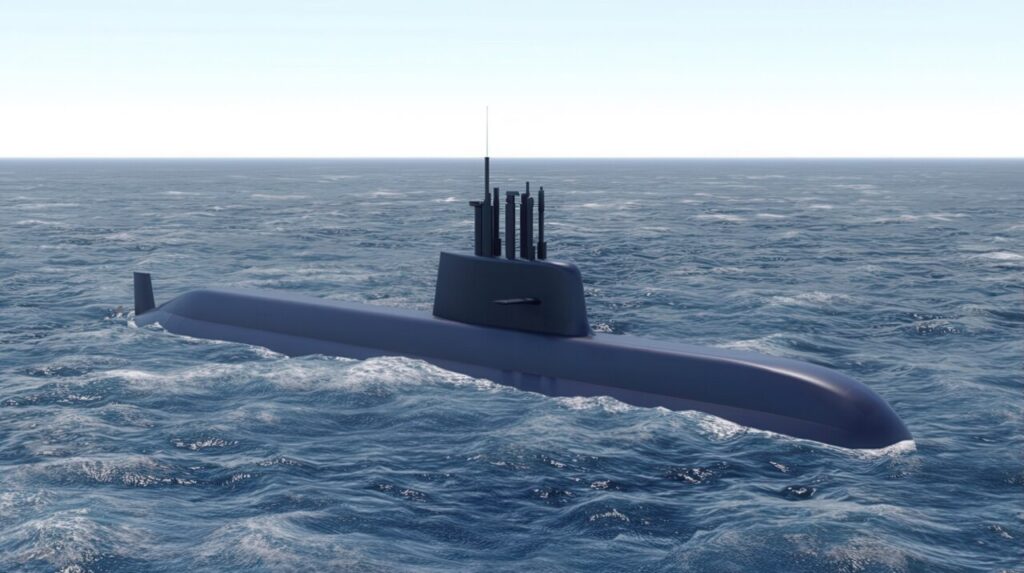
Header image: KSS-III Batch II. By 방위사업청 – Defense Acquisition Program Administration (DAPA)






Community Adaptation for a Water Festival Without Clean Water