


Introduction
The long-awaited details about the first set of investments related to the understanding reached by South Korea and the United States last November have finally been released. The official statement by the South Korean Ministry of Trade, Industry, and Resources (MOTIR) shows that the first tranche of investment will go towards building two gas combined-cycle power plant (Project Star) and eight large nuclear reactors (Project Power) while the Alaskan liquefied natural gas (LNG) pipeline development project (Project North) will undergo further review. The latest reports indicate that the initial transfer of $2.4 billion has already been made for the gas power plant project. Although critics in South Korea have questioned the commercial viability, financial efficacy, and lack of oversight of these projects, the selection and structuring of the financing mechanisms for these investments suggest that Seoul has done its best to manage the associated risks while delivering on the promises made in November 2025.
The Projects
It is important to recognize the context surrounding the latest announcement about these projects to understand the criticism against the South Korean government. Several weeks prior to the announcement, President Trump issued a series of public statements about the joint military exercises, North Korea, and the Strait of Hormuz, which appeared to be linked to the investment pledge made by Seoul last November. In fact, at least one piece of reporting suggested that patience was running thin on the pace of South Korean investments, with these statements made to elicit concrete deliverables. While the criticisms against the South Korean government may be fair, the project selection and commitment suggest that there was considerable thought behind the process before these announcements were made.
| Project | Location | Total Amount | Details |
|---|---|---|---|
| Project Star (Gas combined-cycle power plant) | Encinal, Texas | $22.3 billion | 6,472 MW plant supplying power directly to nearby AI data centers. Led by Related Companies and NextEra Energy; Lewis Energy Group provides site, gas, and water. Phase 1 operation in 2029, full operation by 2032. First official Korea-US strategic investment project. |
| Project Power (8 large nuclear reactors: 2 APR1400, 6 AP1000) | N/A | Up to $120 billion | Up to $120B for 8 units = $100B construction (overnight cost) + $20B contingency. Up to $30B per 2 units = $25B construction + $5B contingency. The contingency counts toward the $200B strategic investment total even if unused. Any costs above $30B per 2 units are not borne by the Strategic Investment Fund. Up to $10B may be paid by year-end for long-lead items. |
| Project North (LNG pipeline and export terminal) | Alaska | $54 billion* | Review stage only; will proceed only if commercial reasonableness and Korean legal requirements are met. If it proceeds, the U.S. will offer tariff cuts on equipment such as steel, guaranteed long-term LNG purchase agreements, and priority access to the LNG for Korea. |
*According to a public statement by President Trump. The Korean government’s announcement does not give a figure for Project North, and the statement does not make clear whether this is the total project cost or Korea’s share.
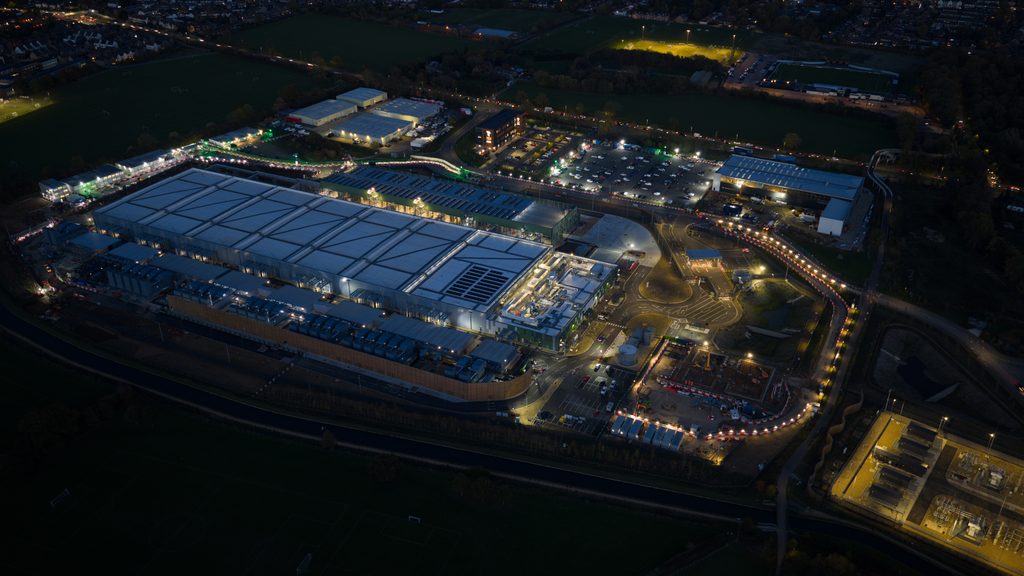
The three announced projects include: Project Star (Texas gas combined-cycle power), Project Power (Korea-US civil nuclear power cooperation), and Project North (Alaska LNG). Project Star seeks to build and operate 6,472 MW gas combined-cycle power plant for AI data centers in Encinal, Texas. The $22.3 billion plant will supply electricity as of 2029 but will have full operational capacity by 2032. The Project will involve several major global companies, including Related Companies, NextEra Energy, and Lewis Energy Group along with yet unnamed “competitive Korean companies” to participate across the entire project by supplying equipment, engineering, construction, operational support, and maintenance.
Project Power involves $120 billion investment for two APR1400 and six AP1000 reactors. The announcement indicates that the construction of these plants will be sequenced so that construction of two units of AP1000 will begin in the first stage followed by two additional units of APR1400 and two more AP1000s in the second stage, where the gap between the first and second stage will be kept below six months. The final stage will consist of the remaining two units of AP1000. The arrangement allows South Korea to build its own APR1400 reactors in the U.S. while the benefits of building the Westinghouse designed AP1000 reactors can be shared. Both countries hope that Project Power can inject more momentum into the president’s Nuclear Energy Executive Order, which aspires to begin construction of 10 new large reactors by 2030. $100 billion will be used to cover the construction costs while an additional $20 billion will be set aside for contingency spending, and both sides agreed to allow $10 billion advance payment by year end on long-lead items. The announcement stipulates that $120 billion sets a ceiling on the allocation of these investments whereby only $30 billion will be allocated to two reactors that will include both the construction cost ($25 billion) and contingency spending ($5 billion). The Strategic Investment Fund will not be able to cover costs that exceed $30 billion per two reactors, and the $20 billion contingency will count towards the $200 billion investment even if it is not utilized. Finally, the announcement also states that the governments and companies of both countries will pursue the acquisition of a stake in Westinghouse with specific terms for this acquisition to be finalized through future negotiations.
Project North is the most controversial of the three given that the construction of an 800-mile LNG pipeline and liquefaction facilities in inhospitable Alaskan terrain makes this project especially challenging, meaning that the cost could be significantly higher than the estimate. There is also the danger that the project may not be completed within the 20-year time frame to begin delivery of the LNG, which would require restructuring the financing arrangement to allow the South Korean government to recoup its investment. LNG demand can also fluctuate over time given that the visibility of long-term market conditions remain unclear. Among the major energy companies that were involved in this project during the 2010s, for instance, ExxonMobil, BP, and ConocoPhillips decided to not participate, citing economic reasons for doing so. President Trump’s announcement of South Korea’s participation in this project, which was later rebuffed by President Lee Jae Myung, seems to suggest that the expected size of South Korean investment is $54 billion. So far, the announcement from the South Korean side merely states that the two countries will review the project before making a final decision.
The selection and status of these three projects appear to confirm that the South Korean government has done the work to fulfill the bargain struck last November while making sure that only the most promising projects were the ones chosen to move forward. One interesting feature of the package is that much of the investment is focused on energy infrastructure, perhaps understandably so given the desperate need for more energy to feed the ever-growing hunger for AI compute. Missing from this package are investments related to shipbuilding and other areas, such as semiconductors, pharmaceuticals, critical minerals, quantum computing, and AI. One could argue that investments in some of these sectors are either already baked in by private sector investment, as in semiconductors, or South Korea does not yet have enough scaling advantage (regarding, for example, AI or quantum computing) to push forward with new investment. Investment in shipbuilding appears separate as part of the additional $150 billion investment package, which means that more announcements about this portion of the agreement are likely in the coming days. Finally, it is important to recognize the political implications of this announcement from Korean taxpayers’ standpoint. Channeling government- financed investment to create jobs in the U.S. would be a difficult sell to Korean taxpayers when the same money could also be used for other needs at home. In short, justification for these investments takes on greater persuasion if there is more immediate positive return on behalf of Korean taxpayers. This may be one argument as to why this round of investment announcements was mostly focused on energy infrastructure given that the South Korean state-owned enterprises (SOEs), such as Korea Electric and Power Company (KEPCO) and Korea Hydro-Nuclear Power Company (KHNP), are dominant players in this domain.
Financing
As outlined in the November Memorandum of Understanding, the investment is channeled through two special purpose vehicles: Investment Special Purpose Vehicle (I-SPV) and the Project Special Purpose Vehicle (P-SPV). The former is managed by the Korea-U.S. Strategic Investment Corporation and U.S. government, which collects, allocates, and distributes the fund to and from the P-SPVs. Annual contribution by the Korean government is set at $20 billion per year, up to $200 billion maximum.
The important aspect of this agreement is that the fund provided by the Korean government is a recoverable 20-year investment provided that returns from P-SPV on any given year will be transferred to the I-SPV, and the distribution is split 50-50 between the Korean and U.S. governments until an aggregate amount equal to the Deemed Allocation has been recouped. The Korean government is then guaranteed a 10% return on investment thereafter. In the event that Korea is unable to recover the full Deemed Allocation within 20 years, the U.S. and Korean governments can discuss adjustments to the distribution of returns on their investments. In short, the arrangement allows South Korea to recover the total principal and interest on its investments. The interest will be based on the 20-year U.S. Treasury yield plus a spread to be agreed upon by the two countries for each project. Finally, the agreement also requires both parties to allow for preferential treatment to Korean vendors and suppliers in lieu of comparable foreign vendors and suppliers in executing the project.
According to some initial reports, the Ministry of Economy and Finance and the Bank of Korea planned to raise up to $20 billion a year for these transfers by diverting interest and dividend income from South Korea’s foreign reserves and dollar denominated bonds. Recent reporting seems to confirm this formulation. If true, this would allow the government to maintain fiscal prudence while keeping the foreign exchange market largely unaffected. As of this August, South Korea’s foreign reserves stood at more than $442 billion, but more recent reporting suggests that the reserve declined slightly in the month of September. The South Korean government’s foreign securities (including U.S. Treasuries) holdings remained relatively stable at approximately $387 billion, as they were at the end of August. Annual return from these holdings would go towards the strategic investment fund. If the interest earnings are not enough to cover the annual $20 billion investment limit, the government would be able to issue more bonds to cover the shortfall.
Conclusion
Nearly one year after the 2025 Joint Fact Sheet, South Korea has moved from broad pledges to concrete commitments, naming the first set of projects it will fund and sending its first transfer. An initial review of the project selection and the financing structure suggests Seoul did its due diligence. It chose projects with experienced partners and clear demand, and it secured safeguards such as risk pooling across projects in addition to a legally binding annual cap. These moves demonstrate both a seriousness in South Korea’s intent and its desire to ensure successful completion of these projects. This is understandable — South Korea’s ability to recover its investment, and possibly earn a return, depends on these projects being successful. Much remains unsettled, however, including how the rest of the funds will be allocated, the form and scale of South Korea’s role in the Alaska LNG project, and the investment in shipbuilding. Still, the agreement appears to have real momentum as the U.S. enters a critical moment with midterm elections just around the corner.



Community Adaptation for a Water Festival Without Clean Water