
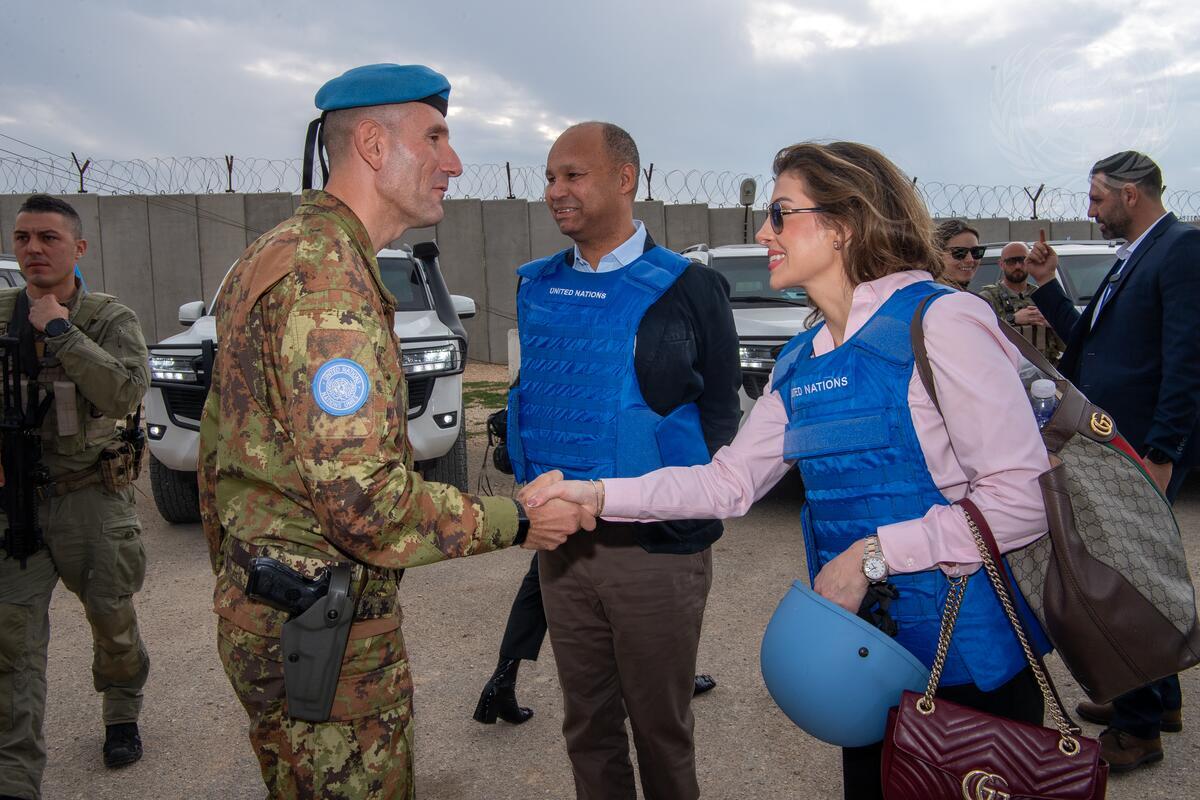
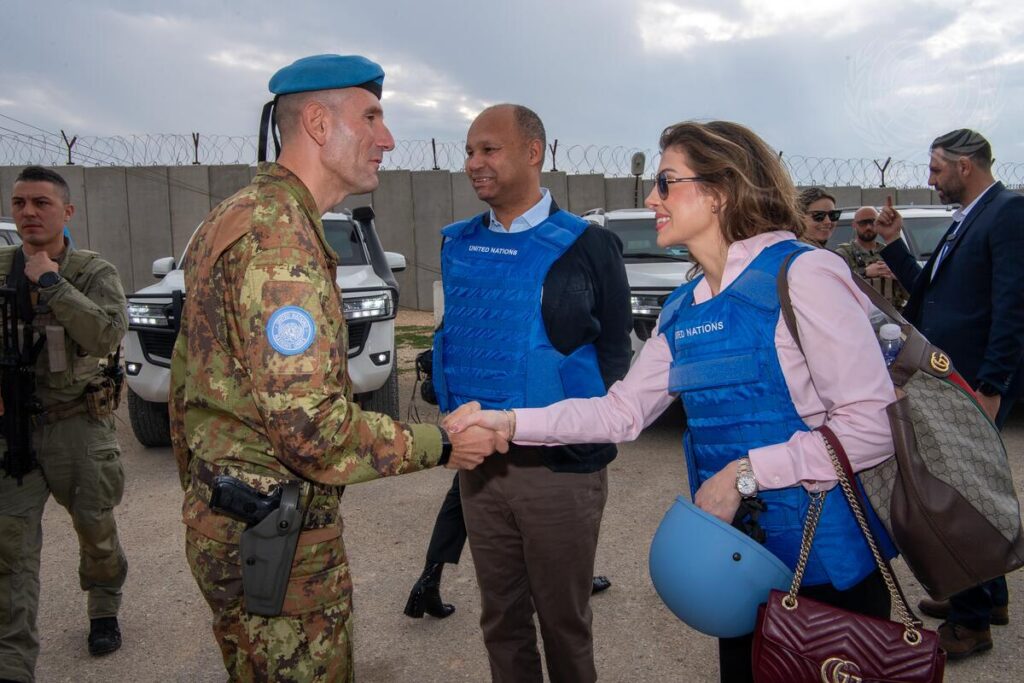
In August 2025, the UN Security Council mandated that the UN peacekeeping mission in Lebanon (UNIFIL) commence drawdown on December 31, 2026. UNIFIL is one of the longest running UN peacekeeping missions, established in 1978 by UN Security Council resolutions 425 and 426. UNIFIL’s original mandate included operating in cooperation with the Lebanese Armed Forces (LAF) as they deployed throughout the south of the country, assisting with border securitization and maintaining an area free of unauthorized armed personnel, assets, and weapons. Following the escalation of conflict in 2006, the Security Council adopted resolution 1701, which supplemented and enhanced UNIFIL’s force numbers, equipment, mandate, and scope of operations. In strengthening the mission’s capabilities, the Security Council authorized the mission to take necessary action to ensure that the mission’s area of operations was not utilized for hostile activities of any kind and to protect the freedom of movement of UN personnel, facilities, installations, and equipment, in addition to humanitarian workers. UNIFIL was also mandated to protect civilians under “imminent threat of physical violence.”
Resolution 1701 also provided the conditions for the deployment of the UNIFIL Maritime Task Force (MTF), which was requested by the Government of Lebanon and has supported safe passage in Lebanon’s territorial waters, air surveillance over maritime and land territories, search and rescue operations, and the prevention of unauthorized arms supplies. The Lebanese Navy has hailed its cooperation with UNIFIL MTF, citing enhanced vessel readiness, improved maritime operations management and training, and advanced radar networks as a result of the mission’s deployment. As the MTF prepares to withdraw in December 2026, the force is transitioning from assuming responsibility for maritime security tasks to advising and observing the Lebanese Navy.
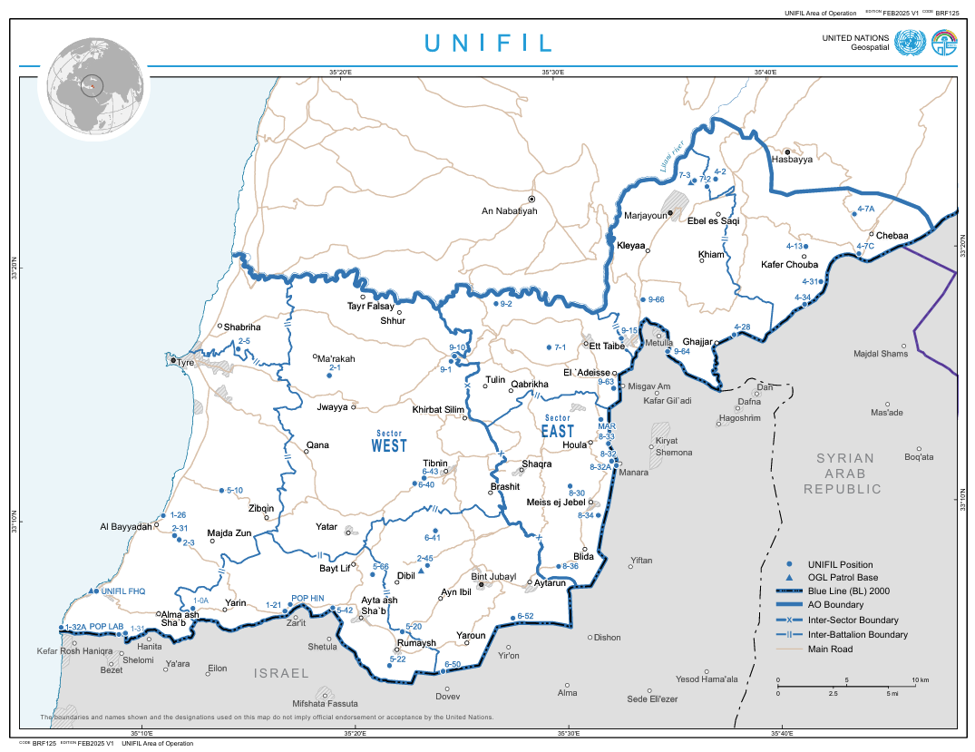
Source: UNIFIL Map of Operations, February 2025.
The resumption of large-scale regional war in 2024 and again in early 2026 has left UNIFIL caught in the middle of an unresolved conflict between Israel and Hezbollah along the highly sensitive Blue Line, which has long been subject to periodic flares of violence and heightened tensions. Israeli political leaders have expressed their desire for UNIFIL’s withdrawal, and the United States led the effort to pass resolution 2790 in the Security Council to draw down the mission. Lebanese Prime Minister Nawaf Salam commented on UNIFIL’s withdrawal, noting that there is still an evident need for an international presence in the southern part of his country, and that a UN presence is preferable “given the impartiality and neutrality that only the UN can provide.” Over two-thirds of the Lebanese Parliament also transmitted a letter to the Security Council emphasizing the value of UNIFIL, pleading for a strengthening of the mission’s mandate, and stressing the persistence of hostilities.
Peacekeeping Without Peace
Lebanon remains under bombardment and threat of prolonged occupation by Israel, which has led to defunct normalized relations and calls for an updated armistice agreement. Surges of conflict, and questions surrounding UNIFIL’s future, are not new, particularly following exchanges of fire across the Blue Line since October 8, 2023. The escalation of hostilities in March 2026, due to Hezbollah rocket fire and returning Israeli large-scale air strikes, has been devastating for civilians, infrastructure, and humanitarian delivery. UNIFIL has worked to detect and record violations of Resolution 1701 despite objectively dangerous conditions.
Several ceasefire agreements have been announced publicly, but none have been effective in halting hostilities permanently. The ceasefire announced in April 2026 between Israel and Hezbollah serves as a recent example of an agreement that is ineffective at protecting civilians in southern Lebanon. Israel continues to issue evacuation orders throughout southern Lebanon and north of the Blue Line, in violation of resolution 1701, in its quest to dismantle Hezbollah. By early May 2026, UNIFIL recorded extensive military activity across its area of operations, with hundreds of projectiles per day attributed to the Israel Defense Forces (IDF) and a fraction of return fire attributed to Hezbollah. Furthermore, the Trilateral Framework announced in June 2026 between Israel, Lebanon, and the United States (rejected by Hezbollah), which intended to serve as a comprehensive peace arrangement, has not prevented the exchange of explosive drones. Civilians continue to face devastating consequences of the conflict, and experts have drawn attention to the tens of thousands of displaced, injured, and deceased civilians.
Through the course of UNIFIL’s history, the mission has faced grave resistance, ongoing threats, and direct confrontations with Israel and Hezbollah. Israeli tanks have blocked roads typically patrolled by UNIFIL, with the IDF executing extensive airstrikes and naval and drone activities. Hezbollah and Israel regularly operate explosive drones in the mission’s area of operations. Mission personnel consistently work to combat mis- and disinformation spread by the media and Hezbollah, compromising host-country relations. UNIFIL has also reported devastating exchanges of fire leading to mass displacements of civilians, including attacks on Lebanon’s capital of Beirut, and daily denials of peacekeepers’ freedom of movement.
A Force Under Attack
As of August 2026, UNIFIL’s force consisted of over 7,400 peacekeepers from 46 troop-contributing countries (TCCs). The force has been as large as 10,800 peacekeepers over the course of the mission’s 48-year history, with an authorized capacity of 15,000 uniformed and civilian personnel.
High personnel contributions from European countries such as Italy (738), Spain (677), France (609), Ireland (274), Germany (185), Serbia (169), Austria (160), and Finland (144) constitute a substantive majority of these European TCCs’ overall contributions to UN peacekeeping. These European contributions are unique across the spectrum of UN peace operations and other missions, which has resulted in substantive political engagement by European countries about the future of the mission. Despite the presence of a truly international force in Lebanon, in addition to vested interest from China and France, two large TCCs and permanent members of the UN Security Council, political pressure from the United States ultimately forced UNIFIL’s forthcoming draw down. France and Italy have demonstrated enduring support for security along the Blue Line with a recent announcement that the two countries would co-lead an international coalition to support Lebanese security after UNIFIL’s departure.
Attacks on UN Peacekeepers and Humanitarians
What is notable about the ongoing commitment of TCCs to UNIFIL is that many have remained resolute in their support despite the increasing risks to their personnel. Seven UNIFIL peacekeepers have died due to malicious act incidents to date in 2026, with several more personnel wounded. A presumed combination of IDF strikes and fire from non-state actors has wounded or killed several contingent members, including prominent cases of Ghanaian peacekeepers in early March 2026, Indonesian peacekeepers in March and April 2026, and French peacekeepers in April 2026. The most recent Serbian peacekeeper death in June 2026 came within hours of a Washington-led ceasefire renewal agreement.
Under customary international law and Article 7 of the Convention on the Safety of United Nations and Associated Personnel of 1994, the UN and its “associated personnel, their equipment and premises shall not be made the object of attack or of any action that prevents them from discharging their mandate.” The Government of Ghana petitioned the UN Secretary General for an immediate investigation into attacks on its UNIFIL contingent and called upon its 55 member-state counterparts in the Commonwealth of Nations to condemn the attack. Although not a Commonwealth country, French President Emmanuel Macron heeded the original plea by calling the attack “unacceptable” and reiterating expectations regarding the security of UNIFIL’s forces to Israeli President Isaac Herzog. Tributes to the Indonesian peacekeepers have been continuously highlighted by high-level UN officials, who have unequivocally demanded that attacks on peacekeepers must stop.
The Security Council has been seized of the increasing impunity towards UN peacekeepers — including in UNIFIL — taking action to bolster accountability through resolution 2823 (2026) adopted in June. However, ultimately, any accountability for the attacks on peacekeepers in UNIFIL will rely on the parties responsible for the attacks cooperating with investigative and justice mechanisms (national or international). That is unlikely to occur given differing views on the events within the Security Council, and a lack of cooperation from Israel and Hezbollah.
Drawdown and Transition: What Comes After UNIFIL?
The future of the Blue Line’s security without UNIFIL’s presence remains undetermined. UNIFIL has, for decades, developed operations in service of stabilization. UNIFIL has also often worked in cooperation with the 28 UN entities with a presence in Lebanon. Encompassing migration, humanitarian response, environment, development, and illicit drugs and international crime, these agencies and offices appropriately coordinate to deliver international support for societal needs. One such entity — the Office of the United Nations Special Coordinator for Lebanon (UNSCOL) — was formally established in 2007 to follow up on the implementation of Resolution 1701 (2006) and promote domestic long-term stability. Secretary-General António Guterres recently announced that the current UN Special Coordinator for Lebanon and head of UNSCOL, Jeanine Hennis-Plasschaert, will step down given her new appointment as UN Under-Secretary-General for Safety and Security. This transition comes at a sensitive time for the UN’s presence in Lebanon and may require a reinvigoration of diplomatic engagements and de-escalation efforts that Hennis-Plasschaert undertook amidst recent flares of conflict. UNSCOL may assume further responsibilities in facilitating dialogue and supporting efforts to monitor a cessation of hostilities in the face of UNIFIL’s ending mandate.
In early June 2026, UN Secretary-General António Guterres outlined three potential options for continued UN uniformed involvement after UNIFIL’s withdrawal to be considered by the Security Council for implementation. These options vary in the proposed amount of uniformed personnel (1,980–5,525), and they all include an unarmed observer presence, armed UN units, and other support units and personnel. Given the security situation on the ground, any future UN uniformed presence would require operational support, including force protection, potential air assets for medical and casualty evacuation, and demining, explosive ordnance disposal, and engineering capacities. The Secretary-General’s letter also notes that radar capacity and limited air assets such as helicopters, static cameras, uncrewed aerial vehicles, and satellite imagery would enhance the UN presence’s capacity to monitor, observe, and report on the evolving situation.
An additional UN peace and security entity operating in Lebanon is the United Nations Truce Supervision Organization (UNTSO), which was established as the first UN peacekeeping mission in 1948 to observe and monitor various ceasefires and armistice agreements across the Middle East. UNTSO provides military observers to UNIFIL in the form of the Observer Group Lebanon (OGL), operating out of UNIFIL bases and patrolling along the Blue Line. The OGL, while committed to its mandate of ensuring compliance with international agreements in southern Lebanon, is limited to its mandated role of observation and analysis without authority to act on witnessed violations. However, the use of the OGL in Lebanon has prompted some speculation that UNTSO could take on some responsibilities in Lebanon.
Ultimately, UN Security Council members will set the terms for a follow-on UN presence after UNIFIL. This could take the form of a follow-on UN peace operation, non-UN led peace operation, or other multilateral or regional configurations. The options will depend heavily on the level of U.S. support. The current U.S. administration has demonstrated a preference for non-UN-led peace operations mandated by the Security Council, reflected by the authorization of the Gang Suppression Force in Haiti and International Security Force in Gaza. Irrespective of the form of a potential follow-on presence in Lebanon, that future mission should utilize lessons learned from UNIFIL’s 48 years of experience while also emphasizing the safety and security of peacekeepers and the protection of civilians.
Header image: UN Photo/Pasqual Gorriz



Community Adaptation for a Water Festival Without Clean Water