
Editor’s Note: Giulia Neaher and Isaac Halaszi are the Managing Editors of the RAI Scenarios. The Responsible AI Fellows developed each scenario during an in-person workshop, and the editing team consolidated and revised them for publication.
Status Quo
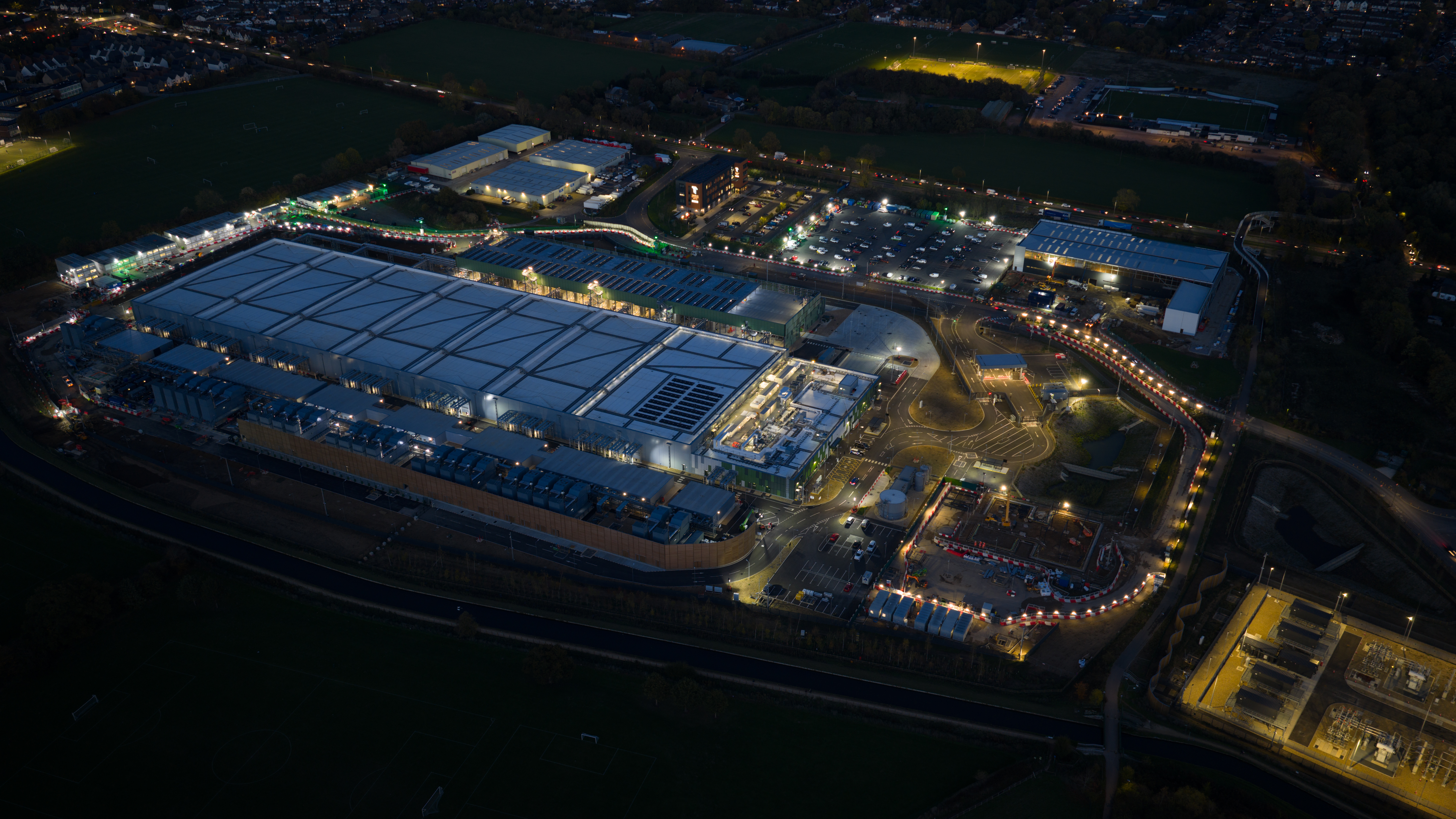
AI infrastructure development in parts of the Global South has proceeded with limited or contested consultation of local and Indigenous communities. AI infrastructure, including data centers, energy and water systems, connectivity, and associated land development, can impose significant local costs when projects are planned without meaningful consultation.
For example, Colombia is seeking to expand its data-center capacity as part of broader digital-development ambitions. As new facilities and supporting infrastructure are proposed, communities have raised concerns about land use, water demand, energy access, and meaningful consultation.
This is also a concern in the Global North. For example, in the United States, rural and urban communities have expressed dissatisfaction with the expansion of data centers, citing concerns about utility costs and other local impacts. As plans for AI-related infrastructure accelerate, communities in both the Global North and South are increasingly organizing around the environmental, economic, and governance impacts of particular projects.
Inciting Event(s)
The U.S. government makes the decision to restrict foreign-national access to leading frontier AI models by 2031, as the proposed data centers are becoming operational. Furthermore, communities in the Global South still see little real-world benefit from AI in education, labor, or social services, as many widely used AI systems still perform poorly in local languages, dialects, and social contexts. While the new infrastructure shows potential for improving context-specific systems, its development proceeds without meaningful local consent.
A local protest to disrupt data center construction efforts in a rural area escalates and picks up significant media attention, with environmental and Indigenous rights activists blocking access to project sites and demanding stronger protections for land and water resources. Downstream implications of these demonstrations include organized protests in cities across the country and a general boycott of AI systems within their communities. The demonstrations inspire networks in other countries to adapt the approach to their own legal, political, and ecological contexts. The demands of these protests are also felt in less democratic countries across the Global South; where unable to engage in protest, technologists turn to data and environmental metrics to hold tech companies accountable, developing tools to track the land and water usage of new data centers and cross-reference these figures to access in rural and indigenous communities. The combined hard and soft pressures begin to shape the accountability landscape in the Global South.
Mechanism(s)
Community coalitions across Latin America and Africa begin coordinating with universities, Indigenous activists, technologists, and local startups to independently monitor the environmental impacts of AI infrastructure. These networks document changes in water accessibility, land use, deforestation, and energy consumption associated with new data centers. The resulting evidence is compiled into publicly accessible environmental scorecards that empower advocates and enable policymakers to compare projects across countries and identify where companies fail to meet environmental or social commitments. Major tech companies invest in the capabilities of Global South technologists, helping to develop at-scale AI infrastructure and capacity building for local tools.
As these tools gain credibility, governments face growing pressure to strengthen oversight through existing regional institutions, multistakeholder partnerships, and global environmental agreements like the Montreal Protocol and its Kigali Amendment. Regional governments establish common guidelines requiring transparent reporting on water, energy use, and meaningful consultation with local and indigenous communities. Meanwhile, multilateral development banks (MDB) and investors reinforce these standards by tying loans and investment to environmental performance and community engagement. Over time, accountability shifts from reactive protest toward continuous monitoring, regional cooperation, and community participation.
Outcomes
In this scenario, coordinated efforts between community leaders and tech startups set up an ecosystem of community monitoring, whereby Global South communities directly hold AI power players – such as local governments involved in data center licensing – accountable for their impacts on the environment and society. This system of standards starts out as informal accountability, but as it gains influence, it transforms into binding conditions that meaningfully shape AI infrastructure development.
As these community-developed standards spread, international agreements and regulatory bodies draw on them, translating local advocacy into enforceable, interoperable regulatory precedents.
Next Steps: Achieving This Scenario by 2031
Alternative scenarios are, first and foremost, thought exercises that illustrate different versions of potential futures. The next phase of the Responsible AI Fellowship will build policy and technical playbooks to make these desired futures a reality by 2031. Key to this process is the solicitation of suggestions from partners, community members, and regional experts to identify practical tools and pathways; if you have ideas for how particular parts of this scenario can become reality, please fill out the survey here:
Stimson Responsible AI Fellowship Scenario Feedback – Fill out form
In the meantime, we’ve drafted several potential mechanisms to spark discussion, which are included below.
Policy Options
International Standards Bodies Incorporate Local Frameworks
International standards development organizations (SDOs) are already incorporating AI standards into their bodies of work. Here, they establish specific standards that relate to global AI accountability, building on existing efforts such as ISO data center performance metrics and LEED criteria for data centers. Standards and metrics developed in the Global South, which consider Global South priorities for AI, could be adopted by major international SDOs, increasing their reach and impact.
Industry Commitments Shape Corporate Sustainability
Industry leaders, not just government, are influenced by local advocacy and set up public commitments to meet the demands of local leaders, in the vein of Microsoft’s Community-First AI Infrastructure initiative. As more companies adopt comparable commitments, community-informed sustainability practices can become an expected baseline for AI infrastructure investment.
Relevant Facts
AI Data Centers by Region
AI Data Center Index
Africa (19 facilities); Asia (83 facilities); Australia (12 facilities); Europe (90 facilities); Middle East (30 facilities); North America (96 facilities); South America (14 facilities).

Data Center Sentiments
Local Opposition
In 2025, $156 billion (USD) worth of data center projects were blocked or delayed by local opposition and litigation in the United States. In Q1 2026, this number was closer to $130 billion (USD), with grassroots groups spanning 49 states. Ultimately, communities feel disenfranchised by big tech, unable to negotiate when and where data centers are to be built.
Community Harm and Mitigation
Data centers have been linked to environmental harms including a higher demand for nonrenewable energy and water supplies, and a decrease in air quality and agricultural land use. However, newer AI data centers are using more renewable energy, adopting AI-enhanced thermal dynamics, and shifting towards liquid cooling.
Leveraging AI for Sustainability
Microsoft AI for Good Lab
AI is recognized for its scalability and speed when addressing environmental issues. Examples include a global mapping of solar farms and AI-enabled degradation tracking and conservation.
AI-enabled Solutions
AI methods have higher accuracy and precision in both image and dataset analysis, are faster and more cost efficient than traditional methods, and can be scalable to individual/community needs. Examples include:
- Tracing and controlling pollutants in local water supplies in the Shandong Province, China.
- Evaluating the quality of drinking water in Odisha, India and the Northern Delta, Vietnam.
- Enhancing at-home indoor and outdoor air-quality sensors for future smart homes and cities.







Community Adaptation for a Water Festival Without Clean Water