

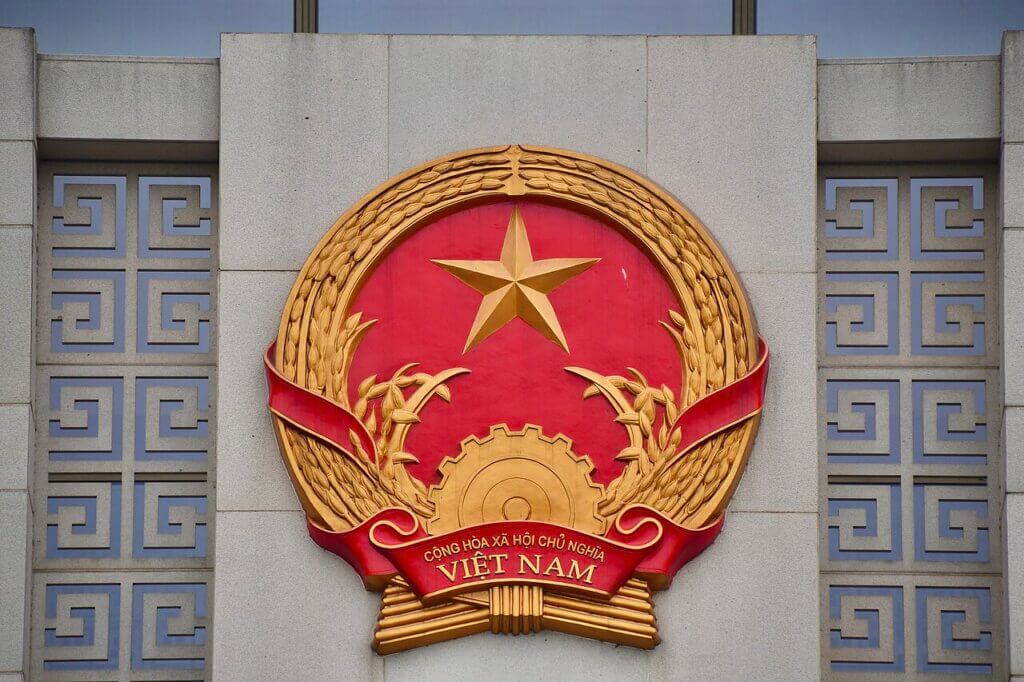
The 14th National Congress of the Communist Party, held in Hanoi from January 19-23, 2026, ratified the most significant shift in Vietnam’s political economy since the launch of Đổi Mới (“Renewal”) in 1986. As expected, the Congress re-appointed former Public Security minister Tô Lâm to a full five-year term as General Secretary; according to news reports, he is likely to be selected for the dual role of State President as well. The Party has long held unchallenged power within Vietnamese politics; now its new leadership has historically unparalleled control over all aspects of the Party-state system.
Vietnam’s New Development Vision
Five-year plans with economic growth targets have been a mainstay of socialist regimes since Soviet times. For instance, Vietnam’s 11th Party Congress in 2011 called for Vietnam “to basically become a modern industrialized country by 2020.” The 14th Congress continued this tradition but raised the bar, targeting 10% annual GDP growth from 2026 to 2030, which would raise Vietnam to a high-middle income level with a per capita income of $8,500. Instead of using terms like “build” or “develop” as in the past, the Political Report for the 14th Congress emphasizes “achieving breakthrough development.” Analyst Carl Thayer argues that a new economic model is needed for Vietnam to “avoid the middle income trap” of a plateau in low-value-added exports.
Party leaders believe that unlike the Đổi Mới era of extensive economic development based on attracting foreign direct investment (FDI), the new economy that will lead Vietnam to high-income status needs to be led by domestic businesses, both state-owned and private; concentrate on more “advanced” sectors such as digital technology, energy, and artificial intelligence; and engage with global markets as an investor, producer, and consumer, not only in an export assembly role.
This economic vision is the key to understanding political shifts in Vietnam over the last 18 months, since the passing of former General Secretary Nguyễn Phú Trọng in July 2024. The new cohort of Party leaders installed in the 2026 Party Congress, led by Tô Lâm, has taken ownership of this “new era,” but its roots were apparent beforehand: For instance, Vietnam agreed to a Comprehensive Strategic Partnership (CSP) with the United States in September 2023 primarily in order to attract U.S. support on science, technology, and the “innovation economy.” The raft of new international partnerships in the past several years, most recently a CSP with the European Union, should also be viewed in this light. Almost uniquely in the world, the Vietnamese continue to be optimistic about globalization – not because they seek special status or dominance over others, but since they believe they can ride the tiger long enough to become a full member of the club of developed countries. Vietnamese citizens’ positive views of the United States are consistent with support by government leaders of both countries for closer bilateral relations – a rare area of continuity from the Biden to Trump administrations.
Restructuring the Party-State
Thus, the Party’s rapid steps towards administrative reform in 2025 aimed to create a new governance structure that is fit for the purpose of rapid economic growth. The Politburo – the highest leadership organ of the Party – issued a series of “Breakthrough Resolutions” signaling their commitment to reform. These guiding documents, of higher importance than laws or decrees, focus on streamlining the Party-State apparatus (Resolution 60/NQ-TW), reform of legal and governance systems (Resolution 66/NQ-TW), promotion of a private sector-led economy (68/NQ-TW), science, technology, and digital transformation (57/NQ-TW), and deeper international integration (59/NQ-TW), including raising the importance of foreign affairs within the Party. Most recently, Resolution 79/NQ-TW, issued in January 2026, emphasizes the role of the state-owned economy as a counterweight to the private sector.
Together, these six resolutions comprise the largest governance reform in decades, implemented at breakneck speed. Resolution 60, issued in April 2025, abolished the entire district level of administration and reduced the number of provinces and centrally administered cities from 63 to 34. These changes took effect on July 1, allowing little time for discussion. The changes aimed to improve government performance and reduce costs, while also enabling Party leaders to retain and promote local officials of their choosing.
Certain risks of rapid restructuring became apparent in the fall of 2025 when massive floods hit central Vietnam, killing 90 and submerging 200,000 homes. While climate change was an undeniable culprit in intensifying the flooding, evidence showed that government warning systems – which had been managed at the district level – did not function as well as they previously had, and the centers of the new merged provinces were far away. Meanwhile, Party-backed mass organizations such as the Vietnam Women’s Union also face restructuring and budget cuts.
In the past decades, Vietnam’s political system has been characterized as “fragmented authoritarianism”: Although the Party ruled and permitted no opposition, multiple bureaucratic, geographic, and interest-based factions often made decision-making cumbersome and created opportunities for corrupt dealing. Multi-level, overlapping governance structures were effective at reducing poverty and distributing the benefits of public services. The 2025 administrative reforms shook up this system in favor of a streamlined apparatus that may prove more decisive but less consultative and responsive.
It remains to be seen whether a reduced government footprint will lead to a greater role for private, religious, and other civil society groups to provide social services at the local level. The increased restrictions on civic space during the 2016-24 period appear to have relaxed slightly or at least not worsened in the past year. The heightened role of the Ministry of Public Security suggests that state control of civil society will remain a priority, but Tô Lâm’s pragmatism, pro-business attitude, and need to show results may point in a different direction.
The Party’s New Leaders
Much of the international coverage of the 14th Party Congress has centered around the rise of Tô Lâm to preeminence, in particular, how his likely assumption of the state presidency centralizes power in a single individual in an unprecedented way. It is undoubtedly true that Tô Lâm has no rival in the present Party hierarchy, and his re-appointment as General Secretary was never in serious doubt. But it is not clear that he is any more powerful than his predecessor, Nguyễn Phú Trọng, who held the top Party position for 13 years, claimed importance as an ideologue, and also served concurrently as state president from 2018-21. Despite its title, the presidency is simply not as powerful a position: It is largely ceremonial, with some importance in foreign relations. The General Secretary, through chairing the Politburo and the Secretariat, is the key driver and decision maker within the Party, and the Party sets the direction for the rest of the state.
Historically, Vietnam’s single-party system has operated through consensus among top leaders: the 180-200 members of the Central Committee, who then elect the 15-19 member Politburo. Individual politicians are less important than collective rule; Party leaders are not chosen through public elections on the basis of personality or policy positions, but rather selected by their peers on a combination of competence and loyalty. Leadership was typically shared among the northern, central, and southern regions of the country. In principle, one could replace one Politburo member with another and not affect the Party consensus. Conflicts among leaders rarely have to do with ideology or policy positions: The idea that there are “conservative,” “modernizer,” and “moderate” factions is mostly a fiction. Rather, factions are rooted in patronage and bureaucratic interests: Public Security and Defense Ministry backgrounds and provincial origins in the north, center, or south.
Tô Lâm continues in this tradition. He is both a “conservative” (maintaining strong Party authority), a “modernizer” (with ambitious development plans), and a “moderate” (cannily co-opting potential opposition), while placing allies from the Ministry of Public Security and his home province of Hưng Yên, outside Hanoi, in key positions. Due in large part to Nguyễn Phú Trọng’s “blazing furnace” anti-corruption campaign, which removed one-third of the previous Politburo, there are few remaining senior leaders who could compete with or check Tô Lâm’s authority. (Defense Minister Phan Văn Giang, who was rumored to be a candidate for state president, retained his Politburo seat but did not move up much in ranking.)
Most of the new Politburo are upper-middle-aged technocrats with experience in Party leadership at provincial and national levels. There is some regional balance, but a plurality of northerners, including three members from Hưng Yên and another three from the same former district of the north-central province of Hà Tĩnh. The 19 members include one woman (Bùi Thị Minh Hoài) and one ethnic minority representative (Đỗ Văn Chiến). One new addition, Nguyễn Thanh Nghị, is the son of former prime minister Nguyễn Tấn Dũng, whose pro-business faction was notably purged from power after 2016. Nghị’s inclusion is a signal that dealmaking may be back in fashion.
The primacy of a single leader and possibly a permanent combination of the roles of General Secretary and State President brings Vietnam in line with similar one-party systems in China and Laos. Certainly, the example of Xi Jinping’s consolidation of individual power is closely observed by Vietnamese leaders. Although Vietnam’s political system resembles China’s in structure, however, the policies adopted will be Vietnam’s own.
Performance-Based Legitimacy
The new Politburo will move even more swiftly in the direction of the national development targets set in 2025. Infrastructure projects and policy changes that previously were delayed for years will proceed apace. The streamlined Party structure will implement central-level decisions with minimal friction. The result is already a vastly different experience of governance than the Vietnamese are accustomed to, with little incentive or space to protest.
The Communist Party’s claim to legitimacy has long been based on broad popular support, especially in the north; its historical record of defeating U.S. forces and unifying the country; and, increasingly over time, its ability to bring material progress. Now that the Party has placed its chips on economic breakthrough, its ability to deliver that goal is both a major source of legitimacy and the main constraint on its power. After averaging 6.3% growth from 2021-25, already one of the highest rates in the world, is double-digit growth for the next five years feasible? And whatever growth is achieved, how will it be distributed? The answers will depend not only on decisions made by Party leaders, but also on events and policies in the rest of the world.








Community Adaptation for a Water Festival Without Clean Water