
Executive Summary
Multilateral tools that serve to protect civilians in conflict are coming under increasing strain. United Nations peace operations are having to contend with myriad changing factors, including the internationalization of conflict, erosion of compliance with international law and norms, and rising preference for kinetic action over diplomatic solutions. From within the UN, geopolitical interests have impacted the functioning and efficacy of the Security Council, with 2025 witnessing efforts to simplify peace operation mandates, cut operational expenses, and pursue the wind-down of UN missions viewed by some member states as having exceeded their useful lifespan. Furthermore, the UN liquidity crisis and related funding and personnel cuts have reduced civilian and uniform presence on the ground, limiting the operational capacity and programmatic activities of UN peace operations.
In looking at the Security Council’s efforts to protect civilians trapped in conflict, there is a clear difference in approach to the mandating of UN peacekeeping and special political missions. Since 1999, the Council has established 16 different peacekeeping operations with protection of civilians mandates; however, within this same time period, the Council has only integrated protection language into the mandates of a few special political missions. As a result, the UN Department of Peace Operations (DPO), which backstops peacekeeping missions, has developed a comprehensive approach to the protection of civilians over the past three decades, while the UN Department of Political and Peacebuilding Affairs (DPPA), which supports special political missions, does not maintain formal guidance for its missions on the protection of civilians.
To counter the growing threats faced by civilians in armed conflict, the UN and its member states should examine opportunities to advance protection outcomes across the full range of UN peace operations. While debate around the role of peace operations in protecting civilians has been ongoing for multiple decades, its urgency has risen as political and financial appetite for deploying or maintaining peacekeeping operations has declined, accompanied by reduced political will to intervene where civilians are under threat.
UN special political missions, however, have too often been on the periphery of policy and expert discussions on the protection of civilians, which have developed primarily around peacekeeping operations. Nonetheless, some special political missions have had mandates with direct protection implications, including on human rights monitoring and reporting; addressing grave violations against children; preventing and countering conflict-related sexual violence; and facilitating or coordinating humanitarian assistance.
Emerging research also highlights a role for special political missions in contributing to the protection of civilians. For instance, special political missions have promoted and furthered protection outcomes through dialogue facilitation and mediation, engaging parties on conduct of hostilities, ceasefire monitoring, high-level advocacy, capacity-building and technical assistance, and other unarmed approaches to protection. In addition, Secretary-General António Guterres’ 2024 Agenda for Protection codifies the expectation that all UN entities, including special political missions, work to address protection and human rights issues.
To strengthen the capacity of UN special political missions to advance the protection of civilians now and into the future, this report makes the following recommendations to UN member states and the Secretariat.
Member States:
- Integrate discussion of peacekeeping and special political missions in existing fora to better enable consideration of the full spectrum of UN peace operations in protecting civilians, such as within the General Assembly’s Fourth Committee, the Special Committee on Peacekeeping Operations (C-34), and Peacekeeping Ministerials.Member states should continuously evaluate opportunities to improve protection outcomes across peace operation settings, regardless of mission type, by focusing on how best to mandate, resource, and adapt missions to ever-changing realities on the ground.
Secretariat:
- Issue written guidance on how special political missions can most effectively contribute to protection efforts. Such guidance should cover the full range of special political missions and assist mission personnel in assessing their mission’s respective comparative advantages and capacity for advancing efforts to protect civilians.
- Undertake a study to collect good practices and lessons on the protection of civilians by special political missions, collating analysis and findings from past and current missions.Such a study could support the development of institutional guidance for special political missions on protection, as well as inform the approach of UN member states in establishing, mandating, and resourcing special political missions in the future.
- Establish a joint protection hub for UN peace operations, bridging DPO and DPPA, to enable an organizational approach to the protection of civilians that covers the full spectrum of peace operations, inclusive of special political missions. Such a hub could also support policy development on protection across peace operation transitions and for new and emerging peace operation models, which may not fit neatly into the current UN categories of a peacekeeping or special political mission.
- Encourage UN peace operations without explicit protection language in their mandate to develop a mission-specific plan for implementing the UN Agenda for Protection. Such a plan should outline the mission’s methodology for assessing and monitoring threats to civilians, identify protection priorities in coordination with the UN Country Team and humanitarian actors, and lay out an action plan for advancing protection at strategic and operational levels where possible.
Introduction
Civilians continue to face dire and widespread threats in conflict situations, as reflected in the extraordinarily high levels of civilian fatalities at the global level.1Although 2025 saw
the first decrease in the number of civilian deaths within armed conflicts after three years of sustained increases, the harm inflicted on civilians in conflict zones remained immense. (UN Security Council, Protection of civilians in armed conflict: Report of the Secretary-General, S/2026/390, 7 May 2026, para. 7; and Office of the UN High Commissioner for Human Rights,
“Conflict-related deaths” in Human Rights Count 2026, June 2026, https://innovation.ohchr.org/rightscount/.) The United Nations, however, has struggled to keep pace with the spread, scale, and intensity of conflict and its corresponding impact on civilians.2The number of armed conflicts in the world more than doubled in the past 15-plus years, with many conflicts persisting for decades and other more recent conflicts escalating in intensity and civilian harm. (International Committee of the Red Cross, “ICRC Annual Report 2024,” September 7, 2025, https://www.icrc.org/en/report/icrc-annual-report-2024.) In 2023 alone, civilian deaths in conflict areas rose by 72% compared to the year before. Women and children are also disproportionately affected; that same year, the proportion of women killed in conflict doubled, while the proportion of children killed in conflict tripled. (UN Security Council, Protection of civilians in armed conflict: Report of the Secretary-General, S/2024/385, 14 May 2024, para. 6.) The UN Security Council, for instance, has not deployed a new UN peacekeeping mission with a protection of civilians mandate since 2014.3The last peacekeeping mission the Security Council established was the UN Multidimensional Integrated Stabilization Mission in the Central African Republic (MINUSCA) in 2014, which maintains a protection of civilians mandate. Many factors have led to this stalled situation, including challenges around host authority consent,4For further discussion, see Julie Gregory and Lisa Sharland, Host-Country Consent in UN Peacekeeping, Stimson Center, September 2023, https://www.stimson.org/2023/host-country-consent-in-un-peacekeeping/. diverging political will among Council members, limited contingency planning by the Secretariat for at-risk contexts,5Lisa Sharland, Julie Gregory, and Juliet Weis, “Prioritizing Protection of Civilians in Future Peace Operations: Applying Lessons from 25 Years of POC,” Stimson Center, August 2025, https://www.stimson.org/2025/protection-of-civilians-in-future-peace-operations/. and sustained risk aversion by troop- and police-contributing countries (T/PCCs), particularly in contested settings. Furthermore, certain Council members have pushed to reduce the mandates of existing peace operations, cut operational costs, and draw down missions perceived as having run their course, notwithstanding protection of civilians concerns. Compounding matters, the UN finds itself under significant strain as the organization navigates a dire liquidity and funding crisis. Political and financial gridlock have thus resulted in delayed or insufficient multilateral engagement to protect civilians, including in contexts as varied as Afghanistan, Ethiopia, Gaza, Haiti, Myanmar, Sudan, and Ukraine.
Nonetheless, civilians expect the UN to work in favor of their protection.6This was a key theme throughout a 2024 dialogue series that the Stimson Center co-organized with partners in Nairobi, Geneva, and New York. (See “Protection of Civilians in the Context of Peace Operations: Nairobi Dialogue,” Stimson Center, 22 November 2024, https://www.stimson.org/2024/nairobi-dialogue/.) As the UN Agenda for Protection espouses, “protection underpins everything the United Nations does.”7United Nations Agenda for Protection, February 2024, https://www.ohchr.org/sites/default/files/documents/issues/protection/Agenda-Protection-Pledge-Policy-Brief.pdf, i. Every UN presence thus has a role to play in promoting and working towards the protection of civilians, without prejudice to the primary responsibility of the host authorities to protect civilians. Regardless of a mission’s mandate, a UN peace operation should seek to contribute to protection efforts.8This report uses the term “UN peace operations” to refer to both peacekeeping and special political missions, in accordance with the definition utilized in the Pact for the Future. (UN General Assembly, Resolution adopted by the General Assembly on 22 September 2024, A/RES/79/1, para. 42.) This is particularly essential in armed conflict contexts and where civilians face indiscriminate or targeted violence. The focus over the years, however, has largely remained on multidimensional peacekeeping operations as a tool through which to advance the protection of civilians.
While peacekeeping remains an essential instrument for protecting civilians, threats against civilians are far more widespread than the few contexts where these missions operate.9In 2026, five out of 11 UN peacekeeping missions are mandated to protect civilians. These peacekeeping operations are in the Abyei Area (between Sudan and South Sudan), Central African Republic, Democratic Republic of the Congo, Lebanon, and South Sudan. A significant number of UN special political missions also operate in or focus on contexts where armed or targeted violence threatens civilian safety and security, such as in Afghanistan, Colombia, the Great Lakes region, Haiti, Lebanon, Libya, Myanmar, the Occupied Palestinian Territory, Sudan, and Yemen.
There, however, remains a widespread difference of opinion amongst UN member states, the Secretariat, and peace operation experts and scholars regarding if and how special political missions should engage on the protection of civilians in the absence of armed personnel. Such difference in opinion is reinforced by a lack of common understanding about how special political missions can (and do) have a protection impact, including through their political work.10Existing literature that surveys the role of UN special political missions in contributing to the protection of civilians includes Dirk Druet, United Nations Special Political Missions and Protection: A Principled Approach for Research and Policymaking, International Peace Institute, July 2021, https://www.ipinst.org/2021/07/un-special-political-missions-and-protection-a-principled-approach-for-research-and-policymaking; and Daniele Rumolo, Reflections on Protection of Civilians in UN Special Political Missions, PAX, February 2023, https://protectionofcivilians.org/report/reflections-on-protection-of-civilians-in-un-special-political-missions/. A number of special political missions, for example, engage parties on issues related to the conduct of hostilities; support dialogue and mediation initiatives focused on preventing or ending conflict; conduct human rights monitoring and reporting; support the delivery or coordination of humanitarian assistance; or address issues related to children and armed conflict and conflict-related sexual violence.11UN Security Council Affairs Division, “Field Missions Dashboard,” June 30, 2025, https://main.un.org/securitycouncil/en/content/field-missions-dashboard. Going beyond armed protection, it is thus necessary to consider and evaluate the diverse ways in which special political missions can realistically contribute to the protection of civilians. This is especially pertinent to contexts where special political missions are established following the exit of a peacekeeping mission mandated to protect civilians where threats to civilians remain, as occurred in Haiti and Sudan.
This report thus examines the contributions and limitations facing special political missions in advancing the protection of civilians, including in contexts of armed conflict and organized violence. Recognizing that the terminology of the “protection of civilians” is often associated with the protection of civilians mandate undertaken by UN peacekeeping missions, the usage of the term in this paper is instead intended to refer to protection outcomes at-large for civilians, except where specified or discussed in relation to peacekeeping. This paper focuses specifically on special political missions with a country mandate, including larger special political missions and UN Special Envoys of the Secretary-General. Analysis and findings from the Stimson Center’s research on the linkage between the protection of civilians and UN special political missions are highlighted where appropriate.12See Julie Gregory, Civilian Protection in Sudan: Emerging Lessons from UNITAMS, Stimson Center, October 2024, https://www.stimson.org/2024/civilian-protection-in-sudan-emerging-lessons-from-unitams/; Julie Gregory and Elias Yousif, Verifying Peace, Promoting Protection: The Experience of Colombia’s UN Verification Mission, October 2025, https://www.stimson.org/2025/verifying-peace-promoting-protection-the-experience-of-colombias-un-verification-mission/; Julie Gregory, “A Role for UN Envoys on Civilian Protection?,” Stimson Center, November 2024, https://www.stimson.org/2024/a-role-for-un-envoys-on-civilian-protection/; and Julie Gregory, Bridging the Gap between UN Special Envoys and the Protection of Civilians, Stimson Center, April 2026, https://www.stimson.org/2026/bridging-the-gap-between-un-special-envoys-and-the-protection-of-civilians/.
This paper is limited in scope, as it does not cover the work of UN sanctions monitoring teams, panels or groups of experts, or UN regional offices, which also fall under the UN’s categorization of a special political mission. Nonetheless, these omissions should not be taken to imply that these entities do not or cannot contribute meaningfully to protection aims. Instead, the protection impacts of these entities should be considered as points for future study.
What has protection historically meant in the context of UN peace operations?
The Security Council first addressed the “protection of civilians in armed conflict” through a thematic resolution in 1999,13See UN Security Council, Resolution 1265 (1999), S/RES/1265 (1999), 17 September 1999. articulating its link to international peace and security and laying the foundation for what has become a core part of the Council’s agenda. Learning from the mass atrocities committed in Rwanda and Srebrenica in the mid-1990s, the Council established and mandated a UN peacekeeping mission with the protection of civilians for the first time in 1999, deploying it to Sierra Leone. In subsequent years, the Council deployed 15 additional UN peacekeeping missions with protection of civilians mandates, addressing violence against civilians in contexts across Africa, the Caribbean, and the Middle East.14For a full list of current and former UN peacekeeping operations with protection of civilians mandates, see UN Department of Peace Operations, The Protection of Civilians in United Nations Peacekeeping Handbook, 2020, https://peacekeeping.un.org/sites/default/files/dpo_poc_handbook_final_as_printed.pdf, 3.
A critical component of the protection of civilians in UN peacekeeping is the authorization to use “all necessary means, up to and including deadly force, to protect civilians under threat or imminent threat of physical violence.”15Ibid., 2. In 2010, the then-named Department of UN Peacekeeping Operations (DPKO) codified an operational concept for the protection of civilians in peacekeeping,16UN Department of Peace Operations and McGill University’s Centre for International Peace and Security Studies, 25 Years of Protecting Civilians Through UN Peacekeeping: Taking Stock and Looking Forward, October 2024, https://peacekeeping.un.org/sites/default/files/25_years_of_protecting_civilians_through_un_peacekeeping_-_taking_stock_and_looking_back_0.pdf, 6. developed in direct response to a request from the Security Council.17The Security Council issued a request in November 2009 for the Secretary-General to develop an operational concept for the protection of civilians in peacekeeping through Resolution 1894 (2009). (See UN Security Council, Resolution 1894 (2009), S/RES/1894 (2009), 11 November 2009, para. 22.) This concept laid out a three-tiered approach to protection: 1) “protection through dialogue and engagement” (e.g., protecting through engagement with armed actors and host authorities, mediation and conflict resolution, and human rights monitoring and reporting); 2) “provision of physical protection” (e.g., protecting through deterrence, facilitating the safe movement of at-risk civilians, and engaging in the threat or use of force when required); and 3) “establishment of a protective environment” (e.g., protecting through capacity building, supporting security sector reform, and reinforcing the rule of law). In this concept of protection, the protection of civilians is considered a whole-of-mission responsibility, inclusive of civilian, military, and police personnel. The concept was integrated into DPKO’s official policy on the protection of civilians, first released in 2015.18For the latest version of DPO’s protection of civilians policy, see UN Department of Peace Operations, The Protection of Civilians in United Nations Peacekeeping, 1 May 2023, https://peacekeeping.un.org/sites/default/files/2023_protection_of_civilians_policy.pdf. The development of training and guidance, including the 2020 Protection of Civilians in United Nations Peacekeeping Handbook, continues to support UN peacekeeping personnel in implementing protection of civilians mandates.
In contrast, the Security Council has rarely included protection language in the mandates of special political missions, due primarily to differences in opinion about how unarmed missions can meaningfully support protection outcomes without creating unrealistic expectations. Several notable exceptions to this mandating tendency, however, exist. Prior to the takeover of the Taliban in 2021, the UN Assistance Mission in Afghanistan (UNAMA) was tasked from 2007 to 2021 with the “monitoring of the situation of civilians in armed conflict,” leading the mission to develop and publicly disseminate protection of civilians reports on the evolving situation in Afghanistan.19This language (or variations of it) has been widely viewed by practitioners and experts alike as constituting a “protection of civilians” mandate, albeit without the ability to physically protect. (See UN Security Council, Resolution 1746 (2007), S/RES/1746 (2007), 23 March 2007, para. 4. For the public reports on protection and human rights issues UNAMA produced from 2007 to 2021, see UNAMA, “Reports on the Protection of Civilians in Armed Conflict,” accessed August 8, 2026, https://unama.unmissions.org/reports-protection-civilians-armed-conflict.) This monitoring and reporting work, which continues today under the mandate to “monitor, report, and advocate with regard to the situation for civilians,”20UN Security Council, Resolution 2626 (2022), S/RES/2626 (2022), 17 March 2022, para. 5(e). has been credited with creating valuable space for the mission’s engagement in country and supporting the mission’s credibility and impartiality.21Charles T. Hunt, Emma Bapt, Adam Day, Fiifi Edu-Afful, Abigail Gérard-Baldé, Hafsa Maalim, Wendy MacClinchy, Nadia Nata, and Claudia Pfeifer Cruz, UN Peace Operations and Human Rights: A Thematic Study, Effectiveness of Peace Operations Network (EPON), 2024, https://civiliansinconflict.org/wp-content/uploads/2024/02/EPON-UN-Peace-Operations-and-Human-Rights_WEB.pdf, 35-37 and 42-43; and Dirk Druet, United Nations Special Political Missions and Protection: A Principled Approach for Research and Policymaking, 9-10.
Other UN special political missions, such as in Somalia22In 2022, the Security Council mandated the former UN Assistance Mission in Somalia (UNSOM) to support host authorities in ensuring “that plans are in place to protect civilians and communities in areas which are the focus of military operations…” (UN Security Council, Resolution 2657 (2022), S/RES/2657<o:p> (2022), 31 October 2022, para. 7.) and Sudan, have been directly mandated to support host authorities in fulfilling their responsibility of protecting civilians. The former UN Integrated Transition Assistance Mission in Sudan (UNITAMS), a follow-on to the AU-UN Hybrid Operation in Darfur (UNAMID), had a highly ambitious and detailed mandate calling for the mission to “assist peacebuilding, civilian protection and rule of law, in particular in Darfur and the Two Areas.”23UN Security Council, Resolution 2524 (2020), S/RES/2524 (2020), 3 June 2020, para. 2 (iii). However, given the uncertainty around what “civilian protection” entailed in the context of a special political mission,24Julie Gregory, Civilian Protection in Sudan: Emerging Lessons from UNITAMS, 19 and 32-33. UNITAMS faced an uphill battle from the start. The Agenda for Protection, released in early 2024 by Secretary-General António Guterres, affirms the policy basis for all peace operations to work in support of protection outcomes. According to the Agenda, “protection applies always, at all times, in all contexts.”25United Nations Agenda for Protection, 14. Leading with a human rights approach, the Agenda frames protection as “when, through specific actions, individuals who otherwise would be at risk or subject to deprivation of their rights, are able to fully exercise them.”26Ibid., 7. The Agenda for Protection follows up on the Human Rights Up Front initiative launched by Secretary-General Ban Ki-moon, which called for an UN-wide effort to prioritize the prevention of life-threatening or large-scale human rights violations.27UN, “‘Human Rights Up Front’ Initiative”, accessed August 8, 2026, https://www.un.org/sg/en/content/human-rights-front-initiative. But with only a singular reference to special political missions and a few to peacekeeping operations, the Agenda lacks the requisite specificity on its own to inform and guide the work of UN personnel serving in special political and peacekeeping missions, particularly if protection language is not already included in a mission’s mandate.
A Role for Special Political Missions in Protection
Discussion and attempted reform efforts around using the full range of UN peace operations to effectively prevent, manage, and resolve conflicts have been ongoing for years. In 2015, the High-Level Independent Panel on Peace Operations (HIPPO) notably called for consideration of a “full spectrum” of peace operations — that includes peacekeeping and special political missions — in responding to international peace and security threats. The subsequent 2019 re-structuring of the peace and security pillar in the Secretariat, however, saw more change on paper than in practice, with both departments largely retaining their prior division of labor. For instance, the regional desks, intended to jointly support both departments, continue to report to either the Department of Political and Peacebuilding Affairs (DPPA) or Department of Peace Operations (DPO).28Eugene Chen, Managing Peace Operations: How to Exit the Groundhog Day Time Loop of Peace Operations Reform, September 2025, https://cic.nyu.edu/wp-content/uploads/2025/09/Managing-Peace-Operations-September-2025.pdf, 7. Nonetheless, debates around adopting a full spectrum approach and what it may mean for the future of peace operations have come to the forefront again in the past few years, as political and financial appetite for deploying new UN peacekeeping missions has waned.
Furthermore, the UN Agenda for Protection reinforces the policy foundation, created by the Human Rights Up Front initiative, that all UN peace operations — regardless of whether protection language is featured within the mandate — prioritize protection in their work. This section thus explores the diverse ways in which special political missions can contribute to the protection of civilians in practice, as well as key challenges that can limit their protection impact.
What distinguishes UN special political missions from peacekeeping operations?
In the 1990s, the term “special political mission” developed as a way to easily refer to UN peace operations other than peacekeeping operations.29For a comprehensive historical overview of special political missions, see UN Department of Political and Peacebuilding Affairs, UN Special Political Missions 1945-2025: An Overview, July 2026. This contributed to the development of a binary system for UN peace operations, where if a mission is not a peacekeeping operation, it is usually classified as a special political mission, with the exception of peace enforcement operations.
As the term implies, special political missions tend to be tasked with advancing a political objective — a characteristic shared with peacekeeping — such as preventing or resolving conflict, supporting implementation of peace agreements or political transitions, and engaging in peacebuilding and electoral assistance. Like peacekeeping operations, special political missions also vary significantly in size, scope, and function. Special political missions include special and personal envoys, special advisers, and other representatives of the Secretary-General (Cluster 1); sanctions monitoring teams, panel/group of experts, and other mechanisms (Cluster 2); and regional offices and other missions with a country-specific mandate (Cluster 3).30These typology clusters group together special political missions for budgetary purposes, rather than serving as a strict programmatic classification. The missions that fall under each cluster can be viewed in the annex of the Secretary-General’s annual report on Overall policy matters pertaining to special political missions. For the 2025 report, see UN General Assembly, Overall policy matters pertaining to special political missions: Report of the Secretary-General, A/80/322, 7 August 2025.
Special political missions are specifically known for their civilian character and operate without armed capacities, though some have guard units for self-protection purposes. In contrast, seven out of 11 current peacekeeping missions maintain armed uniformed personnel alongside civilian colleagues.31Peacekeeping missions that deploy armed uniformed personnel include the missions in the Central African Republic, Democratic Republic of the Congo, South Sudan, Abyei Area, Lebanon, Golan Heights, and Cyprus. Other peacekeeping missions, namely the missions in the Middle East (UNTSO), India/Pakistan, Western Sahara, and Kosovo, maintain unarmed uniformed personnel for advisory, capacity-building, or observer purposes. Nonetheless, both peacekeeping and special political missions also include unarmed military and police personnel, or those with relevant backgrounds, serving in advisory, capacity-building, observer, or ceasefire monitoring functions.
One of the greatest distinctions between these two umbrella categories of peace operations is that some peacekeeping operations — specifically in the Central African Republic, Democratic Republic of the Congo, South Sudan, Abyei Area, and Lebanon — are authorized to utilize the threat or use of force, including lethal force if needed, in implementing their mandate. Under the protection of civilians mandate in peacekeeping, these missions are empowered to use force when required “to prevent, deter or respond to threats of physical violence against civilians.”32UN Department of Peace Operations, The Protection of Civilians in United Nations Peacekeeping, para. 13. The UN Interim Force in Lebanon (UNIFIL) operates under a narrower scope regarding recourse to the threat and use of force, as it is authorized under Chapter VI of the UN Chapter. As relates to its protection of civilians mandate, it is authorized to use force when civilians are “under imminent threat of physical violence.” (UN Security Council, Resolution 1701 (2006), S/RES/1701 (2006), 11 August 2006, para. 12.) On the other hand, special political missions cannot engage in the use of force.
Going beyond armed protection, peacekeeping operations with protection of civilians mandates are also required, through DPO’s policy on The Protection of Civilians in United Nations Peacekeeping, to engage in “protection through dialogue and engagement” and “establishment of a protective environment,” with activities conducted by both civilian and uniformed personnel alike.33UN Department of Peace Operations, The Protection of Civilians in United Nations Peacekeeping, para. 34. Furthermore, under the concept of physical protection, civilian and uniformed personnel are encouraged to use “unarmed approaches to protection” when appropriate, which cover all protection activities other than those that project kinetic power and threaten or use force.34Ibid., para. 35. In contrast, as few special political missions have had explicit protection language integrated into the mandate, DPPA has yet to draft guidance for special political missions on the protection of civilians.
In addition to policy differences, the UN’s approach to backstopping peacekeeping and special political missions also structurally separates them within the Secretariat, impacting how they are perceived and utilized by member states. Some important bureaucratic distinctions that exist today between special political and peacekeeping missions,35For further background on the bureaucratic distinctions between special political missions and peacekeeping, see Eugene Chen, Managing Peace Operations: How to Exit the Groundhog Day Time Loop of Peace Operations Reform, 14-17. which are based more on precedence than necessity, include:
- Funding — Special political missions are funded through the UN’s regular budget, while peacekeeping operations are funded through a separate peacekeeping assessment;
- Lead department arrangement — DPPA currently serves as the lead on all special political missions, while DPO serves as the lead on all peacekeeping missions;36When the lead department system was first created under then Secretary-General Kofi Annan, mission support at the Secretariat-level was intended to be based upon the functional needs of the mission, rather than the categorization of “peacekeeping” versus “special political mission,” as it is today. For instance, the UN Department of Peace Operations was expected to take on larger and more complex peace operations (including relevant special political missions), while the UN Department of Political and Peacebuilding Affairs was expected to backstop more nimble and lighter-footprint missions. Ibid., 16. and
Member state engagement — Member state discussion of special political missions and peacekeeping is often kept separate, for instance with the General Assembly’s Fourth Committee maintaining distinct agenda items on the “comprehensive review of the whole question of peacekeeping operations in all their aspects” and the “comprehensive review of special political missions.” Furthermore, the Special Committee on Peacekeeping Operations (C-34) does not cover special political missions in its exchanges.
A Protection Framework for Special Political Missions
Special political missions should be supported to engage on the protection of civilians. At present, a number of special political missions operate in or focus on contexts where armed violence actively threatens civilian safety and security. However, without strategic guidance from UN headquarters, senior leaders in special political missions may not realize they have the authority to pursue protection or may not feel compelled to prioritize it, should explicit protection language not be featured within the mandate.
Special political missions have also been selected as the follow-up instrument of choice when a peacekeeping mission with a protection of civilians mandate is transitioning out of the country, as was the case in Burundi, Sierra Leone, Haiti, and Sudan. Special political missions should thus be prepared and equipped to engage on the protection of civilians, as protection threats often persist after peace has been officially agreed. Nonetheless, there is a legitimate concern that framing special political missions in relation to the protection of civilians could unduly raise expectations among UN member states, host states, and civilian populations, setting missions up to fail. For this reason, it is all the more imperative that there is clear guidance as to how special political missions may realistically help move the needle forward on protection without being over-tasked, as well as what barriers they may face in doing so.
Activities undertaken by special political missions that have an impact on the protection of civilians are covered by the operational concept articulated in DPO’s Protection of Civilians in United Nations Peacekeeping policy. DPO’s protection of civilians concept provides a useful framework that outlines the many ways in which peace operations can meaningfully contribute to the protection of civilians, including with and without armed capacities. Activities conducted by special political missions with protection outcomes fall into three main groups: 1) protection through engagement and dialogue, 2) contributing to physical protection, and 3) protection through capacity-building and technical assistance. Special political missions, however, have significantly less capacity as compared to peacekeeping to physically protect civilians, given their unarmed nature. Furthermore, special political missions should not be seen as a substitute to the robust capacities offered by peacekeeping, but rather as another tool that can work in favor of protection aims. The table and following sections detail tasks that special political missions can carry out to advance each distinct form of protection, as well as considerations that may limit their protection impact in practice.
| Type of Protection | Examples of Tasks | Considerations for Protection Impact |
|---|---|---|
| Protection through engagement and dialogue | May include (but is not limited to) dialogue facilitation; mediation; ceasefire monitoring; civilian casualty tracking; human rights monitoring and reporting; high-level and working-level advocacy; other good offices; and community violence reduction initiatives. | All special political missions can contribute through use of good offices, even if protection language is not included in mandate. However, protection impact is likely to depend on integration of protection considerations into mission’s political strategy; receptivity of host authorities and non-state armed groups to engaging on protection issues; and diplomatic reinforcement by external stakeholders (e.g., by UN Security Council members, donor countries, regional organizations, and neighboring states). |
| Contributing to physical protection | May include (but is not limited to) support to early warning; physical accompaniment; facilitation of safe passage or refuge; and protection through presence (e.g., using presence as a deterrence method, such as through election observation; supporting disarmament, demobilization, and reintegration processes; and carrying out other mandated tasks at the local level).1Within the context of special political missions, it is most probable that protection through presence could be enabled by the presence of mission personnel in a politically contested or conflict-affected area at the local level — for instance, through a regional, sub-regional, or local office. The UN’s liquidity crisis, however, may make this more challenging for special political missions to maintain or enact going forward, as this approach can be personnel intensive, depending on scope. | Protection impact by special political missions is likely to depend on mission presence and engagement at local levels, host authority cooperation, and mission assessment, planning, and resourcing (such as for physical accompaniment or facilitation of safe passage). |
| Protection through capacity-building and technical assistance | May include (but is not limited to) support to human rights capacity-building with national institutions and civil society; security sector reform; justice and rule of law; police assistance; government accountability mechanisms; and civilian self-protection and advocacy. | Protection impact by special political missions is likely to depend on mission mandate, assessment and planning, capacity and resourcing, as well as the cooperation of host authorities and/or local populations. |
Protection Through Engagement and Dialogue
Firstly, special political missions can strengthen protection outcomes through diplomatic engagement on the protection of civilians. For instance, when facilitating bilateral or multilateral talks with parties, incorporating discussion of protection and humanitarian issues can help to de-escalate tensions and improve the climate for talks between conflict parties by enabling the identification of related common ground and confidence-building measures. In the context of Libya, for example, the UN Support Mission in Libya (UNSMIL) endeavors to build common ground among security actors by convening workshops on the protection of civilians and community violence reduction.37UN Security Council, Strategic review of the United Nations Support Mission in Libya: Report of the Secretary-General, S/2025/611, 30 September 2025, para. 24. Furthermore, addressing protection issues can help the parties save face or build confidence among the civilian population, particularly when the outcomes from the talks are publicly available.38Julie Gregory, Bridging the Gap Between UN Special Envoys and the Protection of Civilians, 15.
Furthermore, special political missions can raise concerns and needs around the protection of civilians through advocacy and engaging conflict-affected populations. In Syria, the Office of the UN Special Envoy of the Secretary-General has supported dialogue and advocacy on humanitarian issues through its Humanitarian Task Force, utilized from 2016 – 2024.39Dirk Druet, United Nations Special Political Missions and Protection: A Principled Approach for Research and Policymaking, 11-12. The Humanitarian Task Force was last convened in October 2024. (See UN Office of the Special Envoy of the Secretary-General for Syria, “Statement Attributable to the United Nations Deputy Special Envoy for Syria Ms. Najat Rochdi following the Humanitarian Task Force,” 7 October 2024, https://specialenvoysyria.unmissions.org/en/press-releases/statement-attributable-united-nations-deputy-special-envoy-syria-ms-najat-1.) By bringing together UN member state representatives, UN entities, and humanitarian organizations, the Task Force provided a forum for identifying and brainstorming solutions to ceasefire violations and access denials, among other matters. The Office’s engagement with civil society experts through the Civil Society Support Room also reinforced its convening and advocacy work by positioning the Office as a credible contact for civilian-affected populations on the ground. This enabled the Office to gather crucial information about the evolving situation facing civilians and funnel it across to the humanitarian taskforce for action.40Dirk Druet, United Nations Special Political Missions and Protection: A Principled Approach for Research and Policymaking, 11-12.
Special political missions can also contribute to protection by helping facilitate and support local dialogue. In Colombia, the UN Verification Mission has worked at national and local levels to reduce violence against civilians through accompanying dialogue efforts between the government and select armed groups. In the port city of Buenaventura on the Pacific Coast, for example, the mission’s support of the socio-legal urban dialogue process contributed to a series of violence reduction measures adopted by the two criminal gangs that maintain de-facto control of the city, leading to a significant reduction in homicides, civilian extortion, and theft in 2024.41Julie Gregory and Elias Yousif, Verifying Peace and Promoting Protection: The Experience of Colombia’s UN Verification Mission, 17-19. Although the socio-legal dialogue process in Buenaventura was suspended in March 2025, similar processes remain ongoing in Medellín and Quibdó. For instance, through this process, several armed groups in Quibdó signed an agreement in late 2025 to avoid violence and support peaceful elections going forward. (UN Security Council, Report of the Secretary-General to the Security Council on the United Nations Mission in Colombia, S/2025/419, 27 June 2025, para. 12; and UN Security Council, Report of the Secretary-General to the Security Council on the United Nations Mission in Colombia, S/2025/849, 26 December 2025, para. 13.) Additionally, in Sudan, UNITAMS’ organization of the Darfur Protection of Civilians Committees in each of the region’s five states held promise for localizing protection efforts and providing a forum for discussion between local government and security officials, civil society, and conflict-affected populations — a model that could have led to protection dividends had the war not prevented its further development.42Julie Gregory, Civilian Protection in Sudan: Emerging Lessons from UNITAMS, 27.
Additionally, special political missions can conduct ceasefire monitoring, supporting productive communication between conflict parties and helping reinforce their commitment to stop fighting. In Sudan, the UNITAMS-led “Darfur Permanent Ceasefire Committee” served as the only forum where the Sudanese Armed Forces (SAF) and Rapid Support Forces (RSF), along with the other signatories to the 2020 Juba Peace Agreement, continued to meet and dialogue after the start of the war in April 2023 — demonstrating the strength of the UN’s convening power. To this point, the UNITAMS Ceasefire Committee Chairperson successfully de-escalated tensions in a number of situations, including utilizing good offices to prevent the RSF’s advancement on El Fasher while the ceasefire mechanism remained in effect.43Ibid., 29. Additionally, in Colombia, the UN Verification Mission’s support to ceasefire monitoring from 2023-2025 helped avert armed confrontations between the Colombian armed forces and the Ejército de Liberación Nacional (ELN) and Estado Mayor de los Bloques y Frentes (EMBF) respectively, as well as lower attacks on critical civilian infrastructure and coordinate responses to humanitarian issues.44Julie Gregory and Elias Yousif, Verifying Peace and Promoting Protection: The Experience of Colombia’s UN Verification Mission, 17.
Contributing to Physical Protection
Secondly, special political missions can contribute to the physical safety and security of civilians. For instance, special political missions can utilize engagement with civilian populations tosupport early warning efforts for preventive action. The UN Verification Mission in Colombia, for example, leverages its strategic presence and positive reputation across the country to facilitate communication between local civilian populations and government entities, including in areas with little to no state presence. When civilians flag credible protection and humanitarian concerns, the Verification Mission escalates it to the appropriate government authorities to inform their efforts to protect vulnerable populations.45Ibid., 14 and 17.
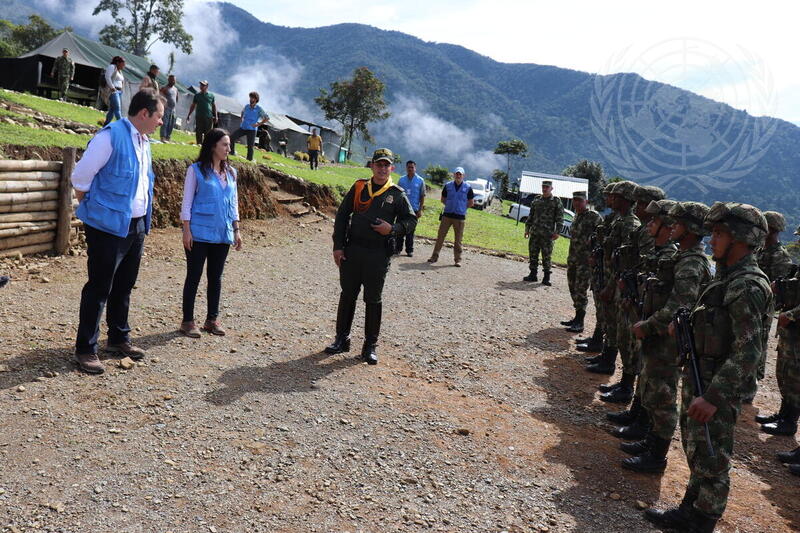
Furthermore, special political missions can use their physical presence as a deterrent to civilian harm. Whether it be through establishing a permanent or temporary office in conflict-prone locations, conducting field visits to conflict-affected areas, or physically accompanying civilians under threat, missions can have a positive impact on civilian safety and security. In the case of Colombia, the presence of UN personnel was reported by government authorities and civil society actors as encouraging better behavior by armed groups, as such actors perceived their actions to be under international observation.46Ibid., 14. In the words of one mission personnel, “sometimes the bad guys behave a bit better when the white cars and blue vests show up.”47Ibid., 16.
Special political missions may also be able to support the evacuation and relocation of at-risk civilians, pending available mission resources. For instance, in exceptional cases, the UN Verification Mission in Colombia has facilitated the emergency relocation of former FARC-EP combatants, social leaders, and human rights defenders facing imminent threats of violence, in coordination with the Colombian government, including through the use of mission helicopters.48Ibid., 21.
Protection Through Capacity Building and Technical Assistance
Thirdly, special political missions can advance the protection of civilians through capacity-building and technical assistance to host authorities and conflict-affected populations, such as by offering trainings. In the context of Haiti, for example, the UN Integrated Office in Haiti (BINUH) and the Office of the UN High Commissioner for Human Rights (OHCHR) have partnered together to provide trainings to the Haitian National Police, with recent trainings conducted on addressing sexual violence, and human rights and the use of force.49UN Security Council, United Nations Integrated Office in Haiti: Report of the Secretary-General, S/2025/641, 14 October 2025, para. 48; and UN Security Council, United Nations Integrated Office in Haiti: Report of the Secretary-General, S/2026/31, 15 January 2026, para. 38. Additionally, throughout 2025, BINUH provided training and mentorship to human rights defenders, civil society leaders, and human rights institutions to improve their capacity to monitor, document, investigate, and address human rights violations, including as relates to gender-based violence.50UN Security Council, United Nations Integrated Office in Haiti: Report of the Secretary-General, S/2025/226, 14 April 2025, para. 41; UN Security Council, United Nations Integrated Office in Haiti: Report of the Secretary-General, S/2025/418, 27 June 2025, para. 45; and UN Security Council, United Nations Integrated Office in Haiti: Report of the Secretary-General, S/2026/31, 15 January 2026, para. 37.
Special political missions can also contribute to capacity-building and advocacy through monitoring, documenting, and raising awareness about human rights abuses. Prior to the Taliban takeover in 2021, for instance, research shows that the UN Assistance Mission in Afghanistan (UNAMA)’s human rights monitoring and reporting helped Afghan government authorities gain a more accurate sense of abuses perpetrated against civilians by Afghan security forces and Coalition Forces, enabling military and police officials to identify and correct inaccurate reports about civilian casualties, thereby strengthening the government’s internal oversight.51Office of the UN High Commissioner for Human Rights, UN Department of Political Affairs, and UN Department of Peacekeeping Operations, Public Reporting on Human Rights by United Nations Peace Operations: Good practices, lessons learned and challenges, November 2017, para. 33. Furthermore, consistent and methodologically-rigorous reporting of human rights abuses has been widely documented as reinforcing perceptions of mission impartiality and credibility, both with conflict parties and civilian populations, as in Afghanistan and Libya.52Charles T. Hunt et al., UN Peace Operations and Human Rights: A Thematic Study, 25 and 37; and former UN personnel, virtual interview by author, March 26, 2026. While human rights activities can serve as a deterrent against future abuses, they can also support mission access to diverse parties and enable work on other aspects of its mandate.53Charles T. Hunt et al., UN Peace Operations and Human Rights: A Thematic Study, 41.
Furthermore, special political missions can work with government authorities, national human rights institutions, and civil society to improve the ability of these entities to monitor and reinforce human rights standards. For example, BINUH and OHCHR in Haiti carried out visits to four prisons in late 2025 to evaluate human rights compliance and identify protection gaps, which led to 88 detained children receiving assistance. As of the end of 2025, 16 children were released from prison into foster care; BINUH continues to engage Haitian authorities on other detained minors, with the aim of curbing excessive pretrial detention and protecting the rights of children.54UN Security Council, United Nations Integrated Office in Haiti: Report of the Secretary-General, S/2026/31, 15 January 2026, para. 31.
Special political missions can also play a vital role in providing technical assistance to host authorities on issues concerning the protection of civilians. In Libya, for instance, UNSMIL helped inform the creation of draft laws on the prevention of violence against women, freedom of association, and reconciliation and transitional justice. Though political gridlock has prevented their adoption so far,55UN Security Council, Strategic review of the United Nations Support Mission in Libya: Report of the Secretary-General, S/2025/611, 30 September 2025, para. 26. UNSMIL has promoted discussion of these thematic issues in country, such as by organizing a dialogue in Tunis with Libyan political representatives, legal experts, and gender experts on the protection of women.56UN Security Council, United Nations Support Mission in Libya: Report of the Secretary-General, S/2026/281, 6 April 2026, para. 62. In Haiti, BINUH has provided technical support to Haitian authorities in considering possible pathways for children to leave gangs and reintegrate into Haitian society, as well as in drafting a related national action plan.57UN Security Council, United Nations Integrated Office in Haiti: Report of the Secretary-General, S/2026/31, 15 January 2026, para. 34.
Additionally, special political missions canwork to improve the capacity of conflict-affected populations to engage in self-protection. In Colombia, through proactive verification of the 2016 peace agreement, the Verification Mission supports former FARC-EP combatants and conflict-affected communities in raising their voices regarding protection needs through advocacy, political engagement, and in certain circumstances, dialogue with armed groups. This can range in practice from providing informal advice, connecting civilians to the appropriate government entities, supporting Indigenous and other at-risk communities in advocating for their rights, and providing skillset-building opportunities through extrabudgetary workshops.58Julie Gregory and Elias Yousif, Verifying Peace and Promoting Protection: The Experience of Colombia’s UN Verification Mission, 17 and 21.
Challenges in Progressing Protection Efforts
Special political missions, however, can face limitations and risks when engaging on protection issues. Notably, few political missions have had explicit protection language incorporated into their mandate to date. While some special political missions have mandates that inherently reinforce the safety and security of civilians — as is the case, for instance, with the UN Verification Mission in Colombia in monitoring implementation of security provisions for former FARC combatants, human rights defenders, and other at-risk populations — often times, action taken in support of the protection of civilians relies on the initiative, innovation, and capacity of personnel in special political missions, most of whom have heavy workloads and little additional time to spare.
Furthermore, special political missions are usually not resourced with personnel specialized in the protection of civilians. This can result in a mission inadvertently deprioritizing protection issues, adopting ineffective strategies, or having limited capacity to support host authorities or conflict-affected populations in improving their practices on the topic. Additionally, in a crisis setting, a lack of training or expertise on the protection of civilians can increase security risks for mission personnel who are compelled by their conscience to act, such as by engaging in protection through presence, physical accompaniment, or evacuation activities.
Special political missions also usually have a limited footprint, with on-the-ground presence typically centered in and around capital cities. This can reduce the ability of these missions to observe or engage conflict actors directly on protection issues, particularly those actors farther away from where the mission is located. Low geographic presence can also necessitate that the mission relies more on government entities and civilian populations to inform where and when it is safe to travel.
A mission’s political and programmatic space for contributing to protection may also be constrained should host authorities be opposed to a mission working on protection issues. In such a case, using terminology already included in the mission’s mandate (e.g., human rights monitoring; coordinating humanitarian assistance; or use of good offices) can provide an opening to work in favor of the protection of civilians while preserving political cooperation. Such space, however, may further narrow if the host authority is itself causing civilian harm. In such instances, it becomes more important than ever that a mission utilize its diplomatic levers to shine a light on threats to civilian safety and security, including engaging the host authorities on their obligations under international humanitarian and human rights law.
Expanding the Protection Spectrum for UN Peace Operations
When UN member states, officials, or civil society experts discuss the protection of civilians and UN peace operations, the overriding assumption is that the conversation will be about UN peacekeeping. This phenomenon is reflective of the work DPO has put in over the last few decades to develop and disseminate a broad, accessible concept for the protection of civilians that peacekeeping missions can adapt to their specific mandate and context, driven in part by demand from troop- and police-contributing countries.
Special political missions, however, can and do also contribute to the safety and security of civilians, as illustrated in the previous section. Nonetheless, there remains a lack of dialogue and shared understanding amongst member states and the Secretariat about whether and how these missions should seek to advance the protection of civilians where present. Diverging opinions on this matter continue to be reinforced by an absence of relevant UN guidance. Over time, this has contributed to a narrative that the protection of civilians should primarily be the domain of peacekeepers, rather than the underlying responsibility of every type of UN peace operation. Such a narrative has been reinforced by the cautious approach of Secretary-General Guterres to peace operations; for instance, the 2026 Review on the future of all forms of United Nations peace operations,59See UN General Assembly and Security Council, Review on the future of all forms of United Nations peace operations: Report of the Secretary-General, A/80/798-S/2026/600, 22 July 2026. a Secretary-General report requested by the General Assembly in the Pact for the Future, framed the protection of civilians solely in relation to peacekeeping operations, thereby missing a critical opportunity to explore how others types of peace operations may be able to advance protection outcomes, beyond human rights activities.
Going forward, this gap in policy discourse increases the likelihood that member states may expect either too little or too much of special political missions in contexts where civilians remain under threat. It also raises the risk that mission personnel will not interpret or carry out the requirements of the UN Agenda for Protection in a united way. This was indeed the case for UNITAMS, where lack of clarity around what the “civilian protection” terminology in its mandate meant in the context of a special political mission contributed to confusion and hindered collaboration across the mission. This made mandate implementation more challenging and resulted in UNITAMS being guided more by the preferences of the Sudanese host authorities than by the mission’s strategic prioritization of protection needs.60Julie Gregory, Civilian Protection in Sudan: Emerging Lessons from UNITAMS, 32-33. For the benefit of civilians in conflict settings, all UN peace operations should be encouraged to do their best to act in favor of the protection of civilians, while being mindful of their mandate, resources, and capacities.
With this aim in mind, the following recommendations highlight opportunities for UN member states and the Secretariat to further support and strengthen the contributions of special political missions on the protection of civilians.
To better enable a full spectrum approach to the protection of civilians across UN peace operations, member states should integrate political dialogue about peacekeeping and special political missions in existing fora where it is not already the case. Member states, for instance, could merge discussion of peacekeeping and special political missions within the General Assembly’s Fourth Committee; expand the focus of the Special Committee on Peacekeeping Operations (C-34) to include special political missions; as well as re-envision the biannual Peacekeeping Ministerial to a Peace Operations Ministerial. Such an approach would assist member states in considering the real impact of all UN peace operations — including as relates to protection outcomes — without letting organizational debates over mission models or unnecessary bureaucratic divides impede political dialogue and action. Moreover, member states should seek to enhance protection outcomes for both peacekeeping and special political missions by focusing on how best to mandate, resource, and adapt missions to protection needs on the ground.
To inform member state understanding and support special political mission personnel in applying a protection lens to their work, the Secretariat should develop written guidance on how special political missions can contribute to the protection of civilians. Such guidance could cover protection through engagement and dialogue, protection through capacity-building and technical assistance, and unarmed approaches to physical protection. Member states, however, will likely need to drive a request for such guidance, such as through the Fourth Committee under the agenda item of “comprehensive review of special political missions,” as DPPA has not sought to address this gap to date.
Protection guidance for special political missions should avoid being overly proscriptive or restrictive in approach, acknowledging the rich diversity of special political missions in existence and the differing contexts in which they are present. It should also apply to all field-based special political missions — regardless of resourcing levels — and suggest creative avenues for advancing the protection of civilians, given the politically- and resource-constrained environments peace operations usually operate in. It may also be helpful to provide a utilitarian framework to 1) assist mission personnel in analyzing the range of safety and security threats facing civilians and how those overlap with a mission’s mandate and to 2) evaluate how a mission’s relationships, resources, and expertise may be leveraged to benefit protection outcomes, while managing possible risks that may arise. Additionally, guidance should consider non-traditional armed violence scenarios, such as urban conflict — as in Libya; situations in which armed groups or criminal actors are ensconced within civilian communities — as in Colombia; or contexts where special political missions may be operating alongside multilateral coalitions undertaking kinetic operations — as in Haiti.
To strengthen the protection impact of special political missions, the Secretariat should compile relevant good practices and lessons learned from past and current special political missions. Ideally done through an independent study, this could take the form of a white paper or non-paper. Such a resource would go a long way in supporting personnel in special political missions that may be grappling with protection of civilians challenges and ensuring that Security Council member states can make evidence-based decisions when deciding whether and how to mandate special political missions to address protection issues.
To ensure a united approach on the protection of civilians, the Secretariat should create a joint protection hub for UN peace operations. Utilizing the restructuring momentum provided by the UN80 initiative, DPO and DPPA could re-allocate existing protection staff to a joint hub,61Such a change would need to be approved by the General Assembly’s Fifth Committee given the structural shift to the posts involved. providing a more unified approach to the protection of civilians at the institutional level and circumnavigating concerns that such a change would result in a further strain on the UN’s already overstretched budgets.62Such an approach has also been taken regarding DPO and DPPA’s gender units, which merged in January 2026, following Secretary-General Guterres’ inclusion of it in the proposed revisions for the 2026 programme budget as part of the UN80 initiative. The formation of a joint protection hub would support greater exchange between peacekeeping and special political missions. Peacekeeping personnel would benefit from an enhanced ability to learn from special political missions, including on engagement and dialogue efforts that have a protection impact. It would also grant the 20+ special political missions present around the world greater access to policy and resource support on protection. Looking towards the future, a joint protection hub could also provide policy and practice support for transitions between diverse types of peace operations, as well as to new and emerging models of peace operations, which may not neatly fit into the UN’s current peacekeeping and special political mission structures, as seen with the Gang Suppression Force and the UN Support Office in Haiti, for instance.
Amidst budget and staffing reductions, existing protection-focused staff within DPO and DPPA could be supported by the development of a roster of volunteer protection of civilians experts. Mirroring the approach of DPPA’s Standby Team of Senior Mediation Advisers, a stand-by group of protection of civilians experts would allow the hub to bring in surge capacity as required, such as in response to protection crises or to support peace operations without full-time protection staff.
A joint protection hub for peace operations would also fill the space left by the anticipated “Protection Support Hub” proposed by Secretary-General Guterres in the Agenda for Protection.63Secretary-General Guterres’ proposed “Protection Support Hub” is envisioned to provide guidance on the protection of civilians to UN officials and entities in crisis settings across the UN system, if stood up. See United Nations Agenda for Protection, 21-22. Given the fact that Guterres’ term is drawing to a close, it is unlikely that the proposed internal, UN-wide “Protection Support Hub” will be set up in the near-term, especially with ongoing funding challenges impacting the entire UN system. A joint DPO-DPPA protection hub would thus enable immediate progress on the protection of civilians for peace operations and ensure that all peace operations, regardless of model or mandate, can access relevant advice and support as needed.
To ensure consideration of protection issues by all peace operations, the Secretariat should encourage missions without explicit protection language in their mandate to develop a plan for implementing the UN Agenda for Protection. While many personnel may react to protection concerns on the ground as they arise, having a mission-specific plan for implementing the Agenda for Protection would enable mission leadership to set relevant strategic and operational priorities based on the mission’s mandate, capacities, and resources. These guidelines should address the “minimum requirements” listed in the Agenda, such as outlining the methodology for assessing and monitoring protection threats, identifying protection priorities in coordination with the UN Country Team and humanitarian actors, and articulating an action plan to advance protection at strategic and operational levels.Such a plan should be shared across the mission, thereby empowering mission personnel to act within their capacities to further protection aims.
Conclusion
New and accelerating challenges to the safety and security of civilians in conflict settings require that the UN continue to adapt. Though the UN has developed a strong body of practice for peacekeeping operations on the protection of civilians, the UN and its member states are too often held back by political deadlock and ways of operating that no longer serve. Outside of peacekeeping, there are also various understandings about what the term “protection” means and how to implement it through the work of different UN bodies, departments, and agencies. Notably, the diverse approaches of DPO and DPPA to protection of civilians issues have reinforced an unhelpful division between UN peacekeeping and special political missions.
While the focus over the past three decades has been on peacekeeping operations implementing protection of civilians mandates, special political missions can and do contribute to protection outcomes, though the latter should not be viewed as a lighter-footprint substitute to peacekeeping. However, without further guidance on how to implement the UN Agenda for Protection, the protection impact of special political missions will likely remain dependent on the individual initiative and innovation of mission personnel serving in them, rather than on a strategic organizational approach. It is thus time for member states to address this significant gap within the UN’s approach to peace operations, such as by calling for the development of protection guidance for special political missions. Furthermore, member states should seek to bridge institutional divides on protection between peacekeeping and special political missions, ensuring that UN peace operations across the spectrum are using their respective comparative advantages to advance protection aims on the ground where possible.
Acknowledgements
The author is grateful to everyone who shared their insights and expertise to inform this paper, including UN personnel at headquarters and in mission settings. Special thanks go to Eugene Chen, Aditi Gorur, Charles T. Hunt, and Lisa Sharland for their feedback on earlier drafts, and to Juliet Weis for guiding the paper through the publication process.
All views reflected herein remain the responsibility of the author.
This paper was made possible by generous support from Global Affairs Canada.





Community Adaptation for a Water Festival Without Clean Water