
Executive Summary
Sudan continues to be wrecked by a civil war that directly and indiscriminately targets civilians. Since the Sudanese Armed Forces (SAF) and Rapid Support Forces (RSF) commenced fighting in April 2023, their respective quests for political and territorial control have wrested the country apart and devastated the lives of Sudanese civilians. And while this report does not examine the abuses and atrocities that taken place since the war started, its retrospective look at the few preceding years offers lessons that could help inform approaches to protection moving forward — both for Sudan and other peace operation contexts.
In 2020, the UN Integrated Transition Assistance Mission in Sudan (UNITAMS) was established and mandated by the Security Council to assist with “civilian protection.” Over the course of its three-and-a-half-year deployment, this special political mission was charged with implementing an ambitious set of protection tasks. These mandated activities ranged from providing capacity building and advisory support to host-authorities in implementing Sudan’s National Plan for the Protection of Civilians through to operational activities like deploying mobile monitoring teams and mediating local conflicts. UNITAMS’ efforts to advance the protection of civilians in Sudan were, however, largely dependent on the commitment and follow-through of Sudan’s political and security authorities.
Furthermore, UNITAMS had to contend with the significant gap left by its peacekeeping predecessor, the UN-AU Hybrid Operation in Darfur (UNAMID), whose force component engaged in the physical protection of civilians across the region. And though UNITAMS was never intended to fully replace UNAMID, UNITAMS was perceived as the follow-on mission to the UN-AU peacekeeping mission. Sustained insecurity and threats to civilian safety and security in Darfur meant that UNITAMS had to navigate the exact same protection challenges as UNAMID, but with a country-wide mandate, far fewer resources, and no capacity to physically protect civilians.
UNITAMS, nonetheless, put in place mechanisms that held initial promise for furthering the protection of civilians in Sudan. The Protection of Civilians Committees set up across the five states of Darfur provided a vital communication link and operational presence for the transitional government’s National Mechanism for the Protection of Civilians. Similarly, the Darfur Permanent Ceasefire Committee provided proof of the essential convening role that a mission can play in bringing together armed force representatives and providing a mechanism for collective monitoring and discussion. Under the leadership of the UNITAMS chair, the Darfur Permanent Ceasefire Committee remained the only venue where the RSF, SAF, and armed struggle movements continued to meet and dialogue after the start of the war. UNITAMS also enabled civil society actors across Darfur to report early warning indicators and human rights violations directly to the mission, positively contributing to the international community’s awareness of conflict-related human rights violations. And UNITAMS’ Police Advisory Unit experienced initial success in advising and training elements of the Sudan Police Force in community policing and other matters. These preliminary achievements — which did not prevent or hold up against the scourge of war — provide food for thought about how special political missions can advance the protection of civilians.
But despite these useful and innovative mechanisms, UNITAMS was not equipped to operate in an environment of active conflict and civil war. Progress in implementing the “civilian protection” provisions in its mandate was hampered by the military coup d’état in October 2021 and later brought to a stop by the eruption of conflict in April 2023. The military coup forced a change in government interlocutors working on the protection of civilians, just as progress was being made to operationalize Sudan’s National Mechanism for the Protection of Civilians. Thereafter, UNITAMS found it increasingly challenging to address protection priorities at the national level. UNITAMS’ work on the ground came to a halt with the eruption of conflict between the SAF and the RSF in Khartoum on 15 April 2023. With the de facto authorities consumed with fighting that indiscriminately targeted civilians, political will for implementing the National Plan for the Protection of Civilians evaporated. The armed conflict also necessitated the evacuation of UNITAMS personnel from the country, with only a small group remaining in Port Sudan. The mission’s mandate came to an end on 1 December 2023, when the Security Council elected to terminate its mandate following a request from Sudan’s de facto authorities.
UNITAMS’ experience offers essential lessons, as UN member states consider options for the protection of civilians in Sudan, as well as the future of peace operations and their role in advancing protection at large. The external and internal challenges UNITAMS faced in implementing its “civilian protection” activities underline the need for peace operations to be fit for purpose — in mandate, design, and resourcing — particularly when deployed to environments with a long-standing or recent history of conflict. Furthermore, it emphasizes the necessity that host-authorities assume their primary responsibility to protect civilians and maintain their commitment to cooperate with the peace operation over time, both of which were glaringly absent as the conflict unfolded.
Emerging Lessons from UNITAMS
Resourcing Missions to Address Gaps in National Capacity to Protect: Sudan’s authorities lacked adequate political will, resources, and funds to make good on the National Plan for the Protection of Civilians or deploy a meaningful number of Joint Security-Keeping Forces in Darfur. In turn, UNITAMS did not have the leverage to hold host-authorities to account for their protection commitments, particularly following the start of the war. Moreover, the simultaneous drawdown of the peacekeeping mission UNAMID and setup of the political mission UNITAMS created a cliff between the UN’s protective presence in Darfur, moving sharply from UNAMID’s substantive protection of civilians mandate to UNITAMS’ inability to physically protect.
In considering the deployment of a UN peace operation to enable or assist with the protection of civilians, it is critical that the Secretariat evaluate the current capacity and resources available to a host-state to protect civilians. The Secretariat should provide the Security Council with a frank assessment of the protective environment and clearly describe how different models of peace operations, including special political missions, could help the host-state in assuming their primary responsibility to protect, noting possible limitations.
In managing the transition between missions with different protection capabilities, the Security Council should allow significant overlap in time between them when possible. A properly resourced handover while both missions are operational would promote stability and security in the conflict environment and strengthen continuity between them. In addition, meaningful overlap between the missions could provide host-authorities with necessary support in fulfilling their protection of civilians responsibilities.
Defining Protection: Lack of clarity around what it means for a special political mission to support the protection of civilians meant that UNITAMS personnel differed in how they envisioned the mission reinforcing or engaging in protection efforts in country. The mission ultimately fell back on Sudan’s National Plan for the Protection of Civilians to guide its efforts, meaning that it was influenced more by host-state desires and the expertise of a few staff, than by a strategic vision for protection.
To clarify understanding, the UN Department of Political and Peacebuilding Affairs should develop institutional guidance on the role and scope for special political missions in advancing the protection of civilians. This would go a long way in informing Security Council thought on mandating political missions to assist with the protection of civilians, as well as enhance understanding among existing political missions about how they can effectively contribute to protection efforts. For its part, the Security Council should use clear language in the mandate that avoids being overly proscriptive, to allow the mission flexibility in developing a protection approach that best responds to evolving dynamics on the ground.
Mainstreaming Protection Across Mission and UN Country Team: UNITAMS’ bifurcated structure and leadership approach led to the separation of “political” and “protection” issues within the mission. Protection aims were thus not integrated into the mission’s political work in a strategic manner. Additionally, a “One UN Protection of Civilians” strategy failed to gain consensus as UN agencies disagreed over how to leverage and coordinate their respective comparative advantages on protection.
Any future mission with protection language in its mandate should create and implement a whole-of-mission strategy for the protection of civilians. In this way, protection aims will be the responsibility of all sections to address and advance. This strategy should be developed by mission leadership and articulate the mission’s tailored approach to protection, laying out objectives and priority areas of work, as well as establishing coordination mechanisms across the mission. Such a strategy could also inform the development of a “one UN” approach to protection in country, with each UN agency evaluating how they can tap existing capacities and funds to benefit mission objectives on protection.
Introduction
Sudan remains ravaged by war, with fighting between the Sudanese Armed Forces (SAF) and Rapid Support Forces (RSF) having taken over the country since April 2023. Civilians remain directly targeted and disproportionately impacted, with over 18,800 people killed1 “The Resident and Humanitarian Coordinator for Sudan, Clementine Nkweta-Salami, condemns attacks at a hospital and livestock market in Al Fasher, North Darfur,” Sudan Situation Report, UN Office for the Coordination of Humanitarian Affairs, 29 July 2024, https://reports.unocha.org/en/country/sudan/. and approximately 11.3 million displaced since the conflict started.2 “Sudan Situation,” Operational Data Portal, UN Refugee Agency, 30 September 2024, https://data.unhcr.org/en/situations/sudansituation. Sexual- and gender-based violence (SGBV) is widespread, with both parties also committing grave violations against children.3 UN Human Rights Council, Report of the Independent International Fact-Finding Mission for the Sudan, A/HRC/57/23, 5 September 2024, paras. 57 and 64. Critical civilian infrastructure continues to be destroyed and looted, leaving civilians without water, electricity, telecommunications, and medical facilities across the country.4 Ibid., paras. 45-48. Hunger has also become ever present, with over half of the population facing acute hunger and famine in North Darfur likely to spread.5 “Sudan Emergency,” World Food Programme, accessed 16 September 2024, https://www.wfp.org/emergencies/sudan-emergency.
Multilateral political talks aimed at achieving a ceasefire between the conflict parties have yet to yield the desired outcome, motivating the UN Security Council and African Union (AU) Peace and Security Council in June 2024 to call for the identification of other practical measures that could enable the protection of civilians in Sudan.6 UN Security Council, Resolution 2736 (2024), S/RES/2736 (2024), 13 June 2024, para. 2; AU Peace and Security Council, “Communique of the 1218th Meeting of the PSC, held at the level of Heads of State and Government, on 21 June 2024, on Consideration of the Situation in Sudan,” PSC/HoSG/COMM.1218 (2024), paras. 9 and 20. In recognition of the heinous impact of the war on civilians, the UN Human Rights Council’s Fact-Finding Mission for the Sudan called for the immediate deployment of “an independent and impartial force with a mandate to safeguard civilians” in September 2024.7 “Sudan: UN Fact-Finding Mission outlines extensive human rights violations, international crimes, urges protection of civilians,” UN Office of the High Commissioner for Human Rights, 6 September 2024, https://www.ohchr.org/en/press-releases/2024/09/sudan-un-fact-finding-mission-outlines-extensive-human-rights-violations.
Only a few years ago, the future looked quite different for Sudan. In mid-2019, the country was transitioning to democratic governance, following the military ousting of Omar al-Bashir from a 30-year autocratic rule and the subsequent formation of a military-civilian transitional government. The international community welcomed this new political trajectory for Sudan, with many viewing it as a critical opportunity to restore stability and peace in Darfur. In this context, the Security Council began conceptualizing a Chapter VI political mission to support Sudan’s political transition. At the same time, the UN Security Council and AU Peace and Security Council were also overseeing the transition of the UN-AU Hybrid Operation in Darfur (UNAMID), which had been engaged in the protection of civilians in the Darfur region since 2007. But even as this hybrid peacekeeping mission was drawing down, insecurity and threats to civilians remained significant throughout Darfur, leading the Security Council to mandate its new political mission to support government-led protection of civilians efforts.
Established in June 2020, the UN Integrated Transition Assistance Mission in Sudan (UNITAMS) was designed to assist the transitional government with four main strategic objectives. Firstly, it was mandated to provide good offices and technical expertise to advance the political transition, draft a new constitution, and promote human rights. Secondly, it was tasked with supporting the facilitation of peace processes and implementation of future peace agreements. Thirdly, the mission was required to assist Sudanese-led peacebuilding and support national and local authorities in “civilian protection” efforts and in strengthening the rule of law. Fourthly, UNITAMS was to support the transitional authorities in procuring economic and development aid, as well as in coordinating humanitarian action.
UNITAMS, however, faced significant hurdles in implementing its mandate. Relations with the host-authorities became more challenging following the military coup in late 2021, and the mission was prevented from staying in country after the breakdown of the political transition and start of the war in April 2023. UNITAMS thereafter worked from outside the country before its drawdown in December 2023. UNITAMS’ experience thus offers crucial insights into the potential role and limits of a UN political mission in advancing the protection of civilians, particularly in a context with entrenched and volatile conflict dynamics.
Given the recency of the mission’s deployment (from October 2020 to December 2023), few studies to date have explored UNITAMS’ role in Sudan, including its efforts to motivate progress on the protection of civilians.8 See Daniel Forti, Walking a Tightrope: The Transition from UNAMID to UNITAMS in Sudan, International Peace Institute, February 2021; Dirk Druet, “UN Integrated Transition Assistance Mission in Sudan” in United Nations Special Political Missions and Protection: A Principled Approach for Research and Policymaking, International Peace Institute, July 2021, 16-18; “Prioritizing and Sequencing of Security Council Mandates: The Case of UNITAMS,” International Peace Institute, Stimson Center and Security Council Report, May 2021; Sarah-Myriam Martin-Brûlé, Andrew E. Yaw Tchie, Olajumoke Ayandele, and Thea Willoch Njaastad, UNITAMS Mandate Renewal Study: Fostering a Process of Trust and Inclusivity, Effectiveness of Peace Operations Network, 2022. This paper steps into this gap, drawing from 17 virtual interviews conducted between December 2023 and February 2024, in addition to extensive desktop research. Those who participated in the research include nine UN personnel, either from UNITAMS or UN agencies in country; six Security Council member state representatives; and four NGO representatives in or from Sudan (with one interview facilitated via email). All interview data has been anonymized to safeguard the sensitive nature of discussions.
This research notably faced limitations due to the war in Sudan. As the security situation made in-person research impossible, all interviews were conducted virtually. This approach, however, limited engagement with those in Sudan, especially with Sudanese civil society, restricting the research to those who have access to technology and an internet connection. Overall, widespread internet and communication blackouts, displacement of contacts, and language barriers posed a challenge in connecting with those on the ground.
While this report does not address the appalling toll of the war on civilians, its retrospective look back at the preceding years provides critical insight into the Security Council’s attempt to remain engaged on protection concerns in Sudan following UNAMID’s drawdown. Though UNITAMS was unsuccessful at preventing the outbreak of war between the SAF and RSF, its experience can help inform how other UN political missions could further contribute to the protection of civilians. As such, UNITAMS’ efforts to implement other aspects of its mandate remain outside the scope of this report, as does the individual efforts of UN agencies, funds and programmes to advance protection aims. Similarly, multilateral efforts to achieve a ceasefire between the SAF and RSF are not explored herein. These gaps reflect important areas for future research.
Framing Protection
Diverse conceptions about how different UN departments and entities can enable or contribute to protection have led to diverging expectations across the UN system. As explored by Dirk Druet, there are a variety of terms used to refer to the critical work of protecting civilians, including humanitarian protection, protection of human rights, and protection of civilians (commonly referred to as POC for short).9 For an overview of these terms and their resulting implications, see Dirk Druet, United Nations Special Political Missions and Protection: A Principled Approach for Research and Policymaking, International Peace Institute, July 2021, 4-8. For an examination of how UN peace operations have contributed to the promotion and protection of human rights, see Charles T. Hunt, Emma Bapt, Adam Day, Fiifi Edu-Afful, Abigal Gérard-Baldé, Hafsa Maalim, Wendy MacClinchy, Nadia Nata and Claudia Pfeifer Cruz, UN Peace Operations and Human Rights: A Thematic Study, Effectiveness of Peace Operations Network, 2024. The plurality and overlap of these terms have led to inconsistent usage and at times confusion around what is meant, both by those engaged in protection and those they seek to protect.
In early 2024, the UN took an essential step to address these challenges by establishing a UN-wide approach through the Agenda for Protection.10 United Nations Agenda for Protection: Strengthening the ability of the United Nations System to protect people through their human rights, February 2024. Recognizing protection as an imperative of the UN’s work, and without prejudice to the primary responsibility of member states to protect civilians, the Agenda provides an overarching framework of “protecting through human rights.” It frames the UN’s role in protection as “when, through specific actions, individuals who otherwise would be at risk or subject to deprivation of their rights, are able to fully exercise them.”11 Ibid., 7. The Agenda thus highlights that protection is the work of all UN entities.
Within the context of international peace and security, the Security Council can address protection issues through the “protection of civilians in armed conflict” agenda. The Council adopted the first thematic resolution on the topic in 1999,12 See UN Security Council, Resolution 1265 (1999), S/RES/1265 (1999), 17 September 1999. affirming that the protection of civilians is a matter of international peace and security. This framework seeks to achieve a broad set of aims, including enforcing adherence to relevant international law and Council decisions; protecting women, children and other marginalized populations, as well as critical civilian infrastructure; enabling protection through UN peace operations; and facilitating access to humanitarian aid. The protection of civilians by UN peace operations — a term inclusive of peacekeeping and special political missions — thus falls within this framework.13 The Secretary-General reports on the work and impact of both UN peacekeeping and special political missions in the annual report to the Security Council on the protection of civilians in armed conflict.
Under this agenda, the UN Department of Peace Operations has articulated the role for UN peacekeeping in the protection of civilians through a dedicated policy, 14 UN Department of Peace Operations, Policy on the Protection of Civilians in United Nations Peacekeeping, updated 1 May 2023. building upon applicable Security Council resolutions and lessons emerging from peacekeeping. This policy informs the protection of civilians within UN peacekeeping, laying out a three-tiered operational concept of: 1) “protection through dialogue and engagement,” 2) “provision of physical protection,” and 3) “establishment of a protective environment.” Peacekeeping missions with an explicit protection of civilians mandate are widely known for being authorized “to use all necessary means, up to and including deadly force, to protect civilians under threat or imminent threat of physical violence.”15 UN Department of Peace Operations, The Protection of Civilians in United Nations Peacekeeping Handbook, 2020, 2. However, it should be recognized that the peacekeeping approach to physical protection also encompasses unarmed approaches, such as protection through presence, interpositioning, and facilitating refuge or safe passage, as well as other activities that do not involve the use of force.16 UN Department of Peace Operations, Policy on the Protection of Civilians, para. 49.
In turn, the UN Department of Political and Peacebuilding Affairs does not have guidance or a policy on the protection of civilians in special political missions. And while special political missions do not have authorization to use force (except in self-defense), their work nonetheless helps advance the Security Council’s objective of the protection of civilians in armed conflict.17 See Druet, United Nations Special Political Missions and Protection; Daniele Rumolo, Reflections on Protection of Civilians in UN Special Political Missions, PAX, February 2023. It is, however, worth noting that few political missions have had explicit language on the protection of civilians incorporated into their mandates. Relevant examples other than UNITAMS include the UN Assistance Mission in Afghanistan’s (UNAMA) mandate of “monitoring of the situation of civilians in armed conflict”18 This language was introduced in UNAMA’s mandate in 2007 and has been widely interpreted to mean that the mission has a “protection of civilians” mandate. See UN Security Council, Resolution 1746 (2007), S/RES/1746 (2007), 23 March 2007, para. 4. This interpretation has also been reinforced by the mission’s use of terminology; for instance, from 2007 to 2021, UNAMA regularly produced human rights reports entitled “Afghanistan: Protection of Civilians in Armed Conflict.” See “Reports on the Protection of Civilians in Armed Conflict,” UNAMA, accessed 27 September 2024, https://unama.unmissions.org/reports-protection-civilians-armed-conflict. and the UN Assistance Mission in Somalia’s (UNSOM) mandate to support Somalia in ensuring “that plans are in place to protect civilians and communities in areas which are the focus of military operations…”19 This language was introduced in UNSOM’s mandate in 2022. See UN Security Council, Resolution 2657 (2022), S/RES/2657 (2022), 31 October 2022, para. 7.
By bringing special political missions further into the discussion on the protection of civilians in armed conflict, there is an opportunity to more effectively utilize the full spectrum of UN peace operations to advance the protection of civilians. UN member states would thus benefit from a greater understanding of the role and limitations special political missions may face in motivating progress on the protection of civilians. This report seeks to contribute to this evolving conversation through examination of UNITAMS’ experience in interpreting and carrying forward its mandate to assist “civilian protection” — a term for which there is no clear definition.
UNITAMS’ Establishment
Since 2002, the international community has deployed eight different peace operations to Sudan, with five of these established by the Security Council (see Annex 1 for a full list). UNITAMS served as the eighth peace operation hosted by Sudan within the past three decades, created just as its peacekeeping predecessor UNAMID was drawing down.
Transitioning from UNAMID
The UN-AU Hybrid Operation in Darfur (UNAMID) was deployed from 2007-2020 as a joint UN and AU peacekeeping force.20 For further discussion of UNAMID’s role in Darfur and lessons from its deployment and drawdown, see Ralph Mamiya, Wibke Hansen, Andrews Atta-Asamoah, Daniel Gebreegziabher, Seba Issa, Tore Listou, Thomas Mandrup, and Per Skoglund, Assessing the Effectiveness of the United Nations-African Union Hybrid Operation in Darfur (UNAMID), Effectiveness of Peace Operations Network, 2020; Geneva Centre for Security Sector Governance and UN Sudan, UN/AU Transition in Darfur: Lessons from Assistance on Rule of Law and Human Rights through the State Liaison Functions, December 2020; UN Security Council, “Letter dated 28 December 2021 from the Secretary-General addressed to the President of the Security Council,” S/2021/1099. The hybrid mission was formed as a compromise between Sudan’s strong preference for an AU force and the need to rapidly augment the limited capacity of the AU Mission in Sudan (AMIS).21 UN Department of Peace Operations, “UNMIS Background,” United Nations Mission in the Sudan, accessed 28 August 2024, https://peacekeeping.un.org/en/mission/past/unmis/background.shtml. At its height, UNAMID had an annual budget of well over $1 billion and almost 23,000 troops and police. However, for years, UNAMID faced severe operational blocks22 UN Security Council, “Letter dated 28 December 2021 from the Secretary-General,” S/2021/1099, para. 12. and demands made by the al-Bashir government for its departure. Starting in 2014, the Security Council began engaging in discussions about the mission’s sequenced drawdown and exit strategy,23 In November 2014, al-Bashir publicly called for UNAMID to depart, despite sustained high levels of violence in Darfur, claiming the mission acted as a “security burden.” “UN deputy chief says Sudan’s request for UNAMID’s departure ‘understandable’,” Sudan Tribune, 2 January 2025, https://sudantribune.com/article52198/. with the process picking up in 2017 following member state pressure to cut the UN peacekeeping budget.24 “UN agrees to cut down Darfur peacekeeping force,” Aljazeera, 29 June 2017, https://www.aljazeera.com/news/2017/6/29/un-agrees-to-cut-down-darfur-peacekeeping-force.
By late 2019, the UN and AU jointly assessed that the “overall security situation in Darfur remained volatile.”25 UN Security Council, Special report of the Chairperson of the African Union Commission and the Secretary-General of the United Nations on the African Union-United Nations Hybrid Operation in Darfur, S/2019/816, 15 October 2019, para. 8. The economic crisis and key conflict drivers — such as land and resource access, environmental degradation, and human rights violations and abuses — continued to exacerbate tensions between tribal communities and farmer and pastoral communities across the region. Ongoing insecurity in the Jebel Marra area in Central Darfur between government security forces and the armed group SLM-Abdel Wahid added a further layer of complexity, particularly as government attention redirected back to Khartoum following the establishment of the transitional government.26 UN Security Council, Special report of the Chairperson of the African Union Commission and the Secretary-General of the United Nations on the strategic assessment of the African Union-United Nations Hybrid Operation in Darfur, S/2019/445, 30 May 2019, paras. 20–26. However, the Security Council perceived that the organization of the transitional government, led by Prime Minister Abdalla Hamdok, held the promise of a possible “transition from peacekeeping to peacekeeping” in Darfur, with some member states determined that the mission should close by June 2020.27 UN Security Council, 8643rd meeting, S/PV.8643, 17 October 2019. UNAMID’s withdrawal was thus motivated more by political and budgetary considerations than a positive change in the security context.
Former UNAMID personnel and INGO representatives described significant fear and concern from Darfuri civilians regarding UNAMID’s departure. Concerns were particularly elevated among communities of internally displaced persons (IDPs), who relied on the mission’s presence for their security.28 Interviews with UNITAMS personnel, 2 February 2024, and INGO representatives, 14 February 2024. According to an INGO representative present in Darfur at the time, the overall feeling in Darfur was that “mother UN has abandoned us.”29 Interview with INGO representative, 22 December 2023. Responding to security concerns from armed groups participating in the peace process in Darfur, it is notable that Prime Minister Hamdok requested the extension of UNAMID’s mandate by several months to October 2020.30 “Hamdok requested aligning UNAMID withdrawal with Sudan’s peace process,” Sudan Tribune, 18 October 2019, https://sudantribune.com/article66460/. Given Hamdok’s request and the AU’s support for the mission remaining through December 2020, the Security Council was able to agree to keep UNAMID in place until the end of 2020.
Negotiating the Initial Mandate
The UN started considering a follow-on presence to UNAMID in the summer of 2019 after it was clear that the Security Council and transitional government would not support the long-term presence of the peacekeeping mission.31 Interview with Security Council member state representative, 29 January 2024, first one. Starting in September 2019, the UN and AU conducted a series of consultations with Sudan’s transitional government to foster agreement on a follow-on mechanism that would support the “Government’s priorities for ending conflict and achieving peace across the whole country.”32 UN Security Council, Special report on the African Union-United Nations Hybrid Operation in Darfur, S/2019/816, para. 30. The initial consultations yielded UN-AU agreement that a future deployment should 1) uphold national ownership, 2) have a realistic and achievable mandate, 3) not include a military force component, 4) be created under Chapter VI or VIII of the UN Charter, 5) not exceed the political transition period, and 6) have a “light presence and geographical footprint.”33 Ibid., para. 46.
In January 2020, Prime Minister Hamdok notified the Security Council of the transitional government’s willingness to accept a “reconfiguration” of the UN’s footprint in country. In his initial letter, Hamdok proposed the establishment of a Chapter VI special political mission with a countrywide mandate to assist with peacebuilding, support the Juba peace process, and help garner international economic assistance. Support for the protection of civilians, police capacity-building, and human rights monitoring were also mentioned, among a variety of other elements.34 UN Security Council, “Letter dated 28 January 2020 from the Charge d’affaires a.i. of the Permanent Mission of the Sudan to the United Nations addressed to the President of the Security Council,” S/2020/77, 28 January 2020, 3–4.
The United Kingdom and Germany, co-penholders on Sudan at the time, as well as France and the United States, saw the protection of civilians as an overriding goal for the new peace operation, given the absence of a viable security alternative for Darfur.35 Interviews with Security Council member state representatives, 17 January 2024, 19 January 2024, and 29 January 2024 (first and second one). The United States, for instance, pushed “for a robust police mission in Darfur” to support the transitional government in tackling the ongoing insecurity there.36 UN Security Council, “Letter dated 28 April 2020 from the President of the Security Council addressed to the Secretary-General and the Permanent Representatives of the members of the Security Council,” S/2020/336, 22. Among elected members, Indonesia and Estonia also advocated that an armed UN police presence could be instrumental in helping the government progressively assume its responsibility for ensuring security in the region.37 Ibid., 11, 15.
Furthermore, the co-penholders wanted to ensure there was a credible UN presence in country following UNAMID’s departure. According to one Council member representative, the fear was that without significant capacity, “the UN would be relegated to a working office in Khartoum.”38 Interview with Security Council member state representative, 29 January 2024, second one. The co-penholders thus originally envisioned a hybrid political mission with up to 2,500 UN police and one military battalion — between 500 and 800 UN troops — as a quick reaction force in Darfur.39 Edith M. Lederer and Justin Lynch, “Proposed UN resolution would support Sudan’s peace efforts,” Associated Press, 18 March 2020, https://apnews.com/general-news-439923c48764b6d9470ac646fb69990c. As Germany expressed in the lead-up to the establishment of UNITAMS, “given that we [the Security Council] have taken on this responsibility [on the protection of civilians], we must continue to live up to it,” noting that a resurgence of violence could derail the country’s political transition.40 UN Security Council, “Letter dated 28 April 2020 from the President of the Security Council,” S/2020/336, 13.
Sudanese authorities were also allegedly open to the idea of integrating armed police into the follow-on mechanism, according to one Council member representative privy to initial closed-door consultations.41 Interviews with Security Council member state representatives, 19 January 2024 and 29 January 2024, first one. This came crashing down, though, when the Associated Press leaked a draft version of the mandate on 18 March 2020.42 See Edith M. Lederer and Justin Lynch, “Proposed UN resolution would support Sudan’s peace efforts,” AP News, 18 March 2020, https://apnews.com/general-news-439923c48764b6d9470ac646fb69990c. Sudan’s transitional government faced significant backlash from those who perceived the continued presence of uniformed components in country as foreign interference. The consequence for the co-penholders was that “all the delicate groundwork . . . laid with Sudan was annihilated,” leaving only “unarmed civilian protection” and advisory support as a way to include protection in the mandate.43 Interview with Security Council member state representative, 29 January 2024, first one. Only two days later, on 20 March 2020, Hamdok sent through a second letter that presented a narrowed vision for the mission, with protection and human rights nowhere referenced.44 UN Security Council, “Letter dated 20 March 2020 from the Permanent Representative of the Sudan to the United Nations addressed to the President of the Security Council,” S/2020/221, 20 March 2020, 2.
Other members of the Council continued to question what positive impact a small number of armed police could realistically have on the ground. Notably, the A3+1 (Niger, South Africa, and Tunisia, plus Saint Vincent and the Grenadines) remained opposed to the inclusion of formed police unit(s), perceiving the reputational risk to the UN in creating false expectations about its ability to protect civilians to outweigh the potential benefits.45 UN Security Council, “Letter dated 28 April 2020 from the President of the Security Council,” S/2020/336, 19.
Russia and China were, however, most outspoken against including uniformed components, deferring to the publicly expressed preference of the host-state. In the words of a Russian representative, the “opinion of the government in Khartoum, as the host-party, should be decisive in every case.”46 UN Security Council, 8643rd meeting, S/PV.8643. Council members in favor of a more robust presence thus had to navigate balancing what the government and the rest of the Council would accept versus what was required to address security needs.
On the UN’s side, the Secretary-General also recommended avoiding the deployment of uniformed components as part of the post-UNAMID mission. In the AU-UN March 2020 report to the Council,47 It was in this report that the AU and UN introduced the term “civilian protection” as a key principle of the follow-on mechanism, conceivably as a way to denote that the new mission should not be expected to engage in the physical protection of civilians. it was noted that:
“If a follow-on mission includes a mandate indicating the physical protection of civilians, such a mandate, which has not been requested to date by the transitional Government of the Sudan, would require a very significant deployment, commensurate with the size of the area of operations. Short of this, a post-UNAMID mechanism would not be in a position to provide such protection and should therefore not be expected to do so.”48 UN Security Council, Special report of the Chairperson of the African Union Commission and the Secretary-General of the United Nations on the African Union-United Nations Hybrid Operation in Darfur and a follow-on presence, S/2020/202, 12 March 2020, para. 64.
In late May 2020, the Security Council’s calculus on Sudan changed when the transitional government sent through a letter to the Council containing “the national plan of the Sudan for protecting civilians after the exit of the African Union-United Nations Hybrid Operation in Darfur (UNAMID)” (referred to herein as the National Plan for the Protection of Civilians).49 See UN Security Council, Resolution 2524 (2020), S/RES/2524 (2020), 3 June 2020. This plan was presented to the Council as a guarantee that Sudan had both the political will and capacity to protect its civilians,50 Interview with UNITAMS personnel, 13 February 2024. with the Council interpreting it as a sign that the transitional government could and would take credible action to do so.51 Interview with Security Council member state representative, 17 January 2024. Despite initial pushback from some members, the Council used Sudan’s national protection of civilians plan as the basis for including a protection focus within UNITAMS’ mandate.52 Interview with Security Council member state representative, 29 January 2024, first one.
Sudan’s National Plan for the Protection of Civilians
The National Plan for the Protection of Civilians outlined a highly ambitious roadmap for improving rule of law, protection of civilians, and peacebuilding in Darfur. The plan is based on eight main elements through which the transitional government promised to “assume full responsibility for the protection of its civilian citizens.”53 UN Security Council, “Letter dated 21 May 2020 from the Permanent Representative of the Sudan to the United Nations addressed to the President of the Security Council,” S/2020/429, 1 June 2020, 2. The plan’s elements include wide-ranging discussion of:
- Addressing the needs of IDPs and refugees
- Enabling human rights and rule of law
- Disarmament, demobilization and reintegration (DDR)
- Ending violence against women and children
- Facilitating humanitarian assistance
- Improving conflict resolution mechanisms
- Addressing challenges facing herders and nomads
- Investing in essential services, reconstruction, and development
Sudan is the first peacekeeping host-country to provide a national plan on the protection of civilians to the Security Council.54 Damian Lilly, Considering the Protection of Civilians during UN Peacekeeping Transitions, International Peace Institute, January 2021, 8. By taking this initiative, Sudan’s transitional government both exerted its agency as a sovereign state and, crucially, demonstrated a willingness to deal with past atrocities and engage in the protection of civilians. Submitted to the Security Council a few weeks before the planned vote on a follow-on mission to UNAMID, the document was interpreted by the Council as proof that the transitional government would take the necessary steps to protect civilians in Darfur, no longer requiring a foreign peacekeeping presence.55 Interviews with UNITAMS personnel, 26 January 2024 and 13 February 2024. Following UNITAMS’ creation, the transitional government sought to highlight its continued political commitment to the plan, voluntarily submitting periodic progress reports to the Security Council.
Authorizing the Mission
The Security Council established UNITAMS in June 2020 through Resolution 2524, tasking the political mission to “assist peacebuilding, civilian protection and rule of law, in particular in Darfur and the Two Areas” (the latter referring to South Kordofan and Blue Nile states) as one of its four strategic objectives. It is notable that the Council utilized the term “civilian protection,” for which there was no precedent in Council resolutions, arguably as a way to differentiate UNITAMS’ mandate from UNAMID’s past Blue Helmet capabilities.56 Druet, United Nations Special Political Missions and Protection, 2. The Council also doubled down on the term by renaming Sudan’s national protection of civilians plan to the “National Plan for Civilian Protection” within the mandate. Under this framing, UNITAMS was mandated to provide advisory and technical support to Sudan’s transitional government and its security institutions in mitigating and preventing violence against civilians. The mandate lists out myriad related activities, which can be categorized into three main areas.
- Enhancing the rule of law and strengthening security institutions, e.g., by providing capacity building and advisory support to the Sudanese Police Force and the Joint Security-Keeping Force (JSKF), as well as in helping foster trust between local communities and state authorities through community policing and “other methods of unarmed civilian protection;”
- Supporting the creation of a secure environment, e.g., by assisting government authorities in carrying out the national protection of civilians plan and creating clear benchmarks to monitor progress; and
- Enabling the “promotion and protection of human rights,” e.g., by monitoring and reporting on human rights violations in conflict-affected areas, helping draft and implement relevant government action plans, and supporting the delivery of services to survivors of sexual violence.57 UN Security Council, Resolution 2524 (2020), para. 2 (iii) b–d; UN Security Council, Resolution 2579 (2021), S/RES/2579 (2021), 3 June 2021, para. 3 (iii) b–d.
Some of UNITAMS’ mandated protection activities were also operational. For instance, the Council envisioned that UNITAMS would deploy “mobile monitoring teams,” mediate localized conflicts, establish early warning systems with the support of local populations, and conduct outreach to civilians under threat.58 UN Security Council, Resolution 2524 (2020), para. 2 (iii) c; UN Security Council, Resolution 2579 (2021), para. 3 (iii) c. Looking back on the development of UNITAMS’ mandate, one Council member shared, “we got the best out of the Council in terms of protection, but we were under no illusion — it was a band aid at most . . . It was the only option available, so we [the Council] tried to give it [the mission] as many functions as possible.”59 Interview with Security Council member state representatives, 19 January 2024.
The Security Council further specified that UNITAMS should “ensure effective and integrated cooperation of United Nations agencies, funds and programmes . . . in carrying out, as relevant, the strategic objectives of UNITAMS . . . ”60 UN Security Council, Resolution 2524 (2020), para. 2 (iv) c. It is important to note that operating in an integrated manner was a first for the UN Country Team in Sudan, as UNAMID had not been an integrated mission.61 The term “UN Country Team” refers to the full collection of UN agencies, funds, and programmes working on sustainable development, emergency response, recovery, and transition in a programme country, and is led by the UN Resident Coordinator. With UNITAMS, the intention was for the UN Country Team to contribute to the achievement of the mission’s mandate, primarily through programmatic work that supported the creation of a protective environment. This arrangement also aimed to leverage UN agencies’ networks and established field presences across the country.
As part of the mission’s first mandate renewal in June 2021, the Council requested that UNITAMS prioritize support to ceasefire monitoring in Darfur and implementation of the national protection of civilians plan, alongside other key areas.62 UN Security Council, Resolution 2579 (2021), para. 4, (i) and (ii). UNITAMS’ two subsequent mandate renewals were highly contentious, resulting in technical rollovers. Both times, Sudan expressed opposition to the draft shared by the UK penholder. In 2022, the draft text included references to the military coup in October 2021 and violence by security forces against unarmed protestors, while in 2023 the United Kingdom wanted to reflect the impact of fighting between the SAF and RSF on the security and humanitarian situation. In both instances, Sudan refused to engage with the penholder, instead requesting a rollover of the mandate. It found favorable support for these requests with China, Russia, and the A3.63 “Sudan: Vote on UNITAMS Mandate Renewal,” Security Council Report, 2 June 2022, https://www.securitycouncilreport.org/whatsinblue/2022/06/sudan-vote-on-unitams-mandate-renewal-2.php; “Sudan: Vote on UNITAMS Mandate Renewal,” Security Council Report, 2 June 2023, https://www.securitycouncilreport.org/whatsinblue/2023/06/sudan-vote-on-unitams-mandate-renewal-3.php.
Factors Impacting UNITAMS’ Support to Protection
Once authorized, UNITAMShad a slow start-up, hampered by budgetary and staffing realities (see Annex 2 for changes to UNITAMS’ budget and staffing over the years), difficulties in obtaining visas for UN personnel to deploy in country,64 Interview with Security Council member state representative, 29 January 2024, first one; UN Security Council, Situation in the Sudan and the activities of the United Nations Integrated Transition Assistance Mission in the Sudan: Report of the Secretary-General, S/2023/154, 28 February 2023, para. 61. health concerns related to COVID-19, and a delay in appointing senior mission leadership. The Special Representative of the Secretary-General (SRSG) and Head of Mission, Volker Perthes, was appointed following an eight-month delay, arriving in mission in early February 2021.65 UN Security Council, Situation in the Sudan and the activities of the United Nations Integrated Transition Assistance Mission in the Sudan: Report of the Secretary-General, S/2021/199, 1 March 2021, para. 35. The Council experienced difficulty in selecting a head of mission that had the backing of all Council members and was accepted by the host-government. Sudan’s transitional government reportedly maintained a set preference that the head of mission come from a European member state, with the hope that such an individual could galvanize funding for Sudan.66 Interview with Security Council member state representative, 29 January 2024, first one.
Similarly, the Deputy Special Representative of the Secretary-General, Resident and Humanitarian Coordination (DSRSG/RC/HC), Khardiata Lo N’Diaye, arrived in mission in mid-March 2021.67 UN Security Council, Situation in the Sudan and the activities of the United Nations Integrated Transition Assistance Mission in the Sudan: Report of the Secretary-General, S/2021/470, 17 May 2021, para. 45. Lo N’Diaye was later succeeded by Clementine Nkweta-Salami, appointed by the Secretary-General on 1 May 2023.68 “Leadership,” United Nations Integrated Transition Assistance Mission in Sudan, accessed 28 August 2024, https://unitams.unmissions.org/en/leadership.
Mission Leadership and Structure
Mission leadership had a substantial impact on how the mission interpreted and incorporated “civilian protection” within the mission’s body of work. According to a senior mission leader, UNITAMS leadership did not discuss developing a mission strategy on the protection of civilians, instead adopting Sudan’s National Plan for the Protection of Civilians as the guide for its work.69 Interview with UNITAMS personnel, 27 February 2024. By relying on government priorities — vast in number and scope — to drive the mission’s work on protection, the mission arguably lacked a targeted approach that may have been helpful in managing government expectations.
The mission’s bimodal structure also led to the siloing of protection work within the mission, re-enforced by internal reporting lines and division of labor at the senior mission leadership level. UNITAMS was designed around a two-pillar system: 1) a political pillar led by the SRSG, under which fell the Office of Support to the Political Transition, Police Advisory Unit, Office of the Chief of Staff, Integrated Electoral Assistance Division, and the later established Darfur Permanent Ceasefire Committee (Darfur PCC); and 2) a protection pillar headed by the DRSG/RC/HC under which the Office for Support to Civilian Protection (OSCP) sat.70 Interviews with UNITAMS personnel, 17 January 2024 (two interviews) and 13 February 2024; “Organizational Chart in 2021,” UNITAMS, internal UN document, hardcopy on file with author. As head of the political pillar, the SRSG was focused on overseeing the mission’s work on the political transition and support to peace processes, while the DSRSG/RC/HC oversaw the mission’s initiatives on protection, peacebuilding, and coordination of the UN Country Team.71 Forti, Walking a Tightrope, 18.
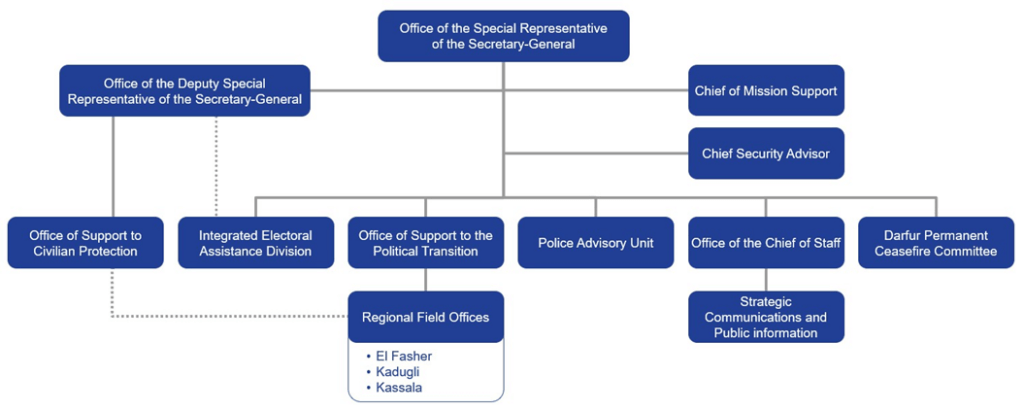
Figure 1: UNITAMS organizational chart72 Adapted from “Organizational Chart in 2021,” UNITAMS.
This setup created several layers of bureaucracy between the head of mission and those leading on protection work. Oversight of the mission’s “civilian protection” work was thus largely deferred to the DSRSG/RC/HC, with no apparent attempt to mainstream protection priorities across the whole-of-mission, including the political pillar. For instance, the use of good offices or high-level advocacy on protection of civilians matters appeared to be limited, mostly centering around the de facto authorities’ use of violence against protestors following the October 2021 coup.73 Interview with UNITAMS personnel, 27 February 2024. Analysis substantiated by a review of the Secretary-General’s reports on the situation in the Sudan.
Within UNITAMS, OSCP was designed as the hub through which the mission would assist and advise on protection efforts in country. OSCP’s activities were intended to cover a wide-range, such as strengthening rule of law and reform of security institutions; monitoring and reporting on conflict-related human rights violations, as part of the UN’s Joint Human Rights Office in Sudan; advising and coordinating with the UN Country Team on efforts to end grave violations against children and conflict-related sexual violence; collecting and analyzing data for early warning and conflict prevention purposes; and supporting Sudan’s authorities in developing effective DDR processes.74 “Support to Civilian Protection,” United Nations Integrated Transition Assistance Mission in Sudan, accessed 28 August 2024, https://unitams.unmissions.org/en/support-civilian-protection; interview with UNITAMS personnel, 17 January 2024.
OSCP was based in the mission’s headquarters in capital, with 15 Khartoum-based positions originally envisioned for OSCP in 2021. At full capacity, this would have included 13 expert positions, namely one protection of civilians officer, a women protection advisor, a child protection advisor, one DDR officer, four rule of law officers (including two national), and five human rights officers (including two national). OSCP’s field presence was to be enabled by staff working on protection, human rights, and gender issues in the El Fasher (Darfur) and Kadugli (South Kordofan) Regional Offices, as well as by a human rights officer within the Kassala Regional Office.75 “Organizational Chart in 2021,” UNITAMS.
OSCP’s ability to inform and motivate the protection of civilians, however, remained highly constrained throughout UNITAMS’ deployment. This was in part due to staffing gaps, including significant leaves of absence at the leadership level.76 Interview with UNITAMS personnel, 13 February 2024. Furthermore, the mission’s singular Protection of Civilians Officer was not hired until late 2022, with personal factors preventing the individual from assuming their responsibilities until 1 April 2023, two weeks before the outbreak of conflict.77 Interview with UNITAMS personnel, 26 January 2024.
OSCP’s presence on the ground was also limited compared to other UN partners, posing immediate challenges to its work in Darfur and South Kordofan. The El Fasher Regional Office grew to a mere three people working on protection and human rights issues across the five states of Darfur.78 Interview with UNITAMS personnel, 2 February 2024. Similarly, the Kadugli Regional Office only ever had three personnel charged with substantive matters on the ground.79 Interview with UNITAMS personnel, 31 January 2024. For both regional offices, engaging with local interlocutors and responding to emerging developments thus remained quite difficult. One person from the mission recalled being told by a UN agency personnel, “we cannot call you or send you a message when you are in El Fasher to address issues in another state, when UN agencies have local field presences and know the situation better.”80 Interview with UNITAMS personnel, 2 February 2024.
UNAMID’s Drawdown
Following the end of UNAMID’s mandate on 31 December 2020, the peacekeeping mission was expected to transfer residual assets to national and local authorities that could be used to implement the national protection of civilians plan.81 UN Security Council, Situation in the Sudan and the activities of the United Nations Integrated Transition Assistance Mission in the Sudan: Report of the Secretary-General, S/2021/766, 1 September 2021, para. 63. UNAMID’s withdrawal, however, re-activated tensions in Darfur, particularly in North, South and West Darfur as different groups vied for control of the assets, infrastructure, and camps the mission left behind.82 Interviews with INGO representative, 22 December 2023, and UNITAMS mission personnel, 13 February 2024. Widespread looting, vandalism, and diverging expectations as to what would remain hindered UNAMID’s withdrawal and the ongoing utility of these assets in certain cases.83 In UNAMID’s El Fasher base, one INGO representative present in the days following the handover of the base to local authorities recounted that the mission’s buildings were systematically looted, with approximately 260 4×4 vehicles with military-grade specifications driven in a convoy to Libya. Interview with INGO representative, 22 December 2023. Physical assets transferred over to UNITAMS included the UNAMID Khartoum Liaison Office, vehicles, engineering materials, and communications equipment.84 UN Security Council, Situation in the Sudan, S/2021/470, para. 46.
To facilitate the transfer of knowledge to UNITAMS and the UN Country Team, UNAMID established a coordination mechanism as called for in Resolution 2524 (2020). Under this mechanism, UNAMID and UNITAMS organized 17 internal brown bag lunch seminars on good practices, lessons learned, and ongoing programmatic activities with the UN Country Team.85 UN Security Council, Situation in the Sudan, S/2021/766, para. 62. Despite these coordination efforts, UNITAMS personnel interviewed reported having to start their work from scratch. In the words of one mission personnel, there was “nothing to inherit” from UNAMID, outside of some contacts86 Interview with UNITAMS personnel, 27 February 2024. and select mission personnel that were able to transfer over.87 One exception to this is the co-chair role that UNAMID held in the UN Country Taskforce on monitoring and reporting on grave violations against children, which position was transferred over to UNITAMS’ DSRSG/RC/HC/RC/HC; UN Security Council, Situation in the Sudan, S/2021/766, para. 50.
An Integrated Approach with the UN Country Team
As called for in its mandate, UNITAMS strove toward a “One UN” approach with the UN Country Team.88 An integrated UN presence is guided by the UN Policy on Integrated Assessment and Planning,
14 February 2023. For background on the development of the UN’s integrated approach in Sudan, see “Integrated Planning in Sudan” in UN Transitions in a Fractured Multilateral Environment, Security Council Report, 8 December 2023, 15-16. In the first half of 2021, the mission and UN agencies, funds and programmes developed a strategic framework to help mobilize financing for the Sudan Financing Platform’s Multi-Partner Trust Fund and guide cooperation at the programmatic level.89 UN Sudan, Consolidated Annual Narrative and Financial report for the Sudan Financing Platform: Sudan Multi-Partner Trust Fund (MPTF), December 2021, 13-14. This framework, entitled the Sudan Peacemaking, Peacebuilding, and Stabilization Programme (SPPSP), included protection as one of 30 areas for action, with the identification of three related buckets for programmatic work:
- “support to prevention,” e.g., human rights monitoring and early warning,
- “support to physical protection,” e.g., demining action, and
- “support to the creation of an enabling and protective environment,” e.g., promoting institutional and legal reform, tackling issues facing IDPs and farmer versus nomad conflict, addressing violence against women and children, undertaking humanitarian action, facilitating provision of water and sanitation, and supporting DDR.90 UN Sudan, Sudan Peacemaking, Peacebuilding and Stabilization Programme, 23 October 2021, https://sudan.un.org/en/183587-sudan-peacemaking-peacebuilding-and-stabilization-programme, 83-91.
The DSRSG/RC/HC thereafter tasked OSCP and representatives from the UN’s Protection Cluster to develop a “One UN Protection of Civilians strategy,” building off the SPPSP. This comprehensive strategy was intended to articulate the UN’s approach to supporting the government in carrying out the National Plan for the Protection of Civilians, including the respective contributions of UN agencies, funds, and programmes. Lack of consensus, however, regarding an integrated approach on protection-related activities prevented the adoption of such a strategy. 91 Interviews with UNITAMS personnel, 17 January 2024 (second one) and 13 February 2024.
Despite the absence of an integrated protection vision, UNITAMS was still able to benefit from the capacities and reach of UN agencies, funds, and programmes. Relevant joint initiatives included, for instance, co-chairing the UN country taskforce with UNICEF on the monitoring and reporting of grave violations against children;92 UN Security Council, Situation in the Sudan, S/2021/766, para. 50. developing a UN working group on the rule of law to support the transitional government in drafting legislation and advising on judicial matters;93 Ibid., para. 51. establishing an integrated working group with Sudan’s Ministry of Social Welfare in early 2022 to collect information on sexual abuses and coordinate assistance for survivors;94 UN Security Council, Situation in the Sudan and the activities of the United Nations Integrated Transition Assistance Mission in the Sudan: Report of the Secretary-General, S/2022/172, 2 March 2022, para. 43. conducting workshops with UNDP and UN Women on strengthening the participation of women in political processes and ceasefire arrangements;95 UN Security Council, Situation in the Sudan, S/2023/154. and organizing peacebuilding assessments with UNDP across seven states.96 Ibid., para. 50.
Impact of the Military Coup
The military coup on 25 October 2021, led by General Abdel Fattah al-Burhan, forced an abrupt change in government interlocutors responsible for setting up the National Mechanism for the Protection of Civilians. Key civilian interlocutors within the Ministry of Cabinet Affairs, which had served as the supervisory body for the Mechanism, were relieved of their positions and arrested (including the Minister of Cabinet Affairs) and replaced by the military. This unconstitutional change in Sudan’s government prompted a pause in OSCP’s engagement with national authorities.97 Interviews with UNITAMS personnel, 2 February 2024 and 13 February 2024.
Prior to the coup, UNITAMS had also intended to bring on a UN consultant to sit within Sudan’s Ministry of Cabinet Affairs and provide technical assistance to the National Mechanism for the Protection of Civilians. This individual would have liaised with national host-authorities on protection of civilians matters, as well as advised and facilitated communication between the National Mechanism and the POC Committees in Darfur. The military takeover, however, prevented UNITAMS from placing the consultant within the government, 98 Interview with UNITAMS personnel, 13 February 2024. out of concern that doing so would legitimize the coup. Furthermore, it halted the mobilization of international donor assistance, including for the execution of the government’s protection of civilians plan.
During this time, protection of civilians concerns accelerated. OSCP thus began re-engaging the military de facto authorities in December 2021, though struggled to obtain the same level of traction on protection issues as compared to the original transitional government.99 Interviews with UNITAMS personnel, 13 February 2024 and 27 February 2024. Nonetheless, the de facto authorities sought UNITAMS’ help procuring the equipment and vehicles listed in the national protection of civilians plan, questioning why the mission was not able to do more on this front.100 Interviews with UNITAMS personnel, 27 February 2024.
Expectations for the mission’s ability to mobilize funding from international donors were high from the start of the mission; however, with donor support suspended following the coup, this expectation became a widening gap, leading to rising tensions between the mission and the de facto authorities. This increased pressure is reflected in a March 2022 letter the de facto authorities sent to the Security Council, in which it was alleged that UNITAMS had “completely ignored the other three strategic objectives within the mandate,” including as relates to assisting civilian protection.101 UN Security Council, “Letter dated 22 March 2022 from the Charge d’affaires a.i. of the Permanent Mission of the Sudan to the United Nations addressed to the President of the Security Council,” S/2022/256, 28 March 2022, para. 30. And so, with progress hampered at the national level, the OSCP shifted its focus to Darfur in helping establish the state-level POC Committees and in trying to get the JSKF up and running.102 Interview with UNITAMS personnel, 13 February 2024. It was not until April 2022 that the de facto authorities officially re-formed the National Mechanism, with the Ministry of the Interior assuming leadership and the Ministry of Foreign Affairs providing technical support and reporting to the UN Security Council on progress achieved.103 Republic of the Sudan, Ministry of the Cabinet, Secretariat General, “Decisions of the Transitional Council of Ministers Decision No 98 for the Year 2022 Re-formation of National Mechanism for the Protection of Civilians,” 27 April 2022.
A Joint Security-Keeping Force
The creation of a Joint Security-Keeping Force in Darfur was a key provision included in the 2020 Juba Peace Agreement,104 For background on the Juba Peace Agreement, see Forti, Walking a Tightrope, 4. which aimed to unify the armed struggle movements together with elements of the SAF and RSF in Darfur.105 Juba Agreement for Peace in Sudan Between the Transitional Government of Sudan and the Parties to Peace Process, Official English Version, 3 October 2020, para. 29. Importantly, this joint force was meant to be the primary mechanism for ensuring the physical protection of civilians in Darfur. The transitional government initially committed to training and equipping a 12,000-strong force for the JSKF.
Sudan’s Security and Defense Council upped this number to 20,000 in April 2021, in response to intercommunal violence in El Geneina, West Darfur, that left over 144 dead. Out of this 20,000, 8,000 forces were to be supplied by the armed struggle movements and 12,000 by the national government. The transitional authorities also committed to deploying an immediate protection force of 3,000–4,000 forces to El Fasher (North Darfur) and Nyala (South Darfur), for which each movement of the armed struggle would contribute 300 to 350 individuals.106 “Sudan increases Darfur joint security force to 20,000 troops,” Sudan Tribune, 17 April 2021, https://sudantribune.com/article67559/. This latter force was never deployed.
The first JSKF cohort graduated in July 2022 in North Darfur, consisting of about 2,000 armed struggle forces in total.107 “New security forces for Darfur as Juba Peace Agreement is slowly implemented,” Dabanga Sudan, 29 June 2022, https://www.dabangasudan.org/en/all-news/article/new-security-forces-for-darfur-as-juba-peace-agreement-is-slowly-implemented. To enable this milestone, UNITAMS worked with the signatory armed movements in El Fasher to assess training needs108 UN Security Council, Situation in the Sudan and the activities of the United Nations Integrated Transition Assistance Mission in the Sudan: Report of the Secretary-General, S/2022/400, 17 May 2022, para. 46. and led a workshop for 56 officers on protection principles, international humanitarian law, and human rights in May 2022.109 Ibid., para. 53. SAF and RSF were reluctant to join the JSKF, facing strong criticism from the wali (governor) of the Darfur Regional Government, Minni Minawi, for not participating in the first cohort.110 “Minawi criticizes Sudan govt forces for failing to join Darfur force two years after peace agreement,” Dabanga Sudan, 4 October 2022, https://www.dabangasudan.org/en/all-news/article/minawi-criticises-sudan-govt-forces-for-failing-to-join-darfur-force-two-years-after-peace-agreement.
The second cohort (which included elements of the SAF and RSF) graduated in January 2023, deploying to South Darfur to address attacks against civilians and illicit drug trafficking.111 “New security forces for Darfur.” For this second group, UNITAMS’ Police Advisory Unit provided training to 1,500 JSKF forces on protection of civilians, international humanitarian law, and human rights issues.112 UN Security Council, Situation in the Sudan, S/2023/154, paras. 47 and 53. UNITAMS also advocated for the swift formation of the JSKF through the Darfur PCC, as well as during meetings with the Governor of North Darfur in December 2021 and General al-Burhan in February 2022.113 UN Security Council, Situation in the Sudan, S/2022/172, paras. 55 and 49.
The lack of SAF and RSF buy-in, compounded by insufficient government funding, inhibited efforts to advance the protection of civilians in Darfur. Prior to the breakout of conflict in 2023, the SAF and RSF continued to invest in their individual reach across the country, with the RSF solidifying its presence and control of rural areas, as well as expanding its influence in Khartoum.114 “10 Conflicts to Worry About in 2022: Sudan,” ACLED, 2022, https://acleddata.com/10-conflicts-to-worry-about-in-2022/sudan/. And with a lack of funding for equipment, fuel, food, or renumeration, 115 “Sudan increases Darfur joint security force.” the envisioned JSKF only reached a few thousand in number, consisting mainly of former combatants from the armed struggle movements. As a result, the JSKF had a negligible impact on the protection of civilians in Darfur.
Impact of Armed Conflict
Contributing to Protection
Prior to April 2023, there were a number of initiatives under development or underway within OSCP and other mission sections that could have positively contributed to the protection of civilians. This included:
- Sending the Joint High Military Committee, including the command and key officers of the JSKF, for a study tour to Rwanda to learn from the country’s experience integrating security forces and conducting peacebuilding and post-conflict reconstruction;116 Interview with UNITAMS personnel, 13 February 2024.
- Conducting a needs assessment for the state-level POC Committees in Darfur (e.g., mapping out the members and work of each committee, analyzing local conflict dynamics, investigating the need for additional committees, examining training needs, and monitoring the capacity of the SAF to respond quickly and appropriately to reported ceasefire violations);117 Interview with UNITAMS personnel, 26 January 2024.
- Engaging on rule of law issues, police capacity-building, and trust-building initiatives between communities and law enforcement in Darfur and South Kordofan;118 One person in the mission reported that the first police personnel assigned to the Kadugli regional office (i.e., three uniformed advisors and one police coordinator) arrived on location in April 2023, only just prior to the evacuation of international UNITAMS personnel on May 2, 2023. Interview with UNITAMS personnel, 31 January 2024.
- Finalizing mission standard operating procedures on early warning (which would have covered preventative responses by the SAF); 119 Interview with UNITAMS personnel, 26 January 2024. and
- Carrying out peacebuilding and programming activities across Darfur, South Kordofan, and Blue Nile, in conjunction with the UN Country Team.
The eruption of armed conflict on April 15, 2023 represented what one person in UNITAMS described as the practical “death” of UNITAMS’ mandate in supporting government-led protection efforts.120 Interview with UNITAMS personnel, 26 January 2024. The attention of the de facto authorities was fully diverted to the fighting between the SAF and the RSF, making it impossible for the mission to advance the protection of civilians — particularly with both sides indiscriminately targeting civilians and civilian infrastructure.
The security situation forced UNITAMS to shift almost entirely to virtual work, with most international mission personnel relocated to Nairobi. The mission retained a small presence in Port Sudan, led by the DSRSG/RC/HC, as well as a liaison team in Addis Ababa. 121 UN Security Council, Situation in the Sudan and the activities of the United Nations Integrated Transition Assistance Mission in the Sudan: Report of the Secretary-General, S/2023/644, 31 August 2023, para. 51. In doing so, the mission had to rely on the nascent groundwork it had laid during the first two years of operations. Remote human rights monitoring and reporting became a predominant focus for OSCP, while other protection-related activities also continued, such as the work of the Darfur PCC and the development of a possible future DDR strategy for Sudan.122 Interviews with UNITAMS personnel, 17 January 2024 (first and second one), 19 January 2024, and 2 February 2024.
In June 2023, SRSG Perthes was declared persona non grata by the military government while outside the country.123 “Sudan declares UN envoy Volker Perthes ‘persona non grata’,” Aljazeera, 9 June 2023, https://www.aljazeera.com/news/2023/6/9/sudan-declares-un-envoy-volker-perthes-persona-non-grata. This not only prevented his return to Sudan but froze him out of any political engagement with Sudan’s de facto authorities. In a September 2023 letter to the Security Council, Sudan’s authorities threatened to reconsider consent for UNITAMS if Perthes was allowed to brief the Council.124 UN Security Council, “Letter dated 8 September 2023 from the Permanent Representative of the Sudan to the United Nations addressed to the President of the Security Council,” S/2023/659, 8 September 2023. The SRSG shortly thereafter offered his resignation based on the government’s untenable position.
Tensions with Sudan’s authorities culminated in mid-November 2023 when Sudan requested the Security Council to “immediately terminate UNITAMS,” citing disappointment regarding the mission’s performance in implementing its mandate.125 UN Security Council, “Letter dated 16 November 2023 from the Permanent Representative of the Sudan to the United Nations addressed to the Secretary-General,” S/2023/884, 16 November 2023. On 1 December 2023, the Council agreed to close the mission, initiating a three-month drawdown process.126 UN Security Council, Resolution 2715 (2023), S/RES/2715 (2023), 1 December 2023. With UNITAMS’ departure, there is no longer a UN entity in Sudan focused on the comprehensive protection of civilians — a predominant concern given the enduring nature of the war.
Achievements on Protection
Though UNITAMS’ efforts failed to prevent the war, the mission invested in innovative and useful initiatives to propel progress forward on the protection of civilians, leading to some positive initial gains. The below examples provide insights into how special political missions can advance the protection of civilians, provided conflict parties remain in favor of peace.
In carrying forward its mandate, UNITAMS served as an essential support in operationalizing the state-level Protection of Civilians (POC) Committees in Darfur. Each POC Committee was formally established by the respective wali (governor) at the instruction of the national government. By mid-July 2021, state-level authorities were actively organizing committees, though setup was slowed by limited funds, resources, and guidance from the federal level. The POC Committees were intended to serve as a mechanism to advance the protection of civilians in each state, providing an operational and communication link to Sudan’s National Mechanism for the Protection of Civilians. Furthermore, these committees aimed to bring together government and security officials with local civil society, IDPs, and conflict-affected populations, though this was achieved with varying success.127 Interviews with UNITAMS personnel, 2 February 2024 and 13 February 2024.
UNITAMS assisted in developing terms of reference for the POC Committees, as well as conducting trainings on protection of civilians and human rights upon their formation. Had the armed conflict been avoided, UNITAMS would have continued to build the protection skillset of POC Committee members, supported each committee by developing action plans for the following two to three years, and worked with the UN Country Team to solicit necessary funds for logistics management and office space.128 Interviews with UNITAMS personnel, 26 January 2024, 2 February 2024, and 13 February 2024. UNITAMS, in conjunction with the Office of the UN High Commissioner for Refugees, also initiated a roundtable series to foster dialogue between the POC Committees and civil society representatives across all five states; however, this activity was put on hold following the coup.129 UN Security Council, Situation in the Sudan and the activities of the United Nations Integrated Transition Assistance Mission in the Sudan: Report of the Secretary-General, S/2021/1008, para. 59.
Prior to April 2023, POC Committees were functional inEl Fasher (North Darfur), El Geneina (West Darfur), Nyala (South Darfur), and East Darfur, albeit to differing degrees. The committees in Nyala and East Darfur saw the most progress, with the surrounding environment reaching a higher degree of stability.130 Interviews with UNITAMS personnel, 2 February 2024 and 13 February 2024. Some committees, however, acted more like a security committee than one focused on protecting civilians. In El Geneina, for instance, state authorities established three POC committees, integrated respectively within the police, SAF, and RSF. Though these committees were originally conceptualized to include civil society, UNITAMS saw value in supporting them as is and building out their capacity and membership over time.131 Interview with UNITAMS personnel, 2 February 2024. The success of the POC Committees, however, was dependent on the sustained political will of the state host-authorities, which came under heavy strain with the onset of conflict and fell away with UNITAMS’ closure.
Secondly, UNITAMS worked to monitor and report on human rights violations, with one to two human rights officers deployed in El Fasher (covering Darfur), Kadugli (covering the Two Areas), and Khartoum, respectively. OSCP coordinated its human rights activities through a UN Joint Human Rights Office with OHCHR, the latter of which commenced operations in Sudan only a few months ahead of UNITAMS’ deployment.132 OHCHR’s country office in Sudan was operational by July 2020. “Sudan: Overview,” OHCHR, accessed 28 August 2024, https://www.ohchr.org/en/countries/sudan. This joint approach was adopted to maximize efforts, leverage each entity’s comparative advantages, and allow for greater collaboration. In this way, UNITAMS was able to focus predominantly on conflict-related early warning indicators and human rights violations. Additionally, OSCP was able to utilize OHCHR’s human rights integrated monitoring tool for recording, collating, and analyzing data.133 Interview with UNITAMS personnel, 2 February 2024. In practice, however, the joint approach suffered from imperfect coordination. One person in the mission noted that at times both OHCHR and the mission reported the same victims or same violations, leading to duplication.134 Interview with UNITAMS personnel, 31 January 2024. Following the military coup, UNITAMS paid particular attention to monitoring and reporting on protests, arrests, and killings that occurred in response to the unconstitutional change in government,135 UN Security Council, Situation in the Sudan, S/2022/172, para. 42. engaging in advocacy with authorities as appropriate.136 Interview with UNITAMS personnel, 27 February 2024; Ibid.
Prior to the war, OSCP invested in sensitizing and training human rights defenders, community groups, local grassroots networks, and civil society organizations across Darfur on early warning indicators and human rights violations.137 Interview with UNITAMS personnel, 2 February 2024. OSCP thereafter linked these civil society actors to the mission’s Human Rights Incident Monitoring and Analysis Tool (HIMAT). HIMAT was the first platform of its kind within the UN system to enable civil society actors to report human rights violations, expanding UNITAMS’ monitoring to areas where it had no operational presence and providing a crucial link to the mission.138 Ibid.; UNITAMS, “How Does UNITAMS Continue to Support Civilian Protection in Sudan?,” Press Release, 31 October 2023, https://unitams.unmissions.org/en/how-does-unitams-continue-support-civilian-protection-sudan. As of late October 2023, HIMAT had received thousands of human right violation incident reports, providing a crucial record of alleged perpetrators for future justice and accountability procedures.139 UNITAMS, “How Does UNITAMS Continue to Support Civilian Protection in Sudan?” Following the start of the war, UNITAMS also consulted with Sudanese civil society organizations and human rights defenders in surrounding countries, to mutually reinforce human rights monitoring, advocacy, and accountability efforts.140 Interviews with UNITAMS personnel, 26 January 2024 and 13 February 2024.
Thirdly, UNITAMS’ Police Advisory Unit strengthened the Sudan Police Force’s (SPF) awareness and understanding of its role in protecting civilians and promoting respect for human rights and gender responsiveness. Upon its setup in 2021, the Unit assisted the SPF in assessing needs and understanding its obligations for implementing the national protection of civilians plan in Darfur and the Two Areas, presenting the assessment to the international community in September 2021.141 UN Security Council, Situation in the Sudan and the activities of the United Nations Integrated Transition Assistance Mission in the Sudan: Report of the Secretary-General, S/2022/898, 1 December 2022, para. 61. The following year, the Unit increased engagement with the SPF to strengthen their protection of civilians’ capacities through specialized training and advisory support to its officers in Khartoum and Darfur. This included the creation and operationalization of a gender desk at SPF’s headquarters in Central Darfur.142 UN Security Council, Situation in the Sudan, S/2022/172, para. 57; UN Security Council, Situation in the Sudan, S/2022/400, para. 52.
The Unit also had a Specialized Police Team with expertise on community policing and addressing SGBV.143 Charles T. Hunt, Specialized Police Teams in UN Peace Operations: A Survey of Progress and Challenges, International Peace Institute, March 2024, 3. The Unit thus focused its capacity-building and training activities with the SPF on community-oriented policing, responding to SGBV and conflict-related sexual violence, as well as in one instance transnational and organized crime.144
See, for example, UNITAMS, “UNITAMS Supports Strengthening of Protective Environment Through Building Sudanese Policing Capacities on Gender Related Protection Issues,” Press Release, 10 April 2022,
https://unitams.unmissions.org/en/unitams-supports-strengthening-protective-environment-through-building-sudanese-policing-capacities; UNITAMS, “Protection of Civilians’ Issues Were the Focus of Discussion in El Fasher, North Darfur,” Press Release, 24 August 2022, https://unitams.unmissions.org/en/protection-civilians-issues-were-focus-discussion-el-fasher-north-darfur; UNITAMS, “UNITAMS Builds National Police Capacities on Gender-Based Violence,”
Press Release, 15 December 2022, https://unitams.unmissions.org/en/unitams-builds-national-police-capacities-gender-based-violence-0; UNITAMS, “UNITAMS Engages Police Personnel on Prevention and Investigation of Sexual and Gender-Based Violence,” Press Release, 28 December 2022, https://unitams.unmissions.org/en/unitams-engages-police-personnel-prevention-and-investigation-sexual-and-gender-based-violence. In this way, the Unit was able to have a positive impact on SPF protection capacities and community relations, despite its small size.145 As of February 2023, the Police Advisory Unit had about 14 UNPOL officers serving within it. UNITAMS Twitter post, 1 February 2023, https://twitter.com/UNITAMS/status/1620815310340395010. For instance, at a November 2022 workshop organized by UNITAMS, civil society representatives were able to share their concerns and exchange with the SPF on the newly-developed Community-Policing Department, and how it would differ from its predecessor in the prior government.146 UNITAMS, “Community-Oriented Policing Will Help Building Trust Between State Authorities and Communities,” Press Release, 29 November 2022, https://unitams.unmissions.org/en/community-oriented-policing-will-help-building-trust-between-state-authorities-and-communities. In total, UNITAMS’ Police Advisory Unit delivered between May 2022 and February 2023 four train-the-trainers sessions, five training courses, eight specialized training sessions, seven workshops, 51 advisory sessions, and eight community awareness-raising initiatives, in collaboration with select UN agencies. This benefitted 2,001 police personnel, 1,933 community members, 1,500 members of the JSKF, and four prosecutors in total.147 Numbers derived from UN Secretary-General reports on the Situation in the Sudan. UN Security Council, Situation in the Sudan and the activities of the United Nations Integrated Transition Assistance Mission in the Sudan: Report of the Secretary-General, S/2022/667, 2 September 2022, para. 55; UN Security Council, Situation in the Sudan, S/2022/898, paras. 53-54; UN Security Council, Situation in the Sudan, S/2023/154, para. 53.
Fourthly, UNITAMS’ organization of the Darfur Permanent Ceasefire Committee (PCC) was widely cited by those interviewed as one of the most successful mechanisms the mission invested in. The Darfur PCC was a tripartite mechanism overseen by the Joint High Military Committee, consisting of a UNITAMS chair, five representatives from the armed struggle movements (one representative per group), five representatives from Sudan’s main security actors (e.g., police, SAF, RSF, intelligence), and government observers from Chad and South Sudan. The PCC was headquartered in El Fasher, with offices later opened in each of the region’s five states. There was also the aim to establish two field teams for each state office that could investigate alleged violations and help to defuse tensions at local levels, only escalating upwards if needed, but this element was never operationalized.148 Interviews with UNITAMS personnel, 17 January 2024 and 19 January 2024.
The Darfur PCC mechanism finds its origins in the 2020 Juba Peace Agreement, in which the parties committed to setting up a committee to serve as a joint ceasefire monitoring, verification, and implementation mechanism.149 UN Security Council, Situation in the Sudan, S/2021/766, para. 35. As stipulated in the 2020 Juba Peace Agreement, “the Parties shall establish a Ceasefire Committee that serves as the main mechanism for the efforts of monitoring, verification, and implementation on the ground; The Ceasefire Committee shall be accountable to the Joint High Military Committee for Security Arrangements which supervises the activities of the Ceasefire Committee; The Ceasefire Committee shall be headquartered in al-Fashir with sectors formed in all Darfur states/region.” Juba Agreement for Peace in Sudan, paras. 25.6.1–25.6.3. In 2021, the civilian-led transitional government requested UNITAMS’ support in implementing this arrangement. In response, the mission onboarded a retired general in mid-2021 to serve as the chair of the Darfur PCC,150 UN Security Council, Situation in the Sudan, S/2021/766, para. 35. initially supported by one advisor and a few colleagues deployed by UN Headquarters. Given that the mission did not originally have a budget for ceasefire monitoring, UN personnel assigned to the Darfur PCC operated in a make-do-with-less scenario, with one individual interviewed recalling that they had to start everything from scratch, with “only a couple of bodies on the ground.”151 Interview with UNITAMS personnel, 17 January 2024. The mission’s work in organizing the PCC included drafting standard operating procedures, training members on the role and operations of the mechanism, and raising awareness about pressing gender, human rights, and protection of civilians issues.152 UN Security Council, Situation in the Sudan, S/2022/667, paras. 47, 50; UN Security Council, Situation in the Sudan, S/2022/898, para. 48.
Despite minimal resources, UNITAMS was able to convene the Juba Peace Agreement signatories and facilitate the regular meeting of the Darfur PCC. The Darfur PCC helped manage relations between the signatories and de-escalated tensions to prevent the outbreak of violence. Had it been fully stood up, the Darfur PCC could also have served an early warning function, such as by alerting signatories, state authorities, and civilians of the buildup of troops in a specific area.153 Interview with UNITAMS personnel, 17 January 2024. It is worth noting, however, that this mechanism did not address intercommunal violence, the dominant type of violence across Darfur at the time.154 Interview with INGO representatives, 14 February 2024. Nonetheless, the Darfur PCC was successful in de-escalating tensions in a variety of situations at the local level, including in facilitating negotiations to keep the RSF out of El Fasher throughout the mission’s deployment. However, the mechanism’s impact remained constrained by a limited ability to carry out investigations or even ensure the security of personnel.155 Interviews with UNITAMS personnel, 17 January 2024 and 19 January 2024. Though the Darfur PCC disbanded following UNITAMS’ drawdown,156 UN Security Council, Situation in the Sudan pursuant to Security Council resolution 2715 (2023), S/2024/204, 29 February 2024, para. 56. its operations continued through the first 10 months of the conflict, serving as the only venue where the Juba Peace Agreement signatories regularly met.157 Interviews with UNITAMS personnel, 17 January 2024 and 19 January 2024.
Emerging Lessons on Protection
UNITAMS’ experience also offers an opportunity to reflect on the challenges UN special political missions may face in holding a host-state to account for ensuring the protection of civilians and in coordinating protection efforts across a wide range of actors. This section seeks to inform evolving thought around the future deployment of political missions to contexts where civilians are facing sustained or elevated risks.
Resourcing Missions to Address Gaps in National Capacity to Protect
Sudan’s National Plan for the Protection of Civilians was originally held up as confirmation that the transitional government could and would hold up its primary responsibility to protect. The planned JSKF in Darfur was also expected to provide for the physical protection of civilians, as the region continued to suffer from volatility. However, Sudan’s host-authorities had insufficient political will, low capacity, and no resources to implement the National Plan for the Protection of Civilians or deploy the JSKF in adequate numbers.
In discussing the National Plan for the Protection of Civilians, experts interviewed described the plan as “all just on paper” and “a shopping list with no budget.”158 Interviews with Security Council member state representative, 29 January 2024, first one and INGO representatives on 14 February 2024. At the high-level coordination meeting for Sudan’s National Mechanism for the Protection of Civilians with international partners in September 2021, lack of funding was highlighted by the transitional government as a key impediment to advancing the protection of civilians.159 Interview with UNITAMS personnel, 13 February 2024; UN Security Council, Situation in the Sudan, S/2021/1008, para. 33. This issue continued to fester as international assistance halted following the military coup in October 2021, with the de facto authorities wondering why UNITAMS could not do more to provide required resources.
Lack of operational overlap between UNAMID and UNITAMS also made it impossible to facilitate a gradual and sequenced transition between the two missions’ vastly different protection capacities. UNITAMS was thus unable to fully inherit the relationships or protection mechanisms that UNAMID had carefully built up over the years. Furthermore, efforts to avoid a protection cliff in Darfur by transferring a limited number of UNAMID armed police or military to UNITAMS were prevented by a lack of political support among the Security Council and transitional government.
In considering the deployment of a peace operation where threats to civilians are high, it remains of utmost importance that the Secretariat clearly ascertain national host-state capacity and available resources and funds in country for the protection of civilians. Furthermore, it is imperative that the Secretariat provide the Security Council with a frank assessment of the protective environment in each context and elaborate on possible options for how the UN could effectively support the host-state in fulfilling its responsibility to protect civilians. In doing so, the Secretariat should outline what different models of peace operations could offer when it comes to the protection of civilians.
Importantly, a mission that is unable to use force to protect civilians, such as a special political mission, will be dependent on the host-authorities to do so. As several UNITAMS personnel reflected, effective protection in a volatile context requires physical deterrents, particularly in areas that have chronically suffered from conflict.160 Interviews with UNITAMS personnel, 26 January 2024 and 2 February 2024. In such a situation, the Security Council should be confident that either the threat environment does not necessitate the use of force to protect civilians, or that the host-state or another force operating in parallel can be relied upon to intervene to protect civilians as needed. Otherwise, there is a risk that a UN mission mandated to support the protection of civilians could be implicated by any failures of the host-state to protect.
In transitioning between peace operations with different protection capacities, the Security Council should strategically plan for missions to overlap in duration. Allowing a handover to take place while both missions are fully resourced will promote stability within the conflict environment and minimize operational gaps in areas and on issues the follow-on mission will remain engaged. In this way, the missions can ensure continuity of support for mechanisms that reinforce a peaceful, protective environment. This would also provide time and space for the transfer of established relationships with conflict parties and among host-communities, helping to foster trust and avoid the perception that the former mission is “abandoning” interlocutors. And while such an approach may be more funding- and resource-intensive in the short-term, enabling a properly resourced handover would mean there is a higher likelihood that hard-won peace gains can not only be sustained, but built upon. This approach could also be considered in transitions to non-UN missions.
Furthermore, allowing for meaningful overlap between missions could provide a host-state with essential support in assuming their primary responsibility to protect. This transitional period could serve as an opportunity for host-authorities to engage in the full protection of civilians, while UN uniformed components provide a stabilizing presence and can reinforce state capacity as needed.
Defining Protection
Lack of clarity around the term “civilian protection” in UNITAMS’ mandate translated to diverse understandings of what it meant within the mission itself. For most UNITAMS personnel interviewed, “civilian protection” is a poorly defined concept. For example, UNITAMS personnel interviewed with a peacekeeping background tended to interpret the mission’s protection work as aligning with the UN Department of Peace Operation’s Protection of Civilians in UN Peacekeeping Policy, except without the ability to protect civilians through the threat or use of force. In other words, they viewed UNITAMS’ role as primarily protecting through dialogue and engagement (Tier 1) and helping establish a protective environment (Tier 3). Others interviewed in mission saw “civilian protection” as encompassing the specific activities listed in UNITAMS’ mandate, or the list of action points contained in Sudan’s national protection of civilians plan. The mission’s approach to the protection of civilians was thus largely guided by the desires of host-authorities and the work of individual experts in UNITAMS’ OSCP, rather than by clear UN institutional guidance or strategic direction from mission leadership.
To enhance understanding across political missions and among member states, there is a need for the UN Department of Political and Peacebuilding Affairs to develop institutional guidance on the role and scope for special political missions in advancing the protection of civilians. This would go a long way in informing both the work of existing political missions and Security Council thought about the operational role(s) and limits of a special political mission in advancing protection outcomes. Nonetheless,the Security Council should strive to issue clear expectations in the mandate, while avoiding being overly proscriptive. A proscriptive approach to protection activities may contribute to elevated and unrealistic expectations by host-authorities and host-populations; motivate unnecessary resistance from host-authorities, should the provisions be disliked; as well as strip the mission of flexibility to change approach in response to developments on the ground. The Security Council could avoid this trap by instead requesting mission leadership create a multi-year strategy and plan for how the mission can contribute to desired protection outcomes.
In the case of UNITAMS, the mandated strategic objective of “civilian protection” lacked clarity about the scope and role for the mission in assisting protection efforts. The opacity of this language is exacerbated by the wide-ranging nature of protection-related tasks in the mandate. For instance, in addition to advising and building up the capacity of host-authorities to protect civilians, the Security Council called UNITAMS to undertake operational-style protection activities, such as sending out “mobile monitoring teams,” facilitating “crisis mediation” at local levels, and supporting community policing initiatives.161 UN Security Council, Resolution 2524 (2020), para. 2 (iii) b and c; UN Security Council, Resolution 2579 (2021), para. 3 (iii) b and c. Such a proscriptive and detailed approach arguably created false expectations about what the mission could accomplish, especially since the mission was not resourced in a way to allow implementation of all these activities.
Mainstreaming Protection Across Mission and UN Country Team
Within UNITAMS, the mission’s split structure and lack of cross-coordination at the working level meant that the political and protection pillars ended up working alongside each other but not in tandem. The DDR section was particularly impacted by this reality, as it had personnel allocated to both pillars; counterintuitively, the DDR approach and activities were determined within each pillar, rather than through a unified approach.162 Interview with UNITAMS personnel, 17 January 2024, second one. As one person in the mission stated, “Quite frankly, I don’t know what they [OSCP] were doing; it was a siloed mission.”163 Interview with UNITAMS personnel, 17 January 2024, first one. As a consequence, protection aims were not integrated into the mission’s political work in a strategic manner, leaving a significant gap in the mission’s approach to protection through dialogue. This may have been remedied in part by UNITAMS’ proposal of adding in a DSRSG/RC/HC-Political position into the mission structure, as seen in its 2024 budget, 164 UN General Assembly, Proposed programme budget for 2024, A/78/7/Add.4, 30 August 2023, para. 9. granting the SRSG greater capacity to guide both pillars equally.
In terms of establishing an integrated approach with the UN Country Team on protection, “One UN” talk revealed the height of competition” between agencies, according to one person interviewed in UNITAMS. UN agencies were allegedly already “falling over each other for funding” to sustain activities, prior to any discussion about collaborating or de-conflicting programmatic work on protection and peacebuilding.165 Interview with UNITAMS personnel, 17 January 2024, second one. To mediate these issues, UNITAMS brought in OHCHR representation and colleagues from the Sudan Team in UN Headquarters in early 2023 to create a coordinated protection of civilians strategy that each agency could tap into. Disagreement among UN agencies over perceived proprietary areas of work, such as the sharing of sensitive data, ultimately prevented consensus on a strategic UN-wide approach to protection in Sudan.166 Interviews with UN personnel, 19 January 2024 and 13 February 2024.
Any future special political mission mandated to support the protection of civilians should develop a whole-of-mission strategy to take it forward, mirroring the approach adopted in multidimensional peacekeeping. Such a strategy should set out the mission’s unique approach to the protection of civilians, identify priority areas and objectives, and establish cross-mission coordination mechanisms. This would enable all sections within a mission to understand how they can support achievement of key protection aims, better coordinate protection-related activities across field locations, and clearly communicate to host-authorities and host-populations the mission’s intended role in advancing the protection of civilians.
A mission-wide strategy should also be leveraged to guide the development of a joint protection strategy with the UN Country Team. Rather than starting from a blank page, a mission strategy on the protection of civilians would ensure there is already a clear vision for UN agencies, funds and programmes to plug into. In this way, UN agencies could independently evaluate how their own existing capacities, funding structures, and networks could be leveraged in support, while also reinforcing the mission’s working relationship with each agency.
Conclusion
Civilians in Sudan continue to bear the brunt of conflict between the SAF and RSF. And though this report does not offer solutions to the horrors facing civilians in Sudan, its findings point to the necessity of centering the protection of civilians in any political or peace process moving forward. Efforts to create and maintain peace will only be successful if the protection of civilians is prioritized and enabled by political dialogue. Separating the protection of civilians from the political risks creating an artificial divide, making it harder to hold conflict parties to account and address the root causes of conflict.
In any future intervention in country, it is also imperative that a localized, people-centered approach to protection is adopted. Sudanese civilians remain the most active agents in furthering protection efforts on the ground, despite exceedingly limited resources and no guarantees to their safety. As such, any intermediary steps to protect civilians should reinforce and build up mechanisms that are already contributing to the protection of civilians.
Ultimately, Sudan’s experience demonstrates that a protective environment cannot take root when conflict parties do not support peace. As a special political mission, UNITAMS was set up to support government efforts to protect civilians, making it particularly dependent on the host-state. And while UNITAMS failed to prevent the war, its preliminary achievements suggest that special political missions can contribute in non-kinetic ways to the protection of civilians, given requisite resources, the cooperation of host-authorities, and careful management of host-state and host-population expectations. UNITAMS’ efforts to progress the protection of civilians in country in fact provide useful examples of how other political missions can further contribute to protection aims, including by centering civilians in their own protection.
Sudan’s host-authorities, however, did not implement the National Plan for the Protection of Civilians or deploy the Joint Security-Keeping Force in sufficient numbers in Darfur. UNITAMS thus had little to no recourse to advance protection aims when host-state cooperation deteriorated and then fell away with the start of armed conflict, beyond serving as a witness and recorder of abuses against civilians. And so, while there is scope to utilize the full spectrum of peace operations to advance the protection of civilians, it remains imperative that each UN peace operation be fit for the environment in which it deploys.
Annex 1: Peace Operations Deployed to Sudan
| Type of Mission | Mandate | Deployment | |
|---|---|---|---|
| International Joint Military Committee/Mission (JMC/JMM) in the Nuba Mountains | Multinational monitoring and verification mission | Assist with the disengagement of combatants and monitor and resolve disputes relating to alleged violations of the Nuba Mountains Cease-Fire Agreement. | 2002–2004 |
| United Nations Advance Mission (UNAMIS) | UN special political mission | Facilitate engagement with the conflict parties and help prepare for the deployment of a UN peace operation following the anticipated signing of a Comprehensive Peace Agreement. | 2004–20051 Upon the establishment of the United Nations Mission in the Sudan (UNMIS) in March 2005, the Security Council requested the transfer of UNAMIS’ functions to UNMIS. |
| African Union Mission in Sudan (AMIS) | AU peacekeeping mission | Monitor the ceasefire and peace agreements between the government of Sudan and rebel groups in Darfur, as well as serve as a peacekeeping presence in the region. | 2004–20072 The African Union Mission in Sudan (AMIS) was integrated into UNAMID in December 2007. |
| United Nations Mission in the Sudan (UNMIS) | UN peacekeeping mission | Support implementation of the 2005 Comprehensive Peace Agreement; coordinate the return of displaced persons and humanitarian assistance; protect and promote human rights; and assist the parties with de-mining activities, among other tasks. | 2005–2011 |
| United Nations-African Union Hybrid Operation in Darfur (UNAMID) | UN-AU joint peacekeeping mission | Support the implementation of peace agreements in Darfur; provide security in the region [including through the protection of civilians, monitoring and reporting violations of the peace agreement(s), and helping facilitate the disarmament and disengagement of armed groups]; support good governance, rule of law, and human rights in Darfur; and help ensure the delivery of humanitarian assistance. | 2007–2020 |
| United Nations Interim Security Force for Abyei (UNISFA) | UN peacekeeping mission | Monitor and verify the movement of armed forces away from the Abyei Area, protect civilians under imminent threat of violence, and facilitate the delivery of humanitarian assistance. | 2011–present |
| United Nations Integrated Transition Assistance Mission in Sudan (UNITAMS) | UN special political mission | Assist with the political transition process; provide support to peace processes and the implementation of related peace agreements; help facilitate peacebuilding, “civilian protection,” and rule of law, with a focus on Darfur and the Two Areas; and support the mobilization of international economic and development aid for Sudan, as well as coordinate humanitarian assistance in country. | 2020–2023 |
Annex 2: UNITAMS’ Budget and Staffing by Year
| Proposed Budget by the Secretary-General | Appropriation by the Fifth Committee | Amount UNITAMS Spent | Proposed Staff Numbers by the Secretary-General | Actual Staff Numbers | |
|---|---|---|---|---|---|
| 2020 (20 July–31 December) | – | $2,635,4003 UN General Assembly, Proposed programme budget for 2021, A/75/7/Add.8, 24 November 2020, para. 8. | $1,420,0004 UN General Assembly, Proposed programme budget for 2022, A/76/6 (Sect. 3)/Add.4, 28 May 2021, 146. | 31 temporary positions through 30 September; 60 temporary positions through 31 December5 UN General Assembly, Proposed programme budget for 2021, A/75/7/Add.8, para. 8. | Not reported |
| 2021 | $34,327,3006 UN General Assembly, Proposed programme budget for 2021, A/75/7/Add.8, para. 11. | $34,070,4007 UN General Assembly, Proposed programme budget for 2022, A/76/6 (Sect. 3)/Add.4, 146. | $30,362,6008 UN General Assembly, Proposed programme budget for 2023, A/77/6 (Sect. 3)/Add.4, 28 October 2022, 132. | 269 civilian personnel and 21 individual police officers9 UN General Assembly, Proposed programme budget for 2021, A/75/7/Add.8, 7. | 157 civilian personnel10 Figures as of the end of November 2021. UN Security Council, Situation in the Sudan, S/2021/1008, para. 46. |
| 2022 | $45,596,70011 UN General Assembly, Proposed programme budget for 2022, A/76/6 (Sect. 3)/Add.4, para. 409. | $56,319,60012 UN General Assembly, Proposed programme budget for 2023, A/77/6 (Sect. 3)/Add.4, 132. | $56,649,00013 UN General Assembly, Proposed programme budget for 2023, A/78/6 (Sect. 3)/Add.4, 26 May 2023, 136. | 270 civilian personnel and 30 UN police officers14 UN General Assembly, Proposed programme budget for 2022, A/76/6 (Sect. 3)/Add.4, para. 409. | 215 civilian personnel, 17 police officers, and 17 military observers15Figures as of 16 October 2022. UN Security Council, Situation in the Sudan, S/2022/898, para. 63. |
| 2023 | $66,562,10016 UN General Assembly, Proposed programme budget for 2023, A/77/6 (Sect. 3)/Add.4, para. 320. | $66,128,00017 UN General Assembly, Proposed programme budget for 2023, A/78/6 (Sect. 3)/Add.4, 136. | Not yet reported | 356 civilian personnel, 42 UN police offices, and 28 military observers18 UN General Assembly, Proposed programme budget for 2023, A/77/6 (Sect. 3)/Add.4, para. 320. | 245 civilian personnel, 2 police, and 11 military observers19Figures as of 31 October 2023. UN Security Council, Situation in the Sudan and the activities of the United Nations Integrated Transition Assistance Mission in the Sudan, S/2023/861, 13 November 2023, para. 63. |
Abbreviations
AMIS — African Union Mission in Sudan
Darfur PCC — Darfur Permanent Ceasefire Committee
DDR — Disarmament, demobilization, and reintegration
DSRSG/RC/HC — Deputy Special Representative of the Secretary-General/Resident Coordinator/Humanitarian Coordinator
JSKF — Joint Security-Keeping Force
OSCP — Office for Support to Civilian Protection
POC — Protection of Civilians
RSF — Rapid Support Forces
SAF — Sudanese Armed Forces
SGBV — Sexual and gender-based violence
SPF — Sudan Police Force
SRSG — Special Representative of the Secretary-General
UNAMID — United Nations-African Union Hybrid Operation in Darfur
UNITAMS — United Nations Integrated Transition Assistance Mission in Sudan
Acknowledgments
The author is deeply appreciative of all those who shared their knowledge and experience to inform this research. Special thanks go out to those who participated in virtual interviews, including former UNITAMS personnel, other UN personnel, Security Council member state representatives, and experts in nongovernmental organizations. The author is also grateful to Lisa Sharland for her guidance and feedback on several rounds of drafts, and to Evan Cinq-Mars, Dirk Druet, Regina Fitzpatrick, Charles T. Hunt, Andrew E. Yaw Tchie, and Juliet Weis for their insights and comments on earlier drafts.
This report was made possible by generous support from S&R Evermay Foundation.
All views expressed in this report remain the responsibility of the author.
Header photo: A child in the internally displaced persons camp in Labado village, East Darfur. UN Photo/Albert González Farran.
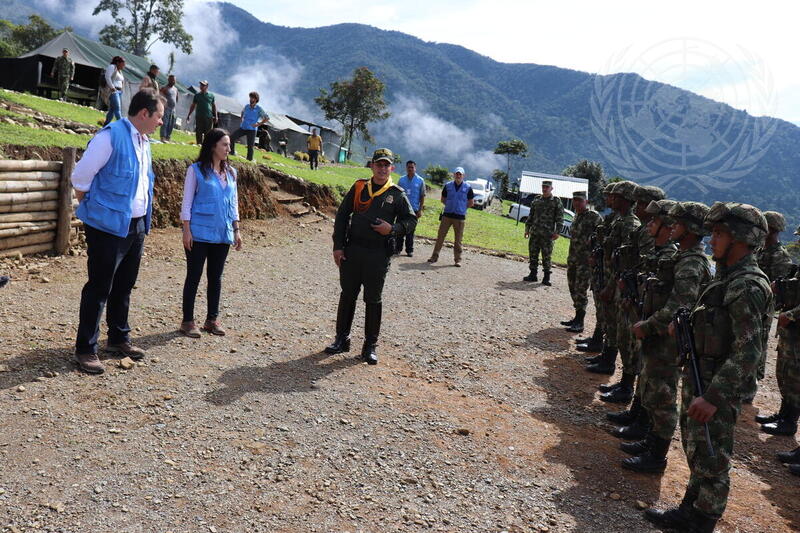





Community Adaptation for a Water Festival Without Clean Water