
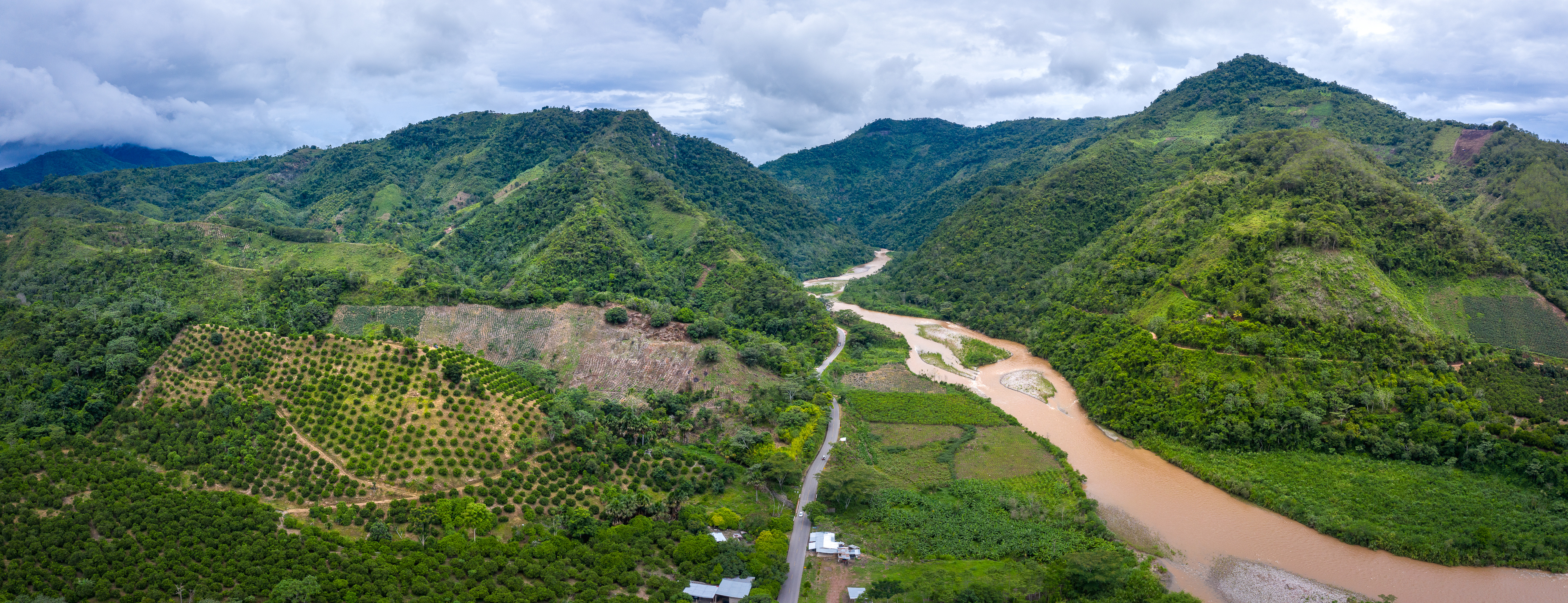

Latin America and the Caribbean (LAC) constitute one of the most biologically rich regions of the planet, hosting a disproportionate share of global biodiversity, agricultural resources, and unique ecosystems ranging from the Amazon rainforest to marine and coastal systems of global relevance. Yet, despite this exceptional natural endowment, the region remains structurally underrepresented in global biotechnology, bioeconomy value chains, and deep‑tech innovation. This disconnect between natural wealth and innovation output is not accidental: It is the result of structural fragmentation, chronic underinvestment at scale, misaligned incentives, and a legacy of asymmetrical integration into global knowledge economies where LAC provides raw biological inputs but captures minimal knowledge rents.
The INKA Regional Biotechnology and Bioeconomy Strategic Program is designed to catalyze a structural shift in the region’s innovation trajectory. It moves beyond pilot projects to establish a region-wide, mission-oriented platform linking biodiversity, frontier science, ethical governance, human capital, infrastructure, finance, and international cooperation. A proportionate responsible-innovation framework provides the confidence needed to accelerate collaboration and investment while managing material risks. Biotechnology and the bioeconomy are positioned as central pillars of sustainable development, economic diversification, and climate resilience for Latin America and the Caribbean.
Conceived as a ten-year, multi-partner effort, the program is structured around two phases: a foundational Phase I (Years 1-4) with an indicative envelope of USD 280-360 million to establish proof of concept and core architecture, and a scaling Phase II (Years 5-10). The total 10-year ambition aligns with international benchmarks at USD 770 million to USD 1.16 billion, representing the estimated minimum efficient scale required to overcome fragmentation and achieve global relevance. The program is explicitly designed to be a credible and attractive proposition for a broad coalition, including international financial institutions, bilateral and multilateral donors, global science agencies, philanthropic foundations, and—critically—private‑sector partners seeking structured access and co-development.
The strategic program seeks to transform Latin America from a passive supplier of biological raw materials into an active generator and co-owner of globally competitive, ethically responsible biotechnological knowledge, intellectual property, and innovation-driven enterprises. This transformation is operationalized through seven interlinked strategic pillars, supported by professional governance and international cooperation built on reciprocity, predictable rules, and clear value-sharing mechanisms.








Community Adaptation for a Water Festival Without Clean Water