
Dear Friend,
We hope you will be hitting pause on your work calendar for at least some portion of August, if you have not already had a chance to do so in the past few months. Geopolitical and technological developments relevant to nuclear security, from nuclear energy deals to accelerating AI capabilities, are sure to continue at their usual speed in the fall and we will all need our refreshed selves for the job of unpacking and addressing the risks and opportunities these developments will present. August itself is full of notable events, from the 67th Annual Meeting of the Institute for Nuclear Materials Management in Austin, Texas from August 2-6 to the anticipated launch of the International Atomic Energy Agency’s Atomic Technologies Licensed for Applications at Sea (ATLAS) initiative here in Washington, D.C., August 26-27. Be sure to take a minute or two to catch up on nuclear security headlines and member updates in the July newsletter below before you unplug.
Warm end-of-July wishes,
Christina
Director, International Nuclear Security Forum
Join the conversation on X: @INS_Forum
Follow INSF on LinkedIn here
Updates
The International Nuclear Security Forum was featured in the latest episode of the Women in Nuclear Security Podcast. Podcast host and INSF member Shahneela Tariq interviewed INSF Director Christina McAllister, Senior Fellow and Director of the Partnerships in Proliferation Prevention program at the Stimson Center, to unpack the evolving landscape of global coalition-building. Listen to the full episode here.
FUNDING APPEAL: If you appreciate this newsletter, please consider a donation to ensure sustainability into the future. Donate here and specify where indicated that your gift is intended to support the INSF. Institutional funding for civil society’s nuclear security work is increasingly hard to come by, as many readers already know, and the International Nuclear Security Forum appreciates your support!
Nuclear Security News
Impact: Iran
NPR
24 June 2026
Dispute widens over Iran nuclear inspections
The head of the U.N.’s nuclear agency said Wednesday that Iranian nuclear enrichment sites would be visited by his inspectors as part of the interim U.S.-Iran deal to reach an end to the war. An Iranian diplomat instead insisted any such visit would only come after a final deal.
Al Jazeera
19 July 2026
Iran attacks Bahrain, Kuwait and Jordan after US hits Iranian nuclear site
Iran has fired drones and missiles at Kuwait, Bahrain and Jordan and claimed to have stopped two ships in the Strait of Hormuz after an eighth consecutive night of attacks by the United States on Iranian cities, including on the partly built Darkhovin nuclear facility.
Impact: The Russian Invasion of Ukraine
NucNet
26 June 2026
IAEA Completes Key Safety Related Repairs At Zaporizhzhya Nuclear Power Station
Repairs have been completed on a key power line and other energy infrastructure vital for nuclear safety at the Russia-controlled Zaporizhzhia nuclear power station in Ukraine, as part of efforts to strengthen its access to the electricity grid and help reduce the risk of a nuclear accident during the military conflict, IAEA Director General Rafael Grossi said.
Reuters
15 July 2026
Russia says Ukrainian drone kills chief engineer at Zaporizhzhia nuclear plant
The chief engineer at the Russian-controlled Zaporizhzhia nuclear power plant has been killed by a Ukrainian drone near the station, the head of Russia’s state nuclear corporation Rosatom said. Alexei Likhachev said in a statement that a Ukrainian drone had struck a service car between the plant’s site and the town of Enerhodar, killing the engineer, Alexander Yakovlev, and the driver.
World Nuclear News
16 July 2026
IAEA condemns reported killing of chief engineer at Zaporizhzhia NPP
The International Atomic Energy Agency said its Director General Rafael Mariano Grossi “condemns the reported incident which he says represents an unacceptable attack on the plant and its management, seriously threatening nuclear safety.” The IAEA reported it had been informed by the Russian Federation that the Zaporizhzhia Nuclear Power Plant chief engineer was killed in a drone strike near the site.
Security Culture
Yahoo News Singapore / The Straits Times
30 June 2026
S’pore and Indonesia to cooperate on nuclear security and radiation protection
Singapore inked an agreement with Indonesia’s nuclear energy regulator on June 30 to collaborate on areas including radiation protection, emergency preparedness, radiation monitoring, and shaping regulatory policies.
Energies Media
5 July 2026
NRC releases 253-page proposal to overhaul nuclear security regulations across four major areas
On June 23, the U.S. Nuclear Regulatory Commission published a 253-page proposed rulemaking to modernize its security regulations, one of the most expansive updates the agency has put forward in recent memory. NRC Chairman Ho Nieh framed the proposal as a deliberate move away from rules built around “the threats and technologies of the past.”
Mexico Business News
15 July 2026
Mexico Issues New Nuclear Material Transport Security Rules
Mexico’s Ministry of Energy (SENER) has published a new mandatory standard that strengthens security, tracking, route planning, and operational controls for transporting fissile substances and radioactive materials across the country. The NOM-042-NUCL-2026, published in the Official Gazette of the Federation, establishes a risk-based framework for categorizing materials such as enriched uranium, plutonium, and radioactive substances used in industrial, medical, scientific, and energy activities.
Advanced Reactors
The New York Times
23 June 2026
Energy Dept. Promises $17.5 Billion in Loans for Nuclear Power
The Trump administration announced a plan for billions of dollars in federal loans aimed at spurring the country’s largest build-out of nuclear power plants in more than three decades. The complex and unusual strategy, which would be overseen by the Energy Department, would provide up to $17.5 billion in low-cost loans to help electric utilities buy expensive components that could be used in up to 10 new AP1000 nuclear reactors, a large type of reactor designed by Westinghouse.
American Nuclear Society / Nuclear Newswire
6 July 2026
DOE contract boosts Centrus’s HALEU goals as Urenco continues LEU expansion
In the latest twist in a long-term, multistep contracting arrangement with the Department of Energy, Centrus Energy has signed a contract to finalize terms of a $900 million DOE task order to expand production capacity for high-assay low-enriched uranium at its American Centrifuge Plant in Piketon, Ohio.
Nuclear Engineering International
24 July 2026
Clean Core, QNI sign HALEU deal
Chicago-based Clean Core Thorium Energy (CCTE) and Boston-based Quadrant Nuclear Industries (QNI) have signed a memorandum of understanding (MOU) establishing a framework for collaboration on a reliable, domestic supply of high-assay low-enriched uranium (HALEU) fuel. This supports the commercialization of advanced thorium-based nuclear power by securing key supply chain components.
Weapons, Materials, and Facilities
NucNet
13 July 2026
Nuclear Plants ‘Well-Equipped’ To Deal With Cyber Attacks, But Risks Are Real, Says Insurer
Nuclear power plants are mostly well-equipped to deal with cyber threats, but nevertheless run an increasing risk of becoming a strategic target, according to UK-based insurer Chaucer.
Reuters
15 July 2026
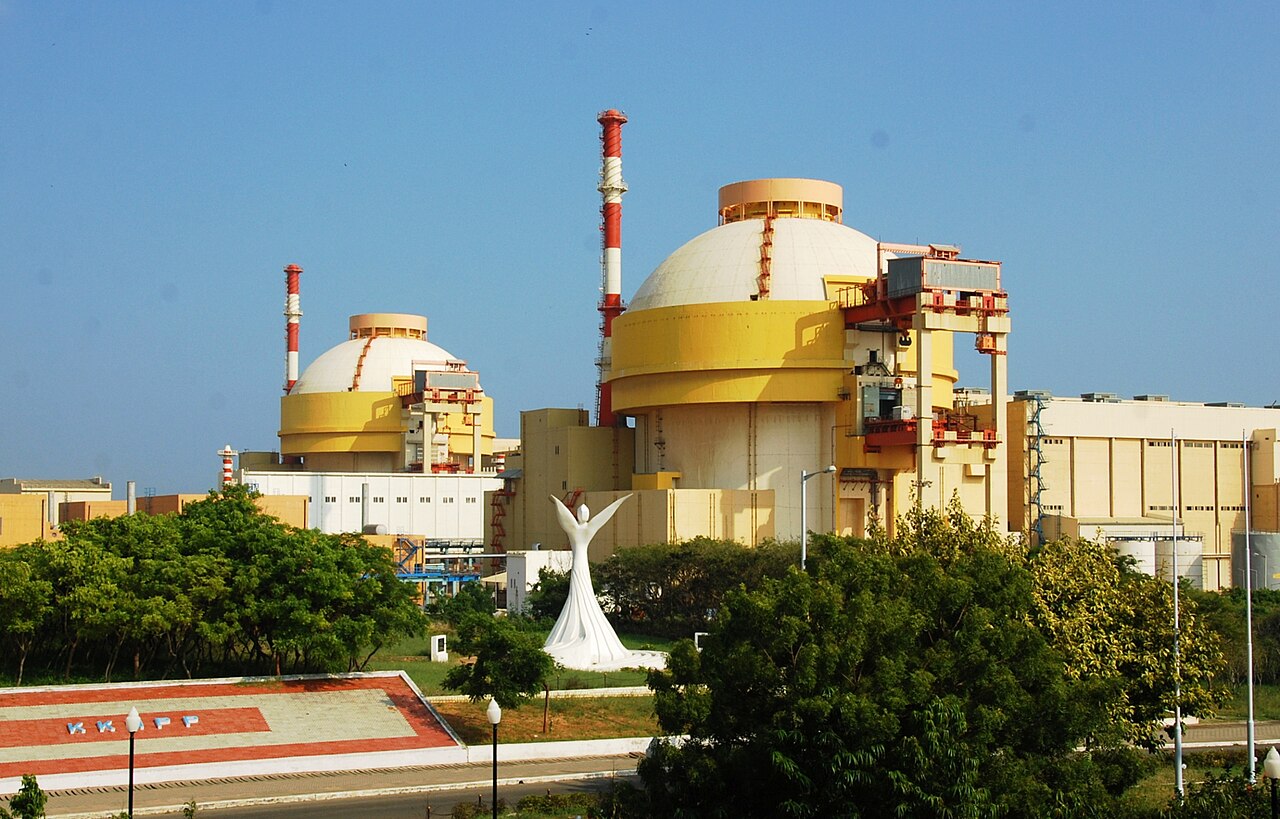
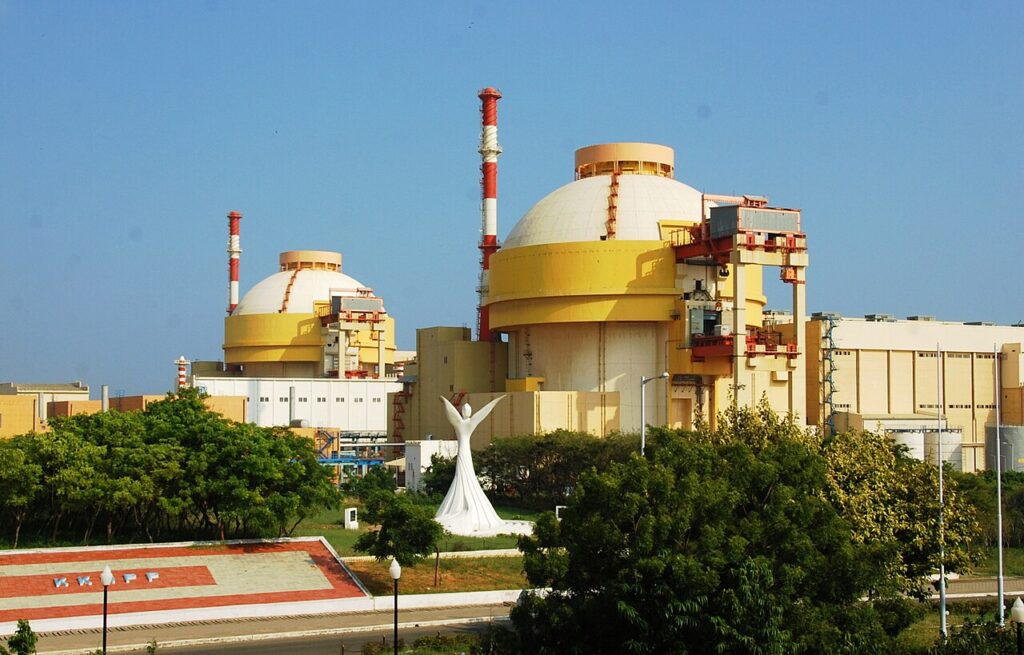
EXCLUSIVE: Files relating to India’s largest nuclear power plant Kudankulam exposed in data breach
Ransomware group World Leaks has posted on the dark web a huge cache of files related to India’s largest nuclear plant, including purported blueprints of parts of its facilities and supplier details — information it labelled as coming from Reliance Group. Reliance Group, one of the plant’s contractors, told Reuters in a statement that there had been a “partial breach” of its data on a server hosted by third-party Indian data centre service provider Yotta, and that the government has been informed about the incident.
The Record / Recorded Future News
20 July 2026
India says allegedly leaked nuclear plant files pose no safety risk
India’s state-owned nuclear operator said that documents recently posted online and purportedly linked to the country’s largest nuclear power plant contain no information affecting safety or security. The statement came after media reported that the cybercrime group World Leaks had published thousands of files apparently connected to the Kudankulam Nuclear Power Plant, appearing to include engineering drawings, supplier information, inspection records and insurance documents related to Units 3 and 4 under construction.
U.S. Department of Energy
22 July 2026
NNSA Removes High-Risk Cesium from North Dakota, Bolstering U.S. Security
The U.S. Department of Energy’s National Nuclear Security Administration (NNSA) has successfully removed all high-risk cesium-137 material from North Dakota, a major achievement for national security. This critical milestone makes North Dakota the 14th state or territory to be declared free of high-risk quantities of this material, underscoring NNSA’s ongoing commitment to protecting Americans across the country from radiological threats.
International Architecture
International Atomic Energy Agency (IAEA)
13 July 2026
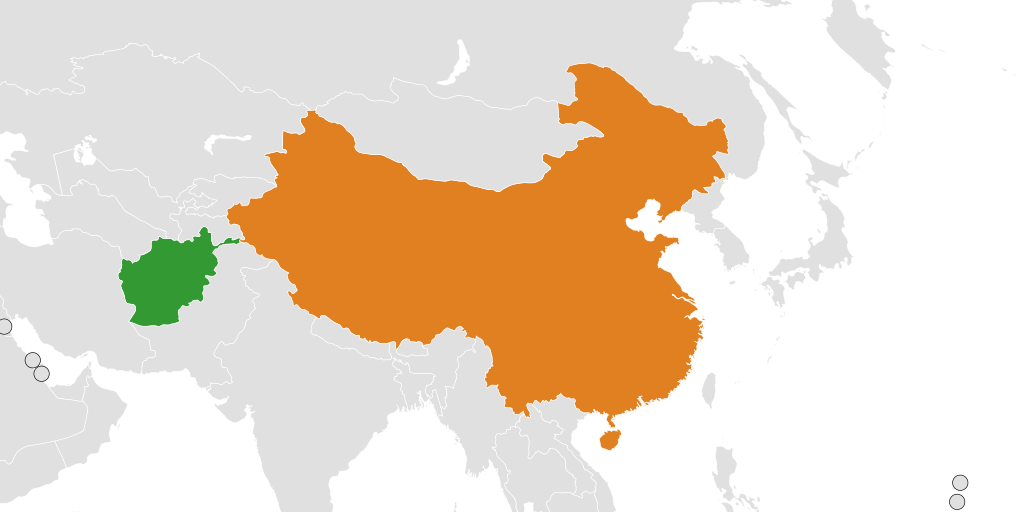
IAEA Concludes International Physical Protection Advisory Follow-Up Mission in China
The International Atomic Energy Agency has concluded an International Physical Protection Advisory Service (IPPAS) follow-up mission in China, conducted at the request of the Government of the People’s Republic of China to review and strengthen China’s national nuclear security regime for nuclear material, facilities, and physical protection systems.
The Washington Post
22 July 2026
U.S. nuclear deal with Saudis includes path to enriching fuel
President Donald Trump has reached an agreement with Saudi Arabia that gives that country a pathway to enrich nuclear fuel and commits it to using U.S. companies and technology for its civilian nuclear program, a deal that has sparked alarm among nonproliferation experts given that Saudi leaders have previously signaled ambitions for a nuclear weapons capability.
Reuters
23 July 2026
US says Saudi nuclear deal off without Israel recognition | Reuters
U.S. President Donald Trump conditioned a civilian nuclear cooperation deal with Saudi Arabia on Thursday on Riyadh normalizing relations with Israel, an action the kingdom has so far refused to take.
Analysis and Opinion
Atlantic Council
25 June 2026
Radiological and nuclear threats are no longer hypothetical. Europe needs to respond.
Jacek Siewiera and Jim Stokes argue that the occurrence of two separate radiological incidents on European soil on the same day in April should put to rest any lingering doubts about whether the threat is merely theoretical. The decisions made in the next twelve to eighteen months will determine the future of European CBRN detection infrastructure.
Sciences Po Center for International Studies
29 June 2026
Hacking the bomb? What Claude Mythos AI reveals about the gamble of nuclear deterrence
Thomas Fraise argues that there are several plausible future scenarios in which possessing nuclear weapons will generate more real costs than potential benefits in a world that has warmed by several degrees. Maintaining a credible and safe arsenal will require budgetary choices at the expense of other urgent spending made necessary by the climate crisis.
Al Jazeera
23 July 2026
What are the security implications of the US-Saudi nuclear deal?
The US-Saudi nuclear deal has drawn concerns that if the deal comes to fruition, it could spark a nuclear arms race across the Middle East amid reports that Riyadh would be able to enrich its own uranium, a necessary step in acquiring nuclear weapons. The Al Jazeera staff comments on the issue.
Bulletin of the Atomic Scientists
27 July 2026
Balancing global uranium enrichment needs and proliferation risks: A framework
Logan Mintz and Matthew Sharp argue that there is an essential tension between the Trump administration’s readiness to use military force to prevent enrichment in Iran while condoning the technology’s spread elsewhere.
Member Organization Announcements and Updates
Center for Arms Control and Non-Proliferation
CACNP Senior Policy Director John Erath spoke with Anadolu Ajansı about increasing nuclear arsenals worldwide, arguing that 81 years after the first atomic test, AI increases nuclear risks.
Erath also published a commentary titled “The Wrong Way,” discussing what is amiss with the recently published U.S. Defense Budget Request and the NDAA’s heavy emphasis on nuclear weapons.
International Institute for Strategic Studies
Daniel Salisbury published a research report on the 24th of June about “Radioactive Measures: Hybrid Threats and Nuclear Risks in Europe and Beyond,” examining how some states exploit nuclear risks through hybrid activities, showing how hostile reconnaissance, cyber operations and disinformation can target nuclear infrastructure and public confidence.
Daniel Salisbury published an online analysis piece on the 26th of June, titled “A growing missile threat to the US homeland and the emerging arms race.”
Hasan Alhasan published an online analysis piece on the US-Iran memorandum of understanding on the 26th of June.
A new episode of the Arms Control Primer podcast was published on Argentina’s nuclear history: “Better know a non-nuke: Argentina.”
James Martin Center for Nonproliferation Studies
CNS Director Bill Potter published a piece in remembrance of the recently passed George Moore.
Siegfried S. Hecker published an article titled “A Personal Perspective of U.S.-China Nuclear Science and Security Cooperation,” presenting a historical narrative of U.S.-China cooperation in nuclear security following China’s political opening in the early 1970s.
Nuclear Threat Initiative
Nickolas Roth published an article titled “Minimizing Weapons-Usable Nuclear Material: A Nuclear Security Success Story Still in Progress,” discussing the achievements of the International Symposium on HEU Minimization in contributing to nuclear security.
The Stimson Center
Global Affairs Canada and the Stimson Center launch the Brian Finlay Innovation in Threat Reduction Award. The award honors the life and legacy of Brian Finlay in advancing innovative solutions to some of the world’s most pressing security challenges. Beginning in 2027, the award will be presented annually on Canada Day (July 1) to an individual demonstrating exceptional promise, creativity, and impact in addressing proliferation and security risks related to weapons and materials of mass destruction.
University of Tennessee’s Institute for Nuclear Security
From July 27th to July 29th, the University of Tennessee’s Institute for Nuclear Security (INS) hosted fellows from the South Carolina Universities Research and Education Foundation (SCUREF) participating in the Training in Radiological and International Nuclear Security Fellowship (TRAINS) for the course Facility-Level Safeguards: Policy, Practice, and Implementation Under the IAEA.
Vienna Center for Disarmament and Non-Proliferation
AI is changing the cybersecurity landscape faster than traditional regulatory approaches in the nuclear industry can keep pace. The VCDNP brought together experts from industry, national regulators, and international organisations to examine what this means for nuclear security and what regulators and operators need to do about it.
From 29 June to 3 July 2026 the VCDNP held an intensive course on nuclear issues for the Kuwait Diplomatic Institute.
The VCDNP presented proposals for concrete measures and language on space security during the Third Session of the OEWG on the Prevention of an Arms Race in Outer Space in All its Aspects to promote the early pursuit of substantive outcomes.
Individual Member Updates
Ali Alkis and Jasmine Auda published an article on nuclear security verification in Zeitschrift fur Friedens- und Konfliktforschung examining potential pathways for developing internationally accepted approaches to nuclear security assurance while respecting national interests and security sensitivities:
29 June 2026: Navigating the Verification Gap in Nuclear Security: The Challenges of Sovereignty and Political Feasibility
Dominic Brennan published a piece on the strategic significance of floating nuclear power plants in the South China Sea:
- 17 July 2026: Vermilion Tide
Tahir Azad published an interim assessment on the cost of the Iran War for the United States:
- 20 July 2026: Assessing the Cost of the Iran War for the United States
Opportunities
MA Program
University of Bradford, University of Bradford
MA International Relations and Emerging Technologies
This interdisciplinary programme combines expertise in international relations, peace studies, technology governance, ethics, and global security. Students will explore how governments, organisations, and international actors engage with technological change – and what this means for conflict, cooperation, human rights, inequality, and global governance. Start date is September 2026.
Job
IISS, London, UK
Research Analyst and Programme Administrator, Defence and Military Analysis Programme, London
This position will assist the Defence and Military Analysis Programme in the implementation of the Missile Dialogue Initiative (MDI), a multi-year Track 1.5 project that seeks to strengthen international discussion and to promote a high-level exchange of views on missile technologies and related international security dynamics. The deadline to apply is August 11th, 2026.
Job
NTI, Washington, DC
Executive Assistant to the CEO
As part of the NTI Executive Office, the EA to the CEO serves as a trusted advisor and facilitator to the CEO, who is a visible, high-energy former senior government official. The EA also works with the COO and NTI Vice Presidents, playing a key role in ensuring communication and operational excellence across NTI program teams.
Call for Papers
International Journal of Nuclear Security
The University of Tennessee’s Institute for Nuclear Security (INS) will have an announcement in August for the publication of the 2026 call for papers collected by the International Journal of Nuclear Security (IJNS). IJNS is managed by INS, and this year’s call for papers is on redefining nuclear physical security: the evolving paradigms of the 21st century.





Community Adaptation for a Water Festival Without Clean Water