
Dear Friend,
While not strictly a nuclear security issue in the sense of physical protection of materials and facilities, the U.S.-Saudi 123 Agreement on civilian nuclear energy cooperation signed on July 22 and finally transmitted to Congress at the end of August has made headlines for its potential to undermine important non-proliferation precedents. Reports on the deal that suggest it may offer a pathway to uranium enrichment while bypassing the IAEA Additional Protocol in favor of a bilateral safeguards arrangement are raising concerns. Meanwhile, the United States and Iran resumed attacks in a conflict that is at least in part being fought over Iran’s domestic uranium enrichment program. The situation at the Zaporizhzhia Nuclear Power Plant, Europe’s largest, looks bleak as continued fighting hampers electrical grid repairs and backup generator fuel deliveries critical to nuclear security and safety systems. Yet in Syria, a path is being cleared for the IAEA to remove material from the country’s legacy secret nuclear program, while ministers from around the world met in Washington, DC, at the end of August for the IAEA’s launch of the Atomic Technologies Licensed for Applications at Sea (ATLAS) initiative, and nuclear applications in space will be the dedicated focus of a two-day conference in Prague in November. Read on for more details.
Wishing all a productive start to the new academic year.
Christina
Director, International Nuclear Security Forum
Join the conversation on X: @INS_Forum
Follow INSF on LinkedIn here
Updates
FUNDING APPEAL: If you appreciate this newsletter, please consider a donation to ensure sustainability into the future. Donate here and specify where indicated that your gift is intended to support the INSF. Institutional funding for civil society’s nuclear security work is increasingly hard to come by, as many readers already know, and the International Nuclear Security Forum appreciates your support!
Nuclear Security News
Impact: The Russian Invasion of Ukraine
IAEA
20 August 2026
Update 363 – IAEA Director General Statement on Situation in Ukraine
The Zaporizhzhia Nuclear Power Plant (ZNPP) informed the IAEA team at the plant that a drone explosion at a bus stop used by plant staff and subcontractors caused 20 casualties, including one death and three serious injuries, in what the ZNPP described as the worst event the plant has faced. In addition, the ZNPP decided to increase the water levels in the spent fuel pools of all six reactor units given extended unavailability of one of the plant’s offsite power lines and military activity in the area hampering efforts to replenish the site’s diesel fuel stores.
IAEA
28 August 2026
Update 364 – IAEA Director General Statement on Situation in Ukraine
The Zaporizhzhia Nuclear Power Plant (ZNPP) has been without off-site power for more than a week and is currently relying on emergency diesel generators (EDGs) to provide the electricity needed for essential nuclear safety and security functions. The ZNPP reported that it now has approximately ten days of diesel fuel available on site for EDG operation, which is the minimum regulatory requirement. The IAEA is working to establish a localized ceasefire zone to facilitate repairs to and restoration of the Ferosplavna-1 off-site power line to the ZNPP. The IAEA was also informed of three new drone incidents at the site of the ZNPP earlier in the week, while other nuclear sites, including the South Ukraine, Chornobyl, and Khmelnytskyi NPPs, continued to report air raid alarms and drone activity.
International Architecture
American Nuclear Society
7 August 2026
Undeclared Uranium Hitches a Ride on Cobalt Exports from Congo, Study Says
A study found that the Democratic Republic of the Congo has exported thousands of metric tons of uranium in cobalt shipments to China without declaring it to the International Atomic Energy Agency.
Axios
10 August 2026
Scoop: U.S. Brokers Secret Deal on Clandestine Syrian Nuclear Site
The International Atomic Energy Agency (IAEA) will soon remove nuclear material stored at a clandestine site in Syria after the Trump administration reached understandings with Syria and Israel, according to Israeli and U.S. officials.
IAEA
26 August 2026
IAEA Launches ATLAS as Countries Explore Nuclear Power for Shipping and Offshore Energy
Six expert Project Groups comprised of country, industry, and other stakeholder representatives will begin practical work this year to address the safety, security, safeguards and regulatory aspects of in an integrated Atomic Technologies Licensed for Applications at Sea (ATLAS) framework.
Security Culture
Energies Media
2 August 2026
NRC Issues Proposed Rule to Update Radioactive Material Transportation Regulations for New Reactor
The U.S. Nuclear Regulatory Commission has issued a proposed rule to update how radioactive materials are transported, taking account of the rise of new nuclear technologies such as microreactors and other advanced reactor types.
Big News Network
11 August 2026
FANR Highlights Nuclear Safety, Security Achievements in 2025 Annual Report
The United Arab Emirates’ Federal Authority for Nuclear Regulation highlighted its 2025 achievements in nuclear safety, security, safeguards and radiation protection.
Manila Bulletin
26 August 2026
BoC Forms Nuclear Chemical Response Team to Secure Philippine Ports
The Philippine Bureau of Customs formed a nuclear and chemical response team to strengthen detection and emergency response at the country’s ports.
Threats
APS Physics
4 August 2026
Detecting the Illicit Removal of Nuclear Fuel
Spent nuclear fuel and shutdown nuclear reactors emit antineutrinos, which nuclear watchdogs could use for real-time monitoring of plants.
The Register
12 August 2026
‘Near-Autonomous’ AI Agents Attack Taiwan’s Nuclear Safety Agency
Suspected Chinese cyber operatives used publicly available AI tools to compromise Taiwanese government systems before expanding the attack to its nuclear safety agency, supply-chain vendors, and at least seven energy companies in what security researchers called a “near-autonomous attack.”
Emerging Technology
UzDaily
5 August 2026
Rosatom Proposes Creating 3D Printing Center in Uzbekistan
Experts from Russian state corporation Rosatom held a specialized seminar in Uzbekistan on the implementation of additive technologies in industry, focusing on the prospects of establishing a dedicated Additive Technologies Center in the country.
Environment+Energy Leader
19 August 2026
DOE Nuclear AI Program Prometheus Adds Security Partner
HiddenLayer has joined the Idaho National Laboratory-led Prometheus initiative as the nuclear sector pushes artificial intelligence beyond research and into reactor design, licensing, manufacturing and operational workflows, the same processes regulators are now using AI of their own to review.
Task & Purpose
19 August 2026
Air Force Security Teams Want to Train with Chinese-Made Drones at Nuclear Base
Security teams at an Air Force nuclear base may soon be training with Chinese-made drones, which are now so widely used in war zones that one expert called them ‘the new AK-47.’ According to a federal contract solicitation, nuclear security airmen at F.E. Warren Air Force Base, Wyoming, need the Chinese-made drones so they can train with the “exact devices adversaries are most likely to employ.”
Cooperation and Collaboration
Arise News
28 July 2026
Police, US Agency, ONSA Strengthen Capacity to Counter Weapons of Mass Destruction
The Nigeria Police Force has concluded the final phase of its Countering Weapons of Mass Destruction Curriculum Development Workshop, organized in partnership with the U.S. Defense Threat Reduction Agency and Nigeria’s Office of the National Security Adviser (ONSA), aimed at strengthening the Force’s capacity to tackle chemical, biological, radiological, nuclear and explosive threats.
The Wall Street Journal
25 August 2026
Exclusive | Trump Sends Nuclear Agreement with Saudi Arabia to Congress
The Trump administration sent a U.S.-Saudi civil nuclear cooperation agreement to Congress for review, opening debate over enrichment, safeguards and nonproliferation conditions.
Africa Defense Forum
25 August 2026
Building a Shield Against CBRN Threats
More than 100 professionals from across the continent gathered in Tunis for Africa Shield 2026, a regional counterproliferation workshop organized and funded by the U.S. Defense Threat Reduction Agency, the European Union, and United Nations agencies.
U.S. Department of Energy
27 August 2026
NNSA and DTRA Remove High-Risk Radioactive Source from Guatemala
The National Nuclear Security Administration and the Defense Threat Reduction Agency removed a high-risk radioactive source from Guatemala for secure disposition.
Advanced Reactors
Utah News Dispatch
24 August 2026
National Labs Eye Cybersecurity Threats to Smaller Nuclear Reactors
The Idaho National Laboratory hopes to create a cybersecurity methodology for industry players as they develop new automated features in nuclear plants.
Weapons, Materials, and Facilities
Japan Atomic Industrial Forum
9 August 2026
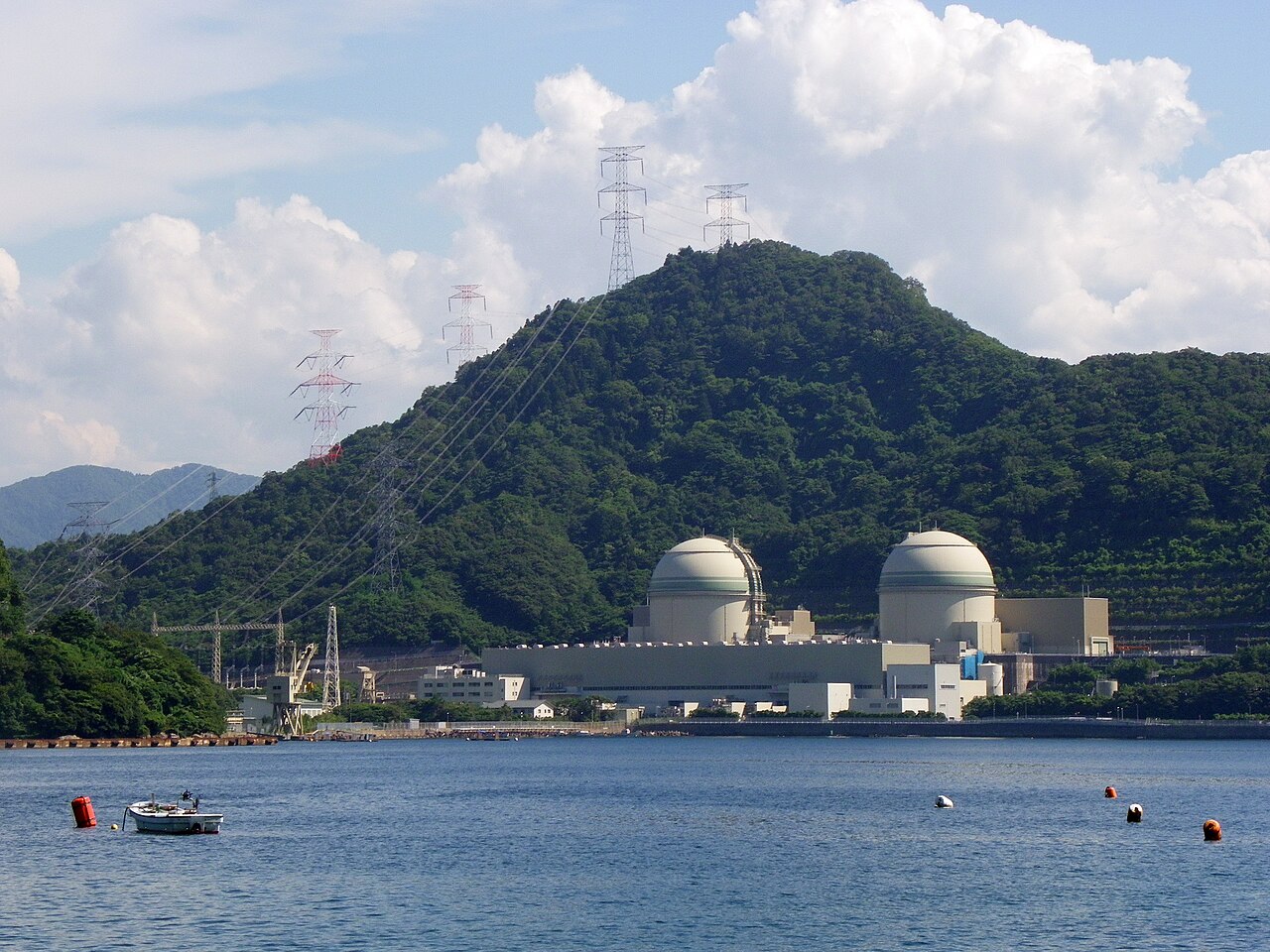
Japan’s total plutonium holdings remained at 44.4 tonnes, while domestic stocks increased following a shipment of mixed-oxide fuel for the Takahama nuclear power plant.
Wyoming Tribune Eagle
14 August 2026
New Hangar Facility Prepares F.E. Warren AFB for Next Step in Nuclear Security
A new $140 million helicopter and Tactical Response Force operations facility at F.E. Warren Air Force Base represents the future of security of America’s intercontinental ballistic missile enterprise.
Bioengineer.org
17 August 2026
Sandia Conducts Advanced Test of Secure Transportation Vehicle
A semitrailer carrying mock nuclear weapons has been deliberately hurled into a barrier at Sandia National Laboratories in one of the most heavily instrumented crash experiments ever conducted at the facility’s rocket sled track. The test was the second and final full-scale impact evaluation of the Mobile Guardian Transporter, a next-generation vehicle designed to carry nuclear weapons and other highly sensitive materials for the U.S. Department of Energy’s Office of Secure Transportation.
Kyodo News
26 August 2026
Japan Nuclear Plants Given Extension to Build Antiterrorism Facilities
Japan’s nuclear watchdog said it would revise regulations and extend the deadline to build antiterrorism facilities for nuclear power plants, moving the five-year start date to the beginning of operations rather than the approval of the plants’ planning and construction.
Analysis and Opinion
Chicago Council on Global Affairs
27 July 2026
What the US-Saudi Nuclear Deal Means for Global Nonproliferation
Rachel Bronson argues that the U.S.-Saudi nuclear deal departs from previous U.S. agreements by permitting uranium enrichment and apparently bypassing IAEA oversight. She warns that these concessions could weaken global nonproliferation norms and establish a dangerous precedent for future nuclear cooperation agreements.
Nuclear Threat Initiative
29 July 2026
The Double-Edged Sword of Laser Enrichment
By 2050, the United States aims to quadruple its nuclear energy capacity. Achieving that goal, however, will require far more than building new reactors. A critical hurdle will be securing enough enriched uranium to fuel them. Emerging laser enrichment technology could help expand domestic fuel production, but its spread may also create new security and nonproliferation challenges.
Nature
4 August 2026
Plans for Nuclear-Powered Merchant Ships Must Confront Risks
Authors Jihong Chen and Zheng Wang argue that proposals for nuclear-powered merchant ships should not advance to commercial deployment without first confronting their safety, security, regulatory, and liability risks. They call for a comprehensive governance framework capable of addressing those interconnected challenges before the technology enters widespread use.
Future for Advanced Research and Studies
13 August 2026
Reflections on Nuclear Security Policy: An Interview with Dr. Hassan Elbahtimy
Dr. Elbahtimy, Senior Lecturer in International Security in the Department of War Studies at King’s College London, addresses topics including the relationship between great power competition and nuclear security governance, civilian nuclear facilities in conflict zones, the nexus of nuclear technology with AI and related dual-use technologies, and more.
CIMSEC
24 August 2026
The Silent Threat: Overlooked Radiological Risk in the Red Sea and the Strait of Hormuz
Dr. Abdek Mahamoud Abdi argues that radioactive sources transiting the Red Sea and Strait of Hormuz and destined for legitimate commercial purposes are at risk for diversion given shipping and trade disruptions caused by the ongoing conflict. The piece calls for stronger regional preparedness, detection, and response cooperation to prevent these vulnerabilities from becoming a serious security crisis.
Institute for Science and International Security
25 August 2026
Probable Uranium Storage Facility Identified at the Natanz Nuclear Complex
Analysis of commercial satellite imagery points to a probable uranium storage facility at Iran’s Natanz nuclear complex, built between 2010 and 2017. David Albright, Sarah Burkhard, Spencer Faragasso, and the Good ISIS team contend that the site was prepared for an increase in enrichment pending JCPOA’s sunset, and recommend any temporary enrichment ban today must include a requirement to dismantle remaining capabilities and must not allow for any type of preparatory activity for the end of a ban.
The New York Times
27 August 2026
The Saudi Nuclear Deal Is a Dangerous Gamble
The editorial argues that the enrichment provisions and safeguards arrangements of the U.S.-Saudi nuclear agreement may increase proliferation risk. It warns that it could set a damaging precedent for future civil nuclear agreements and the global nonproliferation regime and trigger an arms race across the Middle East.
Member Organization Announcements and Updates
International Institute for Strategic Studies
Tomisha Bino published an Online Analysis piece on the US-Saudi 123 Agreement, in which she raises questions not only over proliferation but also about the reliability of the US as a strategic partner in the Gulf.
Christopher J. Fettweis published a Survival article on “The Iran Threat in Perspective,” about Iran’s rhetorical overreach, fitful pursuit of a nuclear capability and religiosity.
Trond Arne Undheim published a Survival article on “Nuclear Command Without Control: AI and the Problem of Escalation Opacity.”
James Martin Center for Nonproliferation Studies
Duglas B. Shaw, Stephen Herzog, and William C. Potter published an article in Arms Control Today on “Anticipatory Arms Control for the AI Age,” on why the Asilomar Process is needed for the new generation of AI and WMD restraint.
In her new book “We Shall Outlast Them,” CNS Eurasia Program Director Dr. Hanna Notte details how President Vladimir Putin’s invasion of Ukraine is also a war on the West. Listen here to Dr. Notte discuss the book on NPR.
On The International Risk Podcast, Dominic Bowen is joined by Dr. William Potter to explore the escalating risks and eroding norms surrounding nuclear weapons in today’s fractured global order.
Nuclear Threat Initiative
From July 28-29, 2026, NTI, the China Arms Control and Disarmament Association (CACDA), and the State Nuclear Security Technology Center (SNSTC) hosted the China-U.S. Track II Dialogue on Nuclear Security at the SNSTC-operated Center of Excellence on Nuclear Security. Experts from NTI and Chinese partner organizations identified practical opportunities for China and the United States to cooperate on strengthening nuclear security.
Nuclear Aware Africa
Nuclear Aware Africa published the second edition of its newsletter, “The Atomic Dispatch,” and held a webinar on “Youth and Civil Society as Disarmament Actors in Africa.”
World Institute for Nuclear Security
Executive Director Lars van Dassen will conclude his tenure at the end of 2026 and WINS is preparing for the leadership transition. In August, WINS presented on its activities in the region, generously supported by Global Affairs Canada, at the ASEANTOM meeting. Lars van Dassen highlighted that WINS’ ongoing program links training and capacity building projects with the cultivation of a community of practice and knowledge exchange in the region and the wider world.
Rhonda Evans, WINS’ Director of Programme Development and Partnerships, and Whitney Isaacs, Certification and Training Manager, co-authored a paper on the impact of WINS training and certification programs on professional capacity development with WINS Academy Ambassadors Camila Araujo, Lourena Correa and Beatriz Machado. The paper was presented at the International Nuclear Atlantic Conference.
Individual Member Updates
Alan J. Kuperman published an op-ed on July 25, 2026, in Australia’s Herald-Sun newspaper, “Australia must scrap failing AUKUS submarine deal as key promises crumble,” and published an open access paper in The Nonproliferation Review, “The Global Risks from US Violation of HEU Minimization: Insights from Norm Theory.”
Opportunities
Job
GDIT, Washington, DC
FIRST Nuclear Security Senior Program Analyst
GDIT is seeking a Program Advisor to oversee international security assistance trainings aimed at addressing pressing nuclear security, proliferation, safety, and sovereignty challenges posed by aggressive civil nuclear reactor exports. Apply here.
Research
Lawrence Livermore National Laboratory (LLNL), Livermore, CA
CGSR Undergraduate Research Associate – Spring 2027
We have openings in Spring 2027 for undergraduate students to engage in practical research on global security topics. Students will work with CGSR over the duration of three to four months as a research associate (RA). RAs will engage in practical research to further their educational and career goals, while also supporting the development of strategies for national security and LLNL’s mission focus areas. Examples of relevant fields of research include nuclear deterrence, arms control, nonproliferation, emerging technologies, cybersecurity, space, biological & chemical security, and energy security. Apply here.
Training Course
WINS, Lancaster, UK
Cybersecurity in the Nuclear Industry
Designed for nuclear industry professionals, this five-day program 7-11 September, 2026, will provide practical tools, current best practices, and operational insights to support the development and management of robust cybersecurity programs across data security, information technology and operational technology. Certification available. Register here.
Conference
IRPA, Medellin, Colombia
Latin America Regional Congress
The program 18-22 October, 2026, aims to foster nuclear security culture, raise awareness about innovation and emerging technology, build capacity, promote best practices and knowledge exchange and strengthen international cooperation networks. Visit the event website for more information.
Conference
Nuclear Institute, Nuclear Security Special Interest Group, London, UK
Nuclear Institute Security Conference
The one day program 12 November, 2026, will cover topics including insider risk, the emerging nuclear security landscape, building the future nuclear security workforce, and a future focus panel. For more information and registration, see the event website.
Conference
Advanced Nuclear Technologies in Space (ANTS), Prague, Czechia
ANTS 2026 will be the first European conference dedicated to space nuclear technologies, bringing together leading experts from across the global space and nuclear communities. The event will be held 23-24 November 2026.
Workshop
WINS, Vienna, Austria
Security of Radioactive Sources Used in Gamma Irradiators and at Facilities that Store, Handle and Distribute Cobalt-60 Sources
The program 9-10 December, 2026, will cover the full spectrum of source security, including lifecycle management, security by design, threat assessment, physical protection, incident response, and the integration of cybersecurity measures. Participants will also examine security considerations during source reloading and maintenance activities and review developments related to the pool obscurant system. Apply here.
Training Course
World Nuclear University, Cape Town, South Africa
Summer Institute 2027, 30 May-3 July
Recognized as a flagship leadership development program within the global nuclear sector, the Summer Institute brings together a select cohort of high-potential, mid-career professionals to engage in an intensive program focused on strategic leadership, international collaboration, and the future of the industry, while building the leadership capability required to operate in complex global systems. Now open for applications.








Community Adaptation for a Water Festival Without Clean Water