


The Debate on Entering the War
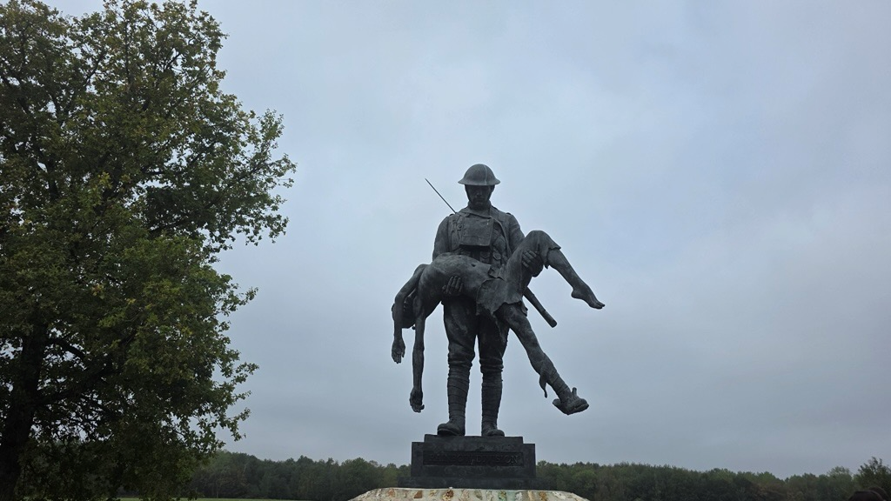
The domestic debate over American entry into World War I was far more serious and sustained than often understood. It is easy in hindsight to treat U.S. entry as the inevitable culmination of a series of German provocations. But that wasn’t the way it was viewed at the time. In reality, the public, the press, and politicians spent nearly three years debating whether U.S. interests warranted intervention, and what a larger military role overseas might mean at home. Visiting crater-pocked terrain in areas of the Western Front and Verdun’s Douaumont Ossuary made clear why many Americans were wary of sending their boys to fight in Europe. (To be sure, the debate should not be romanticized. After U.S. entry, the government actively sought to shape public opinion and suppress antiwar speech.)
The debate over U.S. entry wasn’t merely between sophisticated internationalists on the one hand and naive isolationists on the other. Many opponents of intervention followed European affairs closely and supported some forms of international engagement. What worried them was the prospect that the United States might adopt the same habits of militarization and armed rivalry that made Europe so unstable.
That concern was especially clear in the preparedness debate. Before the war, the United States maintained a very small standing army by European standards, in part due to long-held fears of large, permanent armies as a threat to liberty. As the conflict dragged on, Theodore Roosevelt and organizations such as the National Security League pushed for a much larger military establishment. Their opponents worried about what would come with it, including higher taxes, greater executive power, and the growth of a European-style military caste that could develop interests of its own.
This debate also raised a broader question that remains relevant. Does greater military capacity merely bolster deterrence and give policymakers more options, or can it instead make intervention easier and thus more likely?
Congress dealt with a related problem as the United States moved closer to war. Even in early 1917, as relations with Germany were deteriorating quickly, lawmakers were still arguing about steps short of intervention, including whether the president should be allowed to arm merchant ships. Opponents warned that the country could slide into war through a series of smaller decisions, without Congress formally deciding that war was necessary.
Compared with many more recent American wars, the debate before World War I looks unusually lengthy and rigorous. Congress has not formally declared war since World War II, and presidents have frequently undertaken military operations without congressional authorization. In other cases, Congress has passed broad authorizations, such as the 2001 AUMF, that successive presidents have stretched to justify operations across the globe.
It’s not hard to wonder whether such a prolonged, serious debate would be possible today. Congress still possesses powerful constitutional tools, including authorization and funding, but over time, it has ceded much of its authority on the use of force to the executive.
Modern military technology has also allowed wars to be launched with much greater speed and secrecy. Presidents can quickly order strikes without first mobilizing a large army, moving hundreds of thousands of troops by sea, or asking much of the public beforehand. This can further narrow the opportunity for debate before military action begins.
What is striking, then, is how long Americans continued to argue over the basic question of whether World War I was their war to fight. Even by the spring of 1917, there was no overwhelming public demand for U.S. entry. Opinion shifted rapidly after Germany resumed unrestricted submarine warfare, but President Woodrow Wilson had not simply been carried into war by popular pressure.
None of this means that U.S. entry was undoubtedly wrong, or that military preparedness was inherently misguided. Germany’s resumption of unrestricted submarine warfare substantially changed the problem facing the United States. But the years before U.S. entry forced policymakers to confront vital questions that are easy to lose sight of once fighting begins.
U.S. Mobilization
On April 6, 1917, the point the United States decided to intervene in World War I, the Army stood at 127,500 and the National Guard around 180,000. Six weeks later, Congress passed the Selective Service Act, federalizing the National Guard and requiring military conscription for all men between the ages of 21 and 30. It was the first draft since the Civil War, and by 1918, the president expanded it to include all men from 18 to 45. A little over 24 million Americans ultimately registered, and 4 million Americans served in the Army in World War I.
The United States instituted the draft because it lacked well-trained troops ready to deploy to the European continent, but also because reliance on volunteers threatened the labor force needed for wartime industrial mobilization. Within a year of entering the war, the Army stopped accepting volunteers to enlist. The Army granted about 100,000 men deferments to support ship construction, whether they had prior shipbuilding experience or not. Still, the deployment of millions of men to Europe created a massive labor shortage that complicated industrial mobilization efforts.
There were thousands of labor strikes in the first six months of U.S. involvement in the war. Metal workers, shipbuilders, coal miners, and others supporting the war effort faced growing costs of living, brutal working hours, and demanding work conditions. Meanwhile, the Great Migration of Black workers seeking a better life in the north and the entry of about two million women into the workforce stoked conflict within the labor force.
One of the worst outbreaks of racial violence in the World War I period occurred when the Aluminum Ore Company hired Black workers as strikebreakers in East St. Louis, Illinois. White workers in an active dispute with the company proceeded to indiscriminately attack the Black population there, murdering between a hundred and two hundred people while ousting about 6,000 people from their homes. The Wilson administration faced sharp public criticism for refusing to intervene. Instead, it focused on war mobilization, primarily through the National War Labor Board (NWLB) and the War Industries Board. The latter operated only from July 1917 to December 1918, with explicit focus on prioritizing war industry needs.
A Decisive Role in Victory But Not in Peace
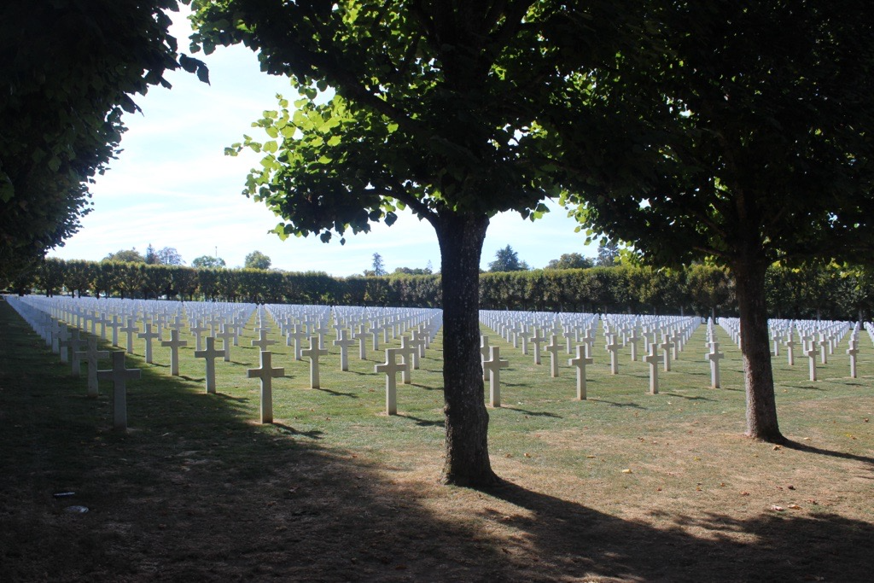
While the United States contributed far fewer soldiers to the war effort than the other Allies, U.S. entry into World War I did prove decisive. Four years of grinding war had left both the Triple Entente and the Central powers with millions of casualties and desperate publics. The entry of the Americans swung the balance towards the Entente, facilitating their victory in under a year following the arrival of major deployments of American troops in March of 1918.
President Wilson had likewise played a major role in the diplomacy to end the war. Notably, he had sent a peace proposal to Germany in 1916 that was later seen by the Germans as a missed opportunity to end the war prior to U.S. entry. He played a critical role in the Paris Peace accords, pushing his agenda for a League of Nations and the concept of self-determination (at least for the great powers of the day).
But when it came to the final peace agreement at Versailles, the United States failed to positively shape the outcome. Wilson’s failure to secure domestic support led to the first ever instance of the U.S. Senate rejecting a peace treaty. Wilson’s vision of a “peace without victory” was roundly rejected by the Allies, who instead sought maximum concessions from Germany and the other defeated powers.
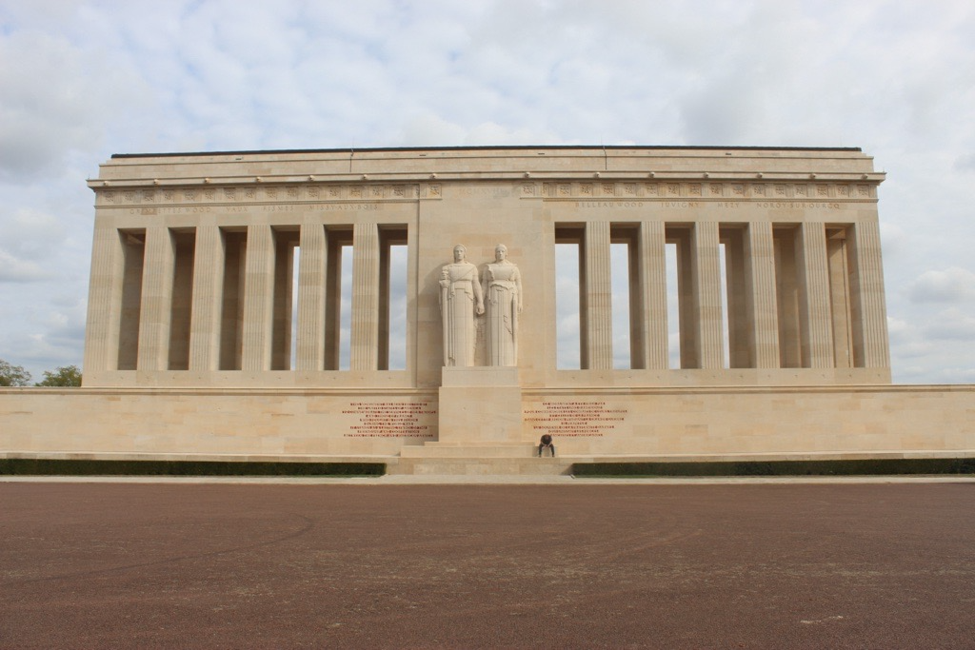
This would have dire consequences given the animating role of the victor’s peace in the rise of National Socialism in Germany. Our trip to Compiegne, where the armistice was signed, highlighted how the grievances regarding the war’s end became a central narrative for Adolf Hitler. In 1940, Hitler would use the same train car that the World War I armistice had been signed in to humiliate the French as they were forced to sign the armistice for the Battle of France.
There are books worth of lessons from the end of World War I and the U.S. role, but it was particularly provocative to think about the current role of Congress in ending conflicts and the challenges posed by partners in war termination. Over two consecutive presidential administrations, there has been disagreement within Congress and between Congress and the White House on how to support Ukraine following the 2022 Russian invasion. Like in World War I, while the United States has played a crucial role, Ukraine has given immeasurably more, and understandably feels differently about the terms for peace than the United States does. The United States has struggled to shape the terms of peace because of its own position towards Russia and domestic pushback to any agreement seen as placating the aggressor, both of which have parallels with World War I. The lesson of pushing for a peace without victory is worth remembering as debate continues on how to end the war.







Community Adaptation for a Water Festival Without Clean Water