
Introduction
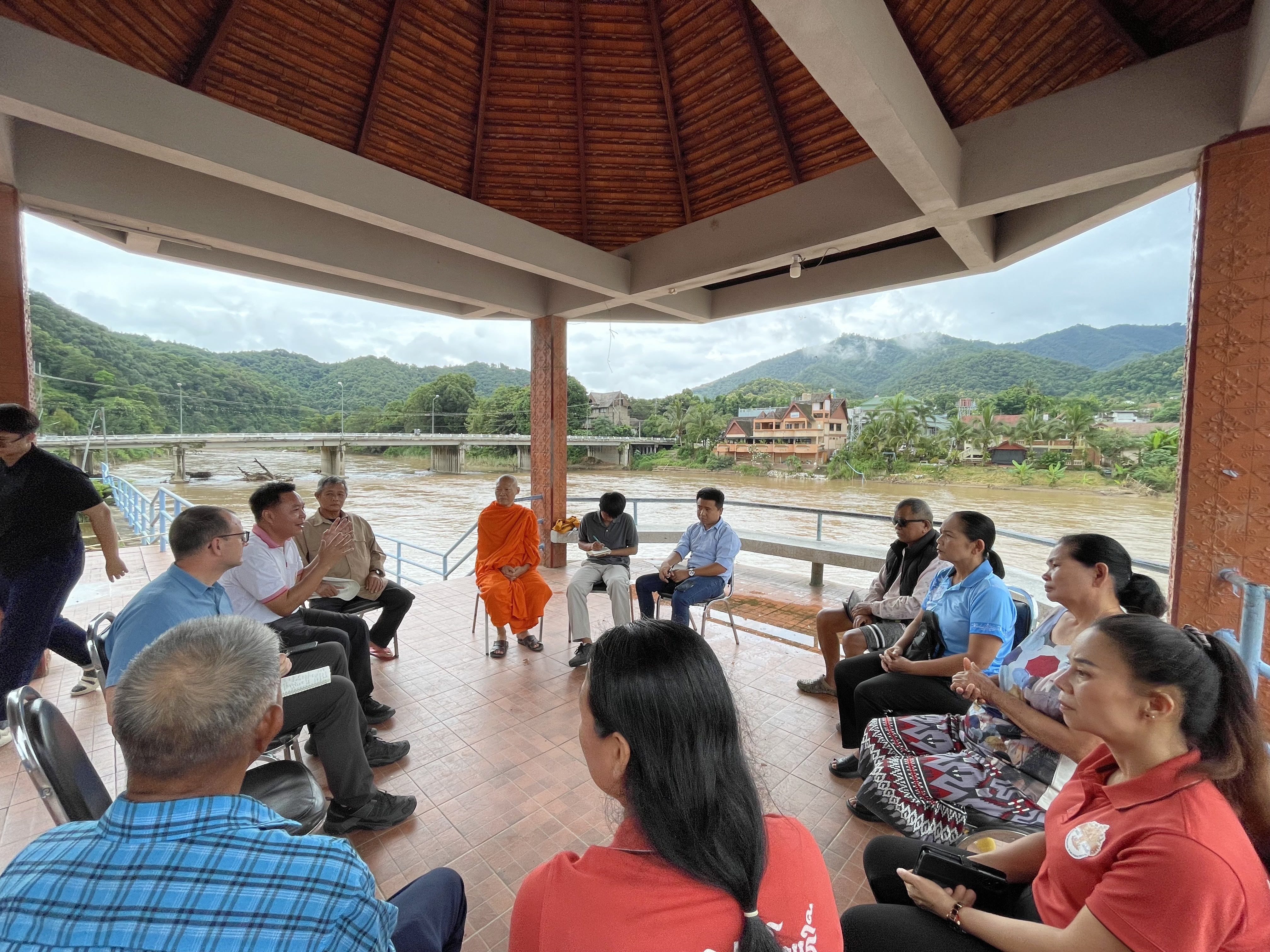
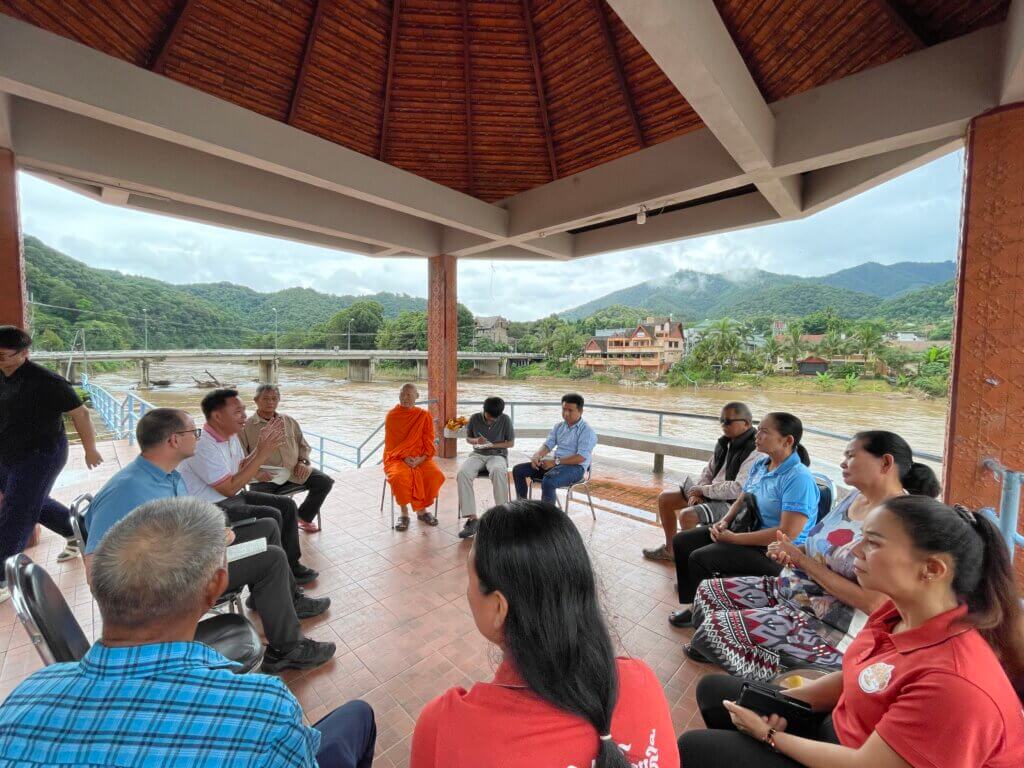
In mid-August, we conducted fieldwork in Thailand’s Chiang Rai and Chiang Mai provinces to investigate how pollution from unregulated Chinese-operated rare earth mines in Myanmar impacts the health and livelihoods of communities living along the Mekong mainstream and three transboundary tributaries. We’ve identified a looming health crisis that has potential to affect hundreds of thousands of people. This crisis could devastate the local economy, which relies heavily on agriculture and tourism. The Thai government’s response is too slow and too opaque to address the concerns of local people. Experienced community activists and civil society organizers are mobilizing to support communities and farmers, but they lack tools and methods to address this completely new and complex issue. No one we met with believes the authorities in Thailand, Myanmar, or China have either the motivation or the ability to stop the actions of unregulated Chinese miners. In Laos, Chinese mining for rare earths has now spread into numerous Mekong tributaries and other river systems that flow from Laos into Vietnam, posing health and economic risks within all countries of mainland Southeast Asia.
In the coming weeks, we plan to publish more research on this new crisis unfolding in the Mekong. Below is a summary of top-level concerns and findings from our field work in northern Thailand.
Click here to explore our dashboard showing how pollution from rare earth mines interacts with rivers, communities, and more throughout mainland Southeast Asia.
Toxic Rare Earth Mining on Upstream Mekong Tributaries in Myanmar
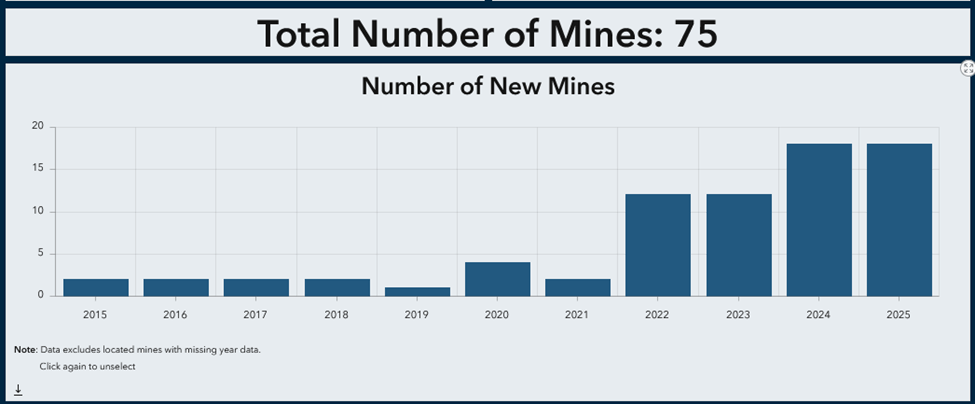
Time series of rare earth mines in the Mekong Basin (Myanmar and Laos) from 2015-2025. Data: Planet Labs, Stimson.
Unregulated rare earth mining started in Myanmar’s portion of the Mekong Basin and then expanded into Laos. Activity has ticked up significantly in the last four years. Using high-resolution satellite imagery from Planet Labs, our team identified 60 rare earth mines in Myanmar’s portion of the Mekong Basin.
The mining process is highly toxic. Injecting water mixed with fertilizer or acid into deforested hillsides creates a liquid slurry that collects in downhill pools to separate the rare earth raw materials. Siphoned river water is then sent back into local rivers polluted with heavy metals and chemicals such as arsenic, manganese, mercury, and cadmium among others. A recent BBC article highlights that for every one ton of rare earth minerals processed, two thousand tons of toxic waste is produced. Because rare earth mining sites are only viable for a few years, miners tend to rapidly develop new mines within close proximity of defunct sites.
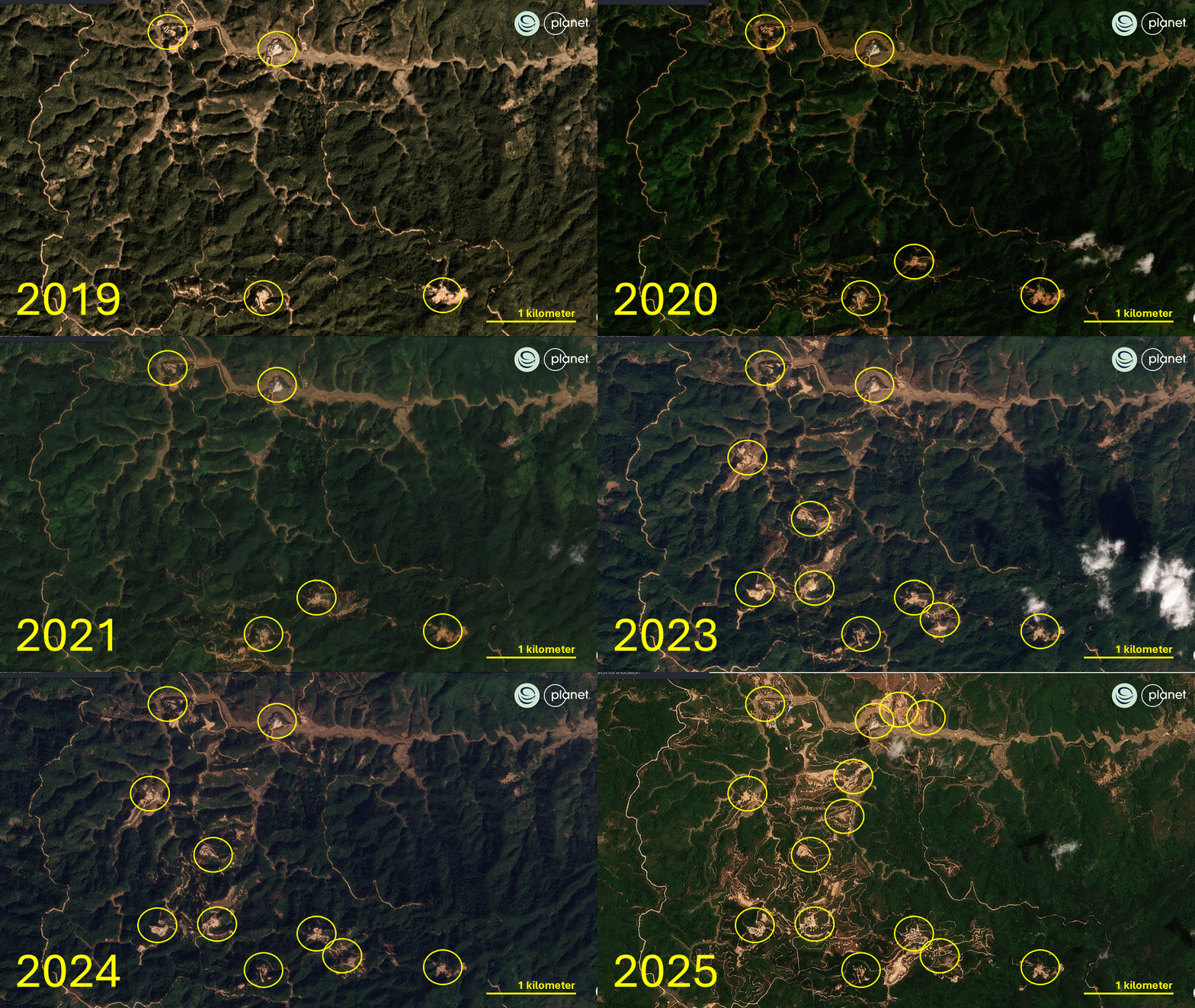
Rare earth mines quickly proliferate across hillsides from 2019-2025 in Wa State, Myanmar. Imagery: Planet Labs.
Experts in Chiang Rai Province suspect the mines are owned and operated by Chinese companies, whose owners may be posing as Myanmar citizens. They have traced the movement of Chinese miners from Kachin State in northern Myanmar to Shan State, which borders Chiang Rai Province. In a June 8 Facebook post, China’s Embassy in Bangkok publicly denied any involvement of Chinese miners in rare earth mining operations in Myanmar. Rare earths transported overland from Myanmar into China support the manufacturing of electric vehicle components, wind turbines, and medical equipment, among many other products. In discussions with community members, multiple people speculated that some of the rare earths are illicitly transferred to China through faster road systems in Thailand and Laos or via cargo ship up the Mekong River.
Where Are the Mines?
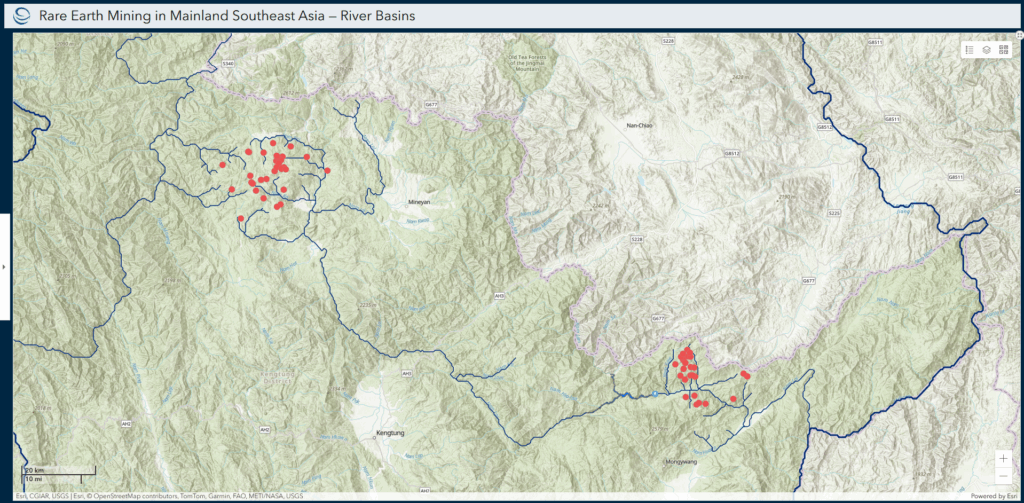
The mines in Myanmar are concentrated in territories administered by ethnic armed groups with close ties to Beijing. These ethnic armed groups often engage in illicit extractive industries or narcotics manufacturing to generate income that supports the administration and defense of their territory. They also at times openly engage in conflict with Myanmar’s central government in a civil war that has persisted for decades. The Nam Lwe (Nam Loi) River, a 200-kilometer long tributary of the Mekong that enters the Mekong mainstream along the Myanmar-Lao border, about 150 kilometers upstream from Chiang Rai, has the highest concentration of rare earth mining in the river basin. Prompted by reports on the recent growth of mines in United Wa State Army and National Democratic Alliance Army (NDAA) territory by Shan Human Rights Foundation, our team used satellite imagery and identified 31 rare earth mines in Wa State near the Nam Lwe headwaters, and 26 mines in NDAA territory farther downstream.
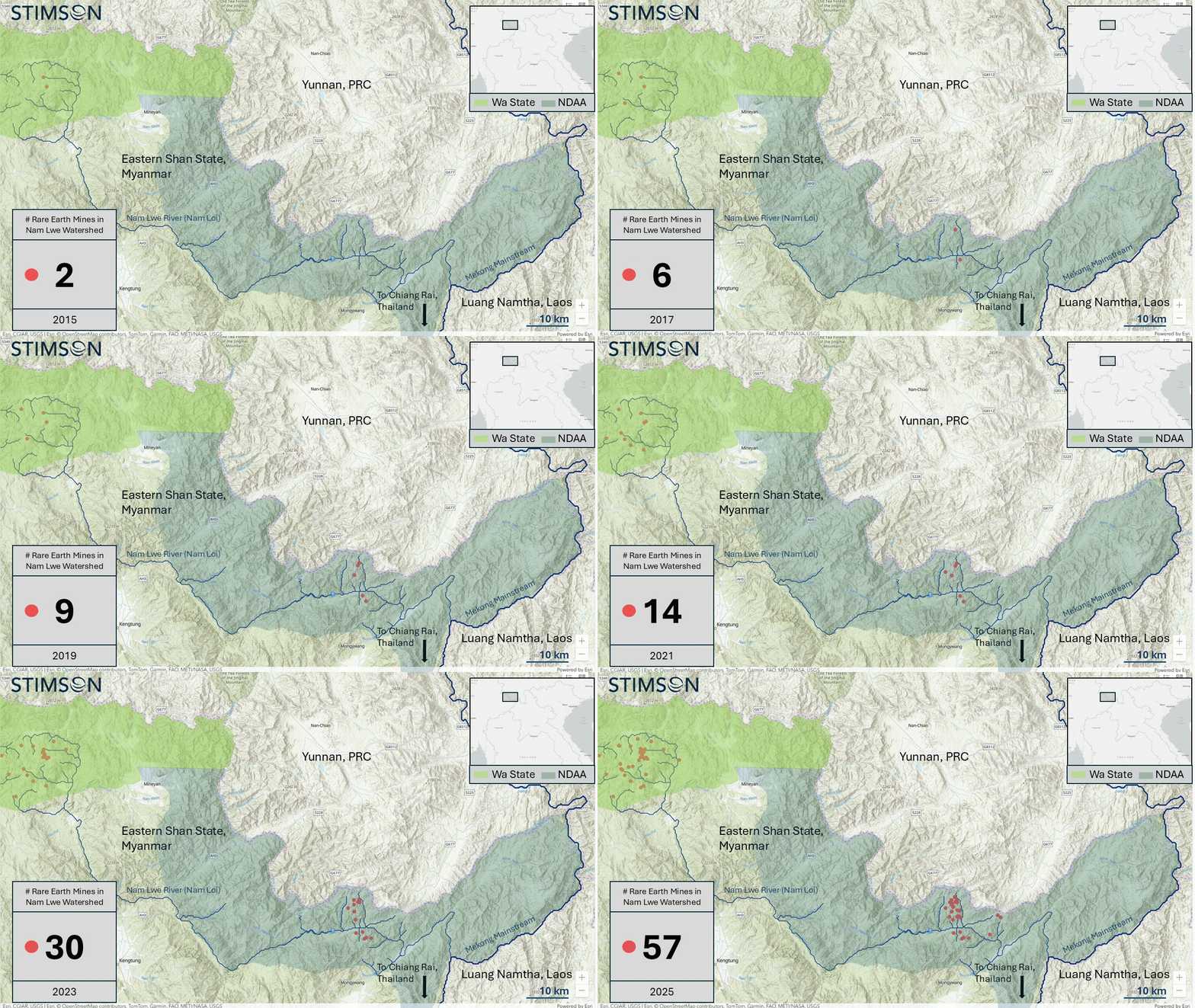
Rare earth mine development on the Nam Lwe River in Myanmar (2015-August 2025). Data: Planet Labs, Stimson.
The Kok River flows from Myanmar into Thailand, first into Chiang Mai province and then into Chiang Rai province. The Kok is the largest tributary of the Mekong in northern Thailand and supports much of Chiang Rai’s agricultural and tourism economies. Current satellite imagery shows that three rare earth mines are active on the upstream of the Kok River, and at least two are possibly under development. While speaking with experts, we learned that toxins attributed to rare earth mining, such as arsenic and cadmium, have been found in water samples at all testing sites in Chiang Rai province since testing began in March 2025.

Locations of mines and affected rivers in the Golden Triangle area. Data: Planet Labs, Stimson.
The Sai and Ruak Rivers meet at the border town area of Mae Sai, Thailand, and Tachilek, Myanmar. Satellite imagery suggests one rare earth mine is active in the headwaters of the Sai River, and at least nine gold mines are active with five in development. The Sai-Ruak River forms the Thai-Myanmar border and flows into the Mekong at the Golden Triangle town of Sob Ruak — where toxins have been found at all water testing sites along the Thai side of the river.
Independent testing conducted by Dr. Wan Wiriya from Chiang Mai University’s Environmental Science department has applied a Heavy Metal Pollution Index to water, soil, and sediment testing. All tested sites in the Kok, Sai-Ruak, and Mekong mainstream exceed medium pollution limits for a cocktail of heavy metals. Communities where the index exceeds high pollution thresholds are Thaton in Chiang Mai, where the Kok River enters Thailand, and Sob Ruak, where the Sai-Ruak River enters the Mekong. At Mae Sai-Tachilek, pollution levels nearly 100 times higher than the threshold set for high pollution were detected.

Chiang Mai University Dept of Environmental Science water testing results using an index of heavy metals.
Impacts
Since 2022, Mekong activists and civil society groups have noted that flooding along the Sai-Ruak River is increasing in severity and frequency. During our fieldwork, we learned the Sai-Ruak floods were unique for being much muddier and sediment laden than previous floods. Additionally, the sediment was “stickier” in quality compared to sediment deposited during previous flood events. In 2024, flooding led to the discovery of contamination of water and sediment in these rivers from upstream rare earth and gold mines. In late August 2024, the Kok and the Sai-Ruak Rivers flooded severely from a passing storm. Just three weeks later on September 11, 2024, the Kok and Sai Rivers flooded again as Typhoon Yagi passed over mainland Southeast Asia. These back-to-back flood events sent thick mud far and wide across the floodplains and caused significant damage in cities and towns in Chiang Mai and Chiang Rai Provinces. In 2025, the Kok and the Sai-Ruak Rivers have already flooded four times.
The mud likely came from deforested areas in Myanmar where exposed and loose soil is more likely to run off into streams during rain events. All of the rare earth mines and processing areas are in deforested areas. The sticky quality of the mud is now attributed by locals to be from rare earth mining runoff and toxic pollutants. Chiang Mai University’s Environmental Science Department is conducting DNA studies on the origin of heavy metals in the mud and has determined that more than 60% either directly or indirectly come from upstream mining activity. Changes in the composition of the mud and the relationship to heavy metals, rare earth elements, and mining warrant further study.
Slide the white button to see how the Kok River changed course after the 2024 floods at Thaton in Chiang Mai Province, Thailand.
In the Kok River Basin, the subdistrict of Thaton in Chiang Mai Province is the closest to the Myanmar border and likely receives the brunt of impacts along the Kok River. Approximately 20,000 people live in Thaton, and the subdistrict is home to 12 indigenous groups. The September 11, 2024 flood was so intense that it caused the Kok River to rise six meters in some areas while altering the course of the river (see image above). In the past, the people of Thaton came together to clear mud and debris from flooded homes, but now they avoid helping each other in order to avoid coming into contact with contaminated water and mud.
In Thaton, locals complained about skin rashes ranging in their level of severity when coming in contact with the river. Testing results posted in Thaton show toxicity levels vary from month to month at different sites along the Kok. Local people expressed worries about the upcoming 2026 dry seasons, as they need to use the river. For some villages during the dry season, the Kok is the only source of water for consumption and farming. The local government has yet to come up with a solution for the provision of safe drinking water and non-potable water for Thaton subdistrict, thus shifting the cost and anxieties of access to clean water entirely onto the shoulders of local people. Previously, fishing provided both an important source of food and income for local people. Now, according to locals, fishing on the Kok River in Chiang Mai and Chiang Rai provinces has stopped completely. Indeed our team observed zero fishing activity on both the Kok River and the Mekong mainstream when we visited.
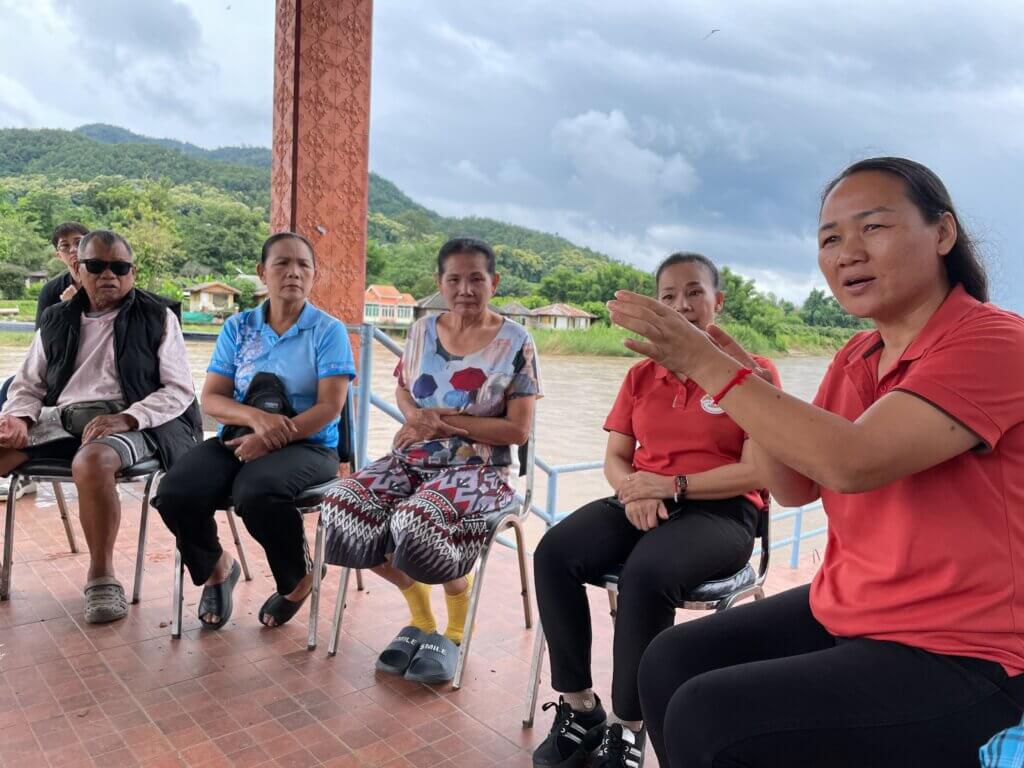
Stimson Team holds a local consultation with community members in Thaton, Chiang Mai Province, Thailand.
Thaton used to be an important ecotourist hub on the road from Chiang Mai to Chiang Rai, but due to Thaton’s reputation of being contaminated, the town’s tourism services are nearly dead. Thaton’s river port once offered boat and rafting experiences for tourists who want to float downstream to Chiang Rai City and stay overnight in indigenous villages along the way. The boat and rafting services have completely stopped, and homestay experiences and other community-based tourism services have shuttered.
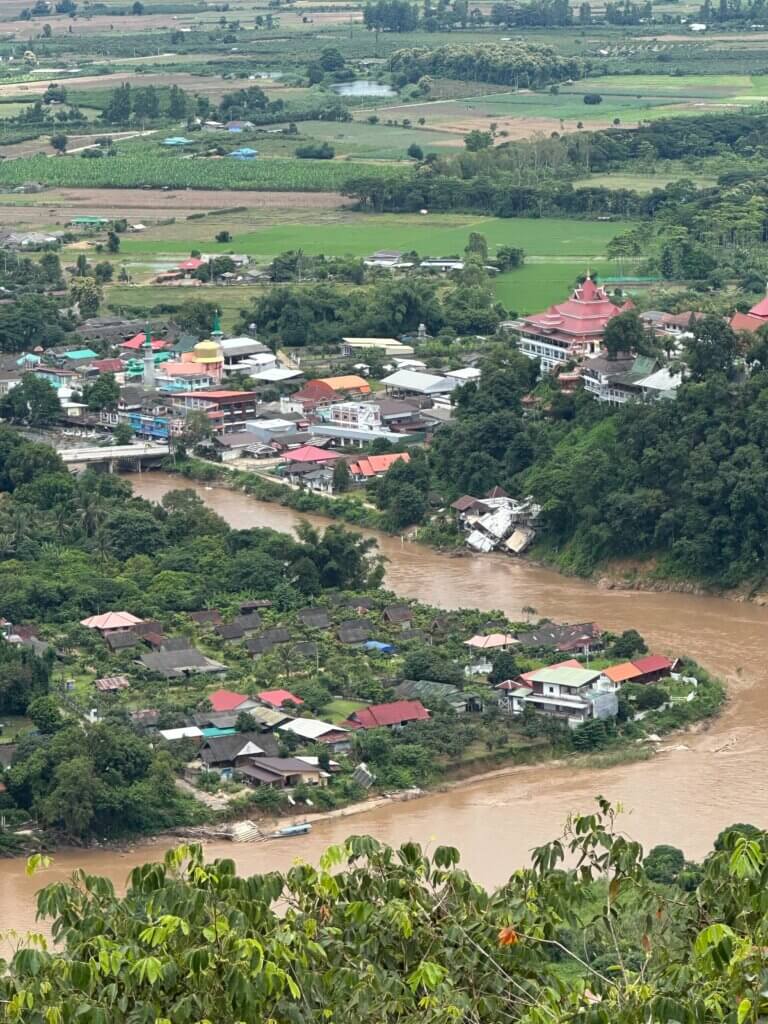
Thaton looking downstream.
The spiritual connection to the river is also changing. Loi Kratong, an important Buddhist water festival where people place votive candles in rivers throughout Thailand to ask forgiveness for taking resources such as fish from the river, no longer happens in Thaton. And an annual ritual where a Buddha statue is floated down the river, which gathers people by the thousands, is also no longer hosted on the river.
Agricultural damage is taking a huge toll on the economic security of Thaton and other communities downstream in Chiang Rai Province. Wide portions of the Kok floodplain in Thaton, where crops such as rice, oranges, baby corn, and green pepper are grown, were flooded, and much of the crop was entirely ruined. Today, crops from Thaton are pariah to consumers in Chiang Rai and Chiang Mai province, and fishing along the Kok in Thaton has completely halted. Testing by Chiang Mai Region’s Office of Environmental and Pollution Control beginning in March 2025 showed rare earth-related toxins were present in the river water and sediment. Government officials have told people in Thaton that their crops and fish are safe to eat but are best avoided, leading to further confusion for residents who can never be certain of whether their foods are safe to consume. While local consumers have started to avoid buying crops from this part of Thailand, products like rice and baby corn are still harvested and sold to canners that distribute the products to supermarkets around the world.
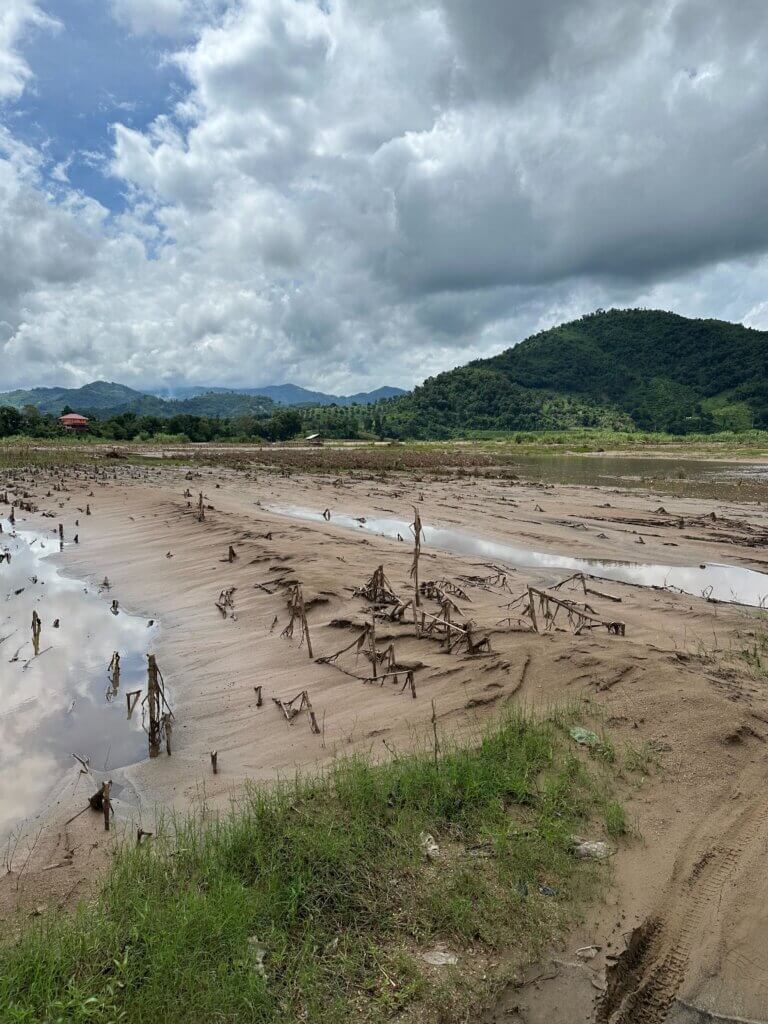
Ruined fields of baby corn from 2025 floods on the floodplain of the Kok River.
Call to Action
Much of the local government response is driven by community activism. By our own measure, northern Thailand has long been home to the highest concentration of civil society groups active on Mekong conservation issues. Many of these groups such as the Romphothi Foundation in Thaton and the Mekong School in Chiang Khong along the Mekong mainstream were longtime beneficiaries of U.S. government funding now cut by the Trump Administration. These groups, alongside advocates like Pai Deetes from International Rivers and academics from universities in Chiang Rai and Chiang Mai, are throwing their energies into citizen science-led monitoring activities and teach-ins around the affected provinces.
They have collectively joined forces under the banner of “The People’s Network to Protect the Kok, Sai, Ruak, and the Mainstream Mekong Rivers” to coordinate activities and messaging as a community voice. Yet, these groups lack resources and tools to address the complexity of the issues; and for this group, which usually focuses efforts on anti-dam campaigns and sovereign food rights, this is an entirely new issue. They struggle with trusting official government testing results when academic laboratories show levels of contamination much higher than what government testing has produced. Universities in Chiang Rai and Chiang Mai provinces have the capabilities and labs to test water, sediment, and soil, but they lack certification, and as such, their data cannot be used for official decision making. Local communities need answers regarding the health implications that exposure to contaminated water, food, and soil can cause. They need to know what foods are safe to eat and sell at the market and which foods are not. And most importantly, they want to stop the mining activity upstream.
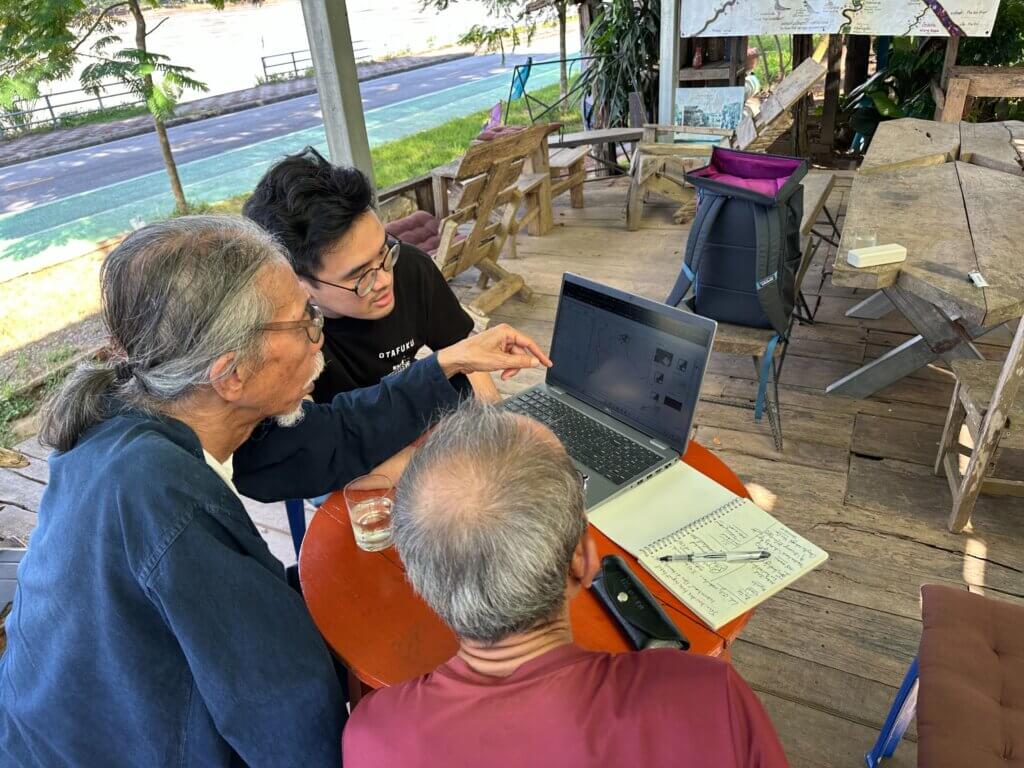
Stimson’s Regan Kwan showing locations of rare earth mines to Mekong School Founder Niwat Roykaew.
Currently, information dissemination from Thai government agencies is spotty and inconsistent. An effective response to this crisis requires the coordinated efforts of a handful of Thai government agencies, but experts voiced that these agencies are known to move at different paces and are not used to coordinating in such a manner. The Chiang Mai Office of Environmental and Pollution Control has acted most effectively, setting up more than 20 testing sites along the Kok and Sai-Ruak Rivers and publishing results on information boards in main towns and online (see image below).
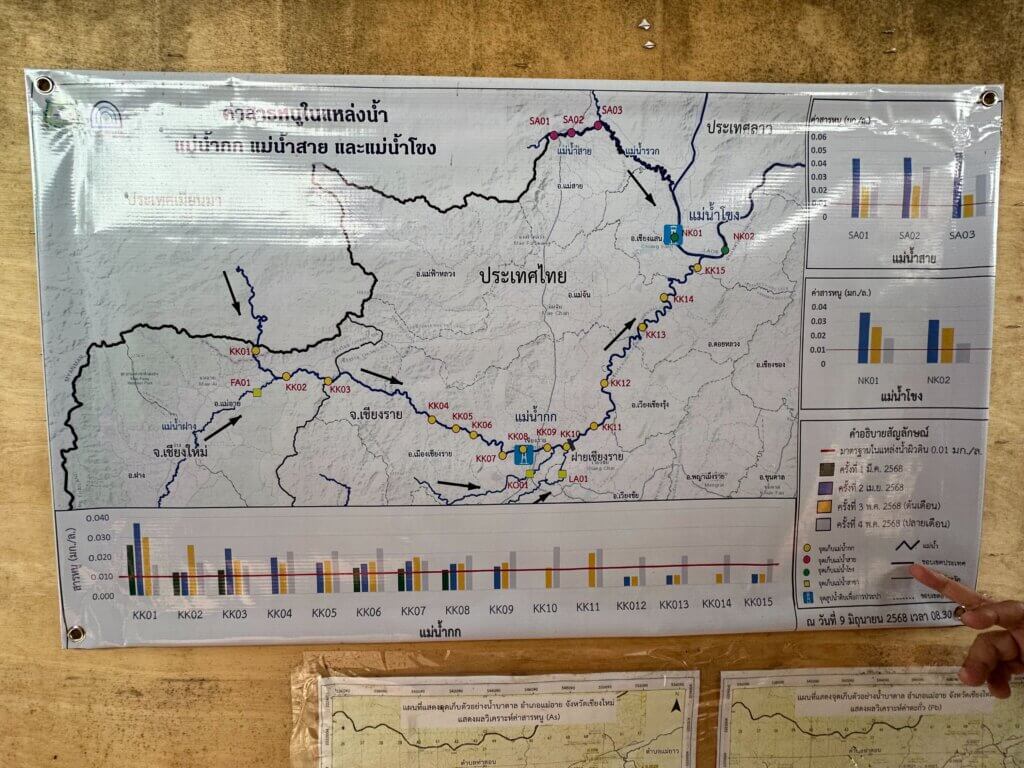
Information board in Thaton shows water quality testing locations and pollution levels since April 2025.
However, these results are not accessible by all people within affected communities, such as the elderly and handicapped, who cannot travel to villages or access online resources easily. The same can be said regarding basic information about how to prevent exposure or lower risk to contaminated water. At the end of July, Thailand’s Ministry of Public Health started collecting urine samples from villagers in Chiang Mai and Chiang Rai provinces, but test results have yet to come back to local public health clinics. We also heard that some higher-level officials are telling local officials to keep quiet and bury the bad news as to not draw unnecessary attention to the issue. As a result, local people now speak of a possible cover-up to protect suspected Thai interests, which might be benefiting from economies generated by rare earth mining.
Political will could be building up at the national level to spur more action on this pressing issue. In late August, Thailand and Myanmar agreed to a joint monitoring operation of the Kok, Sai, and Ruak Rivers. Monitoring can inform a better policy response, but it will unlikely curb the activity of Chinese mine operators in Myanmar. These miners operate in territories totally out of reach of Myanmar’s military-led government. Stopping the mining, which many see as an unlikely outcome at least in the near term, will also require the involvement of Beijing or other political actors in China who so far have shown zero motivation to address the issue.
Transboundary and Regional Scale
On August 20, the Mekong River Commission held a consultation with Chiang Rai government and non-government stakeholders to hear concerns and communicate preliminary plans to address the crisis. Many experts and activists we met while conducting our fieldwork either spoke at or attended that meeting. Most agreed that the convening was a step in the right direction, although they are unsure how the Mekong River Commission will act on what was presented at the dialogue. This was one of the first times the Mekong River Commission, a regional governmental organization composed of Thailand, Cambodia, Laos, and Vietnam, organized a dialogue with civil society actors on a particular Mekong-related issue. Given that rare earth mining pollution is already affecting rivers and people in Thailand and Laos, two MRC member countries, there is merit in the MRC’s involvement with this issue.
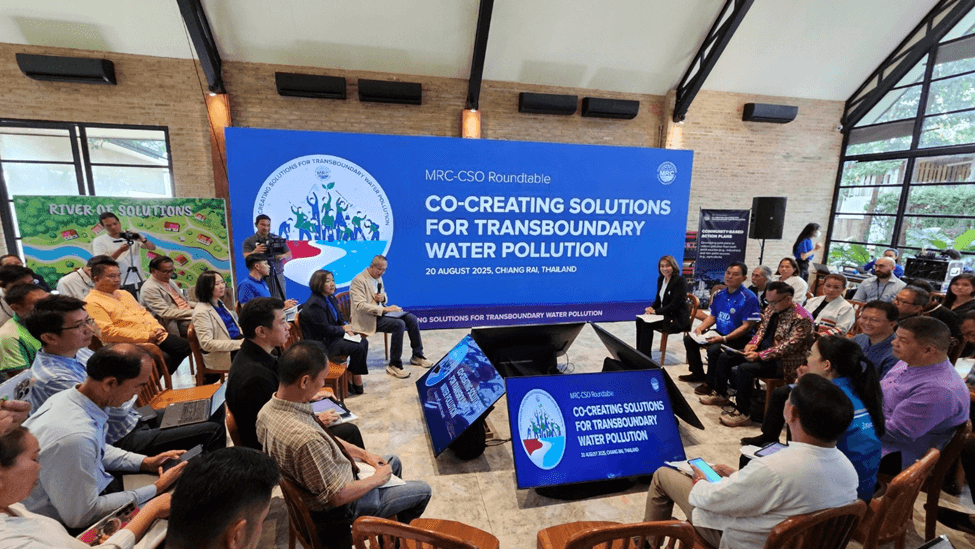
Mekong River Commission held a consultation with community members, government officials, and civil society groups in Chiang Rai, Thailand on August 20, 2025. Image: Mekong River Commission Facebook Page
Our field engagements focused on rare earth mines because those are the mines involved in the recent cross-border pollution on Mekong tributaries in Chiang Rai province. However, similar contamination concerns are also relevant for other common mine types in the region such as gold mines, which are proliferating throughout Myanmar and Laos. The extent and scope of mining in the region is not well mapped, but implications for rivers are increasingly coming to light.
Last year RFA reported on pollution cases related to two rare earth mines in Laos, and our own investigative work has found 15 rare earth mines on Mekong tributaries in Laos (three on the Nam Khan and 12 on the Nam Ngiep). A source has told us that entire communities situated downstream from mines in Laos’s Houaphan Province cannot use river water for daily use or fishing. These rivers in Houaphan Province are not in the Mekong Basin but rather flow into Vietnam’s central provinces (two mines on the Song Ma system, eight on the Song Chu system, and two on the Song Lam system).
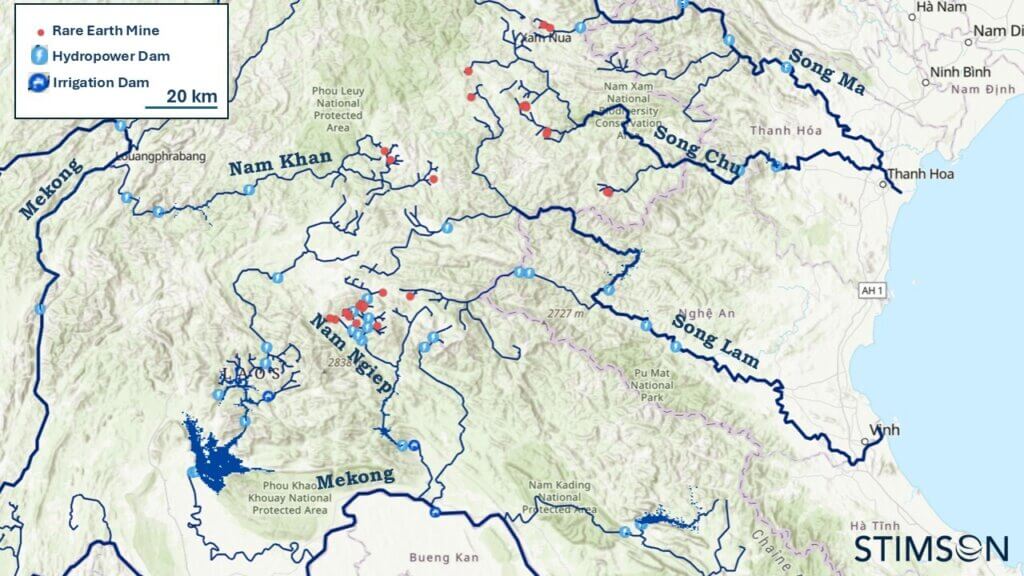
Locations of 27 rare earth mines in Lao PDR. Data: Planet Labs, Stimson.
The most downstream of rare earth mines situated on the Nam Ngiep River in central Laos empty into the Mekong Mainstream just over 300 kilometers upstream from Cambodia. And mining activity other than rare earths is beginning to show up along rivers in southern Laos even closer to Cambodia. This suggests Cambodia’s mainstream and possibly the Tonle Sap Lake, which when combined are responsible for producing 70% of the animal protein intake of the Cambodian population, are already experiencing levels of contamination.
Next Steps
This field note only scratches the surface of what we learned while in Thailand. In the coming weeks, we plan to publish research that further explores the impacts of rare earth mining pollution on communities, chronicles and assesses the Thai government response to date, analyzes the rare earth mining supply chain, and provides more insight on the regional scale and transboundary implications of the mining. If you have information to share about these topics, please write Brian Eyler at [email protected].
Other Suggested Resources
Rare earth rush in Myanmar blamed for toxic river spillover into Thailand (Mongabay: June 9, 2025)
Webinar: Where’s the Water Mekong Wet Season 2025 (Stimson: July 2, 2025)
The Wartime Mining Boom Exporting Rare Earths, and Toxins
A Rebel Army is Building a Rare-Earth Empire on China’s Border (Bloomberg: July 18, 2025)
Rare Earth Mines in Myanmar Are Poisoning Thai Rivers (The Diplomat, September 2, 2025)







Community Adaptation for a Water Festival Without Clean Water