
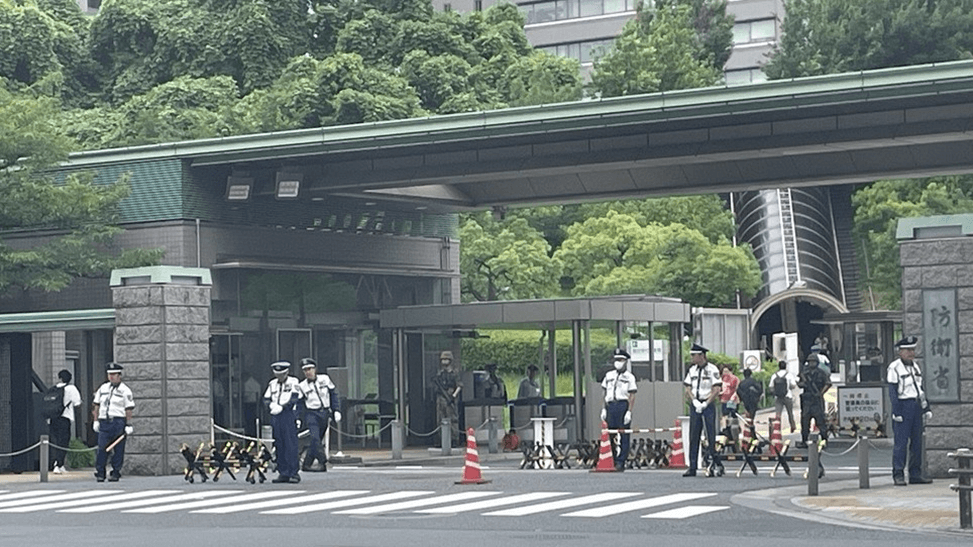
Six months into Donald Trump’s return to the White House, much of Washington’s foreign policy establishment has sounded the alarm. Editorial pages warn of escalating tensions with allies and renewed doubts about the credibility of American security guarantees. Most of the concern has focused on Europe and NATO. But what about U.S. allies in the Indo-Pacific, where the stakes are arguably highest? How are they viewing their relationship with Washington?
In late June 2025, we traveled to Japan and the Philippines—two allies standing on the frontlines of the China challenge—and interviewed nearly 30 government officials, active and retired senior military leaders, and various experts with backgrounds in security, defense policy, and U.S. alliance relations. Given Trump’s rhetoric, tariffs, and the potential stakes of China’s growing power and assertiveness, we expected to encounter deep anxiety about American reliability. Instead, we found a striking degree of continuity and calm. The allies may not be entirely at ease, but they are far from panicked.
The perception among U.S. allies in Asia that Washington is largely conducting “business as usual” may provide short-term reassurance, but it also risks creating complacency and slowing efforts to address urgent issues like burden sharing. Three themes emerged from our conversations that help explain why the region remains relatively unfazed—and what that reveals about the trajectory of America’s Indo-Pacific alliances.
Continuity in Actions and Rhetoric
Despite initial anxiety, Japanese and Philippine officials were reassured by a surprising degree of continuity in both rhetoric and practical military cooperation. Many of those we interviewed acknowledged that, in the months leading up to and following the start of the administration, there was widespread trepidation about their respective alliances’ uncertain future. In March, for example, Trump complained, “We have an interesting deal with Japan that we have to protect them, but they don’t have to protect us … Who makes these deals?”
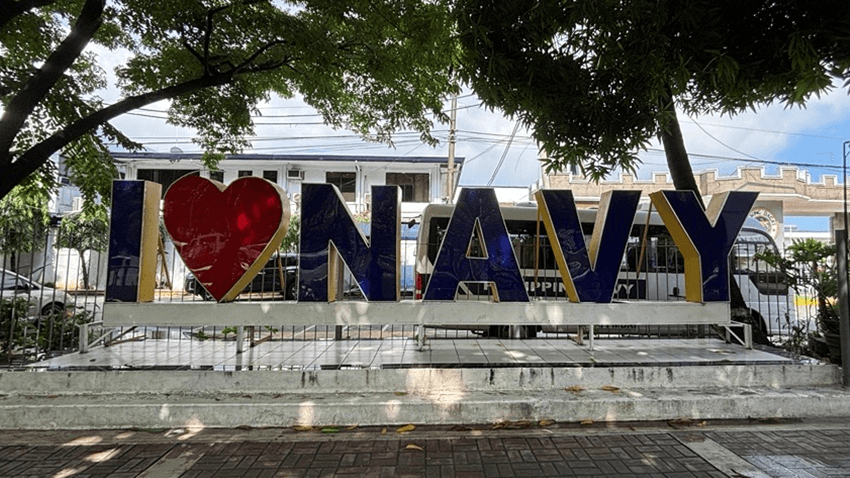
Sign in front of the Philippine Navy Headquarters in Manila
Combined with demands for greater burden sharing, an amorphous “America First” doctrine, and the widely circulated footage of Ukrainian President Zelenskyy being berated in the Oval Office, such rhetoric raised fears that Trump would adopt a far more confrontational approach to Asian allies. Yet, as weeks turned to months, officials in Tokyo and Manila found reassurance in key areas of continuity. The most frequently cited sources of confidence were consistent policy signals and sustained high-level engagement, particularly U.S. Secretary of Defense Pete Hegseth’s early visits to both countries and his remarks at the Shangri-La Dialogue. In contrast to Trump’s past public questioning of NATO’s Article 5 commitments in Europe, Hegseth affirmed that, “America is proud to be back in the Indo-Pacific—and we’re here to stay.” Officials and experts also found reassurance in Washington’s announcement that it would proceed with—and even accelerate—plans to upgrade the U.S. command-and-control structure in Japan and expand both U.S. capabilities and joint scenario-based trainings in the Philippines.
While those we spoke with in Tokyo and Manila expressed frustration over the administration’s tariff policies, they drew a clear line between trade tensions and U.S. defense commitments. The core security promise of the alliance remained, in their view, safe, even as economic ties had grown fraught.
Officials and experts we spoke with frequently cited the uninterrupted routine of allied activities as another key signal of U.S. commitment. They highlighted the continuation of scheduled military exercises and combined training events, noting that none had been canceled or scaled back by the administration. Most notably, Balikatan marked its 40th anniversary as the premier annual exercise between the U.S. and Philippines armed forces, with this year’s iteration featuring a “full battle test.” These activities reassured Tokyo and Manila that longstanding U.S. defense commitments endure.
Reactions to Iran
Just days before our arrival in Tokyo, the United States had launched strikes on Iran’s nuclear facilities. Interestingly, developments in the Middle East did not dominate our discussions. Officials acknowledged the strikes, but their response was quite muted.
“If anything,” one senior official noted, “it at least shows that President Trump is not an isolationist.” The attack on Iran may have reassured U.S. allies of Trump’s willingness to use force abroad, but it also invited some skepticism that the administration’s promise to make the Indo-Pacific the priority theater was anything more than empty words. Several experts pointed to the redeployment of U.S. forces—including a U.S. Patriot battalion from South Korea and two carrier strike groups from the Indo-Pacific to the Middle East—as a cause for concern.
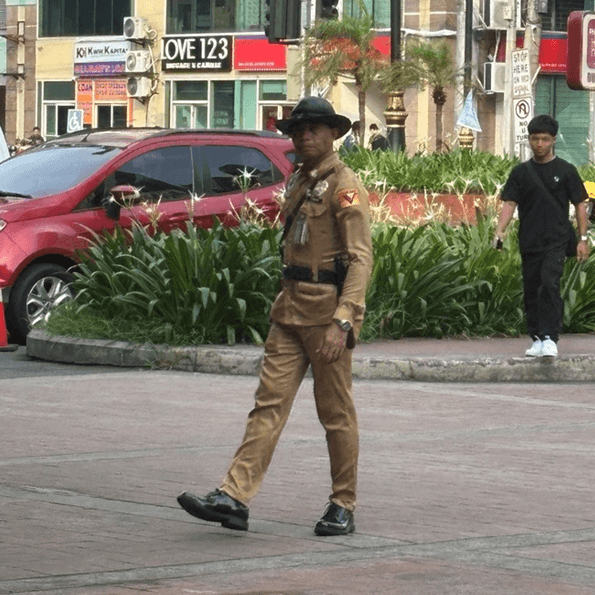
As Philippine analysts reminded us, this is hardly new. The “pivot to Asia” has been promised and postponed time and again. U.S. credibility in the region now depends as much on its willingness to use force to defend allies as on its ability to maintain strategic focus and a persistent presence in the Indo-Pacific.
Defense Budget Theater
If there was one area of frustration in both Tokyo and Manila, it was the renewed pressure from Washington to boost defense spending. Trump’s reported demands that allies spend at least 5% of their gross domestic product (GDP) on defense elicited pushback. Officials we spoke to acknowledged the importance of greater burden-sharing but emphasized that any increases must be politically and fiscally feasible for them.
Nearly every official referred to Trump’s aggressive defense spending targets with some degree of exasperation. They pointed out that they had already increased their defense budgets — Manila’s defense budget rose by 6.4% this year; Tokyo’s by 7.4%. They viewed further increases, particularly sudden demands to reach 5% of GDP, as unrealistic. In the Philippines, experts stressed that no matter the incentives or threats, a constitutional mandate prioritizing education over defense would continue to limit spending on the military.
This is likely regardless. Given that both allies feel reassured by U.S. defense commitments, domestic politics are likely to prevail over American demands. This dynamic is especially evident in Japan, where the Trump administration’s push for Japan to raise defense spending to 3.5% of GDP reportedly led to the cancellation of the planned foreign and defense ministers meeting—the 2+2 talks—originally scheduled for July 1.
Even with recent increases, Japanese and Philippine defense budgets fall well short of meaningful burden sharing. Japan spends just 1.6% of its GDP on defense, and even its much-heralded plan to “double” its defense budget by 2027 actually amounts to only a 65% increase over five years. The Philippines spends even less, with its defense spending amounting to 1.3% of its GDP. For Washington, these figures underscore a long-standing problem—America’s allies continue to underinvest in their own defense even as they face growing security challenges.
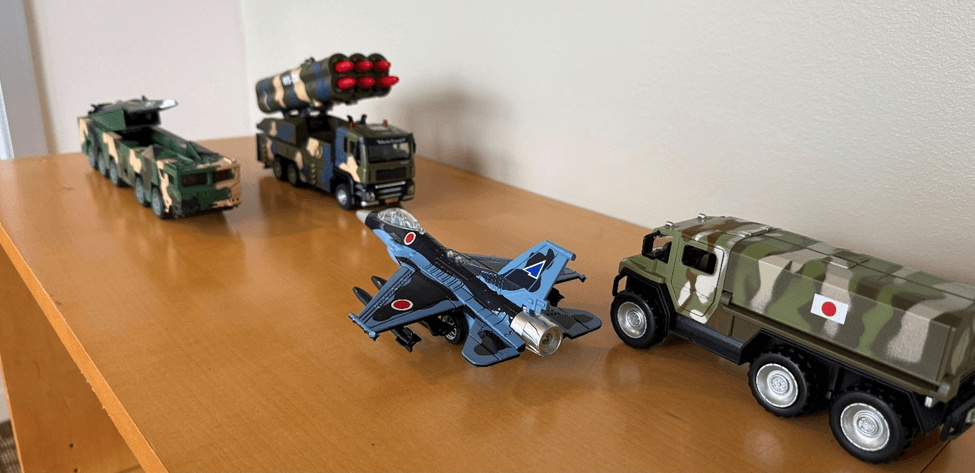
Models of the Japanese F-2 fighter and a missile launcher truck, acquired from the Japanese Ministry of Defense, facing adversary models.
Ultimately, the situation remains close to business as usual, albeit with more visible frustration on both sides. Confident in the credibility of U.S. defense commitments, officials in Tokyo and Manila suggested they might pursue creative accounting measures rather than undertake significant increases in defense expenditures to appease Washington. Both referenced the precedent set by some European NATO allies of reclassifying certain expenditures as defense-related to create the appearance of greater compliance with Trump’s demands. The result is likely to be more theater than meaningful burden-sharing.
Conclusion
For all the fears that Trump’s return to power would upend America’s Indo-Pacific alliances, the picture that emerged from our conversations was far more nuanced. Officials in Tokyo and Manila are not panicked — they’re pragmatic. They see a familiar pattern: abrasive rhetoric and policy U-turns (and U-turns again), followed by continuity on the ground.






Community Adaptation for a Water Festival Without Clean Water