



The Stimson Center’s Middle East Program seeks to inform policy discussions on the Middle East by leveraging regional expertise, convening dialogues, and producing rigorous, non-partisan analysis and scholarship. The program assesses regional geopolitical developments with a focus on conflict management, regional security, and post-conflict peacebuilding. Through sustained engagement with policymakers, scholars, and subject-matter experts, the program aims to advance practical policy thinking rooted in on-the-ground realities.
A core pillar of the program is the convening of high-level Track 1.5 and Track 2.0 regional dialogues that bring together policymakers, academics, and experts to conduct joint analysis, discuss de-escalation processes, and advance regional cooperation. The program also organizes issue-area roundtables to develop impactful policy recommendations informed by global lessons learned and regional experience. The program’s analysis and policy outputs are directly informed by the insights generated through these dialogues and roundtables.
This interview was originally published by Cawi Washington (Eye of Washington) Program of Voice of America Kurdish Service
June 23, 2021
June 15, 2021
The biggest question now is when the system will collapse completely—and equally important what comes in its wake—should the kleptocracy refuse to redistribute its power and wealth.
May 28, 2021

Qatar brokered a resumption of diplomatic ties between Kenya and Somalia, but challenges to peaceful relations remain.
May 19, 2021
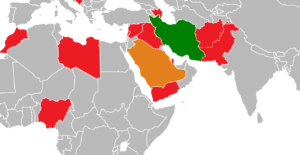
Iran-Saudi talks in Baghdad demonstrate Iraq's potential as a hub for regional dialogue, but this is a fragile process and prone to be undermined by spoilers.
May 11, 2021
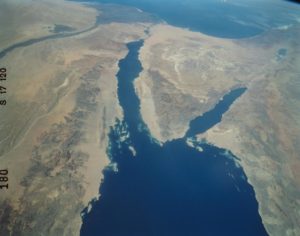
Changing regional dynamics could lead the Red Sea Council to increase its security focus or to become a more multidimensional platform.
April 7, 2021