

Editor’s Note: This article was originally published in India’s World. It is republished here with permission. No part of this text may be reproduced further, in full or in part, without the prior permission of the original publisher.
Has Washington quietly moved beyond the Indo-Pacific? As the Trump administration sends increasingly contradictory signals on China, the Quad, and regional security, allies and strategic partners are increasingly left wondering whether America’s strategic priorities are changing or its policymaking has simply become unpredictable.
In the first Trump administration and throughout the Biden administration, it was easy to make the case that global geopolitical competition with China served as the organising principle of US foreign policy. A key corollary of that principle was the increasing importance of the Indo-Pacific region to US interests and as the primary geographic theatre of the contest with Beijing. To demonstrate Washington’s embrace of that new vision, in May 2018, US Pacific Command (PACOM) was renamed US Indo-Pacific Command (INDOPACOM). Then, in June 2026, seemingly out of the blue and without warning to parts of the US government itself, INDOPACOM reverted to PACOM.
In isolation, this sort of name change would be meaningless. However, the shift came alongside a lengthy and growing list of tangible US policies that suggest the Trump administration may no longer prioritise the Indo-Pacific and could even perceive competition with China in fundamentally different ways than in the past.
According to the latest US National Security and National Defense Strategy documents, defence of America’s southern border and the Western Hemisphere are now Washington’s top strategic concerns. Judging by recent US military operations and defence expenditures, Washington’s immediate focus is the Middle East. And in listening to President Trump’s own statements, he often appears more inclined to seek a “G-2” accommodation with Beijing than to pursue sharpened competition in the Indo-Pacific or elsewhere.
In New Delhi, these changes—not to mention unwelcome US policy positions on Russia, Pakistan, and trade—have clearly set off alarm bells. Understandably so. However, to appreciate the totality of Washington’s approach to the Indo-Pacific, some additional context is helpful.
Above all, observers should appreciate the extent to which today’s US policymaking process is distracted and disrupted. The Trump administration’s strategy of “flooding the zone”—acting so rapidly and energetically that critics and opponents can barely keep up, much less mount an effective response—is typically applied to the president’s approach to partisan politics at home. However, it applies equally to the administration’s conduct of international affairs.
More than ever before, top US national security officials hopscotch across issues and regions with a dizzying pace and energy. Missing from their activities are many of the bureaucratic institutions designed to coordinate US national security policymaking. Above all, the staff of the National Security Council (NSC) has been hollowed out or sidelined. Prior to Trump 2.0, the NSC, and the interagency process writ large, systematically—if often laboriously—forced US policymakers to grapple with the many complexities and inherent tradeoffs in the foreign policy of a superpower. However imperfect, such a process was the only way to focus the manifold elements of the US national security apparatus to the purposes of a unified grand strategy. For complicated missions such as waging a sustained global geopolitical competition with China, there is no better alternative. Today, however, the president and a small coterie of top officials unapologetically make policy on the fly. It should be no surprise that their efforts frequently yield incongruous and at times even contradictory outcomes.
Such is clearly the case for the Indo-Pacific. Just as important parts of the Trump administration—at times even the president himself—appear to have deprioritised the region, others continue to churn away much as they did in the Biden years. Indeed, many US officials sound as committed as ever to the Indo-Pacific and to sharpened US competition with China and strategic partnership with India. Their words are backed by actions and resources. For instance, State Department policymakers continue to seek ways to make strategic infrastructure and other commercial investments across the Indo-Pacific region to counterbalance China’s influence. At the Pentagon, US officers continue to engage in extensive and increasingly sophisticated exercises with their Indian and other regional counterparts.
Perplexingly then, if one were to listen only to embassy diplomats and defence attachés, it would be possible to come away convinced that nothing fundamental has shifted in US Indo-Pacific policy. Yes, they will say, the United States is more full-throated in its pursuit of an “America First” agenda that self-consciously advances US prosperity and security, but it is neither distracted from nor less committed to the strategic mission of counterbalancing China in this critical region.
The contradictions in the US approach are, however, on full display when it comes to the most consequential Indo-Pacific initiative of the past twenty years—the Quadrilateral Security Dialogue, or “Quad,” which joins India and the United States with Japan and Australia in a loosely structured minilateral that is transparently (if deniably) designed to build a common front against China in the Indo-Pacific.
On the one hand, the Quad persists as before. Most indicative of its continued health is the fact that National Security Advisor and Secretary of State Marco Rubio has participated in four ministerial meetings of the group since the start of the second Trump administration, including a late May 2026 meeting in New Delhi that brought him to India for four full days. On substance, the United States has enthusiastically embraced new Quad initiatives like the Indo-Pacific Maritime Surveillance Collaboration, which builds on the earlier Indo-Pacific Maritime Domain Awareness initiative. Both are clearly aimed to improve tracking of shipping—including Chinese vessels—across the vast Indian Ocean by way of real-time information sharing among all four Quad partners.
Yet on the other hand, President Trump has so far pointedly refused to participate in a leader-level Quad summit that India was supposed to host at some point in 2025. The White House has never explained why. Trump is famously dismissive of most other multilateral groupings and alliances, so the Quad may simply be no exception. But given his penchant for personal diplomacy on issues of greatest interest, the president’s delegation of the Quad to Rubio is significant. It is hard to read as anything but an intentional downgrading of the grouping. US Ambassador to India, Sergio Gor, has almost certainly explained the message that Trump’s absence sends to the Quad partners, India in particular, and yet the President remains absent.
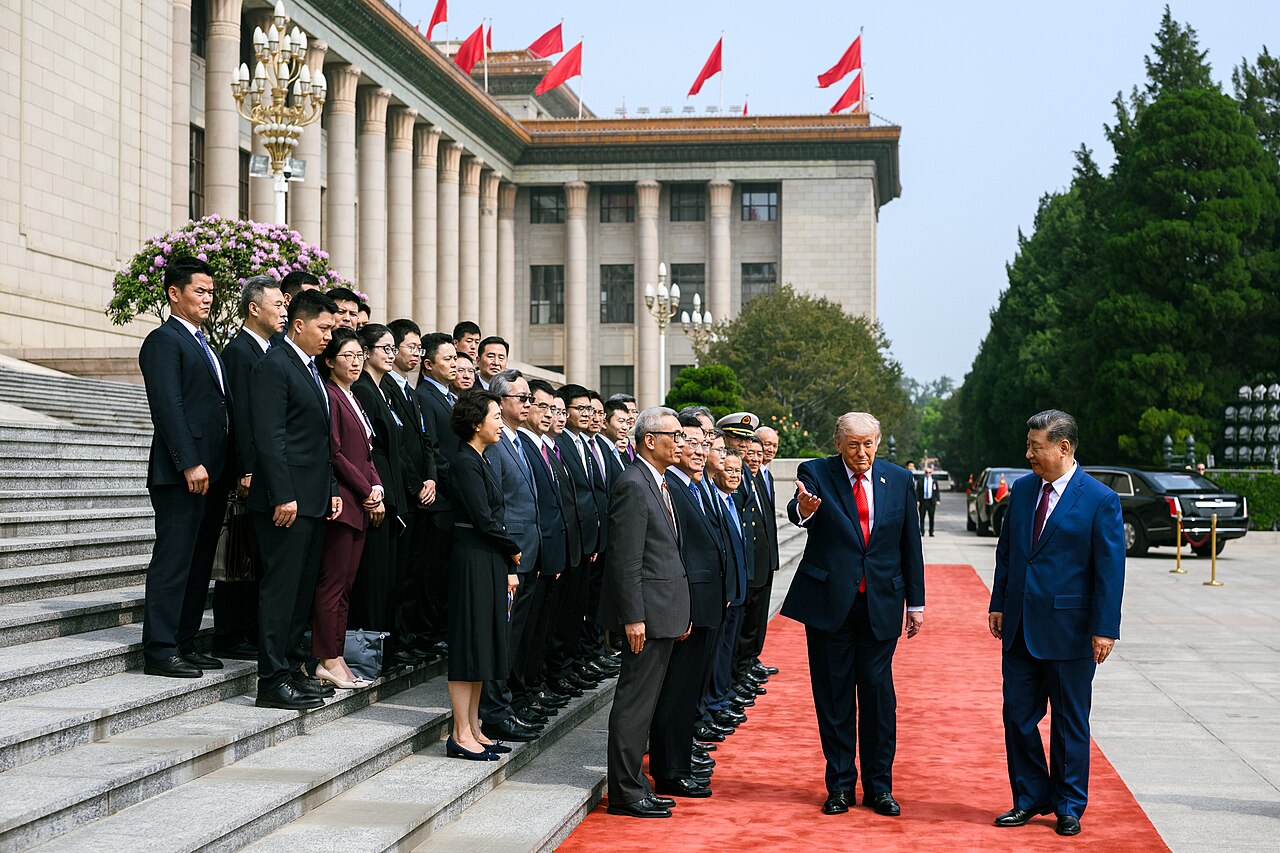
The president’s choice is also striking in light of his May visit to Beijing and his apparent reluctance to frame US competition with China primarily in territorial or military terms. Trump is more inclined to focus on economic and technological competition with China, in which the geography of the Indo-Pacific is arguably less pertinent. He clearly has no interest in promoting a “Free and Open Indo-Pacific”—a mantra of the grouping’s past—and in many ways appears comfortable with a “spheres of influence” logic to international politics in which China would naturally play an outsized role in the Indo-Pacific region. All of these views undermine the core logic of the Quad and of US commitment to engagement in the Indo-Pacific.
When seen in full, Washington’s current approach to the Indo-Pacific thus reads like a confusing jumble. It reflects neither a clear and decisive retrenchment nor a convincing and enduring strategic commitment. The key point here is that this ambiguity is the product of an unsystematic policy process and unresolved differences among top US officials; it does not conceal a grander plan or clever stratagem.
Under such circumstances, India’s restrained policy response to Washington is undoubtedly both intensely frustrating and the wisest course of action. And India will benefit from continued patience. If for now New Delhi cannot count on Washington as a steady partner in the Indo-Pacific, neither can it afford to write off the long-term US potential in the Indo-Pacific just yet.







Community Adaptation for a Water Festival Without Clean Water