
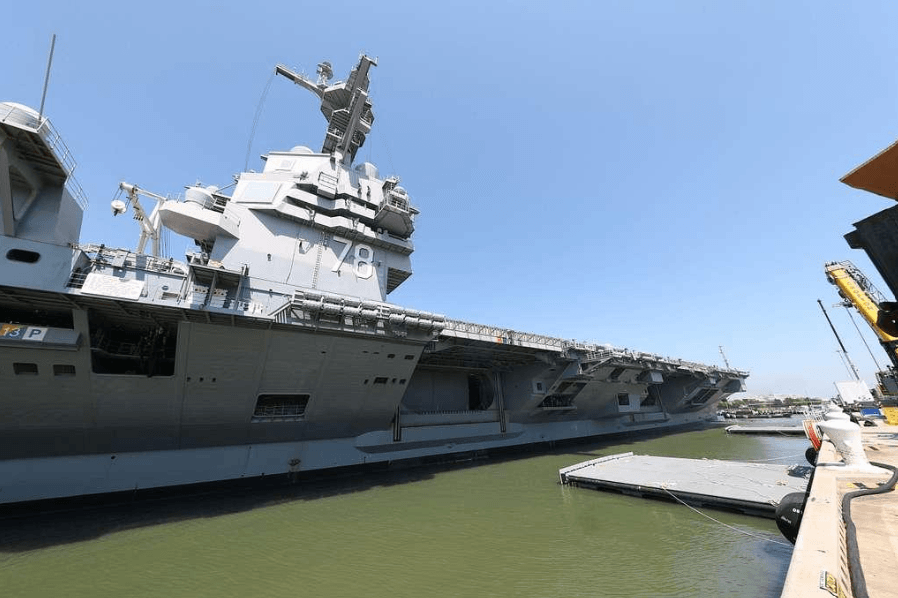
A March 12 fire that injured 200 sailors is just the latest embarrassing incident in the history of the USS Gerald R. Ford. The vaunted aircraft carrier has become a case study demonstrating how such a program will fail when policymakers prioritize economic and political concerns over military effectiveness. Navy leaders pulled their premier ship from the front lines after the laundry room fire and sent it to the island of Crete, where it will undergo urgent repairs for at least a week.
Construction on the Ford began in 2009, but the ship wasn’t commissioned until July 2017. Even then, the ship was far from ready for service. It took another five years for the Navy to put the ship to sea on its first operational deployment.
Almost from the beginning, the Ford has been plagued by developmental problems. In the early 2000s, Navy leaders decided to replace the existing fleet of Nimitz-class aircraft carriers, which have provided reliable service for more than 50 years, with a newly designed ship. Doing so meant the contractor could milk the development process given that the government would reimburse the company for the research and development costs.
Read the full article on Responsible Statecraft.








Community Adaptation for a Water Festival Without Clean Water