

Branka Panic is a Global Perspectives Responsible AI Fellow at Stimson and the Founding Director of AI for Peace, a think tank ensuring AI benefits peace, security, and sustainable development. As part of the Responsible AI Fellowship, Stimson supports original research and writing by our diverse cohort of Fellows, who represent countries from across the Global South.
By Giulia Neaher, Managing Editor, RAI Case Studies
“AI is advancing at runaway speed. The question is whether we will govern it together – or let it govern us. For the first time, the AI Dialogue gives every country a seat at the table. We must now turn global participation into global action – to make AI safer, fairer, more accessible and more ethical.” — António Guterres, UN Secretary-General
The integration of artificial intelligence (AI) into economies, public institutions, and daily life is outpacing the governance frameworks intended to oversee it, generating cross-border benefits and risks beyond the reach of any single state. The first UN Global Dialogue on AI Governance was convened to close this gap, with the aim of establishing a governance model that reflects the priorities of all Member States, distributes AI’s benefits more equitably, and ensures substantive participation across governments, different sectors, and affected communities.
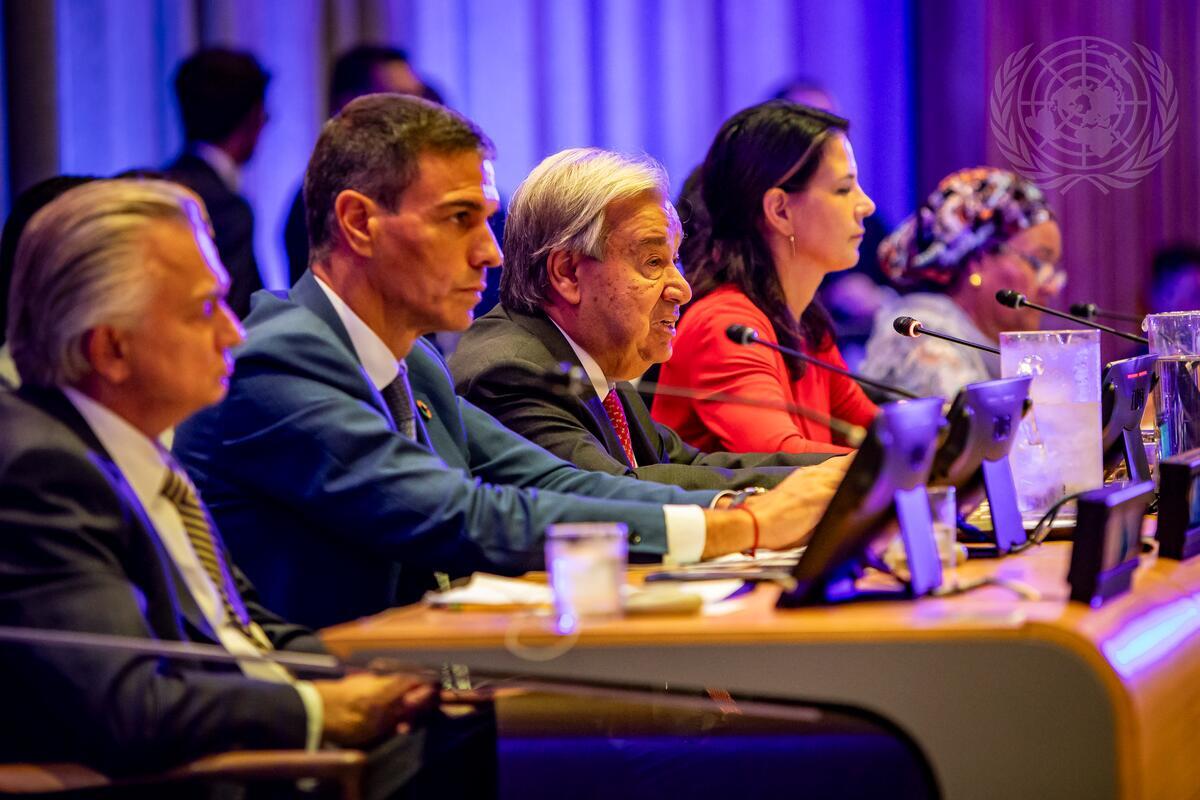
The Dialogue convened in Geneva on July 6-7, 2026. More than 4,000 participants registered, representing 170 countries and comprising scientists, entrepreneurs, civil society representatives, and advocates from around the world. The Dialogue — alongside the Independent International Scientific Panel on AI — was established through the Global Digital Compact in 2024 as part of the Pact for the Future, and formally operationalized by General Assembly resolution 79/325 in August 2025.
It formed part of a comprehensive Geneva Digital Week — running back-to-back with the annual AI for Good Global Summit and the World Summit on the Information Society (WSIS) — and aimed to ensure that AI governance is responsive to all nations, not just technological and economic leaders.
As the Secretary-General noted at the opening of the AI Dialogue, when he first raised the issue of AI before the General Assembly in 2017, only two national leaders even mentioned the subject in their statements. Less than a decade later, AI is reshaping geopolitics, labor markets, education, and peace and security — and multilateral governance is racing to catch up. In just the last two years, the international community has convened AI Summits in the UK, South Korea, France, and India, with another scheduled in Geneva for 2027. It has produced landmark scientific assessments, including the International AI Safety Reports, national and regional AI strategies, and regulatory frameworks. Yet none of these fora have universal membership. In 2023, the High-Level Advisory Body on AI found that only seven countries were parties to all prominent non-UN AI governance initiatives, while 118 — primarily in the global South — were parties to none. The Dialogue aims to change that by creating a space where all UN Member States discuss shared AI governance with equal standing.
But governance is shaped as much by what is left off the agenda as by what appears on it — by who speaks and when, which voices reach outcome documents, and which dissolve into the margins. At this first Dialogue, the margins were instructive: AI in military applications and autonomous weapons systems were absent from the discussion, by design, despite the Secretary-General raising them in his opening address; official side events were relegated to early morning (7am) and lunch slots; applicants for speaker positions waited weeks without confirmation; and a growing cohort of Global South actors concluded that parallel processes are necessary because the official one, for all its stated commitment to inclusivity, does not yet adequately reflect their interests.
The Floor, Not the Ceiling: What the Scientific Panel Delivered and What It Left Unresolved
The internet took 15 years to reach a billion users. Conversational AI reached that threshold in two years. In that compressed timeframe, these systems have moved from experimental tools to autonomous agents — writing code, conducting research, generating medical assessments, and shaping decisions that affect lives, livelihoods, and national security with progressively less human involvement. The governance infrastructure required to manage this transition — technical standards, institutional oversight, legal frameworks, societal safeguards — does not yet exist at a scale or pace matching the technology.
The Independent International Scientific Panel on AI released its preliminary report at the Dialogue with this governance-technology gap in mind. The panel was co-led by Yoshua Bengio and Maria Ressa, a choice that signals the process’ intent to bridge computational science and societal accountability. Over six weeks of intensive drafting, the Panel’s task was to establish what is scientifically known about AI’s capabilities, risks, and societal impacts; what we do with that evidence is ours to decide.
It delivered stark findings: AI development is extraordinarily concentrated in the U.S. and China; harms are already materializing, from AI systems delivering misleading medical advice to stoking suicidal ideation in teenagers; and reliable methods for retaining control over increasingly autonomous systems do not yet exist. Underpinning the entire report is the fundamental evidence dilemma: Policymakers need evidence to govern responsibly, but by the time sufficient evidence accumulates, the window for effective intervention may have closed. What was most striking, however, was not the report itself but that the authors chose to frame it as the floor, not the ceiling, of what we should be worried about.
The Panel’s preliminary report did not escape scrutiny. Within days, researchers at the AI Policy Lab at Umeå University published a critique questioning not the report’s content but its intellectual independence — arguing that the Panel demands trust it has not yet earned, given that it was established by General Assembly resolution, its members nominated through a Secretary-General shortlist, its reports timed to a political calendar it does not control, and its funders named but not itemized (no amounts, no conditions, no individual declarations of interest). This is not in itself evidence of regulatory capture, the authors stress, but the absence of transparency mechanisms routine in comparable bodies — from the IPCC to the European Medicines Agency — leaves the question open.
The critique’s concerns around the panel extend to the substance of its findings, as well: The report presents a smoothed consensus rather than making scientific disagreement visible; it warns against reliance on developer-produced safety assessments while drawing heavily on that same evidence base; and it foregrounds frontier AI and catastrophic risk while giving considerably thinner treatment to the distributed harms of existing systems already affecting Global South populations. The authors propose concrete remedies to these structural problems, including published methodology, visible disagreement, comprehensive declarations of interest, pooled funding, and structural separation between the Panel’s scientific work and its UN secretariat. Overall, they argue that independence must be demonstrated through architecture, not assumed through reputation.
What Was Actually Discussed? And Was It Really a Dialogue?
“Global governance on AI should not be measured by quantity of principles that we published, but rather the capacity we build, the inequalities we reduce, social values that we retain. AI will not in the end be justified by the sophistication of its algorithms, but by the impact it has on people.” – Paola Bogantes, Minister, Ministry of Science and Technology, Costa Rica
The Scientific Panel’s preliminary report was released barely three working days before the Dialogue opened — leaving delegations and participants minimal time to absorb its findings, let alone formulate considered responses. In practice, many prepared their Dialogue contributions before the report was published, meaning the Panel’s evidence base informed the proceedings unevenly at best.
The word “dialogue” implies exchange — the reciprocal testing of ideas and the possibility that one’s position might shift through encounter with another’s. But UN processes typically produce something different: sequential statements, thematic panels with pre-assigned speakers, and structured interventions (of three minutes, no more no less) where positions are declared rather than negotiated. The first Global Dialogue on AI Governance was no exception. Yet these processes, for all their procedural rigidity, still offer a comprehensive map of where states, institutions, and communities currently stand — their priorities, their anxieties, their red lines, and the distance between their positions.
On that measure, the Dialogue surfaced several substantive positions. Many speakers acknowledged that AI is developing faster than our collective capacity to govern it, though few addressed the uncomfortable question of what a governance process convened this late in the technology’s trajectory can realistically achieve. AI as a development issue was a recurring frame: Leveraging AI’s potential to support the UN’s 2030 Sustainable Development Goals requires closing digital divides, building capacity, and ensuring all countries can participate meaningfully in the AI ecosystem as producers, not just as consumers of systems designed elsewhere. Many actors across sectors repeated that international human rights law already constitutes a binding framework here, and that the task is not to invent governance from scratch but to find the courage to apply existing obligations.
The Dialogue organized four thematic sessions on opportunities and implications of AI, bridging AI divides, safe and trustworthy AI, and human rights. The following analysis is based on selected sessions and is not a comprehensive record of the Dialogue. The human rights session foregrounded a stark asymmetry, namely that we demand 10-15 years of safety testing before a drug reaches the market yet accept no comparable threshold for AI systems already integrated into hiring, education, and law enforcement. The Panel report showed that harms are currently outpacing benefits — with direct harm, exacerbation of inequalities, opportunity costs, and development without rights-based safeguards identified as distinct risk categories. Benefits are global in their promise; harms are devastatingly local in their impact, falling on the most marginalized, in communities where even Member States cannot secure transparency from AI companies.
The power dimension was named directly: A handful of companies shape how billions experience information and public services. A fundamental evaluation gap was identified, namely that developers and scientists ask whether systems can be made faster and more accurate, but society asks entirely different questions: Can my child use this safely? When should I not trust it? What recourse do I have? What we measure shapes what we optimize for, and if governance success is defined by human rights protection, then evaluation frameworks must be designed accordingly. The rallying message from the human rights session — “smarter, kinder, wiser, not bigger, faster, better” — offered an alternative metric for progress, though whether it will survive contact with the political economy of AI development remains to be seen.
Parts of the Dialogue were reserved for a high-level governmental segment — three-minute national statements by Heads of Delegation and senior representatives of Member States, intended to share national and regional perspectives, priorities, and approaches to AI governance. The segment revealed the full spectrum of where states currently stand. Some used the Dialogue to promote their domestic AI ecosystems and investments: Kazakhstan highlighted its digitalization agenda and data centers; Portugal presented its strategy to build digital twins, leverage its renewable energy for AI gigafactories, and develop a large language model specifically for the Portuguese language and culture. In stark contrast, Libya pointed to the realities that define many countries of the African continent: insecurity and conflict as lived context and an AI gap that is not merely digital but extends to jobs, use, and equitable distribution of resources. Costa Rica sharpened the asymmetry further: Some countries design AI systems, set the standards, and capture the value, while others barely have access to imported ones, and Latin America and the Caribbean receive only 1% of global AI investment. China framed its statement around openness and universality, asserting that all countries have the right to develop and benefit from AI, and positioning itself as a partner to the Global South in building those capabilities.
The high-level segment was, in miniature, a map of the governance challenge itself — states speaking from fundamentally different material conditions about a technology that is reshaping all of them simultaneously, with no shared baseline of capacity, infrastructure, or institutional readiness from which to negotiate common rules.
Universal Membership, Unequal Architecture: Why the Global South Built Its Own Table
Both the Dialogue and the Scientific Panel merit recognition on one substantive front: Global Majority participation was not confined to symbolic presence. Heads of state, ministers, academics, and civil society leaders from across the Global South engaged in plenaries and thematic sessions, not only in peripheral events but in the formal program. Practitioners whose work has materially advanced digital rights and AI accountability in their regions — among them Urvashi Aneja of Digital Futures Lab in India, Nighat Dad of the Digital Rights Foundation in Pakistan, Linda Bonyo of Lawyers Hub Africa, and Jamila Venturini of Derechos Digitales— contributed perspectives grounded in the operational realities of communities navigating AI development and deployment on the ground. No other governance forum can convene this breadth of participation with equivalent standing.
Yet the limitations of this participation were signaled not only by civil society observers but by members of the Scientific Panel themselves. A growing coalition of Global South experts and institutions has determined that engagement within the official process alone is insufficient to secure their interests. The Global South Network on Trustworthy AI, a civil society-led platform for AI evaluation, safety, and advocacy across the Global South, presented what it described as the first independent, expert-led assessment of AI safety risks and infrastructure requirements specific to the Global South: “AI Safety in Context: Voices from the Majority World.” That this parallel architecture was deemed necessary — led in many cases by the same experts who sit on the UN Scientific Panel (such as Dr. Vukosi Marivate, co-chair of this report and UN Scientific Panel on AI member), and participate in the Dialogue itself (such as Dr. Rachel Adams, Global Center on AI Governance) — is not a rejection of the multilateral process, but an honest judgement on its current adequacy. The Network organized a parallel event in Geneva during the Digital Week to examine how AI safety risks manifest in Global South contexts and how governance frameworks can be designed to address them.
The prevailing AI safety discourse remains oriented towards frontier model capabilities, existential risk scenarios, and misuse frameworks defined within technologically advanced economies. It does not adequately address how AI systems generate harm in contexts characterized by weak regulatory infrastructure, informal labor markets, linguistic exclusion, and intersecting inequalities across gender, race, disability, and economic status. Nor is the Global South a monolith. Participants noted an internal stratification within Global South representation itself, with experiences from larger economies such as Brazil, India, and Kenya dominating, while the realities of medium and small states remain largely undocumented in safety research and governance design.
The Secretary-General identified the structural foundation of this imbalance in his opening address: “Last year, private investment in AI infrastructure approached half a trillion dollars. Public investment in AI capacity for developing countries is, by comparison, a rounding error.”
Until that asymmetry is addressed — not only in resource allocation but in whose evidence informs governance frameworks, whose risks are prioritized, and whose safety standards are treated as universal — the Dialogue’s commitment to inclusivity will remain a statement of intent rather than operational reality. Universal membership guarantees a seat, but it does not guarantee that the agenda, the evidence, or the resulting frameworks reflect the priorities of those seated. The Global South Network’s parallel process is not a protest against multilateralism — it is a practical response to an architecture that offers presence without adequate influence. They built their own table not because the official one excluded them, but because it was not yet designed to serve them.
From Geneva to New York, What Does Success Look Like?
The closing session invited speakers to answer what success would look like by the time the Dialogue reconvenes in 2027. While the co-chairs’ outcome document is still pending, what follows highlights key responses to this question, drawn from what was said from the podium but also from what the week as a whole revealed.
Success would mean helping countries already grappling with structural challenges to translate high-level principles into national laws and institutions adapted to their own contexts — moving beyond the repetition of principles as a mantra and toward operational plans with timelines, resources, and accountability for delivery. It would mean sustained capacity building, dedicated financing, and cross-sector partnerships that regularly exchange evidence and develop open tools. And it would mean treating public participation not as consultation theater but as a source of governance evidence — recognizing lived experience alongside technical expertise, giving communities clear routes into decision-making, and embedding participatory architecture around the Dialogue itself.
“Inclusion can not stop at the level of states. For this dialogue to be legitimate, we need to move from hearing only about the future a few companies, investors, and powerful actors want to see to hearing the hopes, aspirations, and fears of people around the globe, as AI becomes intertwined with everyday life.” — Gaia Marcus, Director, Ada Lovelace Institute





Community Adaptation for a Water Festival Without Clean Water