
Foreword
Our home, a paradise known for its pristine beaches, vibrant culture, and welcoming people, stands at a critical juncture. The very natural beauty that defines Aruba is now facing an unprecedented threat: the accelerating impacts of climate change. This research report, prepared by the Stimson Center, serves not only as a record of distress, but more importantly, as a beacon of commitment and a call to national action. We are grateful to all the partners and stakeholders who participated in this comprehensive study and continue to be actively engaged in strengthening Aruba’s climate resilience.
This report presents with stark sincerity the multiple vulnerabilities we face, from the direct risks to our coastal communities to the cascading effects on our economy and the most vulnerable in our community. It confirms what many of us have seen with our own eyes — the degradation of our precious coral reefs, the increasing intensity of extreme heat, and the delicate balance of an ecosystem that sustains our way of life. The report’s findings are a powerful reminder that our prosperity is not separate from the health of our society and environment; they are inextricably linked.
However, this report is not a conclusion; it is a starting point of a transformative and transformational enterprise. It provides us with a clear, data-driven roadmap to fortify our island’s resilience. It challenges us to look beyond conventional solutions and embrace innovation, collaboration, and a shared sense of responsibility. Building climate resilience is not a task for any single ministry, business, foundation, or non-governmental organization. It is a shared national endeavor that requires a whole-of-society approach. It calls for our government to enact forward-thinking legislation and policies, for our private sector to invest in responsible practices, for our academic institutions to drive research, and for every citizen to become a steward of our natural and cultural heritage.
The challenges are significant, but so, too, is our potential. Our history is a testament to our resilience and adaptability. Let this report galvanize us to move from awareness to action. Let us build a more inclusive and climate resilient Aruba, not just for ourselves, but for the generations to come. We are confident that by working together, we can transform these vulnerabilities into opportunities to strengthen our island and safeguard our future.
With deepest gratitude,
Ryan R. Peterson, PhD
Chairman
National Climate Resilience Council of Aruba
The Climate and Ocean Risk Vulnerability Initiative
For coastal cities and small islands, efficiently allocating resources and enacting adaptation strategies are imperative. Yet these efforts are often hindered by incomplete or unavailable subnational data as well as technical, financial, and capacity gaps. The result is a cycle where coastal communities struggle to develop comprehensive strategies, secure funding, and implement resilience measures. Breaking this cycle requires tools that account for multidimensional climate risks and support cohesive planning to unlock climate finance and advance resilience efforts.
The CORVI Tool
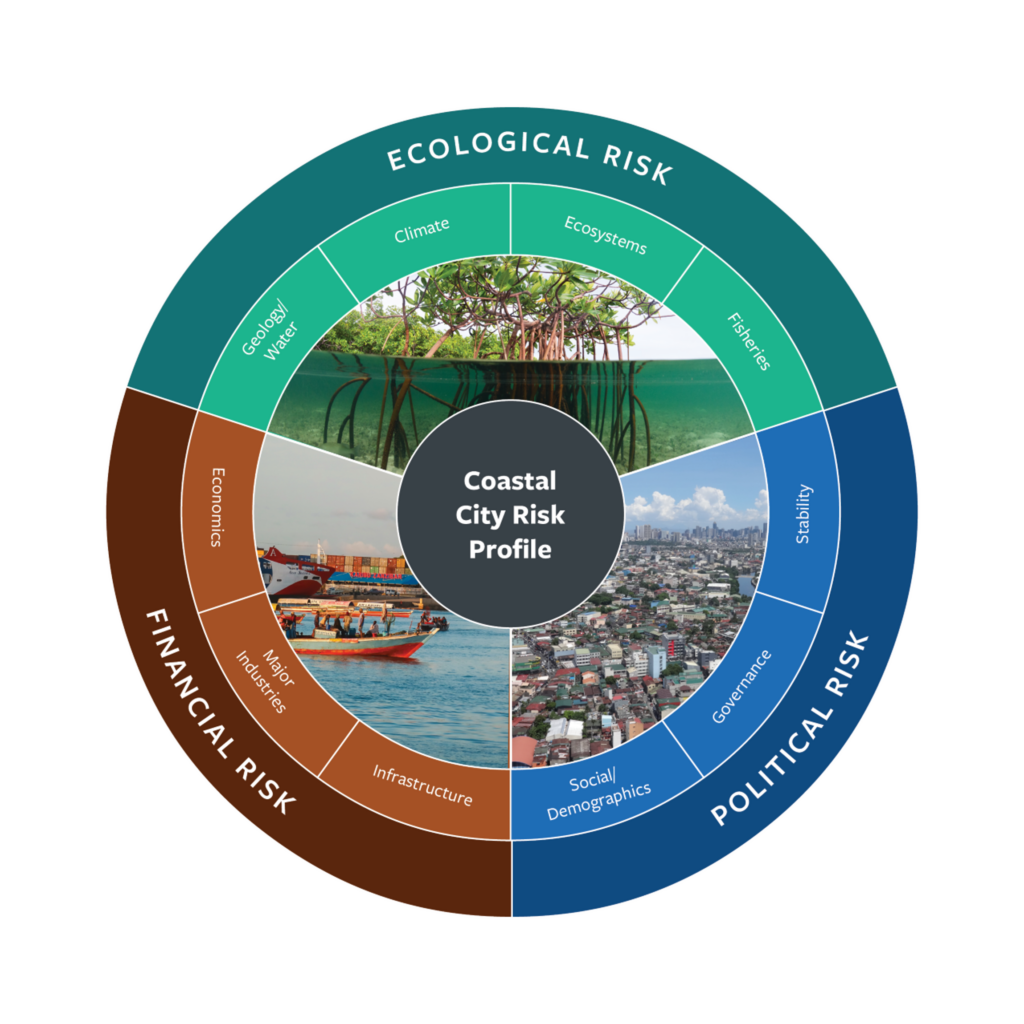
In response, the Stimson Center developed the Climate and Ocean Risk Vulnerability Initiative (CORVI), a decision-support tool that compares a diverse range of climate-related risks across the land-seascape to produce a coastal city risk profile. Risks are organized across 10 categories within three areas — ecological, economic, and social — and assessed through nearly 100 indicators tailored to each community (See Appendix 1 for the list of risk indicators used in the CORVI assessment for Aruba). These indicators capture factors such as infrastructure vulnerability, marine ecosystem health, and urbanization dynamics. The CORVI risk scores, which form the basis of a coastal city risk profile, are supported by existing academic and grey literature, government documents, and semi-structured interviews with key informants.
The CORVI Methodology
To overcome data gaps, CORVI uses structured expert surveys to collect site-specific data that is otherwise unavailable. This primary data is combined with secondary data using the approach of structured expert judgement (SEJ) to produce a comparative score for each indicator in the assessment. SEJ is a well-established social science technique that seeks to quantify risk when pre-existing secondary data is inadequate. Through interviews and surveys with subject matter experts across academia, government, civil society, and the private sector, as well as a series of weighting procedures to ensure data is representative, SEJ allows researchers to quantify topics that might otherwise be challenging to study in a systematic fashion. Pairing primary survey data with secondary data through SEJ allows CORVI to provide insight into risks relating to urban coastal environments that existing secondary datasets do not cover.
Using the CORVI Results
CORVI integrates quantitative and qualitative data to create a comprehensive, interdisciplinary picture of a coastal city’s climate risks. This approach highlights the interconnections that can either exacerbate or reduce overall vulnerability, helping decision-makers identify interdependent ocean and climate-related risks, allocate resources effectively, make proactive decisions, and avoid costly mistakes. Armed with the CORVI results and recommendations, decision-makers and policymakers in governments, international financial institutions, civil society, and the private sector can better target adaptation and resilience efforts. Assessments in Kingston, Belmopan, and Belize City have led to prioritized actions — advancing nature‑based solutions like flood mitigation and coastal restoration, promoting more integrated urban planning, strengthening institutional capacity, and supporting social protection programs.
Executive Summary
Under business-as-usual greenhouse gas emission scenarios, Aruba faces a dramatic climate transformation in the coming decades.1Greenhouse gas emissions scenarios used are the World Bank’s SSP2-4.5 levels. Rising sea levels, more intense and longer-lasting heat and drought events, and accelerating coastal erosion are urgent and dynamic challenges that will have wide-ranging and significant impacts on Aruba’s public health, tourism, energy systems, critical infrastructure, and coastal ecosystems.
This Climate and Ocean Risk Vulnerability Initiative (CORVI) assessment, funded by the Government of Aruba and its CORVI partners, provides a comprehensive overview of these risks. The CORVI methodology2Details about the CORVI methodology are provided in Appendix 3. builds on national level data and closes information gaps through extensive surveys and interviews3A list of organizations represented in this assessment (which included 93 expert surveys and 20 interviews) is provided in Appendix 2. with local experts. The subnational data generated by the assessment provides a more complete picture of climate risks at both the local and regional levels.4Rouleau, Tracy; Jack Stuart; Maia Call; Sally Yozell; Nagisa Yoshioka; Miko Maekawa; and Natalie Fiertz. “The Climate and Ocean Risk Vulnerability Index: Measuring Coastal City Resilience to Inform Action.” Frontiers in Sustainable Cities 4 (2022): 884212. https://doi:10.3389/frsc.2022.884212
Based on the CORVI assessment data — both quantitative and qualitative — three clusters of risk in Aruba emerge as the most urgent for policy- and decision-makers to address:
- Declining Ecosystem Health
- Changing Demographic Patterns
- Fragilities of a Tourism-Dependent Economy
These risk clusters highlight the critical interdependencies between the health and resilience of Aruba’s tourism economy, and the health and resilience of the community and nature. They underscore the multidimensional and compounding impacts of climate change in Aruba, including the loss of biodiversity, intensifying urban expansion, strained infrastructure, and diminishing returns from unregulated tourism growth.5Aruba Conservation Foundation; Wageningen University & Research; and Greg Peterson. Aruba Vision 2050: A Nature‑Inclusive Vision. Aruba: Aruba Conservation Foundation, May 2025. PDF file. https://cms.acf.aw/wp-content/uploads/2025/05/ArubaVision2050.pdf
The Government of Aruba, together with partners in civil society, the private sector, and academia, has opportunities to strengthen and better integrate climate resilience into decision-making, beginning with its governance framework. Embedding climate change and its anticipated impacts across all government ministries and departments — in plans, programs, and budgets — will help solidify Aruba’s position as a regional leader in climate-smart governance.
Invest in Vital Infrastructure Through Ecosystem Restoration
Several ecological risk indicator scores rank among the highest in the Aruba risk profile, reflecting significant vulnerabilities tied to the declining health of coastal ecosystems, compounded by climate-driven shifts in weather patterns and extreme weather events. Healthy coastal and marine ecosystems serve as critical “lines of defense” against wave energy and flooding, while also providing co-benefits such as habitat for nearshore fisheries. Investing in ecosystem restoration is therefore essential to lay the groundwork for nature-based solutions that strengthen climate resilience. To achieve this, the Aruban government, private sector, and civil society should work together to protect existing marine ecosystems, restore degraded areas, and prioritize the health — and long-term resilience — of all Aruba’s coastal environment.
Develop and Implement an Inclusive Spatial Development Plan
Increased population and economic activity along Aruba’s coastal strip are expanding the human footprint and placing pressure on fragile ecosystems. New developments are clearing and fragmenting natural protections, heightening vulnerability to climate, and intensifying the urban heat island effect. At the same time, the aging of both Aruba’s resident and tourist populations is increasing their susceptibility to heat-related illnesses and reducing their ability to cope with storm events. Reducing Aruba’s climate vulnerability will require deliberate shaping of residential and commercial growth through a comprehensive spatial development plan. Updating Aruba’s Spatial Planning Ordinance is a key step, but a forward-looking plan must go further and be grounded in inclusive, community-based, and multi-stakeholder dialogue that integrates nature-based approaches to ensure its sustainable success.
Strengthen the Resilience of Aruba’s Economy
Aruba’s economy is concentrated in coastal tourism, particularly along the northwestern coastline running north from Oranjestad. Increasing climate hazards — particularly extreme heat, coastal erosion, and storms — threaten both the infrastructure and ecosystems that sustain this sector. At the same time, rapid tourism growth has strained existing infrastructure and public services while fueling social tensions and inequality. Strengthening the resilience of Aruba’s built environment and natural ecosystems, as outlined in the next two recommendations, will be critical to sustaining the tourism economy. These efforts should be complemented by measures to boost the industry’s capacity to withstand and recover from extreme weather, diversify tourism towards less climate-vulnerable models, and support the development of synergistic industries. Transparent, inclusive planning for the tourism sector can further enhance effectiveness by improving coordination and cooperation across stakeholders.
Climate Risks to Aruba
Least responsible yet hardest hit, island nations are on the frontlines of the climate crisis. The Caribbean’s total share of global carbon dioxide emissions is just 0.3%, yet its countries face climate impacts that threaten the fabric of their communities and the foundations of their economies.6Cevik, Serhan. Waiting for Godot? The Case for Climate Change Adaptation and Mitigation in Small Island States. IMF Working Paper 2022/179. Washington, DC: International Monetary Fund, September 9, 2022. https://doi.org/10.5089/9798400220364.001 From stronger, earlier hurricanes to longer and hotter periods of extreme heat, coastal erosion, and sea level rise, climate change poses an existential threat to the Caribbean region — and to island nations around the world. In Aruba, where the economy depends on the health and resilience of coastal ecosystems, a perfect storm emerges. The island’s small, open, tourism-dependent economy is exceptionally vulnerable, with climate impacts directly threatening the infrastructure that underpins daily life and economic stability, from hotels and housing to healthcare services and vital public utilities.
Under business-as-usual greenhouse gas emission scenarios, Aruba is facing a dramatic climate transformation in the coming decades.7Greenhouse gas emissions scenarios used are the World Bank’s SSP2-4.5 levels. The island’s average annual mean surface air temperature is expected to rise from 26.81°C (2020-2039) to 28.64°C (2080-2099), accompanied by a severe expansion of periods of excessive heat. From 1951 to 2020, Aruba’s most intense heat typically lasted three months, from August through October. By 2100, extreme temperatures are projected to persist for seven months, stretching from May through November. This profound shift poses urgent challenges with far-reaching and substantial impacts on public health, tourism, energy, systems, critical infrastructure, and coastal ecosystems.
Aruba’s water resources will also face additional stress. Annual rainfall is projected to drop nearly 14%, from 678.02 millimeters (1995-2014) to 583.89 millimeters (2080-2099). At a granular level, Aruba’s precipitation patterns will shift towards increasingly extreme and unpredictable rainfall patterns with longer drought periods interrupted by intense but brief storm events. The combination of rising temperatures, extended heat periods, and reduced precipitation with greater rainfall variability will fundamentally alter Aruba’s climate profile and adaptive capacity.
This Climate and Ocean Risk Vulnerability Initiative (CORVI) assessment, funded by the Government of Aruba and its CORVI partners, provides a comprehensive overview of the climate risks and vulnerabilities facing Aruba. The CORVI methodology8Details about the CORVI methodology are provided in Appendix 3. builds on national level data and fills information gaps through extensive surveys and interviews9A list of organizations represented in this assessment (which included 93 expert surveys and 20 interviews) is provided in Appendix 2. with local experts. This subnational data creates a more complete picture of the local and regional climate risks and vulnerabilities.10Rouleau, Tracy; Jack Stuart; Maia Call; Sally Yozell; Nagisa Yoshioka; Miko Maekawa; and Natalie Fiertz. “The Climate and Ocean Risk Vulnerability Index: Measuring Coastal City Resilience to Inform Action.” Frontiers in Sustainable Cities 4 (2022): 884212. https://doi:10.3389/frsc.2022.884212
Based on the CORVI assessment data — both quantitative and qualitative — three clusters of risk in Aruba emerge as the most urgent for policy- and decision-makers to address:
- Declining Ecosystem Health
- Changing Demographic Patterns
- Fragilities of a Tourism-Dependent Economy
These risk clusters highlight the critical interdependencies between the health of Aruba’s tourism economy, and the health of the community and nature. They underscore the multidimensional and compounding impacts of climate change in Aruba, including the loss of biodiversity, intensifying urban expansion, strained infrastructure, and diminishing returns from unregulated tourism growth.11Aruba Conservation Foundation; Wageningen University & Research; and Greg Peterson. Aruba Vision 2050: A Nature‑Inclusive Vision. Aruba: Aruba Conservation Foundation, May 2025. PDF file. https://cms.acf.aw/wp-content/uploads/2025/05/ArubaVision2050.pdf
Risk Cluster 1: Declining Ecosystem Health
The first cluster of risks relates to the essential role that coastal and marine ecosystems play in supporting Aruba’s coastal communities, growing its blue economy, and ensuring its long-term climate resilience. Several ecological risk indicator scores rank among the highest in the Aruba risk profile, reflecting substantial vulnerabilities driven by coastal erosion and declining health of key ecosystems. The Coverage and Health of Sand Dune Systems, Sea Grass Beds, Mangroves, and Coral Reefs received scores of 6.02 and above, with the highest concerns related to Coral Reef Coverage (medium-high risk, 7.24), the Health of Existing Coral Reefs (high risk, 7.78), and Mangrove Coverage (high risk, 8.92).
Healthy coral reefs, mangroves, seagrass beds, and sand dunes can play an enormous role in climate resilience by serving as natural barriers that reduce coastal erosion, control flooding, and absorb wave energy.12Philipp Jordan, ”Bridging the gap between coastal engineering and nature conservation?” J Coast Conserv 26, no. 4 (2022), https://doi.org/10.1007/s11852-021-00848-x ,13Greg Guannel et al., ”The Power of Three: Coral Reefs, Seagrasses and Mangroves Protect Coastal Regions and Increase Their Resilience,” PLOS ONE, (2016), https://doi.org/10.1371/journal.pone.0158094 Surveys and interviews with experts overwhelmingly indicate that Aruba’s coastal and marine ecosystems are under threat from existing and expanding coastal development, overuse, and fragmentation. The decline of these ecosystems reduces coastal protections, endangers the growth and sustainability of Aruba’s sun-sand-sea tourism-based economy, and limits nature-based adaptive solutions to climate change. Rising sea levels, Coastal Erosion (medium-high risk, 7.43), particularly for Druif Beach and Eagle Beach, invasive species, and terrestrial and marine heat waves further degrade and disrupt these ecosystems, increasing Aruba’s vulnerability to acute Extreme Heat Events like heat domes and marine heat waves (medium-high risk, 6.86), as well as longer-term changes such as Change in Sea Surface Temperature (medium-high risk, 6.28), and more frequent and prolonged Droughts (medium-high risk, 7.17).
Beyond ecosystem services to support economic security, small islands like Aruba are already inherently limited in terms of availability of natural resources to support food and water security, as reflected in the high risk scores for Percent of Arable Land (8.07) and Bodies of Water with High Water Quality (7.93).14Mary Boyer et al., “Building Resilience in Aruba’s Food Security During the COVID-19 Pandemic and Beyond.” World Bank: Washington, D.C, (2020), https://www.deaci.aw/wp-content/uploads/2021/01/Building-Resilience-in-Arubas-Food-Security-During-the-Pandemic-and-Beyond_11.pdf These scores indicate serious threats to Aruba’s freshwater supply and reinforce Aruba’s dependence on imports to provide food, energy, and other materials to meet community and industry needs.
Risk Cluster 2: Changing Demographic Patterns
The second cluster of risks arises from Aruba’s shifting population patterns, which increase its vulnerability to climate hazards. The most important of these changes is the increase in Aruba’s National Population Density (high risk, 8.96). Between 1988 and 2018, Aruba’s population density increased from 330 to 605 people per square kilometer, an increase of 83%.15World Bank. “Population Ages 65 and Above (% of Total Population) ‐ Aruba (Indicator SP.POP.65UP.TO.ZS).” World Development Indicators. The World Bank, accessed September 11, 2025. https://data.worldbank.org/indicator/SP.POP.65UP.TO.ZS?locations=AW The Central Bureau of Statistics Aruba (CBS) projects that the population will grow by an additional 28,000 people between 2020 and 2040, an increase of over 25% in 20 years.16Central Bank of Aruba. 2024. Governing from the Future: Leading with Impact. https://www.cbaruba.org/readBlob.do?id=10732 These figures only include Aruban residents, not tourists and temporary migrants. In 2019, on an average day, Aruba hosted 21,518 stayover visitors, 2,568 cruise visitors, and 17,000 undocumented Venezuelan migrants, increasing the island’s population density by more than 36%.17Ibid, p 37 The ongoing expansion of hotel rooms and other short-term rentals and accommodations will lead to a continued increase in tourist numbers and population density.18Ibid, p 40
Aruba’s population is concentrated along the coast where communities are vulnerable to storm surge and coastal erosion. Coastal development drives ecosystem destruction by clearing mangroves, increasing pressure on sand dunes, and pushing people into Informal or Unplanned Settlements (medium-high risk, 6.72). These losses reduce the natural protection of coastal ecosystems and heighten vulnerability to coastal hazards. The density of populations and structures are also increasing the urban heat island effect in Aruba, driving up temperatures and the incidence of heat-related illnesses, and limiting space for adaptation solutions, such as gray measures like seawalls and green measures like ecosystem restoration. Rapid urbanization is also straining public services, particularly those as already under stress, like wastewater treatment.
Aruba is also experiencing a rapidly aging population. The share of the population aged 65 and above nearly tripled in thirty years, rising from 6% in 1994 to 17% in 2024.19World Bank. “Population Ages 65 and Above (% of Total Population) ‐ Aruba (Indicator SP.POP.65UP.TO.ZS).” World Development Indicators. The World Bank, accessed September 11, 2025. https://data.worldbank.org/indicator/SP.POP.65UP.TO.ZS?locations=AW The proportion aged 80 and above is projected to grow by 3.6 times between 2020 and 2040, reaching 9% of the population.20Central Bank of Aruba. 2024. Governing from the Future: Leading with Impact. https://www.cbaruba.org/readBlob.do?id=10732 At the same time, Aruba’s tourist population is aging, with visitors over 60 accounting for over one-fifth of all visitors in 2022.21Peterson, Ryan R. The Heat is On: Climate Aruba Digest Semiannual Report. National Climate Resilience Council, June 2024. https://ncrc-aruba.org/documents/20240704A/heatison_semiannualjune2024_final_26062024.pdf Older populations are more vulnerable to climate hazards such as extreme heat, as reflected in the medium-high risk score for Mortality Attributed to Non-Communicable Diseases (7.18), and face greater challenges evacuating during storms. In addition, an aging Aruban population increases pressure on the island’s old-age pension system22Central Bank of Aruba. 2024. Governing from the Future: Leading with Impact. https://www.cbaruba.org/readBlob.do?id=10732, further straining the very resources needed to support the aging population’s ability to adapt to climate change.
Risk Cluster 3: Fragilities of a Tourism-Dependent Economy
The third cluster of risks for Aruba relates to the fragilities of the island’s tourism-dependent economy, as reflected in the high risk scores for Percent of National Economy Based in Tourism Industry (8.83) and the Percent of People Employed in Tourism (9.59). Tourism accounts for approximately 70% of Aruba’s economy,23World Travel & Tourism Council. Aruba Travel & Tourism Economic Impact Factsheet. WTTC Research Hub. May 13, 2025. https://researchhub.wttc.org/factsheets/aruba an increase from 65% prior to the COVID-19 pandemic. Tourism makes up an even larger share of employment in Aruba, exceeding 88% as of 2023,24Ibid. and experts rated it as the highest risk indicator in this assessment.
Tourism in Aruba is overwhelmingly based around a sun-sand-sea model, leading to a heavy concentration of people, infrastructure, and economic activity on the country’s coastline. This concentration of development has led to the destruction of and damage to coastal ecosystems, reducing the protections they offer and increasing the Level of Commercial Infrastructure Damage from Extreme Weather Events (high risk, 8.36). In addition to direct damage, storms and other extreme weather events can deter tourists, who may choose alternative destinations if they perceive a high risk of disruption. On the other hand, Aruba’s location at the outer edge of the Caribbean Hurricane Belt could provide an opportunity to increase its relative tourism advantage vis-à-vis regional neighbors.
Aruba’s tourism economy also faces significant risks from extreme heat. Already one of the hottest countries in the world,25Visual Capitalist. “Mapped: The 10 Hottest and Coldest Countries in the World.” Visual Capitalist, [Date of Publication]. https://www.visualcapitalist.com/10-hottest-and-coldest-countries-in-the-world-map/ Aruba is projected to experience a greater Number of Extreme Heat Events (medium-high risk, 6.86), including heat domes intensified by the urban heat island effect along its highly developed coastline. As one interviewee observed, “A lot of people are feeling that the heat is too much. [It is hot at] all times, it used to be a very specific time of the year, maybe September, October, but now [it is hot] throughout the year.“26Interview with a representative of Aruba Real Estate. The aging of both Aruba’s resident and tourist populations27Peterson, Ryan R. The Heat is On: Climate Aruba Digest Semiannual Report. National Climate Resilience Council, June 2024. https://ncrc-aruba.org/documents/20240704A/heatison_semiannualjune2024_final_26062024.pdf heightens vulnerability to heat-related illnesses, as reflected in the medium-high risk score for Mortality from Non-Communicable Diseases (7.18).28Ibid. Interviewees consistently expressed concern for those most exposed to extreme heat — hotel staff, landscapers, airport ground crews, the elderly, schoolchildren at recess, and even pets. Heat-related mortality for people over 65 years of age increased by approximately 85% between 2000–2004 and 2017–2021.29Lancet Countdown: Heat-related Mortality. 2023. https://lancetcountdown.org/explore-our-data/ Marine heatwaves add another dimension of risk, threatening the island’s natural attractions. Coral reefs, which account for more than 20% of tourist expenditures,30Central Bank of Aruba. 2024. Governing from the Future: Leading with Impact. https://www.cbaruba.org/readBlob.do?id=10732 are increasingly vulnerable to bleaching and loss as global temperatures rise.31Heron, Scott F., Peter Kalmus, Maria Beger, and Adele Dixon. “99% of Coral Reefs Could Vanish If We Don’t Act Fast – Study.” World Economic Forum, February 4, 2022. https://www.weforum.org/agenda/2022/02/coral-reefs-extinct-global-warming-new-study/ Beyond its vulnerability to climate hazards, Aruba’s tourism-dependent economy creates other challenges. Tourism growth is no longer an effective driver of economic growth; between 2009 and 2019, annual visitors rose 37%32Central Bureau of Statistics Aruba. Tourism in Aruba 2018. December 15, 2021. https://cbs.aw/wp/index.php/2021/12/15/tourism-in-aruba-2018/ while GDP per capita rose only 5%.33World Bank. GDP per Capita (Current US$) – Aruba. World Development Indicators. Accessed September 11, 2025. https://data.worldbank.org/indicator/NY.GDP.PCAP.CD?locations=AW Aruba’s tourist arrivals are also heavily concentrated in a single market, the United States. Just three states — New York, Massachusetts, and New Jersey — accounted for one-third of all stopover visitors to Aruba in 2024.34Tourism Analytics. Aruba Tourism Statistics. Accessed September 11, 2025. https://tourismanalytics.com/aruba-statistics.html This lack of diversification makes Aruba’s economy highly vulnerable to economic fluctuations in the U.S. economy, and to the regional economies of the Mid-Atlantic and New England specifically. Finally, overreliance on tourism has contributed to growing income inequality in Aruba.35Central Bank of Aruba. 2024. Governing from the Future: Leading with Impact. https://www.cbaruba.org/readBlob.do?id=10732
CORVI Analysis
Ecological Risk
Aruba is renowned for its warm, steady climate, white-sand beaches, mangroves, coastal forests, coral reefs, and saliñas36A saliña ecosystem is characterized by high salt concentrations, typically exceeding that of normal seawater, e.g., coastal salt marshes, saline ponds or lagoons, or inland salt lakes. .37Polaszek, Timothy, Francielle Laclé, Pieter van Beukering, and Esther Wolfs. The Economics of Ecosystems and Biodiversity (TEEB) Aruba: Main Report. Wolfs Company, 2018. https://www.wolfscompany.com/wp-content/uploads/2018/04/TEEB-Aruba-Main-Report.pdf Its coastal and marine ecosystems not only attract tourists — the cornerstone of Aruba’s economy — but also provide critical natural defenses against coastal erosion and flooding. Healthy and resilient ecosystems offer essential goods and services to coastal communities; they stabilize sediments, support water filtration and flood management, protect coastlines from storm surge, support diverse fisheries, and maintain biodiversity.38Philipp Jordan and Peter Fröhle, ”Bridging the gap between coastal engineering and nature conservation,” Journal of Coastal Conservation 26, no. 4 (2022), https://doi.org/10.1007/s11852-021-00848-x The loss of these ecological communities can result in broader ecosystem collapse.39Smith, Kathryn E., Margot Aubin, Michael T. Burrows, Karen Filbee-Dexter, Alistair J. Hobday, Neil J. Holbrook, Nathan G. King, Pippa J. Moore, Alex Sen Gupta, Mads Thomsen, Thomas Wernberg, Edward Wilson, Dan A. Smale, et al. “Global Impacts of Marine Heatwaves on Coastal Foundation Species.” Nature Communications 15 (June 13, 2024): Article 5052. https://doi.org/10.1038/s41467-024-49307-9
- The ECOSYSTEMS category (expert weighted average score of 6.46) demonstrates the important role that healthy and resilient ecosystems can play in reducing vulnerability to climate change. Every indicator in this category but one (Sargassum Abundance) received a medium-high or high-risk score. The Coverage and Health of Sand Dune Systems, Sea Grass Beds, Mangroves, and Coral Reefs received scores of 6.02 and above, with the highest concern around the Level of Coral Reef Coverage (7.24), the Health of Existing Coral Reefs (7.78), and the Level of Mangrove Coverage (8.92).
- The FISHERIES category (expert weighted average score of 5.90) illustrates the role fisheries management plays in supporting the growth of a sustainable blue economy. Medium-high risk scores were calculated for Nearshore Fish Stock Status (6.50), Percent of Fisheries Managed Sustainably (6.47), Fish Consumption Per Capita (6.40), and Offshore Fish Stock Status (6.17).
- The GEOLOGY/WATER category (expert weighted average score of 5.54) reflects serious threats to Aruba’s freshwater supply and the impacts on human security. High scores for the Percent of Arable Land (8.07) and Bodies of Water with High Water Quality (7.93). Medium-high risk scores for the Rate of Coastal Erosion (7.43), Degree of Saltwater Intrusion in Coastal Aquifers (6.62), Projected Change in Sea-Level Rise (5.57), Degree of Soil Salinity in Arable Lands (5.39) reflect experts’ concerns about increasingly limited on-Island natural resources.
- The CLIMATE category (expert weighted average score of 5.23) highlights the threats to Aruba from heat. Medium-high risk scores were calculated for three linked climate indicators, including Total Number of Droughts (7.17), Total Number of Extreme Heat Events (6.86), and Change in Sea Surface Temperature (6.28).
Aruba, along with its neighboring islands, Curaçao and Bonaire, is climatologically unique due to its location off the northwestern coast of Venezuela. Generally, Aruba is much drier than other Caribbean Basin countries; most of the rain in Aruba falls from October to January, whereas in the rest of the region, rain falls from May to October.40Debrot, Adolphe Oscar, and R. J. F. Bugter. Climate Change Effects on the Biodiversity of the BES Islands: Assessment of the Possible Consequences for the Marine and Terrestrial Ecosystems of the Dutch Antilles and the Options for Adaptation Measures. January 2010. https://www.researchgate.net/publication/238608091_Climate_change_effects_on_the_biodiversity_of_the_BES_islands_assessment_of_the_possible_consequences_for_the_marine_and_terrestrial_ecosystems_of_the_Dutch_Antilles_and_the_options_for_adaptation_mea/link/585905d308aeabd9a58b1532/download According to the World Bank, Aruba ranked as the eighth hottest country in the world in 2022 with an average temperature of 28.8°C (83.8°F).41Voronoi. “Burkina Faso is the World’s Hottest Country.” Voronoi, June 8, 2024. https://www.voronoiapp.com/climate/–Burkina-Faso-is-the-Worlds-Hottest-Country-1487. This vulnerability to heat is pervasive and will continue to impact ecosystems and people in and around the Caribbean Basin. In Aruba, the effects of heat stress will be particularly acute, which is reflected in the medium-high risk scores for Total Number of Extreme Heat Events (6.86) and Total Number of Droughts (7.17).These scores, coupled with the medium-high risk score for Change in Sea Surface Temperature (6.28), reflect an increased vulnerability to prolonged terrestrial heat and warming waters.
For coastal populations — both local community members and tourists — heat can be dangerous and deadly. Heat stroke, heat exhaustion, and dehydration are directly attributable to extreme and prolonged heat. Vulnerability to heat is shaped by physiological factors, including age and health status, and exposure factors, like occupation and socioeconomic status.42World Health Organization. Climate Change and Health. October 12, 2023. https://www.who.int/news-room/fact-sheets/climate-change-and-health Since 1980, the average air temperature in Aruba has increased by at least 1.5 degrees Celsius.43Peterson, Ryan R. The Heat is On: Climate Aruba Digest Semiannual Report. National Climate Resilience Council, June 2024. https://ncrc-aruba.org/documents/20240704A/heatison_semiannualjune2024_final_26062024.pdf Together with an increase in relative humidity across the island, the risks for Aruban citizens and visitors is increasing. Aruba faces a growing likelihood of heat dome formation44A heat dome is a meteorological phenomenon produced when a large area of high pressure in the atmosphere forms a ridge over a region and stays there for days or even weeks. between May and November, putting communities at greater risk for Mortality Attributed to Heat (medium-high risk, 5.64). Extreme heat also worsens non-communicable diseases such as cardiovascular illness, respiratory disease, diabetes, and kidney disease, and this risk is reflected in the medium-high risk score for Mortality Rate Attributed to Non-Communicable Diseases (7.18). The difference between these scores can be attributed to the fact that Aruba’s elderly population — both residents and tourists — is most vulnerable to non-communicable diseases. Aruba is facing a rapidly growing aging population, and the country’s prominent tourism industry is also experiencing an increase in older tourists from the Baby Boomer and Silent generations.
Similarly, warming waters and terrestrial heat, whether long-term changes in sea surface temperature or prolonged drought or short-term shocks, like marine heat waves45Smith, Kathryn E., Margot Aubin, Michael T. Burrows, Karen Filbee-Dexter, Alistair J. Hobday, Neil J. Holbrook, Nathan G. King, Pippa J. Moore, Alex Sen Gupta, Mads Thomsen, Thomas Wernberg, Edward Wilson, Dan A. Smale, et al. “Global Impacts of Marine Heatwaves on Coastal Foundation Species.” Nature Communications 15 (June 13, 2024): Article 5052. https://doi.org/10.1038/s41467-024-49307-9 and terrestrial heat domes, will continue to negatively impact all of Aruba’s coastal and marine ecosystems. This is particularly concerning when considering the already-degraded status of much of Aruba’s ecological communities. Heat stress, together with the effects of Projected Change in Sea-Level Rise (medium-high risk, 5.57), the Rate of Coastal Erosion (medium-high risk, 7.43), and Percent of Bodies of Water with High Water Quality (high risk, 7.93) will limit Aruba’s ability to build and maintain nature-based climate resilience.
For coral reefs, Change in Sea Surface Temperature (medium-high risk, 6.28) and degraded water quality — whether because of sedimentation due to Rate of Coastal Erosion (medium-high risk, 7.43), land-based sources of pollution, or invasive algae species — make a deadly combination. These threats are reflected in the high risk score for Health of Existing Coral Reefs (7.78). Most of Aruba’s coral reefs exist on the windward (eastern) coast and are dominated by sandy bottoms due to the country’s location on the Venezuelan continental flat.46Vermeij, Mark, Kristen Marhaver, Andrew Estep, and Stuart Sandin. Aruba Coral Reef Report 2021. Prepared for the Government of Aruba. Directorate of Nature & Environment, August 2023. https://dnmaruba.org/wp-content/uploads/2023/08/Aruba-Coral-Reef-Report_2021-compressed.pdfThis means that there is less area available for corals to grow, so the Level of Coral Reefs Coverage in Aruba is naturally low (medium-high risk, 7.24).47Eicher, H. Evaluating coral ecosystem health in Aruba – the development and future of Aruba’s coral reefs. Master’s thesis, Utrecht University, 2023. https://studenttheses.uu.nl/bitstream/handle/20.500.12932/45847/Master%20thesis_H.Eicher.pdf?sequence=1&isAllowed=y However, from this already naturally low level of coverage, coral reef coverage further decreased from 22.2% to 8% from 1988 to 2019 and continues to decline.48Ibid. This decline is attributed to stony coral tissue loss disease and bleaching events related to heat stress.49Ibid.
Due to rising ocean temperatures, coral reefs around the world are exposed to higher temperatures more frequently. Heat stress is a precursor to coral bleaching, disease outbreaks, and coral die-offs.50Terry P. Hughes et al., “Spatial and temporal patterns of mass bleaching of corals in the Anthropocene,” Science 359, no. 6371 (2018): 80-83, https://doi.org/10.1126/science.aan8048 Severe heat disrupts the symbiotic relationship between corals and algae, impeding the corals’ ability to obtain energy and increasing its vulnerability to stressors such as disease. Since 2003, the Caribbean has been under constant heat stress.51Aarón Muñiz-Castillo et al., “Three decades of heat stress exposure in Caribbean coral reefs: a new regional delineation to enhance conservation,” Scientific Reports 9, no. 11013 (2019), https://doi.org/10.1038/s41598-019-47307-0. Between 1985 and 2017, the Southern Caribbean experienced the most bleaching and coral die-offs of any Caribbean sub-region. On average, the lower Lesser Antilles region experiences nine bleaching risk events per year and three coral mortality risk events per year.52Ibid.
Research shows that the increasing presence of microalgae and turf algae in Aruba’s coral reef systems is a clear sign of reef degradation, with some reef communities disappearing entirely. Healthy populations of parrotfish, which are key herbivores in the Caribbean Basin that help control algal growth, have declined, contributing to unchecked algal proliferation in certain areas.53Cramer, Katie L., Aaron O’Dea, Tara R. Clark, Jian-xin Zhao, and Richard D. Norris. “Prehistorical and Historical Declines in Caribbean Coral Reef Accretion Rates Driven by Loss of Parrotfish.” Nature Communications 8 (January 23, 2017): Article 14160. https://doi.org/10.1038/ncomms14160 Notably, the central section of the island, especially in shallow waters, still supports relatively high parrotfish populations and correspondingly lower algal abundance. In contrast, the northwestern reef sections of Aruba are experiencing eutrophication, driven largely by land-based pollution and runoff, including discharges from sewage systems.54Vermeij, Mark, Kristen Marhaver, Andrew Estep, and Stuart Sandin. Coral Reefs Baseline Study for Aruba. Prepared for the Government of Aruba. Directorate of Nature & Environment, 2019. https://publico.aw/assets/data/reports/20191213A/carmabi_aruba_report_final.pdf. Eutrophication is linked to increased algal growth and declining reef health in Aruba and throughout the Caribbean Basin.55Cramer, Katie L., Aaron O’Dea, Tara R. Clark, Jian-xin Zhao, and Richard D. Norris. “Prehistorical and Historical Declines in Caribbean Coral Reef Accretion Rates Driven by Loss of Parrotfish.” Nature Communications 8 (January 23, 2017): Article 14160. https://doi.org/10.1038/ncomms14160 Along the southern coast of Aruba, nuisance algae such as turf and macroalgae are less prevalent, which suggests that algae management efforts should prioritize the more affected northwestern areas, while supporting herbivorous fish populations in the central and southern regions to prevent future outbreaks.
Harmful Algae Blooms (HABs) have been documented in Latin America and the Caribbean for at least 50 years.56Ibid. Recent workshops and research conducted by the government of Aruba indicate that warming waters will further degrade the marine ecosystems that help limit HABs, while also creating favorable conditions for nuisance algae to thrive, as reflected in the medium-high risk score for the Rate of Occurrence of Harmful Algal Blooms (6.12). Experts point to sargassum as a growing threat in Aruba, fueled by warming water and shifting ocean chemistry. Across the Caribbean basin, sargassum has devastating ecological impacts: entangling fish, blocking sunlight from corals and the seabed, and contributing to coral bleaching and disease outbreaks. Its effects extend beyond ecosystems, disrupting coastal communities and tourism-dependent economies. In June 2025, for example, toxic gases from sargassum forced one school in nearby Martinique to close temporarily.57NBC News. “Scientists Say Record Amount of Seaweed Hit Caribbean; Nearby Areas May Be Next.” NBC News, August 2, 2023. https://www.nbcnews.com/science/science-news/scientists-say-record-amount-seaweed-hit-caribbean-nearby-areas-may-rcna210975.
In addition to the high perceived risk related to mangrove and coral reef health, experts expressed concerns about the status of Aruba’s seagrass beds and sand dunes. These fragile ecosystems are under significant pressure from unchecked human activity. The medium-high risk scores for the Health of Existing Sea Grass Beds (6.56) and Sand Dune Systems (6.48), the Level of Sea Grass Bed Coverage (6.86), and Sand Dune Coverage (6.75) reflect coastal decline. Seagrass ecosystems are declining due to reduced water quality, human activities like dredging, and the encroachment of invasive seagrass species. Sand dunes are particularly vulnerable to disturbance from unplanned beach houses, recreational ATV use, and foot traffic that damages vegetation and destabilizes the sand. Key dunes including Boca Durif, Boca Daimari, Wariruri, and the Sasarawichi dunes face mounting pressure with limited signage, trail management, or enforcement of access rules.58Del Nevo, Adrian. Aruba: Important Bird Areas in the Caribbean. Prepared for the Dutch Caribbean Nature Alliance. 2003. https://arubabirds.com/aboutAruba/documents/aruba.pdf. The loss of dune habitat threatens nesting seabirds, coastal biodiversity, and reef systems. While Aruba has environmental laws, and the Ministry of Tourism is taking steps such as placing boulders to prevent dune erosion, enforcement remains limited.59Jurgens, S. S., Mijts, E., & Van Rompaey, A. (2024). Are there limits to growth of tourism on the Caribbean islands? Case-study Aruba. Frontiers in Sustainable Tourism, 3, 1292383.
Climate change is altering Caribbean fisheries by shifting habitats, distributions, growth, and reproduction.60Townhill, Bryony L., Silvana N.R. Birchenough, Georg H. Engelhard, Olivia Harrod, Ellen McHarg, Iris Monnereau, and Paul J. Buckley. 2021. Responding to Climate Change in Caribbean Fisheries and Aquaculture through Adaptation. Lowestoft, UK: Centre for Environment Fisheries and Aquaculture Science (Cefas). https://assets.publishing.service.gov.uk/media/606326c68fa8f515b5684678/CME_adaptation_report_Final_text.pdf. Overfishing and habitat degradation compound the effects of these climate shifts. While commercial and recreational fisheries play a relatively small role in Aruba’s economy, experts nonetheless flagged overfishing as a concern, as reflected in the medium-high risks for Percent of Fisheries Managed Sustainably (6.47), Nearshore and Offshore Fish Stock Status (6.50 and 6.17, respectively), and the Level of Unreported Catch (6.40). Survey respondents and interviewees also highlighted weaknesses in the Capacity of Fisheries Enforcement Institutions (6.10) as an area of concern.
Mangrove forests — red, black, white, and the fofoti — are a vital part of Aruba’s coastal ecosystem.61https://www.unesco.org/en/articles/mangrove-ecosystems-caribbean-sids-aruba ,62Government of Aruba. “International Day for the Conservation of Mangrove Ecosystems.” July 23, 2025. https://www.gobierno.aw/en/international-day-for-the-conservation-of-mangrove-ecosystems. The Department of Nature and Environment (DNM) estimates63“Department of Nature and Environment (DNM): Mangroves Cover 1.15% of Aruba’s Territory.” 2025. Aruba Today, July 26. https://www.arubatoday.com/department-of-nature-and-environment-dnm-mangroves-cover-1-15-of-arubas-territory/ that the Level of Mangrove Coverage (high risk, 8.92) on the island is 1.15% of Aruba’s territory.64Ibid. Recent studies identify Aruba as a hotspot for mangrove fragmentation, a key driver of ecosystem degradation that undermines their ability to provide critical ecosystem services, as reflected in the medium-high risk score for the Health of Existing Mangroves (6.98).65Bryan-Brown, Dale N., Rod M. Connolly, Daniel R. Richards, Fernanda Adame, Daniel A. Friess, and Christopher J. Brown. 2020. “Global Trends in Mangrove Forest Fragmentation.” Scientific Reports 10: 7117. https://doi.org/10.1038/s41598-020-63880-1 Fragmentation reduces mangrove’s capacity to buffer wave action, increasing sediment erosion and weakening the forests’ resilience to sea level rise.66Ibid. It also makes forests more accessible to human disturbance, driving up rates of deforestation and threatening critical habitat for birds and many fished species.67Ibid. Despite growing fragmentation, Aruba’s mangroves have experienced relatively low loss rates when compared to other global mangrove forests.68Ibid. Since 1996, the extent of mangroves in Aruba has decreased by less than one square kilometer.69Global Mangrove Watch. 2025. “Aruba Mangrove Data.” Accessed September 11. https://www.globalmangrovewatch.org/country/ABW?active-widgets=%5B%22mangrove_habitat_extent%22%2C%22mangrove_net_change%22%2C%22mangrove_habitat_change%22%2C%22mangrove_alerts%22%2C%22mangrove_species_location%22%2C%22mangrove_species_distribution%22%2C%22mangrove_species_threatened%22%2C%22widgets_deck_tool%22%5D&bounds=%5B%5B-70.27293016744846%2C12.361544580075417%5D%2C%5B-69.76940449339304%2C12.58662306510773%5D%5D
Aruba’s national census records indicate short-term, high-impact climate shifts. Over the past 20 years, the Number of Flood Events (medium risk, 4.36), both residential and commercial,have increased by 82%.70Ibid. Local experts report noticeable changes in beach erosion following these flood events; “It used to be that naturally…the sand would come back, but I’ve noticed the past few years that that’s not the case.”71Interview with representative of Aruba Real Estate. Aruba, located in the Lesser Antilles on the southern edge of the Caribbean Hurricane Belt, experiences fewer direct hurricane strikes than much of the region, as reflected in the relatively low score of Total Number of Hurricanes (medium risk, 3.19). However, the interval between major hurricanes in the region has shortened dramatically over the past half century, from 80 years to an estimated six to eight years.72International Panel on Deltas and Coastal Areas (IPDC). 2024. Climate Adaptation in Deltas, Coasts, and Islands: Introducing the IPDC Guidance Framework and the Climate Adaptation Context of the IPDC Members. May 21. https://cms.deltares.nl/assets/common/downloads/IPDC-Report_2024_7-3.pdf This is reflected in the medium risk score for Total Number of People affected by Extreme Weather Events (5.12). While direct landfall in Aruba is rare, hurricanes still bring strong wind, heavy rain, and storm surges that have historically caused significant flooding events, with rainfall events reaching up to three times the annual average in Aruba.73Ibid.,74“Recent Hurricanes in Aruba.” 2025. WorldData. Accessed September 11. https://www.worlddata.info/america/aruba/hurricanes.php
Small islands like Aruba face inherent constraints in natural resources needed to ensure local food and water security, which is reflected in the high risk score for Percent of Arable Land (8.07) and medium-high risk score for Degree of Soil Salinity in Arable Lands (5.39). In 2023, Aruba imported $380 million worth of food and food products, primarily from the United States, the Netherlands, and China. This heavy reliance on food imports, coupled with rising global food prices, contributes directly to food insecurity.
Aruba has extremely limited groundwater75van Sambeek, M.H.G., H.G.M. Eggenkamp, and Marc Vissers. 2000. “The Groundwater Quality of Aruba, Bonaire and Curaçao: A Hydrogeochemical Study.” Geologie en Mijnbouw 79 (4): 459–466. https://doi.org/10.1017/S0016774600021958 and no freshwater lakes or rivers, which reflects challenges related to Bodies of Water with High Water Quality (high risk, 7.93) and the Degree of Saltwater Intrusion in Coastal Aquifers (medium-high risk, 6.62).76“Technologies Used.” 2025. WEB Aruba N.V. Accessed September 11. https://webaruba.com/water-production/technologies-used The indicators point to serious threats to the island’s freshwater supply and underscore Aruba’s dependence on imports of food, energy, and other materials to meet the needs of both residents and tourists. Aruba currently produces sufficient desalinated tap water for local consumption through its state-owned utility, Water en Energiebedrijf N.V. (WEB Aruba), but bottled water and non-alcoholic bottled beverages remain popular, with imports valued at $14.6 million in 2023.77“Aruba | Imports and Exports | World | Beverages, spirits and vinegar | Value (US$) and Value Growth, YoY (%) | 2012 – 2023.” 2025. TrendEconomy. Accessed September 11. https://trendeconomy.com/data/h2/Aruba/22 The desalination plant has begun bottling locally produced desalinated water for both domestic use and export, which may reduce reliance on imports in the future.78“ArubaWater | Top Alternative Beverages Company-2023.” 2025. Food Business Review. Accessed September 11. https://www.foodbusinessreview.com/arubawater However, this critical piece of infrastructure sits directly on the coast to access ocean water for desalination, leaving it highly vulnerable to coastal erosion, storm surges and wave action, and sea-level rise. Disruption to the plant’s operations, whether short- or long-term, would create a national security crisis, threatening the island’s entire water supply.
Social Risk
Aruba’s siloed, single-sector approach to climate change adaptation undermines resilience, especially given the island’s inherently limited natural resources — most notably space — to support and sustain local and visiting populations.
- The SOCIAL/DEMOGRAPHICS category (expert weighted average score of 6.05) includes the two highest risk indicators in the Social Risk Area: National Population Density (8.96),and Percent of International Migrants Living in Country (7.86). These findings underscore how immigration and population growth intensify pressure on Aruba’s ecosystems and infrastructure.
- The HEALTH category (expert weighted average score of 5.47) is characterized by medium-high scores for most indicators, the highest score attributed to the Mortality Rate Attributed to Non-Communicable Disease (medium-high risk, 7.18). The risk scores for Cases of Infectious Disease (medium-high risk, 5.60) and Mortality Attributed to Heat (medium-high risk, 5.64) reflect local experts’ concerns about the impacts that climate change may have on Aruba’s healthcare system.
- The GOVERNANCE category (expert weighted average score of 4.98) highlights persistent challenges in securing sustained investment in climate resilience — both through Investment in Climate Resilience Development Projects (medium-high risk, 6.85) and the development and implementation of a National Climate Adaptation Plan (medium-high risk, 6.96). A medium-high risk score for Civil Society Participation (5.45) further reflects concerns about ensuring broad stakeholder engagement in Aruba’s climate planning and strategy development.
Aruba’s average National Population Density of 598 persons per square kilometer has almost doubled since 1961 and is reflected in the high risk score (8.96). The impacts of this are particularly acute in highly developed tourism districts, where the population density can reach well over 1,500 persons per square kilometer.79International Panel on Deltas and Coastal Areas (IPDC). 2024. Climate Adaptation in Deltas, Coasts, and Islands: Introducing the IPDC Guidance Framework and the Climate Adaptation Context of the IPDC Members. May 21. https://ipdc-climate-action.org/wp-content/uploads/2024/05/IPDC-Report_2024_7-3.pdf Spatial analysis shows that 46% of households are located in coastal residential areas with population densities exceeding 1,000 persons per square kilometer, with an additional 10,000+ tourists per square kilometer. 80International Panel on Deltas and Coastal Areas (IPDC). 2024. Climate Adaptation in Deltas, Coasts, and Islands: Introducing the IPDC Guidance Framework and the Climate Adaptation Context of the IPDC Members. May 21. https://cms.deltares.nl/assets/common/downloads/IPDC-Report_2024_7-3.pdf. These densely populated coastal zones are prone to storm surges, inland flooding, and extreme heat, compounded by non-climatic factors such as water contamination, solid waste pollution, and biodiversity loss.81Ibid.
Urbanization and energy consumption (and subsequently, GHG emissions) have been increasing in Aruba since the 1990s.82Ibid. Between 1990 and the current day, Aruba’s total urban population increased by 70%.83“Urban Population: Aruba.” 2025. World Bank. Accessed September 11. https://data.worldbank.org/indicator/SP.URB.TOTL?locations=AW In the same time period, however, Urban Population as a Percent of Total Population (high risk, 8.83) has decreased 50% to 44%.84“Urban Population (% of Total Population): Aruba.” 2025. World Bank. Accessed September 11. https://data.worldbank.org/indicator/SP.URB.TOTL.IN.ZS?locations=AW In urban environments, climate impacts like rising temperature, relative humidity, and heat waves and domes, are amplified. These factors spur the formation of urban heat islands85Urban heat islands occur when a city experiences much warmer temperatures than nearby rural areas., impacting health outcomes, particularly for Aruba’s aging population.86Peterson, Ryan R. 2024. The Heat is On: Climate Aruba Digest, Semiannual Report, June 2024. National Climate Resilience Council (NCRC), June 26. https://ncrc-aruba.org/documents/20240704A/heatison_semiannualjune2024_final_26062024.pdf
The cascading health risks are reflected in the relatively high score for Mortality Rate Attributed to Non-Communicable Diseases (7.18). The Caribbean carries the highest burden from non-communicable diseases (NCDs) for developing nations in the Americas, with chronic conditions the leading cause of death in the region.87Razzaghi, Hilda, Damali N. Martin, Sarah Quesnel-Crooks, Yuling Hong, Edward Gregg, Glennis Andall-Brereton, Vilma Gawryszweski, and Mona Saraiya. 2019. “10-Year Trends in Noncommunicable Disease Mortality in the Caribbean Region.” Revista Panamericana de Salud Pública 43 (e37). https://doi.org/10.26633/RPSP.2019.37 In Aruba, much of the population is already at elevated risk for developing an NCD: 98% of the population have at least one risk factor, and 38% of those have three to five (e.g., overweight, high blood pressure, daily smoking, poor diet, physical inactivity).88Ministry of Tourism and Public Health of Aruba and the Department of Public Health of Aruba. 2024. Pan American STEPS Risk Factor Surveillance Survey Aruba 2023 Report. Pan American Health Organization. https://cdn.who.int/media/docs/default-source/ncds/ncd-surveillance/data-reporting/aruba/steps/2023-steps-aruba-country-report.pdf?sfvrsn=28655eee_3&download=true Obesity alone affects 46% of Arubans. Other prevalent risk factors include tobacco and alcohol use. By contrast, cases of infectious diseases are low in Aruba, as reflected in the relatively low score for Cases of Infectious Disease (5.60).89Pan American Health Organization (PAHO). 2025. “Core Indicators Dashboard.” Accessed September 11. https://opendata.paho.org/en/core-indicators/core-indicators-dashboard
Local concerns about the Percent of Population at Risk of Mental Health Disorders and Stress-Related Disorders are reflected in the medium-high risk score of 6.53. Extreme weather events can trigger or worsen these conditions. According to “Steps 2023 Aruba,” a report published by the Aruban Ministry of Tourism and Public Health, the Pan American Health Organization, and the Central Bureau of Statistics, 17% of the population reported mild levels of anxiety and depressive symptoms, 44% reported moderate levels, and 2% reported severe levels, with higher percentages among women than men. Younger people also reported more mental health challenges than older age groups. In 2023, Aruba’s suicide rate was about 5%.90Pan American Health Organization (PAHO). 2024. Pan American STEPS Risk Factor Surveillance Survey Aruba 2023 Report. Ministry of Tourism and Public Health of Aruba and the Department of Public Health of Aruba. https://dvg.aw/wp-content/uploads/2024/06/STEPS-report-Aruba-2023.pdf At the same time, time spent in nature has been shown to reduce stress and improve wellbeing. In Aruba, 78% of the community reported feeling connected to nature, and many visit natural areas weekly, with beaches and the underwater world (41%) being the most popular.91Aruba Conservation Foundation; Wageningen University & Research; and Greg Peterson. Aruba Vision 2050: A Nature‑Inclusive Vision. Aruba: Aruba Conservation Foundation, May 2025. PDF file. https://cms.acf.aw/wp-content/uploads/2025/05/ArubaVision2050.pdf
Though climate change drives compounding and cascading health impacts, Aruba’s Access to Healthcare received a relatively low risk score (4.13). The Ministry of Tourism, Public Health and Sport oversees healthcare delivery, and the Netherlands manages hospital clinical services and operations. The Aruban government finances 96.1% of health care costs, with 75.8% funded through public revenues from social premiums and taxes, managed primarily by the General Health Insurance.92Algemene Ziektekosten Verzekering (AZV). 2025. “Home.” Accessed September 11, 2025. https://www.azv.aw/pa/home-pa/ However, the health system faces resource constraints, as reflected in the medium risk score for Health Worker Density and Distribution (5.36). Resource constraints have worsened, particularly in the aftermath of COVID-19, which heavily affected Aruba’s tourism-dependent economy.93PAHO. 2021. Annual Report 2020: Universal Health and the Pandemic – Resilient Health Systems. PAHO/WHO Representation in Trinidad and Tobago. https://iris.paho.org/bitstream/handle/10665.2/54563/PAHOTTO210001_eng.pdf?sequence=1&isAllowed=y In 2017, Aruba had 15.9 physicians per 10,000 people, compared to 27.7 in Antigua and Barbuda, and 26 in the Unites States.94“Physicians (per 1,000 people): United States.” 2025. World Bank. Accessed September 11. https://data.worldbank.org/indicator/SH.MED.PHYS.ZS?locations=US Vulnerability is further compounded by geography: Over 80% of hospitals are located in low-lying areas exposed to natural disasters.95UNFPA. 2024. “Climate Emergency Threatens 41 Million People, Their Livelihoods and Health Care in Low-Elevation Coastal Areas in Latin America and the Caribbean.” May 28. https://www.unfpa.org/press/climate-emergency-threatens-41-million-people-their-livelihoods-and-health-care-low-elevation As one interviewee noted, “…at the current rainfall and sea level[, i]t is a challenge, but also around the hospital, when we have heavy rain, water will be accumulating, and then the hospital is difficult to access…”96Interview with representative of Department of Natural Resources.
The greatest source of Social Tension (medium risk, 4.08) in Aruba stems from the expansion of the tourism industry. Although Incidences of Civil Unrest are rare (2.76), those that have occurred have centered on tourism growth, coastal privatization, and ecosystem damage.97Billy, Dizzanne. 2024. “Locals in Aruba Protest Unsustainable Growth of Hotel and Tourism Industry.” Global Voices, May 9. https://globalvoices.org/2024/05/09/locals-in-aruba-protest-unsustainable-growth-of-hotel-and-tourism-industry/ While Aruba has maintained a 0% poverty rate under the international poverty line ($5.15/day)98“Aruba Poverty Rate.” 2025. MacroTrends. Accessed September 11. https://www.macrotrends.net/global-metrics/countries/ABW/aruba/poverty-rate#:~:text=Aruba%20poverty%20rate%20for%202022,a%200%25%20increase%20from%202021 since at least 2019, income inequality remains a significant concern. In 2016, 31% of households earned more than USD $2,950 per month, 48% of households earned between USD $983 and $2,949, and the remaining 20.3%99Central Bureau of Statistics (CBS). 2019. Na unda mi placa ta bai: Income and Expenditure Survey 2016. Aruba. https://cbs.aw/wp/wp-content/uploads/2019/04/Unda-mi-placa-ta-bai-2016.pdf earned less than USD $983. The bottom half of households (48.8%) accounted for only 20.5% of total accumulated household income, underscoring the extent of income inequality.100Ibid.
As of late 2023, 36% of Aruba’s population was foreign-born, with the largest shares coming from the Netherlands Antilles (22.1%), Venezuela (19.7%), Colombia (19.6%), and the Netherlands (14.7%).101Central Bureau of Statistics (CBS). 2023. “Immigration to Aruba in the Last 50 Years.” March 27. https://cbs.aw/wp/index.php/2023/03/27/immigration-to-aruba-in-the-last-50-years/ Over the past 50 years, Aruba’s immigration rate has fluctuated, with surges followed by declines.102Yayboke, Erol, and Ángeles Zúñiga. 2023. “Forgotten Frontlines: Aruba, Curaçao, and the Venezuelan Displacement Crisis.” Center for Strategic and International Studies (CSIS). May 3. https://www.csis.org/analysis/forgotten-frontlines-aruba-curacao-and-venezuelan-displacement-crisis In the last decade, the rate peaked at 33.32% in 2022 and fell to its lowest point of 17% in 2020.103Ibid. Aruba hosts roughly 17,000 Venezuelan refugees and migrants, which is globally the highest number of refugees relative to a country’s population, as reflected in the high risk score for Percent of International Migrants Living in Country(7.86).104Ibid. Around 2,000 Venezuelans file for asylum claims each year, but many remain without legal status105Those with legal asylum status also cannot obtain work permits., forcing them into informal work and leaving them without access to healthcare or legal employment.106Badia i Dalmases, Francesc, and Andrés Bernal Sánchez. 2022. “Venezuelan Refugees Find Only Misery on the ‘Happy Island’ of Aruba.” openDemocracy, August 19. https://www.opendemocracy.net/en/democraciaabierta/venezuela-aruba-refugees-migrants-crisis/Neither Dutch nor EU law applies to Aruba’s management of international migrants. While no significant tensions have emerged to date, the lack of integration into the island’s economic and political life presents a potential source of instability, particularly if exclusion extends to responses to climate hazards.107United Nations Office for the Coordination of Humanitarian Affairs (OCHA). 2023. “Aruba and Curacao Fact Sheet: November–December 2023.” ReliefWeb. Accessed September 11. https://reliefweb.int/report/aruba-netherlands/aruba-and-curacao-fact-sheet-november-december-2023.
Aruba’s ability to respond reactively to short-term climate hazards is hindered by limited climate literacy and a lack of island-wide, multi-sector coordination. This is reflected in the medium-high risk score for Disaster Response Capacity (5.11).108Notes from June 2024 Stimson Center research trip to Aruba. Recent investments, however, have helped strengthen disaster response in Aruba. In late 2024, 16 new alert towers were installed as part of a new multi-hazard early warning system (EWS).109“16 MHEWS Alert Towers Installed Across Aruba.” 2024. Arubapapers. December 14. https://arubapapers.com/16-mhews-alert-towers-installed-across-aruba/ The EWS was launched in early 2025, accompanied by trainings and a public education campaign.110“CMO Launches Earthquake Alert System Fully Funded by the European Union.” 2025. 24ora. March 17. https://english.24ora.com/cmo-launches-earthquake-alert-system-fully-funded-by-the-european-union/. Earlier this year Aruba, together with five other Dutch Caribbean islands, received training on community disaster response through the Caribbean Disaster Risk Management.111“Six Dutch Caribbean Islands Join Forces for Disaster Response Training in St. Maarten.” 2025. BES Reporter, June 29. https://www.bes-reporter.com/news/government/76376/six-dutch-caribbean-islands-join-forces-for-disaster-response
Similarly, Aruba’s ability to proactively plan for long-term climate impacts is limited by sector silos. Although Aruba has integrated climate change considerations into specific sectoral development plans, the island still lacks a comprehensive, coordinated approach through a National Climate Adaptation Plan (medium-high risk, 6.96). Interviewees noted that tourism companies develop their own solutions to address waste and energy challenges in isolation rather than through collective action.112Interview with representative of Aruba Hotel and Tourism Association. As one noted, “We [Aruba] need a cohesive plan where everybody is collaborating towards a specific goal. Right now, what you have is companies that are coming up with waste solutions, for example, or an energy solution, all separately…Aruba is bad at connecting dots. So, we have a lot of people that are doing a lot of great things, but they are all separately siloed.” Civil Society Participation (medium-high risk, 5.45) in these efforts has promoted local-level adaptation measures, such as rainfall harvesting, but is often excluded from formal planning processes.113Interview with representative of Santa Rosa.
Beyond disaster response and adaptation planning, governance concerns further constrain effective climate action, which is reflected in the medium-high risk scores for Capacity of Ethics Enforcement Bodies (5.47 and Level of Perceived Transparency within Government (5.00). In early 2022, the Interamerican Press Association criticized a deterioration in press freedom, while a 2025 IMF report114International Monetary Fund. “Sectoral Debt and Global Dollar Cycles in Developing Economies.” IMF Working Papers 2024, no. 30. Accessed September 11, 2025. https://www.elibrary.imf.org/view/journals/001/2024/030/article‑A001‑en.xml noted that key budget documents “are currently not transparently published nor easily located by the public” and pointed to “limited to no transparency” for funds created under Article 40 of the Transparency Law.115Sociedad Interamericana de Prensa. 2022. “Aruba.” Sociedad Interamericana de Prensa, April 14. https://www.sipiapa.org/notas/1215036-aruba Lack of institutional transparency and perceptions of corruption have also hindered the design and enforcement of housing policy. Given Aruba’s limited financing for climate adaptation, stronger accountability and transparency will be critical to ensure that scarce resources are allocated and used effectively.
Launched on April 22, 2024, the National Climate Resilience Council (NCRC) is Aruba’s principal initiative to close gaps in adaptation planning. Its mandate includes promoting climate literacy and engaging with the public sector, private sector, civil society, academic institutions, and supra-national agencies. The NCRC is also tasked with developing enabling legislation, strengthening institutional capacity, and coordinating risk and resilience assessments. In addition to overseeing this CORVI assessment, the NCRC supervised the creation of a Climate Impact Atlas for Aruba, which compiles climatological and geographic maps of the island covering topics such as sea surface temperature, coastal ecosystems, and sea level rise.
The NCRC’s mandate also includes identifying and mobilizing climate finance to implement the projects and policies needed to strengthen Aruba’s climate resilience. However, Aruba’s status as a constituent country within the Kingdom of the Netherlands precludes its access to many sources of international financing and funding. As a result, its Investment in Climate Resiliency Development Project (medium-high risk, 6.85) relies heavily on domestic sources of funding from tax revenues and state-owned enterprises. Interviewees highlighted this as a major concern: “…the majority of the people understand the problem [of climate change], but when it comes to mitigation and readiness, that will require investment, so it [the biggest challenge] will probably be financial.”116Interview with representative of the Aruba Hotel and Tourism Association. Aruba does not receive climate resilience funding from the Netherlands, though it benefits from limited international funding and technical assistance from institutions like the World Bank, including the Global Facility for Disaster Reduction and Recovery (GFDRR), and the European Union.11724Ora. “CMO Launches Earthquake Alert System Fully Funded by the European Union.” 24Ora. Accessed September 11, 2025. https://english.24ora.com/cmo-launches-earthquake-alert-system-fully-funded-by-the-european-union/
Economic Risk
Aruba’s economy is heavily based on leisure tourism, particularly its beaches and waters. This economic model is already under strain and faces mounting risks from climate hazards, most notably extreme heat, storms, sea level rise, and coastal erosion. The dual pressures of rising tourism demand and growing climate risks are threatening Aruba’s critical infrastructure, driving a negative feedback loop of economic and climatic risks.
- The INFRASTRUCTURE category (expert weighted average score of 5.17) highlights the vulnerability of Aruba’s built infrastructure to extreme weather. The highest score in this area — Level of Commercial Infrastructure Damage from Extreme Weather Events (8.36)—reflects the significant threat posed by storms and other hazards. Additional risks stem from overburdened infrastructure and housing pressures, particularly the prevalence of Informal or Unplanned Settlements (6.72) and challenges with Wastewater Treatment (6.08).
- The ECONOMICS category (expert weighted average score of 4.83) highlights the vital importance of Aruba’s highly built-up coastline, as reflected in the high score for the Percent of GDP Generated in Coastal Cities (7.95). There are concerns that “tourism exhaustion” is driving Income Inequality (6.25) and contributing to economic stagnation.
- Although the MAJOR INDUSTRIES category has the lowest average score (expert weighted average score of 4.57), it contains two of the highest risk scores across the entire assessment — the Percent of National Economy Based in Tourism Industry (8.83) and Percent of People Employed in Tourism (9.59). These scores underscore the crucial importance—and vulnerability—of Aruba’s tourism industry to climate hazards.
Aruba’s economy is highly dependent on tourism, which accounted for over 70% of national GDP in 2023, as reflected in the high risk score for Percent of the National Economy Based in Tourism (8.83), up from 64.7% before the COVID-19 pandemic. This rebound followed a sharp 24% GDP contraction in 2020, the third largest globally among non-conflict countries.118International Monetary Fund. World Economic Outlook Database: NGDP_RPCH@WEO / OEMDC / ADVEC / WEOWORLD. Accessed September 11, 2025. https://www.imf.org/external/datamapper/NGDP_RPCH@WEO/OEMDC/ADVEC/WEOWORLD Tourism’s share of the economy is projected to rise further, reaching 72% by 2034. The sector accounts for an even larger share of employment, as reflected in the high risk score for Percent of People Employed in Tourism (9.59), with more than 88% of jobs tied to tourism in 2023.119World Travel & Tourism Council. Aruba Travel & Tourism Economic Impact Factsheet. Research Hub. Released May 13, 2025. Accessed September 11, 2025. https://researchhub.wttc.org/factsheets/aruba. Aruba’s reliance on tourism is intrinsically linked to the health of its coastal and marine environments. Climate impacts — particularly sea level rise, coastal erosion, and warming ocean temperatures — directly threaten the hotels, resorts, and beaches that are the island’s core economic assets. Any damage to the tourism sector has cascading effects across the broader economy. Experts from the Central Bank van Aruba warned that such impacts would manifest as higher credit risks from loan defaults, decreased public revenues as a result of reduced tax revenue from tourism, and major disruptions to the employment structure.120Interview with representative of Centrale Bank of Aruba.
Sea level rise is one of the most persistent and far-reaching consequences of climate change, with profound implications for coastal communities and small islands. Global mean sea level rise is projected to rise by 0.43 and 0.84 meters by 2100 relative to 1986-2005 levels, with rates accelerating dramatically in the coming decades.121Masson-Delmotte, Valérie, Panmao Zhai, Anna Pirani, Sarah L. Connors, Clotilde Péan, Sophie Berger, Nada Caud, et al., eds. 2021. “Summary for Policymakers.” In Climate Change 2021: The Physical Science Basis. Contribution of Working Group I to the Sixth Assessment Report of the Intergovernmental Panel on Climate Change, 3–32. Cambridge, UK and New York, NY: Cambridge University Press. https://doi.org/10.1017/9781009157896.001 The Caribbean archipelago, composed almost entirely of small islands with high concentration of populations, assets, and critical infrastructure along its coastlines, faces particularly acute risks.122World Meteorological Organization. 2024. State of the Climate in Latin America and the Caribbean, WMO‑No. 1351. Geneva: WMO. Accessed September 11, 2025. https://library.wmo.int/viewer/68891/?offset=#page=2&viewer=picture&o=bookmark&n=0&q=Scientific projections estimate that more than 3,100 square kilometers of Caribbean coastal land will be permanently lost at 1.5°C of warming.123Martyr‑Koller, Rosanne; Adelle Thomas; Carl‑Friedrich Schleussner; Alexander Nauels; and Tabea Lissner. 2021. “Loss and Damage Implications of Sea‑Level Rise on Small Island Developing States.” Current Opinion in Environmental Sustainability 50: 245–259. https://doi.org/10.1016/j.cosust.2021.05.001 Such losses will trigger cascading effects across the region’s social and economic systems. Rising baseline sea levels, when combined with increasingly powerful storm surges, amplify coastal flooding exponentially.
Approximately half of the Caribbean’s population lives within 1.5 kilometers of the coast. A one-meter rise in sea level could permanently displace at least 110,000 people across Caribbean Community countries, with informal settlements at particular risk due to low-lying locations, inadequate housing, and limited protective infrastructure.124Ocean & Climate Platform. 2025. Adapting Coastal Cities and Territories to Sea Level Rise in the Caribbean Region: Challenges and Leading Practices. February. https://ocean-climate.org/wp-content/uploads/2025/02/Seaties-Caribbean-Report.pdf Nearly 80% of the region’s harbor facilities would be inundated under this scenario, while power plants, roads, airports, and seaports would also face heightened flooding exposure.125Ibid. The region’s economic backbone — tourism — faces equally severe threats. With one meter of sea level rise, an estimated 49% to 60% of Caribbean tourist resorts would be damaged,126Scott, Daniel, Murray Charles Simpson, and Ryan Sim. 2012. “The Vulnerability of Caribbean Coastal Tourism to Scenarios of Climate Change Related Sea Level Rise.” Journal of Sustainable Tourism 20, no. 6: 883‑898. including the permanent inundation of about 29% of all resort properties and significant vulnerability of an additional 49% to enhanced storm surges and coastal flooding.127Ocean & Climate Platform. 2025. Adapting Coastal Cities and Territories to Sea Level Rise in the Caribbean Region: Challenges and Leading Practices. February. https://ocean-climate.org/wp-content/uploads/2025/02/Seaties-Caribbean-Report.pdf
Aruba’s tourism market is heavily concentrated: 83% of visitors are from the United States, leaving the economy heavily exposed to fluctuations in the U.S. economy. Moreover, 96% of Aruba’s tourism is based in leisure tourism, with minimal diversification to business travel.128World Travel & Tourism Council. 2025. Aruba Travel & Tourism Economic Impact Factsheet. Released May 13, 2025. https://researchhub.wttc.org/factsheets/aruba
The tourism-based economy faces serious risks. A 2017-2018 study by the Aruba Tourism Authority concluded that the island has already exceeded its tourism carrying capacity,129Department of Economic Affairs, Commerce and Industry of Aruba. 2020. Sustainable Tourism. Report No. 623. December. https://www.deaci.aw/wp-content/uploads/2020/11/FINAL-Report-Sustainable-Tourism.pdf. while other studies point to “tourism exhaustion,” where growth delivers diminishing economic returns.130Central Bank of Aruba. 2024. Governing from the Future: Leading with Impact. https://www.cbaruba.org/readBlob.do?id=10732 Between 2009 and 2019, annual visitors increased by 37%,131Central Bureau of Statistics Aruba. 2021. Tourism in Aruba 2018. December 15. https://cbs.aw/wp/index.php/2021/12/15/tourism-in-aruba-2018/ yet GDP per capita rose only 5%.132World Bank. 2023. GDP per capita (current US$) – Aruba. Accessed September 11, 2025. https://data.worldbank.org/indicator/NY.GDP.PCAP.KD?locations=AW Average visitor expenditures also declined between 2005 and 2018.133Peterson, Ryan R. 2019. Weathering Overtourism and Climate Change: Whence the Twain Shall Meet. Working Paper. Caribbean Economic Research Team (CERT). https://cert-net.com/files/2019AMSC_RPeterson_CERT.pdf At the same time, Income Inequality (medium-high risk, 6.25) has also grown in recent years, reflected in Aruba’s Gini coefficient134The Gini coefficient measures the extent to which the distribution of income within a country deviates from a perfectly equal distribution. Measured on a scale of 0 (perfect equality) to 1 (perfect inequality). A coefficient above 0.4 is generally considered a “warning level” or a significant indicator of inequality. of .44 in 2019.135SDG-Indicator Working Group. 2021. Aruba Sustainable Development Goals Indicators 2021: New Baselines and Time Series Analysis. Department of Economic Affairs, Commerce and Industry (DEACI), Aruba. https://www.deaci.aw/wp-content/uploads/2021/12/REPORT_SYNOPSIS_14122021.pdf In response, the government launched the National Strategic Plan (Nos Plan, Nos Futuro, or NSP), which aims to shift to high-value, low-impact sustainable tourism by cultivating new niche markets, including cultural, sports, adventure, and medical tourism.136Department of Economic Affairs, Commerce and Industry of Aruba. 2025. Sustainable Development Planning. Accessed September 11, 2025. https://www.deaci.aw/sustainable-development/
Interviewees voiced concern that hotel expansion and beach privatization are limiting access to public spaces, fueling frustration among local residents.137Interview with representative of Aruba Airport Authority 2024. They also noted that tourism development causes crowded beaches and strains critical infrastructure, including the power grid and road network.138Interview with representative of Casa del Mar Resort 2024. Stakeholders highlighted the growth of short-term vacation rentals as a driver of oversaturation, recommending caps to curb uncontrolled growth and safeguard housing availability and community well-being.139Interview with representative of the Ministry of Tourism and Public Health 2024. Many warned that continued expansion of tourism threatens to displace residents and further degrade Aruba’s natural resources.140Interview with representative of Tourism Advisory 2024. Even tourists expressed unease: Long-time visitors to Aruba feel uncomfortable with the island’s changes, citing excessive hotel construction and crowding.141Interview with representative of Aruba Beach Club 2024.
Tourism’s dominance in Aruba’s economy has marginalized other economic sectors, such as agriculture and fisheries.142Wolfs Company. 2018. TEEB Aruba – The Economics of Ecosystems and Biodiversity: Main Report. https://www.wolfscompany.com/wp-content/uploads/2018/04/TEEB-Aruba-Main-Report.pdf By 2021, agriculture contributed just 0.03% of GDP,143Michigan State University. 2025. Aruba: Economy. globalEDGE. Accessed September 11, 2025. https://globaledge.msu.edu/countries/aruba/economy leaving the island heavily reliant on international imports, primarily from the United States.144Davila, Isabel C. 2018. Retail Foods – Caribbean Basin. GAIN Report No. CB1802. U.S. Department of Agriculture, Foreign Agricultural Service. https://apps.fas.usda.gov/newgainapi/api/Report/DownloadReportByFileName?fileName=Retail+Foods_Miami+ATO_Caribbean+Basin_6-29-2018.pdf. While the share of the national economy tied to ports and shipping is relatively modest, as reflected in the medium-high risk score for the Percent of National Economy Based in Port and Shipping Industries (6.23), Aruba’s ports remain vital for handling imports and accommodating cruise tourism.
Aruba’s sun-sand-sea tourism model has concentrated housing, tourist structures, and key infrastructure along the coast, leaving them highly vulnerable to sea level rise, storms, coastal erosion, and other climate hazards. This includes 46% of households at risk from storm surge and flooding,145Central Bank of Aruba. 2024. Governing from the Future: Leading with Impact. https://www.cbaruba.org/readBlob.do?id=10732 as well as many tourist accommodations, the port, Queen Beatrix International Airport, water and power plants, and wastewater treatment facilities. Their low-lying coastal locations expose them to coastal erosion, storm surge, sea level rise, and strong winds, as reflected in the high risk score for the Level of Commercial Infrastructure Damage from Extreme Weather Events (8.36). Interviewees noted that both the airport and hospital already experience operational disruptions from heavy rainfall and flooding.146Interviews with representatives of Department of Nature and Environment and Centrale Bank of Aruba 2024. The World Bank and Global Facility for Disaster Reduction and Recovery estimate that damages from a single extreme event could reach $310 million, or 9.2% of GDP.147Global Facility for Disaster Reduction and Recovery (GFDRR). 2023. Disaster Risk Profile: Aruba. June 15. https://www.gfdrr.org/en/publication/disaster-risk-profile-aruba The loss of protective natural ecosystems such as mangroves and sand dunes — often cleared to make way for new coastal infrastructure — further compounds these risks. Dense development along the coast also decreases ground permeability, heightens flooding, and prevents ecosystems from migrating inland as sea levels rise, further endangering them and the benefits they provide.148Blume-Werry, G., et al. 2023. “Experimental Warming Altered Plant Functional Traits and Their Coordination in a Permafrost Ecosystem.” New Phytologist. https://doi.org/10.1111/nph.19115 Coastal build-up also increases the urban heat island effect and extreme heat temperatures. Heat stress is projected to significantly affect Aruba’s most important industries, particularly tourism and construction, with an estimated 40% of GDP exposed to extreme and chronic heat stressors.149Peterson, Ryan R. The Heat is On: Climate Aruba Digest Semiannual Report. National Climate Resilience Council, June 2024. https://ncrc-aruba.org/documents/20240704A/heatison_semiannualjune2024_final_26062024.pdf A recent study projects that, under a business-as-usual scenario, total losses from environmental degradation and climate change will reach at least 20% of GDP by 2050.150Central Bank of Aruba. 2024. Governing from the Future: Leading with Impact. https://www.cbaruba.org/readBlob.do?id=10732
Damage from extreme weather events is exacerbated by Aruba’s challenges with wastewater management. Rapid tourism growth paired with insufficient investment in plant maintenance resulted in the closure of the Parkietenbos Facility151Government of Aruba. 2024. The Sewage Treatment Plant (STP) in Parkietenbos Resumes Operation. November 25. https://www.gobierno.aw/en/the-sewage-treatment-plant-stp-plant-in-parkietenbos-resumes-operation and pushed the Bubali plant beyond its capacity.152Government of Aruba. 2024. Bill to Privatize the RWZI Sent to Parliament. April 18. https://www.gobierno.aw/en/bill-to-privatize-the-rwzi-sent-to-parliament Insufficient Proportion of Wastewater Safely Treated (medium-high risk, 6.08) caused “disturbances in the neighborhood”153Ibid. and may also have damaged local ecosystems, particularly wetlands. Properly treated wastewater can help sustain wetlands and enhance their ability to absorb floodwaters,154Government of Aruba. 2025. New Wastewater Treatment Facility Aruba. United Nations Department of Economic and Social Affairs. Accessed September 11, 2025. https://sdgs.un.org/partnerships/new-wastewater-treatment-facility-aruba but insufficient treatment damages these ecosystems and undermines their protective function. To address these shortcomings, the government of Aruba enacted a reform package that transferred wastewater treatment facilities to Aruba Wastewater Sustainable Solutions (AWSS) and introduced a new $20 sustainability fee charged to visitors to fund maintenance and capital expenditures.155Coster, Rona. 2024. “Effective July 1st, 2024: Sustainability Fee Introduced.” Bati Bleki. June 18. https://batibleki.wheninaruba.com/effective-july-1st-2024-sustainability-fee-introduced/ AWSS, a subsidiary of Utilities Aruba, N.V. (wholly owned by the government of Aruba), now owns the island’s four wastewater treatment plants, incinerator, and sewage network. These reforms have already produced results, including the reopening of the Parkietenbos Facility in late November 2024.156Government of Aruba. 2024. The Sewage Treatment Plant (STP) in Parkietenbos Resumes Operation. November 25. https://www.gobierno.aw/en/the-sewage-treatment-plant-stp-plant-in-parkietenbos-resumes-operation
Rising population density and increased tourism development are putting growing pressure on Aruba’s housing market. Properties purchased by overseas investors and wealthy Arubans for tourist rentals have driven up real estate prices, leaving many local families facing low affordability and high rents.157Economisch Bureau Amsterdam. 2023. EBA Presents Results of Study on Vacation Home Rentals in Aruba. May 24. https://economisch-bureau.nl/en/bulletins/eba-presents-results-of-study-on-vacation-home-rentals-in-aruba/ By mid-2024, more than 3,000 were on the waitlist for housing from the FCCA (Fundacion Cas pa Comunidad Arubano).158Government of Aruba. 2024. More Than 3,000 People Are Waiting for a House. July 25. https://www.gobierno.aw/en/more-than-3000-people-are-waiting-for-a-house Policy prioritization of detached and self-built homes, coupled with the conversion of residences to short-term tourism rental spaces,159Interview with representative of the Ministry of Tourism and Public Health 2024. have also increased demand for land. As a result, many residents — particularly migrant workers — have been pushed into marginal or environmentally sensitive areas, raising the already medium-high risk of Informal or Unplanned Settlements (6.72). Interviewees emphasized the vulnerability of these settlements, as well as Low-Income Housing in Flood Zones (medium-high risk, 6.06), given the lack of infrastructure to manage rising sea levels and heavy rainfall.160Interview with representative of the Department of Nature and Environment 2024. Informal settlements also place additional stress on ecosystems that are critical for buffering climate hazards and filtering water resources.
Aruba’s transportation infrastructure faces moderate risks. Approximately one-third of the island’s roads are unpaved, mainly in the interior, while paved roads serve the more densely populated and economically critical coastal areas. These networks face distinct climate hazards, requiring tailored measures to increase the Level of Resilience for Roads (medium-high risk, 5.36). Unpaved roads are vulnerable to increased rainfall intensity, which can wash away road surfaces. Coastal paved roads face threats from erosion and extreme heat: Erosion can undermine road foundations or increase flooding, particularly along the northwestern coast, while heat can soften asphalt, causing cracking, buckling, and accelerated wear.161Chiu, Allyson. 2022. “What Happens to Roads, Bridges and Railways in Extreme Heat.” The Washington Post, July 20. https://www.washingtonpost.com/climate-environment/2022/07/20/heat-wave-road-railway-buckling/ Queen Beatrix International Airport, which recently expanded through the Gateway 2030 project to meet increased tourism, faces similar risks. Its runway sits less than 40 meters from the sea at its closest point, leaving it exposed to coastal hazards. The airport, however, benefits from some natural protection provided by Renaissance Island immediately offshore, which contributes to its assessed Level of Resilience for Airport (medium risk, 4.93).
Aruba’s power grid also faces significant challenges (Level of Grid Resilience – medium-high risk, score of 5.05). Outages already occur nearly every month due to aging equipment.162Aruba Online News. 2024. “Persistent Power Outages in Aruba: Causes and Ongoing Issues.” Aruba Online News, August 17. https://arubaonline.news/persistent-power-outages-aruba-causes-ongoing-issues/ Increasing incidence of extreme heat will put additional pressure not only on the electrical grid but also on other public utilities, leading to higher costs and the potential for more or prolonged service disruptions. Despite these risks, there are restrictive limits on solar energy adoption on the island. One interviewee noted, “…Allowing companies and people to install more solar [would be helpful], now residentially you can only install 10 kilowatt[s] and commercially 100 [kilowatts].” Higher demand for air conditioning, reduced efficiency of power plants and transmission lines in high heat, 163Buchele, Mose. 2025. “Amid Extreme Heat, Some Power Grids May Struggle to Keep Up with Rising Energy Demand.” NPR, June 26. https://www.npr.org/2025/06/26/nx-s1-5443660/amid-extreme-heat-some-power-grids-may-struggle-to-keep-up-with-rising-energy-demand and stronger storms that can topple transmission towers all threaten grid stability. These vulnerabilities cascade into the water sector, which depends on Oranjestad’s desalination plant. Power outages can halt operations at the plant, as shown in the medium-high risk for Aruba’s Level of Water Distribution Infrastructure Resilience (5.98). In 2021, Tropical Storm Elsa highlighted this risk when it knocked out the power supply for most of the island and cut off the water supplies completely in some areas.164NL Times. 2021. “Aruba Battles Heavy Storm; Nearly Entire Island Without Electricity.” NL Times, July 4. https://nltimes.nl/2021/07/04/aruba-battles-heavy-storm-nearly-entire-island-without-electricity
The Status of Resilience Planning
Contributions of the Government of the Netherlands via the International Panel on Deltas and Coastal Areas (IPDC), the Climate Adaptation Services (CAS) office, and the National Climate Resilience Council (NCRC) comprise the key frameworks that guide climate adaptation planning in Aruba.
History and Overview
The International Panel on Deltas and Coastal Areas (IPDC) was launched by the Dutch Ministry of Infrastructure and Water Management as part of the Government of the Netherlands’ commitment to the global Water Action Agenda.165International Panel on Deltas and Coastal Areas (IPDC). 2025. Supporting Climate Action. Accessed September 11, 2025. https://ipdc-climate-action.org/#:~:text=The%20International%20Panel%20on%20Deltas,assets%2C%20amidst%20other%20social%20challenges This flagship initiative focuses on improving the climate resilience of deltas, coastal regions, and islands, with a specific emphasis on bridging the gap between adaptation needs and the practical implementation of these solutions. IPDC’s mission is to scale up and accelerate climate adaptation actions, especially in vulnerable regions, by enhancing governance, knowledge, capacity-building, and access to adaptation finance. By connecting various decision-making layers, including policy, scientific communities, and implementation networks, the IPDC works to address climate change and its impacts on vulnerable coastal areas.
In the Caribbean context, Aruba serves as a prominent case where IPDC’s approach is being integrated into national efforts to build climate resilience. The National Climate Resilience Council of Aruba (NCRC), launched on Earth Day, April 22, 2024, is a central initiative in this regard, tasked with guiding and overseeing the development of a national climate adaptation strategy for Aruba (NAS-A). The formation of the NCRC aligns with broader goals of enhancing climate resilience in Aruba, as identified in national strategic plans such as the “Repositioning Our Sails” roadmap.166IPDC (International Panel on Deltas and Coastal Areas). 2024. Climate Adaptation in Deltas, Coasts, and Islands: Introducing the IPDC Guidance Framework and the Climate Adaptation Context of the IPDC Members. Delft, The Netherlands: Deltares. May 21. https://ncrc-aruba.org/documents/ipdc_report_2024.pdf Both the NCRC and the IPDC highlight the need for integrated solutions that transcend sectoral boundaries and address the diverse challenges posed by climate change.
History and Overview
The International Panel on Deltas and Coastal Areas (IPDC) was launched by the Dutch Ministry of Infrastructure and Water Management as part of the Government of the Netherlands’ commitment to the global Water Action Agenda.167International Panel on Deltas and Coastal Areas (IPDC). 2025. Supporting Climate Action. Accessed September 11, 2025. https://ipdc-climate-action.org/#:~:text=The%20International%20Panel%20on%20Deltas,assets%2C%20amidst%20other%20social%20challenges This flagship initiative focuses on improving the climate resilience of deltas, coastal regions, and islands, with a specific emphasis on bridging the gap between adaptation needs and the practical implementation of these solutions. IPDC’s mission is to scale up and accelerate climate adaptation actions, especially in vulnerable regions, by enhancing governance, knowledge, capacity-building, and access to adaptation finance. By connecting various decision-making layers, including policy, scientific communities, and implementation networks, the IPDC works to address climate change and its impacts on vulnerable coastal areas.
In the Caribbean context, Aruba serves as a prominent case where IPDC’s approach is being integrated into national efforts to build climate resilience. The National Climate Resilience Council of Aruba (NCRC), launched on Earth Day, April 22, 2024, is a central initiative in this regard, tasked with guiding and overseeing the development of a national climate adaptation strategy for Aruba (NAS-A). The formation of the NCRC aligns with broader goals of enhancing climate resilience in Aruba, as identified in national strategic plans such as the “Repositioning Our Sails” roadmap.168IPDC (International Panel on Deltas and Coastal Areas). 2024. Climate Adaptation in Deltas, Coasts, and Islands: Introducing the IPDC Guidance Framework and the Climate Adaptation Context of the IPDC Members. Delft, The Netherlands: Deltares. May 21. https://ncrc-aruba.org/documents/ipdc_report_2024.pdf Both the NCRC and the IPDC highlight the need for integrated solutions that transcend sectoral boundaries and address the diverse challenges posed by climate change.
Legal and Regulatory Frameworks for Climate Adaptation
Aruba’s climate adaptation efforts are grounded in several key legal and regulatory frameworks that guide environmental and climate-related policy. Among the most relevant laws are:
- Disasters Ordinance (Calamiteitenverordening, 1992) – Provides the legal basis for disaster management and emergency responses.
- Spatial Planning Ordinance (Landsverordening Ruimtelijke Ontwikkeling, 2006) – Governs land-use planning and development, which includes considerations for climate resilience in urban and rural areas.
- Nature Conservation Ordinance (Natuurbeschermingsverordening, 1992) – Protects the island’s biodiversity and natural ecosystems, essential for resilience against climate impacts such as sea-level rise and extreme weather events.169Ibid.
These regulations provide the backbone for implementing climate adaptation measures and support but require further refinement to incorporate elements like Environmental-Social-Governance (ESG) criteria and climate-related financial disclosures, areas where the current framework is still developing through the NCRC.
In April 2024, Aruba unveiled a constitutional amendment to enshrine environmental rights into its constitution. The amendment would recognize and affirm both a human right to a “clean, healthy, and sustainable environment” and a right for nature, both on land and water, to “protection, conservation, and restoration of its ecosystems and biodiversity and to regeneration of its life cycles.”170Surma, Katie. 2024. “Aruba Embraces the Rights of Nature and a Human Right to a Clean Environment.” Inside Climate News, March 25. https://insideclimatenews.org/news/25032024/aruba-rights-of-nature/ The national ordinance would make Aruba the second nation in the world (after Ecuador) to constitutionally recognize the “rights of nature” and would be the first amendment to Aruba’s constitution since the island broke with the Netherlands Antilles in 1986. The ordinance would also require the government to periodically assess the state of the island’s environment and present reports to the legislature every five years. A memorandum published alongside the draft ordinance stated that the amendment aims to provide a broader ecosystem-level of protection, building on Aruba’s Nature Conservation Regulation, which provides targeted protection to individual species.171Ibid.
Aruba’s Biodiversity Strategy and Action Plan, 2024-2030 outlines the island’s approach to harmonize people and nature and ensure that Aruba’s ecosystems and environment remain intact, healthy, and able to support the Aruban people and economy into the future. The Plan describes three strategic goals to pursue this vision: 1) Reduce threats to biodiversity loss, 2) Sustainable use of natural resources, 3) Tools and solutions for implementation. Within these three goals, the Plan includes numerous specific targets, including protecting 30% of Aruba’s land, coastal, and marine areas; restoring 30% of degraded land, coastal, and marine areas; promoting local, sustainable agriculture and fisheries; and public nature education.172Government of Aruba. 2024. Harmonizing People and Nature: Aruba’s National Biodiversity Strategy and Action Plan 2024–2030 (NBSAP). September. https://publico.aw/assets/data/policies/20241022A/harmonizing_people_and_nature_-_aruba’s_national_biodiversity_strategy_and_action_plan_2024-2030_(nbsap).pdf Under the auspices of the Plan, Aruba also launched in July 2025 the Aruba Reforestation Project, which aims to plant 100,000 trees around the island over the following four years.173Government of Aruba. 2025. Aruba Reforestation Project Launch. July 17. https://www.gobierno.aw/en/aruba-reforestation-project-launch
Mission and Purpose of the NCRC
The NCRC’s primary goal is to enhance Aruba’s climate resilience and adaptive capacity for the wellbeing of society and nature.174National Climate Resilience Council (NCRC). 2025. NCRC Aruba. Accessed September 11, 2025. https://ncrc-aruba.org/ The Council aims to integrate climate adaptation efforts across multiple sectors and stakeholders, overcoming existing silos that fragment decision-making and resource allocation. The NCRC will focus on creating inclusive and just platforms for collaboration, facilitating connections between the public and private sectors, NGOs, academia, and regional and international institutions.
One of the NCRC’s most innovative contributions is the introduction of the “Climate Quintet” model. This model emphasizes the importance of diverse actors working together, from government bodies and private companies to non-governmental organizations, academic researchers, and international agencies. By fostering inter-institutional relationships and building collective capacity, the NCRC seeks to create a robust and inclusive climate adaptation framework for Aruba. Furthermore, the NCRC aims to address challenges related to data fragmentation, governance inefficiencies, and insufficient climate resilience capacities, all of which hinder effective climate action.
The NCRC also plays a crucial role in Aruba’s ongoing planning efforts for climate adaptation, particularly through initiatives like the Climate Impact Atlas for Aruba (developed by Climate Adaptation Services). These projects provide critical data to inform policy and guide investment in resilient infrastructure, water systems, and ecosystems. The Council’s work intersects with broader national strategies, such as the National Strategic Plan (NSP), which outlines key actions in natural resource management, sustainable energy, and climate resilience.
Contributions by the Government of the Netherlands via the IPDC
The Dutch Government’s support for the IPDC plays a pivotal role in the development of climate adaptation strategies for the islands within the Kingdom of the Netherlands, including Aruba, Curaçao, Sint Maarten, and the special municipalities of Bonaire, Sint Eustatius, and Saba. Through the IPDC, the Netherlands facilitates a collaborative platform for governments, financial institutions, scientific experts, and practitioners to work together on shared climate challenges. The Dutch Ministry of Infrastructure and Water Management is central to IPDC’s operations, ensuring that water-related issues are prioritized in the climate adaptation discourse.
The Dutch Government has been instrumental in mobilizing knowledge and financial resources, helping to break down barriers to climate adaptation implementation in these vulnerable regions. This support helps islands like Aruba to not only develop climate action plans but also access the necessary tools, expertise, and funding mechanisms to turn these plans into tangible actions. The IPDC’s efforts are particularly valuable in terms of overcoming implementation barriers related to governance, finance, and knowledge development, and fostering multi-actor collaborations at the local, regional, and international levels.
The establishment of the National Climate Resilience Council (NCRC) represents a significant milestone in Aruba’s climate adaptation journey. It is a direct result of the Government of Aruba’s vision, as outlined in the “Repositioning Our Sails” master plan and receives critical support from the Government of the Netherlands via the IPDC. The NCRC’s inclusive approach, centered around the “Climate Quintet” model, offers a strategic framework for addressing climate resilience in a holistic and collaborative manner. With its focus on cross-sector collaboration, data-driven decision-making, and capacity-building, the NCRC is poised to play a central role in strengthening Aruba’s adaptive capacity in the face of climate change. Through the IPDC, Aruba and other Caribbean islands are supported in their efforts to bridge the gap between adaptation needs and implementation, ensuring that these vulnerable regions can thrive in a changing climate.
Opportunities for Improving Climate Resilience Governance in Aruba
There are opportunities for the Government of Aruba and its partners in civil society, the private sector, and academia to support and better integrate climate resilience into its governance framework. Including references to climate change and its anticipated impacts on Aruba in all Government ministries and departments — plans, programs, and budgets — will solidify Aruba as a leader in climate-smart governance in the region.
- Incorporate climate change into national planning and budgetary processes: Climate resilience should be a component of all national and sectoral development plans, including urban planning, tourism strategy, and infrastructure projects.
- Barbados’ Roofs to Reefs program, first launched in 2021, was developed to integrate economic and environmental resilience planning. R2R aims to bring together small-scale, disconnected adaptation projects and integrate environmental and economic resilience planning.175Gill, Joy-Ann. 2021. “‘Roofs to Reefs’ Is Barbados’ National Resilience Plan.” Barbados Government Information Service (blog), July 13. https://gisbarbados.gov.bb/blog/roofs-to-reefs-is-barbados-national-resilience-plan/ It aims to leverage innovative financial tools such as green and blue bonds to reinforce homes, increase the use of renewable energy and rainwater harvesting, and restore coral reefs and other nature-based solutions.176United Nations Environmental Programme. 2021. “Barbados PM Mottley Leads the Charge Against Climate Change.” December 7. https://www.unep.org/news-and-stories/story/barbados-pm-mottley-leads-charge-against-climate-change R2R also includes the increased use of data to identify hazards and set targets as well as aims to create a circular economy.177International Finance Corporation (IFC). 2023. Barbados’ Blueprint for Climate Resilience. https://www.ifc.org/en/stories/2023/barbados-blueprint-climate-resilience
- Green budget tagging involves assessing each individual budget measure and giving it a “tag” according to whether it is helpful or harmful to green objectives. Green objectives may relate to climate or other areas of the environment, such as biodiversity, air, and water challenges (quantity and quality). Information gathered from tagging individual measures can be useful to understand how overall budget policy impacts cross-cutting goals relating to climate and the environment.178OECD. 2021. Green Budget Tagging: Introductory Guidance & Principles. OECD Publishing. https://doi.org/10.1787/fe7bfcc4-en Two examples of green budget tagging include Colombia and the Philippines. In the former, “tagging covers national, regional, and local expenditures along 12 sectors considered the most directly linked to mitigation and adaptation efforts.”179Ibid. In the latter, “tagging identifies expenditure across seven areas: food security, water sufficiency, ecosystem and environmental and ecological stability, human security, climate-smart industries and services, sustainable energy, and knowledge and capacity development.”180Ibid.
- Develop a National Adaptation Strategy: A comprehensive national adaptation strategy is essential for prioritizing actions, estimating costs, and securing future financing to support climate resilience. Several countries in the Caribbean have submitted National Adaptation Plans to the UNFCCC that describe their comprehensive strategies. Two examples, one recently submitted and the other in 2019, provide useful examples.
- The Grenada NAP (2019) was designed as “the overall political umbrella document to coordinate and guide external financing and donor contributions on adaptation to climate change.”181Grenada. 2019. National Adaptation Plan – Grenada. UNFCCC. https://unfccc.int/documents/638466 The NAP encompasses 12 programs, including strengthening institutional arrangements, integrating climate change into national budgeting, integrated coastal zone management, resilient infrastructure and land management, sea level rise, and public education.182Ibid.
- The Antigua and Barbuda NAP (2025) outlines the country’s “comprehensive strategy to address the escalating challenges posed by climate change.”183Antigua and Barbuda. 2025. National Adaptation Plan – Antigua and Barbuda. UNFCCC. June 24. https://unfccc.int/documents/648686 The NAP describes five key strategies, including strengthening early warning systems, investing in climate-smart infrastructure, promoting sustainable land use, diversifying the economy, and building capacity.184Ibid.
- Enact enabling climate legislation: Create a robust legal and regulatory framework that supports climate adaptation. This includes laws that promote sustainable development and climate-smart redevelopment; restore, protect, and preserve natural resources; and provide clear mandates for government agencies to implement climate-resilient policies and regulations.
- Launched in 2018 in the wake of the devastating impact of Hurricane Maria, the Climate Resilience Execution Agency for Dominica (CREAD) was designated as the lead and coordinating agency for building climate resilience in the country. CREAD led the drafting of the Dominica Climate Resilience and Recovery Plan (CRRP), and in cooperation with other government ministries, external partners, and the private sector, coordinated the initiatives needed to achieve the goals of the CRRP.185Yozell, Sally, Tracy Rouleau, and Natalie Fiertz. 2024. CORVI: Assessing Priority Climate Risks in Dominica. Stimson Center. https://www.stimson.org/2024/corvi-assessing-priority-climate-risks-in-dominica/
- With support from the Green Climate Fund, St. Kitts and Nevis has worked to develop a National Development Planning Framework (NDPF) to cover the period 2022-2037. The NDPF aims to integrate climate resilience into economic development planning. The NDPF specifically includes sustainable goals for the tourism sector that include enabling legislation, vulnerability assessment, revision of building codes, and improved waste management, among others.186Government of Saint Kitts and Nevis. 2024. GCF Country Programme – Saint Kitts and Nevis. Prepared under the guidance of the Department of Economic Affairs & PSIP, the Caribbean Development Bank, and greenwerk. https://www.gov.kn/wp-content/uploads/2024/05/GCF-country-programme-saint-kitts-and-nevis.pdf
- Enhance and expand climate data and research capacity: Invest in and strengthen the institutional capabilities and organizational capacities to collect and analyze real-time climate and environmental data, including the installation of remote data sensors on land and across Aruba’s substantial EEZ.
- Dominica’s Disaster Vulnerability Reduction Project (DVRP) dramatically expanded the country’s hydrological and meteorological monitoring capability. Before the project, the capability was limited to two airports on the east and west coasts of the island. DVRP expanded that network to 44 automatic water stations, rain gauges, and water level sensors covering the entire island. The expanded overage allows for real-time, localized tracking of heavy rainfall events and the capture of finer-grained storm surge projections.187World Bank. 2023. Dominica’s Journey to Become the World’s First Climate Resilient Country. September 26. https://www.worldbank.org/en/news/feature/2023/09/26/dominica-s-journey-to-become-the-world-s-first-climate-resilient-country
- Although still in the Adaptation Fund’s active project pipeline, one of the four components of St. Kitts and Nevis’ proposal entitled “Coastal Adaptation and Resilience Initiative”188The project proposal includes support from the findings of the CORVI assessment in Basseterre, Saint Kitts and Nevis. is to strengthen data management and monitoring systems. This component aims to map the country’s coastal zones, marine habitats, and adaptation needs; improve data collection and management processes; and implement early warning systems for beaches and coastal ecosystems.189Adaptation Fund. 2024. Coastal Adaptation and Resilience Initiative – St. Kitts and Nevis (CARI-SKN). Project and Programme Review Committee, 34th Meeting, Bonn, Germany, October 8–9. https://www.adaptation-fund.org/wp-content/uploads/2024/09/AFB.PPRC_.34.Inf_.16.-Proposal-for-Saint-Kitts-and-Nevis.pdf
- Establish a Climate Resilience Fund: Establishing a separate fund for climate adaptation investments will reinforce any policy or regulatory changes.
- A GCF project to support Antigua and Barbuda, Dominica, and Grenada includes a small grant facility for community adaptation projects and a revolving loan fund for adaptation in private sector buildings aimed at strengthening resilience to more intense hurricanes and higher temperatures. Both components are fairly small-scale, totaling $9 million, but can provide a template for analogous funding mechanisms.
- Belize’s blue bond agreement, facilitated by The Nature Conservancy, reduced Belize’s public debt by 12% of GDP and created a long-term stable source of financing dedicated to marine conservation. The agreement locked in a commitment for Belize to protect 30% of its oceans; promised the development of a science-based, participatory marine spatial plan; and created a Conservation Fund.190The Nature Conservancy. 2021. Belize Blue Bonds for Ocean Conservation. https://www.nature.org/content/dam/tnc/nature/en/documents/TNC-Belize-Debt-Conversion-Case-Study.pdf
Priority Recommendations to Build Resilience
Based on the above risks and vulnerabilities, three areas of action were developed to prioritize climate resilience in Aruba.
Invest in Vital Infrastructure Through Ecosystem Restoration
Several ecological risk indicator scores rank among the highest in the Aruba risk profile, reflecting significant vulnerabilities tied to the declining health of coastal ecosystems, compounded by climate-driven shifts in weather patterns and extreme weather events. Healthy coastal and marine ecosystems serve as critical “lines of defense” against wave energy and flooding, while also providing co-benefits such as habitat for nearshore fisheries. Investing in ecosystem restoration is therefore essential to lay the groundwork for nature-based solutions that strengthen climate resilience. To achieve this, the Aruban government, private sector, and civil society should work together to protect existing marine ecosystems, restore degraded areas, and prioritize the health — and long-term resilience — of all Aruba’s coastal environment.
- Healthy and resilient mangrove ecosystems can protect Aruba’s critical infrastructure from flooding and storm surge, reduce damage from extreme weather events, reduce — and even reverse — coastal erosion, improve nearshore water quality, provide essential habitat and nursery grounds for fish, and support the growth of a sustainable blue economy. To reap these benefits — and ultimately to employ mangrove-focused nature-based solutions to climate change, including a storage source for blue carbon — the Aruban government, together with local community leaders, should support mangrove replanting and restoration efforts. Adopting best practices that are tailored to conditions in the Caribbean Basin, like the UN Environment Programme’s Manual for the Ecological Restoration of Mangroves in the Mesoamerican Reef System and the Wider Caribbean, will support geographically relevant approaches. Successful examples in Puerto Rico, where Surfrider has planted more than 22,000 mangroves in several critical locations around the island, have realized ecological, economic, and community benefits, offering opportunities for local organizations, students, and communities to collaborate on and take ownership of ecosystem restoration.191Surfrider Foundation Puerto Rico. 2024. Mangrove Restoration. https://puertorico.surfrider.org/mangrove-restoration
- Establishing or expanding locally managed marine areas (LMMAs) could increase marine protections, restore vulnerable marine ecosystems, and foster local leadership in coastal and marine resource management. Replicating the success of neighboring St. Lucia’s Soufriere Marine Management Area and the Canaries & Anse La Raye Marine Management Area could not only support ecosystem restoration but also offer premier opportunities for eco-tourism. Applying an inclusive participatory or community-led approach to siting and enforcing nearshore LMMAs and marine protected areas (MPAs) has been used by other coastal communities to great effect. Connecting to other Caribbean Island LMMAs, as is done through the Eastern Caribbean Marine Managed Area Network (ECMMAN), could further enhance the ecological benefits of new or expanded LMMAs in Aruba.192Marine Planning. 2024. Eastern Caribbean Marine Managed Area Network (ECMMAN). https://marineplanning.org/projects/caribbean/ecmman/
- To reduce the impacts of “nuisance” flooding, the government and civil society partners should support and implement nature-based solutions (NbS) to reduce flooding and coastal erosion. NbS to reduce flooding can include constructed wetlands, community gardens, restoration of riparian vegetation, and swales,193Swales are shallow, broad, and vegetated channels designed to store runoff, convey water, and remove or filter pollutants. which in Latin America and the Caribbean, have helped reduce flooding, clean and filter runoff and wastewater, and support ecosystems in low-lying, flood-prone areas.194Ozment, Suzanne, Maggie Gonzalez, Anelise Schumacher, Emmie Oliver, Ana Gabriela Morales, Todd Gartner, Mariana Silva Zuniga, Gregory Watson, and Alfred Grünwaldt. 2021. Nature-Based Solutions in Latin America and the Caribbean: Regional Status and Priorities for Growth. World Resources Institute. https://files.wri.org/d8/s3fs-public/2021-10/nature-based-solutions-in-latin-america-and-the-caribbean-regional-status-and-priorities-for-growth_1.pdf In the United States, for example, coastal wetlands provide $23.2 billion annually in storm protection services.195National Oceanic and Atmospheric Administration (NOAA). 2024. Natural Infrastructure. https://coast.noaa.gov/states/fast-facts/natural-infrastructure.html NbS to reduce coastal erosion can include beach nourishment, dune restoration, mangrove restoration, and living shorelines. Living shorelines offer an alternative to traditional shoreline stabilization techniques like bulkheads, revetments, and breakwaters. Living shorelines can reduce damage and erosion while simultaneously providing ecosystem services to society, including food production, nutrient and sediment removal, and water quality improvement.196National Oceanic and Atmospheric Administration (NOAA), “Living Shorelines,” NOAA Habitat Blueprint, accessed September 11, 2025, https://www.habitatblueprint.noaa.gov/living-shorelines/
- Conduct a science-based fisheries stock assessment for coastal and offshore fisheries to improve fisheries management. According to the CORVI risk scores and semi-structured interviews, fisheries in Aruba are declining because of overfishing and habitat degradation. However, quantitative data to support this qualitative data remains sparse. Investing in stock assessments will offer a deeper understanding of the current state of coastal and offshore fisheries, support longer-term marine management goals, and help determine fishing levels, gear types, closures, and areas for habitat protection.
- Encourage sustainable fisheries management policies by supporting science-based fishery management plans. Sustainable nearshore fisheries management relies on community engagement and leadership. An inclusive approach that connects all relevant stakeholders will support the development of a locally relevant, enforceable, and achievable fishery management plan for critical commercial and recreational fish stocks, including wahoo, mahi-mahi, marlin, and grouper. Replicating the Caribbean Fishery Management Council’s island-based approach197Caribbean Fishery Management Council (CFMC), “Fishery Management Plans,” accessed September 11, 2025, https://www.caribbeanfmc.com/fishery-management-plans to fisheries management in St. Croix, Puerto Rico, and the U.S. Virgin Islands could ensure the continued health of important fishery resources in Aruba’s EEZ and would allow for accommodation of the unique biological, ecological, economic, and cultural characteristics of those resources and the communities that depend on them.
Develop and Implement an Inclusive Spatial Development Plan
Increased population and economic activity along Aruba’s coastal strip are expanding the human footprint and placing pressure on fragile ecosystems. New developments are clearing and fragmenting natural protections, heightening vulnerability to climate and intensifying the urban heat island effect. At the same time, the aging of both Aruba’s resident and tourist populations is increasing their susceptibility to heat-related illnesses and reducing their ability to cope with storm events. Reducing Aruba’s climate vulnerability will require deliberate shaping of residential and commercial growth through a comprehensive spatial development plan. Updating Aruba’s Spatial Planning Ordinance is a key step, but a forward-looking plan must go further and be grounded in inclusive, community-based, and multi-stakeholder dialogue that integrates nature-based approaches to ensure its sustainable success.
Climate-Proof Existing Critical and Vital Infrastructure
- Shoreline “armoring” or “hardening” of structures such as seawalls, breakwaters, groins, and revetments that are designed to protect the coast. Although these types of structures do offer protection— seawalls reduce storm surge, and breakwaters reduce sediment loss and coastal erosion — they can have serious drawbacks. They often have high upfront costs and may need expensive upgrades if climate change exceeds the projections upon which the structure is based. In addition, these structures interfere with natural processes and currents and can increase erosion and storm surge in areas adjacent to those protected by hardening structures. Therefore, these solutions should be used only for the most critical infrastructure that cannot be moved or protected in other ways, such as Aruba’s desalinization plant.
- Cool surfaces, particularly white roofs, increase the amount of light reflected and heat radiated. Compared to black roofs, on a day with an air temperature of 37°C, light reflection increases from 5% to 80%, and the amount of light that heats the city air is reduced from 52% to 8%.198Global Cool Cities Alliance, Cool Roof Toolkit Primer, accessed September 11, 2025, https://coolrooftoolkit.org/wp-content/pdfs/CoolRoofToolkit_Primer.pdf These effects can reduce annual cooling energy use by 10% to 20% in a building’s top floor, reducing pressure on the energy grid and providing cost savings.199Ibid. Installing white pavements, in addition to white roofs, can reduce the urban heat island effect and reduce fatalities from extreme heat events.200Ibid.
- Increasing green areas can provide a variety of benefits in reducing the damage from extreme heat and heavy precipitation. Absorptive natural surfaces reduce flooding; every one percentage point increase in the coverage of impervious surfaces (e.g., roads, sidewalks, parking lots) increases the magnitude of flooding by 3.3%.201Erica Gies, Water Always Wins: Thriving in an Age of Drought and Deluge (Chicago: University of Chicago Press, 2022), 188. Retention ponds and detention areas store floodwaters, reducing damages. The latter can serve multiple purposes, such as serving as playing fields during dry periods. Grass and tree cover can also reduce the urban heat island effect; one study found that grass can reduce local maximum surface temperatures by 24°C while tree shade can reduce local maximum surface temperatures by 19°C.202Armson, D., P. Stringer, and A.R. Ennos. 2012. “The effect of tree shade and grass on surface and globe temperatures in an urban area.” Urban Forestry & Urban Greening 11 (3): Pages 245-255. https://www.sciencedirect.com/science/article/abs/pii/S1618866712000611
- Updated building codes can help increase the implementation of climate proofing measures, including cool surfaces, insulation, and permeable surfaces. They can also incentivize measures such as the preservation or restoration of natural ecosystems, bioswales, coastal setbacks, permeable surfaces, and other risk reduction measures. Aruba could use certification schemes— analogous to the U.S. Green Building Council’s Leadership in Energy and Environmental Design (LEED) certification system— to incentivize the implementation of adaptation measures beyond mandatory minimums. Building codes can also help Aruba implement strategies that go beyond single buildings, such as district cooling. District cooling chills water in a central plant and circulates it to client buildings, providing the same cooling as distributed cooling systems, but with up to 50% lower energy and emissions impacts while reducing the urban heat island effect.203United Nations Environment Programme (UNEP), Beating the Heat: A Sustainable Cooling Handbook for Cities, published November 3, 2021, https://www.unep.org/resources/report/beating-heat-sustainable-cooling-handbook-cities However, district cooling systems are only cost effective in dense areas, making them potentially applicable in Oranjestad but not in all areas of Aruba.
Integrate Climate Resilience in Investments, Policies, and Community Outreach
- Use targeted investments, incentives, and policies to support the implementation of the spatial development plan and climate adaptation measures. In areas of lower climate risk, Aruba can invest in targeted public infrastructure and clustering — increasing the height of residential and commercial structures to accommodate greater density in certain specified areas, reducing horizontal sprawl, and opening space for retention areas, parks, and other green areas. In areas of higher risk, Aruba could enforce land use regulations to prevent new development and protect coastal ecosystems. The island could also consider the use of land acquisition strategies in higher risk areas to remove residents from vulnerable areas while compensating them, in the form of either financial compensation or development rights in a lower risk area.204Carolyn Kousky, Billy Fleming, and Alan M. Berger, eds., A Blueprint for Coastal Adaptation: Uniting Design, Economics, and Policy (Washington, DC: Island Press, 2021), 12. Once acquired, vulnerable land can then be converted into retention areas or used to restore natural ecosystems, such as wetlands. Aruba could also use incentives — such as tax breaks, rebates, and encouragement of favorable lending terms — to increase the implementation of adaptation measures by individual businesses and households.
- Conduct regular stress testing of current and proposed development. This stress testing is comprised of three potential components.
- The first component is an assessment of the ability of major institutions in the Aruban economy to absorb and recover from the losses imposed by extreme weather events, both individual and compound. Extreme weather events have the potential to sharply reduce international visitor arrivals for an extended period and, given the importance of tourism to the Aruban economy, such an event would have serious knock-on losses to the broader Aruban economy.
- The second component is regular assessments of Aruba’s spatial development plan based on the latest climate science updates, including the speed of global climate warming. The uncertainties in both global greenhouse gas emission trajectories and physical climate processes produce wide estimates of likely total sea level rise by 2100, from 0.3 to 1.9 meters.205Horton, Benjamin P., and Benjamin S. Grandey. February 23, 2025. “Sea Level Rise: A New Method to Estimate the Probability of Different Outcomes, Including a Worst-Case,” The Conversation, accessed September 11, 2025, https://theconversation.com/sea-level-rise-a-new-method-to-estimate-the-probability-of-different-outcomes-including-a-worst-case-250180 Aruba should assess and update its spatial plan as these uncertainties are narrowed.
- The third component is an impact assessment of proposed changes or exceptions to the spatial development plan. This assessment should go beyond narrow consideration of the specific proposed changes to consider how such changes may affect adjacent areas of the island and broader development patterns.
- Public communication and engagement can help strengthen public support for climate adaptation measures and enhance their effectiveness. The government could undertake a public outreach campaign to educate the public on the climate risks that Aruba faces, public responses to mitigate these risks (including the spatial development plan), and measures that individuals and businesses can take to further mitigate their specific risks. This campaign should employ multiple avenues of communication, including written materials, radio, video, trainings, and in-person workshops. Finally, communication and engagement between the government and the public should be a two-way undertaking, offering the opportunity for residents and community leaders to provide their own expertise and feedback.
Strengthen the Resilience of Aruba’s Economy
Aruba’s economy is concentrated in coastal tourism, particularly along the northwestern coastline running north from Oranjestad. Increasing climate hazards — particularly extreme heat, coastal erosion, and storms — threaten both the infrastructure and ecosystems that sustain this sector. At the same time, rapid tourism growth has strained existing infrastructure and public services while fueling social tensions and inequality. Strengthening the resilience of Aruba’s built environment and natural ecosystems, as outlined in the next two recommendations, will be critical to sustaining the tourism economy. These efforts should be complemented by measures to boost the industry’s capacity to withstand and recover from extreme weather, diversify tourism towards less climate-vulnerable models, and support the development of synergistic industries. Transparent, inclusive planning for the tourism sector can further enhance effectiveness by improving coordination and cooperation across stakeholders.
Strengthen the Capacity to Manage Extreme Weather
- Facilitate coordinated adaptation planning by large hotels and enterprises. Many of the larger tourism industry businesses in Aruba are aware of the risks that climate change poses to their operations and are taking initial steps to reduce that risk. Local experts, however, highlighted that these steps are often being taken in an isolated fashion, uncoordinated with those of adjacent businesses. This can be inefficient and can even result in unintended spillovers that increase damages to neighboring properties, as when a revetment or seawall increases coastal erosion to adjacent beaches and dunes.206U.S. Climate Resilience Toolkit, “Coastal Erosion,” accessed September 11, 2025, https://toolkit.climate.gov/coastal-erosion The National Climate Resilience Council (NCRC) is well placed to take the lead in facilitating increased coordination between private sector stakeholders to identify and avoid these negative consequences and increase the overall effectiveness of private sector adaptation actions.
- Business continuity planning helps “protect assets (people, property, operations); sustain the capability to provide goods and services to customers and/or supply chain; maintain cash flow; preserve competitive advantage and reputation; and provide the ability to meet legal, regulatory, financial, and contractual obligations.”207Federal Emergency Management Agency (FEMA), Ready Business Hurricane Toolkit, published April 2020, https://www.ready.gov/sites/default/files/2020-04/ready_business_hurricane-toolkit.pdf Data from the U.S. Federal Emergency Management Agency suggests that 40%of businesses without a continuity plan will never reopen following an extreme weather event, and 75% will fail within three years.208Ibid. This is particularly true for smaller, local enterprises that do not have the option of drawing on resources and expertise from international corporate networks that can fill gaps after an extreme weather event. Aruba’s Crisis Management Office and the NCRC can help these smaller businesses to create continuity plans to better prepare for and recover from such an event.
- Post-disaster recovery loans to small businesses after extreme weather events “reduce exit and bankruptcy, increase employment and revenue, and unlock private credit.”209Benjamin Collier, Sabrina T. Howell, and Lea Rendell, After the Storm: How Emergency Liquidity Helps Small Businesses Following Natural Disasters, CES Working Paper No. 24-20 (Washington, DC: U.S. Census Bureau, April 2024), https://www.census.gov/library/working-papers/2024/adrm/CES-WP-24-20.html This shows that the government can crowd-in investment from the private sector through providing these loans, thereby reducing uncertainty about the likelihood of repair. This type of uncertainty, and therefore these loans, are particularly relevant for small local businesses that may already exist on thin profit margins that leave them with few resources to draw upon in the event of an unanticipated shock.
- Occupational heat safety standards provide protections for workers, particularly those working outside, as Aruba faces rising temperatures. Seven U.S. states have passed these types of standards,which can serve as a template for analogous regulations in Aruba.210Rosenthal, Jill, and Reema Bzeih. “States Must Lead the Way To Protect Workers From Extreme Heat.” Center for American Progress, May 20, 2025. https://www.americanprogress.org/article/states-must-lead-the-way-to-protect-workers-from-extreme-heat/ These policies include measures such as provision of water, provision of shaded cool-down areas, cool-down rest periods, training, acclimatization, and emergency response plans. Several of them have a specific temperature threshold that triggers the enactment of these measures.
- Invest in Aruba’s newly created integrated multi-hazard early warning and response system to better prepare for and recover from key extreme weather events, particularly storms, extreme heat events, and drought. Warnings provided just 24 hours in advance can reduce the damage caused by a storm or heatwave by 30%.211United Nations Office for Disaster Risk Reduction (UNDRR). 2019. Words into Action: A Guide to Multi-Hazard Early Warning Systems. https://www.undrr.org/words-into-action/guide-multi-hazard-early-warningEarly warning and response systems are more effective, particularly at reaching hard-to-reach populations (such as undocumented residents), when designed and implemented in coordination with local communities and the private sector (see case studies from Tanzania212United Nations Office for Disaster Risk Reduction (UNDRR). 2025. Community Co-Design for Early Warning Systems in Tanzania. https://www.undrr.org/node/79473and Senegal213United Nations Office for Disaster Risk Reduction (UNDRR). 2025. “Public-Private Partnerships in Senegal.” Accessed September 11, 2025. https://www.undrr.org/node/79474). Their effectiveness is also amplified by linking warnings to clear, previously developed response actions. These can include water conservation measures in the case of drought, measures to surge public health capacity during a storm or heatwave, or check-ins for high-risk individuals such as the elderly.214Klinenberg, Eric. 2025. Heat Wave: A Social Autopsy of Disaster in Chicago. 2nd ed. Chicago: University of Chicago Press. https://press.uchicago.edu/ucp/books/book/chicago/H/bo20809880.html
Invest in Evolving the Tourism Model
- Pursue higher-value-added forms of tourism, focused on increasing the value that Aruba receives per visitor, rather than increasing the number of visitors. Such a shift would reduce the burdens placed on Aruba’s natural and built environment by increasing numbers and density of tourists while maintaining the economic benefits the sector provides. Higher-value-added tourism should not be equated with luxury tourism, which often is characterized by a higher level of “economic leakage,” or revenues that flow out of the local economy into foreign-owned and located businesses and suppliers.215Economist Impact. 2023. “Destination Always: Future-Proofing Destinations to Capture the Benefits of Visitors without Trade-Offs.” October. https://assets.ctfassets.net/9crgcb5vlu43/5ABdaWxuUcGHET91SPpZDK/befc7c593a2c85f172bb572443c464b5/PDF_Destination_Always__Future-proofing_destinations_to_capture_the_benefits_of_visitors_without_trade-offs
- Local policy focused on developing entrepreneurship, production, and human capital can help reduce economic leakage and increase the benefit that tourism provides to the local Aruban economy. This can include incentives to increase local sourcing, particularly for food products. It can also involve investing in digital up-skilling to build local capacity to provide “back-office” services, such as human resources, technology, and marketing, as Bali has pursued.216Ibid. Increasing the availability of these types of back-office jobs can also reduce the share of the Aruban workforce that is exposed to the island’s increasing temperatures.
- Promote alternative and regulated forms of tourism, such as cultural, business, wellness, and ecotourism. These types of tourism could focus on areas of the island outside of the coastal strip, such as Arikok National Park, thereby reducing Aruba’s economic exposure to coastal hazards, such as coastal erosion and storm surge. This could also reduce geographic inequalities and lessen the pressures on Aruba’s coastal ecosystems, such as mangroves and sand dunes. Elevating these types of tourism will, in some cases, require supportive policy. For example, a fisheries stock assessment would help Aruba sustainably promote local sourcing of seafood products and promote sport fishing tourism, in addition to ensuring that the island’s high level of seafood consumption can continue.
- Support the growth of new industries by leveraging Aruba’s specific assets to reduce the Aruban economy’s dependence on highly climate-vulnerable coastal leisure tourism. Aruba has access to, and should leverage, the Dutch educational system and Dutch capital markets, including investment funds for entrepreneurs. Aruba also has ready access to foreign demand through its international visitors and proximity to the U.S. market. Finally, Aruba’s territorial sea encompasses a territory considerably longer than its densely populated terrestrial territory. Given these assets, Aruba could specialize in high-value marine products that use Dutch investment capital and international visitors to support early growth. Industries such as sustainable aquatic foods and bio-based materials are seeing rapid growth and could appeal to environmentally conscious tourists willing to pay a premium.
Appendices
Appendix 1: List of CORVI Indicators for Aruba
Ecological Risk Categories and Indicators
| Category | Indicator |
|---|---|
| Climate | Total Number of Hurricanes |
| Total Number of Flood Events | |
| Total Number of Extreme Heat Events | |
| Total Number of Droughts | |
| Total Number of People Affected by Extreme Weather Events | |
| Total Number of Wet Days | |
| Change in Sea Surface Temperature | |
| Ecosystems | Level of Mangrove Coverage |
| Level of Coral Reefs Coverage | |
| Level of Sea Grass Bed Coverage | |
| Level of Sand Dune Coverage | |
| Health of Existing Mangroves | |
| Health of Existing Coral Reefs | |
| Health of Existing Seagrass Beds | |
| Health of Existing Sand Dune Systems | |
| Rate of Occurrence of Harmful Algal Blooms | |
| Incidence of High Sargassum Abundance | |
| Fisheries | Nearshore Fish Stock Status |
| Offshore Fish Stock Status | |
| Fish Consumption Per Capita | |
| Level of Unreported Catch Estimate | |
| Percent of Fisheries Managed Sustainably | |
| Capacity of Fisheries Enforcement Institutions | |
| Number of Fisheries Access Agreements with Foreign Nations | |
| Number of Incidents of Foreign Vessels Fishing in EEZ | |
| Geology/Water | Percent of Study Area at Risk of Flooding |
| Percent of Landscape that is Arable Land | |
| Degree of Soil Salinity in Arable Lands | |
| Projected Change in Sea-Level Rise | |
| Rate of Coastal Erosion | |
| Degree of Saltwater Intrusion in Coastal Aquifers | |
| Piped Water Supply Continuity | |
| Percent of Bodies of Water with High Water Quality | |
| Level of Geophysical Risk of Landslides |
Social Risk Categories and Indicators
| Category | Indicator |
|---|---|
| Social/Demographics | National Population Density |
| Percent of Population Below Poverty Line | |
| Percent of International Migrants Living in Country | |
| Urban Population (% of total population) | |
| Percent of Population Below 30 Years of Age | |
| Urbanization Rate | |
| Dependency Ratio | |
| Percent of Population Achieving Proficiency in Literacy and Numeracy | |
| Percent of Adult Citizens Living Outside of the Country | |
| Level of Social Tension | |
| Governance | Level of Perceived Transparency within Government |
| Capacity of Ethics Enforcement Bodies | |
| Voter Turnout | |
| Civil Society Participation | |
| National Climate Adaptation Plan | |
| Rule of Law | |
| Capacity of Current Disaster Response | |
| Investment in Climate Resiliency Development Projects | |
| Number of Incidences of Civil Unrest or Instability | |
| Health | Mortality Attributed to Heat |
| Mortality Rate Attributed to Non-Communicable Diseases | |
| Cases of Infectious Disease | |
| Percent of Population at Risk of Mental Health Disorders and Stress-Related Disorders | |
| Percent of Population Experiencing Moderate or Severe Food Insecurity | |
| Access to Healthcare | |
| Health Worker Density and Distribution | |
| Mortality Rate Attributed to Unsafe Water, Unsafe Sanitation, and Lack of Hygiene |
Economic Risk Categories and Indicators
| Category | Indicator |
|---|---|
| Infrastructure | Percent of People Living Below Five Meters Above Sea Level |
| Percent of Low-Income Housing in Relation to Flood Zones | |
| Level of Informal or Unplanned Settlement | |
| Level of Housing Damage from Extreme Weather Events | |
| Level of Commercial Infrastructure Damage from Extreme Weather Events | |
| Level of Shoreline Development | |
| Level of Grid Resilience | |
| Renewable Energy Share in Total Energy Consumption | |
| Percent of Population with Adequate Access to Electricity | |
| Level of Water Distribution Infrastructure Resilience | |
| Proportion of Wastewater Safely Treated | |
| Effectiveness of Solid Waste Management Procedures | |
| Level of Resilience for Roads | |
| Level of Resilience for Airports | |
| Level of Resilience for Ports and Shipping | |
| Major Industries | Percent of National Economy Based in Agriculture |
| Percent of National Economy Based in Nearshore Fishing | |
| Percent of National Economy Based in Offshore Fishing | |
| Percent of National Economy Based in Tourism Industry | |
| Percent of National Economy Based in Port and Shipping Industries | |
| Percent of People Employed in Agriculture | |
| Percent of People Employed in Tourism | |
| Percent of People Employed in Port and Shipping Industries | |
| Percent of People Employed in Commercial Fishing | |
| Percent of People Employed in Artisanal and Subsistence Fishing | |
| Economics | National GDP Per Capita |
| National Unemployment Rate | |
| National Youth Unemployment Rate | |
| Debt Ratio | |
| Income Inequality | |
| Level of Informal Economy | |
| Market Losses from Extreme Weather Events | |
| Percent of GDP Generated in Coastal Cities |
Appendix 2: Surveyed and Interviewed Organizations
| Amsterdam Manor Beach Resort |
| Anedna Watersports |
| Aruba Airport Authority |
| Aruba Bank NV |
| Aruba Birdlife Conservation |
| Aruba Conservation Foundation |
| Aruba Hotel and Tourism Association |
| Aruba Timeshare Association |
| Aruba Tourism Authority |
| Aruba Trade & Industry Association |
| Ban Lanta y Planta |
| Brouwerij Nacional Balashi |
| Bucuti & Tara Beach Resort |
| Caribbean Mercantile Bank |
| Centrale Bank van Aruba |
| Centro di Cuido SABA / Centro Medico pa Cuido Chronico (CMCC) |
| Centro di Pesco Hadikurari |
| Century 21 Aruba Real Estate |
| Chamber of Commerce and Industry Aruba |
| Crisis Management Office |
| Department of Agriculture, Livestock and Fisheries |
| Department of Economic Affairs, Commerce & Industry of Aruba |
| Department of Elderly Care |
| Department of Finance |
| Department of Finance Aruba |
| Department of Foreign Affairs Aruba |
| Department of Legislation and Legal Affairs |
| Department of Public Health |
| Directie Natuur en Milieu |
| Directie Ouderenzaken |
| Directorate of Nature and Environment |
| Divi Vacation Club |
| Eneda Engineering Services VBA |
| Fundacion Mangel Halto |
| Fundacion Proteccion y Conservacion di Commandeursbaai |
| Guia Sostenibel Consultancy |
| Horacio Oduber Hospital Aruba |
| Iberostar |
| Imagination of Development and the Nature of Values Aruba |
| Impact Blue Foundation |
| La Cabana Beach Resort & Casino |
| Marriott Aruba Ocean Club |
| Megaresorts (Divi Resorts Aruba) |
| Metabolic Foundation |
| Moons Consulting Engineers |
| Playa Linda Beach Resort |
| Public Health Department |
| Red Sail Sports |
| Sagicor Life |
| SETAR N.V. |
| Social Economic Council |
| Turtugaruba Foundation |
| UN Environment Programme |
| UNESCO Aruba |
| University of Aruba |
| W.E.B. Aruba N.V. |
Appendix 3: The Climate and Ocean Risk Vulnerability Initiative Methodology
The Climate and Ocean Risk Vulnerability Initiative (CORVI) is a decision support tool that compares a diverse range of climate-related risks across the land-seascape to produce a coastal city risk profile. These risks are organized across 10 categories, grouped under three risk areas: ecological, social, and economic (see Figure 1). The 10 categories are made up of nearly 100 indicators, covering a range of regionally relevant and site-specific issues, including the vulnerability of vital infrastructure, the health of marine ecosystems, and urbanization dynamics. Each indicator and category are scored using a 1-10 risk scale relative to other cities in the region, offering a simple reference point for decision-makers looking to pinpoint and categorize climate risks. The CORVI risk scores, which form the basis of a coastal city risk profile, are augmented with existing academic and grey literature, government documents, and key informant interviews to develop a comprehensive narrative and understanding of the coastal city’s climate risks and identify priority policy recommendations.
How CORVI is Different
CORVI builds on the work of previous indices but is distinct in three ways.
- Locally Based: Unlike many other indices which tend to focus on the national or regional level, CORVI is city- or small island-based, providing sub-national level detail on the nature and impact of climate and ocean risks. This focus is based on extensive interviews with potential issuers of the CORVI tool, who noted that climate change is local and the difficulty of down-scaling national level risk and vulnerability data to inform policy action to build climate resilience in specific communities.
- Holistic: CORVI looks across a broad set of ecological, economic, social and political risk factors connected to climate change impacts and that influence vulnerability of coastal cities and their residents. As part of the category and indicator selection process, indicator inclusion was primary based on its ability to capture and explain climate change risks in coastal cities, and not if data was available. This approach promotes a holistic understanding of climate change impacts to coastal cities.
- Data Driven: Through using Structured Expert Judgment (SEJ), CORVI is suited to producing actionable insights in data sparse environments. By combining empirical and survey data across a wide range of indicators, CORVI fills data gaps to provide a comprehensive assessment, while reducing data availability bias. This approach provides a contextual and data-driven assessment of climate and ocean risk vulnerability.
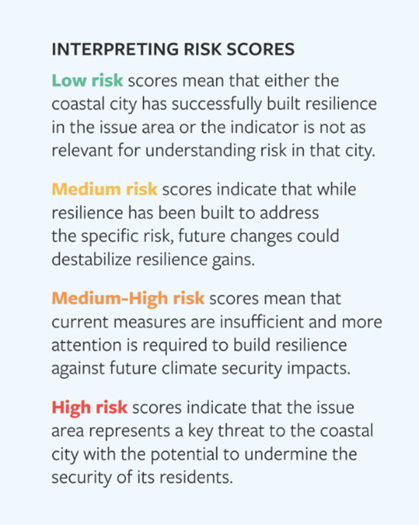
Rapid CORVI Assessments
- Western Province, Sri Lanka
- Southwestern Urban Corridor, Barbados
- Tarawa, Kiribati
- Dominica
- Mauritius
Full CORVI Assessments
- Basseterre, St. Kitts and Nevis
- Castries, St. Lucia
- Chattogram, Bangladesh
- Dagupan, Philippines
- Dar es Salaam, Tanzania
- Kingston, Jamaica
- Mombasa, Kenya
- Toamasina, Madagascar
- Suva, Fiji
- Belize City, Belize
- Aruba
Indicators
To ensure that the CORVI indicator scores provide a holistic risk rating, each is made up of five factors: current, past, and expected trends, the rate of change of the risk, and the impact of this risk on the coastal city.
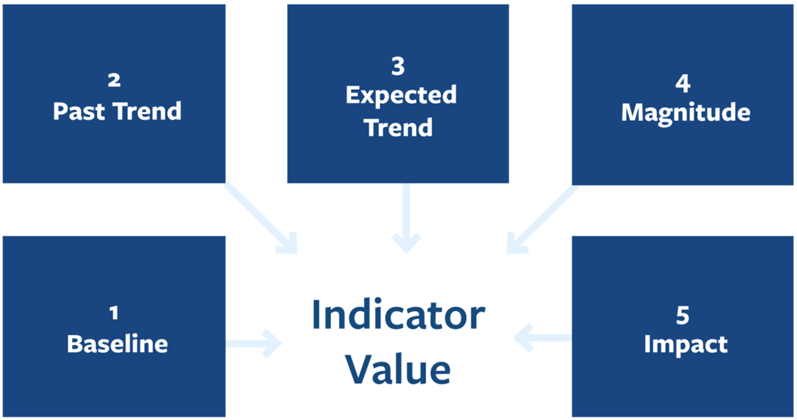
- The BASELINE measures the current level of risk for each indicator relative to other coastal cities in the region. Baseline data for economic and social indicators is derived from the most recent year of complete data. Climate indicators use a longer period of 15 years.
- PAST TREND assesses the trend of risk for the past 10 years, measured from the baseline year. The only exceptions to the 10-year trend measure are the climate indicators, which use a 15-year trend horizon to account for slow onset changes.
- EXPECTED TREND assesses the anticipated trend of risk in the next 10 years, measured from the baseline year. The only exceptions to the 10-year trend measure are the climate indicators, which use a 15-year trend horizon to account for slow onset changes.
- MAGNITUDE assesses the degree of expected future trend change relative to other cities in the region. Change that happens quicker than expected is assumed to increase risk when compared to changes that take place over a longer time scale. This assumes that longer time periods of change contribute to less risk, as decision makers have more time to adapt and build resilience.
- Finally, the IMPACT assesses the importance of change for each indicator in describing future risks in the coastal city.
Data Collection and Structured Expert Judgment
To overcome data gaps, CORVI employs structured expert surveys to collect data that is otherwise unavailable. This primary data is combined with secondary data using the approach of structured expert judgement (SEJ) to produce a comparative score for each indicator in the assessment. SEJ is a well-established social science technique that seeks to quantify risk when pre-existing secondary data is inadequate. Through interviews and surveys, as well as a series of weighting procedures to ensure data is representative, SEJ allows researchers to quantify topics that might otherwise be challenging to study in such a systematic fashion.
To apply SEJ to CORVI, subject matter experts across academia, government, civil society, and the private sector are identified through research and extensive outreach to stakeholders in the target coastal cities. These experts then refer the project team to other experts and stakeholders with appropriate expertise using “snowball sampling.” To guard against confirmation bias, survey answers are compared to a regional secondary empirical dataset to weigh the expert responses by utilizing a coherence check. This ensures that experts whose answers do not match secondary data are not weighed as highly as those who do.
This approach has several strengths. First, CORVI incorporates the views of subject matter experts and local stakeholders at each stage of its implementation. This allows the final product to better reflect the specific context that it is seeking to measure and provide more focused information for end users. Second, pairing primary survey data with secondary data through SEJ also allows CORVI to provide insight into risks relating to urban coastal environments that existing secondary datasets do not cover. While the use of SEJ allows CORVI to assess a diverse range of risks, it should not be a substitute for empirical data collection. Rather, SEJ is best viewed as an alternative research technique specialized in analyzing topics with significant data gaps.
CORVI Partners
CORVI operates in collaboration with national government authorities for every assessment. As a locally driven, comprehensive assessment of ocean and climate risk and vulnerability, the CORVI team engages with a wide range of partners on the ground, including national and local government, the private sector, civil society, and academia.
Benefits and Use Cases
The results of CORVI assessments in Kingston, Belmopan, and Belize City have led to prioritized actions to support nature‑based solutions like flood mitigation and coastal restoration, approached urban planning in a more integrated and holistic manner, build institutional capacity, and support social protection programming.
Acknowledgements
The research team wishes to express its appreciation for the support provided by Sally Yozell, Senior Advisor to the Environmental Security Program, and by Aruba’s National Climate Resilience Council and the CORVI partners in Aruba. We are particularly grateful to Juliet Carvalhal (Impact Blue) for her collaboration and guidance throughout the project. We appreciate the support of the students and faculty of the Hospitality & Management Studies Program at the University of Aruba.
Header image: Coastal landscape in Arub; Credit: Ryan Peterson, PhD







Community Adaptation for a Water Festival Without Clean Water