
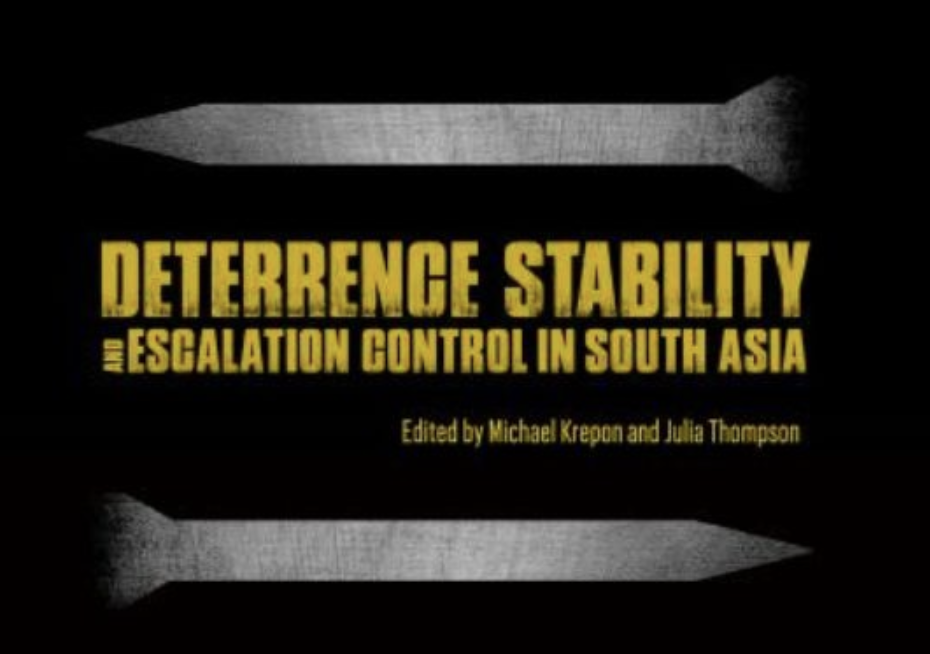
India and Pakistan have developed and flight tested seventeen new nuclear weapon delivery vehicles since testing nuclear devices in 1998 – an average of more than one per year. Military doctrines have also evolved to emphasize more rapid mobilization to engage in limited conventional warfare. Diplomacy to reduce nuclear risks has lagged far behind nuclear weapon-related advances and doctrinal change. Since 1998, Pakistan and India have negotiated four notable military-related Confidence-Building and Nuclear Risk Reduction Measures. No new measures have been agreed upon since 2007.
There is no basis for deterrence stability on the Subcontinent when diplomacy and nuclear risk reduction are moribund while nuclear capabilities grow and military doctrines evolve. The most desirable off-ramp to increased nuclear dangers is to secure normal relations with a nuclear-armed neighbor. This collection of essays – the product of bi-monthly discussions at the Stimson Center – provides analysis and ideas for deterrence stability and escalation control on the Subcontinent. This pursuit awaits leadership in India and Pakistan that is strong enough to persist in the face of violent acts designed to disrupt progress.









Community Adaptation for a Water Festival Without Clean Water