
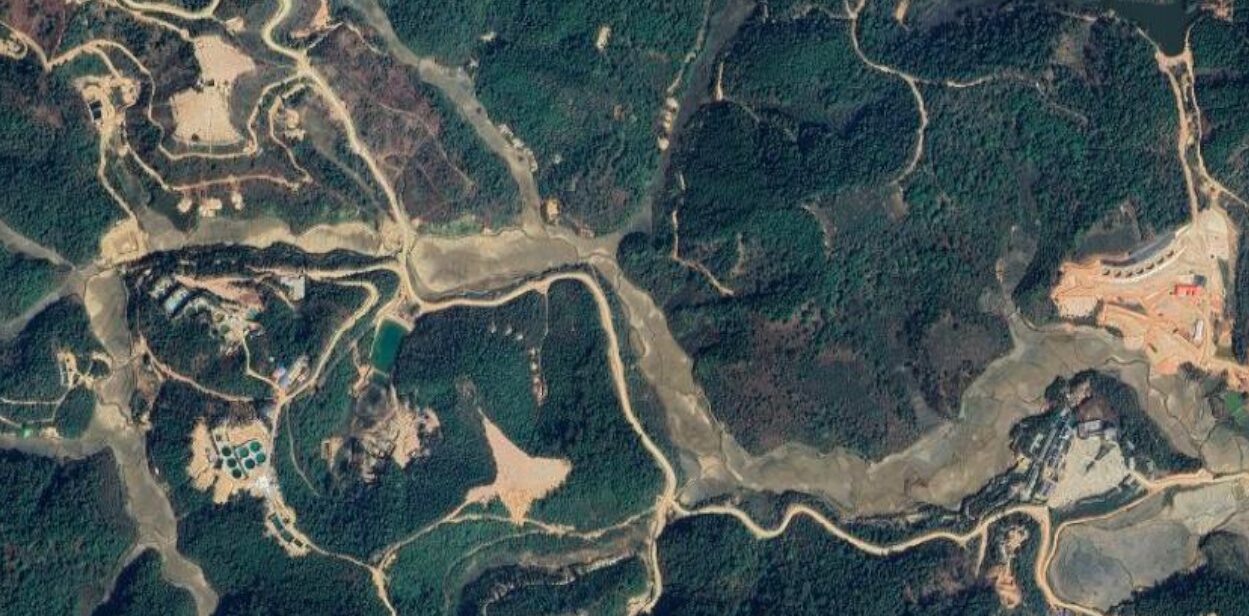
For the first time, rare earth mines are emerging in territory controlled by the Ta’ang National Liberation Army (TNLA), close to the border with China, in Myanmar’s Shan State. This revelation builds on work undertaken by the Stimson Center over the past year to document and geolocate thousands of mines across mainland Southeast Asia, including over 600 rare earth mines in Myanmar. This issue brief will situate the expansion of rare earth mining in Shan State into broader domestic and geopolitical contexts and assess the potential impacts of continued mining growth, both in scale and in geographic scope, on conflict dynamics in Myanmar as well as on the environment and local communities.
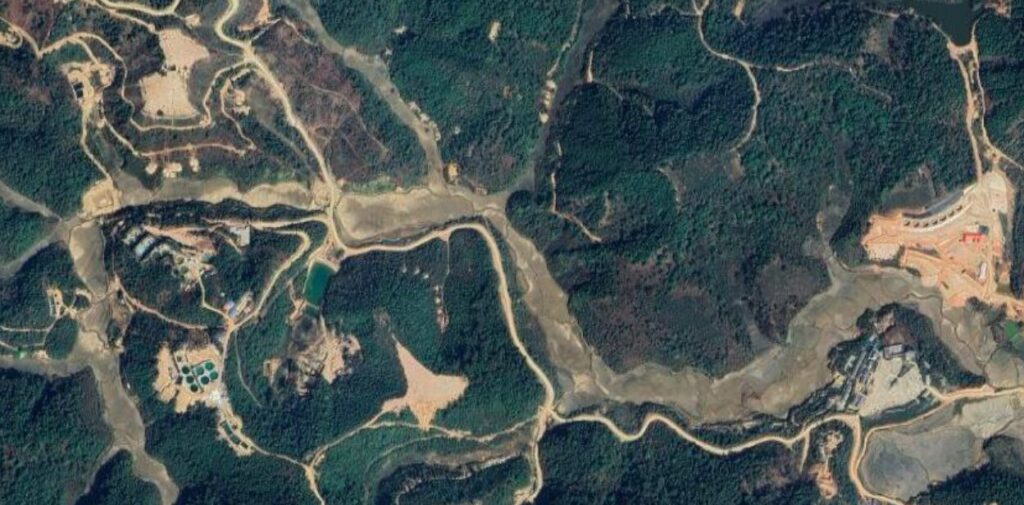
Figure 1: Rare Earth Mines in TNLA-Held Territory
Figure 2: New Rare Earth Mines in Myanmar since 2022
The Rise and Stumble of the TNLA
The TNLA is an ethnic armed group formed in 2009 as the armed wing of the Palaung State Liberation Front (PSLF)1Palaung and Ta’ang refer to the same ethnic group. Ethnic Ta’ang refer to themselves as such while Palaung is the Burmese language term used to refer to the Ta’ang. , a political movement established in 1991. The PSLF built upon a decades-long struggle for greater autonomy for the ethnic Ta’ang people and sought to establish a Ta’ang State larger than the Palaung Self-Administered Zone (SAZ) defined by the Myanmar military-drafted 2008 Constitution. In the decade after its establishment, the TNLA clashed with both the Myanmar military and Shan ethnic armed groups, including the Restoration Council of Shan State, carving out a foothold in the mountains of northern Shan.
The TNLA’s influence grew in the wake of the 2021 military coup as it consolidated control in rural areas of northern Shan, enhanced administration and social service delivery, and offered discreet support to other resistance actors even as it avoided direct confrontation with the military. That changed in October 2023, however, when the TNLA and two of its allies – the Arakan Army and the Myanmar National democratic Alliance Army (MNDAA) – collectively known as the Brotherhood Alliance, launched a major offensive, dubbed Operation 1027. By October 2024, TNLA territory grew to encompass 12 townships in northern Shan, including lucrative trade routes to China and mining interests, while resistance forces, with TNLA support, threatened Myanmar’s second city of Mandalay.
Though the TNLA’s rapid expansion greatly increased its earning potential, it also brought new challenges. Over the course of the following year, the TNLA’s gains were rolled back due to a combination of battlefield adaptations made by the Myanmar military, Chinese pressure on the TNLA and other groups operating near the China-Myanmar, increased Chinese support to the Myanmar regime, and resentment among non-Ta’ang populations under TNLA rule. Having lost three townships militarily, the TNLA was compelled to agree to a Chinese-brokered bilateral ceasefire agreement with the Myanmar military in October 2025 in which it ceded two further townships and faced criticism for seemingly abandoning broader resistance to military rule. The TNLA later lost control of another township to its erstwhile Brotherhood Alliance ally, the MNDAA, and, in recent Chinese-brokered negotiations, the Myanmar military has sought to squeeze the TNLA further, insisting it give up control of all of its territory except the two townships which comprise the Palaung SAZ.
The TNLA’s Mining Interests
Northern Shan State is rich in minerals, including gold, silver, lead, zinc, and copper, and has a long history of mining. Though it did not control these resources prior to 2023, the TNLA taxed the transit of minerals through its territory, sometimes breeding tension with other ethnic armed groups. As its domain expanded in late 2023 and into 2024, the TNLA gained control of valuable mining assets. In May 2024, however, the TNLA announced a temporary suspension of mining activities operating under licenses granted by Myanmar military authorities and required that companies seek TNLA permission within six months to continue to operate. In a separate, simultaneous announcement, the TNLA banned rare earth mining, supposedly to allow for environmental conservation plans to take shape.
While the TNLA has not officially lifted the suspension on mining, its approach seems to have shifted after it captured Mogoke, a ruby mining hub in Mandalay Region adjacent to Shan State, in mid-2024. Though it suspended mechanized ruby mining, the TNLA allowed artisanal ruby mining in exchange for a nominal annual tax. By mid-2025, as it was losing ground to the Myanmar military, the TNLA was actively courting investment in the mining sector and had again begun to allow large-scale ruby mining, a trade worth hundreds of millions of dollars annually.
Shortly thereafter, however, the TNLA agreed to return Mogoke to the Myanmar military as a part of its October 2025 bilateral ceasefire. The loss of Mogoke, as well as of other territory and revenues from controlling trade routes, left the TNLA in a weaker position militarily, financially, and politically. It was at about this time that infrastructure related to rare earth mining began to appear in TNLA-held territory. Satellite imagery analysis over the past seven months in northern Shan State’s Mantong Township shows the development of at least 12 rare earth mines and new corresponding roads connecting these mines to established roads leading towards the Chinese border. Collection pools, where heavy rare earth-laden slurry accumulate through the extraction process and clear markers of rare earth mining in Myanmar, appear in TNLA territory as early as December 2025. While it is difficult to determine the current stage of these developments, the leaching process in general takes 150-400 days, which suggests exports to China may have already begun.
Figure 3: Timelapse of rare earth mines development in Mantong Township, Shan State, from November 2025 to April 2026
Figure 4: Location of area in Figure 3 relative to distance to the border with China
Linkages to Global Supply Chains
The rare earth mines in TNLA territory comprise only a small proportion of similar mines across northern Myanmar. Most of Myanmar’s rare earth mines – nearly 80% of those established since 2022 – are in Kachin State and, as satellite image analyses show, over the past decade, they expanded rapidly, with hundreds of new mines appearing close to the China-Myanmar border. Production accelerated after the 2021 military coup, enabling Myanmar to eclipse China as the world’s largest producer of heavy rare earths ores.
The growth of mining in Myanmar coincided with an increase in global demand and stringent new environmental regulations in China, introduced in 2011 and tightened in 2016. As a result of Chinese domestic supply constraints, China’s dominant role in heavy rare earth processing and high-performance magnet manufacturing, and the proximity of most mines to the China-Myanmar border, nearly all of Myanmar’s heavy rare earths are exported overland to China: Myanmar accounted for at least 60% of China’s rare earth imports from 2017-2024, with Myanmar’s exports reaching a peak value of US$1.4 billion in 2023.
These dynamics were scrambled somewhat when the Kachin Independence Army (KIA) seized most of these rare earth mines from a Myanmar military-aligned warlord in an offensive in late 2024. While exports from Kachin to China resumed after a temporary collapse in the first quarter of 2025, the KIA is now the only major ethnic armed group with significant rare earth mining interests that is still actively fighting the military. That increases the importance of comparatively stable supplies of rare earths from Shan, including those from TNLA territory; these dynamics have likely contributed to a shift in mining towards Shan State over the past few years, as evident from satellite image analysis.
Figure 5: Rate of Annual Growth (%) of Rare Earth Mines in Shan and Kachin States
Conflict and Environmental Implications
As mining grows in scale and importance in Shan State, so too will its interlinkages with conflict, illicit economies, and environmental challenges. In the near-term, rare earth mining in Shan State may act as a deterrent to renewed conflict. The new rare earth mines in Mantong Township lie within the Palaung SAZ that the Myanmar military already effectively recognizes as TNLA territory, and it is unlikely the Myanmar military would want to reopen its front against the TNLA at this point. Moreover, reported involvement of Chinese and Wa companies, as well as the MNDAA and the United Wa State Army (UWSA), in mining in Mantong and neighboring townships, where they are likely providing key inputs and technical expertise, act as further restraints on renewed conflict given China’s preference for border stability and the low likelihood of direct antagonism between the Myanmar military and Wa interests. These factors should enable the TNLA’s ceasefire with the military to hold for now and for the TNLA to continue to control mining in the area.
Ceasefires in Myanmar, however, are rarely durable as they have not historically translated into processes that address underlying political grievances. Over time, the TNLA may be able to rebuild its financial and military strength, in part through revenues from rare earth mines, to once again challenge the Myanmar military in northern Shan. Indeed, throughout Myanmar, mining and other extractive industries generate billions of dollars in revenue for armed groups and the Myanmar military each year, often with little transparency and significant scope for corruption. These dynamics help to sustain conflict and contribute to massive illicit economies in Myanmar, with increasing indications of linkages between natural resource extraction and illicit economies and recent research uncovering individuals trafficked between scam compounds and rare earth mines in UWSA territory in eastern Shan.
Beyond the impacts on conflict dynamics, the continued expansion of mining and other extractives comes with negative environmental impacts. Water and soil testing along the Irrawaddy River in Kachin State found extremely acidic pH levels and high concentrations of contaminants, likely from untreated mining wastewater discharged into nearby waterways and chemical leaks from upstream mines. A growing body of evidence suggests pollution from mines is responsible for reducing access to safe drinking water, causing skin diseases among local communities and livestock, tainting the soil used for growing crops, and threatening fish stocks among local and downstream communities. These impacts are likely to be replicated in the Shweli and Myitnge Rivers in northern Shan where new rare earth mines are located.
Lack of proper mining governance and enforcement also poses a more direct safety risk to communities. Landslides and mine collapses are well-documented in Kachin State (and in China), likely due to the compounding impacts of deforestation, unregulated mines developed on steep terrain, the weakening of the ground due to leachate injections, and more frequent and extreme weather events. Similar dynamics are likely to play out in Shan State. Lax regulations and oversight remain a challenge as well: Though not likely linked to rare earth mining, a recent explosion at a mining equipment storage warehouse in TNLA territory killed dozens of villagers, demonstrating the dangers of mishandling materials used for mining.
While some ethnic armed groups have expressed interest in learning more about the impacts of mining and addressing environmental repercussions, political will and governance and technical capabilities vary widely across groups. It is not yet clear where TNLA fits on this spectrum: It has not yet acknowledged that rare earth mining is taking place in its territory nor has it offered further details on the environmental conservation plans it used to justify its initial ban on rare earth mining in 2024 or if that ban has been formally lifted. In northern Shan, as elsewhere in Myanmar, rare earth mining incentive structures are misaligned with efforts to address weak mining governance, environmental harms, and underlying conflict dynamics. Absent significant change, the current trajectory of expansion — along with adverse impacts — is set to continue.








Community Adaptation for a Water Festival Without Clean Water