
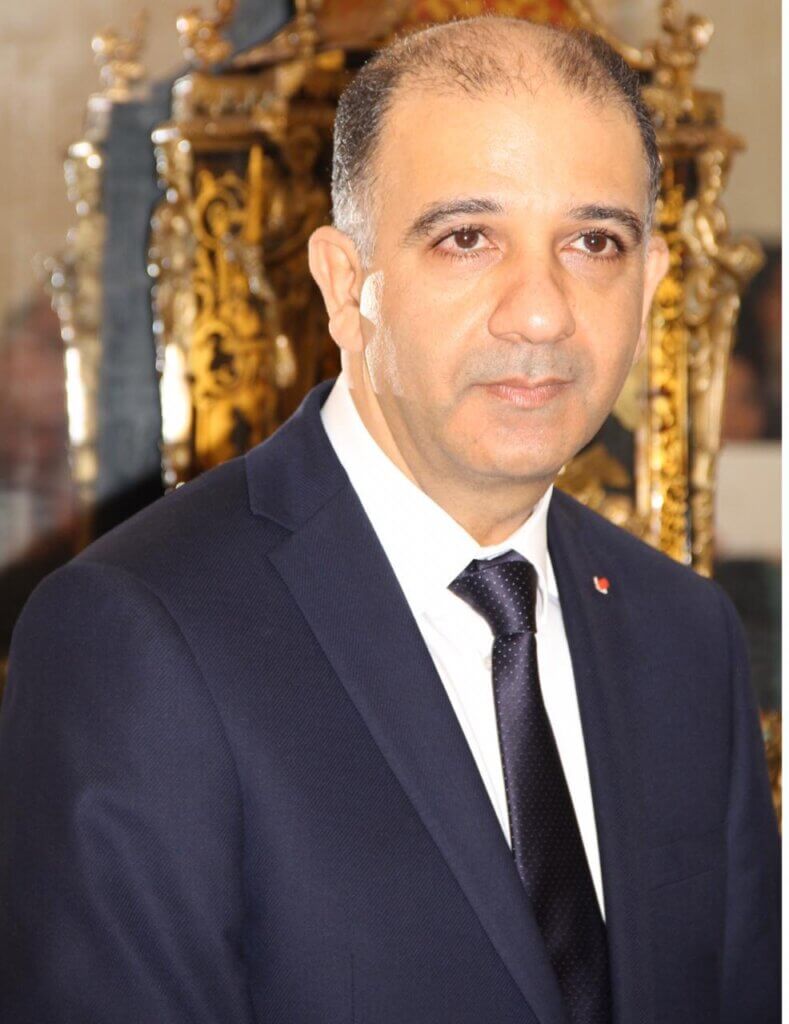
Editor’s Note: Joey R. Hood is an American diplomat and career member of the Senior Foreign Service who most recently served as U.S. Ambassador to Tunisia (2023–2025). Over a distinguished diplomatic career, he has held senior leadership roles across the Middle East, including Chargé d’affaires and Deputy Chief of Mission in Baghdad, Deputy Chief of Mission in Kuwait, and Principal Officer at the U.S. Consulate General in Dhahran, Saudi Arabia.
In Washington, Hood served as Acting Assistant Secretary and Principal Deputy Assistant Secretary in the Bureau of Near Eastern Affairs, where he oversaw U.S. policy across the region. His earlier assignments include roles focused on Iran, public diplomacy in Qatar, and political-economic affairs in Yemen.
A former Fulbright scholar in Burkina Faso and a Pickering Fellow, Hood holds a BA from Dartmouth College and an MA from The Fletcher School at Tufts University. He speaks French and Arabic.
By Hafed Al-Ghwell, Senior Fellow and Director, North Africa Program
Introduction
In the context of the Iran war, it may seem like an odd time to be thinking about Tunisia, but our experience with the Iranian regime and Sunni extremist organizations over the past several decades teaches us that our adversaries will contest anywhere they can, and nowhere more so than in countries with highly educated populations near geographic chokepoints. With that in mind, it is no surprise that Hitler instructed Rommel to hold Tunisia as the linchpin of his Africa campaign, that Roosevelt decided Tunisia was where the U.S. Army would first face the Nazis, and that ISIS recruited so heavily there that Tunisians became, on a per capita basis, the most well-represented nationality in the “caliphate” beyond Iraq and Syria.
These are, of course, only two of the most recent examples of empires on the move trying to use Tunisia as an African beachhead. Cato the Elder’s phrase “Carthago delenda est” echoes down through the ages to us because it became symbolic of a powerful entity obsessed with destroying its rival. Over 1,400 years later, St. Louis IX, King of France, died in present-day Tunisia while pursuing his own obsession: driving a definitive wedge between the Abbasid Empire in the east and Andalusia in the west. France returned six centuries later, but not until after the Ottomans had ruled Tunisia for three centuries themselves. During that time, a new, mercantilist country arose 5,600 miles to the west, whose diplomats (two of whom would later serve as president) set their sights on negotiating treaties with Tunis and its neighbors. When those negotiations failed, this new country, the United States of America, embarked on its first foreign war to secure the Strait of Sicily for American shipping.
What is it about this small, keystone-shaped land at Africa’s northernmost point that has obsessed great powers east and west for more than two millennia? One unchanging attribute is its geographic position, occupying one side of the 90-mile-wide Strait of Sicily, just 42 miles from Italian territory at its closest point, extending southward to the edge of the Sahara Desert. That position on the edge of the Mediterranean has made it an attractive route for Sub-Saharan African migrants heading to Europe, and in ancient times, the ideal breadbasket for Rome, especially during the latter 500 years of the Roman Climatic Optimum. Even with today’s far harsher climate conditions, Tunisia remains the second-largest producer of olive oil and among the top exporters of citrus and dates in the world. While its strategic location and agricultural potential bewitched everyone from Cato to Hitler to Qaddafi, these were not the attributes that attracted ISIS recruiters a decade ago. They were far more interested in this statistic: Tunisia consistently has among the highest percentage of STEM graduates in the world. Taking advantage of the tumult following the uprisings of 2010/2011, ISIS recruiters turned impressionable Tunisians into leading fighters, bomb technicians, teachers, and online recruiters.
Now with the ISIS fight behind us, the Arab uprisings a distant memory, and the threat of Iran looming large before us, we are tempted to conclude that Tunisia is no longer relevant to U.S. objectives. But that would be a mistake. As history vividly demonstrates, aspirational powers will continue to covet Tunisia, and their influence may not be congruent with our interests. In addition, all those STEM graduates will find ways to put their knowledge to work; the question is whether that will be in the service of the next extremist movement, or, for example, helping to develop better technology for agriculture in arid regions.
This policy brief proposes recommendations for ways in which the United States and its partners can nurture Tunisia as an “exporter of stability” to the Sahel countries. Through training, exercises, and airlift, the Tunisian military can support the development of counter-terrorism, police, and peacekeeping forces throughout the African continent in ways that are too expensive or too involved for the United States and Europe to do on their own. In this way, Tunisia and its partners can provide a viable alternative to Russian mercenaries and other foreign influence in the Sahelian states, which only contribute to further instability.
This brief also proposes ways in which the United States and European partners can help Tunisia maintain economic stability in ways that benefit all sides, rather than trying to revive economic development models rejected by the current U.S. and Tunisian administrations. I will explain why going “offshore” with manufacturing in Tunisia is much more attractive than one might think at first blush, and why creative use of the multilateral development banks can benefit western investors and safeguard the Tunisian economy from predatory practices by our adversaries.
The Roots and Fruits of Security Assistance
The United States is among Tunisia’s oldest security cooperation partners. As early as 1805, President Jefferson and the envoy of the Bey of Tunis, Sidi Soleiman Mellimelli (incidentally the first Muslim diplomat to set foot in Washington), were haggling over the form our security cooperation would take after Jefferson proved willing to go to war with Tunis and the other North African states in 1801 to secure American shipping. In a letter from December 1805, Ambassador Mellimelli explained on behalf of his Bey, also referred to as Pasha, or “Bashaw” in Mellimelli’s rendering, how much his leader would prefer military equipment (“stores”) rather than cash transfers:
“[The Bey] is in the habit of receiving presents, of Maratime (sic) and Military Stores, from almost every Nation, with whom he is at peace…but from the United States of America, his Excellency has not received a single article. […] It is true Consul [James] Cathcart offered the Bashaw in your Excellency’s name, a permanent triennial present, of 24,000 dollars, which his Excellency did not think proper to accept, not being in want of Cash, but the Stores in question, are absolutely necessary for the defence, and welfare of his State; and is consistent with the customs which are established between the Regency of Tunis, and other Nations; and as your Excellency has abundance of those articles, my Master only demands a part of your superfluities, as a proof of your Excellency’s sincere friendship towards him; promising to reciprocate those acts of friendship, as much as circumstances will admit.”
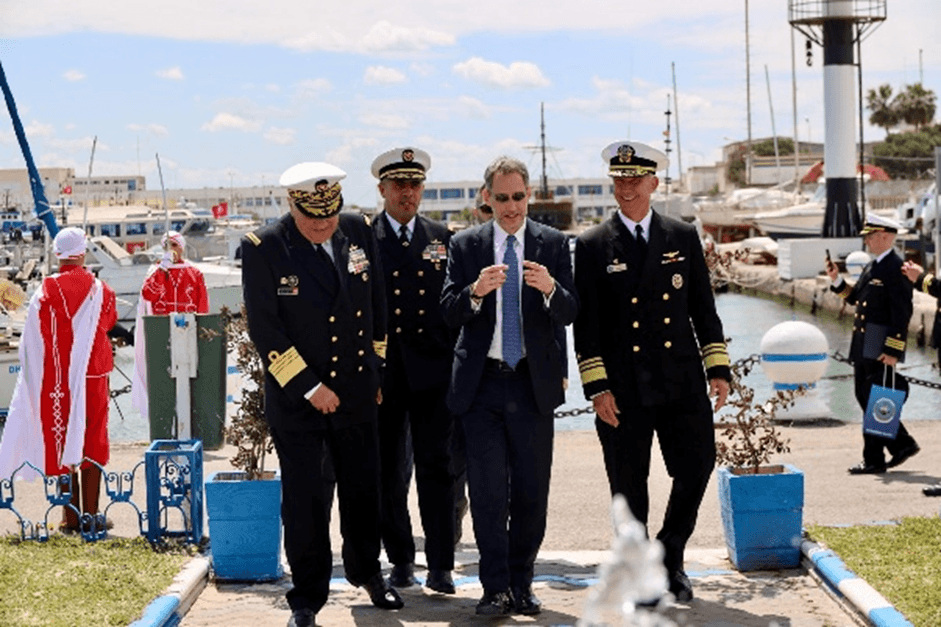
While it is not clear what military equipment, if any, President Jefferson decided to send to the Bey, Jefferson did establish in 1801 the Mediterranean Squadron, the precursor to today’s Sixth Fleet, to conduct anti-piracy operations known as the “Barbary Wars.” Those ships were in frequent enough contact with Tunis that they occasionally blockaded the port of La Goulette to provide leverage during bilateral negotiations, or rotated U.S. personnel in and out of the Consulate. Most of our early Consuls, starting with William Eaton, who famously led Marines to “the shores of Tripoli,” were military officers. Even one of the former interns at the U.S. Consulate would come to have an illustrious military career: future Admiral David Farragut spent a year learning French, Italian, and Arabic in 1817 under the tutelage of Consul Charles Folsom.
As piracy lost its luster and the Civil War consumed the United States, security enforcement and cooperation in the Mediterranean took a back seat among U.S. priorities, but as World War One dawned, the U.S. government re-established a major naval presence in the region. It would later prove pivotal to denying the Nazis a reliable resupply route as Operation Torch bottled them up in Tunisia in 1942/1943. Modern security cooperation with Tunisia began shortly after its independence in 1956. President Habib Bourguiba decided that the United States would be Tunisia’s strategic security partner; a U.S. memorandum from 1981 could have been drafted by Ambassador Mellimelli himself:
“President Bourguiba said that Tunisia wants to buy the minimum necessary equipment for its defense and will pay to the best of its ability. [Assistant Secretary of Defense for International Security Affairs Francis “Bing”] West said a request for increased credits had already been sent to Congress. […] President Bourguiba closed by saying that the Sixth Fleet was welcome to Tunisia wherever and whenever it pleased.”
Those “credits,” now called Foreign Military Financing (FMF), were meant to help Tunisia bolster its defenses against the depredations of Libyan strongman Moamar Qaddafi, who was fresh on the minds of both governments after having tried to incite an uprising in Gafsa in 1980. FMF support increased dramatically after the uprisings of 2011, as did U.S. military advising and exercising to help Tunisia deal with an increasingly lethal extremist threat. This was no sure thing. In 2012, assailants attacked the Embassy and destroyed much of the American school across the street. In 2013, assassins took out politicians Chokri Belaid and Mohammed Brahmi. By 2015, ISIS supporters managed to raise a black flag atop the clock tower in central Tunis. In 2017, ISIS fighters almost managed to capture the city of Ben Guerdane. As the security forces gained the upper hand and concerns rose in Washington regarding the direction in which President Qais Saied was taking the country’s democratic experiment, FMF levels began to fall from $121 million in 2021 to less than half of that today. Since 2011, the U.S. government has also allocated more than $100 million in assistance to bolster law enforcement capacity, but those funds are now also diminishing.
It would be easy to declare “mission accomplished” and allocate scarce U.S. foreign assistance funding to emerging threats elsewhere rather than spending more money on a problem we have already solved together. This approach would be shortsighted, as it would forfeit the benefits the U.S. government and our partners could derive from the infrastructure we helped build, the training we provided, and the equipment we transferred or sold to Tunisia, particularly in the past 15 years.
Exporting Stability
There is a way to “export” elements of the hard-won stability Tunisia and the United States achieved together, and for counter-terrorism operations, the Sahel states would make for natural partners. American relations with these governments have been particularly strained since a series of military coups starting in 2021. While U.S. legislation generally bars security assistance to governments after military coups, waivers based on national security are available. Even so, several of these governments, including Niger, Burkina Faso, and Mali, have been reticent to cooperate in anything that appears to compromise their sovereignty. As a result, the U.S. government was forced to withdraw its military elements from Niger in 2024 and sharply curtail its engagement with Mali and Burkina Faso.
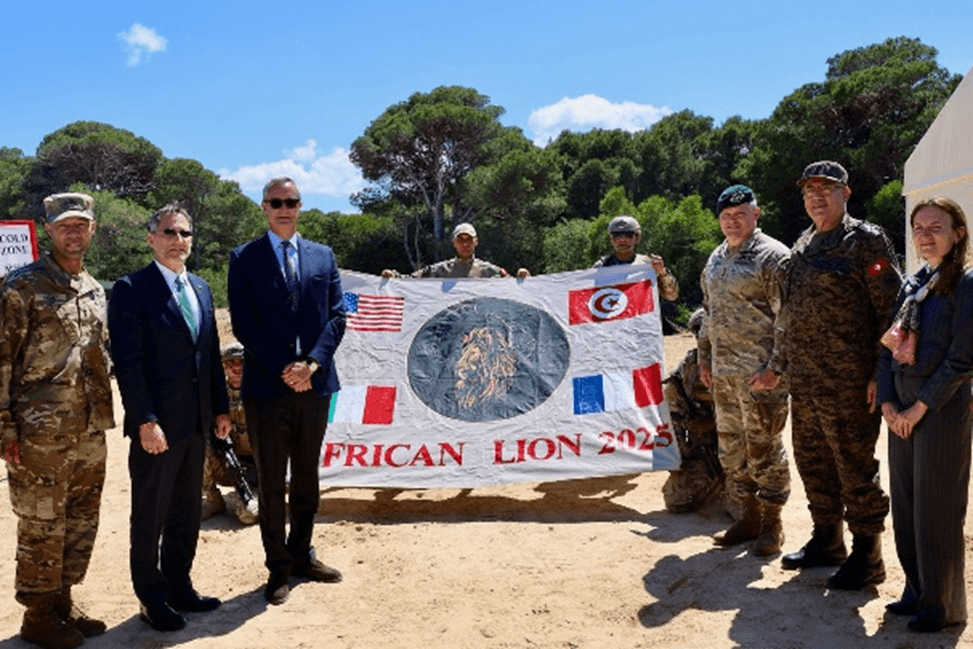
There is still a certain level of security cooperation with these governments, which is why they continue to participate in U.S. Africa Command’s annual special operations exercise, “Flintlock,” but using Tunisia as a platform, exercises and training focused on counter-terrorism capabilities could reach a more mature level. The Sahelian states already participate in the largest U.S. annual military exercise on the continent, “African Lion,” major elements of which have been hosted in Tunisia for the past decade. The inclusion of French and Italian forces in a significant way for the first time in 2025 allowed for the possibility of countries other than the United States or Tunisia taking the lead on different exercise elements. In that context, with the assistance of the Tunisian Armed Forces, it would be a relatively easy step to ask one of the Sahelian countries to run an exercise element.
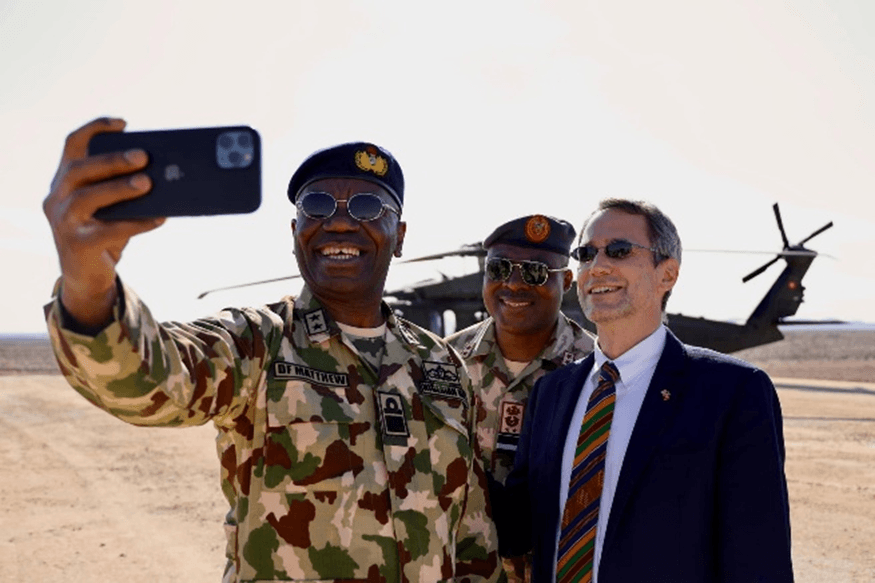
Imagine, for example, Burkinabè forces demonstrating how they took down over 100 terrorists and liberated territory around the city of Kantchari near its border with Niger in 2025, and presenting their lessons learned. A demonstration of how this combined air-ground operation went down fits the very purpose for which the vast land forces training area at Ben Ghilouf was built through US-Tunisian cooperation. Nigerien forces could make excellent use of a special forces training area elsewhere in Tunisia to describe and demonstrate how they made intelligence-driven progress against Boko Haram in the Lake Chad region or against insurgents in the tri-border area with Mali and Burkina Faso. Of all the nations participating in African Lion, these Sahelian states have some of the most recent experience with major counter-terrorism and counterinsurgency operations, making their contributions all the more valuable to other participants.
This approach, which would elevate Sahelian forces’ participation from observer status to full-spectrum participants, could require financial and airlift assistance to offset costs, but these could be shared by U.S. and European exercise participants, as well as Tunisia, which has a fleet of C-130 transport aircraft tailor made for such missions. Tunisia has provided airlift for U.S. assets participating in African Lion, and it could expand that support to Sub-Saharan African partners, as well.
The benefits of fully integrating Sahelian forces into African Lion go beyond the obvious usefulness of exercising military capabilities under peaceful, controlled conditions and the advice other participants can offer. In addition, there is the less measurable, but perhaps even more valuable dividend of trust that comes from military forces operating side by side as equals with something valuable to share, rather than the traditional (some would say colonial) model of teacher-and-student. Certainly, there is much more that can be done to address the deficit of trust that has grown between American, European, and Sahelian partners.
The United States conducted a test case of sorts for this approach in 2025 with Tunisian-hosted training for teams from over a dozen countries. Called the “Special Program for Embassy Augmentation and Response” or SPEAR, these teams are made up of security professionals from each nation but fall under the tactical direction of the respective U.S. Ambassador’s security team. SPEAR was set up in the wake of the 2012 attack in Benghazi, where local security forces collapsed. Providing venues and interpreters for training these teams in large groups can climb into the millions of dollars, but Tunisia absorbed most of those costs, leaving responsibility for the overall administration and equipment necessary for the week-long training to the United States. Another benefit reaped by this approach is that it allowed the Tunisian SPEAR team to step into the role of instructor for some elements, further strengthening their esprit de corps and commitment.
Beyond SPEAR teams, there is an opportunity to provide long-term training for a wide variety of African law enforcement personnel at the new police training academy in Enfidha. Financed roughly 50/50 by the Tunisian and American governments, the academy represents the largest single investment in this type of infrastructure by the Department of State’s Bureau of International Narcotics and Law Enforcement. Built to accommodate nearly 2,000 students at a time, the center could easily pepper 500 or more foreign students throughout its courses. Given Tunisian instructors’ facility in Arabic, French, and English, language should not be a barrier for students from as close as Libya or as far as South Africa.
With the U.S. and Tunisian governments having made the initial investments in bricks and mortar, European governments could contribute relatively small amounts of funding that would make a major difference in information technology, training equipment, travel, books, and curriculum development. Cooperation at this level would likely be welcomed by Tunisian officials and citizens as another demonstration of a more equitable partnership and fit more readily the new approaches to foreign assistance taking place in capitals like Washington and Rome.
Economic Development
Beyond security, economic development is another area in which Tunisia can serve as a regional stabilizing force, but this would also require a new approach. Just as the U.S. government should no longer provide security assistance suited for a bygone era, it should not try to use tools to promote economic stability and development that are no longer supported by citizens or governments in either country. For years, western countries supported a reform program proposed by the Tunisian government that would have been financed by the International Monetary Fund (IMF), except that President Qais Saied did not support it himself. He objected to the proposed reductions in subsidies for fuel and food, despite plans to compensate the neediest citizens through the reform program, likely assessing that it was too risky politically. Economists can argue all they want that subsidies are not sustainable and that structural reform is the only path to long-term economic stability, but if those arguments do not convince a country’s leader or its citizenry, then we must try another approach.
Meanwhile, in Washington, the Trump Administration dismantled USAID and ended most of its programs, particularly in economic development, transferring humanitarian assistance to the State Department. While it can be argued that some of the economic development projects the U.S. government pursued over the decades in Tunisia ended up creating a net benefit to the U.S. economy, no amount of explanation is going to convince the president to return to the previous assistance model. Here, too, we must try another approach.
Both President Saied and President Trump prefer direct investment to development projects carried about by “Beltway Bandit” organizations, so the U.S. government should take advantage of this by amplifying Tunisia’s offshore manufacturing sector, an area in which Tunisian and American businesses have been delivering results for decades. More than 75 American companies already take advantage of offshore manufacturing in Tunisia, including for iconic brands such as Bazooka Gum, Carhart clothing, and Porsche luxury vehicles.
It should be noted that in the context of Tunisia, “offshore” does not mean factories set up on an island somewhere, but rather the manufacturing of products exclusively for export. For example, if an American rancher wanted to export bison to the European market, he could process it in Tunisia and ship it within a day to Italy, Spain, or France, all tariff free thanks to Tunisia’s offshore manufacturing law and its free-trade agreement with the European Union. In today’s newly protectionist trade atmosphere, that would be no mean feat. Likewise, businesses can – and have – taken advantage of the offshore manufacturing regime to export to the United States. One enterprise, Carthage Seafood, became a major market contributor, particularly in blue crab, in just a few years after only modest assistance from the U.S. government, and their contribution came just in time for American consumers, with domestic blue crab populations at record lows.
The U.S. government can do more to foster American firms’ entry into Tunisia’s offshore manufacturing sector by sponsoring trade missions focused on promising areas, such as agribusiness, pharmaceuticals, and information technology. Remember all those STEM graduates Tunisia produces annually? They make excellent software engineers, call center problem solvers (in three languages), and innovators. And in many cases, they are not likely to be replacing American labor, since in the case of agribusiness, they would be transforming Tunisian produce, and in other cases, would be producing goods that otherwise would not have been competitive in the European market if exported directly from the United States due to our reciprocal tariffs.
Beyond trade missions, the U.S. government can support trade shows and conferences that gather Tunisian and American business executives and officials to explore specific promising sectors. Perhaps the most famous example of an American discovering unique aspects of Tunisia from which his enterprise could benefit was George Lucas, who produced six movies from the Star Wars franchise, as well as Indiana Jones. Several major scenes were filmed in Tunisia, and the iconic Jedi cloak is merely a typical Tunisian bernous. How can the government inspire such creativity? The U.S. Embassy’s recent sponsorship of an “Aviation Days” conference is an excellent example of this type of collaboration, which likely exposed companies like Boeing, Honeywell, and Collins Aerospace to Tunisian aerospace component manufacturers with which they were not previously familiar.
One objection diplomats often hear while trying to promote greater trade and investment is that American companies are not interested in small markets like Tunisia. Executives’ ears should perk up, however, when they hear that Tunisia has free trade agreements with the European Union and many other African countries. Those arguments, however, sometimes fall on deaf ears. That is when it can be useful to engage with smaller and medium-sized enterprises, as well as governments at the sub-national level.
Here again, the U.S. Embassy in Tunis has made some promising in-roads with the state of Wyoming. Its flagship university, through Embassy facilitation, has signed memoranda of understanding with six Tunisian institutions, and these are not charity cases. These agreements are meant to guide joint research and collaboration in areas such as archaeology, cloud seeding, wastewater re-use, and ecotourism. The University of Wyoming has big plans for all those STEM graduates that I mentioned earlier.
When I traveled to Wyoming last year, I warned university leaders that federal funds may not be available to support these plans in the current atmosphere, but they responded, “That is not a deal-breaker for us. Wyoming has resources, and the relationships we are establishing are meant to be an exchange of expertise, so our citizens will benefit just as much as Tunisians.” With 50 states, 14 territories, and the District of Columbia, America has virtually limitless possibilities for sub-national engagement.
Future areas of potential collaboration should include American venture capitalists and angel investors taking a close look at Tunisian innovation, through low-cost U.S. government facilitation, a responsibility that it can, over time, hand over to sub-national governments and universities. Thanks to a start-up law conceived with the input of American expertise, Tunisian innovators (again, remember all those STEM graduates?) have launched several successful start-ups in the past several years. Instadeep, an AI company focused on healthcare, is just one example; it was recently purchased by German firm BioNTech after raising over $100 million in financing. There are no doubt many other opportunities Tunisian innovators can present to American investors; the U.S. government has a proven track record of playing an effective matchmaker when it sets its mind to doing so.
For many years, the U.S. government has focused not on helping to find the next business “unicorn” for American investors, but designing large interventions that – in my experience – often do not pan out. The Millennium Challenge Corporation is a great idea in theory, granting governments substantial funds to address a particular area of their economy, but in practice, as happened with Tunisia, it can fall prey to shifting political winds in Washington. The Development Finance Corporation (DFC) is another example. In theory, providing political risk insurance or financing for American companies that are otherwise ready to invest seems like an excellent use of limited taxpayer funds. But in practice, at least in smaller markets like Tunisia’s, American firms lack the familiarity and interest they would need to advance to a level at which DFC financing would come in. Fortunately, some of our partners do not have such constraints, so Italy has, for instance, supported Terna implementing a billion-dollar joint venture with Tunisia to connect their electricity grids.
Unfortunately, some of our adversaries have also set their sights on Tunisia. Chinese firms are making a strong play for telecommunications infrastructure, but there are no American companies interested in or capable of presenting alternative offers. What the U.S. government can do, however, is remember that it is the largest single shareholder in multilateral development banks like the EBRD, the World Bank, and the African Development Bank. Along with likeminded partners, the United States can support offers of attractive financing for major projects, as long as the Tunisian government agrees to award its tenders to pre-vetted lists of trusted vendors. If our governments are providing the financing, after all, it is natural that we would want our companies – or at least our allies’ companies – to implement the projects. Why should we subsidize our strategic adversaries?
To be sure, adversaries will always covet Tunisia, as we have seen down through the ages. The U.S. government can wait for that to happen again and then exhaust blood and treasure rectifying the situation, or we can remain strategically engaged at relatively low cost to the American taxpayer, helping to export stability to the continent through military and police training, and facilitating business and sub-national exchanges that pay real dividends to Americans and Tunisians alike.
Header image: The Minaret of the Great Mosque Okba of Kairouan. By Monaam Ben Fredj



Community Adaptation for a Water Festival Without Clean Water