
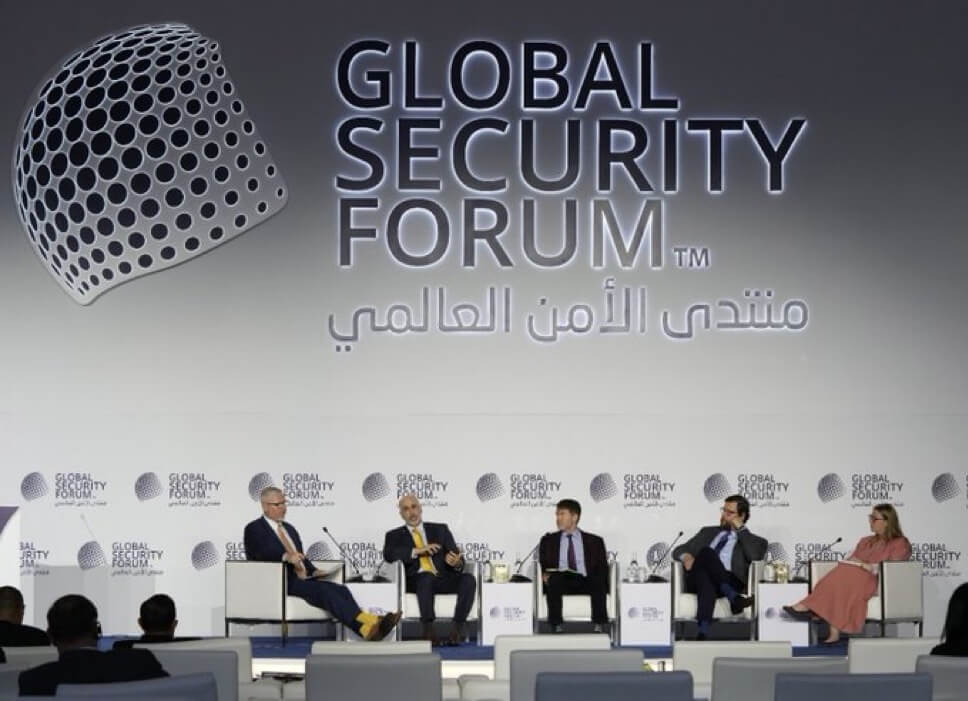
Last week, Pierre Krahenbuhl of the International Committee of the Red Cross made an impassioned plea to the audience at the Global Security Forum in Doha.
“Today’s conflicts are becoming the graveyards of our humanity,” he noted, pleading for states to return to applying the laws of war.
Looking at the world around us, it’s rather hard not to see his point. Ongoing crises in Gaza, Yemen, Ukraine, Sudan, and elsewhere continue to rack up obscene body counts, and despite an early flurry of optimism in negotiations by the incoming U.S. administration, President Donald Trump’s first 100 days in office have largely shown that peace can often be harder to reach than some might assume.
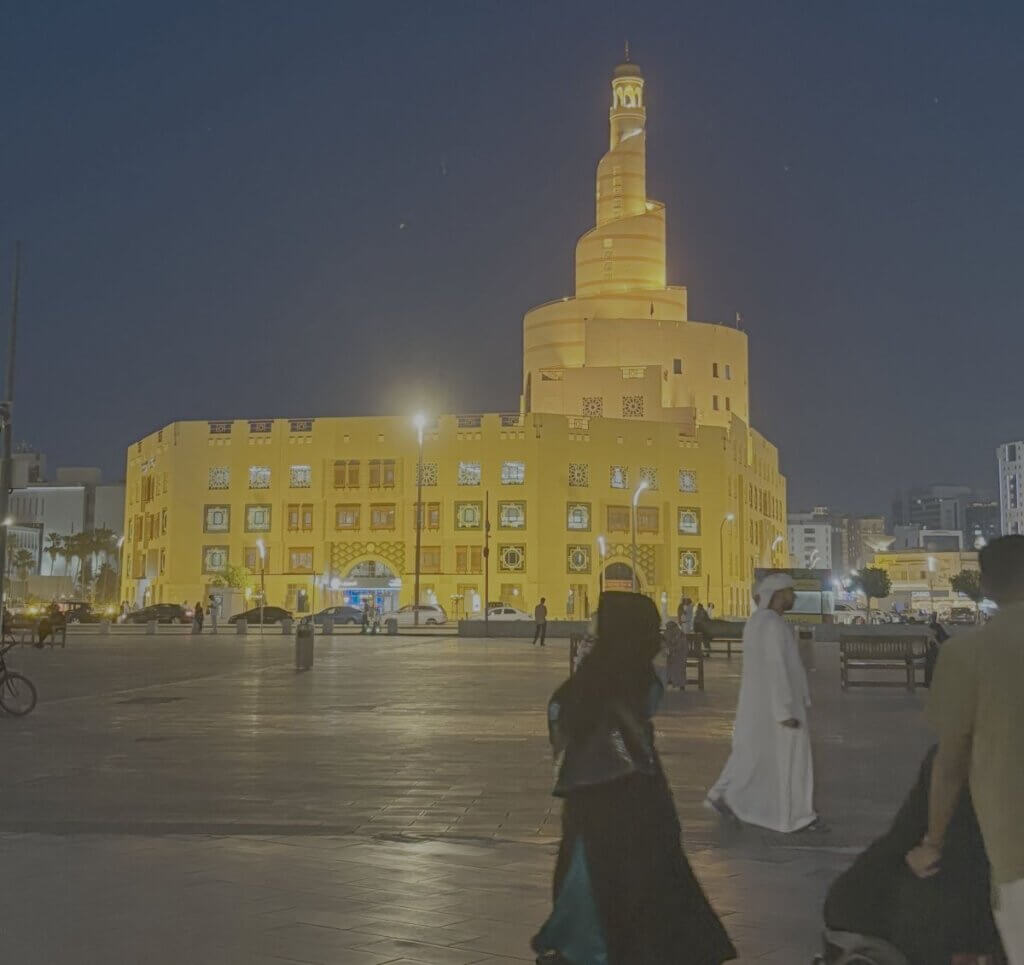
My trip to the Gulf last week offered a preview of some of the issues that will be the focus of the president’s first planned overseas visit (it would have been his first actual overseas visit if not for the untimely death of Pope Francis on April 21st). Beginning on May 14th, the president will visit Riyadh in Saudi Arabia, Dubai in the United Arab Emirates, and Doha in Qatar. The region has changed substantially over the last four years, and it has been particularly impacted by the October 7th attacks and ongoing Israeli military action in Gaza, Lebanon, Syria, and now Yemen. At each of his stops, Trump is likely to hear a more unified – and a more conciliatory – message than in his first term.
Real Estate Goodies
If one were to rank countries by how well they have adapted their foreign policy stances to Donald Trump’s personality-driven approach, European states would rank at the bottom of the table. Japan, Mexico, and the Gulf states have done the best, adeptly rolling Trump’s desire for easy wins into broader discussions of foreign policy. This trip is likely to be no exception: all three countries will offer the president a basket of goodies to take home with him. We already know the contours of quite a few of these deals, some of which are more personal than others. Saudi Arabia, for example, is set to offer U.S. defense contractors a new $100 billion purchase order that might not have been out of place in prior administrations. An Emirati sovereign wealth fund, meanwhile, will invest $2 billion in one of Trump’s own cryptocurrency initiatives. Qatar is covering both sides of this equation with a deal to build a new Trump golf course in Doha and a deal to work with the U.S. government on the sale of a new Air Force One jet. The headlines from the trip will likely be dominated by the stratospheric numbers at play, but in reality, these deals matter fairly little. Instead, the concrete policy issues at stake are less flashy and more important.
A New Iran Deal?
Three regional factors have changed substantially since Trump’s first term in ways that have dramatically altered the regional landscape. The first of these is a more concerted regional approach to foreign policy within the Gulf. Indeed, there has been a marked shift from the early days of Trump’s first presidency – when then-Secretary of State Rex Tillerson was responsible for talking the Saudis out of invading neighboring Qatar – to today’s relatively harmonious intra-Gulf Cooperation Council relations. Certainly, the Gulf Arab states are not aligned on every foreign policy issue. There are disagreements between the Saudis and Emiratis over Yemen and the Horn of Africa, for example. But when it comes to Israel, Gaza, and Iran, there is substantially more alignment than previously.
In large part, this alignment between Saudi and Qatari policy – and to a lesser extent Emirati policy – has been enabled by a second major change in regional dynamics: the decision by Saudi policymakers to pursue rapprochement with Iran, rather than confrontation.
This is opportune: the Trump administration also appears to be shifting away from the confrontational approach to Iran adopted in his first term, which included the withdrawal from the Joint Comprehensive Plan of Action (JCPOA), a “maximum pressure” sanctions campaign, and the killing of Iranian general Qassem Soleimani. This is most clearly exemplified by the opening of direct negotiations between businessman-turned-mediator Steve Witkoff and Iranian officials on the issue of Iran’s nuclear program. There are, of course, many obstacles to achieving a new nuclear deal with Iran. Tehran’s program is further along, much more uranium has been enriched, and the distrust between the two sides is, if anything, higher than when the original nuclear deal was negotiated.
Yet many of the practical and technical issues are similar this time around, and if Witkoff can find a way to thread the needle on domestic uranium enrichment, monitoring, and other key issues, then there is a genuine prospect of a deal. Trump himself has suggested that he does not wish to back or participate in Israeli military action against Iran’s nuclear sites; he may even have fired his national security advisor, Mike Waltz, over this issue.
All of this will be music to the ears of those in the Gulf capitals, who – while still no fans of Iranian foreign policy writ large – are increasingly wary of an open conflict with Iran, particularly one that may not be backstopped by the U.S. military. Trump’s surprise announcement on May 6th that the United States is abandoning its relatively fruitless air campaign against the Houthis – with a Houthi promise to stop targeting U.S. shipping – will also be met with strong approval in the region. Trump’s visit to the Gulf is liable to feature copious praise for Trump’s peacemaking instincts – and to strengthen the hand of Steve Witkoff and those in Washington pushing for a new deal with Tehran.
The Abraham Accords, Israel, and Gaza
Of course, the third development in the region since Trump’s first term is less promising for regional stability: the October 7th attacks by Hamas, and the destructive war that Israel has been waging since then. Gulf leaders remain privately cooperative with Israel, even as they deplore that state’s actions in Gaza. But popular opinion across the region is increasingly hostile, seeing the Israeli approach to Gaza as little more than a Western-sanctioned genocide. Thus, while Trump would undoubtedly like to build on his first-term success in establishing the Abraham Accords – normalizing relations between Israel and the United Arab Emirates, among other countries in the region – there is no prospect of brokering more normalization agreements on this trip. Indeed, there is no real prospect of Israeli normalization with Saudi Arabia or with Qatar, so long as a solution to the Israel-Palestine conflict remains out of reach.
Mediators in the Gulf
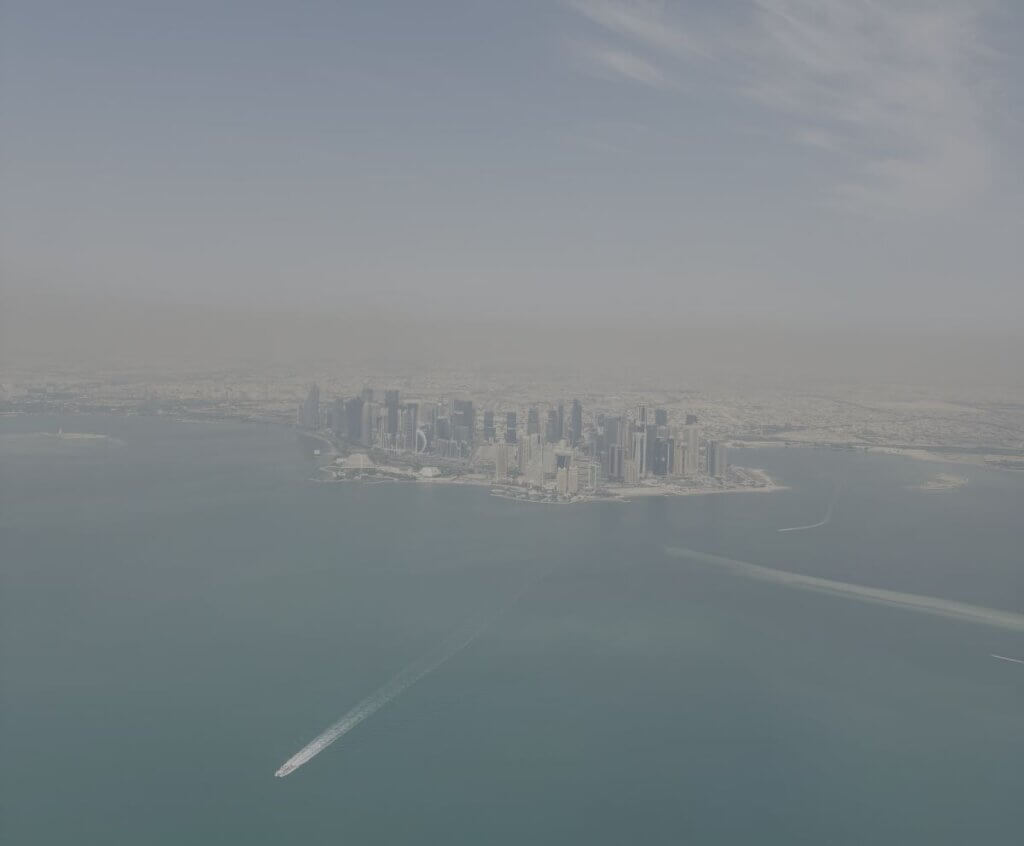
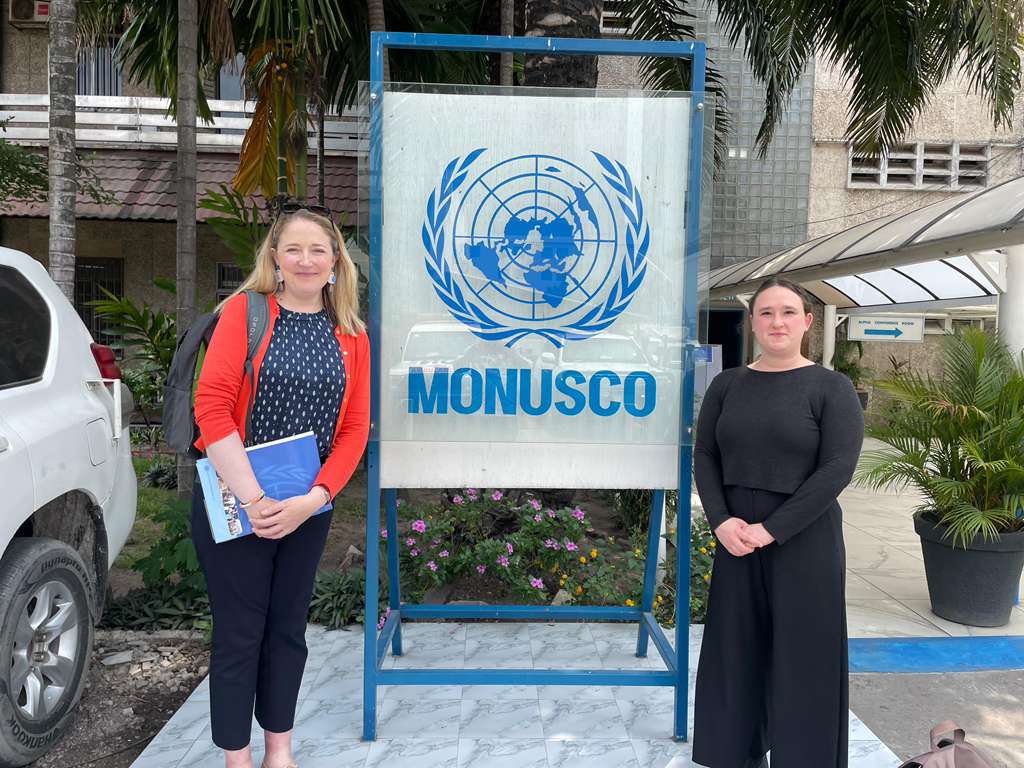
Talks on the president’s trip will not be confined just to the Middle East; states in the Gulf have begun to play an increasingly important role in international mediation globally. For some states in the region – Qatar and Oman in particular – mediation has been a historical area of strength. Oman has often facilitated negotiations between Washington and Tehran, while Qatar played host to direct talks between the United States and the Taliban over the withdrawal from Afghanistan. But Saudi Arabia is also increasingly engaged in mediation efforts, hosting some of the Trump administration’s early talks with Russia on the question of Ukraine. And some of this mediation is now extra-regional – Doha, for example, has played a role in facilitating a ceasefire in the Democratic Republic of Congo backed by the United States – and could provide openings for U.S. diplomacy going forward.
Indeed, there is strong potential for a more global mediation role by the GCC states. As petrostates, these nations have the wealth to host delegations and provide mediation services. They also have strong commercial ties with the United States, Russia, China, Europe, and even India – giving them the relative impartiality needed of such mediation hosts. Though traditionally, the mediation role has often been played by countries such as the Swiss in Europe, a more multipolar world is liable to need more actors that can serve as mediators or neutral parties; both Qatar and Saudi Arabia are attractive options.
This shift is welcome. Just a decade ago, the Gulf states were engaged in acts of proxy warfare across the Middle East, trying to turn the tides of the Arab Spring in their favor, and in doing so, helping to undermine regional stability. Today, these states by and large are pursuing a more productive foreign policy, one aimed at nurturing domestic and regional economic development and trade. It is clearly in U.S. interests for this trend to continue and for these states to remain important U.S. interlocutors on questions of global conflict resolution. Thus, while Gulf leaders are busy lauding Trump for his peacemaking instincts next week, the president himself might consider returning the compliment and emphasizing how much U.S. policymakers appreciate these mediation efforts.






Community Adaptation for a Water Festival Without Clean Water