
Editor’s Note: The external authors of this study bring a broad range of experience and in-country knowledge to the research, providing key insights into the state of renewable energy in both Nepal and South Sudan.
By Andrew Hyde, Senior Fellow and Director, Powering Peace
Executive Summary
Following the 2021 UN Peacekeeping Ministerial in Seoul, the UN, Nepal, and the United States formed a partnership whereby the U.S. committed to finance a solar hybrid power system at the site of a battalion of Nepali peacekeeping forces deployed to the UN Mission in South Sudan (UNMISS). The partnership agreed that the system would be installed in Rumbek, South Sudan, at the site of a battalion of Nepali peacekeeping forces, after another similarly sized and configured system was installed for training purposes at Nepal’s peacekeeping training center in Nepal. The UN, both at headquarters and UNMISS, committed to provide technical support for the scoping, design, installation, and operation of both energy systems. Looking to energize the use of a renewable energy in the field, this partnership model could demonstrate how different stakeholders, including nations, troop contributors, donors, and the UN itself both in the field and at headquarters, could collaborate on realizing the promise of renewable energy in UN Peace Operations.
This independent study documents, reviews, and evaluates the early stages of the project in both Nepal and South Sudan. It covers the initial partnership agreement through the design and planning phases to procurement, shipping, and installation at both sites. The study considers the project’s initial intentions and goals and reviews the steps taken to realize them, with the aim of informing future similar initiatives as well as the UN’s overall approach of increasing the share of renewable resources in its energy supply. The result has been a robust illustration of the difference renewable energy in challenging environments can make, while amply illuminating the challenges that inevitably arise for new and complex endeavors that test the boundaries of bureaucratic, traditional, and technical practice.
The main thematic findings of the study consider how the project was conceived and envisioned, who was involved and when, what assumptions were made, how design and planning decisions were made and executed, and the adaptations required along the way to maintain the project’s progress.
The study’s specific findings can be grouped into six categories for further attention:
Allocation of Resources. While renewable energy technology has become much more common across the world in recent years, the upfront capital costs, along with the challenges of employing this technology by militaries unfamiliar with its operational requirements and rhythms, can easily inflate planned expenses. This cost can eventually be more than offset by the savings in diesel fuel; however, those savings often accrue to the UN, not the budget of Troop and Police Contributing Countries. Thus, a realistic budget that also contains a sufficient initial funding cushion to address unexpected expenses is critical, along with a clear understanding of the sources of financing and possible cost savings for different functions, such as installation, training, and maintenance.
Stakeholder Engagement. The success of this particular partnership relied on the engagement of a range of stakeholders within each partner entity, with different responsibilities, degrees of expertise, and expectations. Some critical institutions only discovered their expected roles as they were activated, rather than through planning in advance. Others had an unanticipated responsibility to identify and marshal critical resources and capabilities to enable the project’s progress. Establishing empowered and accountable institutional focal points was one successful way of addressing the challenge; others involved enhanced communications and coordination, and better project phase segmentation.
Baseline Knowledge and Assumptions. A precise understanding of existing energy consumption patterns at UN missions is important to analyzing and planning a renewable energy capacity at a UN peace operation site. Better measurement and realistic assumptions about the impact of renewable energy can contribute to further a fundamental understanding of potential benefits and possible drawbacks and assist in keeping the project on an agreed timeline.
System Design. A carefully thought-through system reduces uncertainty as to how it will be developed, used, maintained, and, possibly, augmented in the future. A design process needs to involve all stakeholders and factor in operational realities, including required technical expertise and adequate number of skilled personnel. A good design can also provide agility to adapt to emerging circumstances and shifting needs. Future renewable energy systems can benefit from experience of this and other early systems, while also remaining flexible enough to factor in specific geographical and physical circumstances encountered.
Planning, Logistics, and Coordination. A shared understanding of how a project will be realized is vital to its timely implementation within budget. A planning process based on an accepted set of requirements, expectations, and responsibilities can also help ensure sufficient flexibility to overcome unanticipated obstacles and adapt to new realities. Organizational processes and procedures play a determinative role in how a project is installed and realized, while the novel aspects of renewable energy technology can occasionally generate the need to revisit and recast those processes. Regular information-sharing by a dedicated working group ensures that potential stumbling blocks are addressed in a timely manner and that ancillary needs are addressed.
Institutionalized Information and Knowledge-Sharing. A hallmark of UN peace operations is the regular and rapid turnover of those responsible for operations, often leaving scant institutionalized memory behind. Each renewable energy partnership project does not have to be a singular experience but can contribute to a growing base of shareable knowledge for future projects. Relevant institutions need to capture, assess, and share this knowledge, and incorporate it into their operational processes. Regular and established lines of communication among national and UN stakeholders can supplement knowledge-sharing, and new lines of communication, such as organized mentoring, can benefit future projects. This should be further supplemented by regular and established lines of communications among national and UN stakeholders along with the possibility of organized mentoring for future projects.
In addition, we note that the project has also been implemented amid a shifting global energy landscape, with and growing interest in and economic feasibility of renewable energy in fragile conflict-prone settings. This project has made valuable progress in supplementing and documenting the small amount of actual experience with renewable energy at UN peace operations. Using the partnership model, the experience of all the stakeholders in this project — and especially the three principal partners — can also help guide future project partnerships. The interest and commitment of other nations at the 2023 Peacekeeping Ministerial in Accra is a promising indication of how this potential can grow over the coming years.
Introduction
The use of renewable energy in United Nations (UN) peacekeeping operations can be instrumental in reducing long-term costs, lessening climate impacts, improving the security and resilience of peacekeeping, and contributing to reducing fragility in host states. New research and emerging discussions in recent years are exploring how to best deploy these new capabilities in peacekeeping environments at scale. This report examines one partnership model during the initial stages of a project to illustrate the challenges and opportunities associated with implementing renewable energy. The findings offer important considerations for donors and partners as they consider options for scaling this approach.
The Study
The Stimson Center received a grant from the U.S. Department of State’s Global Peace Operations Initiative (GPOI), a peacekeeping capacity-building program, to undertake an independent study on the GPOI’s acquisition and deployment of two renewable-energy hybrid-generation systems to support Nepal’s peacekeeping troops. One system has already been installed at the Birendra Peace Operations Training Center in Panchkhal, Nepal, while the other is currently being installed at Nepal’s peacekeeping operations base at the UN Mission in South Sudan facility in Rumbek, South Sudan.
The goal of the study, in collaboration with the implementing partners, is to formally document and evaluate the process of designing, acquiring, transporting, installing, and operating both systems to capture lessons learned in the development of the project as a path toward widespread adoption of renewable energy in UN Peace Operations. This first preliminary report focuses on the early stages of the project: initiation, development, procurement, and installation.
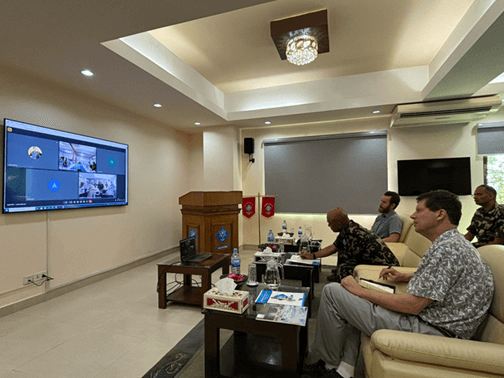
Study team members conducting a virtual consultation with Nepalese peacekeeping forces at the Rumbek mission from the BPOTC base
The UN’s Environmental Goals
The main drivers for increased renewable energy usage in peacekeeping missions are the UN’s Environment Strategy for Peace Operations (2017-2023),1UN Department of Operational Support, Executive Summary, DOS Environment Strategy for Peace Operations, March 2021, https://operationalsupport.un.org/sites/default/files/dos_environment_strategy_execsum_phase_two.pdf. which introduced the transition to renewable energy as a strategic priority area; and, a few years later, The Way Forward: Environment Strategy for Peace Operations 2030,2UN Department of Operational Support, The Way Forward: Environment Strategy for Peace Operations 2023-2030, https://operationalsupport.un.org/sites/default/files/the_way_forward_-_environment_strategy_2023-2030.pdf. which maintains the transition as a strategic priority area. UN peacekeeping accounts for the vast majority of UN Secretariat emissions: of the total 1.2 million tons of carbon dioxide generated by the Secretariat in 2021, more than 90 percent came from field missions.3UN Environmental Programme, Greening the Blue Report 2022, https://wedocs.unep.org/bitstream/handle/20.500.11822/41373/Greening_the_blue_2022.pdf?sequence=3&isAllowed=y. Achieving the reduction goals depends largely on a rapid transition toward renewables in UN field missions. Renewable energy usage in UN peacekeeping has significantly fallen short of strategic aspirations, increasing from 3 percent in 2018 to just 7 percent in 2023 — approximately 1 percent per year.
Renewable energy usage in UN Peacekeeping has significantly fallen short of aspirations, increasing from 3 percent in 2018 to just 7 percent in 2023 — approximately 1 percent per year.
The Way Forward sets internal goals across a range of environmental issues. The goals for energy cover both efficiency and renewable energy usage. The most recent iteration of the environment strategy (2023-2030) highlights three models for renewable energy transitions. The first seeks to connect to local grids that run on some share of clean power where available. The second suggests installing on-site UN-owned and contingent-owned renewable energy systems. The third, UN peacekeeping is moving ahead most aggressively on connecting to local grids that source a share of their electricity from renewable sources or developing their own renewable energy capacity. The greatest long-term possibility for lasting system change, however, is to position the UN as the anchor client for new renewable energy projects developed by the private sector or local utilities, for example through power purchase agreements.
Energy Provision in UN Peacekeeping
Electricity generation at UN Peace Operations can be a challenging process, affected by precedence, security considerations, and the occasional varying interests of various stakeholders. It can be complicated by several factors, including mission locations that may lack infrastructure; complicated supply logistics; and the division of ownership of and responsibility for equipment. Some equipment is UN-owned equipment (UNOE), and some is owned by troop- or police-contributing countries (T/PCCs), also known as contingent-owned equipment (COE).
The exact division of energy-related UNOE and COE varies from mission to mission. In general, UNOE provides electricity for UN field staff and UN country team personnel. In some cases, T/PCCs are also supplied by centralized UNOE, such as from the UN-owned power grid in Juba, South Sudan. In other cases, T/PCCs bring their own energy generation equipment, and are reimbursed by the UN according to established COE rates that are evaluated every three years.
Under current COE arrangements, the UN also reimburses T/PCCs for the fuel required to run the equipment. Across UN peacekeeping missions, UNOE consumes approximately 60 percent of diesel fuel and COE uses the remaining 40 percent. Reducing that fuel consumption to meet UN environmental goals will require a significant and enduring transition to renewable energy.
Partnerships on Renewable Energy
In recent years, a partnership model has emerged in which a supporting country works directly with a T/PCC to provide necessary equipment and training to assist with renewable energy projects. The UN Secretariat, primarily through the Department of Operational Support (DOS), assists in the provision of technical expertise and aims to institutionalize the shared knowledge gained, support project scoping and design, and coordinate the movement of equipment and system integration. This donor direct engagement with T/PCCs helps them build new capacity, acquire new skills and capabilities and manage technical transitions.
For energy this process was inaugurated at the 2021 Peacekeeping Ministerial in Seoul, Republic of Korea, resulting in a handful of pledges by member states to improve the ability of UN peacekeeping missions to address environmental concerns. In its pledge, the United States committed to the deployment of energy-efficient hybrid generators for Nepalese troops. A number of T/PCCs, including Bangladesh, Brazil, and Mongolia, also committed to use more renewable energy and indicated an openness to partnering with donors.
The 2023 UN Peacekeeping Ministerial in Accra, Ghana, further emphasized environmental topics, with a side event focused on environmental management in peace operations. More countries made pledges, including Bhutan, Brazil, Denmark (which announced a second bilateral partnership with Ghana also supported by the UN), Germany (for UNOE capacity-building), and Portugal (in MINUSCA). The U.S. also indicated its intention to proceed with a second bilateral partnership with Mongolia (also at UNMISS), supported by the UN.
US-UN-Nepal Partnership
Following the 2021 Seoul Peacekeeping Ministerial, Nepal and the United States agreed to a partnership facilitated by UN DOS to support the transition of electricity generation by Nepalese forces at UNMISS to renewable energy. The United States, through the GPOI, procured and delivered two low-penetration, 185 Kw hybrid solar-power generation systems to support the Nepali Army – one system in Panchkhal, Nepal, to be used as a for training; and one in Rumbek, South Sudan, to be used as part of the mission. Both systems included hybrid generators, solar panels, and an initial set of spare parts, as well as training for operations and maintenance. Nepal agreed to install, operate, own, and sustain both systems, and the UN agreed to reimburse Nepal for the system deployed in Rumbek as COE.
The Nepal system, installed at the Birendra Peace Operations Training Center (BPOTC) for military contingents, was intended as a pilot case. The goal was to work through installation and operational challenges and create a training prototype, while reducing diesel reliance and cutting emissions. The goal of the second system, at UNMISS in Rumbek, was to transition diesel generators to a hybrid solar-powered generator system for a Nepali battalion serving in South Sudan. The system was intended to help address operational safety by providing reliable electricity while reducing security threats, including those related to reliance on fuel convoys; it also was intended to reduce greenhouse gas emissions and noise pollution.
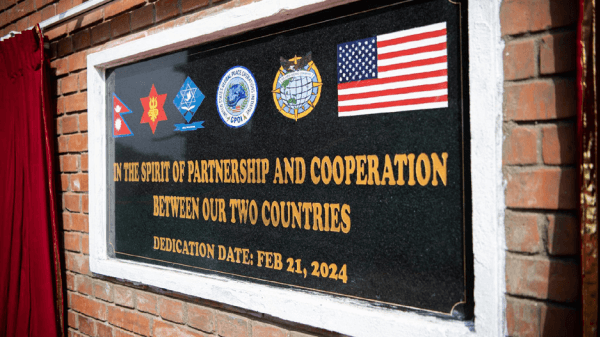
At a February 2024 ceremony dedicating the solar power array installation at BPOTC in Nepal, US Deputy Assistant Secretary of State for Political-Military Affairs Rachel Schiller said, “We are proud to be here today to inaugurate the solar power generator partnership. Nepal, now the largest T/PCC to UN Peacekeeping operations, has assumed a leadership role on the world stage, and we look forward to continuing our partnership.”
The partnership project was designed to test the feasibility and cost-benefit of deploying a more environmentally sustainable power-generation system at a UN peacekeeping mission. Overall, the project was intended to:
- deliver integrated environmental, logistical, and technological benefits.
- enable a transition of power generation for a battalion-sized unit (800 personnel) from diesel generators to a low-penetration hybrid solar-generator system.
- provide a data-informed basis for comparison of fuel and electricity consumption before and after installation.
- gain greater insights into the actual operational implications of a renewable energy system.
- set the stage for a broader adoption of sustainable energy solutions within the UN framework by providing an example to other nations considering partnerships to advance renewable energy usage at UN peacekeeping sites.
The First System in Nepal
To understand the challenges and provide real-world experience for Nepali troops deploying to UNMISS on this new technology, the first system was installed at BPOTC. Gaining first-hand experience in a training environment was integral to the project’s design and plan so that Nepali forces deployed at UN Missions would have had prior experience in installing and operating the system in a more remote and potentially harsher environment. It should serve as a model for future partnerships to build familiarity and expertise.
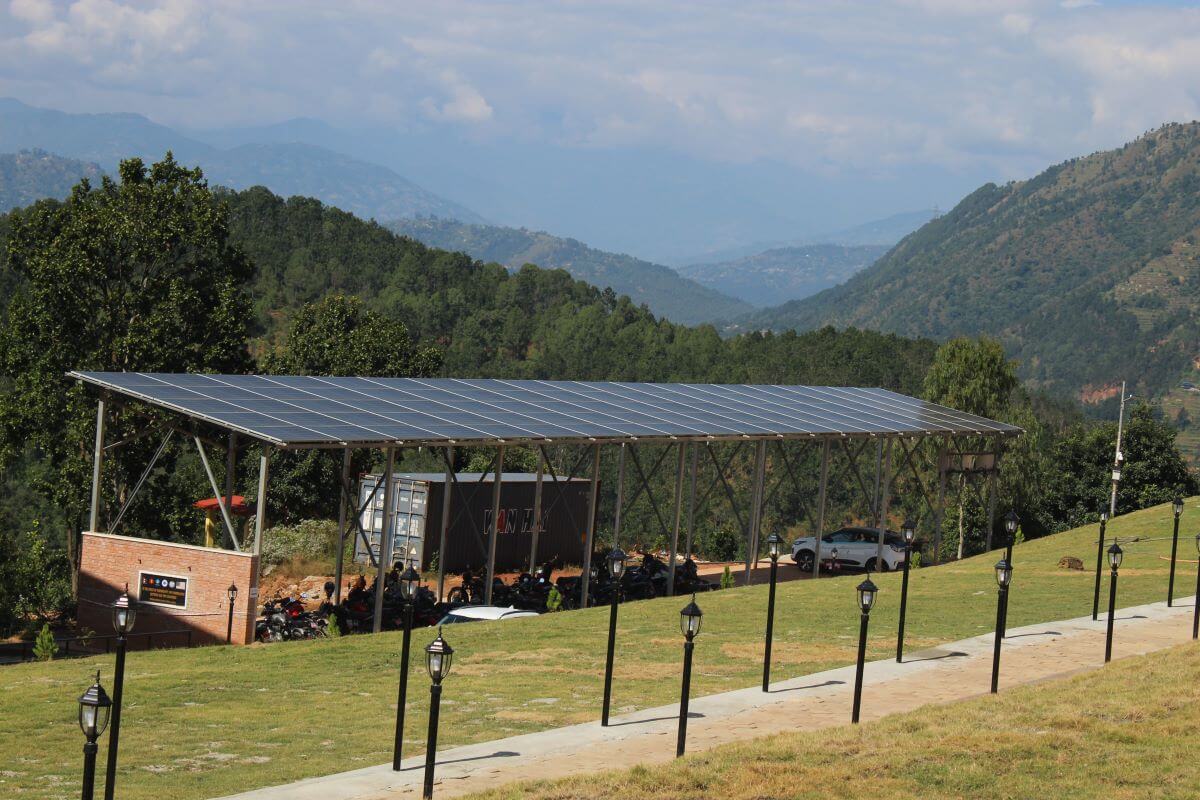
The system consisted of two solar arrays to generate power at BPOTC (one small, with 100 panels, and one large, with 240 panels) with a combined generation capacity of 185 kW.4In 1986, the Nepali Army established an ad hoc “Peacekeeping Training Camp,” which became a dedicated training center in 2001 and was renamed the Birendra Peace Operations Training Centre, or BPOTC (BPOTC, https://bpotc.nepalarmy.mil.np/.) The aim was to familiarize Nepali troops with installation and operation of the equipment, and thus smooth the way for deployment of the second system to Nepali forces at UNMISS in South Sudan. BPOTC projects that this new 185 kW hybrid solar project will cut the facility’s use of grid electricity by 50 percent during daytime hours.
Nepal’s Peacekeeping Training Facility
BPOTC is Nepal’s primary peacekeeping training facility, with more than 6,000 students who attend courses annually ahead of deployments to UN peace operations worldwide.5Since 1958, Nepali peacekeepers have contributed to 44 UN missions with more than 1.4 million personnel deployed in 37 countries. The center also regularly hosts multinational/stakeholder exercises and training for forces from various UN T/PCCs. For example, the training center recently hosted Shanti Prayas IV, a peacekeeping exercise supported by the GPOI that included 1,125 soldiers from 19 countries.6U.S. Indo-Pacific Command, Public Affairs, “The US, Nepal Conclude Multinational Peacekeeping Exercise Shanti Arayas IV,” March 4, 2024, https://www.pacom.mil/Media/News/News-Article-View/Article/3694695/the-united-states-nepal-conclude-multinational-peacekeeping-exercise-shanti-pra/.
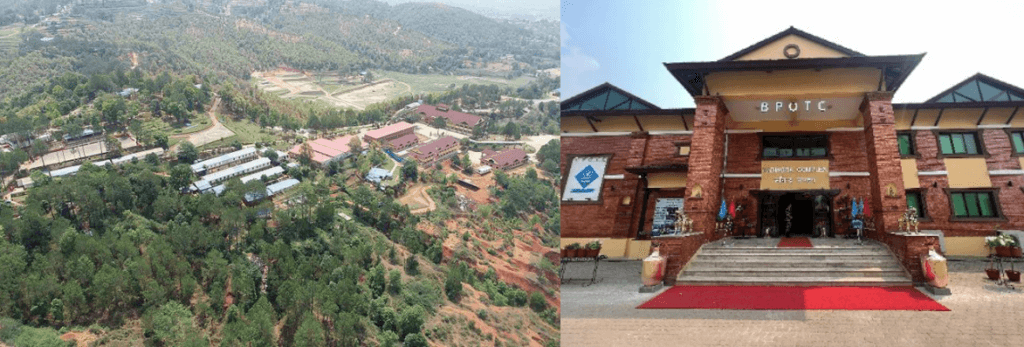
BPOTC hosts an average of 1,135 personnel at any one time, with occasional peaks of 3,000 people. Nepal is looking to increase its UN deployments, and thus aims to expand BPOTC’s training capacity to accommodate up to 10,000 personnel annually. This has led to the construction of a new separate complex to accommodate an additional 800 Nepali army personnel. The two solar arrays have been built over the parking facilities at the new site. Those buildings will be the primary users of the new energy source.
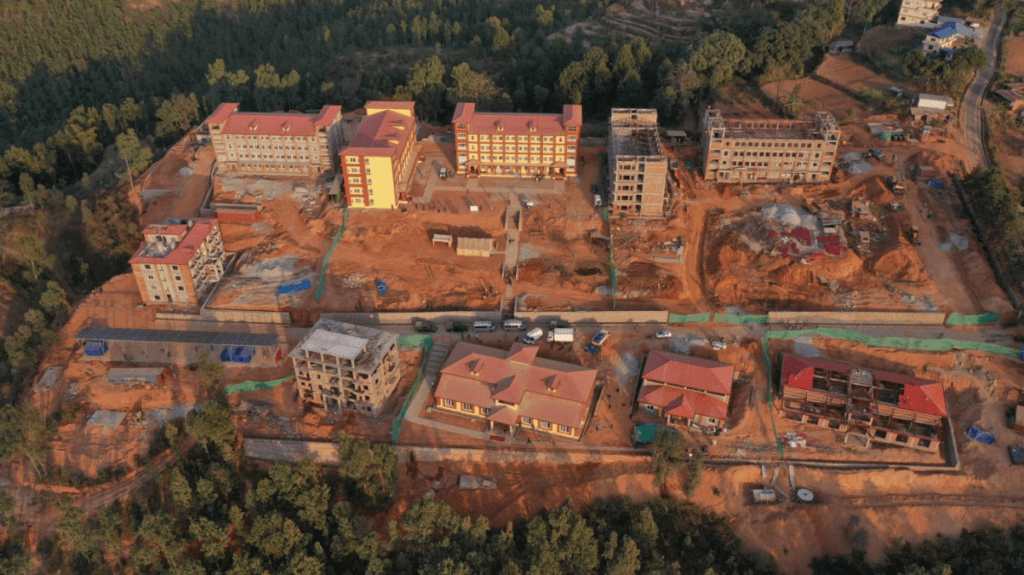
An aerial view of new Palanchowk Block at BPOTC, where the systems were installed
BPOTC currently receives most of its electricity from the national grid, backed up by diesel generators during system outages. This is a typical arrangement for most large-scale institutions and enterprises in Nepal, as occasional droughts and seasonal dry weather often impact hydropower production capacity.
Installation
The first renewable energy system for BPOTC consists of three major components: provision of the solar powered system at BPOTC, which includes two solar panels as well as two prefabricated car park structures; operations and maintenance training; and a spare parts equipment package. Construction started in December 2023 — later than expected after delays related to shipping and customs. The goal for the system was to provide a secure environment in which to gain operational experience with the system.
Below is an overview of the project timeline we observed, which we will analyze in corresponding sections below.
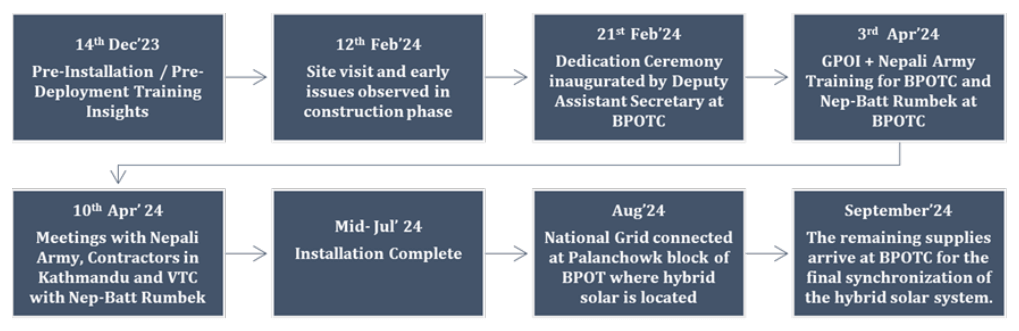
Project Timeline for the Hybrid Solar Installation at BPOTC
To support the installation, the Nepali Army built two car parks as part of a previously approved plan for the new complex, and mounted the solar panels over them. The location and orientation of the system is in an open area that receives substantial sunlight and hews closely to the system designed for Rumbek, although it falls short of generating maximum electrical power. As installed, the system at BPOTC is an effective training tool that also yields significant energy efficiency benefit and maximizes effective and efficient use of the existing terrain.
Site preparation consisted of tree removal, earth compaction, construction of retainer walls and trenches as necessary, and the installation of 80 feet of polyvinyl chloride (PVC) conduit piping for cable connections. Support structures, such as concrete footings and truss-based triangular mounts, required further scoping and improvisation. Once the site was prepared, the Nepali Army assembled the prefabricated car park structures. The contractor helped mount the panels, connected the wiring, and install the GPOI-procured hybrid solar-powered generator system.
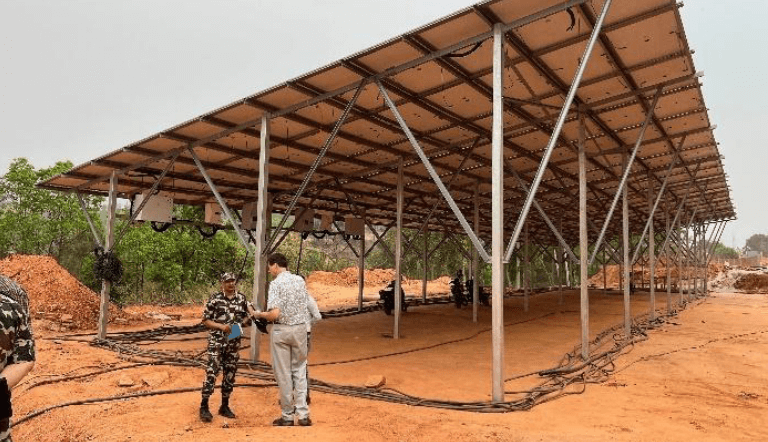
As installation was underway, it became apparent that additional technical and installation equipment was needed to address safety, efficiency, and sustainment concerns. Flexibility and adaptation in identifying, procuring, and using this equipment enabled an effective response. One example was a slow and inconsistent pace of panel installation that was greatly improved by procurement of a mechanical forklift. Another was the need for a grounding and lightning arrester to protect the system from extreme weather events — an important asset that was not foreseen, and ultimately was procured locally.
To help ensure that installation went smoothly, the Nepali Army hired a Nepali solar company to act as consultant on the installation. However, army personnel remained ultimately responsible for the actual installation so that it could more easily be replicated in South Sudan, where technical support is minimally available. The stakeholders responsible for installation had to adapt plans and processes on the spot as they familiarized themselves with the equipment and discovered what the actual parameters of the project would involve. A number of operational realities and constraints became apparent only after larger conceptual decisions were made.
The Second System in South Sudan
The Nepali Battalion Unit (NEPBATT 1) at UNMISS in Rumbek is mandated to maintain peace in the state headquarters of Rumbek and Aweil. The battalion’s sole role is to intervene when conflict arises in the region where they are deployed, offering protection to civilians and their property. The unit shares the site with troops from Thailand, India, and Cambodia, as well as UN civilian personnel. Each military and civilian entity generates its own electricity exclusively from diesel generators.
Existing Energy Footprint
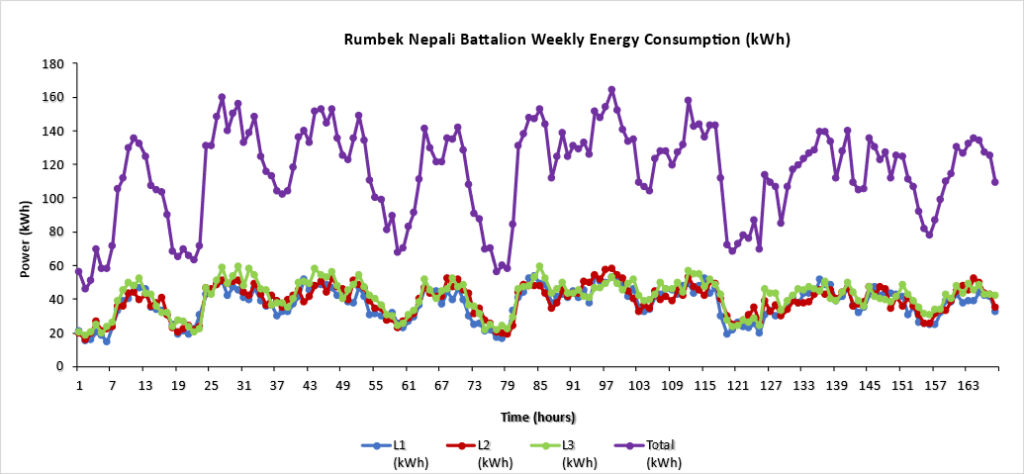
The Nepali contingent in Rumbek has 11 generators, with periodic additions of old and new generators to facilitate reliable power production, which provide electricity to both operations and residential facilities. The UN Department of Operational Support estimates that the Rumbek site’s total monthly fuel consumption for electricity generation each month is 107,000 liters of diesel. Three generators are always in use. On average, the battalion consumes 500 kW daily, while the legacy generators produce 600 kW daily. It is reported that on average, the total fuel consumption by Nepali troops in Rumbek is about 900 liters daily, which amounts to about 27,000 liters per month.
To measure electric flow and fluctuation, the GPOI coordinated with the UN on installation of fuel meters over a six-month period in 2022-23. The recorded data of the variation in electricity produced shows that the hourly electricity consumption in the Nepali contingent has fluctuated throughout the recorded period, peaking at about 160 kWh. The seasonal fluctuation is due to seasonal and weather variations that impact cooling requirements.
Installation
The system in Rumbek was designed to be operated with three 200 KVA hybrid diesel generators that will be synchronized to work in a coordinated manner with 340 high-efficiency monocrystalline PV solar panels that can generate up to 185 kW. The hybrid system is intended to be run automatically, meaning that the solar panels and the three generators will communicate, and the generators will shut off when solar power capacity exceeds the threshold value. The first phase of the project is to provide power from solar panels during the day and revert back to use of diesel generators at night. However, given the noise and exhaust produced by the generators, as well as the opportunity to increase the project’s capacity utilization, the GPOI plans to add an energy storage system to the project in 2025.
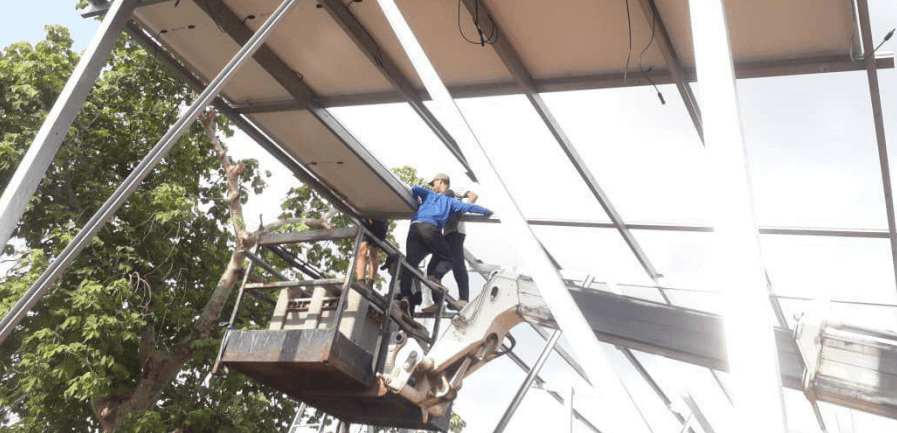
The solar panels were designed to be installed above two existing car parks used by the Nepali battalion in Rumbek. As at BPOTC, there are a total of 340 solar panels: 100 above one car park and 240 nearby above another. While the panels and their support structures were accounted for and funded in the original plan, some of the ancillary requirements, such as footings and anchoring, were not provided by the vendor and so work-arounds and adaptations had to be developed, including sourcing some materials from local markets. The engineering section of the UNMISS Rumbek field office was helpful in identifying and obtaining these resources.
Other elements of the accessory equipment were shipped separately, including additional construction and synchronization processing fixtures. Stakeholders identified a need for accessory specialized engineering equipment for the installation, such as an excavator, roller, forklift, and lifting bucket that was sourced through UNMISS Mission Support from partner T/pCCs, notably the Thai Engineering Unit, at Rumbek. In addition, the area for both sets of panels also exceeded expectations, which required more foundational construction materials than anticipated.

The project installation had three phases: (a) ground preparation, (b) frame structural installation, and (c) synchronization, power generation, and operation. By the end of August, the first two phases had been completed in coordination with the relevant stakeholders.
An unanticipated need early in the process was locating the expertise needed to install the new solar panels. A five-day training course at BPOTC was insufficient as it failed to fully take into account the emerging requirements and constraints that existed in Rumbek. Eventually, Nepali Army personnel from NEPBATT 1 in Juba, who had participated in the pre-installation training at BPOTC, traveled to Rumbek to supervise the installation. In addition, regular conferences with personnel working on the same project at BPOTC helped provide the necessary expertise and knowledge to complete installation. The formation of a WhatsApp group allowed personnel to share information and knowledge, and helped identify daily challenges and develop mitigating measures.
To take greater advantage of solar power production, the GPOI has agreed to additional funding for the development of a storage and microgrid facility to further reduce reliance on hybrid diesel generators and accommodate all the power being generated throughout the day by the solar arrays. There is a huge potential for effectively using storage, as the average solar energy expected to be generated during the day can accommodate most of the battalion’s power requirements during the day and night.
As installation has yet to be completed, the operational and maintenance requirements cannot yet be fully assessed. Nevertheless, given the remote location and occasional harsh conditions in Rumbek, realizing the full potential lifetime of the project will require careful and thorough maintenance. That maintenance will depend on adequate staff support.
The hybrid system is designed to supply electricity only to the Nepali contingent in the UNMISS compound in Rumbek. There are not currently any plans to interconnect with other T/PCC compounds or the UNMISS power system. Future planning for interconnections within the UNMISS camp at Rumbek might at some point be advantageous.
Comparing the Systems
The solar hybrid generator systems at BPOTC and Rumbek were meant to be identical to maximize learning potential and assist in a smooth installation — as well as to help improve and maintain operation, maintenance, and sustainment in Rumbek. The different security and technical environments, however, meant that there would be crucial differences, leading to varying requirements and challenges. Nepali forces have come to terms with those differences and tailored solutions to the particular circumstances, which should be instructive to future renewable energy partnerships.
Key Differences between BPOTC and Rumbek
| Sno. | Headings | BPOTC | Rumbek |
|---|---|---|---|
| 1. | Grid Connection | On-grid, and has to be synchronized in a three-source line (solar, grid, and diesel) for electricity, with the first priority as solar. | Off-grid, and must only synchronize with two sources (solar and diesel), with the first priority as solar, then battery (if installed), and diesel. |
| 2. | Truss-Based System | Not used as a result of terrain constraints and decision to save parking space as they have enough concrete available. | Used as a result of limited availability of concrete for the parking area. |
| 3. | Manpower Availability | Dedicated team and enough manpower to run the project. | Team designated for the task beyond the regular UN mission scope. |
| 4. | Technical Personnel | Electrical/mechanical engineers for installation. | Limited technical expertise for installation. |
| 5. | Consultant Support | Both a supplier of equipment and consultant at site for supervision and training. | No availability of consultants to supervise. Few personnel were provided training. |
| 6. | Availability of resources | Easily available supplementary equipment. | Not available, as the market in Juba is 300 km away. As a result, BPOTC has had to send to Rumbek extra equipment identified during installation. |
Common Factors
Procurement and Transport
U.S. procurement rules shaped how and where the equipment could be procured, which raised costs and reduced the range of possible equipment. The systems for both Nepal and South Sudan were assembled and shipped from Dubai, selected as the supplier after considering factors that included past experience, quality of facilities, and proximity to both locations.
The equipment encountered delays attributable to various factors. The entire prefabricated system was designed as a flat-box solution, packed into shipping containers for international shipping — equipment for both Nepal and South Sudan were packed in similar containers. Delays were compounded by uncertainty over the actual shipment process and cost responsibility, along for the Nepal-bound system with the onset of Nepal’s festival season, which contributed to logistical challenges such as limited availability of transportation and workforce. Cumulatively, these factors resulted in a delay in procurement and transport, highlighting the importance of streamlined and high-confidence logistics planning and clear communications.
Training
Training has been critical throughout each phase. Several formal trainings were conducted over the course of the project to guide Nepali Army personnel before and during the construction process in Nepal, to enable sufficient planning and preparation for the more challenging installation and troubleshooting in South Sudan, and to support smooth operations and maintenance at both sites.
The initial pre-installation training, held in early December 2023, served as an orientation to project and its equipment, and involved 47 Nepali Army personnel. Of these trained personnel, 10 were later deployed to Rumbek to support installation there. The initial training was provided by a consultant, hired by the Nepali Army, who works at a solar company based in Kathmandu.
In March 2024, as the project gained momentum, a comprehensive 10-day training session was conducted in Nepal by contractors hired by the GPOI. This session included industry experts, equipment manufacturers, and suppliers, all offering hands-on installation experience. After completing this training, participants conducted a follow-up session for five Nepali Army personnel who came to Nepal from South Sudan, with an additional 14 participants joining virtually from the Nepali battalion stationed in Rumbek at UNMISS. The training was an important first step in identifying and institutionalizing sustained knowledge transfer from BPOTC to Rumbek.
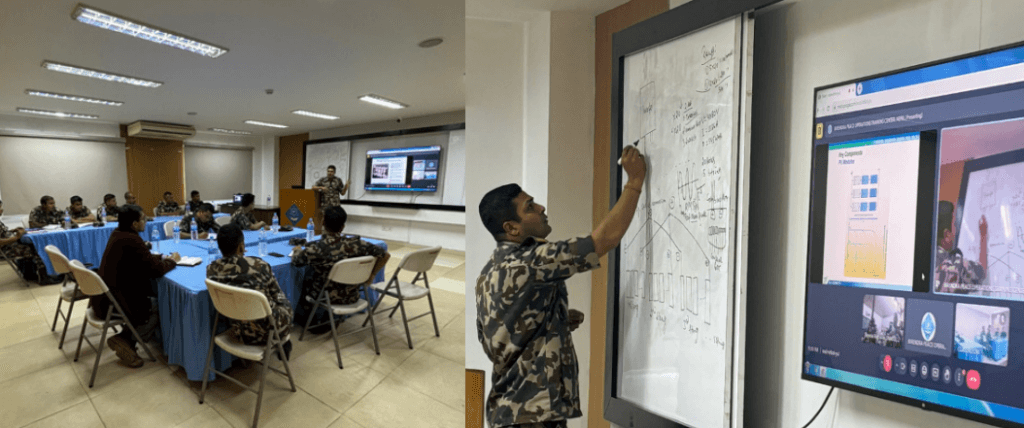
Technical training at BPOTC in March 2024
The March 2024 training focused first on building a conceptual and technical foundation for solar power generation and system maintenance. It then delved deeper into the practical and operational aspects of solar photovoltaic (PV) and diesel generator systems, looking at solar PV fundamentals and diesel generator mechanics, including engine components and combustion cycles. The training concluded with system specifications and a practical overview of design. It emphasized practical aspects of PV module installation, including safety, site selection, mechanical installation, and environmental considerations. Maintenance and care of PV modules, troubleshooting PV inverters, and understanding hybrid controller functionalities were also key topics. (See Annex 1 for more detail.)
Few of those who would be directly involved in the Rumbek installation possessed the most relevant technical knowledge in electrical engineering, which they felt might hinder the smooth operation and installation of the system in Rumbek.
The goal of the training program was to ensure participants were well-versed in both key components and practical applications. However, some participants interviewed felt the 10-day course was insufficient as it did not adequately cover important details such as converter placement, wiring, and synchronization due to the novel aspects of these particular systems that use three sources of electricity. Seeking to reassure the trainees, the trainer indicated that the microgrid management would automatically balance the supply of electricity with actual demand. Nevertheless, some trainees felt the training should have further emphasized hands-on installation rather than providing general background on the equipment. Few of those who would be directly involved in the Rumbek installation possessed the most relevant technical knowledge in electrical engineering, which they felt might hinder smooth operation and installation in Rumbek.
Synchronization
One of the areas of greatest technical concern of the project focused on synchronization of the different sources of power to ensure a steady and dependable flow of power. At BPOTC, the “cascade” of electricity sources begins with solar, with overflow needs met by the national grid and then hybrid diesel generators. In practice, given the volatility of solar power and its complete absence at night, a standby backup source is needed at all times to maintain stability of the microgrid. This means that hybrid generators need to provide a continuing base load of 30 percent. In addition, while the solar power system should be able to provide most of the power needs for the new facility when the sun is shining, there will likely be peak demand points during the day as well as at night where grid or backup diesel hybrid generator power will also be required. At Rumbek instead of a grid connection the system will soon be getting an energy storage system made up of batteries. Electrical power will then have to by synchronized among the solar panels, the hybrid diesel generators and the batteries according to need and availability.
In both cases, the challenges of power supply and synchronization are complex and novel to Nepali Army personnel. Outside expertise through multiple contractors each of whom specialized in only a few aspects of installing, activating and operating the system compounded the challenges for both systems. As a result, the full operation of both systems has faced multiple delays as the right equipment and expertise is identified to ensure no damage to the system and its key components. This situation has highlighted the need for more training to plan and manage synchronization in both locations.
Current Status
As of mid-2024, both systems were nearly complete. There were some minor delays in acquiring the final equipment and expertise needed for synchronizing the power sources at both locations. BPOTC is connected to the national grid, which ensures backup power supply (even if historically unreliable) and provides an alternative to running diesel generators. At BPOTC, along with being able to synchronize or integrate the three power sources (solar, diesel and grid), BPOTC is seeking a net metering agreement to ensure payments from the Nepal Electricity Authority when there is excess solar capacity. At Rumbek, the synchronization challenge involved acquiring the right equipment and expertise to synchronize the solar and hybrid diesel power sources and, eventually, the energy storage system.
Assessment and Lessons Learned
In assessing the progress and success of the trilateral partnership approach to deploying renewable energy capabilities for UN peacekeeping operations, we found it useful to divide the lessons learned into five thematic categories: resource allocation, stakeholder engagement, baseline knowledge and assumptions, system design, and planning and logistics. These are meant to address lessons learned as well as inform consideration of future projects. In most cases, we depict the challenge that arose and when and how it was overcome. While a few issues remain outstanding, overall the adaptability and agility of the stakeholders were able to sufficient address any setbacks or unexpected developments.
Resource Allocation
Background
Operation of a solar hybrid system costs substantially less than operating legacy diesel generators, mainly due to much lower transportation and consumption of diesel fuel. However, the upfront costs of acquiring, installing, and maintaining a solar hybrid system can be significant and, in some cases, can create unexpected ancillary requirements. Sufficient and sustained resource allocation helps increase a project’s effectiveness.
Experience
The U.S. bore most of the initial cost for both systems including procurement, assembly, and transportation. The U.S. also covered costs for an initial round of training for the system’s installation and operation in both locations. Nonetheless, Nepal did incur planned costs as well as unexpected costs, and also encountered some lack of clarity about how and when the UN would provide reimbursement under COE procedures. At BPOTC, the costs of initial civil engineering work and site preparation were covered by Nepal, along with the allocation of manpower and machines for installation of the system itself. The Nepali Army also hired a local consultant at its own expense to supervise both pre-installation and installation work.
UNMISS also faced some unbudgeted expenses related to managing transportation arrangements and securing entrance into South Sudan. The cargo shipment was delayed as a result of the inspection of sensitive materials such as anticorrosive paints, thinners, and arsenic sulfide, necessitating longer and more intensive UNMISS involvement. For some of those expenses, the U.S. picked up the costs to ensure a smooth and efficient process. However, because of the lack of a planned budget for this purpose and the time taken for approval, there was also a delay in obtaining some of the prerequisite materials for site preparation at Rumbek.
Assessment
There was some effort to build a recognized process for gaining practical installation experience, which would prove to be important to the full realization of the project. Establishing two systems, while more expensive, was instrumental in working through many of the challenges and identifying unique needs in a controlled, familiar environment that could arise later on in South Sudan. Understandably, the project has encountered unanticipated detours and added expenses. These also demonstrate that new technologies do not necessarily conform to traditional models of process and development and can have new and secondary effects. In addition, this project benefited from early assessment of how and when there could be future system enhancements — for example, the U.S. made a subsequent decision to provide a battery storage system for Rumbek, which ultimately supported functionality and saved time and money.
Recommendations
- As early as possible in the process, preview for all stakeholders the resources required, and how they will interact with existing allocations and with UN/COE rules and regulations.
- From the very beginning of the project, logistics personnel from key stakeholders should coordinate with the Mission Movement Control, or MOVCON, to understand logistics and transportation requirements, including handling of dangerous goods, documentation, customs clearance, and cargo packing.
- T/PCCs should coordinate with the mission’s headquarters and field office to research materials that may be locally procured, as well as to determine request procedures and submission timelines, availability, load capacity, and access to aircraft for movement. Timely feedback can save on costs of transportation and help alleviate delays due to seasonal changes.
- Along with design and installation costs, consider long-term maintenance and spare parts costs, especially after expiration of the supplier’s warranty period.
- Clarify through a memorandum of understanding among all partners (including T/PCC, donor, UN, and others as applicable) what the likely costs might be and who will be responsible.
- Remain aware of how the use of hazardous materials could complicate border clearances and increase transportation expenses. T/PCCs should be prepared with trained personnel to complete dangerous goods documentation and establish a process to expedite necessary approvals (especially if changes are required).
- Provide resources for training and discuss options for post-training technical support among stakeholders to ensure that peacekeeping operations personnel are adequately supported for on-site activities.
- Allocate some emergency funds to cover contingencies, unanticipated additional equipment, necessary adaptations, technical personnel requirements, and other unexpected situations.
- Future projects should closely consider in the planning phase the expected and ancillary costs borne by different stakeholders to ensure clarity on what resources will be required, by whom, and when.
- A more established coordination mechanism and communication channel should be considered to provide and solicit regular logistical project updates from all stakeholders.
- Missions should anticipate and incorporate the cost of transporting new COE into mission budget projections and allocations; without costs budgeted, T/PCCs and/or donors will be responsible for funding equipment transport, which is a significant cost.
- T/PCCs should be proactive in coordinating with the UN mission and headquarters to ensure their memorandum of understanding accommodates appropriate reimbursement for upgraded COE.
Stakeholder Engagement
Background
An early challenge in this new form of partnership was gaining the involvement of relevant stakeholders among different institutions and within particular governments. Meaningful institutional involvement serves two primary purposes: 1) awareness of the project and its significance to larger, interconnected goals; and 2) design and planning input and commitment from stakeholders who will be instrumental to the project’s success. Comprehensive and accountable stakeholder engagement leads to better design and implementation.
Experience
Despite some initial efforts at building awareness among the partnership’s stakeholders and implementers, levels of engagement appeared to fluctuate. Early engagement of a limited set of stakeholders occurred at a “launch conference” in February 2022, but subsequent experience demonstrated that the actual range of stakeholders required a broader audience than initially anticipated. Additional relevant personnel had to be included much later in the process, which contributed to some delays in implementation. In many cases knowledge of the project and its requirements came with simultaneous demands for input and support. In some cases, frequent personnel turnovers created knowledge gaps and delays when outgoing personnel were not able to brief incoming personnel.
Assessment
Ensuring that stakeholder engagement was tied to an institution, or an office rather than an individual, was crucial. One way this was achieved over the course of the project was to identify responsible focal points within some institutions with ownership of the project’s forward momentum and success. Despite changes in personnel, institutionalized coordination and communication updates about the project’s progress facilitated an improvement of the process. Occasional opportunities for a comprehensive review of progress could have contributed to continued stakeholder buy-in and support.
Recommendations
- Engage a comprehensive range of stakeholders to ensure that key players are aware and supportive. A summary of relevant functional stakeholders:
- Supporting/donor country institutions such as national ministries of foreign affairs and defense, and national missions in New York.
- T/PCC institutions such as ministries of foreign affairs and defense, and key military command elements, particularly those involved in fielding and training peacekeeping forces.
- Full range of UN institutions, including both:
- Headquarters — UN Department of Operational Support (e.g., Environmental Division, the Uniformed Capabilities & Support Division), and UN Department of Peace Operations.
- Field Missions — leadership, engineering division, climate advisors, environment unit, and other T/PCCs as appropriate.
- Nations hosting peacekeeping missions, which can reinforce and complement national efforts to promote greater use of renewable energy and leverage possible synergies between those inside and outside the UN compounds, as well as ensuring the smooth flow of equipment and personnel so systems can be developed in line with the existing Status of Forces Agreements with the UN.
- Equipment vendors and associated contractors, who can provide engineering guidance, training, and project implementation to the responsible military engineers.
- Hold a launch conference (or several in different places) with a broad range of potential stakeholders to ensure comprehensive engagement at initial stages, as well as establishment of a baseline understanding of plans, requirements, expected outcomes, and likely timelines.
- Identify opportunities and focal points for periodic broad-based information-sharing among stakeholders to ensure cooperation and synchronization of efforts. Consider periodic multistakeholder check-ins to ensure that stakeholders are adequately informed about progress and challenges, and that newly identified stakeholders can be incorporated into the project.
- Break down the project into phases, such as planning, acquisition, transportation, installation, and operation, and ensure sufficient stakeholder involvement to achieve success at each stage. Be clear about the expectations of and for each stakeholder, and actively seek additional needs and requirements as the project progresses.
Baseline Knowledge and Assumptions
Background
Increased T/PCC use of renewable energy in the field has many positive effects on missions and their personnel. However, a lack of precision about those benefits can create confusion and sap momentum. Building a common understanding and base of data about current energy use levels and patterns, along with planned renewable energy capacity, is essential to measuring project effects and reinforcing the case for increased reliance on these sources. Baseline data on electricity consumption is crucial to understanding and assessing the new system’s impact on the various sources of energy supply. This data also facilitates performance evaluation, allowing for the identification of inefficiencies and the optimization of energy usage. Moreover, baseline data is essential for regulatory compliance and reporting, demonstrating energy savings, and environmental benefits achieved.
Experience
The value of precise measurements of current energy use at Rumbek became apparent as project planning commenced. The lack of measurements at the outset limited the ability to forecast actual fuel savings from the solar panels. As a result, the U.S. asked the UN to install temporary energy meters in Rumbek for placement on the existing diesel generators over a six-month period to determine some of the possible limits that the hybrid system would face under different technical configurations. Once the meters were sent, there was some subsequent confusion about which entity (i.e., Nepal or UNMISS) should be responsible for collecting that information and ensuring the data was being shared with relevant stakeholders. The end result was that the UN installed the meters, Nepal monitored them, and UN DOS assembled and disseminated data. In the pilot at BPOTC, there was a missed opportunity in getting data-based projections for the energy share expected in the new facility.
Assessment
Early understanding of the levels and patterns of baseline energy usage was a key component in project design, planning, and decision-making — and the initial unavailability of this data led to delays. Better data on expected energy use at BPOTC could have contributed to the implementation and training for the system installation there and in Rumbek. Overall, tracking energy performance with baseline data has been and will continue to be fundamental for effective energy management and decision-making throughout the life cycle of the project’s solar facilities.
Recommendations
- Include in the planning and launch processes prior measurements of fuel used and electricity generated (if available) on a periodic basis over a multi-seasonal timeframe.
- Share comparative data from other similar systems to help with understanding and planning for a new hybrid renewable energy system.
- Use energy usage analysis to serve as a sturdy basis for subsequent assumptions for design, planning, and operation.
- Track energy usage and map out future energy savings to help serve project/site prioritization for future initiatives and partnerships, determining where renewable interventions would add the most value.
- Enable key stakeholders to discuss and agree on responsibilities for collection equipment, data collection, and data analysis.
- Once project installation is complete, make a sustained effort to collect and analyze data on electricity consumption and project performance to optimize usage patterns and develop a clear plan for building out storage capacity in the next phase.
System Design
Background
Complex projects involving multiple stakeholders and novel technology require careful design to achieve their stated goals. Design not only illustrates the need for scoping out a system with all responsible stakeholders, but also is important for system integrity. Safety and resilience, particularly with this novel technology, are important considerations. While the overall goal is to create a modular system that can be easily installed in multiple contexts, there may be a need to consider site-specific needs or limitations in some contexts.
Experience
An initial limited design process failed to factor in meteorological realities such as lightning strikes and so required multiple revisions. Some of the initial assumptions proved to be insufficient and had to be revised multiple times to consider aspects of site location, technical specifications, power systems, installation equipment, weather conditions, ancillary equipment, infrastructure, and other practical realities. A further complication was that the system was being added into a facility already under construction, creating several constraints on siting and location.
In addition, key management and operational personnel rotate throughout the course of the project’s installation. The equipment supplier/contractor in Nepal deployed local staff to assist with on-site installation. At the same time, the Nepali Army hired an independent solar contractor with experience in similar projects to provide additional expertise. There was a lack of coordination among the different contractors, with, for example, the installation, software provision and activation of the BPOTC system leaving no one responsible for synchronizing the different sources of power. Although the same issue may arise in Rumbek, an improved understanding of the challenge may shorten any delay.
Storage capacity in Rumbek, which impacts the project’s potential capacity and management, was only incorporated mid-project rather than included as a component of the initial design. In addition, the installation team appeared unprepared to address the technicalities of system synchronization in both BPOTC and Rumbek. Initial observations during training and installation noted uncertainty about the process as a result of limited experience with synchronization.
Assessment
While there was an already established process for this project’s design, it appeared to be somewhat limited, involving initially a narrow range of stakeholders, and failed to factor in likely operational realities. In particular, the BPOTC system seemed to fall short of its goal to mimic as closely as possible what the Nepalese troops would face in Rumbek, given the requirement to locate the panels in a position that was less than ideal to generate solar power because of shadows from nearby buildings.
Recommendations
- Supporting T/PCCs in consultation with UN DOS and UN peacekeeping mission leadership should collaborate early on design, plan, and timeline for the installation of a proposed solar hybrid system.
- Integrate findings from baseline assessment into project design to understand capacity requirements and storage needs. Part of the launch process for a planned installation of a hybrid renewable energy system should be accurate and detailed measurements of fuel consumed and electricity generated on a periodic basis over a multi-seasonal timeframe.
- In the design stage, ensure adequate consultation of existing planning resources, including the UN’s Peacekeeping Resource Hub and Peacekeeping Capability Resource System; UN DOS technical staff and existing equipment lists; and UN Mission’s Mission Support and Movement Control office procedures and processes.
- Remain aware that prefabricated designs will likely need to integrate the possibility of adaptation or improvisation given the remote location of potential sites and be prepared to provide additional spare parts and backup equipment that can serve this purpose and mitigate installation risks (e.g., damage to hard-to-replace parts) and potential delays.
- During the transition from a planning/training phase to an operational phase, include scope for adaptation to the geographic realities of every location to ensure maximum solar generation even at the expense of a completely replicable pilot system.
- Broaden the range of UN and T/PCC stakeholders in the design process to provide wide-scale input and ensure greater ownership and calibration of expectations.
- Establish effective lines of communication with project contractors to help with installation. Since on-site visits may not be possible, virtual connections could be critical to ensure smooth installation.
- Ensure that the supplier that has designed the system is also responsible for its installation to minimize delays resulting from communication and coordination gaps.
- Design should incorporate awareness of the logistical challenges that may arise, including the shipping process and possible scarcity of accessory resources on-site.
Planning, Logistics, and Coordination
Background
Comprehensive planning, sustained coordination, and logistical knowledge of the area of operations are keys to delivering a project on time and within budget. Understanding the requirements of new technologies, incorporating a range of stakeholders, and identifying potential risks in a remote environment are necessary to a well-considered plan. Once the plan has been established, it needs to be updated and adapted as new information and experiences are received. Targeted coordination is important.
Experience
At the initial phases, some known limitations and realities at both sites were not factored in during the planning and development process. Fortunately, agility in project execution allowed for adaptation, but the project still encountered time delays and mounting expenses. The issues encountered included:
- A shifting understanding of what should be incorporated in a complete hybrid generation system (e.g., storage capacity) and how long it might take.
- Compatibility of equipment with the host country’s technical and legal standards.
- Lack of competency in selecting freight forwarders or providing packing materials and special transport instructions.
- Limited leverage of logistics experts from all stakeholders, which affected options and decisions on how and when to acquire and transport the equipment, including factors such as national restrictions on sources, personnel and technical limitations, UN rules on COE transport, and host-country customs requirements. This led to delays in shipping and customs processing that created added complications given the seasonal variability of the road capacity.
- Awareness of actual physical operating conditions.
- Identifying ancillary equipment and human resources necessary to install and operate the system.
Assessment
Plans evolved continuously as new challenges and constraints were identified and new realities became apparent. Coordination was at times rather haphazard and not well planned. Key stakeholders were not consulted in a timely fashion and others with limited visibility and stakes were afforded too much attention. There was also uncertainty and confusion about a division of labor among the stakeholders that led to gaps, delays, and additional expenses. Some of the specific challenges identified were:
- Lack of an agreed-upon and understood upfront plan.
- Delayed determination on how a system donated to a T/PCC should be facilitated by the receiving nation, the mission, and the host country.
- The size of the shipment, given the packing and fragility of the involved equipment.
- An evolving understanding of unique U.S. procurement rules, processes, and limitations; and consideration as to how those would affect available equipment and the timeline for acquisition.
- Lack of clarity in reimbursement options and mechanisms for Nepal from U.S. or UN stakeholders to cover transportation and operation-related costs for Rumbek.
- Lack of clarity on the variety of contracts/subcontracts that would be required to acquire, ship, install, and operate the system.
- Limited consideration of seasonal road conditions and transportation constraints (i.e., shipment configuration), which affected the ability to synchronize procurement and shipping plans.
- The need to secure arrangements to transport equipment outside of normal UNMISS procedures, and the consequential need to involve the mission at a late stage, both to determine how to finance the move and how to ensure its tax- and customs-free passage across national borders.
- Lack of clarity on types and kinds of required documents by stakeholders, further limited by limited communications.
- Unanticipated implications and opportunities of a hybrid system for other elements on a UN mission base, including other T/PCCs and UN civilians.
- A late-stage realization that installation of the equipment would require technical expertise and physical capabilities not readily available in Rumbek.
- Problems with allocation and preparation of responsible personnel for installation and operation, including:
- Identifying and allocating sufficient and qualified personnel to ensure project timelines and operation.
- Training to install and operate the equipment that was developed late in the project cycle and was not always calibrated to the available personnel; and
- Location of the dedicated and trained personnel from Nepal (who were sent to Juba rather than Rumbek), which cost time and money to remedy.
Logistical challenges surfaced rapidly, but, when identified and highlighted they were managed through flexible and improvised remedies.
Recommendations
- Create a dedicated team or working group to manage the life cycle of the project from inception to installation to operation. Along with those responsible for managing execution and evaluating impact, the team should include contract, finance, engineering, and logistics specialists, as well as UN representatives from DOS Environment Section and Uniformed Capabilities Support Division at headquarters and Mission Support, Movement Control, and Force Headquarters.
- Make the first task of the working group to develop and socialize a detailed yet flexible system plan.
- Capture the goals, requirements, plan, and division of stakeholder responsibility in written form such as in a memorandum of understanding or agreement.
- Establish a systematic process to determine renewable energy requirements such as administrative templates (for documents), site visit checklists, financial checklists, and energy survey checklists to better facilitate acquisition and transport submission.
- Identify and carefully review required documents between logistics subject matter experts from the stakeholders, ensuring a mutual understanding of terms of reference.
- Establish working group discussions to review the plan for all aspects of the delivery process from the vendor warehouse to the destination. The participants should include, at minimum, the vendor, a donor logistics subject matter expert, an acquiring entity, transport/logistics firms, the UN mission, and the host nation (preferably a team with logistics, transportation, and/or COE experience).
- Incorporate into planning the fact that arrangements to transport equipment outside of normal mission procedures still require coordination with mission movement control to ensure that COE equipment receives tax- and customs-free passage across national borders.
- Provide regular and comprehensive updates on progress of shipping and the possibilities of delays.
- Develop contingency plans for unexpected challenges and ensure clear communication and coordination among all project stakeholders.
- Anticipate potential logistical issues and related mitigation procedures to mitigate their occurrences and help keep projects on schedule and with minimal negative effects.
Institutionalized Information and Knowledge-Sharing
Background
Solar hybrid power systems are relatively new solutions, typically involving the integration of solar panels with a diesel generator. It is likely that most T/PCC and mission personnel have minimal or limited familiarity with how best to install these hybrid systems, as well as different approaches to functionality and operation, optimization, and upkeep and maintenance. Therefore, focused and continuing processes for acquiring knowledge, learning from experience, and transferring it are vital. Furthermore, lessons learned in electrical safety, operations, and maintenance must be disseminated in the context of the rapid personnel turnover that characterizes all peacekeeping missions. All actors have a role to play in this regard, although much of the burden for determining need and acquiring and applying knowledge falls on the T/PCC contingents.
Installation is necessarily site- and situational-dependent. While there is scope for substantial planning ahead of time, adaptive hands-on learning is also a necessary and critical component of any installation of this kind. Documenting and sharing this practical knowledge are important within and among projects. The challenge institutionally is to monitor, evaluate, and learn from the installation experience, both for future installations by the same T/PCC contingent as well as for other possible partnerships.
Experience
All three partners quickly realized the importance of adequate and targeted training, and moved to implement knowledge-sharing improvements as the project plan progressed. Initially, Nepal’s peacekeeping forces did not include many people with electrical engineering backgrounds; the majority of technical personnel were trained in mechanical, structural, or civil engineering. Specialized trainings were developed to help train participants in solar installation, operations, and maintenance. Some knowledge came from direct and experimental experience on installation and operations, while some came from last-minute contracted training programs developed by an outside contractor and paid for by the U.S. While some participants believed the training was insufficient to the task, it enabled the project to proceed in both locations and improved the team’s confidence in future operations.
A significant challenge for the project, which involved new technology, a remote location, and complex systems, was to ensure that resulting knowledge had been adequately captured and would continue to be disseminated through institutions rather than just the individuals with direct experience. The Nepali Army leadership remained flexible in adapting training needs to the situation as it evolved.
Assessment
U.S.-financed training courses and an outside renewable-energy contractor were important factors in ensuring that the BPOTC experience was adequately captured, distilled, and translated into training for personnel leaving for Rumbek. Following the completion of installation, operation and maintenance of the system to ensure peak performance will be a major engineering challenge. As Nepali troops rotate through BPOTC and Rumbek, rotation planning to ensure adequate preparation and training will be essential to the smooth and full operation of the systems. The need for effective knowledge management extends beyond initial training and needs to account for personnel transitions; this can be helped by the creation of specific opportunities to share experience and knowledge gained from one team to the next.
Recommendations
- Provide a “starter system” at a training center wherever possible, as it is a valuable tool for understanding and preparing for the installation and operation of a system in the field.
- T/PCCs should prioritize the development of a process to assemble and share lessons learned.
- Include a training program as part of the original project plan and then adapt it as needs and requirements are clarified.
- Extend knowledge management beyond technical training on equipment operation and maintenance to ensure overall mission resilience.
- Provide training of the trainers, where possible, to address scale and consistency concerns.
- Prioritize knowledge management among projects as different partnerships seek to build on one another’s experience. Facilitating sustained and periodic communication between project partners and stakeholders who have successfully implemented a project can accelerate new projects/partnerships. For example, creating a forum for sharing lessons learned and information-sharing in South Sudan between UN sites and projects would be valuable — if there is interest in other projects in the country. Here a mission could act as both a forum and resource for sharing this knowledge among T/PCCs, and as an actor in applying it.
- Establish and maintain a forum or network of practice to facilitate information-sharing and help future stakeholders with troubleshooting and navigating the logistical complexities of this kind of project. This forum can serve as a live repository of knowledge, enabling continuous learning and adaptation.
- Establish a robust support system through forums and collaborative platforms to help navigate the complexities of similar projects, ensuring that all stakeholders are equipped to handle challenges and contribute to successful outcomes.
Looking Ahead
This report has identified key considerations and lessons learned from the US-UN-Nepal trilateral project, seeking to showcase how best practices and further project improvements can be adopted in future projects.
This report is only a preliminary assessment, given slowed project timelines that have delayed bringing both systems into operation. Our research and interaction with all key stakeholders to monitor the actual experience and operations of both systems will continue, and will be the subject of a subsequent report in 2025.
We anticipate continuing our work in the following areas:
- Continued Monitoring, Evaluation, and Learning: Ongoing assessment of project processes and outcomes will help refine strategies and improve effectiveness.
- Ongoing Stakeholder Engagement: Regular communication with all stakeholders to gather feedback and insights will enhance collaborative efforts and ensure alignment with project goals.
- Evaluating Scalability and Adaptability: Evaluating systems design and lessons learned to maximize their utility and ensure that the tools and practices developed are scalable, relevant to projects of other sizes, and adaptable to different contexts.
We hope that lessons learned from this project can serve as a foundation for future initiatives, and for promoting a culture of continuous improvement and shared learning. We also welcome any feedback and questions about particular details within the project process, and about this assessment. We are especially interested in how the experiences and lessons learned from this first pilot partnership can be applied to future projects in other locations across UN peacekeeping sites.
Overall, we feel that this groundbreaking effort has proved to be a rich source of information and knowledge-building. We hope that our preliminary assessment can provide valuable insights for troop-contributing countries and partners seeking to promote alternative energy in other peacekeeping missions.





Community Adaptation for a Water Festival Without Clean Water