


Introduction
U.S. Secretary of Defense Pete Hegseth’s interim National Defense Strategic Guidance1Alex Horton and Hannah Natanson, “Secret Pentagon Memo on China, Homeland has Heritage Fingerprints,” The Washington Post, March 29, 2025, https://www.washingtonpost.com/national-security/2025/03/29/secret-pentagon-memo-hegseth-heritage-foundation-china/. directed the military to prioritize Taiwan, signaling the Trump administration’s intent to center its defense planning on the threat perceived from the People’s Republic of China (P.R.C.)
Many politicians, defense leaders, and defense industry-affiliated commentators treat the prospect of a P.R.C. invasion of Taiwan as a foregone conclusion, mainly because they need a potential threat to justify the defense policy decisions and regular budget increases. They rarely question the strategic feasibility, considering the numerous political, economic, and practical military factors that lower the odds.2Robert Manning, “Is a Chinese Invasion of Taiwan the Most Likely Scenario?,” Stimson Center, October 27, 2023, https://www.stimson.org/2023/is-a-chinese-invasion-of-taiwan-the-most-likely-scenario/.
Our analysis identifies four main considerations that make an invasion of Taiwan politically and militarily dangerous for the P.R.C. leadership:
- Escalation Risk. China and the United States both have nuclear weapons. A confrontation over Taiwan risks nuclear escalation.
- Political Gamble. A conflict would be politically dangerous for the Chinese Communist Party because of the inevitable casualties at a time when the Chinese population is in decline after generations of the “One Child Policy.” Taiwan is also a “core interest” by Xi and central to mainland China’s vision of national rejuvenation. Should Xi Jinping opt for invasion, like Putin did in Ukraine, he risks defeat, the opportunity for reunification, and potential damage to his domestic political standing.
- Economic Fallout. A conflict would have dire economic consequences. It would likely disrupt global shipping in the South China Sea and through the Taiwan Strait, causing vital domestic resources to be reallocated towards warfighting rather than addressing economic ailments. Further, an invasion would risk provoking international economic sanctions against the P.R.C.
- Operational Nightmare. A military campaign to conquer Taiwan would be the largest, most complex military operation in history. Modern military capabilities would make such an operation more complex than the 1944 D-Day landings. Just crossing the Taiwan Strait and establishing a beachhead presents a significant challenge. Conducting the subsequent ground campaign across the island’s immensely challenging terrain drastically reduces the chances of Beijing’s victory within a politically acceptable timeframe.
When considered together, the first three factors alone make a P.R.C. invasion of Taiwan highly unlikely. The military argument against the Taiwan scenario is the weakest of the four because most military challenges can eventually be overcome if leaders are willing to absorb the human and resource losses necessary to do so. Mainland China’s military doctrine and long-standing declared policies indicate its strong preference for using all measures short of war to bring about unification with Taiwan, relying on the threat of military force only if “possibilities for a peaceful reunification should be completely exhausted.”3Fǎn Fēnliè Guójiā Fǎ (反分裂国家法) [Anti-Secession Law] (promulgated by the President of the People’s Republic of China, Nat’l People’s Cong., March 14, 2005, effective March 14, 2005), Xianfa art. 34, § 8 (2005), http://www.npc.gov.cn/zgrdw/englishnpc/Law/2007-12/13/content_1384099.htm.
The realities of the “Taiwan scenario” deserve more scrutiny, because the doyens of the national security establishment continue to cite Taiwan as the current raison d’être for a wide range of defense policy decisions from budgeting to acquisitions.
The prevailing narrative in Washington reflects patterns of threat inflation seen in past strategic eras. During the Cold War, American defense officials expected the Soviet Army to pour through a narrow corridor in Germany called the Fulda Gap. That scenario served as the locus of military plans against potential Soviet aggression in Western Europe. Today, the China is cast in a similar role. Taiwan has become the Second Cold War’s Fulda Gap. A thoughtful consideration of all the factors involved in a potential Chinese invasion of Taiwan, however, reveals just how unlikely the scenario really is.
P.R.C. Considerations
It is the stated policy of the P.R.C. that the territory controlled by the authorities on Taiwan—the Republic of China (R.O.C.)—is an inalienable part of China’s territory, that there is only one China, and that the government of the P.R.C. is the sole legal government representing the whole of China.4“The One-China Principle is a Universally Recognized Basic Norm Governing International Relations,” Embassy of the P.R.C. in the Republic of the Philippines, March 19, 2024, http://ph.china-embassy.gov.cn/eng/sgdt/202403/t20240319_11262567.htm. The P.R.C.’s constitution states that “[I]t is the sacred duty of all the Chinese people, including our fellow Chinese in Taiwan, to achieve the great reunification of the motherland.”5Xianfa, Preamble (1982) (China), https://english.www.gov.cn/archive/lawsregulations/201911/20/content_WS5ed8856ec6d0b3f0e9499913.html. Yet, before the P.R.C. considers military action to achieve this reunification, its leaders—the Communist Party of China (C.P.C.; C.C.P; or the Party)—must weigh a range of interrelated economic, demographic, and political challenges that complicate the feasibility of military action.
The development goals of the Party rest upon two pillars: economic prosperity and national security. Tensions between these pillars often force policy tradeoffs, especially during periods of economic strain and geopolitical uncertainty or armed conflict.
Economic Constraints on Invasion
The complexity of an invasion would cause the Party to shift attention and resources from addressing ongoing economic challenges. This redirection could trigger public dissent—posing a direct threat to the Party’s rule.6Tao Wang, “China’s Public Wants to Make a Living, Not War,” Foreign Policy, March 21, 2024, https://foreignpolicy.com/2024/03/21/china-taiwan-public-opinion-war-economy-unification/. It would take a substantial political effort to justify this shift from economic concerns toward a large-scale military operation.
Public sentiment already reflects growing discomfort with the idea of war-related disruption. A 2020-2021 survey conducted by the University of California, San Diego, found that “concern about economic costs was correlated with respondents being more pacifist, while concern about reputational costs reduced the likelihood of respondents being bellicose.”7Adam Liu and Xiaojun Li, “Assessing Public Support for (Non-)Peaceful Unification with Taiwan: Evidence from a Nationwide Survey in China,” Research Paper No. 2023-1, 21st Century China Center, March 7, 2023, https://ssrn.com/abstract=4381723 or http://dx.doi.org/10.2139/ssrn.4381723. The survey indicates that current public sentiment towards economic wellbeing in China is pessimistic.8Ilaria Mazzocco and Scott Kennedy, “Is It Me or the Economic System? Changing Evaluations of Inequality in China,” CSIS, July 9, 2024, accessed June 26, 2025, https://bigdatachina.csis.org/is-it-me-or-the-economic-system-changing-evaluations-of-inequality-in-china/. Similarly, Freedom House’s China Dissent Monitor reported a 27 percent increase in dissent events from 2023 to 2024, with the majority involving workers (41 percent), property owners (28 percent), and rural residents (12 percent).9“China Dissent Monitor,” Freedom House, July-September 2024, https://freedomhouse.org/report/china-dissent-monitor/2024/issue-9-july-september-2024. These figures suggest that concerns about economic performance increasingly outweigh ideological support for reunification.
China’s economy has been facing long-term structural and external pressures that have partially stunted national growth.10Chinese GDP plateaued in 2021 at around $18.2 trillion, according to the World Bank, https://data.worldbank.org/indicator/NY.GDP.MKTP.CD?locations=CN. The combination of the trade war with the United States, the COVID-19 pandemic, and the real estate sector crash have all impacted the Chinese economy for several years and will continue to do so. Beijing also faces increasing resistance from export markets, especially those responding to China’s industrial overcapacity and product-dumping practices.
These challenges are compounded by China’s low domestic consumption, high unemployment, and declining foreign direct investment, which limits Beijing’s ability to offset the surplus in supply. While modest efforts have been made to stimulate consumption and to address the wealth management systems, there have been no breakthrough solutions to date.11Meia Nouwens, “The CCP’s Third Plenum: Economic Reforms, Strategic Continuity,” International Institute for Strategic Studies, July 23, 2024, https://www.iiss.org/online-analysis/online-analysis/2024/07/the-ccps-third-plenum-economic-reforms-strategic-continuity/.
International Trade and Vulnerabilities
Should Beijing choose to use armed force against Taiwan, international shipping to and from mainland China could be severely disrupted.12“Chinese Taipei/China,” The Observatory of Economic Complexity, accessed May 30, 2025, https://oec.world/en/profile/bilateral-country/twn/partner/chn. In 2023, the P.R.C. exported $3.41 trillion in goods, making it the largest exporter in the world,13“China,” The Observatory of Economic Complexity, accessed May 30, 2025, https://oec.world/en/profile/country/chn. not including the $123 billion in exports from Hong Kong,14“Hong Kong,” The Observatory of Economic Complexity, accessed May 30, 2025, https://oec.world/en/profile/country/hkg. and $101 billion in imports from Taiwan—primarily in integrated circuits. A conflict would threaten this trade, especially through chokepoints like the Taiwan Strait and the Strait of Malacca—the waterway between Malaysia and Indonesia connecting the Indian and Pacific oceans. For context, China had a $73 billion GDP loss during the 2021 six-day Suez Canal blockage caused by the cargo ship Ever Given.15“Economic Impacts of the Blockage of the Suez Canal: An Analysis by IDE-GSM,” IDE-Jetro, accessed May 30, 2025, https://ir.ide.go.jp/records/2000862.
In addition, the threat of economic sanctions and informal embargoes looms large. Countries aligned with the United States could face pressure to reduce trade with China. Beijing would be particularly concerned about high-tech industries, highly valued and supported by the Party. These would be negatively affected as international trade slows, and national resources are prioritized for the People’s Liberation Army (P.L.A.).
Food security also remains a vulnerability. China is import-dependent on staple crops, especially soybeans, the majority of which are shipped from Brazil.16“China,” The Observatory of Economic Complexity, accessed June 30, 2025, https://oec.world/en/profile/country/chn. A disruption in imports could affect food prices and food supply, contributing to an erosion in public support for an invasion.
Demographic and Popular Support
China’s aging population and consequences of family planning policies have created a shrinking fighting-age population (roughly 17–35). The One-Child Policy, in effect from 1976 to 2015, significantly contributed to China’s declining population, resulting in a 1.18 birth rate.17Laura Silver and Christine Huang, “Key Facts about China’s Declining Population,” Pew Research Center, December 5, 2022, https://www.pewresearch.org/short-reads/2022/12/05/key-facts-about-chinas-declining-population/.
The youngest Chinese soldiers today—born in 2007—are part of a generation in which most families have no siblings. They represent the legacy of at least six Chinese bloodlines—father, mother, and four grandparents—which would all end with the one soldier’s death.
Casualties among such a population would have profound emotional, political, and economic consequences. The public would need a compelling justification for reunification over the longevity of Chinese families and Confucian values like filial piety.18Fillial piety, 孝顺 [Xiàoshùn], is a core tenet of Confucianism and entails the respect or care for one’s parents and elders. It also coincides with ancestral veneration, extending piety through one’s ancestors and further deepening the importance of family bloodlines. The 2020-2021 UCSD survey found that current Chinese public sentiment does not favor bellicose options for reunification, and more importantly, younger respondents tended to have more pacifist views, suggesting a lack of support for a costly and deadly military campaign among those of fighting age.19Adam Liu and Xiaojun Li, “Assessing Public Support for (Non-)Peaceful Unification with Taiwan: Evidence from a Nationwide Survey in China,” Research Paper No. 2023-1, 21st Century China Center, March 7, 2023, https://ssrn.com/abstract=4381723 or http://dx.doi.org/10.2139/ssrn.4381723.
Beyond the sensitivity to casualties, Beijing would face long-term challenges to a war in Taiwan. While the P.R.C. sees reunification as a national mission, rather than a conquest of an enemy, the destruction of Taiwan’s infrastructure and loss of civilian life would make governance of the Taiwan population difficult. The Pyrrhic victory would leave the P.R.C. with 24 million embittered citizens, recently attacked and deprived of food, energy, and digital infrastructure. This outcome would undermine the slogan “Chinese don’t fight Chinese,” a phrase Xi Jinping referenced in a 2019 speech commemorating the 40th anniversary of the “Message to Compatriots in Taiwan.”
“Chinese don’t fight Chinese. We are willing to strive for peaceful reunification with utmost sincerity and greatest efforts as peaceful reunification is in the best interests of compatriots across the Strait as well as the Chinese nation. We make no promise to renounce the use of force and reserve the option of taking all necessary means. This does not target compatriots in Taiwan, but the interference of external forces and the very small number of ‘Taiwan independence’ separatists and their activities.”20Xinhua, “Highlights of Xi’s Speech at Gathering Marking 40th Anniversary of Message to Compatriots in Taiwan,” New China, January 2, 2019, http://www.xinhuanet.com/english/2019-01/02/c_137715300.htm.
Regardless of how reunification is potentially achieved, there is still uncertainty about how it would be politically received by Taiwanese citizens. Although the P.R.C. has long promoted a “One-Country, Two-Systems” framework for reunification, that model has faced rejection in Taiwan.21“A Policy of ‘One Country, Two Systems’ on Taiwan,” Ministry of Foreign Affairs of the People’s Republic of China, accessed June 11, 2025, https://www.mfa.gov.cn/eng/zy/wjls/3604_665547/202405/t20240531_11367561.html. A 2019 R.O.C. Mainland Affairs Council public opinion survey found that 88.7 percent of the Taiwanese public disapprove of this framework.22“Taiwan Public Rejects ‘One Country, Two Systems’ and Opposes Beijing’s Hostile Military Threats and Diplomatic Pressure Against Taiwan,” New Release, Mainland Affairs Council, Republic of China, August 1, 2019, accessed June 11, 2025, https://www.mac.gov.tw/en/News_Content.aspx?n=2BA0753CBE348412&sms=E828F60C4AFBAF90&s=7062B3A2F65996A6. Reunification efforts in Taiwan have faced sustained resistance, particularly following the international response to the developments in Hong Kong.23Lindsay Maizland and Clara Fong, “Hong Kong’s Freedoms: What China Promised and How It’s Cracking Down,” Council on Foreign Relations, updated March 19, 2024, accessed June 11, 2025, https://www.cfr.org/backgrounder/hong-kong-freedoms-democracy-protests-china-crackdown.
A failed reunification would severely damage the Party’s legitimacy and could possibly ruin any future reunification attempt. Reunification is a core value to the Party and has been through many leaders, predating Xi Jinping. A failure of reunification would have political costs to any Party leader’s legacy, especially given President Xi’s repeated proclamations that the reunification of China is a national endeavor that will complete China’s rejuvenation.24Xinhua, “Highlights of Xi’s speech at gathering marking 40th anniversary of Message to Compatriots in Taiwan,” New China, January 2, 2019, http://www.xinhuanet.com/english/2019-01/02/c_137715300.htm. To survive a failure, the Party would then need to reorient its policies around the Taiwan question, given its inability to simply attribute the loss solely to one leader.
The legitimacy question also arises on the world stage. The international diplomatic and political backlash that might arise from any armed attempt could undermine the P.R.C.’s carefully and peacefully curated global reputation. Thus, it may appear less risky to increase coercive pressure and limited military activity across the Strait. However, even limited tactics still might fail to ensure peaceful reunification. Likewise, the risk of conflict escalating to nuclear war with the U.S. is also a probability the Party’s leaders must consider.
Together, these demographic, political, and reputational realities would complicate the P.R.C’s strategic calculus. Some of these constraints, such as the population decline, are complex and some are irreversible, while others are unpredictable. But they reinforce that the greatest sources of deterrence against a Taiwan contingency may not come from Washington, but from within China itself.
Geographic Realities
Taiwan’s Terrain
For all the mentions Taiwan receives in national security discussions, the island’s physical characteristics get comparatively little attention. News reports about the dangers posed by China against the island often show a political map emphasizing the relative closeness of Taiwan to mainland China, which creates the impression that the challenge of an invasion is found only in crossing the Taiwan Strait. From the U.S. point of view, where the expected response to a potential invasion would primarily focus on the air and sea domains, the political boundaries alone may be enough.
Chinese, military planners on the other hand, have no choice but to carefully consider Taiwan’s geography. Crossing the Taiwan Strait is only the first phase of a larger campaign. If Beijing’s forces were to establish a beachhead in Taiwan, they would then have to break out and conquer the rest of the island. Chinese military planners need to consider Taiwan’s geography and so to them, a topographic map of the island is much more relevant. A simple comparison between the two kinds of maps reveals the inherent complexity of the Taiwan scenario.
Several foundational geographic facts illustrate this complexity. The R.O.C., the authorities on Taiwan, control 86 small islands in addition to the main island. Some of these islands are quite close to China. The Quemoy/Kinmen Island group sits a little more than six miles off the coast of Fujian province.25“Quemoy to Take Bigger Role in Taiwan’s Han Kuang War Games this Year, Source Says,” South China Morning Post, June 10, 2024, https://www.scmp.com/news/china/politics/article/3266070/quemoy-take-bigger-role-taiwans-han-kuang-war-games-year-source-says.
The island of Taiwan sits 80 miles off the coast of mainland China at the narrowest point. Taiwan spans 245 miles north to south and nearly 90 miles at its widest point. Additionally, Taiwan has the tallest mountains in East Asia. The tallest, Yushan, rises to nearly 13,000 feet, and more than 200 peaks are higher than 9,800 feet.26“10 Majestic Mountain Wonders of Taiwan,” National Geographic, September 27, 2018, https://www.nationalgeographic.com/travel/article/sponsor-content-10-majestic-mountain-wonders-of-taiwan. There is no other place in the region with tall mountains so close to the ocean.27Ian Easton, The Chinese Invasion Threat: Taiwan’s Defense and American Strategy in Asia (London: Eastbridge Books, 2019), 145.
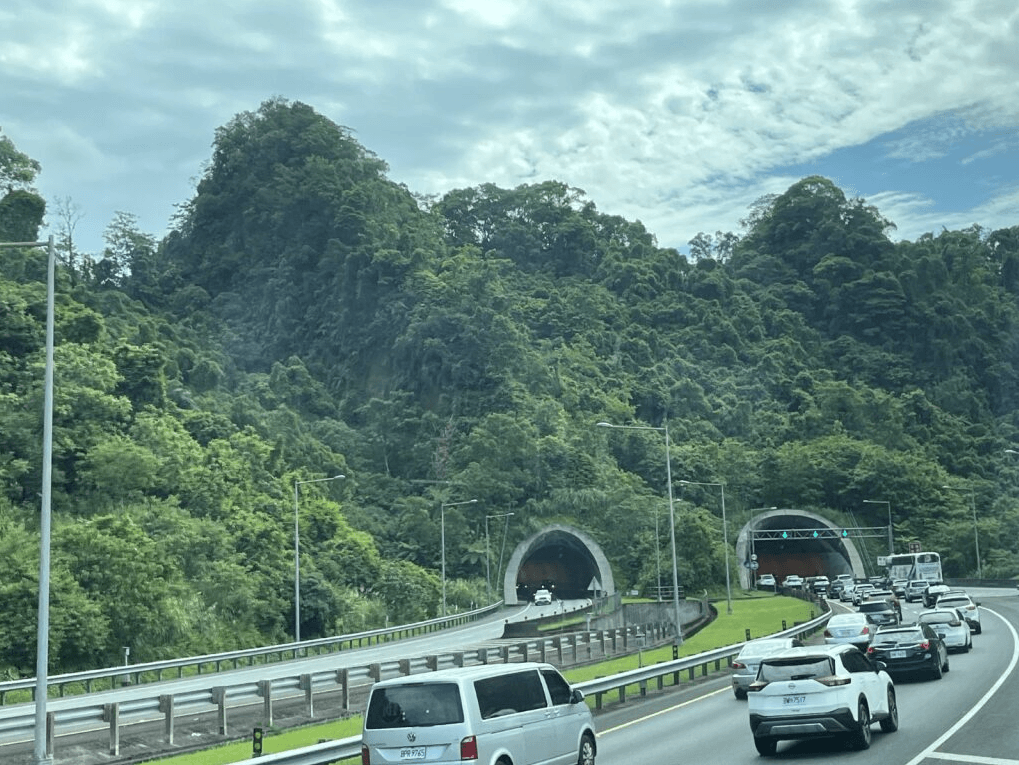
Taiwan’s mountains dominate the island and create land-use challenges. The Central Mountain Range covers nearly 60% of the island’s land surface. The mountains dominate the skyline and shape the island’s interior. They dramatically rise and fall with narrow river valleys in between. An overland trip between Taipei and the Lanyang Plain on the east coast demonstrates the challenge of crossing the mountains. Highway 5 alternates between tall bridges spanning deep gorges and several tunnels. The longest tunnel at the eastern end of the mountains is approximately six miles long. At higher elevations, Taiwan’s mountains top out as craggy peaks. Lower elevations are dominated by subtropical jungle, further complicating mobility and development.
That means the other 40% of the island’s land surface must be carefully managed to support the population of nearly 24 million people. Farmland covers approximately half of the available flat land area while the other half is extremely dense, urban development. Because the Central Mountain Range sits off-center of the island towards the east and the Pacific Ocean, Taiwan’s population is largely concentrated in the plains of the western side of the island facing the Taiwan Strait and mainland China.28“The World Factbook: Taiwan,” Central Intelligence Agency, accessed May 5, 2025, https://www.cia.gov/the-world-factbook/countries/taiwan/#geography.
Visitors to Taiwan will notice that flat land is used intensely on the island. Taipei, the largest city and capital, occupies an ancient lakebed in a basin surrounded by mountains. Greater Taipei spreads out from the center in all directions to occupy every bit of space between the mountains. From the observation deck of Taipei 101 – formerly Taipei World Financial Center – on the 91st floor, one can observe how urban expansion has transformed the ancient lakebed into a densely developed cityscape.
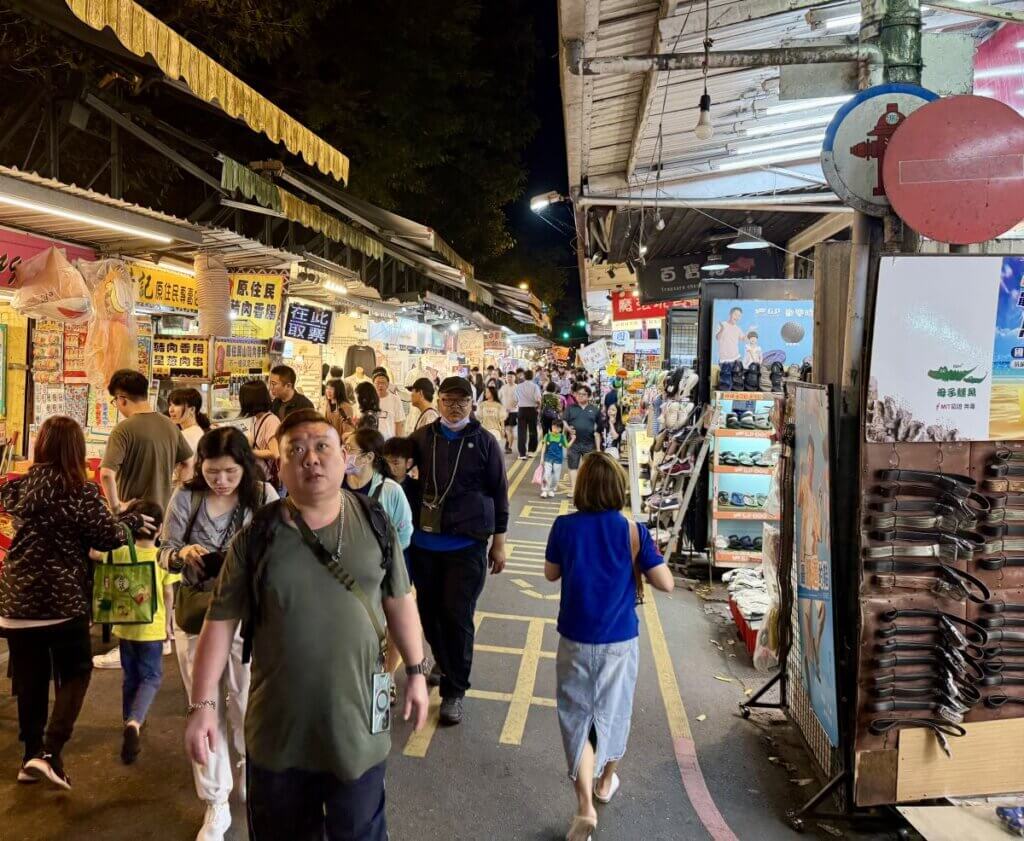
Taiwan’s cities are not only large; they are also very dense. For reference, Taipei City’s population density was 9,575 people per square kilometer in 2020; New York City’s population density was 11,313.81 people per square kilometer that same year.29“Taipei Yearbook 2020: Appendix II Statistics,” Data Catalog, Taipei City Government Open Data, July 6, 2021, accessed June 11, 2025, https://data.taipei/dataset/detail?id=ff607b7b-af57-40e8-8a77-8cf882661119; “QuickFacts: New York City, New York,” United States Census Bureau, accessed June 11, 2025, https://www.census.gov/quickfacts/fact/table/newyorkcitynewyork/POP060220#POP060220. High-rise apartment blocks, hotels, and office buildings predominate the cityscapes in Taiwan. Restaurants and small shops occupy storefronts along the sidewalks.
Unlike in U.S. cities, where street-level retail establishments typically occupy the building’s front facade, many Taiwanese buildings have storefronts along all four sides. Retail activity often extends into alleyways and narrow passageways. In Taipei, a line of small shops selling tools and hardware are built under an elevated highway along the Tamsui River in a clear demonstration of how efficiently even marginal urban space is utilized.
Even where Taiwan’s cities don’t terminate along the side of a mountain range, urban development tends to end rather abruptly. Cities in the U.S. generally spread out from the urban core through exurban and suburban development before transitioning to rural and agricultural regions. In Taiwan, the transition between urban and rural areas can be quite abrupt. Rice paddies exist right next to high-rise apartment blocks. A traveler on the highways or rails between cities will look out across miles of nearly uninterrupted agricultural plots and then suddenly enter high-density urban zones.
A country’s climate dictates the kind of crops it produces. Taiwan’s subtropical climate makes the island an excellent producer of rice. In 2024, 250,000 hectares devoted to rice cultivation produced 1.15 million tons of rice.30“Taiwan: Rice Production,” U.S. Department of Agriculture, accessed May 6, 2025, https://ipad.fas.usda.gov/countrysummary/Default.aspx?id=TW&crop=Rice. Individual farms in Taiwan tend to be small, at 1.1 hectare on average.31“Overview,” Ministry of Agriculture of the Republic of Taiwan, accessed May 6, 2025, https://eng.moa.gov.tw/ws.php?id=9501. The rural landscape of the island is dominated by rice paddies. Farms tend to be rectangular in shape and surrounded by low, concrete walls to control irrigation.32Liu et al (2000) found the average upper boundary of rice paddies, the combination of the muddy layer and ponded water layer, is roughly 20-30cm based on a study of paddy fields in Yun-Lin, Taiwan. Liu, Chen, Jou, and Kuo, “Estimation of the infiltration rate of a paddy field in Yun-Lin, Taiwan,” Agricultural Systems, Volume 68, Issue 1, 2001, Pages 41-54, https://doi.org/10.1016/S0308-521X(00)00062-7. Japanese engineers, during their occupation of the island in the early 20th century, built an extensive irrigation system in the central plains around the cities of Chiayi and Tainan to facilitate aquaculture in the region by creating 150,000 hectares of rice paddies.33“Wushantou Reservoir & Chianan Irrigation Waterway,” Taiwan Ministry of Culture, accessed May 6, 2025, https://www.moc.gov.tw/en/News_Content2.aspx?n=398&s=14057.
Military Implications of Taiwan’s Terrain
Taiwan’s geography warrants greater attention in U.S. defense planning, as it plays an important role in the realistic probabilities of an invasion.
Should the C.C.P. leadership decide to settle the Taiwan issue through military means, they must first confront the challenge of crossing at least 80 miles of water to reach the island. The campaign to conquer Taiwan by force would begin with one of the largest and most complex military operations in history. For comparison, the U.S. Navy employed more than 1,400 combat vessels during the first wave of landings on Okinawa in 1945.34Joseph Wheelan, Bloody Okinawa: The Last Great Battle of World War II (New York: Hachette Books, 2020), 29. The World War II allies needed nearly 7,000 vessels to cross the English Channel in June 1944.35“World War II: D-Day, The Invasion of Normandy,” Dwight D. Eisenhower Presidential Library, accessed May 8, 2025, https://www.eisenhowerlibrary.gov/research/online-documents/world-war-ii-d-day-invasion-normandy. The P.L.A Navy would require a comparably sized fleet to land in Taiwan. While some personnel and material can be flown across the Strait, a mechanized army can only reasonably be transported by sea.
The initial challenge for the P.L.A would be concealing force mobilization across the Strait. It would be expected Beijing would employ an elaborate deception plan to mask their intentions. However, with aircraft and naval vessels patrolling the region, as well as satellites and cyber-forces monitoring any large-scale mobilization or concentration of forces on the mainland, the chances of a surprise attack are extremely narrow. The Taiwanese government and any nation prepared to come to their defense would have some advanced notice to mobilize.
Second, crossing the Taiwan Strait would not be a simple matter. Taiwan’s mountains affect regional weather patterns and create what amounts to a wind tunnel through the Strait. Sea conditions between the mainland and the island frequently feature fog, significant swells, and strong winds. The large surface Chinese fleet needed would also be extremely vulnerable from the moment the ships sally forth from the mainland. Modern anti-ship missiles and uncrewed surface vessels allowed the Ukrainians to gain control of the Black Sea over the much larger Russian Navy.36H.I. Sutton, “Ukraine’s Winning Cards Against Russia In The Black Sea,” Naval News, March 12, 2025, https://www.navalnews.com/naval-news/2025/03/ukraines-winning-cards-against-russia-in-the-black-sea/. The Ukrainians sunk the Russian flagship Moskva in April 2022 with two Neptune missiles.37Ken Dilanian, Courtney Kube, and Carol E. Lee, “U.S. Intel Helped Ukraine Sink Russian Flagship Moskva, Officials Say,” NBC News, May 5, 2022, https://www.nbcnews.com/politics/national-security/us-intel-helped-ukraine-sink-russian-flagship-moskva-officials-say-rcna27559. The Taiwanese military would be able to employ similar means against any Chinese invasion fleet. Taiwan’s latest version of the Hsiung Feng II missile has a range of 250 kilometers, putting Chinese ships in danger while anchored dockside in mainland China.38“Hsiung Feng II,” CSIS Missile Threat Project, April 23, 2024, https://missilethreat.csis.org/missile/hsiung-feng-ii/.
Establishing a beachhead in Taiwan would be another significant challenge. There are relatively few suitable beaches to begin with. Ian Easton, a Naval War College professor and China scholar identified 14 potential invasion beaches on Taiwan, noting that the main island’s 770-mile-long coastline is “remarkably unsuited for amphibious operations.”39Ian Easton, The Chinese Invasion Threat: Taiwan’s Defense and American Strategy in Asia (London: Eastbridge Books, 2019), 129-32.
Much more important than the actual physical characteristics of the beach and whether they can support tanks driving across them is what lies immediately behind the beach ashore. This is where Taiwan’s terrain will truly frustrate an amphibious planner.
An ideal landing beach will have vast open fields behind it to stage men and materiel as the commander generates combat power ashore ahead of the breakout assault. Behind Taiwan’s beaches are either miles of open rice paddies or vast cities. An invader would not be able to stage vehicles and supplies in rice paddies. An invasion force could potentially do so in a city’s port facilities, but it would have to do so while conducting urban combat, which is always a costly endeavor.
Washington’s military planners don’t spend a great deal of time discussing the island of Taiwan itself largely because the expected U.S. response to a Chinese invasion of the island would primarily focus on the air and sea domains. For Chinese military planners, Taiwan’s terrain is highly relevant because crossing the Strait is only one problem they would need to overcome. If Chinese forces were to successfully establish a beachhead, they would then execute a breakout and advance inland to gain control.
An attacking force would be largely limited to operating in the flat areas of the island. That means fighting either in rice paddies or in very dense cities. Rice paddies offer very little cover and concealment for advancing ground forces. Flat, uninterrupted landscapes provide an advantage to defenders because they can lay in wait with long-range weapons and destroy the attackers at a distance. Dismounted infantry are especially vulnerable in such engagements, so they would need to be mounted in armored personnel carriers and likely accompanied by tanks.
While tanks and armored personnel carriers can provide a great deal of protection and mobility, they do have significant limitations. The most relevant in the context of Taiwan is the simple fact that a tank cannot operate in a rice paddy or any sort of marshy area. As a common saying among U.S. armor crewman in the U.S. military goes “tanks don’t go where the cattails grow,” because tanks get stuck in wetlands. Pulling a tank or armored vehicle after it becomes mired in the mud is a time-consuming process in peacetime. Attempting to do so when under enemy fire is extremely dangerous due to the number of people who must expose themselves on the ground to properly rig up the vehicle for recovery.
Because armored vehicles can’t maneuver through Taiwan’s farmland, any attacker would need to confine their movements to the roads. This creates another significant military problem. If the attackers attempt to spread out and use the local farm roads, they would be vulnerable to roadblocks and have trouble supporting or reinforcing other units nearby. Were the defenders to destroy the lead armored vehicle, the rest of the column could not simply bypass it because they would get stuck in the rice paddies on either side of the road. The column would have to stop to clear the obstruction or turn around to find another route which would create opportunities for the defenders to inflict more casualties and damage during an ambush.
Local surface roads aren’t suitable for swift movements even in ideal conditions, so military commanders prefer to use highways whenever possible. Taiwan has a robust transportation network of highways and railways that would facilitate rapid movements of military forces and supplies, so long as an invasion remained uncontested. Most of Taiwan’s highways are elevated for considerable distances over the farmland in between the cities.
Where the main roads are built at grade, they are still built through water-intensive agricultural land. A defender has only to drop a few elevated road sections or overpasses to significantly disrupt the attacker’s operational mobility in Taiwan. The attacker would have to bypass an improvised obstacle like a destroyed bridge or a roadblock by driving around it, but in most cases, they would likely get bogged down in surrounding rice paddies, exposed to long-range missile and artillery attacks due to the flat, open terrain.
Simple factors like roads and sodden farmland can significantly impact military operations. British Field Marshall Bernard Montgomery discovered this the hard way during Operation Market Garden in 1944. The concept for the mission was to capture a pathway through the Netherlands for a rapid assault into Germany after the post-Normandy breakout efforts met stubborn resistance. The plan included history’s largest airborne drop to that time for soldiers to rapidly seize key bridges deep in enemy-held territory.
Simultaneously, a heavily armored column advanced along the route to relieve the airborne forces and secure the road for follow-on forces. The entire scheme tied the operation to Highway 69, a single, two-laned road that passed through marshy farmland and was hemmed by canals and dikes in many places. The mission failed because the defending Germans were able to create numerous roadblocks to pin down the attacking British who could not maneuver off the road.40Cornelius Ryan, A Bridge Too Far (New York: Simon and Schuster, 1974), 424. The airborne troops who expected to be relieved within four days had to fight unsupported for far longer than expected, which resulted in heavy casualties. British troopers dubbed the road “Hell’s Highway.”41Stephen W. Sears, “Hell’s Highway To Arnhem,” American Heritage 22, no. 4 (June 1971), https://www.americanheritage.com/hells-highway-arnhem.
The Department of Defense’s “Military Power of the People’s Republic of China, 2008” report summed up the inherent challenges presented by Taiwan:
Large-scale amphibious invasion is one of the most complicated and logistics-intensive, and therefore difficult, military maneuvers. Success depends upon air and sea supremacy in the vicinity of the operation, rapid buildup of supplies and sustainment on shore, and an uninterrupted flow of support thereafter. An invasion of Taiwan would strain the capabilities of China’s untested armed forces and would almost certainly invite international intervention. These stresses, combined with the combat attrition of China’s forces, the complex tasks of urban warfare and counterinsurgency—assuming a successful landing and breakout—make an amphibious invasion of Taiwan a significant political and military risk for China’s leaders.42“Military Power of the People’s Republic of China 2008: Annual Report to Congress,” Office of the Secretary of Defense, Accession Number: ADA477533, December 1, 2007, https://apps.dtic.mil/sti/citations/ADA477533.
To succeed, the P.R.C. would need to land, advance, and gain control of Taiwan with a politically acceptable number of casualties and in a timeframe that avoids significant domestic or international economic disruption. Given the island’s topographic challenges, the prospects of rapid consolidation of control seem limited.
Amphibious Operations
Operation Causeway
During World War II, U.S. military planners developed a proposal to invade then Japanese-held Formosa (now Taiwan). They thought it would serve as the base of operations for the invasion of Japan’s home islands. General George Marshall, General Hap Arnold, Admiral Ernest King, and Admiral Chester Nimitz believed the island’s airfields and ports were necessary for the final assault against the Japanese. However, many leading naval figures at the time “doubted whether Formosa was worth the immense effort; the invasion would rival the scale of the D-Day landings in Normandy,” writes noted naval historian Ian Toll.43Ian W. Toll, Twilight of the Gods: War in the Western Pacific, 1944-1945 (New York: W.W. Norton & Company, 2020), 56.
Despite the concerns, staff planners in Washington undertook a staff study of the Formosa problem. Service leaders gave it the name Operation Causeway, and the plan today offers important insights into the inherent military challenges an invasion of Taiwan poses. Operation Causeway called for a force of nine Marine Corps and Army divisions. Including all of the air and naval supporting forces, a total of 424,436 people were expected to participate. A fleet of more than 4,000 ships and landing craft would have been used to carry men and supplies to the invasion beaches. The scale of the planned invasion force illustrates the operational challenges. At the time in late 1944, the planners believed the Japanese held Formosa with a force just under 100,000 people.
President Franklin Roosevelt decided against Operation Causeway. Instead, he called for the full re-occupation of the Philippines, Okinawa, and Iwo Jima as forward operating bases for the planned invasion of Japan. Roosevelt made this decision after the commanders in the Pacific further studied the challenges and became convinced that they would need to fully occupy the island. As Ian Toll wrote, “The more they studied Formosa, the less they liked it.”44Ibid., 90-5.
When Roosevelt made his decision regarding Operation Causeway in 1944, the U.S. military was approaching its absolute zenith of strength and experience. The U.S. Navy had grown from 790 ships to 6,768 by the end of the war.45Walter R. Borneman, The Admirals: Nimitz, Halsey, Leahy, and King—The Five-Star Admirals Who Won the War at Sea (New York, Little, Brown and Company, 2012), 458.The Navy, Marine Corps, and Army had already teamed up to conduct amphibious landings at Guadalcanal, North Africa, Sicily, Anzio, Saipan, Tinian, Guam, and other scattered places around the globe. The expected participants of Operation Causeway included the most experienced military commanders in modern history, yet they ultimately recommended against invading Taiwan in favor of other targets, underscoring the challenge.
China’s Amphibious Track Record
China’s current military leadership does not have the benefit of direct combat experience, though historically the PLA does have a mixed track record of successful amphibious operations. For example, mere days after the Communist Party of China secured victory on the mainland against the Republic of China—led by the Kuomintang (K.M.T.) political party during the Chinese Civil War—the C.C.P. leaders launched several missions to capture the remaining R.O.C.-controlled territories offshore.46Maochun Miles Yu, “The Battle of Quemoy: The Amphibious Assault That Held the Postwar Military Balance in the Taiwan Strait,” Naval War College Review 69, no. 2 (Spring 2016): 91, https://www.jstor.org/stable/26397935.
Three weeks after proclaiming the creation of the P.R.C.’s People’s Liberation Army, C.C.P. leaders ordered the army to capture the islands of Quemoy (alternatively known as the Kinmen islands) and Xiamen. The latter island sits only a mile off the mainland coast and the P.L.A. successfully captured it on October 15, 1949. Less than two weeks later, the P.L.A. attempted to capture the Kinmen islands only a few miles farther off the coast. The P.L.A. deployed 9,048 soldiers to accomplish the mission.
Every Chinese soldier were either killed or captured in the attempt. The K.M.T. suffered 1,267 men killed and 1,982 wounded. Other attempts were made to recapture the Quemoy/Kinmen islands throughout the 1950’s, as they sit only six miles off the mainland, yet they remain under the R.O.C.’s control to this day.47Edward F. Chen, “Battle of Guningtou: The Republic of China Fights For Survival,” Warfare History Network, Winter 2011, https://warfarehistorynetwork.com/article/battle-of-guningtou-the-republic-of-china-fights-for-survival/.
During the 1954-1955 and 1958 Taiwan Strait Crises, the P.R.C. and R.O.C. forces exchanged fire on these outer islands, prompting the United States to come to the R.O.C.’s aid by supplying them weapons. The bombardment of the Quemoy/Kinmen islands in 1954 led the Eisenhower administration to consider using nuclear weapons against the P.R.C.48“The Taiwan Straits Crises: 1954–55 and 1958,” Office of the Historian, U.S. Department of State, accessed June 10, 2025, https://history.state.gov/milestones/1953-1960/taiwan-strait-crises.
The efforts to complete the victory against the R.O.C. on their remaining offshore redoubts had a major impact on the thinking of the communist leaders in Beijing. The loss of the entire invasion force on the Quemoy/Kinmen islands, coupled with interventions from the United States, deterred a full-scale attempt at recapture. Nonetheless, back-and-forth shelling continued for two decades.
The episode also had a wider, strategic effect. The P.R.C.’s leaders had to consider whether Washington would intervene in any further operations against the R.O.C.49Maochun, “The Battle of Quemoy.” When the U.S.-led United Nations coalition came to the defense of South Korea the year after Xiamen’s capture, leaders in Beijing had to consider the real possibility of a similar defense of Taiwan. This assessment was only reinforced by the P.R.C.’s tremendous losses when they entered the Korean War in late 1950, and the further losses during the Great Leap Forward and the Cultural Revolution in subsequent decades.
The turmoil of the P.R.C.’s early decades and the United States military support to the R.O.C. forced the C.C.P. to alter plans to capture the remaining R.O.C.-controlled territory. The R.O.C. took advantage of the reprieve to fortify their position by receiving military support from the United States while the island was under Martial Law from 1949 to 1987,50Jonathan Masters and Will Merrow, “U.S. Military Support for Taiwan in Five Charts,” Council on Foreign Relations, September 25, 2024, accessed June 11, 2025, https://www.cfr.org/article/us-military-support-taiwan-five-charts. an era known as the White Terror.51“White Terror Period,” National Human Rights Museum (Taiwan), accessed June 10, 2025, https://www.nhrm.gov.tw/w/nhrmEN/White_Terror_Period.
It is also worth noting that China did launch a successful combined operation and amphibious assault in the Paracels in 1974, seizing several islands from the Republic of Vietnam using a combination of naval power, maritime militia, and irregular infantry. On the one hand, the Battle of the Paracel Islands offers scant insights about the capabilities of the modern P.L.A. and P.L.A. Navy (P.L.A.N.), especially since the operation involved only a few ships and roughly 500 troops.52Toshi Yoshihara, “The 1974 Paracels Sea Battle: A Campaign Appraisal,” Naval War College Review 69, no. 2 (Spring 2016), https://digital-commons.usnwc.edu/cgi/viewcontent.cgi?article=1095&context=nwc-review; Carl O. Shuster, “‘Speed Forward, Fight Close and Hit Hard’—How China Won the Battle of the Paracel Islands,” Navy Times, March 14, 2029, accessed June 12, 2025, https://www.navytimes.com/news/your-navy/2019/03/14/speed-forward-fight-close-and-hit-hard-how-china-won-the-battle-of-the-paracel-islands/. On the other, the operation is instructive regarding the ways in which China might again time its operations around a perceived reduction in U.S. support, as well as how it may attempt to leverage civilian vessels and irregular forces in combination with the navy to achieve its objectives, especially in scenarios involving Taiwan’s outlying territories.
Taiwan’s Military Preparations
One of the first things junior military officers learn about the basics of the offense and defense is that defenders control the ground while the attackers control the clock. This is said as a warning for the defending force to work quickly to prepare the best fighting position possible because the attacker retains the initiative. The attacker decides when the battle will happen. In this case, the P.R.C. has effectively ceded control of the clock by giving the R.O.C. more than 75 years to consolidate its position.
Today, 2.58 million people serve in the R.O.C. armed forces. The army has 94,000 active-duty soldiers with another 1.5 million serving in the reserves.53The International Institute for Strategic Studies, The Military Balance 2023 (The International Institute for Strategic Studies, 2023), 291. Young Taiwanese men are subject to conscription beginning at the age of 19.54“Conscription Agency,” Ministry of the Interior, Republic of China, accessed April 29, 2025, https://www.moi.gov.tw/english/News_Content.aspx?n=8354&s=124869. In 2022, R.O.C. officials increased the period of compulsory military training from four months to a year.55The Associated Press, “Taiwan Increases Its Compulsory Military Service as it Faces Pressure From China,” National Public Radio, December 27, 2022, https://www.npr.org/2022/12/27/1145594497/taiwan-compulsory-military-service-china.
The R.O.C. Navy has 40,000 sailors and a fleet of 167 vessels. Most ships currently in service were purchased from other countries or based on foreign designs. Taiwan operates 8 Cheng Kung-class frigates which are native built hulls based on the U.S. Oliver Hazard Perry-class frigates.56The International Institute for Strategic Studies, The Military Balance 2023 (The International Institute for Strategic Studies, 2023), 292. The fleet will expand in coming years with the construction of a class of domestically produced light frigates. The first of the 12 anticipated new ships is expected to be delivered in October 2026.57Gordon Arthur, “Taiwan Begins Building Anti-Submarine Frigate,” Defense News, January 23, 2024, https://www.defensenews.com/naval/2024/01/23/taiwan-begins-building-anti-submarine-frigate/.
Taiwanese military officials are also developing uncrewed underwater vehicles. Development on the Huilong, or Smart Dragon, underwater drone began in 2020. The uncrewed vehicle has two torpedo tubes to supplement the Taiwanese diesel electric submarine force.58Thomas Newdick, “Our Best Look at Taiwan’s New Uncrewed ‘Smart Dragon’ Submarine,” The War Zone, October 29, 2024, https://www.twz.com/news-features/our-best-look-at-taiwans-new-drone-submarine.
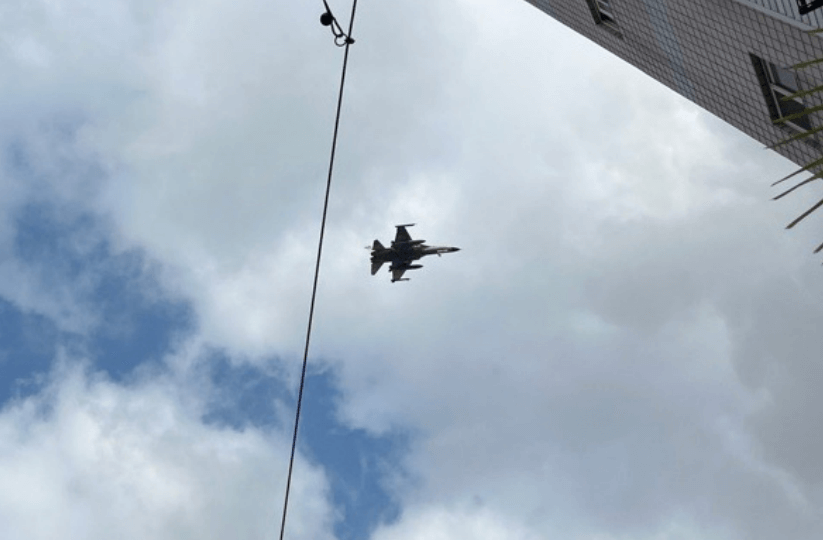
To defend its skies, the R.O.C. has a fleet of 471 military aircraft that includes 285 fighter jets. The venerable F-16 is the centerpiece of the Taiwanese fighter jet fleet, which also operates F-5s, Dassault Mirages, and the indigenous F-CK-1 Ching-Kuo lightweight fighter.59The International Institute for Strategic Studies, The Military Balance 2023 (The International Institute for Strategic Studies, 2023), 293. To provide shore-based long-range strike capabilities, the R.O.C. possesses a robust battery of missiles for land-attack and anti-ship strikes. These include three variants of the Hsiung Feng missile with maximum range of 150 kilometers, and the Yun Feng, which is capable of striking targets on land 2,000 kilometers away.60Missile Defense Project, “Missiles of Taiwan,” Missile Threat, Center for Strategic and International Studies, June 14, 2018, last modified August 10, 2021, https://missilethreat.csis.org/country/taiwan/.
The R.O.C. conducts an annual military exercise called Han Kuang that includes ground, naval, and air forces. The 2025 iteration simulated a scenario in which a regular Chinese military exercise escalated into full-scale attack against Taiwan. The scenario included several “gray zone” activities like the Chinese masking military forces as sand dredgers or civilian vessels, and the widespread use of drones.61Wu Shu-wei and Sunny Lai, “2025 Han Kuang Drills Targeting China’s ’Gray Zone’ Actions, Invasion Threat: Experts,” Focus Taiwan, April 5, 2025, https://focustaiwan.tw/politics/202504050006.
Chinese military planners believe Taiwan’s population will mount a formidable defense of their home. A poll conducted in late 2024 found that two-thirds of the Taiwanese population would be willing to defend their island against a Chinese invasion.62“Most Taiwanese Would Defend Island Against China, Poll Finds,” Deutsche Welle, October 9, 2024, https://www.dw.com/en/most-taiwanese-would-defend-island-against-china-poll-finds/a-70440750. To ensure citizens know how to do so, the government began holding “whole of society” civil defense drills in 2025 to prepare for disasters both natural and unnatural, like an invasion. “We hope that through strength, not only of the military, but also the resilience of the entire society in defense, we can ensure Taiwan’s security and ensure that peace can be achieved through the demonstration of our strength,” R.O.C. president, Lai Ching-te, said during the March event.63Ann Wang and Annabelle Chih, “Lai Oversees First Civil Defense Drills,” Taipei Times, March 28, 2025, https://www.taipeitimes.com/News/front/archives/2025/03/28/2003834194.
Many Taiwanese citizens also pay to attend training courses to learn what they can about defending their homes from a Chinese invasion. They practice identifying Chinese soldiers, conducting orderly evacuations, and treating battlefield wounds. The Kuma Academy offers courses like this four or five times a week. Most of the school seats for these courses sell out within minutes.64Thomas Maresca, “In Taiwan, Citizens Train for a Chinese Invasion,” United Press International, April 5, 2023, https://www.upi.com/Top_News/World-News/2023/04/05/taiwan-Kuma-Academy-Taiwan-civil-defense-training-China-invasion/3671680721096/.
While Taiwan’s natural landscape would make conquering the island difficult, the Taiwanese people would likely also strongly resist an invader. The decisionmakers in Beijing doubtlessly consider Taiwan’s capabilities as they make strategic decisions. However, if China’s leaders decide to launch an invasion, they must consider not only the geographic challenges, but also the readiness and will of Taiwanese population.

Potential International Responses
“There is one sine qua non for all amphibious operations. Sea control, or at least local command of the sea must be total. Without this, there is no secure base from which to launch, sustain, or recover operations ashore,” wrote Andrew Young in the updated standard analysis of historical amphibious operations.65Andrew Young, “Amphibious Genesis: Thomas More Molyneux and the Birth of Amphibious Doctrine,” in On Contested Shores: The Evolving Role of Amphibious Operations in the History of Warfare, ed. Timothy Heck and B.A. Friedman (Quantico: Marine Corps University Press, 2020), 53.
If China decided to attack Taiwan, Chinese leaders would have great difficulty controlling the seas surrounding the island.
Beyond the desire to defend Taiwan, the threat to global shipping may prompt other nations to act. The United States responded swiftly when Houthi militias in Yemen threatened shipping in the Red Sea in November 2023.66Ahmad Ghaddar, “Houthi Attacks on Shipping in Red Sea Persist, U.S. and Allies Strike Back,” Reuters, January 12, 2024, https://www.reuters.com/world/middle-east/houthi-attacks-shipping-red-sea-persist-us-allies-strike-back-2024-01-12/. Indian leaders sent a fleet of ships to patrol the region. Denmark dispatched an anti-aircraft frigate to join the coalition.67Rudy Ruitenberg, “Danish Air-Defense Frigate Heads to Red Sea as Trade is Under Threat,” Defense News, January 29, 2024, https://www.defensenews.com/global/europe/2024/01/29/danish-air-defense-frigate-heads-to-red-sea-as-trade-is-under-threat/. In total, more than 20 countries joined the effort to maintain freedom of navigation in the Red Sea, a shipping lane that handles approximately 30% of the world’s container traffic.68Christian Edwards, “Who Are the Houthis and Why are they Attacking Ships in the Red Sea?,” CNN, January 17, 2024, https://www.cnn.com/2023/12/19/middleeast/red-sea-crisis-explainer-houthi-yemen-israel-intl/index.html; Željko Bogetic, Luan Zhao, Eric Le Borgne, and Holly Krambeck, “Navigating Troubled Waters: The Red Sea Shipping Crisis and Its Global Repercussions,” World Bank Blogs, May 16, 2024, https://blogs.worldbank.org/en/developmenttalk/navigating-troubled-waters–the-red-sea-shipping-crisis-and-its-. Asian waters handle 60% of maritime trade, so it is difficult to imagine disruption to shipping in that region not prompting a comparable response.
The United States had a mutual defense treaty with the R.O.C. that was revoked in 1979 when the Carter Administration recognized the P.R.C. as the sole legal government of China, and severed diplomatic relations with the R.O.C.69“China Policy,” Office of the Historian, U.S. Department of State, accessed June 10, 2025, https://history.state.gov/milestones/1977-1980/china-policy. Since then, the question of America’s commitment to Taiwan’s security has rested on the 1979 Taiwan Relations Act, which stipulates that the United States will maintain unofficial cultural and economic ties with Taiwan, and that diplomatic relations with the P.R.C., “rests upon the expectation that the future of Taiwan will be determined by peaceful means… [and] that the United States shall provide Taiwan with arms of a defensive character and shall maintain the capacity of the United States to resist any resort to force or other forms of coercion that would jeopardize the security, or social or economic system, of the people of Taiwan.”70Taiwan Relations Act, Pub. L. No. 96-8, § 2, 93 STAT, available at https://www.congress.gov/bill/96th-congress/house-bill/2479/text. This law connoted broad support for the security of Taiwan’s political and economic system, however, the United States avoided declaring an explicit commitment to intervene directly in its defense.71James Siebens, “How to Avoid a War over Taiwan,” Stimson Center, November 22, 2024, accessed June 10, 2025, https://www.stimson.org/2024/how-to-avoid-a-war-over-taiwan/.
If China’s leaders did decide to attack Taiwan, the United States might risk losing credibility with its other defense commitments in the region and even beyond if it did not respond. That said, the harm to U.S. credibility could be limited by the fact that the Washington does not have any formal obligation to defend Taiwan militarily, and that it would have a range of other policy options for responding to an attack on Taiwan.
For instance, even if the response did not include a military counterattack and was confined to sanctions, China would suffer significant economic consequences. Peter Zeihan, a noted geostrategist, wrote that without the United States, “China loses energy access, income from manufactures sales, the ability to import the raw materials to make those manufactures in the first place, and the ability to either import or grow its own food.”72Peter Zeihan, The End of the World is Just the Beginning: Mapping the Collapse of Globalization (New York: Harper Business, 2022), 158.
The Taiwanese bolster their military capabilities and interoperability with friendly forces by quietly maintaining military partnerships in the Western Pacific region.73Ben Blanchard, “Taiwan Deepening Security Cooperation with US, Other ‘Allies,’” Reuters, September 18, 2024, https://www.reuters.com/world/taiwan-deepening-security-cooperation-with-us-other-allies-2024-09-19/. Building on this, Taipei’s forces recently began participating in joint military exercises in the region. For example, the Japanese integrated Taiwanese military personnel into a series of wargames analyzing cross-Strait attack scenarios in the summer of 2023.74Lawrence Chung, “For First Time, Taiwanese Experts Will Join US-Japanese War Games Simulating Cross-Strait Clash,” South China Morning Post, June 19, 2023, https://www.scmp.com/news/china/military/article/3224642/first-time-taiwanese-experts-will-join-us-japanese-war-games-simulating-cross-strait-clash.
In an armed contingency, China would largely have to act on its own since it does not have many close allies in the region—though in principle it might be supported by Russia and/or North Korea. Taiwan, on the other hand, might have the support of the United States and its allies, such as Japan, South Korea, the Philippines, Australia, and several smaller Pacific Rim countries in the event of an invasion. These regional allies might assist Taiwan by denying Beijing control of the seas via their submarines and long-range missile strikes. Just by denying freedom of navigation to the P.R.C., Washington’s allies would hamper an invasion force because it would need to be supplied by sea.
If China invades Taiwan, and the international community responds with military means, the risk of escalation rises significantly. The United States and China both have nuclear weapons. That means that the decisionmakers in Beijing must factor in the possibility of a nuclear exchange into their strategic calculus, which may be the strongest deterrent against an invasion.
United States military officials conduct periodic exercises featuring scenarios involving two nuclear powers. The participants often find that when one side begins to lose the conventional fight, that side’s leaders are tempted to launch a nuclear strike. “It gets into a very difficult calculus,” said Brigadier General Greg Bowen, the director of a 2017 exercise. “It’s clearly a place that we don’t want to go.”75Marcus Weisgerber, “Can Two Nuclear Powers Fight a Conventional War?,” Defense One, November 9, 2017, https://www.defenseone.com/threats/2017/11/can-two-nuclear-powers-fight-conventional-war/142451/.
Measures Short of War
Since mainland China considers itself to be sovereign over the territories controlled by Taiwan, it has developed a set of international legal positions that it can invoke to impose incrementally greater degrees of effective control over the islands and their surrounding waters and airspace. This includes the 2005 Anti-Secession Law and 2015 National Security Law, which require the government to respond to actions taken by Taiwan. For example, the 2005 law states that if pro-independence forces in Taiwan undertake actions:
to cause the fact of Taiwan’s secession from China, or that major incidents entailing Taiwan’s secession from China should occur, or that possibilities for a peaceful reunification should be completely exhausted, the state [China] shall employ non-peaceful means and other necessary measures to protect China’s sovereignty and territorial integrity. 76“Fǎn Fēnliè Guójiā Fǎ,” (反分裂国家法) [Anti-Secession Law] (promulgated by the President of the People’s Republic of China, Nat’l People’s Cong., March 14, 2005, effective March 14, 2005), Xianfa art. 34, § 8 (2005) (China), http://www.npc.gov.cn/zgrdw/englishnpc/Law/2007-12/13/content_1384099.htm; see also “Zhōnghuá Rénmín Gònghéguó Guójiā ānquán Fǎ,” (中华人民共和国国家安全法) [National Security Law] (promulgated by the Standing Comm. Nat’l People’s Cong., July 1, 2015, effective July 1, 2015), P.R.C. Laws, https://flk.npc.gov.cn/detail2.html?MmM5MDlmZGQ2NzhiZjE3OTAxNjc4YmY3ZTA2NzA4MmY%3D.
A full-scale amphibious invasion would only be seen as necessary if this approach to deterrence fails. This also points to the expectation that it is far more practical, and therefore more likely, that the P.R.C. will continue a campaign of coercive diplomacy—coercion short of armed conflict designed to simultaneously increase security threats and economic pressure on Taiwan through a combination of administrative measures and military means— than it is to choose to undertake a full-scale amphibious assault on the main island of Taiwan. Beijing’s main objective in this effort would be to bring about cross-Strait negotiations on terms acceptable to the P.R.C., and to persuade Taipei of the need to make meaningful political concessions to the mainland in order to gain relief from coercive pressure.
Export Controls
On the administrative side, the P.R.C. could exert pressure on Taiwan’s economy by imposing bans or restrictions on Taiwan’s exports and imports, increasing its use of customs enforcement and maritime law enforcement to delay shipments to Taiwan for both genuine and performative (or punitive) inspections, causing delays and disruptions for key industries. If it felt the need to escalate further, Beijing could enact severe restrictions on the ability of mainland companies and individuals to export essential goods to Taiwan. It could also discourage or prohibit Chinese citizens from investing in Taiwan, causing significant economic disruptions and potentially destabilizing the society.
The P.R.C. may choose to issue export controls gradually, in stages, with the intention of conditionally increasing pain. For example, it might start with bans on integrated circuits, moving towards coal and crude petroleum, while simultaneously blocking Taiwan’s major exports to the P.R.C. in the agricultural sector.77Chinese Ministry of Commerce, “Shāngwùbù Gōnggào 2023 Nián Dì 11 Hào Shāngwùbù Guānyú Jiù Táiwān Dìqū Duì Dàlù Màoyì
Xiànzhì Cuòshī Jìnxíng Màoyì Bìlěi Diàochá de Gōnggào,” [MOFCOM Announcement No.11 of 2023 on Its Decision to Launch a Trade Barrier Investigation into Taiwan’s Trade Restrictions on the Mainland], April 12, 2023,
http://www.mofcom.gov.cn/article/zwgk/gkzcfb/202304/20230403403369.shtml; see also Blumenthal, et al, “From Coercion to Capitulation: How China Can Take Taiwan Without a War,” American Enterprise Institute, May 13, 2024, accessed June 5, 2025, https://www.aei.org/research-products/report/from-coercion-to-capitulation-how-china-can-take-taiwan-without-a-war/. Taiwan’s exports of agriculture would be hard to reroute to other markets given the short shelf life of these products and the distances they would need to be transported, which would force them to seek to export significantly more of these goods to nearby places like Japan. Critical minerals, such as refined copper and raw nickel would also create near-term pain as Taiwan is forced to look for alternative supply chains.
Maritime Quarantine/Naval Blockade
Even more aggressive would be the imposition of an administrative quarantine of Taiwan’s territories. This could look as innocuous as increased maritime law enforcement activities around outlying islands like Quemoy/Kinmen, Matsu, and Taiping Island by the China Coast Guard (C.C.G.). It could also take the form of a more muscular naval blockade, resembling the “quarantine” imposed on Cuba by the U.S. during the Cuban Missile Crisis,78“Cuban
Missile Crisis,” JFK in History, John F. Kennedy Library and Museum, November 07, 2024, accessed June 5, 2025, https://www.jfklibrary.org/learn/about-jfk/jfk-in-history/cuban-missile-crisis#. through which most, if not all, of Taiwan’s international trade would be severed.
There are also a variety of non-kinetic measures that the P.R.C. could undertake to further isolate and immiserate the population of Taiwan. For example, a campaign of cyberattacks targeting critical infrastructure – including water, energy, and financial services – could be severely destabilizing for Taiwan’s society. The P.R.C. might also target undersea cables that Taiwan relies on for telecommunications, and thus literally cut millions of Taiwan’s citizens’ connection to the outside world.79Jaime Ocon and Jonathan Walberg, “China’s Undersea Cable Sabotage and Taiwan’s Digital Vulnerabilities,” Global Taiwan Brief 10, no. 11, Global Taiwan Institute, June 4, 2025, https://globaltaiwan.org/2025/06/taiwans-digital-vulnerabilities/; Yimou Lee, “Taiwan Detains China-linked Cargo Ship After Undersea Cable Disconnected,” Reuters, February 25, 2025, accessed June 5, 2025, https://www.reuters.com/world/asia-pacific/taiwan-detains-china-linked-cargo-ship-after-undersea-cable-disconnected-2025-02-25/; Erin L. Murphy and Matt Pearl, “China’s Underwater Power Play: The PRC’s New Subsea Cable-Cutting Ship Spooks International Security Experts,” Center for Strategic and International Studies, April 4, 2025, accessed June 5, 2025, https://www.csis.org/analysis/chinas-underwater-power-play-prcs-new-subsea-cable-cutting-ship-spooks-international.
These approaches are less hypothetical than they are extrapolations from recent P.R.C. actions. For example, Taiwan has long identified the threat to its digital infrastructure as a source of strategic vulnerability and has tracked numerous instances of likely attacks on its undersea cables. Regarding the P.R.C.’s ongoing efforts to further impose maritime law enforcement and administrative/jurisdictional control, following an encounter between the Taiwan Coast Guard and a mainland fishing vessel in the waters near Quemoy/Kinmen, the C.C.G. increased its patrols and enforcement actions around the Taiwan-controlled island near the coast of mainland China. 80“A New Normal for the China Coast Guard at Kinmen and Matsu,” Asia Maritime Transparency Initiative, Center for Strategic and International Studies, December 6, 2024, accessed June 5, 2025, https://amti.csis.org/a-new-normal-for-the-china-coast-guard-at-kinmen-and-matsu/; RFA Staff, “Chinese ships intrude into Taiwan waters near Kinmen island,” Radio Free Asia, May 7, 2024, accessed June 5, 2025,https://www.rfa.org/english/news/southchinasea/china-coastd-guard-kinmen-05072024040312.html.
While the kinds of operations outlined above would certainly place economic pressure on the populace and the government, the principal aim of such an operation is likely to psychologically impact Taiwan’s political leadership and population. Taiwan’s loss of physical control over its sea and air approaches, and the consequent loss of access to essential goods and services would demonstrate the P.R.C.’s ability to effectively control Taiwan’s access to resupply through maritime interdiction. This could significantly undermine public confidence in Taiwan’s government and would challenge the R.O.C. to “fire the first shot” in an effort to break the quarantine or naval blockade, or to push back against suspicious P.R.C. vessels operating near its undersea cables. Chinese leaders could initiating a conventional conflict in the Strait that could play to the P.R.C.’s advantage both politically and militarily.
Punitive Strikes/Operations
More escalatory than a blockade—but still less escalatory and practical (and therefore more likely)—than a full-scale invasion would be the use of punitive operations. At the low end of the escalation ladder, these could take the form of increased cyber-attacks to disrupt the availability of critical public services and government functions, banking and financial services, and so forth. Higher up the escalation ladder, the P.R.C. might use missile strikes, naval and aerial bombardment, and even faits accomplis, such as seizing Taiwan’s outlying territories in retaliation for unacceptable actions taken by Taiwan, or in an effort to compel negotiations on Beijing’s terms.
Punitive operations might occur in the context of a blockade or might be conducted on an ad hoc basis in pursuit of various concessions. In any case, the purpose of these operations would be to apply more severe coercive pressure by demonstrating the P.R.C.’s resolve and willingness to escalate to the use of force while also attempting to control escalation by limiting its uses of force in time, scale, and scope, closely linking them to political demands.
As a hypothetical illustration of this approach, the P.L.A. might conduct provocative actions intended to draw Taiwan’s air or naval forces into an encounter in international waters where it could destroy those forces and then issue a demand for de-escalation and negotiations. The P.L.A. Air Force and P.L.A. Rocket Force might conduct a series of air- and missile-strikes targeting Taiwan’s air defenses to simultaneously render it more vulnerable to follow-on attacks while also sending a powerful message about the P.L.A.’s capabilities. Alternatively, they might select targets based on their potential to destabilize and shock Taiwan’s leadership and population, such as strikes on symbolic political targets, energy facilities, or media and communications infrastructure.
Another hypothetical scenario would involve the forcible seizure of one or more of Taiwan’s outlying territories, such as the Quemoy/Kinmen and Matsu islands, following a perceived violation of Beijing’s deterrence demands, or followed by a demand for negotiations. Such an action would be framed as an irreversible punishment for the perceived violation and would also demonstrate Taiwan’s inability to defend its territory, thus advancing Beijing’s political and psychological objectives, extending its control over territories currently governed from Taipei, all without undertaking the immense cost of a full-scale invasion.
Punitive strikes and blockades are both examples of what the P.R.C.’s Science of Military Strategy refers to as “limited” or “restricted military operations” and “warning military strikes,” both explicitly discussed as efforts intended to shape the behavior of others through coercive diplomacy and demonstrations of force.81Xiao Tianliang, ed., In Their Own Words: The Science of Military Strategy 2020 (Montgomery, Alabama: China Aerospace Studies Institute, 2022) pp.138, https://www.airuniversity.af.edu/Portals/10/CASI/documents/Translations/2022-01-26%202020%20Science%20of%20Military%20Strategy.pdf.
Coup d’Etat/Coup de Main
Less likely than the non-kinetic and kinetic coercive diplomacy described above, but still more practical than a full-scale amphibious invasion, would be an attempted coup d’etat or coup de main. In these scenarios, P.R.C. operatives and special forces would attempt a short, sharp action directed at taking over the seat of government by force, or at a minimum capturing the head of state. Forces for such an operation might attempt a clandestine infiltration of Taiwan, even over a period of days or weeks, possibly with the support of sympathizers—a “fifth column”—already in Taiwan, or they might be inserted by sea and/or air as part of a larger conventional military operation.
At the low end, such an action might resemble the 1968 “Blue House Raid.” The raid involved a small unit of North Korean special forces disguised as South Korean soldiers that infiltrated South Korea through the Demilitarized Zone and then worked their way to within 800 meters of the Blue House, the residence of South Korea’s president, with the intention of assassinating the president.
At the high end, this kind of operation might resemble Operation Urgent Fury, in which roughly 7,300 U.S. special forces, soldiers, and Marines, along with 300 troops from the Organization of Eastern Caribbean States, invaded Grenada to reverse a coup backed by Cuba, and to counter the influence of the Soviet Union.82“Operation Urgent Fury—Grenada,” National Museum of the Marine Corps, accessed June 5, 2025, https://usmcmuseum.com/uploads/6/0/3/6/60364049/operation_urgent_fury.pdf. The operation involved an airborne assault on one of Grenada’s airports by U.S. Army Rangers, supported by air power, which allowed follow-on forces to arrive by transport plane. This was supported by a simultaneous amphibious/helicopter assault on a second airport by Marines on the opposite side of the island, and the clandestine insertion of Navy SEALs to conduct reconnaissance and pursue high-value targets.83Ronald H. Cole, “Operation Urgent Fury: Grenada,” Joint History Office, Office of the Chairman of the Joint Chiefs of Staff, 1997, accessed June 5, 2025, https://www.jcs.mil/portals/36/documents/history/monographs/urgent_fury.pdf.
For several years, it has been reported that the P.L.A. has constructed training facilities designed to resemble central Taipei and Taiwan’s presidential district.84Victor Robert Lee, “Satellite Imagery: China Staging Mock Invasion of Taiwan?,” The Diplomat, August 9, 2015, accessed June 9, 2025, https://thediplomat.com/2015/08/satellite-imagery-from-china-suggests-mock-invasion-of-taiwan/; Sebastian Seibt, “Taipei Replica in Remote Chinese Province Fans Taiwan Invasion Fears,” France 24, April 1, 2024, accessed June 9, 2025, https://www.france24.com/en/asia-pacific/20240401-taipei-replica-in-remote-chinese-province-fans-taiwan-invasion-fears. These training facilities may indicate a degree of practical preparation for a special forces raid targeting Taiwan’s president or simply provide an environment for urban combat training and close-quarters battle. They might also represent a form of psychological warfare by virtue of the P.L.A. openly indicating its preparation for conflict in Taipei.
In any case, if the P.R.C. were successful in landing a force of any size, and seizing any airfield or port in Taiwan, it would not only constitute a major demonstration of Taiwan’s vulnerability to such an attack but could create a sufficient shock to the morale of the population and Taiwan’s defending forces that it could destabilize the government. Like the 1968 “Blue House Raid,” it might also be carried out in the hope of sparking a domestic revolt among the P.R.C.’s supporters in Taiwan (both real and imagined).
However, any operation by such a small force would run a high risk of failure if faced with larger, more determined defensive forces with greater knowledge of the terrain and the inherent advantages of interior lines.85Joseph Rodriguez, Jr., “How to Maximize the Advantages of Interior Lines at the Operational Level,” School of Advanced Military Studies, May 1, 1987, accessed June 5, 2025, https://apps.dtic.mil/sti/pdfs/ADA184730.pdf. The tactical and logistical difficulties experienced by U.S. forces in Operation Urgent Fury exemplifies the daunting challenges inherent in such an operation that P.L.A. forces would face without the benefit of hard-earned lessons from practical experience to draw on. These include friendly fire incidents, delays and disruptions to planned flows of follow-on forces, and intelligence failures.
None of the coercive approaches described above are without risk of failure. Nor are they without risk of the kinds of geopolitical consequences that might give Beijing significant cause for hesitation. That said, the material and political costs of failure, and the severity of the blowback against the P.R.C. in each of these scenarios would likely seem less daunting to the C.C.P.’s leadership than a full-scale invasion of Taiwan. Thus, they are likely to strongly prefer to continue pursuing a coercive approach short of a full-scale invasion in order to bring about concessions with minimum fighting.86Joel Wuthnow, “A New Step in China’s Military Reform,” Joint Force Quarterly 117, no. 2 (2025), 4-13, https://digitalcommons.ndu.edu/joint-force-quarterly/vol117/iss2/3.
Current Military Realities
A perfectly reasonable question to ask now is why hasn’t China invaded Taiwan yet?
China’s society endured a great deal of turmoil following the end of the civil war in 1949. The Korean War, Great Leap Forward, Cultural Revolution, and the Tiananmen Square protests and subsequent crackdowns in 1989 forced Beijing to prioritize internal affairs. However, after the Reform and Opening period, and China’s ascension into the World Trade Organization, the P.R.C. has experienced relative stability and significant economic growth.
It also devoted significant resources and attention to modernizing military capabilities. This manifested in a series of innovation plans and programs with the goals of “generally achieving mechanization by the year 2020 with significantly enhanced informationization and greatly improved strategic capabilities,” and, “to complete the modernization of national defense and the military by 2035 and to fully transform the people’s armed forces into world-class forces by the mid-21st century.”87“China’s Defensive National Defense Policy in the New Era,” Defense Policy, Ministry of National Defense, P.R.C., accessed June 12, 2025, http://eng.mod.gov.cn/xb/DefensePolicy/index.html. Despite the P.R.C.’s economic growth and military modernization, it has yet to launch a full-scale invasion of Taiwan.
An invasion of Taiwan would be among history’s largest and most complex military operations. Even with current advances in technology, the prospect of pulling off an invasion successfully decreases by the day. As part of the 1982 Falklands War, the United Kingdom executed the most recent large-scale amphibious landing.88“A Short History of The Falklands Conflict,” Imperial War Museum, accessed February 27, 2024, https://www.iwm.org.uk/history/a-short-history-of-the-falklands-conflict#:~:text=It%20was%20the%20first%20since,sail%20for%20the%20South%20Atlantic. London sent a taskforce of 127 ships to recapture the archipelago from the 13,000 Argentinian soldiers occupying the islands. The British suffered six ships sunk with another 10 damaged and lost nine of the 36 deployed combat aircraft.89Max Hastings and Simon Jenkins, The Battle for the Falklands (New York: W. W. Norton & Company, 1983), 316.
Since 2022, Ukrainian forces have sunk large Russian naval ships using unmanned surface drones, with a recent example including a landing ship off the Crimean coast in February 2024.90Sergey Goryashko, “Ukraine sinks Russian ship off Crimean coast,” Politico, February 14, 2024, https://www.politico.eu/article/ukraine-sinks-russian-ship-off-crimean-coast/. In total, the Ukrainians have destroyed more than 20 Russian ships since Russia’s full-scale invasion began. As a result, the Ukrainians have established control of the Black Sea, without a traditional naval fleet.91Mike Eckel, “Ukraine Has No Navy. But it’s Hammering Russia in the Black Sea,” Radio Free Europe, February 19, 2024, https://www.rferl.org/a/ukraine-navy-black-sea-russia/32826343.html. They managed this impressive feat because persistent surveillance and long-range precision fires technology is no longer monopolized by the major industrial powers.
Any Chinese invasion force will be detected long before it appears off the Taiwanese coast. It will be vulnerable throughout the entire crossing of the Strait and will suffer significant losses before the first Chinese marine makes a boot print in the sand.
Conclusion
Generations of P.R.C. leaders have proclaimed their goal of creating a new world order with China at the center. To them, gaining full political control of Taiwan is a key component of their vision of the world. The authors take the leaders of the P.R.C. at their word regarding their desire to keep (or reincorporate) Taiwan as a part of “China.”
However, for a host of reasons, an armed invasion to accomplish that goal is not a desirable or responsible option. First, there is the risk of nuclear escalation. Second, there are severe political risks to the C.C.P. if casualties start to mount or the invasion fails. Third, the economic losses from a shooting war in one of the world’s great shipping corridors would inevitably result in significant harm for the Chinese economy (not to mention the global economy on which China’s economic prosperity and stability depends).
The military argument against a Chinese invasion of Taiwan is very strong, but it is actually the weakest of the four. The authors are not claiming that a successful military invasion of Taiwan is impossible. With enough will and resources, virtually any military problem can be overcome. The decision to initiate a war frequently comes down to a simple risk versus reward analysis. This study shows that an invasion of Taiwan would be a highly risky endeavor with a low probability of success because of the difficulties of crossing the Strait and then fighting a major land campaign on terrain that is wholly unsuited for the purpose.
Another reasonable question to be asked is why so many people in Washington have focused their attention on this one potential military scenario. Leaders in Beijing have wanted to seize control of Taiwan since 1949, but the U.S. national security establishment only began to focus on the issue around 2016.
A careful look at the Department of Defense’s annual budgets over the past 15 years provides a reasonable explanation for the near single-minded strategic focus on Taiwan. After the end of the first Cold War, defense spending remained stable through the 1990s. That changed after 9/11 when defense budgets rose dramatically with the War on Terror serving as justification for Pentagon largess. The services used the extra funds to launch a slew of expensive acquisition programs. Very few of these new weapons had much relevance for terrorists.
Many of the weapons driving up defense budgets today were launched in the immediate post-9/11 days when few people in Washington were willing to come out forcefully against any defense spending. Lockheed Martin won the contract to develop the F-35 on October 26, 2001, while the rubble at Ground Zero still smoldered.92James Dao With Laura M. Holson, “Lockheed Wins $200 Billion Deal for Fighter Jet,” New York Times, October 27, 2001, https://www.nytimes.com/2001/10/27/us/lockheed-wins-200-billion-deal-for-fighter-jet.html.
Spending for the War on Terror peaked in 2011. For several years after that, annual spending levels declined until 2016 when they began to climb again with great power competition and potential Chinese military aggression cited as a key justification.93Abigail Tierney, “Military Spending in the United States from the Fiscal Year of 2000 to 2022,” Stockholm International Peace Research Institute, Statista, November 30, 2023, https://www.statista.com/statistics/272473/us-military-spending-from-2000-to-2012/. The number of news articles warning of an imminent Chinese military threat increased significantly right before defense spending started increasing again. Data generated on LEXIS NEXIS shows how the increase in the number of media mentions about “Chinese military” correspond with defense spending increases.94Dan Grazier, “Inflating China Threat to Balloon Pentagon Budget,” Project On Government Oversight, June 17, 2021, https://www.pogo.org/analysis/inflating-china-threat-to-balloon-pentagon-budget.
The year 2016 is significant as far as the Pentagon’s acquisition cycle is concerned. When the services launched a series of new acquisition programs in the early 2000’s, they created a bow wave of future spending obligations. As programs completed the development phase and entered into production, annual defense budgets would have to expand to pay for the new purchases. The War on Terror had provided broad cover for spending increases. Without a series of foreign wars to justify historically high defense budgets, the national security establishment needed a new scenario. During the first Cold War, the Soviet menace to Western Europe was cited as a reason for defense spending. Today, the threat of a full-scale Chinese invasion of Taiwan serves the same purpose.
For the national security establishment, the Taiwan scenario is ideal. It justifies every conceivable spending proposal. The services have an entirely new tranche of weapon programs in development now, such as the B-21 bomber, the Sentinel nuclear missile program, Columbia-class ballistic missile submarines, the Constellation-class frigate, and a slew of space and cyber programs.
The cost just to modernize the nuclear weapons enterprise is currently expected to be $1.7 trillion over the next 30 years.95Geoff Wilson, Christopher Preble, and Lucas Ruiz, “Gambling on Armageddon: How US Nuclear Policies Are Undercutting Deterrence and Lowering the Threshold for Nuclear War,” The Stimson Center, February 19, 2025, https://www.stimson.org/2025/gambling-on-armageddon-nuclear-deterrence-threshold-for-nuclear-war/. It would be tough to sell the idea of buying aircraft carriers, bombers, fighter jets, artificial intelligence, and spy satellites to fight tribal forces in Afghanistan. From the perspective of a general or defense industry executive, pointing towards a sophisticated adversary like China is a more compelling justification for high-end weapons procurement.
Policymakers in Washington should make their decisions based on a realistic assessment of the nation’s security needs rather than an inflated threat of invasion or inflamed rhetoric. Instead of simply accepting the talking points of the China alarmists, policymakers should apply some common sense and ask basic questions about the premise on which so many security-related decisions hang.
Members of Congress will shortly debate the first $1 trillion annual defense budget. The Taiwan scenario will loom large in these debates. This study shows there are many reasons to question the validity of the danger actually facing the Taiwanese people. U.S. policymakers must carefully consider reality before committing future generations to the financial burden of preparing for a highly unlikely conflict.






Community Adaptation for a Water Festival Without Clean Water