
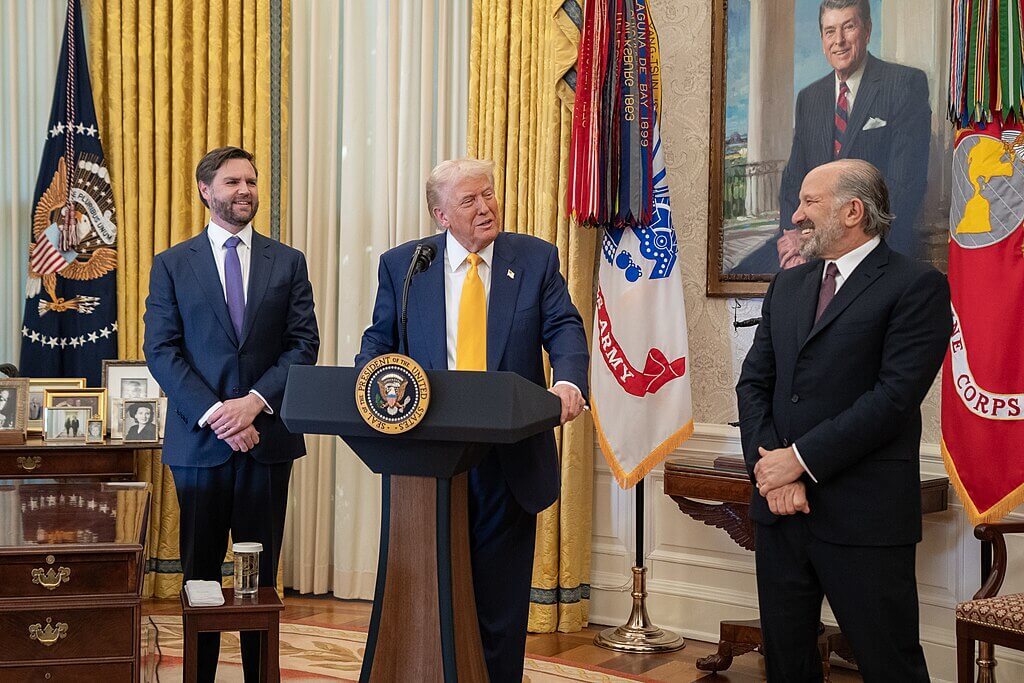
The U.S. arms industry is highly consolidated, specialized, and dependent on government contracts. Indeed, the largest U.S. military contractors are already effectively extensions of the state — and Commerce Secretary Howard Lutnick is right to point that out.
His suggestion in a recent media appearance to partially nationalize the likes of Lockheed Martin is hardly novel. The economist John Kenneth Galbraith argued for the nationalization of the largest military contractors in 1969. More recently, various academics and policy analysts have advocated for partial or full nationalization of military firms in publications including The Nation, The American Conservative, The Middle East Research and Information Project (MERIP), and The Seattle Journal for Social Justice.
While perhaps unexpected from the current administration, full or partial nationalization of the largest military contractors is a reasonable policy proposal worthy of serious debate. One benefit of some degree of public ownership is that it could significantly reduce the arms industry’s influence-peddling activities, particularly congressional lobbying. With a direct stake in a military firm, the government would have greater leverage to guide how a firm does business — like, for example, how much it spends on internal investment versus congressional lobbying.
Read the full article on Responsible Statecraft.








Community Adaptation for a Water Festival Without Clean Water