
More than 80 years after D-Day, the lessons of disposable gliders and temporary harbors remain relevant for sustaining operations under fire. In the Indo-Pacific, China’s anti-access/area-denial capabilities—including long-range missiles, maritime militias, and cyber operations—threaten conventional supply lines, leaving traditional logistics methods highly vulnerable.
Emerging aerospace technologies offer a potential answer. Autonomous cargo drones can deliver supplies rapidly and at scale, bridging the gap when vulnerable ports and bases are under attack and secure supply lines have yet to be established. Swarming approaches, which launch waves of inexpensive drones, could be used to overwhelm China’s defenses and impose attritional costs on its missile forces. Temporary logistics complement, rather than replace, conventional supply methods, enabling the transition from initial operations—when resupply is high risk—to sustained, traditional operations as greater control of the air and sea lanes is established.
Developing these capabilities will require Washington to work with commercial firms and streamline regulations for autonomous cargo aircraft. Encouraging private innovation, investing in scalable production, and integrating commercial systems into military planning will create the conditions necessary to sustain forces even when conventional supply lines are threatened, reinforcing deterrence and operational resilience in the region.
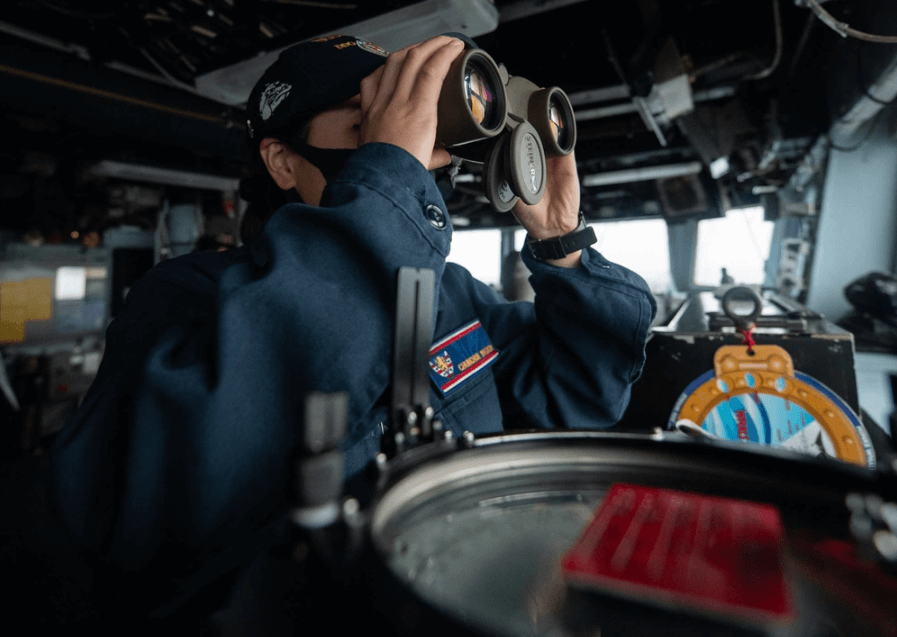
Header image: Ens. Chunchun Waskin scans the horizon on the bridge of guided-missile destroyer USS Barry (DDG 52) during routine underway operations. Photo credit: U.S. Navy photo by Mass Communications Specialist Molly Crawford via DVIDS; Public Domain.
Read the full article on Foreign Affairs.








Community Adaptation for a Water Festival Without Clean Water