
Dear Friend,
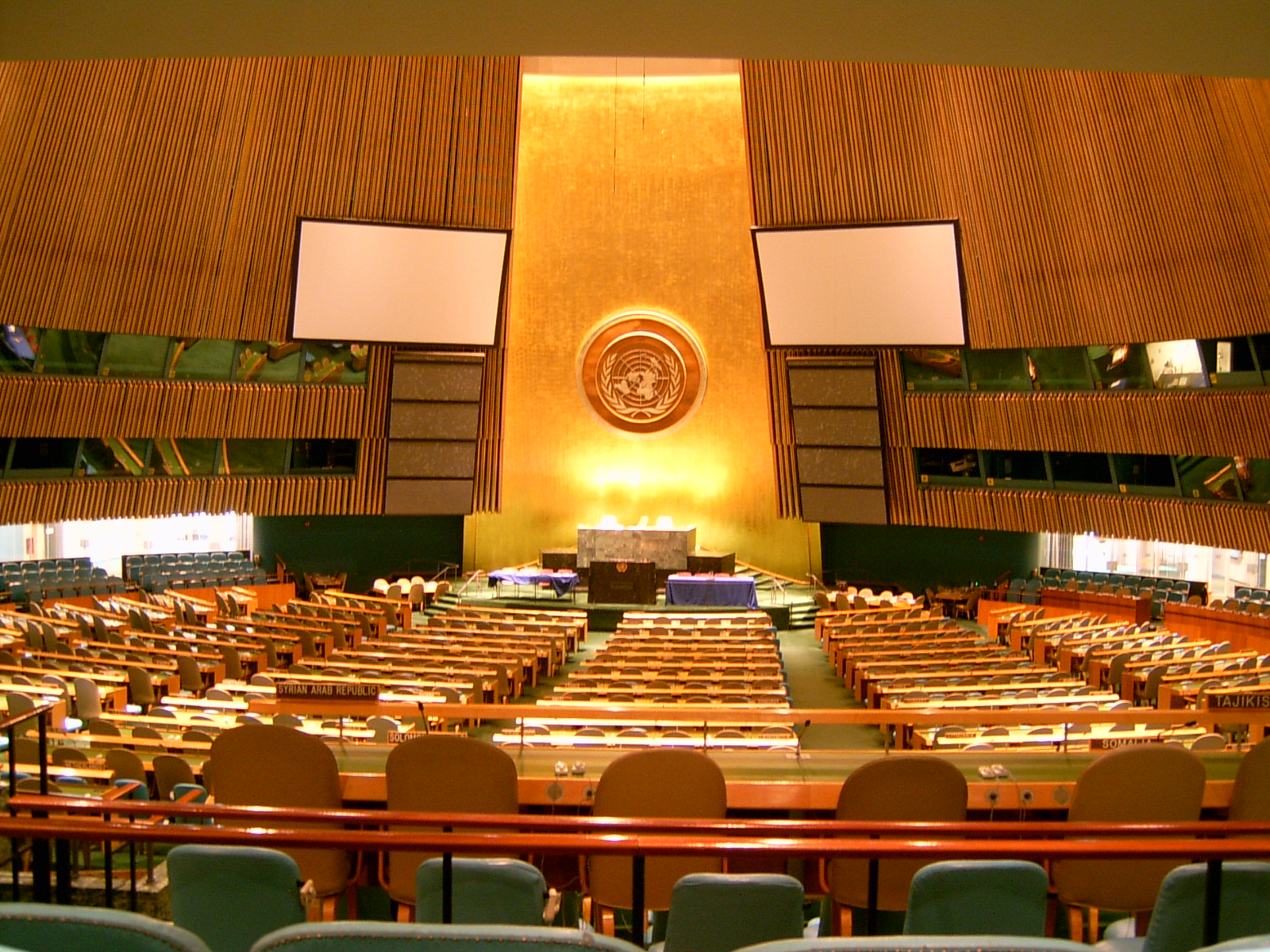
This newsletter goes to press as diplomats gather in New York for the 11th Review Conference on the Treaty on the Non-Proliferation of Nuclear Weapons (NPT). The goal, five years from the last conference, is to review implementation of the treaty and how to make further progress against its three pillars: disarmament, nonproliferation, and peaceful uses of nuclear technology. Most commentary leading up to this has focused on how to shore up the increasingly shaky foundations of these pillars. The key nuclear arms control treaty between Russia and the United States expired earlier this year, eliminating decades of constraints on two nuclear-armed heavyweights while China and North Korea build up their arsenals. With civilian nuclear facilities in Ukraine and Iran, both non-nuclear weapon states, at risk from conventional attacks by nuclear-armed Russia and the United States, the nonproliferation bargain looks more shopworn every day. Because of these severe pressures on the nuclear order, the work this community is doing to strengthen the principles and practices of nuclear security and non-proliferation is even more critical. Please be sure to read to the end for the full list of accomplishments, publications, and upcoming opportunities to join forces.
Warm wishes,
Christina
Director, International Nuclear Security Forum
Join the conversation on X: @INS_Forum
Follow INSF on LinkedIn here
Updates
FUNDING APPEAL: If you appreciate this newsletter, please consider a donation to ensure sustainability into the future. Donate here and specify where indicated that your gift is intended to support the INSF. Institutional funding for civil society’s nuclear security work is increasingly hard to come by, as many readers already know, and the International Nuclear Security Forum appreciates your support!
Nuclear Security News
Impact: Iran
Wall Street Journal
11 April 2026
Attack Near Iran’s Bushehr Nuclear Power Plant Targeted Air Defenses, Says Analyst
Strikes targeted air defense systems near Iran’s Bushehr nuclear power plant, according to an analyst, as the US-Israeli military campaign against Iran continued to escalate and expand its target set to include sites near critical nuclear and energy infrastructure.
Anadolu Agency
20 April 2026
Russia Completes Evacuation of Over 600 Employees from Iran’s Bushehr Nuclear Plant
Russian nuclear corporation Rosatom has completed the evacuation of its employees from the Bushehr Nuclear Power Plant in Iran, with more than 600 people brought to Russia since the start of military operations; only 20 volunteers remain at the plant site, with another 4 in Tehran.
The Hill
29 April 2026
Trump Dismisses Putin’s Offer of Help on Iran
U.S. President Donald Trump said Russian leader Vladimir Putin offered to help with “enrichment,” but that Trump wanted to end the war in Ukraine first. Russia recently discussed with Rafael Grossi, the head of the International Atomic Energy Agency, the possibility of removing Iran’s highly enriched uranium from the country.
Impact: The Russian Invasion of Ukraine
IAEA
17 April 2026
Update 347 – IAEA Director General Statement on Situation in Ukraine
The Zaporizhzhya Nuclear Power Plant temporarily lost all off-site power twice this week after its last remaining off-site power line was disconnected on two separate occasions. The plant relied on emergency diesel generators to maintain nuclear safety and security functions during the outage.
Weapons, Materials, and Facilities
Exchange Monitor
9 April 2026
NNSA Budget Increase Driven by Weapons Activities, No Nuclear Testing Line Item
The National Nuclear Security Administration’s biggest budget request yet for fiscal 2027 would include $27.4 billion for weapons activities, according to the Department of Energy’s budget justification document.
PBS
9 April 2026
This 1.9 Billion-Year-Old Bedrock Will Soon House the World’s 1st Permanent Nuclear Waste Site
After decades of construction, the world’s first facility for permanently disposing of spent nuclear fuel is set to begin operations in Finland, becoming a final resting place for tons of dangerous radioactive waste.
Santa Fe New Mexican
10 April 2026
Feds Release Draft of Environmental Review on Pit Production
The National Nuclear Security Administration may be one step closer to expanding plutonium pit production at a South Carolina site and Los Alamos National Laboratory in an effort to modernize the nation’s arsenal.
Security Culture
The Hill
7 April 2026
Nuclear Energy Regulators Roll Back Security Drill Requirements
The Nuclear Regulatory Commission has voted to no longer lead security drills at power plants, instead allowing companies to lead their own drills in the coming years. The commission decided to transition to company-led drills rather than agency-led ones to assess the nuclear energy fleet’s preparation for attacks.
Threats
Reuters
14 April 2026
North Korea Sharply Boosting Nuclear Weapons Capacity, IAEA Chief Says
North Korea has made “very serious” advances in its ability to produce nuclear weapons, with the probable addition of a new uranium enrichment facility and a rapid rise in activity at the Yongbyon complex.
CNN
22 April 2026
Deaths and Disappearances of Scientists Spark Federal Probe
At least 10 individuals connected to sensitive US nuclear and aerospace research have died or disappeared in recent years, prompting an FBI investigation and a House Oversight Committee probe.
Advanced Reactors
Idaho National Laboratory
8 April 2026
DOME, World’s First Nuclear Reactor Test Bed, Ready for Privately Developed Advanced Reactors
DOME is a first-of-its-kind microreactor test bed that will enable rapid development, testing and demonstration of privately developed advanced nuclear reactors.
Interesting Engineering
19 April 2026
US Firm’s Thorium-Based Nuclear Reactor Fuel Advances to Manufacturing
US-based Clean Core Thorium Energy and Canadian Nuclear Laboratories have announced an agreement to manufacture demonstration irradiation bundles of ANEEL fuel — a thorium-HALEU blend designed for CANDU and pressurized heavy-water reactors — advancing the fuel from validated models to an engineered, fleet-compatible design ready for regulatory review.
U.S. Department of Energy
23 April 2026
The DOE’s DPA Nuclear Fuel Cycle Consortium launched a “Nuclear Dominance — 3 by 33” campaign, enlisting more than 90 industry partners across the nuclear industrial base to catalyze a secure domestic fuel supply chain, accelerate advanced reactor deployment, and close the fuel cycle by 2033.
Materials Minimization
U.S. Department of Energy
9 April 2026
NNSA Removes High-Risk Cesium from South Carolina, Enhancing National Security
In a major step forward for national security, the U.S. Department of Energy’s National Nuclear Security Administration has successfully removed all high-risk cesium-137 material from South Carolina, making it the 13th state to become free of it.
Analysis and Opinion
RealClear Defense
3 April 2026
Blocking Iran’s Other Option: A Plutonium Bomb
While the US and Israel have focused on destroying Iran’s uranium enrichment capabilities, they have overlooked the roughly 210 tons of spent nuclear fuel at Iran’s Bushehr reactor, which contains enough plutonium for more than 200 nuclear weapons.
Council on Foreign Relations
6 April 2026
Why U.S. Allies in Asia Are Chasing Nuclear Energy—And Eyeing Nuclear Weapons
The 2026 Iran war’s disruption to Gulf energy supplies is accelerating debates in Japan and South Korea about expanding nuclear power, while the Trump administration’s perceived indifference to Asian allies has prompted serious discussions in both Tokyo and Seoul about acquiring their own nuclear weapons.
Foreign Policy
7 April 2026
Preventing an Iranian Bomb Is Only Getting Harder
The killing of Supreme Leader Ali Khamenei — who had long restrained Iran’s nuclear weapons ambitions through a hedging strategy — has removed the key brake on Iran pursuing a bomb, with his hardline successors in the IRGC now far more likely to conclude that nuclear weapons are the only reliable deterrent against future regime-change efforts.
Bulletin of the Atomic Scientists
18 April 2026
Taking a Sledgehammer to the Nuclear Nonproliferation Regime
The Trump administration has undermined the nuclear nonproliferation regime by simultaneously going to war against Iran over its enrichment program while granting South Korea and Saudi Arabia permission to pursue the same capabilities. This contradictory approach signals to the world that nuclear rules are selectively enforced, eroding the credibility of the entire nonproliferation architecture at a moment of acute global nuclear risk.
Eurasia Review
22 April 2026
Civilian Nuclear Expansion in the Indo-Pacific: Energy Security or Latent Proliferation?
The closure of the Strait of Hormuz has accelerated interest in civilian nuclear programs across the Indo-Pacific, but the line between peaceful and military nuclear uses — particularly as AUKUS moves forward — is becoming increasingly blurred.
Member Organization Announcements and Updates
International Institute for Strategic Studies
Daniel Salisbury published an Online Analysis piece about The growing manipulation of civil nuclear risks.
Andrew C. Winner published a Survival article about The Second Death of Arms Control.
Nathan Orlando published a Survival article titled Salvific User Error: A Classical Take on AI and Nuclear Deterrence.
Another episode of the Arms Control Primer podcast has been published about Brazil.
Nuclear Threat Initiative
NTI President and CEO Christine Wormuth, Vice President Scott Roecker, and Deputy Vice President Eric Brewer from NTI’s Nuclear Materials Security program participated in a webinar covering the ramifications of the Iran conflict for international security and options to mitigate risks.
NTI convened a private roundtable on April 2 with 25 experts and officials to examine the challenges and opportunities for advancing dialogue between the U.S. and China. The discussion featured Dr. Tianjiao Jiang, a Chinese expert on nuclear and emerging technology policy, who spoke on ‘Issues and Obstacles for U.S.-China Engagement on Nuclear and AI Dialogue.’
Simon Thorpe warns in Risky Business that the most urgent post-war nuclear challenge is not dismantling Iran’s enrichment infrastructure but accounting for and securing its 440+ kilograms of highly enriched uranium, which may have been dispersed to unknown locations before or during the conflict.
Nickolas Roth makes the case in Risky Business that region-specific security architectures and cooperative frameworks are increasingly critical to managing nuclear risks.
The Stimson Center
Senior Fellow and International Nuclear Security Forum director Christina McAllister published a policy paper, “Securing the Future: Building the US Nuclear Security Workforce Pipeline,” presenting findings and recommendations from research funded by the National Nuclear Security Administration’s Office of Radiological Security.
The Stimson Center hosted a public fireside chat on global WMD proliferation challenges with Global Affairs Canada senior officials Troy Lulashnyk and Timothy Edwards, moderated by Stimson President and CEO Brian Finlay.
Vienna Center for Disarmament and Non-Proliferation
VCDNP experts Gaukhar Mukhatzhanova and Sanaa Alvira have prepared a series of briefs for diplomats on the issues that are likely to dominate debates at the 11th Treaty on the Non-Proliferation of Nuclear Weapons (NPT) Review Conference (RevCon).
In a preview of the likely Russian stand at the 2026 NPT Review Conference, Dr. Nikolai Sokov writes that Russia arrives at the RevCon in a visibly stronger state than was the case a year earlier.
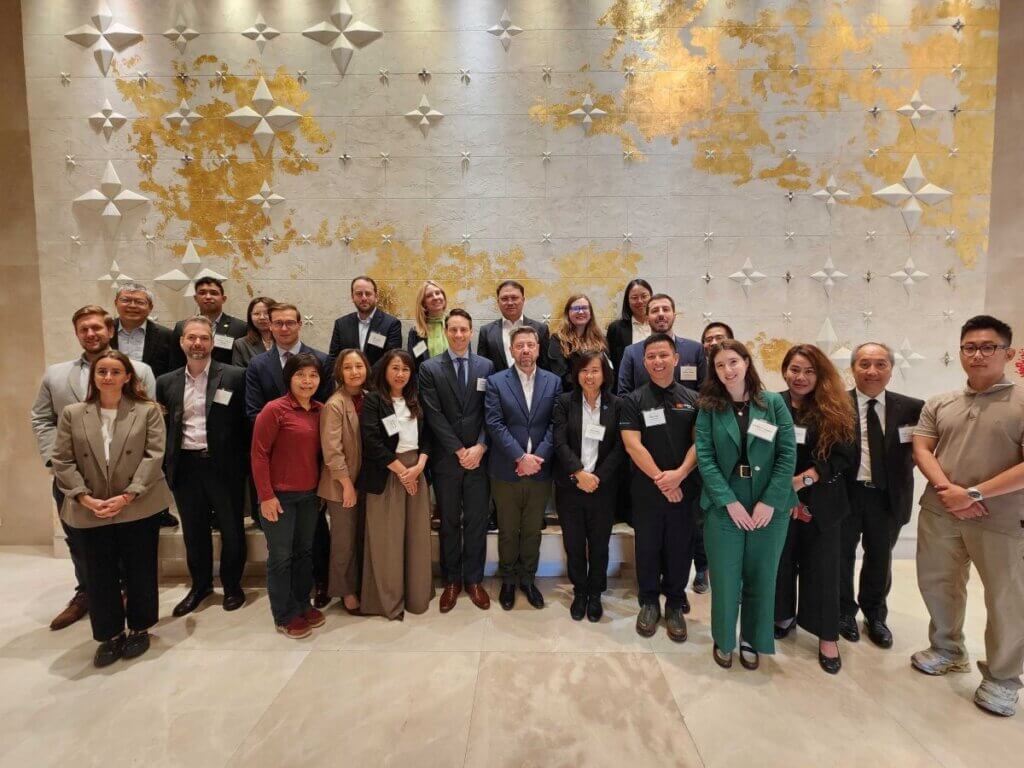
At the 2026 annual VCDNP diplomatic workshop, diplomats and senior officials discussed a wide range of nuclear non-proliferation and disarmament issues against the backdrop of a strained international order, norms, and institutions. Following the workshop, the VCDNP held a reception in celebration of its 15th anniversary.
On 5 February, the Treaty between the United States and the Russian Federation on Measures for the Further Reduction and Limitation of Strategic Offensive Weapons (New START) expired. In an interview for the Press Agency of the Slovak Republic, Senior Research Associate Federica Dall’Arche reflects on the implication of this expiry for the global nuclear stability.
The Space Norms Atlas provides an overview of 150 emerging norms for space security, based on 1,200 data points from 13 years of UN processes on the prevention of an arms race in outer space. It supports States in developing international instruments to preserve stability and prevent escalation in space.
The VCDNP, the Austrian Foreign Ministry, the Permanent Mission of Uruguay, and the Fondation pour la recherche stratégique hosted a workshop on the Hague Code of Conduct against Ballistic Missile Proliferation (HCoC) and its role within the international arms control and non-proliferation architecture.
In a co-authored commentary for the European Leadership Network (ELN), VCDNP Senior Research Associate Federica Dall’Arche reflects on the President Trump’s intensified public calls for greater US control over Greenland.
As a part of the Young Women and Next Generation Initiative, the VCDNP hosted a webinar on the legal framework governing dual-use export controls. The event featured Dr. Ana Sánchez Cobaleda, Legal Advisor for the EU P2P Export Control Program for Dual Use Goods and Assistant Professor at the University of Barcelona.
World Institute for Nuclear Security
In cooperation with the Kenya Nuclear Regulatory Authority and with the generous support of Global Affairs Canada, WINS conducted a tabletop exercise for women from the African region in Nairobi, Kenya, focusing on fields where women remain underrepresented: transport security, cybersecurity and advanced reactors.
On March 13, the Irradiation Industries Association of India (IIAI) and WINS hosted a technical exchange meeting on topics including security fundamentals and best practice, cybersecurity and security-by-design for gamma irradiation facilities.
WINS Communication and Learning Manager Suzanne Carlson presented at the IAEA Conference on the Safe and Secure Transport of Nuclear and Radioactive Material on Sustainable Capacity Building for Secure Transport of Radioactive Sources in the Southeast Asia Region.
WINS launched its latest benchmarking and evaluation tool, Herramienta de Autoevaluación y Plan de Acción: Fortaleciendo entornos organizacionales inclusivos y equitativos en la seguridad física nuclear en América Latina. This toolkit is designed to support organizations in the nuclear sector to evaluate their level of maturity and develop a plan to strengthen organizational culture, leadership, human resources management. WINS held an online workshop exploring current insider threat mitigation practices in the radioactive source security community.
Individual Member Updates
Tahar Azad published several new analyses:
- 22 April 2026: The Anthropology of Nuclear Weapons: Rethinking Deterrence through Culture, Identity, and Power
- 20 April 2026: Custody, Not Compliance: The Contest over Iran’s Enriched Uranium and the Future of Peaceful Nuclear Rights under the NPT
- 18 April 2026: The Poseidon Effect: How Nuclear Drones Are Redrawing South Asia’s Deterrence Architecture
- 14 April 2026: Ethics of War and Nuclear Security in the US–Israel Campaign Against Iran
- 16 April 2026: Iran’s Missile-Drone Campaign and Its Implications for the United States’ Deterrence
- 10 April 2026: How China and Russia keep Iran fighting — without firing a shot
Bahram Ghiassee was interviewed on Voice of America Farsi:
- 30 March 2026: Iran’s Uranium Enrichment Programme and the fate of highly enriched stockpile,
- 12 April 2026: The whereabouts of the 440kg stockpile of 60% enriched uranium, and approaches to removing it from Iranian control
Artem Lazarev notes that the UN Office of Drugs and Crime (UNODC) convened a number of events in March and April:
- On 23 March 2026, UNODC conducted a Canada-funded online workshop for selected Spanish‑speaking countries in Latin America and the Caribbean on the International Convention for the Suppression of Acts of Nuclear Terrorism (ICSANT).
- On 25 March 2026, UNODC held the inaugural meeting of ICSANT competent authorities and liaison points in Vienna. The event was funded by the European Union (EU).
- On 27 March 2026, UNODC held a high-level seminar for Geneva-based diplomats on ICSANT, funded by the USA.
- On 31 March-1 April, UNODC conducted a national visit to Eswatini to support the country’s adherence to ICSANT. The visit was funded by the European Union (EU).
- On 8 April 2026, UNODC conducted EU-funded high-level online consultations with representatives of Senegal on facilitating adherence to, and implementation of, ICSANT.
Mycle Schneider writes that the World Nuclear Industry Status Report (WNISR) has gone live with a major upgrade of its interactive visualization of the world’s nuclear energy reactors. Want to know how many nuclear power reactors operate in Iran? What company provided the Barakah plant in the United Arab Emirates? Who is building a nuclear power plant in Egypt? Answers are just a few clicks away.
Opportunities
Summer Study
UC Institute on Global Conflict and Cooperation (IGCC), La Jolla, California
Public Policy & Nuclear Threats (PPNT) Boot Camp 2026
Now accepting applications for a summer workshop-in-residence at IGCC focused on nuclear policy, nonproliferation, safeguards, and strategic analysis. Features lectures, discussions, and debates with distinguished researchers, academics, policy officials, and operational specialists from leading universities, the national laboratories, international organizations, and government agencies. Mid-career professionals apply by June 5.
Professional Development
World Institute for Nuclear Security, Online
Enabling the Next Generation of Radiological Security Specialists
We’re bringing together experts and early career professionals for an engaging online roundtable discussion focused on knowledge sharing, mentorship, and professional development.
Workshop
World Institute for Nuclear Security, Online
Operational Experience with Drones in Nuclear Security
Participants will discuss best practices for integrating drones into existing security systems at nuclear facilities, the technological and regulatory enablers required for successful implementation, and the future potential of drones as an effective tool in ensuring the secure and efficient operation of nuclear facilities worldwide. Furthermore, participants will have the chance to better understand how drones can be part of adversary capabilities and how the nuclear sector has responded to these evolving threats.
Conference
Nuclear Energy Innovation Summit for Africa, Kigali, Rwanda
Nuclear Energy Innovation Summit on Africa 18-21 May, 2026
The summit, the second iteration of the event, is organized in collaboration with leading international and regional partners, including the International Atomic Energy Agency, the United Nations Economic Commission for Africa, the Nuclear Energy Agency, the World Nuclear Association and World Nuclear Exhibition.
Job
ANSER, Washington, DC
Nuclear Treaties Subject Matter Expert (SME)
Serve as a primary advisor to Air Force leadership on nuclear treaty requirements, supporting policy development, compliance activities, and strategic engagement across the Department of the Air Force, Department of Defense, and interagency community.
Job
UNIDIR, Geneva, Switzerland
Space Security Researcher
Conduct research and analysis and implement project activities related to a wide range of space security related developments (including, but not limited to the space security governance and the space security implications of emerging technologies). Closes 6 May 2026.
Job
European Union Joint Research Centre, Europe
Project Officer, Security Research
A junior policy and research role working on security research including dual-use technology, CBRN threats, and resilience against weapons-related risks at the EU’s Joint Research Centre — directly relevant to nuclear and radiological security policy. Closes 8 May 2026.
Job
Stockholm International Peace Research Institute, Solna, Sweden
Research Assistant, Weapons of Mass Destruction Programme
A junior policy and research role assisting the WMD Programme’s research efforts on nuclear, chemical and biological weapons, as well as outer space capabilities. Closes 22 May 2026.
Job
UNIDIR, Geneva, Switzerland
Research Assistant, Space Security
A junior policy and research role supporting the Space Security Programme with research, digital platforms, and program coordination. Closes 6 May 2026.
Call for Case Studies
World Institute for Nuclear Security, Vienna, Austria
Women Advancing Nuclear Security
We invite you to contribute to an upcoming publication highlighting real-world success stories of women advancing gender equality, diversity, and inclusion in nuclear security. We’re looking for practical, story-driven case studies that demonstrate action and impact, not just policies.




Community Adaptation for a Water Festival Without Clean Water