
Dear Friend,
Nuclear security and nonproliferation implications from U.S. and Israeli operations against Iran dominate our March newsletter. As many of these stories point out, a nuclear weapons state has once again attacked a non-nuclear weapon state. Iran reportedly mulls withdrawing altogether from the Treaty on the Nonproliferation of Nuclear Weapons, raising questions about global nonproliferation architecture. U.S. and Israeli suspicions about Iran’s nuclear program are now focused on the ultimate fate of more than 400 kilograms of highly enriched uranium and nuclear enrichment centrifuges. Just three years after Russia’s shocking seizure and occupation of the Zaporizhzhya nuclear power plant in Ukraine, civilian nuclear facilities are again caught in the crossfire of a major conflict. This time, Russian staff at Bushehr find themselves on the frontlines. Additionally, our review suggests the conflict induced oil shock is increasing interest among many states in nuclear energy, even as pressure increases on global nonproliferation norms.
Warm wishes,
Christina
Director, International Nuclear Security Forum
Join the conversation on X: @INS_Forum
Follow INSF on LinkedIn here
Updates
FUNDING APPEAL: If you appreciate this newsletter, please consider a donation to ensure sustainability into the future. Donate here and specify where indicated that your gift is intended to support the INSF. Institutional funding for civil society’s nuclear security work is increasingly hard to come by, as many readers already know, and the International Nuclear Security Forum appreciates your support!
Nuclear Security News
Impact: Israeli, U.S. Strikes on Iran
Bloomberg
8 March 2026
Iran War: US Mulls Idea of Special Operation to Seize Tehran’s Uranium
President Donald Trump is weighing the option of deploying special forces on the ground to seize Iran’s near-bomb-grade uranium, as officials grow increasingly concerned the stockpile may have been moved, according to three diplomatic officials briefed on the matter.
Reuters
9 March 2026
Much of Iran’s Near-Bomb-Grade Uranium Likely to Be at Isfahan, IAEA’s Grossi Says
IAEA Director General Rafael Grossi stated that the agency assesses that just over 200 kilograms of 60-percent-enriched uranium is underground at Isfahan — enough material for around five nuclear warheads if further enriched to weapons grade.
Wall Street Journal
15 March 2026
Araghchi Says Iran Has No Plans to Retrieve Highly Enriched Uranium
Iranian Foreign Minister Abbas Araghchi stated that Iran has no plans to retrieve its stockpile of highly enriched uranium stored at the underground Isfahan facility, pushing back against U.S. assertions about the material’s status and location.
Reuters
18 March 2026
IAEA does not know status of new Iranian enrichment facility in Isfahan, Grossi says
Iran informed the U.N. nuclear watchdog of the new facility in June and agency chief Grossi said his inspectors were in Isfahan later that month to see it but had to cancel the visit when the nuclear complex there was struck at the beginning of the 12-day war with Israel.
Al Jazeera
21 March 2026
Iran Says US and Israel Attacked Natanz Nuclear Facility
Iran confirmed that U.S. and Israeli forces conducted further strikes against the Natanz nuclear facility, targeting what officials described as remaining infrastructure at the enrichment complex damaged in earlier rounds of the conflict.
Politico EU
22 March 2026
Tehran Strikes Near Israeli Nuclear Center as Trump Threatens Attacks on Iranian Power Plants
Iran launched retaliatory strikes near Israel’s Negev Nuclear Research Center as President Trump threatened to order attacks on Iranian power plants if Tehran did not cease hostilities, marking a sharp escalation in warnings on both sides regarding nuclear-adjacent infrastructure.
Fortune
27 March 2026
Israel conducted further strikes on Iranian nuclear facilities as Tehran vowed that its retaliation would no longer be calibrated or proportional, with Iranian officials signaling a readiness to escalate strikes on Israeli and Gulf infrastructure significantly beyond previous patterns.
Times of Israel
27 March 2026
Iran’s Khondab Heavy Water Production Plant No Longer Operational, IAEA Says
The IAEA confirmed that Iran’s Khondab heavy water production plant is no longer operational following military strikes, removing a facility associated with Iran’s plutonium production pathway cited as a concern in previous nonproliferation assessments.
Al Jazeera
28 March 2026
As War Rages, Iranian Politicians Push for Exit from Nuclear Weapons Treaty
Iranian politicians are pushing to exit the country from the Treaty on the Non-Proliferation of Nuclear Weapons as the United States and Israel escalate attacks on civilian nuclear sites, with members of parliament arguing that remaining in the NPT has provided no security benefit.
Reuters
28 March 2026
Rosatom Says Situation at Iran’s Bushehr Nuclear Power Plant Keeps Deteriorating
Rosatom warned that the security situation at Iran’s Bushehr nuclear power plant continues to worsen, with ongoing strikes creating mounting risks for the operational reactor and the remaining Russian personnel still on site.
Impact: The Russian Invasion of Ukraine
Reuters
13 March 2026
Rosatom Boss Warns of Increased Military Risks Around Zaporizhzhia Nuclear Plant
The head of Russia’s state nuclear corporation Rosatom warned of increased military risks around Ukraine’s Zaporizhzhia nuclear power plant due to intensifying combat in the area, citing a rise in artillery strikes, drone attacks, and mortar fire near the facility.
World Nuclear News
13 March 2026
IAEA and Russia Discuss Zaporizhzhia Nuclear Plant Situation
IAEA Director General Rafael Mariano Grossi described talks with Rosatom Director General Alexei Likhachev in Moscow as comprehensive and timely, covering the current safety, security, and safeguards situation at Zaporizhzhia Nuclear Power Plant, including IAEA-brokered ceasefires enabling repairs to the plant’s back-up power line.
IAEA
26 March 2026
Update 345—IAEA Director General Statement on Situation in Ukraine
Zaporizhzhya Nuclear Power Plant lost connection to its main off-site power line, leaving it reliant on a single backup power line, as Director General Rafael Mariano Grossi initiated discussions with the Russian Federation and Ukraine to secure a local ceasefire for urgent repairs.
Security Culture
E&E News
2 March 2026
NRC Weighs Slashing Inspections as Part of a Wider Agency Shake-Up
The U.S. Nuclear Regulatory Commission is nearing final plans to cut nuclear security and safety inspections and form a dedicated office for licensing advanced reactors as part of a broader reorganization pushed by the Trump administration.
National Today
21 March 2026
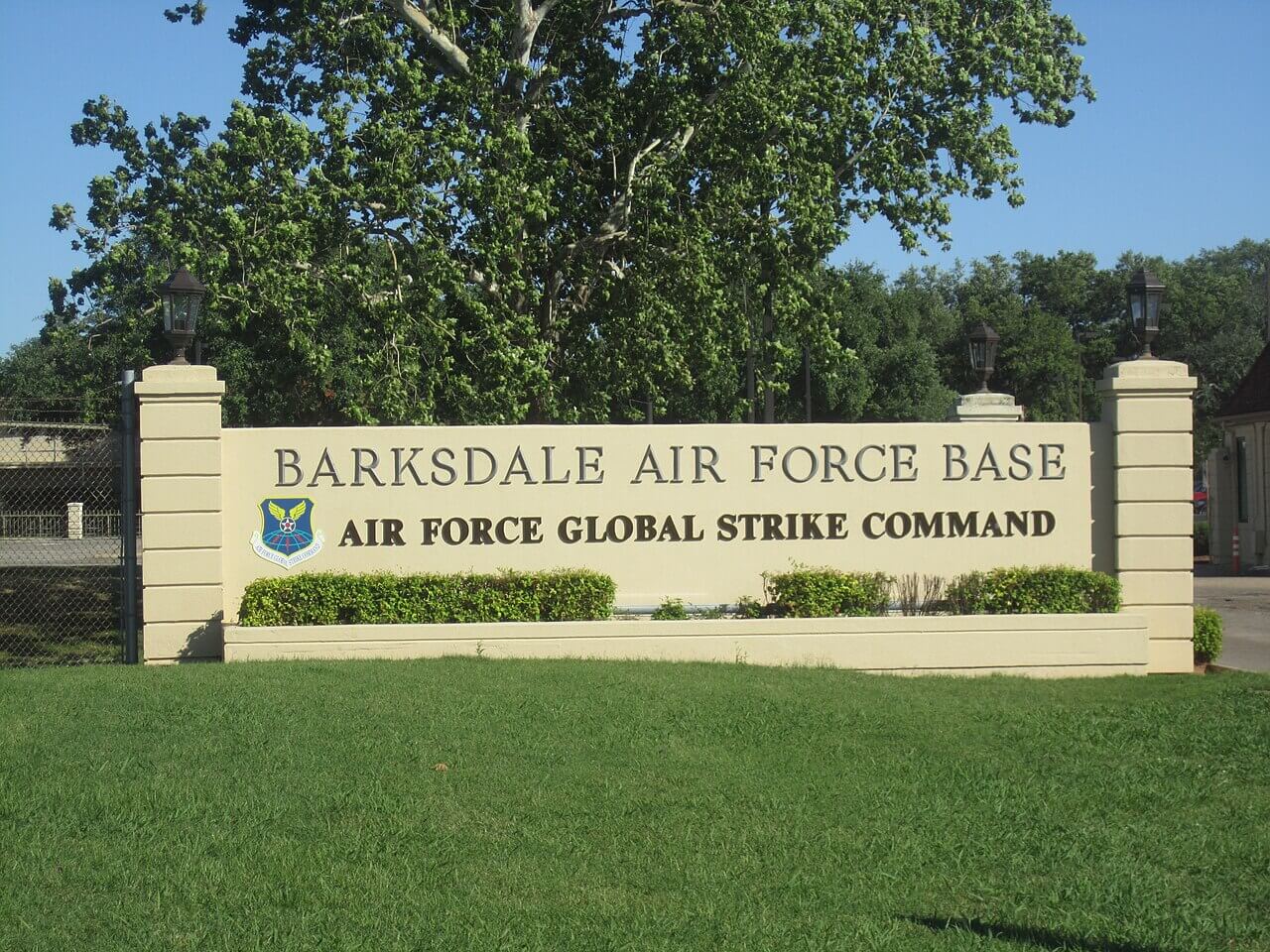
Mysterious Drones Swarm US Air Force Base Home to Nuclear Bombers
A swarm of unidentified drones was detected over a U.S. Air Force base that houses nuclear-capable bombers, prompting a security alert and raising concerns about surveillance of nuclear delivery assets during the ongoing conflict with Iran.
Emerging Technologies
Fast Company
13 March 2026
Anthropic’s removal from U.S. government contracts is threatening to disrupt critical AI safety research in the nuclear sector, where the company had been working on projects to help monitor nuclear facilities and analyze safety data.
International Architecture
Al Jazeera
2 March 2026
France to Increase Nuclear Warheads, Lend Nuclear Aircraft to Europe Allies
President Macron’s advanced deterrence framework will be a nuclear-security relationship with key allies, distinct from existing NATO arrangements, under which France plans to increase its warhead count and extend its nuclear-capable aircraft to partner nations.
World Nuclear News
23 March 2026
Vietnam, Russia Sign Agreement on New Nuclear Plant
Vietnam and Russia signed an intergovernmental agreement covering the construction of a new nuclear power plant, signaling continued Russian nuclear export activity even amid the conflict in Iran and Moscow’s broader geopolitical isolation.
Advanced Reactors
New Atlas
6 March 2026
Natrium Nuclear Plant Construction Gets Green Light
The United States has taken a step toward a civilian nuclear renaissance as the Nuclear Regulatory Commission has given the go-ahead for TerraPower’s Natrium Gen IV reactor to begin construction — the first such approval for a U.S. reactor in a decade.
Reuters
24 March 2026
Low-Enriched Uranium Could Offer Faster Deployment for Small Reactors
Industry analysts and reactor developers indicate that designing small modular reactors around low-enriched uranium fuel could accelerate licensing and deployment timelines by avoiding new regulatory hurdles associated with higher-assay enriched fuel preferred by some advanced designs.
Transport
IAEA
23 March 2026
More than half of all thefts of nuclear and other radioactive material reported to the Incident and Trafficking Database (ITDB) since 1993 occurred during authorized transport, with the share rising to nearly 70% in the past decade.
Analysis
The Guardian
4 March 2026
US-Israel Strikes on Iran Nuclear Program Could Backfire
Nuclear experts contend that the U.S.-Israeli campaign risks backfiring by driving Iran’s regime toward building a secret bomb. Military force can set back enrichment but cannot eliminate Iran’s accumulated nuclear expertise or resolve to weaponize.
New York Times
7 March 2026
There Is One Crucial Reason We’re Talking About Boots on the Ground
W.J. Hennigan and Massimo Calabresi argue that Iran’s cache of highly enriched uranium constitutes the central unresolved problem of the conflict. The stockpile reality is driving a risky ground operation but may be the only way to prevent the material from falling into dangerous hands.
Arms Control Association
10 March 2026
The U.S. War on Iran: New and Lingering Nuclear Risks
Kelsey Davenport argues that although strikes can set back Iran’s nuclear infrastructure, military force cannot eliminate Tehran’s long-term proliferation risk because the country retains the nuclear expertise and likely the key materials necessary for building a bomb.
Responsible Statecraft
11 March 2026
What Do We Actually Know About Iran’s Nuclear Program? Not Much.
Samuel Hickey argues that the loss of IAEA access since mid-2025 means the international community lacks the verifiable knowledge about uranium locations and centrifuge capacity that any serious Iran policy would require.
CSIS
13 March 2026
Trump May Seize Iran’s Nuclear Stockpile: Why Airstrikes Alone Aren’t Enough
Joseph Rodgers argues that the operation to seize Iran’s stockpile of near-weapons-grade enriched uranium would require a significant ground presence. Failure to neutralize the uranium stockpile through air power means the fundamental proliferation problem remains unsolved.
Wall Street Journal
15 March 2026
If Seizing Iran’s Nuclear Material Is the Endgame, Here’s What It Would Take
Michael R. Gordon argues that as the Trump administration contemplates seizing Iran’s stockpile, military planners are confronting enormous logistical and security challenges. The operational requirements make this one of the most complex potential missions in modern military history.
ProPublica
20 March 2026
DOGE Goes Nuclear: How Trump Invited Silicon Valley Into America’s Nuclear Power Regulator
ProPublica’s investigation shows that the Trump administration has invited DOGE operatives and Silicon Valley figures into the Nuclear Regulatory Commission as part of a broader deregulatory push, raising alarms about the independent oversight that is the essential safeguard to preventing nuclear accidents.
New America
23 March 2026
The Maximalism Trap: How All-or-Nothing Diplomacy Undermines Nuclear Security
Amy J. Nelson argues that maximalist demands have consistently foreclosed diplomatic solutions that could have provided meaningful limits on proliferation risk. All-or-nothing positions have produced the more dangerous Iran with stronger domestic incentives for weaponization.
Truthout
26 March 2026
The US-Israeli War on Iran Is Incentivizing Nuclear Proliferation
Jon Letman argues that the double standard of two nuclear-armed states attacking a non-nuclear armed country has fundamentally undermined the logic of the Non-Proliferation Treaty, giving states that have refrained from pursuing weapons compelling new reasons to reconsider that restraint.
The National Interest
26 March 2026
Artificial Intelligence Needs Nuclear Power and Allied Cooperation
Kayla T. Orta argues that the extraordinary power demands of large-scale artificial intelligence infrastructure make nuclear energy strategically essential, and that the U.S. and its allies must coordinate their civilian nuclear expansion to ensure reliable low-carbon baseload power.
Bulletin of the Atomic Scientists
29 March 2026
Analysis: Iran Likely Transferred Highly Enriched Uranium to Isfahan Before the June Strikes
François Diaz-Maurinargues that based on the timeline of the June 2025 strikes and Iran’s known material management practices, Tehran very likely moved significant quantities of highly enriched uranium to the underground Isfahan facility before U.S. attacks on Fordow and Natanz.
The Independent
30 March 2026
Trump’s Iran War: What It Means for Iran’s Nuclear Weapon Capabilities
Nuclear physicist Radhika Sanghani argues that while the U.S.-Israeli military campaign has damaged Iran’s enrichment infrastructure, Iran’s surviving hardliners now have both the motive and potentially the residual capability to pursue a nuclear weapon as the only credible survival guarantee.
Member Organization Announcements and Updates
Stimson Center
Richard Cupitt, Christina McAllister, and Barbara Slavin argue that the U.S.-led campaign against Iran has neglected planning to secure Iran’s stocks of deadly WMD-relevant materials that could fall into the hands of dangerous non-state actors.
International Institute for Strategic Studies
Zuzanna Gwadera and Alex Bollfrass published an online analysis piece on the French nuclear deterrence: Vive l’évolution arguing that Emmanuel Macron’s speech opens up avenues for European cooperation but that questions remain about follow-through.
Johannes R. Fischbach and Zuzanna Gwadera published an online analysis piece titled: As its Orka programme progresses, questions remain for Poland’s deep strike ambitions, about Poland’s selection of the A26 submarine.
Michael Carpenter, Alex Bollfrass, Daniel Salisbury and Meia Nouwens provided a wider view on the US-Israel campaign in Iran: The US–Israel campaign in Iran – further assessments
Morgan Michaels, Daniel Salisbury and Evan A. Laksmana published a research paper on Simulating Southeast Asia’s Nuclear-Security Crisis Responses which analyses how Southeast Asian states might respond to a regional nuclear-security crisis.
A Strategic Comment was published about the French nuclear deterrent, marking a significant evolution in French strategic thinking.
New episodes of the Arms Control Primer podcast were published about non-nuclear-weapon states: Kazakhstan and Belarus
Individual Member Updates
Dr Bahram Ghiassee talked about his recently published book, “Radiological Terrorism: A Global Threat” discussing why the threat is increasing and what needs to change in international law to address that threat.
Trevor Findlay discussed the anniversary of the Fukushima disaster for Australia’s Special Broadcasting Service (SBS).
Dr Bahram Ghiassee published in The Telegraph: ‘The no-go areas US bombers must avoid to stop Iran conflict going nuclear’
Dr. Tahir Azad published an analysis in Irregular Warfare: “The Strategic Use of Drones in Pakistan–India Irregular Warfare.”
Dr. Artem Lazarev from UN Office on Drugs and Crime (UNODC) shared that UNODC conducted a regional criminal investigation and mock trial on the International Convention for the Suppression of Acts of Nuclear Terrorism (ICSANT) for Spanish-speaking States parties from South America.
Steve Cimbala completed a paper on arms control: Nuclear Arms Control: Aspirational Need and Operational Challenge.Contact Steve for a copy.
Opportunities
CONFERENCE
University of Rome Tor Vergata, Rome, Italy
28 September – 3 October 2026
Non-Conventional Safety and Security Challenges in a Changing World | 4th Edition | 2026. The SICC Series – CBRNe Conference 2026 builds upon the success of its previous editions to strengthen the scientific, institutional, and operational dialogue on non-conventional safety and security.
FELLOWSHIP
Institute of Current World Affairs, Remote / Field
30 April 2026
The Rydell-Frisa Disarmament Education Fellowship is a two-year independent writing and research fellowship for outstanding professionals under age 36 with a strong interest in nuclear disarmament. The fellow will examine the impact of disarmament education globally and make recommendations for strengthening the field.
FELLOWSHIP
Andrew Carnegie AI–Nuclear Policy Accelerator / Institute for Security and Technology, Bay Area, CA
A new practitioner-focused initiative designed to strengthen decision-making at the intersection of artificial intelligence and nuclear policy. The Accelerator brings together practitioners, researchers, and policymakers to develop practical tools and frameworks for governing the use of AI in nuclear contexts.
FELLOWSHIP
Arms Control Negotiation Academy (ACONA), International (boot camps)
May 2026
A 12-month part-time fellowship for academics and practitioners with 3–5 years of professional experience in arms control, nuclear issues, negotiation, or international security. The program consists of three intensive one-week boot camps and collaborative multilateral research groups.






Community Adaptation for a Water Festival Without Clean Water