
Editor’s Note: Stimson’s Myanmar Project seeks a variety of analytical perspectives on issues relating to Myanmar’s civil war, domestic politics, foreign relations, and other topics. Aye Lei Tun is a PhD candidate at McMaster University deeply immersed in the study of civil society organizations in Myanmar and Thailand who has conducted extensive fieldwork as part of research for her ongoing dissertation.
By Pamela Kennedy, Deputy Director, East Asia Program
The February 2021 military coup in Myanmar triggered an immediate and violent crackdown on pro-democracy civil society organizations (CSOs).1Independent Research Network, “Oppression and Opportunity: Prospects for the Democratic Role of Civil Society Organisations in Post-Coup Myanmar, Progressive Voice Myanmar, October 2022, https://wp.progressivevoicemyanmar.org/wp-content/uploads/2023/07/Democratic-Role-of-CSOs-in-Post-Coup-Myanmar-IRN.pdf. Organizations working on human rights, gender justice, labor, and ethnic issues became targets of repression, with many forced to shut down, go underground, or flee abroad. 2Kyaw Kyaw, “Laws as Weapons of Oppression: Challenges and Resilience of Myanmar Civil Society in the Post-Coup,” In Defiance, Civil Resistance and Experiences of Violence under Military Rule in Myanmar, ed. Carine Jaquet (Bangkok: Institut de recherche sur l’Asie du Sud-Est contemporaine, 2024). https://books.openedition.org/irasec/10213?lang=en and Pandita Development Institute, “Myanmar’s Civic Space Shrinking or Closing? Uncovering Coping Mechanisms of Local Civil Society in Post-Coup Myanmar,” 2021, https://idl-bnc-idrc.dspacedirect.org/bitstream/handle/10625/60779/da11c3fb-a80c-4a05-af9e-240c7708899f.pdf. In the coup’s early months, transnational networks — including international NGOs, donor agencies, diaspora groups, and solidarity movements — acted as lifelines by providing emergency funding, digital security, advocacy platforms, and relocation support, much of which was made possible through the reprogramming of funds originally allocated for other activities, including COVID-related initiatives.
In Myanmar, civil society encompasses a wide spectrum of organizations, from humanitarian and service-delivery groups to advocacy-oriented networks that promote human rights, democracy, and social justice. These diverse actors together form the backbone of civic participation, linking communities to broader political and social processes. However, since the coup, this space has dramatically contracted. Humanitarian groups face intense scrutiny, while advocacy-oriented CSOs confront existential risks. The boundaries between humanitarian, developmental, and political work have blurred as organizations are forced to navigate survival within an authoritarian and conflict-ridden environment.
More than four years later, international attention and funding have declined as global priorities shift elsewhere.3Adelina Kamal, Naw Hser Hser, and Khin Ohmar, 2023, “Myanmar’s Neglected Crisis Demands a Different
Response,” The New Humanitarian, February 1, 2023, https://www.thenewhumanitarian.org/opinion/2023/02/01/Myanmar-coup-Ukraine-cross-border-aid
and Tamas Wells and Pyae Phyo Maung, “International Aid Partnerships Amidst Myanmar’s Revolution: Solidarity or Self-Preservation and Compliance?” Journal of Contemporary Asia 54, no. 5 (March 15, 2024): 867–86. https://doi.org/10.1080/00472336.2024.2320415. This contraction has hit Myanmar’s grassroots CSOs the hardest, leaving them to operate under repressive laws, surveillance, and worsening conflict with increasingly limited resources. For those working only inside the country, this often means relying on fragile networks and community commitment under constant risk; for those operating in exile, survival depends more on diaspora support and transnational connections; and for groups that straddle both spaces, sustaining activities requires navigating a precarious mix of local legitimacy and external backing.
This issue brief argues that declines and changing priorities in international funding, together with a more repressive environment, have influenced the activism of pro-democracy CSOs: the key actors in Myanmar’s democratic movement. Although international actors provided emergency support immediately after the coup, funding is now far more limited, undermining CSO resilience and their capacity to continue rights-based and advocacy work. The erosion of these organizations would have profound consequences: It would weaken community-led governance in ethnic and rural areas, limit grassroots participation, and further entrench the military’s domination.
Understanding the challenges facing Myanmar’s pro-democracy CSOs is not only vital for the country’s democratic future but also for the global struggle to preserve civic space under authoritarian resurgence. In an era of inward-looking policies and shifting geopolitical priorities, Myanmar’s civil society stands as a test case for whether the international community, particularly the United States and other democratic donors, can uphold their commitments to human rights and democratic values beyond their borders.
Impacts of the Military Coup on Myanmar’s Civil Society Organizations
CSOs in Myanmar gained greater visibility following Cyclone Nargis in 2008 when grassroots groups played a critical role in disaster recovery amid an inadequate state response.4Romain Caillaud and Carine Jaquet, “Civil Society in Myanmar,” in An ASEAN Community for All: Exploring the Scope for Civil Society Engagement, eds. Terence Chong and Stefanie Elies, (Singapore: Friedrich-Ebert-Stiftung (FES), 2011), https://library.fes.de/pdf-files/bueros/singapur/08744.pdf and Ashley South, “Civil Society in Burma: The Development of Democracy amidst Conflict,” East-West Center Policy Studies (Southeast Asia) 51, 2008, https://bookshop.iseas.edu.sg/publication/1357. During the subsequent democratic transition (2010–2020), many expanded their activities beyond humanitarian assistance to encompass rights-based advocacy on issues such as land rights, gender equality, political participation, and minority protection.5David Brenner and Sarah Schulman, “Myanmar’s Top-Down Transition: Challenges for Civil Society,” IDS Bulletin 50, no. 3 (2019): 17–36. https://bulletin.ids.ac.uk/index.php/idsbo/article/view/3047/Online%20article. Myanmar CSOs thus evolved into a vibrant ecosystem that bridged citizens and the state, contributing not only to service delivery but also to the development of participatory governance and local accountability.
However, the 2021 military coup severely disrupted these efforts. Advocacy space contracted in the domestic arena, more than 100 CSO leaders were arrested, and many others sought refuge in border regions or abroad.6John Liu, “CSOs after the Coup: Operations Squeezed, Funding Crunched,” Frontier Myanmar, September 28, 2021, https://www.frontiermyanmar.net/en/csos-after-the-coup-operations-squeezed-funding-crunched/. The military also froze the bank accounts of key pro-democracy and development organizations, including the Open Society Foundation (Myanmar),7After the coup, OSF Myanmar withdrew about USD 1.4 million from the Small and Medium Industrial Development Bank (SMIDB), which allowed the transaction without informing the Central Bank, which led to the arrest of the bank’s chairman Khin Shwe. supported by George Soros, and the Daw Khin Kyi Foundation, affiliated with the National League for Democracy (NLD).8Pandita Development Institute, “Myanmar’s Civic Space Shrinking or Closing?”
In addition, the 2022 registration law for non-profit organizations further curtailed civic activity by criminalizing unregistered organizations and those involved in political activism. Some pro-democracy CSOs deliberately choose not to register to preserve operational independence, avoid signing memorandums of understanding with junta-controlled ministries, or maintain eligibility for certain international funding that does not require formal registration. As a result, at the time of the coup, 242 out of 1,054 CSOs operating at the state and regional levels were at risk of losing their legal status. Yet only 35 renewed their registration, while 227 did not. A similar pattern emerged at the district level, where 686 CSOs faced the same dilemma; only 81 renewed their registration, and 599 did not.9International Center for Not-for-Profit Law (ICNL), “Myanmar’s New Registration Law,” 2022, https://www.icnl.org/wp-content/uploads/Myanmar-registration-law.pdf. This decline reflected not only the pressure of repression but also political choices, as external advocacy networks encouraged non-registration as a form of resistance.
Consequently, many pro-democracy organizations went underground or relocated to areas controlled by ethnic armed organizations or across borders,10JC Mercado, “Is Asia’s Democracy in Decline?” Asia Democracy Chronicles, September 25, 2022, https://adnchronicles.org/2022/09/15/is-asias-democracy-in-decline/. such as Women’s League of Burma.11In the post-coup, the Women’s League of Burma (WLB) leads in advocacy for gender equality, documents human rights abuses, and advancing women’s political leadership in Myanmar. Those remaining inside the country adapted by operating discreetly, rebranding as social enterprises, or adopting new identities to sustain links with pro-democracy networks.12Findings based on fieldwork conducted by the author from April to September 2024 in Thailand, as part of the author’s ongoing Ph.D. dissertation at McMaster University. For instance, one community-based education network in the Dry Zone, previously engaged in civic training, shifted its focus to informal schooling for displaced children while quietly documenting local human rights violations. This kind of adaptation illustrates how CSOs blur humanitarian and political boundaries to survive repression while maintaining their social missions.
Ongoing arrests, surveillance, and restricted access to funding have created profound operational challenges.13Kyaw Kyaw, “Laws as Weapons of Oppression: Challenges and Resilience of Myanmar Civil Society in the Post-Coup.” Most new groups operate without formal registration, relying on community contributions both because access to international funding is restricted and to maintain trust and support at the local level, which encourages them to focus on discreet, grassroots activities. By contrast, exiled and advocacy-oriented CSOs continue to depend heavily on international funding, enabling them to engage in broader transnational advocacy and policy work.
International Post-Coup Funding Support
During Myanmar’s democratic reform period from 2010–2020, international donors, including the United States, EU, Japan, and multilateral agencies, expanded support for governance reform, development, and democratization. This period marked a high point in donor engagement, as international actors viewed Myanmar’s transition as a test case for peaceful democratization in Southeast Asia.
Prior to the 2021 military coup, Myanmar received substantial development aid, with total donor commitments exceeding $4 billion in 2020.14Lowy Institute, 2023. “Myanmar,” Southeast Asia Aid Map, 2023, https://seamap.lowyinstitute.org/country/myanmar/. However, following the coup, international support has significantly declined. In 2021, the UN launched a $600 million appeal through its Humanitarian Needs and Response Plan (HNRP), but only 32% of the required funds were secured for Humanitarian Action.15United Nations Office for the Coordination of Humanitarian Affairs, “Myanmar – Humanitarian Needs and Response Plan 2025,” Humanitarian Action, December 13, 2024, https://humanitarianaction.info/plan/1275/document/myanmar-humanitarian-needs-and-response-plan-2025?fbclid=IwY2xjawIhIKtleHRuA2FlbQIxMQABHWsjzYpFJ40tE2lG2fIdzTCCtyY6eQnfVHiDfJCrCOn73NT1EXZeZyWjpQ_aem_J8ttMVcHR7Q7hiZ07mHEKA. The appeal increased to $994 million in 2024, achieving just 39% funding, and by mid-2025, only 12% of the requested $1.1 billion had been received to support 5.5 million people out of nearly 20 million in need for Humanitarian Action.16United Nations Office for the Coordination of Humanitarian Affairs, “Statement of the Outgoing Humanitarian Coordinator for Myanmar, Mr. Marcoluigi Corsi,” Christina Powell, June 20, 2025, www.unocha.org/publications/report/myanmar/statement-outgoing-humanitarian-coordinator-ai-myanmar-mr-marcoluigi-corsi-20-june-2025. This sharp decline in donor commitments underscores the urgent need for increased international support to address the escalating humanitarian crisis in Myanmar.
Ongoing armed conflict, internal displacement, economic collapse, and natural disasters, such as Cyclone Mocha in 2023 and a devastating earthquake in 2025, have increased humanitarian demand.17Ibid. At the same time, shifting global priorities have diverted attention and funding away from Myanmar, leaving its civil society and vulnerable populations at heightened risk.
This decline in donor commitment is not only a humanitarian issue but also a political one. International disengagement undermines the limited civic infrastructure that continues to uphold local governance, human rights monitoring, and community-level democracy in the absence of state legitimacy. For example, a local women’s organization in Chin State, previously supported by small donor grants, was forced to suspend programs on political participation and leadership training after international assistance was redirected toward short-term emergency aid. Such disruptions weaken grassroots organizing and reduce the continuity of pro-democracy engagement at the community level.
The Politics of International Funding
Since the 2021 military coup, international funding for Myanmar has primarily flowed through large international NGOs and multilateral agencies, while local and grassroots CSOs, despite being on the frontlines, remain chronically underfunded and constrained. These organizations face dual pressures: restrictive measures imposed by the military regime, such as financial controls and threats of surveillance, and complex donor policies that limit access to resources.18Thu Thu Nwe Hlaing, Tamas Wells, and Anne Décobert, “Seeing like a Donor: The Unintended Harms of Rendering Civil Society Legible,” Development in Practice 34, no. 8 (June 18, 2024): 965–76, https://doi.org/10.1080/09614524.2024.2362783. These pressures limit pro-democracy activism and resilience.
Legal Registration and Fund Intermediaries
Many donors require recipient organizations to hold legal registration, aligning with international accountability standards.19Pandita Development Institute, “Myanmar’s Civic Space Shrinking or Closing?” Under military rule, registration exposes CSOs to surveillance, coercion, and the risk of bank account seizures.20Kyaw Kyaw, “Laws as Weapons of Oppression: Challenges and Resilience of Myanmar Civil Society in the Post-Coup.” To navigate these risks and to keep survival while maintaining credibility with international donors, pro-democracy CSOs often establish legitimacy by partnering with larger, registered organizations that serve as intermediaries. Through sub-grants or joint projects, these collaborations allow local CSOs to access funding and implement programs without formal registration.21Findings based on the author’s fieldwork. All 30 CSO leaders interviewed in this study indicated that they faced short-term or inadequate funding, even for humanitarian aid. While this system allows some resources to reach the ground, it creates additional costs because intermediaries take operational expenses for their role in managing the grants and ensuring compliance with donor requirements. These buffer layers in funding not only delay financial transactions but also reduce the amount of support that reaches the intended communities. Moreover, it also reduces the financial independence of local CSOs, limiting their ability to respond flexibly to the urgent needs of their communities.22Findings based on the author’s fieldwork.
Shift in Donor Priorities
International funding in Myanmar has increasingly shifted toward humanitarian relief, such as food, health, and emergency services, while support for advocacy and democratization has declined.23International Center for Not-for-Profit Law (ICNL), “Civic Space in Myanmar: In the Post-Coup and Covid-19 Pandemic Era,” November 2022, https://www.icnl.org/post/report/civic-space-in-myanmar. This reorientation reflects not only changing donor agendas but also the reality of limited resources and competing global crises. As armed conflict has intensified and humanitarian needs have grown exponentially, many donors have had to prioritize humanitarian assistance over longer-term governance or rights-based programs. The redirection of funds is thus partly a pragmatic response to escalating emergencies rather than a deliberate withdrawal from democracy promotion. As a result, many pro-democracy CSOs have adapted their activism by prioritizing survival-focused programs over rights-based advocacy and political engagement, limiting their ability to influence international policies on Myanmar, mobilize communities, and respond to democratic challenges.
However, it is important to note that support for institutional and governance-related initiatives has not disappeared entirely. Donors such as International IDEA and the International Electoral Commission (IEC) continue to back projects related to federal constitutional design, governance reform, and electoral education, often implemented from outside the country or through exiled institutions. Even with these ongoing efforts, the scale of humanitarian demand and the shrinking pool of global aid have created difficult trade-offs. As a result, grassroots CSOs, particularly those without strong transnational networks, struggle to maintain their advocacy functions amid declining resources and intensified insecurity.
At the same time, humanitarian needs remain vastly underfunded, exacerbated by conflict, displacement, and economic collapse.24Naw Seng, “Aid Under Fire: Humanitarian Crisis In Post-Coup Myanmar – Analysis,” Eurasia Review, December 6, 2024, https://www.eurasiareview.com/06122024-aid-under-fire-humanitarian-crisis-in-post-coup-myanmar-analysis/. This trend is further reinforced by shifting global priorities, as attention and resources are diverted to crises in Ukraine, Gaza, and elsewhere, leaving Myanmar increasingly marginalized.25Ian Holliday, Aung Kaung Myat, and Alistair D. B. Cook, “Humanitarian Engagement with Myanmar in the Wake of the 2021 Coup,” Journal of Asian Public Policy, (2025): 1–16. https://doi.org/10.1080/17516234.2024.2448035.
Balancing immediate humanitarian imperatives with sustained support for democratic resilience therefore remains an urgent challenge for international donors. Recognizing these interlinked needs, rather than treating relief and democracy assistance as separate or competing priorities, is crucial for preserving the civic foundations necessary for Myanmar’s eventual political transition.
Donor-Driven Approach
Funding decisions often follow top-down, donor-driven agendas or rigid global frameworks, rather than local realities, which can undermine program effectiveness.26Tamas Wells and Pyae Phyo Maung, “International Aid Partnerships Amidst Myanmar’s Revolution: Solidarity or Self-Preservation and Compliance?” International agencies frequently design interventions based on external assumptions, without fully accounting for Myanmar’s rapidly changing conflict dynamics. CSOs operating in conflict-affected areas face unforeseen costs and risks, including negotiating access with multiple armed groups, rising digital security expenses, and soaring transportation and supply costs. While some donor rigidity reflects attempts to maintain accountability and credibility, manage audits, and leverage lessons from other high-risk contexts, one-size-fits-all policies applied without flexibility increase program costs, reduce effectiveness, and limit the ability of both humanitarian interventions and pro-democracy efforts to meet local needs and support broader democratization.27Thu Thu Nwe Hlaing, Tamas Wells, and Anne Décobert, “Seeing like a Donor: The Unintended Harms of Rendering Civil Society Legible.”
Insufficient and Short-Term Funding
Most humanitarian aid is provided through short funding cycles, often from six months to one year. This is far from enough to meet the growing needs of people affected by ongoing armed conflicts, displacement, and economic collapse. The rising number of people in need, combined with the difficulty of delivering aid in conflict-affected areas, has made the humanitarian response less effective, which in turn has discouraged some donors from continuing or expanding their support.28Ian Holliday, Aung Kaung Myat, and Alistair D. B. Cook, “Humanitarian Engagement with Myanmar in the Wake of the 2021 Coup.”
The politics of international funding have significantly constrained the capacity of pro-democracy CSOs to sustain their advocacy efforts in post-coup Myanmar. Complex donor policies and practices limit their ability to hold the military regime accountable, mobilize communities, and advance democratic reforms. To navigate these constraints, many CSOs have turned to informal community contributions, partnerships with registered intermediaries, or cross-border networks to access resources and sustain activities. While these strategies help them remain active, they also stretch their limited capacities and shift focus toward survival rather than long-term advocacy. Although informal community networks and cross-border partnerships offer greater autonomy from donor conditionalities, they often provide only minimal and unpredictable financial support, leaving CSOs financially insecure even if not formally dependent.
Without more flexible, context-sensitive, and sustained support, the vital work of pro-democracy CSOs will remain trapped in a cycle of survival rather than transformation, weakening the social and institutional foundations needed for Myanmar’s future democratic transition.
USAID Support and Its Impact on Myanmar’s Pro-Democracy CSOs
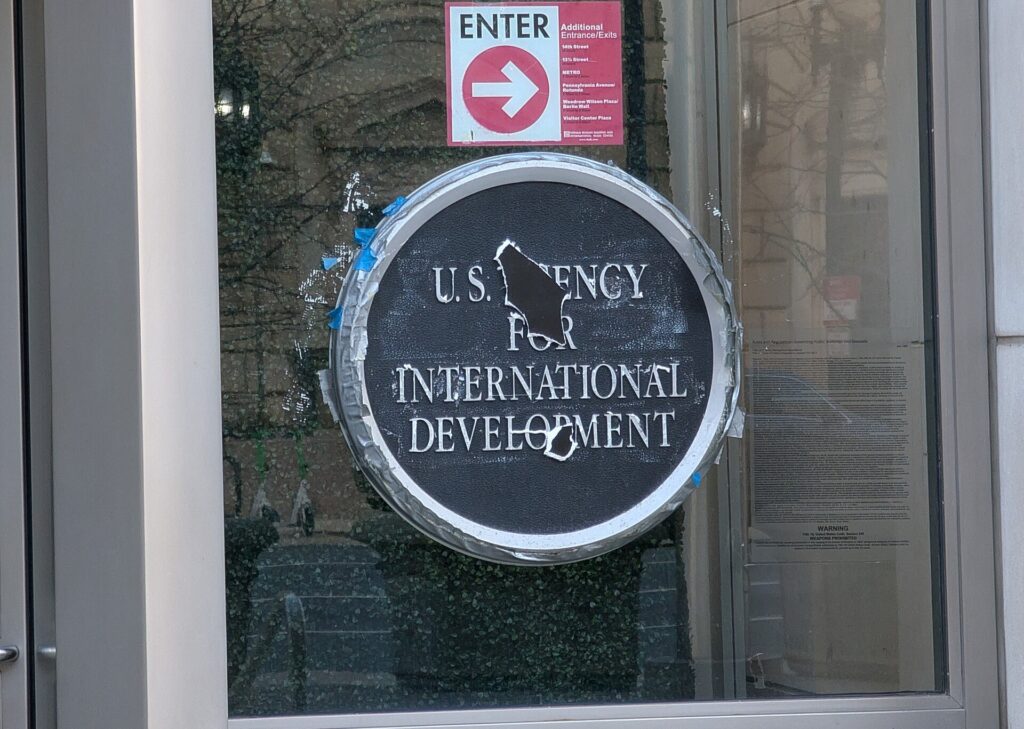
Before the 2015 elections, USAID played a prominent role in Myanmar’s democratic transition, implementing initiatives under four key pillars: strengthening democracy and the rule of law, promoting accountable governance, supporting peacebuilding, and improving food security and health.29Bima Nur Muhammad Rizky, “The Path to Democracy? Foreign Aid Post-Military Coup in Myanmar,” Global Focus 1, no. 2 (2021): 150–63, https://doi.org/10.21776/ub.jgf.2021.001.02.4. The agency’s programs strengthened civil society, bolstered democratic institutions, and contributed to governance reforms, laying the groundwork for a more participatory political environment. In FY 2020, USAID allocated about $69 million in bilateral programs that supported health, livelihoods, and efforts to maintain democratic space, independent media, and peacebuilding in conflict-affected regions.30Government of the United States of America, Department of State, “U.S. Relations With Burma,” 2021. https://2021-2025.state.gov/u-s-relations-with-burma/ In FY 2020 and 2021, the U.S. State Department provided $47.5 million in humanitarian assistance, and from 2012 to 2021, the United States contributed more than $1.5 billion to support Myanmar’s democratic transition, peace process, and socioeconomic development.31Ibid. Together, these initiatives reflected Washington’s commitment to strengthening Myanmar’s civil society and governance institutions without legitimizing the military regime.
However, subsequent reductions in USAID funding in early 2025 have had profound consequences for pro-democracy CSOs in Myanmar. Many organizations, particularly those operating from exile, have been forced to suspend or scale back activities due to financial instability. Office closures, layoffs, and unpaid salaries have significantly reduced their operational capacity. For instance, the suspension and reduction of USAID funding caused serious hardship for ethnic-based media, such as ThanLwinKhet News.32Kate Lamb and Rebecca Ratcliffe, “‘We Have Nothing Now’: Myanmar’s Exiled Media Face Existential Crisis after Trump Severs Aid,” The Guardian, February 23, 2025, https://www.theguardian.com/world/2025/feb/24/donald-trump-usaid-funding-cuts-myanmar-impact-journalists. Women media professionals were especially affected, facing job losses, pay cuts, and job insecurity.33Myanmar Women in Media, “Left Behind: The Fallout of Donor Withdrawals for Women in Myanmar’s Media,” Facebook post, May 27, 2025, https://www.facebook.com/hashtag/mwim?_rdr. For example, the Women’s League of Burma (WLB) faced significant financial challenges covering their office-related costs when USAID funding ceased. Humanitarian and community-focused programs managed by these CSOs, ranging from assistance for internally displaced people and refugees to education and psychosocial support, have been curtailed or halted. The loss of funding has left both the organizations and the communities they serve increasingly vulnerable.34Chalida Ekvitthayavechnukul and Grant Peck, “US Aid Freeze Leads to Suspension of Health Care to Myanmar Refugees in Thailand,” AP, January 29, 2025,
https://apnews.com/article/myanmar-refugees-camps-foreign-aid-rubio-b79eeef83a635d2b59208d8b91586b6b
and Yoon Mya Lay and Shatjam, “How Myanmar’s Civic Space Is Shrinking After USAID Cuts,” The Irrawaddy, March 5, 2025, https://www.irrawaddy.com/opinion/guest-column/how-myanmars-civic-space-is-shrinking-after-usaid-cuts.html.
The withdrawal of support has significantly increased the vulnerability of pro-democracy CSOs to repression by the military regime, exposing the structural dependence of these organizations on external funding. With fewer resources, CSOs face constraints in protecting staff, relocating individuals at risk, and maintaining advocacy activities under hostile and unpredictable conditions. Many organizations have been compelled to curtail or suspend initiatives, weakening their capacity to mobilize communities, foster civic participation, and advance democratic norms. This reduction in operational and strategic capacity has broader implications for the pro-democracy movement: It diminishes the ability of CSOs to challenge authoritarian control, sustain networks of civic engagement, and provide continuity for long-term democratic development.
Overall, USAID’s targeted interventions have been critical for sustaining Myanmar’s pro-democracy CSOs in the post-coup period. Yet recent reductions in support underscore the fragility of these organizations under authoritarian pressure from the military junta and highlight the urgent need for renewed, sustained international investment to ensure the survival of civil society and the continuation of democratic advocacy.
Conclusion
Myanmar’s pro-democracy CSOs have sustained their resilience in the face of repression, declining donor support, and escalating humanitarian crises. Many have reoriented toward humanitarian relief while discreetly sustaining advocacy for rights and democracy, often through informal alliances, cross-border networks, and digital platforms. Nonetheless, their capacity remains constrained by persistent security risks, financial restrictions, and short-term, donor-driven funding structures.
The weakening of these organizations carries broader implications. Beyond delivering humanitarian assistance, CSOs help preserve civic space, document human rights violations, and maintain community-level governance where state institutions have collapsed. Their decline would therefore not only hinder immediate relief efforts but also undermine the foundations for any future democratic transition.
For the international community, supporting Myanmar’s civil society is more than a humanitarian responsibility; it is a test of global commitment to democracy and human rights. Sustained, flexible, and locally driven funding is essential to ensure that Myanmar’s civic actors can continue their work and that the broader struggle for democracy does not fade under prolonged authoritarian rule.
Note: This issue brief draws on original data and analysis from the author’s ongoing Ph.D. dissertation, “Transnational Networks and Resilience of CSOs in Myanmar and Thailand,” currently in progress at McMaster University.
About the Author
Aye Lei Tun is a PhD candidate in the Political Science Department at McMaster University, Canada. She is currently working as a researcher on gender- and media-related studies for Burma-based international NGOs. She has undertaken gender- and media-related research including media audience study, ethnic media study, and gender in media study with International Media Support and UNESCO; the lives of urban garment factory workers; women’s access to the National Registration Card; the lives of people on the Myanmar–China border; gender awareness in Myanmar’s film industry; and the study on “Engendering Political Recruitment and Participation at the Party, Local and National Level in Myanmar.” She is also a published author, with the pen name Thawda Aye Lei, and she has recently published four novels and two short story collections. She can be contacted at [email protected].




Community Adaptation for a Water Festival Without Clean Water