


Editor’s Note: The New Visions for Grand Strategy Project brought scholars from across the political and ideological spectrum to discuss what the future has in store for the United States in the world. The editors of this series sought to foster a lively debate about America’s global role and strategic futures. Each author in this collection speaks for himself or herself alone, and their views do not reflect the official positions of the Henry L. Stimson Center, or of their own employers.
Mohammad Soliman is a senior fellow at the Middle East Institute.
By Emma Ashford, Senior Fellow, Reimagining U.S. Grand Strategy Program
American grand strategy has long grappled with a fundamental tension: Should the United States strive to transform the world in its own image, or merely secure its most vital interests in a constantly changing global system? From George Kennan’s containment doctrine in the 1940s, which argued that the Soviet regime was inherently expansionist, to the post-9/11 regime-change wars, America has oscillated between ambitious and even more ambitious postures — treating the world as a single contested theater in which any potential competitor, real or imagined, had to be checked. Today, that strategic ambition is under pressure, and the question of what scale of ambition is sustainable has become more urgent than ever.
The American century, which began following World War II, was built on a strategic trinity: military dominance over the Eurasian continent, domestic insulation from great power conflict, and techno-industrial supremacy. From 1945 through the unipolar moment of the 1990s and 2000s, these elements reinforced one another, yielding a grand strategy defined by expansive global reach. This formula enabled the United States to win wars, shape markets, and set the rules of both the post-World War II order and the post-Cold War era of globalization.
But the foundations of that world no longer prevail. The industrial base that powered American victories in the First and Second World Wars, and later outproduced and out-innovated the Soviet Union, has been steadily hollowed out.1The National WWII Museum. “Out-Producing the Enemy: American Production During WWII,” (New Orleans, LA: The National WWII Museum, n.d.), https://www.nationalww2museum.org/sites/default/files/2017-07/mv-education-package.pdf. As manufacturing capacity migrated offshore — most decisively to China, now the global factory floor — the industrial sinews that once undergirded American grand strategy have weakened; American hegemony now rests on unstable ground in a strategic landscape shaped as much by production as by the projection of hard power. Today’s challenge is that China is expanding its reach not only through naval or military means, but by constructing a full-spectrum industrial stack, integrating infrastructure and digital goods into a seamless platform for economic and strategic influence.
Hard power has always rested on an industrial foundation. Britain’s coal-fired factories, America’s assembly lines, and the Soviet Union’s steelworks all underwrote their respective countries’ military might. But the nature of that foundation is new. Today, industrial capacity is no longer measured simply in tons of steel or barrels of oil — rather, it is measured in the integration of compute power, artificial intelligence (AI) systems, and advanced automation into the entire industrial ecosystem. Understanding this shift requires a clear grasp of what the techno-industrial base actually is and why control over it determines the balance of power in today’s world.2Aaron Ginn, “The Compute Cold War.” RealClearDefense, July 10, 2025. https://www.realcleardefense.com/articles/2025/07/10/the_compute_cold_war_1121790.html. The techno-industrial base is the fusion of a nation’s physical infrastructure, manufacturing muscle, energy systems, supply chains, and knowledge networks into a single engine of capability. What makes it techno is the seamless integration of compute power and large-scale AI systems, enabling automation, optimization, and innovation at unprecedented scale. In the 21st century, drones and low-orbit satellite constellations play the role that tanks and aircraft carriers did in the 20th century, defining the cutting edge of military reach and strategic advantage. This integrated base allows a country to conceive, build, and scale the technologies that anchor its prosperity, hard power, and strategic reach. In the techno-industrial age, this base is not only an economic asset but also the fulcrum of geopolitical leverage.
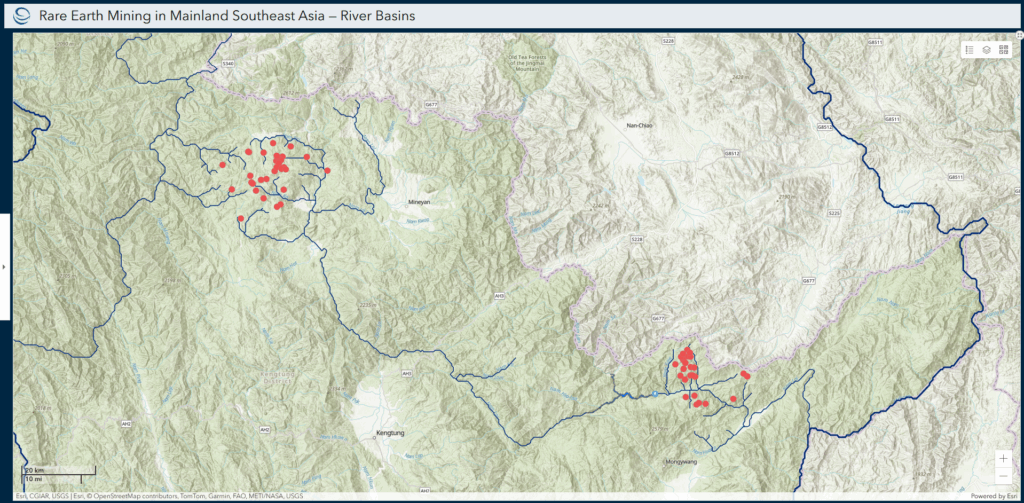
In an age of exponential change — characterized by accelerating technologies and significant infrastructural development — production is becoming the primary metric of national power. Adversaries and competitors are not merely arming; they are building. China is outproducing the United States in critical technologies, ranging from solar panels to electric vehicles (EVs), as well as in rare earth minerals and telecommunications infrastructure.3Christian Shepherd, “China Is Dominating the Global Electric Vehicle Market, despite Tariffs,” Washington Post, March 3, 2025, https://www.washingtonpost.com/world/2025/03/03/china-electric-vehicles-jinhua-leapmotor/; Leslie Hook, “Mining Boss Calls for Price Support to Challenge China’s Critical Minerals Dominance,” Financial Times, July 6, 2025, https://www.ft.com/content/fa9d2102-ccd3-4e86-b415-f7f7e3f13c6f; Anne Neuberger, “China Is Still Winning the Battle for 5G—and 6G,” Foreign Affairs, May 1, 2025, https://www.foreignaffairs.com/united-states/china-still-winning-battle-5g-and-6g. In doing so, Beijing projects power through production and construction. Sea lanes and supply chains are increasingly important in the emerging architecture of global geopolitics. U.S. industrial policy today should serve as both a domestic political pivot for the working class and as the cornerstone of Washington’s grand strategy.4Mohammed Soliman and Andrew Hanna, “Toward a Foreign Policy for the Working Class,” National Interest, March 23, 2025, https://nationalinterest.org/feature/toward-a-foreign-policy-for-the-working-class. A techno-industrial foundation of the kind that once enabled American global leadership should be built, not as a nostalgic gesture, but as a forward-looking doctrine of power for the AI-driven, infrastructure-centric age.
U.S. policymakers need to rethink the very structure of the United States’ grand strategy. Should Washington — as the principal architect of a waning order — continue to support a waning international system as a whole, or shift toward securing a decisive edge in key regions and technological domains, and ultimately change the nature of the liberal international order it once built? Can it maintain legacy alliances on every front, or must it craft a new geometry of selective partnerships, anchored in shared techno-industrial capacities? Should it aim for ideological universality, or instead forge coalitions built around resilient supply chains and critical infrastructure?
The task for America is not global domination; rather, it is shaping the international system. U.S. policies need to right-size America’s global role, not merely for the sake of retreat, but to reindustrialize. Washington should not abandon alliances; rather, it should redesign them for the logic of shared techno-industrial production. This is not purely military: In the 21st century, power will be measured not just by the number of aircraft carriers afloat; rather, it will be equally measured by chip foundries established, grid nodes fortified, megawatts generated, and critical chokepoints secured. Industrial policy is not an adjunct to grand strategy; it is its foundation. The United States needs to rediscover the industrial logic that once animated its strategic posture during the world wars. The world is no longer organized around an ideological contest between capitalism and communism; it is now organized around techno-industrialism, as evident in the U.S. AI Action Plan, which treats control of the AI stack’s physical foundations — chips, data centers, energy, and supply chains — as the core arena of geopolitical competition.5Elbridge Colby and Robert D. Kaplan, “The Ideology Delusion: America’s Competition With China Is Not About Doctrine.” Foreign Affairs, September 4, 2020. https://www.foreignaffairs.com/articles/united-states/2020-09-04/ideology-delusion. This is less a break from history than a return to the logic of classic great power politics, where industrial capacity was the true measure of strength. The Cold War itself was at root a contest between two industrial systems, even if it was draped in ideological language. What was, and is, at issue is how nations build, integrate, and scale the material bases of power.
Defining Grand Strategy in the 21st Century
In his book What Good Is Grand Strategy?, defense analyst Hal Brands describes grand strategy as “the intellectual architecture that lends structure to foreign policy; it is the logic that helps states navigate a complex and dangerous world.”6Hal Brands, What Good Is Grand Strategy?: Power and Purpose in American Statecraft from Harry S. Truman to George W. Bush,(Ithaca, NY: Cornell University Press, Kindle Edition, 2014), 1. But in the 21st century — a period of rapid technological and industrial change — this architecture must be more anchored in physical realities than in the post-Cold War era, when power and production became dangerously decoupled. The key to competing will be how quickly and effectively states can adapt to, integrate, and scale emerging technologies.
Grand strategy as a term gained prominence after World War II, when the United States combined its military power, economic scale, and geographic advantage into a coherent global role, but the core idea dates back to antiquity. British strategist Basil Liddell Hart famously wrote that grand strategy is not simply about achieving victory; rather, it is about ensuring that the use of national resources is worth the cost. Today, that calculus must include whether a country can build the systems it needs to act, compete, and endure scale and geographic advantage into a coherent global role, but the core idea dates back to antiquity. British strategist Basil Liddell Hart famously wrote that grand strategy is not simply about achieving victory; rather, it is about ensuring that the use of national resources is worth the cost. Today, that calculus must include whether a country can build the systems it needs to act, compete, and endure.
Traditionally, scholars have divided American grand strategy into four classical models: restraint, selective engagement, liberal internationalism, and primacy. Each of these reflects a theory of how to manage power: Restraint seeks minimal entanglement; selective engagement prioritizes regional stability; liberal internationalism aims to embed American values into global institutions; and primacy seeks to preserve U.S. dominance by deterring peer competitors.
During the past decades, the United States has oscillated between these four paradigms — sometimes adopting hybrid versions. Each model has struggled to address a core 21st-century reality: the fusion of national security and techno-industrial capability. Efforts have been made to integrate the two — from DARPA’s7DARPA stands for Defense Advanced Research Projects Agency. role in funding early semiconductor consortia like SEMATECH to today’s defense contracts with firms such as Palantir, SpaceX, and Anduril — but these have often been episodic, fragmented, or too narrowly focused to generate the full spectrum of industrial capacity. In this context, industrial policy is no longer just a domestic lever; it must be treated as a central instrument of statecraft.8Amy Kapczynski, “Industrial Policy as Democratic Practice,” Democracy Journal, September 25, 2024. https://democracyjournal.org/arguments/industrial-policy-as-democratic-practice/. What was once confined to the Commerce Department or the U.S. Trade Representative is once again central to questions of geopolitical power. This marks a return to the foundational logic articulated by Alexander Hamilton in his 1791 report on manufactures, which argues that national strength depends on the state’s ability to cultivate its own industrial base.9“Alexander Hamilton’s Final Version of the “Report on the Subject of Manufactures,” 5 December 1791, Founders Online, National Archives, https://founders.archives.gov/documents/Hamilton/01-10-02-0001-0007. More than two centuries later, the stakes are even higher: Manufacturing capacity now underpins digital sovereignty, defense readiness, and global economic influence. The key strategic question is no longer whether the United States should intervene militarily — it is whether it can build, scale, and sustain the systems that underpin modern power.
Today, the United States is caught in a profound tension. It suffers from intervention fatigue after decades of regime-change wars, is constrained by its deep economic interdependence with China — making any rapid strategic decoupling costly and difficult to imagine — and exhibits growing dissonance between national security imperatives and the logic of a market-driven economy. The question is not whether America can “lead”; it is whether the techno-industrial system America built in 1945 can be upgraded to meet the pressures of a new age, which extend well beyond AI to encompass energy, advanced manufacturing, and the entire spectrum of techno-industrial capacity. And if upgrades to the old order are inadequate, the open question is whether the United States has the industrial imagination and political will to build the next one.
The Exponential Age and the End of the 1945 Order
We are no longer living in the world that defined the post-1945 system. That liberal international order — anchored in America’s techno-industrial supremacy, institutional dominance, and unmatched ability to project force and impose standards globally — enabled a model of leadership built on control over the commanding heights of production and infrastructure. In the aftermath of World War II, Europe and Asia were physically devastated and economically debilitated, creating a power vacuum that the United States was both prepared and equipped to fill. This gave rise to a hierarchical system: The United States at the apex; its allies integrated into a dollarized and American-centric industrial order; and the rest of the world relegated to supplying raw materials, cheap labor, or ideological alignment.10Carla Norrlöf, “The Dollar Still Dominates: American Financial Power in the Age of Great-Power Competition,” Foreign Affairs, February 21, 2023. https://www.foreignaffairs.com/united-states/dollar-still-dominates; Henry Farrell and Abraham Newman, “The New Economic Security State: How De-risking Will Remake Geopolitics,” Foreign Affairs 102, no. 6 (November/December 2023): 104-15. https://www.foreignaffairs.com/united-states/economic-security-state-farrell-newman. American grand strategy could afford to be expansive — spreading liberal democracy, containing communism, and dominating sea lanes — because it rested on a vertically integrated industrial base and an unrivaled capacity to scale technology, capital, and energy.
But that world was built for a linear, slower-moving age — a time when technological development and statecraft advanced in measured, incremental steps. The “Exponential Age” is defined by technologies whose capabilities, adoption rates, and strategic effects grow at compounding rather than incremental rates.11The term Exponential Age was coined by technology analyst Azeem Azhar, who wrote “The Exponential Age: How Accelerating Technology is Transforming Business, Politics and Society.” Breakthroughs in compute, semiconductors, AI, robotics, energy systems, and advanced manufacturing feed into each other, creating accelerating feedback loops that transform industries, economies, and military capabilities far faster than in previous eras.12Azeem Azhar, The Exponential Age: How Accelerating Technology is Transforming Business, Politics and Society (New York: Diversion Books, 2021). This marks a shift not only in the pace of innovation but in the structure of power itself.13Mohammed Soliman, “The Technological Pivot of History: Power in the Age of Exponential Innovation,” (Foreign Policy Research Institute, March 28, 2024), https://www.fpri.org/article/2024/03/the-technological-pivot-of-history-power-in-the-age-of-exponential-innovation/. In the exponential age, geopolitical advantage accrues to those with the ability to adapt quickly.14John Ikenberry, review of World Builders: Technology and the New Geopolitics, by Bruno Maçães, Foreign Affairs, April 22, 2205, https://www.foreignaffairs.com/reviews/world-builders-technology-and-new-geopolitics.
China has fully internalized this logic and institutionalized it through a doctrine of techno-industrial maximalism.15Kyle Chan, Thomas des Garets Geddes, and Ailsa Brown, “Chinese industrial maximalism: Lu Feng,” High Capacity, June 19, 2025, https://www.high-capacity.com/p/chinese-industrial-maximalism. Its strategy is not merely to compete, rather, it is to become the physical and digital substrate of the global economy, thereby shaping the hierarchy of great powers. Through massive state investment, long-horizon industrial planning, and relentless scaling, Beijing has transformed itself from the world’s low-cost factory into its infrastructural core.16Carla Norrlöf, “The Dollar Still Dominates: American Financial Power in the Age of Great-Power Competition,” Foreign Affairs, February 21, 2023. https://www.foreignaffairs.com/united-states/dollar-still-dominates. Dominance in solar panels, EVs, lithium batteries, telecommunications hardware, and industrial AI is not accidental overcapacity — it is a deliberate restructuring of global value chains around Chinese platforms.17Camille Boullenois and Charles Austin Jordan, “How China’s Overcapacity Holds Back Emerging Economies,” (Rhodium Group, June 18, 2024), https://rhg.com/research/how-chinas-overcapacity-holds-back-emerging-economies/. Where the United States diverted attention toward wars of choice and distractions, deindustrialization, and financialization, China prioritized system-building, capacity expansion, and global supply chain control.
Indeed, China’s rise is not an accident of globalization. It is the result of a deliberate techno-industrial strategy executed over decades.18Kyle Chan, Gregory Smith, Jimmy Goodrich, Gerard DiPippo, and Konstantin F. Pilz, “Full Stack: China’s Evolving Industrial Policy for AI,” (RAND, June 26, 2025), https://www.rand.org/pubs/perspectives/PEA4012-1.html. Washington’s hubris in expecting ideological change in China through open trade only helped to elevate Beijing’s role in the global value chain at the expense of other developing markets. In short, Beijing has positioned itself as the infrastructure leader of today, dominant in EVs, solar panels, batteries, industrial AI and more.19Patricia Cohen, Keith Bradsher, and Jim Tankersley, “How China Pulled So Far Ahead on Industrial Policy,” New York Times, May 27, 2024, https://www.nytimes.com/2024/05/27/business/economy/china-us-tariffs.html.
National security has always been inseparable from national production, whether the NSA’s prioritization of post-quantum cryptography, or the Defense Department’s adoption of AI-enabled systems.20U.S. Government, National Security Agency, “Post-Quantum Cryptography: CISA, NIST, and NSA Recommend How to Prepare Now,” (Washington, DC: National Security Agency, August 21, 2023), https://www.nsa.gov/Press-Room/Press-Releases-Statements/Press-Release-View/article/3498776/post-quantum-cryptography-cisa-nist-and-nsa-recommend-how-to-prepare-now/; U.S. Government, Department of Defense, “Deputy Secretary of Defense Kathleen Hicks Announces Publication of Data, Analytics and AI Adoption Strategy,” (Department of Defense, November 2, 2023), https://www.defense.gov/News/Releases/Release/Article/3577857/deputy-secretary-of-defense-kathleen-hicks-announces-publication-of-data-analyt/; Mohammed Soliman and Vincent Carchidi, “Re-Balancing the Strategy of Tech Containment,” (Foreign Policy Research Institute, September 23, 2024), https://www.fpri.org/article/2024/09/re-balancing-the-strategy-of-tech-containment/. In this environment, being first matters — and staying first requires infrastructure. As with the Cold War space race, today’s contest spans advanced biotechnology, satellite networks, compute power, real-time AI, and smart factories. These are not abstract arenas.
Yet the United States faces a serious mismatch: It designs and innovates globally, but it produces too little at home, relying heavily on offshore manufacturing, most of all in China. Its strategic vision is expansive, but its industrial muscle has worn thin. The techno-industrial disruption of the past two decades has severed the link between America’s geopolitical primacy and its material foundations. Prime examples are the Nvidia and AMD chips. Conceived and architected in California but fabricated overseas — primarily in Taiwan — the United States has kept control of high-end- design while outsourcing the physical production of items that create capabilities. As the U.S. economy financialized — increasingly detaching from the physical realities of the economy in favor of financial engineering,21Financial engineering is a multidisciplinary field within the investment industry that employs mathematical, statistical, computational, and financial theories to analyze financial markets and create innovative solutions. It is often referred to as quantitative finance, mathematical finance, or computational finance. it traded engineering depth and production scale for asset appreciation and platform monetization. In other words, it outsourced the very foundations of geopolitical influence. In doing so, it allowed China to occupy the role America once held: the builder of the systems and integrator of technologies, the architect of global techno-industrial reality. During the 2025 US-China tariff standoff, for example, Washington sought to reassert leverage through trade restrictions. Nonetheless, some exemptions were quickly issued not out of diplomatic deference but because some critical parts of the U.S. economy could no longer fully operate without Chinese production and raw materials — let alone be a war-proofed economy — or sustain a war-proof economy.22Jarrett Renshaw and Karen Freifeld, “Nvidia’s resumption of AI chips to China is part of rare earths talks, says US,” (Reuters, July 15, 2025), https://www.reuters.com/technology/nvidia-resume-h20-gpu-sales-china-2025-07-15/.
In short, today America is a country that might still be able to invent some aspect of the future but cannot reliably produce it. Thus far, policymakers’ response to this challenge has been ambivalent, characterized by inertia, distracted by wars of choice, and entranced by the abstract promises of the market.23Kelvin Yu, “Foreword,” Techno-Industrial Policy Playbook, n.d., https://www.rebuilding.tech. It is no coincidence that America’s share of global chip manufacturing has declined, and its electrical grid capacity has remained stagnant since 2010.24Cy McGeady, “Strategic Perspectives on U.S. Electric Demand Growth,” (CSIS, May 20, 2024), https://www.csis.org/analysis/strategic-perspectives-us-electric-demand-growth; Richard Elkus Jr, “A Strategy for The United States to Regain Its Position in Semiconductor Manufacturing,” (CSIS, February 13, 2024), https://www.csis.org/analysis/strategy-united-states-regain-its-position-semiconductor-manufacturing.
But there is an essential contradiction here that suggests a solution: American innovation remains unmatched, at least for now. It is American production that is hollowed out. The divide — between upstream genius and downstream incapacity — threatens to make the United States strategically irrelevant in the very domains it pioneered. Without fabs, foundries,25A fab, which stands for ‘fabrication plant’ is a facility in which semiconductor chips are made. Fabs typically work with companies that both design and produce chips. A foundry is a manufacturing facility that makes semiconductor chips but doesn’t necessarily design them. Foundries tend to collaborate with companies that design chips but outsource production of those chips elsewhere. and hyperscale data centers; without domestic capacity to train and deploy frontier AI models; without abundant, secure energy to power inference at scale — the promise of American techno-industrial leadership is a mirage. It also offers a solution.
U.S.A., Inc. and Patriotic Capitalism
To reverse decades of industrial erosion, the United States needs to launch a “second great buildout”— a deliberate, large-scale national effort to reestablish itself as a true builder of systems. This is not about marginal adjustments or scattered innovation initiatives; it is about a wholesale return to system-building — forging a fully integrated techno-industrial ecosystem where finance, capital, and blue-collar capability converge into a single engine of national power.
At the heart of this buildout is a revitalized ethic of “patriotic capitalism” — the fusion of commercial ingenuity and defense-driven innovation that underwrote victory in the Cold War. In this model, private enterprise serves national purpose without sacrificing competitiveness. Silicon Valley is already beginning to rediscover this tradition, as new defense tech companies challenge legacy primes, disrupt procurement orthodoxy, and inject agility into the defense industrial base. The venture capital ecosystem is emerging as a force multiplier, channeling billions into startups that can translate advanced research into deployable systems.
But patriotic capitalism must go beyond innovation for its own sake. To compete in the 21st-century strategic environment, the United States needs to reengineer itself as “U.S.A., Inc.”— a nation-company hybrid capable of scaling its breakthroughs across industries and projecting techno-industrial dominance worldwide. This demands audacious public-private alliances — drawing together DARPA; the Defense Innovation Unit; the National Aeronautics and Space Administration, and the Departments of Energy, Commerce, and Defense — focused on winning in the decisive domains of the future: critical minerals, semiconductor fabrication, AI-driven defense systems, robotics, quantum computing, and space infrastructure. The goal is not just to invent the next great technology — but to build it, scale it, protect it, and embed it into the global order. Only then can America’s innovative genius be matched by its ability to produce at scale — and ensure that the United States remains the system-builder of choice for the world’s most critical technologies.
Rebuilding the Architecture of Global Power
Policymakers’ task today is not to preserve inherited dominance but to reconstruct manufacturing advantage in a world where physical capabilities — not capital alone — matter for geopolitical position. This is why industrial strategy must now serve as grand strategy. America is entering the second great buildout, and compute, not capital, will be the new base layer of influence. Compute is not weightless. It is a physical system: an ecosystem of chips, energy, cooling, model training, edge inference devices, and secure connectivity.
These technologies are the key to power and a kind of sovereignty over the physical world—one that scales. It is physical AI — the fusion of artificial intelligence with robotics, autonomous weapons, smart logistics, and factory-scale automation. The wars of the future will not be fought only with missiles, but with drones executing real-time inference, factories adapting to global disruptions through synthetic agents, and battlefields saturated with intelligent systems. Revolutions in warfare always follow revolutions in industrial production. Today, the frontier of combat is being redrawn by compute.
To compete with China, America should fuse its innovation ecosystem with a restored industrial base; treat compute as a public good and a strategic asset; and reimagine alliances and coalitions as coproduction frameworks. In this new era of strategic flux, the architecture of global power must be reconceived. The 20th-century order was defined by institutions and ideologies — Bretton Woods (the International Monetary Fund and the World Bank), the North Atlantic Treaty Organization (NATO), the United Nations, and the idea that liberal markets and American security guarantees would underwrite peace and prosperity.26G. John Ikenberry, “Power and liberal order: America’s postwar world order in transition,” International Relations of the Asia-Pacific 5, no. 2 (2005): 133-152, https://doi.org/10.1093/irap/lci112. But those frameworks are outdated for a multipolar world.
In addition to rebuilding domestic capacity, the United States needs to transition from being a hegemon to becoming a systems architect: building the institutions of the 21st century, from semiconductors to cloud platforms, submarine cables to AI models, power grids to protocol standards. Competition to shape these nodes will require new partners and new models of interaction. Each critical chokepoint — TSMC (the Taiwan Semiconductor Manufacturing Company) in Taiwan, ASML in the Netherlands, energy supplies in the Gulf, or data flows across the Atlantic — has become a site of geopolitical contest.
The goal is a new kind of order. The era of Western liberalism is giving way to an age of techno-industrial alignment, where partnerships are forged through shared infrastructures rather than shared ideology. The United States should build what might be called a “techno-industrial entente” —a strategic coalition of nations willing to codevelop the core infrastructure of sovereignty: computing, energy, and physical AI.
The Techno-Industrial Entente: A Dual-Track Approach
Under this techno-industrial entente, every partnership should follow a dual-track Hamiltonian model: to receive U.S. security guarantees and access to U.S. technology, partners must first commit to investing in America’s industrial heartland — financing, building, and scaling critical production capacity inside the United States before parallel facilities are developed in their own territories. This ensures that U.S. intellectual property, chip production, and industries critical to defense -are strengthened at home first.
Such coproduction alliances would focus on:
- Semiconductors and Compute Infrastructure – Joint foundry capacity, lithography systems, advanced chip packaging, and the secure integration of compute into manufacturing and defense systems.
- AI and Physical AI – Hyperscale data centers, AI training clusters, edge inference networks, autonomous systems, robotics-enabled production lines, and military grade physical AI for logistics, manufacturing, and defense.
- Electric Vehicles and Battery Ecosystems – Co-development of electric vehicle (EV) platforms, next-generation batteries, gigafactory-scale battery production, and closed-loop recycling systems.
- Energy & Critical Minerals – Rare earth processing, lithium refining, high density grid infrastructure, green hydrogen production, and advanced energy storage to power both industrial and compute demand.
- Space & Communications – Low orbit satellite constellations, resilient undersea cable networks, and secure terrestrial communications grids designed for allied only use.
Institutionalization of the framework would involve:
- Allied Techno-Industrial Council (ATIC) – Modeled after NATO, but focused on joint industrial mobilization, supply chain security, and co-innovation.
- Strategic CoInvestment Fund – Capital from sovereign wealth funds, development banks, and private investors for targeted dual track industrial projects.
- Interoperable Standards Charter – Shared standards for AI systems, robotics integration, chip security, energy resilience, EV interoperability, and data governance.
The New Grand Strategy: Build to Lead
Although the United States has a history of dual-use innovation — with Cold War-era advancements in chips and the Internet as prime examples — American strategy has, for too long, failed to fully and deliberately integrate defense needs with industrial production at the scale required for global competition. That division, and the failures to connect Silicon Valley with the defense base, is no longer tenable. As in wartime mobilization, the line between civilian and military infrastructure is increasingly blurred. Fabs are dual-use. Fiber is dual-use. So is energy, AI, robotics, and advanced logistics. What matters now is not just who innovates first, but who can deploy at scale, defend what they build, and embed it into global networks.
This is the new task of American strategy: to reconstruct a techno-industrial foundation strong enough to resist disruption and flexible enough to evolve. It means thinking in terms of geoeconomic geometry: building regional constellations of capability from the Gulf states to Latin America to East Asia.27For more, see Mohammed Soliman, “Why the U.S. Should Build Data Centers in Dubai and Riyadh,” Foreign Policy, July 2, 2025, https://foreignpolicy.com/2025/07/02/data-centers-us-uae-partnership-saudi-arabia-ai/; and Mohammed Soliman, “America Re-engages Africa and Latin America in a Reimagined Atlantic,” (Foreign Policy Research Institute, January 24, 2024), https://www.fpri.org/article/2024/01/america-re-engages-africa-and-latin-america-in-a-reimagined-atlantic/. It also means recovering the strategic imagination of system-building — not just winning today’s contests but shaping the architecture within which future contests will occur. Today, stability can only emerge from systems that are built to endure the shocks of this century: pandemics, cyberattacks, and great power rivalries unfolding at the speed of technology.
America’s choice is not between global leadership and retrenchment. It is between building a system that serves its interests, or watching others do so. It is between treating infrastructure as a national burden or as a global instrument of strategy. And it is between defending the past or constructing the next operating system of geopolitical power. This is the central insight of techno-industrialism: that, to lead in the exponential age, a state must do more than act. It must build. The next grand strategy will not be written in declarations. It will be engineered.








Community Adaptation for a Water Festival Without Clean Water