
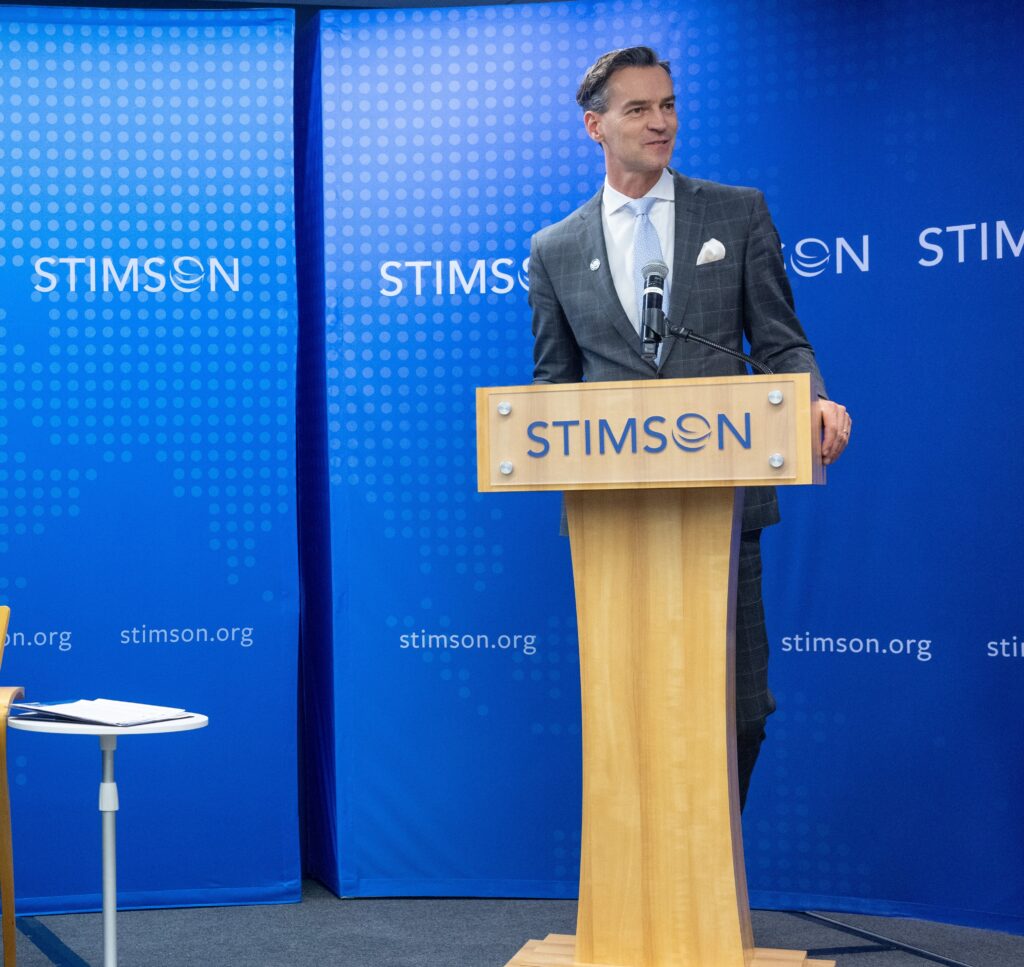
Chairman Burchett, Ranking Member Stansbury, and members of the subcommittee, thank you for the opportunity to testify today. My name is Julia Gledhill, and I am a researcher in the National Security Reform Program at the Stimson Center. Our program works to advance rational, evidence based national security policies that meet today’s challenges while ensuring that defense resources are used effectively, transparently, and in the best interests of the American taxpayer.
My testimony today focuses on three points. First, unrealistic acquisition plans are a major driver of Pentagon waste. Second, rapid acquisition pathways increase the government’s vulnerability to contractor price gouging. Finally, the purpose of acquisition regulations is to empower the government to act in the best interests of taxpayers, not to burden the private sector.
First, overly ambitious acquisition plans set both the military and the arms industry up for failure. The military services develop acquisition plans with little regard for fiscal, industrial, and workforce limitations. Military contractors then receive awards for programs they cannot deliver within budget or on schedule, in some cases for decades. The result is not only wasted taxpayer dollars, but declining military readiness. Unnecessary acquisition programs divert resources from maintaining and sustaining mature and proven systems, on which military servicemembers rely.
With that said, the question of what weapons to acquire is different from the question of how best to acquire them. Congress and the Pentagon’s laser focus on speeding up the acquisition process has led to an explosion in the use of rapid acquisition tools like the Other Transaction Authority, or OTA. The argument for these tools is that they enable the military to develop and field emerging technologies faster than through traditional acquisition processes. Today, however, acquisition tools like the OTA are becoming the rule rather than the exception to the traditional acquisition process.
For example, obligations for prototyping and production OTAs increased tenfold from 2016 to 2024, reaching $18 billion in 2024. In the past year alone, Space Systems Command awarded 20 OTAs valued at a combined total of up to $3.2 billion for companies to develop space-based interceptors. These are a key component of the Pentagon’s missile-defense shield, dubbed “Golden Dome for America,” for which the Pentagon has yet to produce an objective architecture detailing what systems will be deployed and in what quantities.
The risk of overreliance on rapid acquisition is more Pentagon waste. OTAs are not subject to certain competition and cost transparency standards embedded in the Federal Acquisition Regulation, or FAR. Critically, they are exempt from the Competition in Contracting Act and the Truthful Cost and Pricing Data Act, statutes designed to protect the taxpayer from overcharging by private contractors.
Finally, we often hear that the acquisition process is slow because it is overregulated. But in conducting the acquisition process, the government is not a third-party regulator, as is the case with regulators like the Environmental Protection Agency or the Occupational Safety and Health Administration. Rather, acquisition regulations serve as purchasing policies for the government in its business arrangements with contractors, a completely separate paradigm than when the government is regulating an industry in its sovereign capacity.
The FAR exists to ensure that the government maintains leverage in negotiations with private contractors. One of its most important tools is certified cost and pricing information, which contractors must validate as accurate, complete, and current. These data give the Pentagon insight into contractors’ costs and profit margins, strengthening the department’s ability to identify fair and reasonable pricing, especially in sole-source environments.
Yet contractors are rarely required to provide certified cost and pricing information. Since 1993, Congress has raised the mandatory disclosure threshold from $100,000 to $10 million, far outpacing inflation. Meanwhile lawmakers have dramatically expanded what contracts are considered “commercial” products and services, even in sole source situations, which further reduces the number of contracts subject to cost transparency requirements.
In theory, the Pentagon doesn’t need certified cost and pricing data for commercial products and services because they are already subject to price competition in the public marketplace. The problem is that the Pentagon classifies military products, such as the C-130J military transport aircraft, specialized aircraft spare parts, and many other items as commercial, even though they are not sold in substantial quantities in the public marketplace, or even sold commercially at all.
Ultimately, the best way to save taxpayers money on military contracts is to make strategic tradeoffs about what capabilities the military needs and why. But, regardless of what the Pentagon buys, it should leverage every tool available to negotiate the best possible contract prices on behalf of taxpayers. Thank you again for convening this important roundtable, and I look forward to your questions.







Community Adaptation for a Water Festival Without Clean Water