
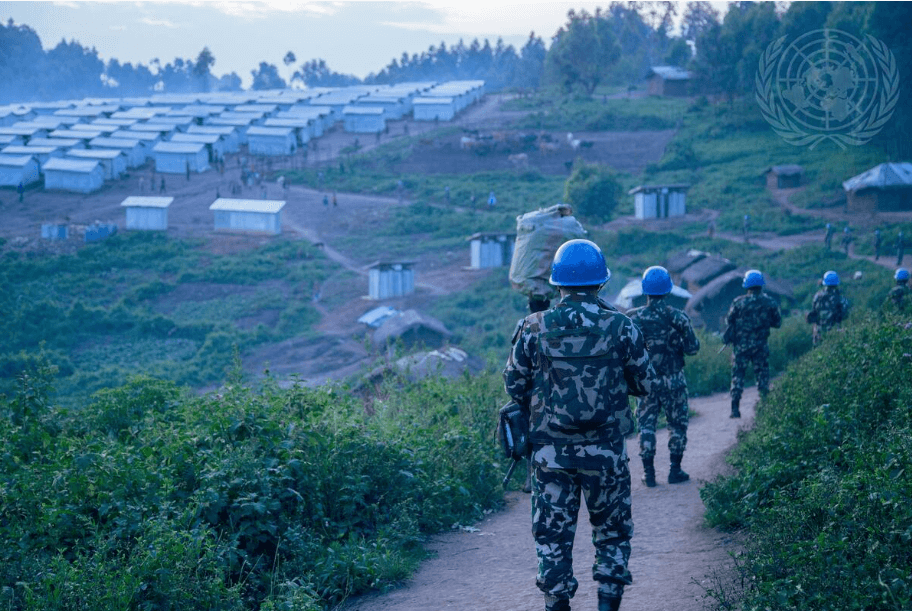
Peacekeeping remains one of the most effective tools available to the international community to protect civilians from violence and harm. Despite the immense challenges facing current UN peacekeeping missions, military, police and civilian personnel continue to intervene to protect civilians under threat of violence, often at significant risk to their own safety and security. In the context of the UN, efforts to improve and strengthen protection of civilians (POC) in peace operations have focused almost exclusively on multidimensional UN peacekeeping missions, primarily due to their explicit physical protection mandate. These missions continue to grapple with emerging challenges, including evolving technological threats, a lack of respect for IHL, a proliferation of armed actors, exploitation of natural resources, disinformation, climate change, and obstructions by some host authorities to their presence. Political will to deploy these large missions with protection embedded in their mandates is likely to be constrained going forward due to the potential opposition of conflict parties and the geopolitics on protection and human rights in the Security Council. As the UN and member states look ahead to future scenarios and models, a more comprehensive approach to protection in peace operations is warranted.
Civilians expect to be protected where there is a UN peace operation deployed.1Stimson Center, Protection of Civilians in the Context of Peace Operations: Nairobi Dialogue, published November 2024, available here. See also UN Department of Peace Operations and McGill University, 25 Years of Protecting Civilians Through UN Peacekeeping, October 2024, available here. This was a core message throughout a dialogue series that the Stimson Center co-hosted with partners in Nairobi, Geneva and New York throughout 2024.2The series was co-hosted with Center for Civilians in Conflict, in partnership with the Government of Switzerland, and with dialogues co-hosted by the Governments of Canada and Uruguay. Consistent throughout those discussions was the need for protection considerations to underpin the assessment, planning, authorization, deployment, operation and transition of all peace operations, irrespective of whether they have or are likely to have an explicit protection mandate. This included special political missions, which are often engaged in political dialogue and capacity-building to support national authorities with their protection responsibilities. But it also applied to regional peace support operations, including those led by the African Union, where there was greater ambiguity in terms of the escalated risks to civilians in peace enforcement contexts. Combined, the complexity of modern peace operations requires ongoing consideration of the comparative advantages of different peace operations as relates to protection of civilians.
Three Policy Recommendations
Delegations preparing for the 2025 Peacekeeping Ministerial should consider how their pledges and political support could influence the efforts to strengthen protection of civilians in current and future UN and regional peace operations through the following:
First, support efforts to center protection concerns in the assessment, planning and deployment of all future models of peace operations. The models proposed in the Future of Peacekeeping report respond to a range of operating environments and domains where harm to civilians is caused.3United Nations, The Future of Peacekeeping, New Models, and Related Capabilities, November 2024, available here. The report offers ideas to prepare member states and the UN to plan, deploy and operate in these settings in the future.4The Stimson Center is finalizing a publication that maps the protection advantages and considerations for the models presented in the Future of Peacekeeping report. It is due for publication in May 2025.
- The UN Secretariat should map protection considerations and resource requirements as part of the application of future models of peace operations.
- Troop- and police-contributing (T/PCCs) should prepare their personnel for a range of future operating environments, integrating these future scenarios into training models for personnel to develop a mindset of protection.
Second, encourage contingency planning by the UN Secretariat for situations where civilians are at risk to enable preparedness to respond. The UN Secretariat by default waits for a formal request from the Security Council to start developing options for a new peace operation. 5Stimson Center, Protection of Civilians in the Context of Peace Operations: New York Dialogues, published January 2025, available here. See also Jenna Russo, United Nations Security Council, 9884th Meeting, 24 March 2025, UN Doc. S/PV.9884. The Secretary-General’s recommendations in response often draw on a narrow interpretation of the request, guided by the perceived political realities of the Council. This approach means that different options for peace operations are often excluded from consideration from the outset. This lack of advanced planning also hampers efforts to engage member states to explore commitments to future missions in a timely and responsive manner.
- The UN Secretariat should utilize its authority—via the Secretary-General—to develop several options for future peace operations where there is an emerging situation of concern, explicitly outlining protection needs and considerations for the Security Council.
Third, facilitate the development of comprehensive guidance and policies for missions on protection across the full spectrum of UN peace operations and those deployed in parallel. Multidimensional UN peacekeeping missions with explicit POC mandates are only one tool that contributes to protection. Peacekeeping missions without explicit protection mandates and special political missions can support protection of civilians, particularly efforts to facilitate political dialogue and build a protective environment. 6For example, the UN Integrated Transition Assistance Mission in Sudan (UNITAMS) had a mandate for ‘civilian protection’, however mission personnel had limited understanding of its application, see Julie Gregory, Civilian Protection in Sudan: Emerging Lessons from UNITAMS, October 2024, available here. But they will often be limited by resourcing (i.e., lack of uniformed enablers) or the mandate. These limitations can be acknowledged but should not preclude a clearer understanding of the contribution of these tools to protection, which remains limited due to a lack of policy and guidance. Often these UN missions operate alongside partners with peace enforcement mandates, blurring lines in terms of responsibilities and coordination on issues related to protection.
- The UN Secretariat should work with partners to develop policy and guidance on protection priorities and contributions from missions without a traditional ‘POC’ mandate, mapping the comparative advantages of different mission models to protect civilians.
This piece was originally published as part of a compendium of Issue Papers ahead of the 2025 Berlin Peacekeeping Ministerial. The original publication can be found here.





Community Adaptation for a Water Festival Without Clean Water