
Editor’s Note: Dario Cristiani is an Associate Fellow within Instituto Affari Internazionali Global Actors Programme. He has been the IAI/GMF Senior Fellow at the German Marshall Fund, working on Italian foreign policy, the Mediterranean, and global politics in close connection with IAI. He is a political risk consultant and a guest lecturer in several institutions in Europe and the Maghreb (Koninklijke Militaire School, Istituto Alti Studi Difesa, Sit Tunis).
By Hafed Al-Ghwell, Senior Fellow and Director, North Africa Program
Introduction
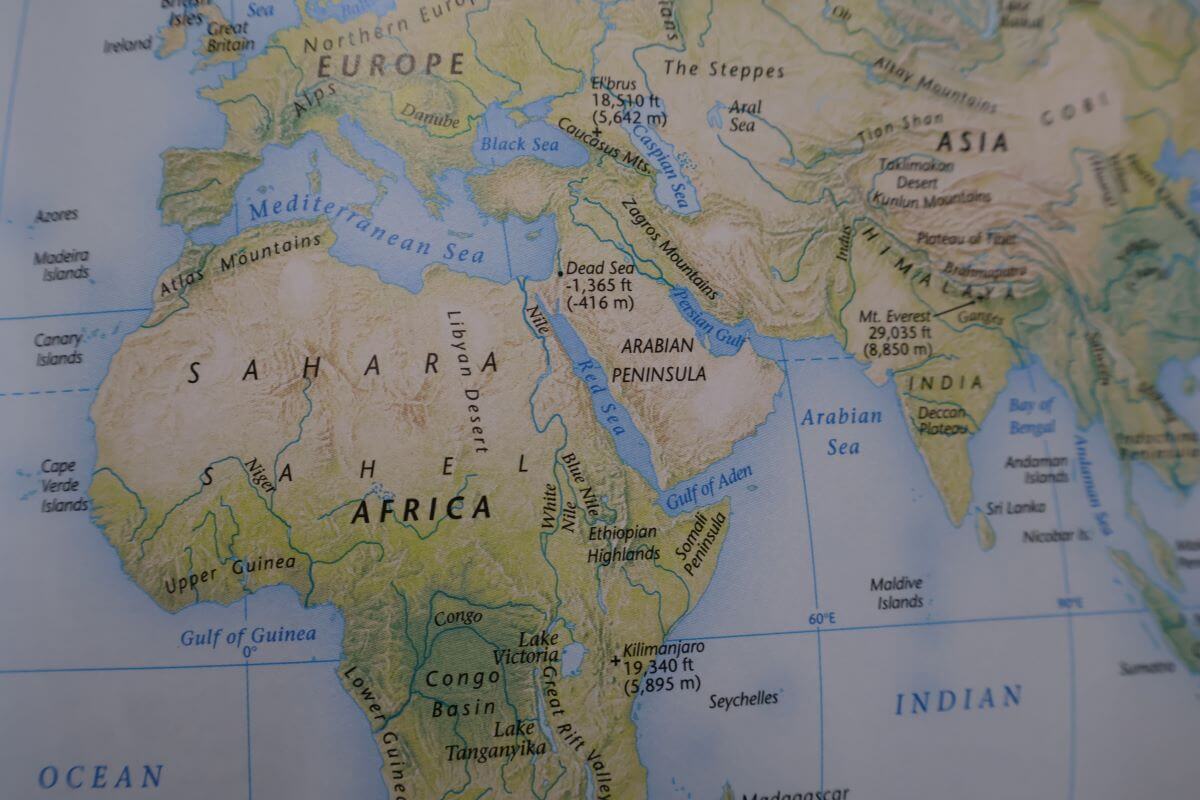
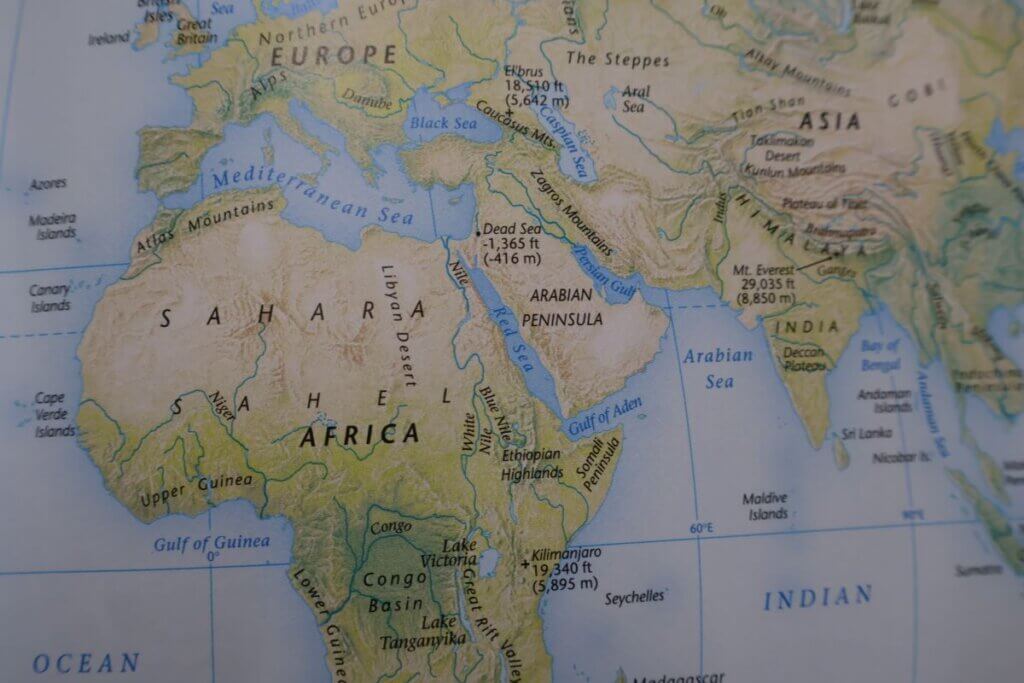
The Mediterranean, North Africa, and the Sahel can no longer be understood as separate or loosely adjacent regions; they are increasingly forming a unified strategic space shaped by dense, multidirectional interdependencies. What once appeared as distinct theaters — Europe’s southern neighborhood, the Maghreb, and the Sahelian belt — are now increasingly connected by overlapping security dynamics, physical infrastructure, human mobility, and political economies that span borders and regions. The Sahara, far from acting as a buffer, has become a corridor through which threats, resources, and actors circulate, binding North Africa and the Sahel into a single security continuum whose effects extend directly into the Mediterranean and Europe.
Security dynamics illustrate this convergence most clearly. Terrorist groups, insurgencies, and armed actors operate fluidly across the Maghreb-Sahel space, exploiting porous borders and weak state presence. The Arab Spring wave, the rise of the Islamic State in Iraq and Syria, the collapse of Libya after 2011, and the subsequent destabilization of Mali and the Sahel demonstrated how crises travel both horizontally along the Mediterranean and vertically across the Sahara, creating a single Regional Security Complex in which instability in one node rapidly affects the others. Human mobility reinforces this logic: Demographic pressures in the Sahel, combined with conflict and economic fragility, translate into migration, displacement, and trafficking routes that move northward through North Africa into the Mediterranean, shaping European political and security debates.
At the same time, material connectivity is knitting this space together in increasingly irreversible ways. Energy pipelines, electricity interconnections, hydrogen corridors, and digital infrastructures such as subsea cables have created layers of physical interdependence between Europe, North Africa, and, indirectly, the Sahel. These connections increase vulnerability but also generate shared interests and incentives for cooperation. Political economies further blur regional boundaries, as illicit flows of gold, fuel, weapons, and people underpin hybrid governance systems that link Sahelian conflict zones to North African hubs and Mediterranean markets. Finally, external and regional powers increasingly act on the assumption that this is a single strategic space. Russia, the UAE, Türkiye, China, the United States, and European actors all leverage positions in North Africa to project influence into the Sahel, some in more comprehensive ways, others focusing more on specific issues. At the same time, countries such as Egypt explicitly frame their security concerns as extending from Libya to Sudan and the Horn of Africa. Together, these dynamics make a compelling case: Analytically and politically, the Mediterranean, North Africa, and the Sahel must be treated as an integrated space because instability, connectivity, and power projection already are.
Polarization and Connectivity
The contemporary Mediterranean space continues to be shaped by a deep and persistent polarization between its northern and southern shores. This polarization has proven resilient despite decades of policy initiatives, dialogue frameworks, and rhetorical commitments to partnership. This divergence is political and normative as much as it is economic and strategic. Governance models remain profoundly different: The northern shore is anchored — albeit imperfectly — in liberal-democratic institutions, dense regulatory frameworks, and multilevel governance structures, whereas much of the southern shore is characterized by centralized, executive-dominated systems, weaker institutional accountability, and more limited channels for political participation.
These differences translate into distinct economic trajectories and security priorities. Northern Mediterranean states are embedded in the European Union’s single market and collective policy instruments. In contrast, southern Mediterranean countries remain only partially integrated, often positioned as external partners rather than co-shapers of the regional order. Uneven access to capital, advanced technology, and decision-making power reinforces this divide: Investment flows, financial instruments, and innovation ecosystems remain overwhelmingly concentrated in the north, while the south is more frequently treated as a space of extraction, transit, or containment. In addition, the securitization of migration and human mobility has further entrenched this fragmentation: Mobility has been reframed primarily as a security challenge rather than a developmental or societal opportunity, reinforcing asymmetrical bargaining relationships, promoting the externalization of border control by the EU, and deepening mistrust between the two shores.
A fragmented form of regionalism has also compounded this structural imbalance. Multilateral frameworks designed to turn the Mediterranean into a space of shared peace and prosperity — most notably the Euro-Mediterranean process launched in 1995 — have largely failed to meet their ambitions, gradually losing political traction and strategic relevance. In their place, states have increasingly favored bilateral, transactional, or ad hoc arrangements, often driven by immediate interests rather than long-term regional visions. The EU continues to claim, as the recent “Pact for the Mediterranean” demonstrates, that it wants to promote a space of “shared peace and prosperity.” Yet, it is evident that its capacity to shape Mediterranean dynamics is limited.1Richard Youngs, “The EU’s Dead-on-Arrival Pact for the Mediterranean,” Carnegie Endowment for International Peace, September 18, 2025, https://carnegieendowment.org/research/2025/09/the-eus-dead-on-arrival-pact-for-the-mediterranean?lang=en.
Yet, beneath this enduring polarization, something significant has begun to change, particularly over the past few years, and with unprecedented intensity in 2025: The Mediterranean is becoming more materially connected, not through grand political visions but through concrete, physical, and strategic infrastructure that is reshaping patterns of interdependence. Energy and digital connectivity have emerged as the most transformative vectors of this shift.
Energy infrastructure has long represented one of the oldest and most resilient forms of physical connectivity across the Mediterranean, anchoring relations between Europe and North Africa well before connectivity became a strategic buzzword.2Abdelnour Keramane, “Energy Infrastructures in the Mediterranean: Fine Accomplishments but No Global Vision,” in IEMed Mediterranean Yearbook 2014 (IEMed, 2015), https://www.iemed.org/publication/energy-infrastructures-in-the-mediterranean-fine-accomplishments-but-no-global-vision/. For decades, pipelines constituted the backbone of Euro-Mediterranean interdependence, quietly structuring trade flows, investment decisions, and diplomatic relationships. Today, however, this legacy infrastructure is being progressively reinterpreted and updated by new technological, political, and strategic visions of connectivity shaped by the energy transition and heightened geopolitical uncertainty.
The Transmed/Enrico Mattei pipeline linking Algeria to Italy via Tunisia remains a central artery of Mediterranean gas flows, with a capacity exceeding 30 bcm per year and a record of operational resilience even during periods of political instability.3Francis Ghilès, “As North African Energy Links Are Redrawn, Italy Becomes Europe’s Southern Gas Hub,” CIDOB Notes Internacionales No.276, July 2022, https://www.cidob.org/en/publications/north-african-energy-links-are-redrawn-italy-becomes-europes-southern-gas-hub. The Greenstream pipeline connecting Libya to Italy has similarly played a crucial role in supplying the Italian market, while also revealing how fragmentation and insecurity on the southern shore can rapidly translate into supply volatility for Europe. Libya’s internal fragmentation and insecurity repeatedly disrupt gas flows, especially associated gas. Poorly maintained infrastructure, sabotage, and blockades translate southern instability into European supply volatility and have long deterred international oil and gas investment.4Mostefa Ouki, “Italy and Its North African Gas Interconnections: A Potential Mediterranean Gas ‘Hub’?,” OIES ENERGY COMMENT, March 2023.
Further west, the Maghreb-Europe Gas Pipeline and the Medgaz link between Algeria and Spain illustrate both the integrative potential and the political fragility of cross-Mediterranean energy ties, as demonstrated by the suspension of GME flows amid Algerian-Moroccan tensions. In 2021, Algeria closed the Maghreb-Europe Gas Pipeline, punishing Morocco economically and strategically, signaling infrastructure control as geopolitical leverage and forcing Rabat to seek alternative energy sources.5Hamza Meddeb, “Economic Statecraft: New Dimensions of Moroccan-Algerian Rivalry,” Diplomacy Now, ICDI, November 7, 2025, https://dialogueinitiatives.org/economic-statecraft-new-dimensions-of-moroccan-algerian-rivalry/.
Together, these pipelines form a dense yet uneven network that has bound North African producers to European consumers for decades. What is changing today is not the existence of connectivity, but its meaning and direction: Infrastructure designed initially for hydrocarbon exports is increasingly viewed as a platform for transformation, whether through route diversification, capacity optimization, or partial repurposing for low-carbon gases such as hydrogen. This shift is epitomized by projects like the SoutH2 Corridor, a 3,300-kilometer pipeline intended to transport hydrogen from North Africa to Italy, Austria, and Germany.6SoutH2 Corridor – Our Connection for a Clean Future, 2025, https://www.south2corridor.net/. Launched in 2023 and designated as an EU Project of Common Interest, SoutH2 signals a qualitative leap from legacy energy interdependence toward a future-oriented vision of Mediterranean connectivity, one that builds on old infrastructures while embedding them in a new strategic logic of decarbonization, resilience, and long-term interdependence. In 2025, Algeria and Tunisia formally joined the project, which gave it new impetus.7“Italy, Germany, Austria, Tunisia and Algeria Back Hydrogen Grid Project,” Commodities, Reuters, January 21, 2025, https://www.reuters.com/markets/commodities/italy-germany-austria-tunisia-algeria-back-hydrogen-grid-project-2025-01-21/.
On the digital side, emerging digital corridors are increasingly binding the two shores into shared information and communication ecosystems. The strategic implication is clear: Material interdependence inevitably increases exposure and vulnerability.8Christian Bueger, “The Mediterranean Subsea: Protecting a Super Data Highway,” in Mediterranean Yearbook 2023 (IEMED, 2024), www.iemed.org/publication/the-mediterranean-subsea-protecting-a-super-data-highway/. Still, it also creates deeper connections and more substantial incentives for cooperation, even in the absence of full political convergence. The Medusa submarine fiber optic cable system is emblematic of this new phase.9“Medusa Submarine Cable System Lands in Marseille,” Medusa SCS, October 8, 2025, https://medusascs.com/news/medusa-lands-in-marseille/. At the end of October 2025, Medusa — owned by AFR-IX Telecom — landed at the cable landing station in Marseille, marking its first operational landing and a significant milestone in its Mediterranean rollout. The initial segment linked Marseille with Bizerte, Tunisia, and Nador, Morocco, with its expansion expected to continue throughout 2026.
For the first time, a privately driven yet strategically consequential project has physically connected the two shores through a high-capacity digital artery, deploying more than 8,700 kilometers of submarine cable and establishing 19 landing points across Southern Europe and North Africa. Medusa is not merely technical infrastructure: It operationalizes a vision of the Mediterranean as a shared digital space, reducing latency, diversifying routes, and lowering dependency on extra-regional chokepoints, while simultaneously exposing both shores to shared cyber, governance, and resilience challenges.
There are also new infrastructure projects connecting Europe and Africa — for instance, the ELMED project, which should be finalized by 2028. This is an “energy bridge” between Italy and Tunisia, linking the European and North African power systems through the first direct-current interconnection between the two continents. Developed by Terna and STEG, the 600-MW subsea link will connect Sicily’s Partanna substation with Mlaabi on Tunisia’s Cap Bon peninsula. Designed for bidirectional flows, it aims to enhance energy security, resilience, and sustainability, while facilitating greater cross-Mediterranean exchanges of renewable electricity and stimulating new investments in clean generation capacity.10Elmed | Elettrodotto sottomarino Italia Tunisia, 2025, https://elmedproject.com/it/.
Taken together, these projects illustrate how connectivity is no longer a secondary or technical issue but a core strategic variable. North Africa’s geographic and strategic positioning — between the mineral-rich regions of sub-Saharan Africa, the manufacturing and refining centers of Asia, and Europe’s vast consumer markets — makes it an indispensable link in emerging global value chains. This is further reinforced by a broader infrastructure rush that extends beyond energy and digital networks to transport and logistics, including projects such as the Trans-Maghreb highway connecting Morocco to Egypt via Algeria, Tunisia, and Libya, as well as new road corridors intended to bind North Africa into a more cohesive and efficient trade network.11Hafed al-Ghwell, “The Great Potential for North Africa in Future Global Supply Chains,” Arab News, October 11, 2025, https://arab.news/j4fu5.
In 2025, connectivity acquired a new dimension: not merely as a tool for development or external influence, but as a structural condition shaping incentives, dependencies, and strategic calculations on both shores. While polarization, fragmentation, and securitization remain defining features of the Mediterranean order, the growing density of physical and digital linkages is quietly reconfiguring the space, creating forms of interdependence that are harder to unwind and that may, over time, generate new pressures for coordination, risk-sharing, and selective cooperation in a region long defined by division rather than connection.
North Africa-Sahel as an Integrated Security Complex
Building on the broader discussion of the Mediterranean as a fragmented yet increasingly interconnected space, North Africa should be reconceptualized not simply as the Maghreb but as part of a wider Maghreb-Sahel continuum, in which the Sahara no longer serves as a dividing frontier but rather a dense strategic corridor. In this perspective, North Africa and the Sahel increasingly form a single Regional Security Complex in the sense articulated by Buzan and Wæver, where security dynamics are so profoundly intertwined that threats, actors, and responses cannot be meaningfully understood in isolation.12Buzan, Barry, and Ole Wæver. Regions and Powers: The Structure of International Security. Cambridge University Press, 2003
This transformation reflects the convergence of multiple dimensions of integration — security and conflict, human mobility, political economies, and state fragility spillovers — operating through two mutually reinforcing processes of contagion, horizontal and vertical, which have been operating for the past 20 years. Horizontal contagion unfolded primarily along the southern Mediterranean following the Arab Spring, beginning in Tunisia and spreading across the region through shared perceptions, narratives, and political imaginaries. The Tunisian uprising, while limited in terms of demographic and economic weight, served as a powerful catalyst by lowering the threshold of fear and demonstrating the vulnerability of regimes previously perceived as stable due to their coercive capacity and external support. This dynamic reached a fully regional scale once protests spread to Egypt, and then Libya and Syria.13Katerina Dalacoura, “The 2011 Uprisings in the Arab Middle East: Political Change and Geopolitical Implications,” International Affairs 88, no. 1 (2012): 63–79. The outbreak of the civil war in Syria created the conditions for the emergence of the Islamic State (IS) and the arrival of thousands of foreign fighters from Maghrebi countries. Starting from 2014, this horizontal contagion initiated a reverse wave, as IS established itself in Libya and started operating more thoroughly in the Maghreb.
In Libya, the revolution that began in February 2011 and the subsequent collapse of the Gaddafi regime marked a decisive rupture. Libya became the first fully internationalized conflict of the Arab Spring, and the disintegration of its state structures transformed the country into a hub for arms proliferation, militant circulation, and illicit trafficking, with immediate consequences across the Maghreb.
In Libya, at this stage, the horizontal contagion along the Mediterranean intersected with a deeper process of vertical contagion linking North Africa to the Sahel, fundamentally reshaping the region’s security architecture. The collapse of Libya sent shockwaves southward, accelerating the diffusion of weapons, fighters, and resources into the Sahelian belt and directly contributing to the destabilization of Mali, where jihadist and insurgent groups seized control of large territories in 2012, prompting the French-led intervention in 2013.14Yvan Guichaoua, “Tuareg Militancy and the Sahelian Shock Waves of the Libya Revolution,” in The Libyan Revolution and Its Aftermath, ed. Peter Cole and Brian McQuinn (Hurst/Oxford University Press, 2015).
This vertical transmission of instability interacted with the region’s longer-term dynamics, notably the gradual southward shift of jihadist organizations rooted in North Africa initiated in the late 2000s. Al-Qaeda in the Islamic Maghreb, emerging from the Algerian GSPC experience, initially pursued a pan-Maghrebi agenda but progressively reoriented its operational core toward the Sahel and Sahara, so that the group shifted from its historical stronghold in Kabilya, transforming what had been a logistical and fundraising hinterland into a central theater of operations. This shift was driven by counterterrorism pressure in northern Algeria, the relevance of Saharan leaders in the internal dynamics of the group, and the strategic advantages of the Sahel: vast ungoverned spaces, weak state presence, porous borders, and access to transnational networks.
The emergence of the Islamic State further intensified these dynamics, particularly following the establishment of an IS presence in Libya in 2014, which introduced a competitive logic within the jihadist ecosystem and reinforced the strategic centrality of the Maghreb-Sahel axis. This culminated in the emergence of the Islamic State in the Greater Sahara, led by the former No.2 of Mokhtar Belmokhtar, Adnan Abu Waild al-Sahraoui. This group became the competitor of AQIM in the Sahara, which in the meantime rebranded in the Sahel as JNIM (Jama’at Nusrat al-Islam wal-Muslimin, or Support Group for Islam and Muslims) for Jihadist predominance in the Great North Africa security complex spreading from the shores of Mediterranean Africa to West Africa.15Djallil Lounnas, Le djihad en Afrique du Nord et au Sahel: d’AQMI à Daech (L’Harmattan, 2019).
As a result, armed actors now operate across borders with relative ease, embedding the Maghreb and the Sahel within a single security space characterized by constant interaction and mutual reinforcement. This security integration has gone hand in hand with the militarization of regimes and the expansion of security governance across the wider region, as states have increasingly relied on security institutions, exceptional measures, and coercive tools to manage threats perceived as existential and transnational.
Human mobility constitutes a second key dimension binding the Maghreb and the Sahel into a unified security complex. A stark demographic divide separates the rapidly growing, youthful populations of the Sahel from the comparatively more demographically mature societies of North Africa and the Mediterranean, generating powerful structural pressures for movement. Migration, displacement, and trafficking routes link Sahelian instability directly to North African outcomes, turning countries such as Libya, Algeria, and Tunisia into both transit zones and spaces of prolonged immobility, where migrants and refugees become embedded in local political economies and security calculations. These flows do not stop at the southern shore of the Mediterranean but extend into Europe, making Sahelian crises a direct factor in Mediterranean and European debates on border control, asylum, and internal security. In this sense, human mobility serves as a vector of vertical integration, translating insecurity in the Sahel into political and social effects far beyond the region. A third dimension of integration lies in the political economies that underpin and sustain insecurity across the Maghreb-Sahel space.
Illicit economies involving gold, fuel, weapons, and people form dense transnational networks that cut across state boundaries and connect armed groups, local elites, militias, and segments of formal institutions. These economies thrive in environments of weak governance and uneven state presence, reinforcing hybrid governance systems in which authority is shared, contested, or informally delegated to non-state actors. Persistent insecurity and terrorist violence in the Sahel represent a structural obstacle to economic recovery and regional integration, severing transport corridors, deterring investment, and undermining state capacity. Without a sustained reduction in terrorist activity, efforts to connect Sahelian economies to North Africa and Europe — through trade, infrastructure, and energy networks — remain fragile and uneven. Counterterrorism, in this sense, is not only a security imperative but also a precondition for economic normalization: Restoring basic security is essential to reopening mobility routes, stabilizing border regions, and enabling the Sahel to function as a viable economic partner rather than a source of chronic disruption within the wider Afro-Mediterranean space.
Against this background, Sudan occupies a pivotal, and often underestimated, position within the Maghreb-Sahel security continuum, serving as a critical eastern hinge linking Sahelian instability to the Red Sea and the wider Horn of Africa. The collapse of state authority following the outbreak of the civil war in 2023 has transformed Sudan into a significant source of regional insecurity, amplifying patterns of arms proliferation, mercenary flows, and illicit trafficking that reverberate westward into the Sahel and northward toward North Africa. Sudan’s territory has become a transit and recruitment space for armed actors. At the same time, its gold sector — already deeply embedded in transnational illicit economies — has further integrated Sahelian and North African conflict economies, both between themselves and with other economies across Africa, the Red Sea, and the Gulf.16Ahmed Soliman and Suliman Baldo, “Gold and the War in Sudan: How Regional Solutions Can Support an End to Conflict,” Research Paper – Chatham House, March 2025, https://www.chathamhouse.org/2025/03/gold-and-war-sudan/04-how-sudans-gold-sector-connects-regional-conflict-ecosystem. The scale of displacement generated by the conflict has added a significant human mobility dimension, with refugee flows affecting neighboring countries and contributing indirectly to broader migration pressures toward North Africa and the Mediterranean. Strategically, Sudan’s destabilization reinforces the logic of a vertically integrated security complex. In these crises, the Red Sea-Sahel axis can no longer be analytically or politically separated from North African stability and European security concerns, underscoring the need to treat Sudan not as a peripheral theater but as an integral component of the wider Afro-Mediterranean security equation.
In North Africa, particularly in contexts such as Libya, these dynamics have contributed to patterns of state capture and militia entrenchment. At the same time, in the Sahel, they have provided armed groups with financial autonomy and social embeddedness. For instance, Al-Qaeda, through the role of local leaders such as Djamal Okacha, has been able to embed itself in the social fabric of central Sahelian countries, exploiting ethnic and socio-economic grievances, especially among the Fulani communities, to recruit and promote Jihad.17Hamza Cherbib, “Jihadism in the Sahel: Exploiting Local Disorders,” in IeMED Mediterranean Yearbook 2018 (European Institute for the Mediterranean, 2018), https://www.iemed.org/publication/jihadism-in-the-sahel-exploiting-local-disorders/. The overall result of these dynamics is a political-security-economic continuum in which legality and illegality are deeply intertwined, and where instability in one part of the system generates opportunities and incentives elsewhere, and vice versa.
Finally, state fragility spillovers represent a crucial integrating mechanism. Crises in the Sahel increasingly affect North African stability, whether through security threats along southern borders, pressures on state institutions, or the diffusion of armed actors and illicit flows. These spillovers, in turn, shape European security calculations, as instability travels from the Sahel to the Mediterranean and onward to Europe through migration, terrorism risks, and energy and trade disruptions. In this context, the analytical distinction between the Maghreb and the Sahel has become increasingly untenable, replaced by the notion of a vertically integrated security complex stretching from the Mediterranean coast deep into the Sahelian hinterland.
Within this evolving configuration, regional powers have adapted their strategies and become more active in the Sahel, reflecting both strategic necessity and opportunity. Morocco has pursued an outward-looking approach that combines security engagement, diplomatic activism, and geoeconomic projection, seeking to anchor its Sahelian presence within a broader vision of connectivity linking North Africa, West Africa, and the Atlantic space. Central to this strategy is the Atlantic Initiative, which aims to position Morocco as a key gateway for landlocked Sahelian states by developing the Atlantic port of Dakhla by 2028 and offering Mali, Burkina Faso, and Niger access to global markets.18“L’Initiative Royale Pour l’Afrique Atlantique : Enjeux, Facteurs-Clé de Succès et Feuille de Route Pour Le Maroc,” Institut Royal Des Etudes Stratégiques, September 2024, https://www.ires.ma/fr/publications/rapports-thematiques/linitiative-royale-pour-lafrique-atlantique-enjeux-facteurs-cle-de-succes-et-feuille-de-route-pour-le-maroc. Of course, Morocco’s full sovereignty over the Saharan region is seen as essential and functional by Rabat to this project.
Algeria has approached the Sahel through a security-first strategy tempered by diplomacy and preventive engagement, driven by the conviction that instability along its southern borders poses a direct threat to national security. Algiers has prioritized border control, intelligence cooperation, and mediation while avoiding large-scale external military deployments, in line with its long-standing strategic doctrine, although this approach has become increasingly difficult to sustain.19Abdelkrim Boukachabia, “La politique étrangère de l’Algérie envers l’espace sahélo-saharien : entre continuité et transformation,” CERMAM, October 8, 2024, https://cermam.org/fr/la-politique-etrangere-de-lalgerie-envers-lespace-sahelo-saharien-entre-continuite-et-transformation/. Between 2020 and 2023, Mali, Burkina Faso, and Niger experienced a wave of coups that reshaped domestic governance and external alignments, leading the new juntas to withdraw from ECOWAS, the G5 Sahel, and the OIF, and to establish the Alliance of Sahelian States.20Rick Le Recit MOUAYA TAMBA, “L’Alliance des États du Sahel : une configuration émergente de souveraineté sécuritaire en Afrique de l’Ouest,” Note de la FRS n°19/2025 – Fondation pour la Recherche Stratégique (FRS), October 2, 2025, https://www.frstrategie.org/publications/notes/alliance-etats-sahel-une-configuration-emergente-souverainete-securitaire-afrique-ouest-2025. These shifts have constrained Algeria’s traditional mediating role and contributed to a deterioration in relations, particularly with Mali.21“Nouveau regain de tension dans les relations entre l’Algérie et le Mali,” Afrique, RFI, January 7, 2025, https://www.rfi.fr/fr/afrique/20250107-nouveau-regain-de-tension-dans-les-relations-entre-l-alg%C3%A9rie-et-le-mali.
However, taken together, these trajectories illustrate how the Maghreb’s southern orientation has intensified as the Maghreb-Sahel space has consolidated into a single, interconnected security complex. North Africa can no longer be understood solely through its Mediterranean dimension: It is increasingly shaped by vertical connections across the Sahara, where security, mobility, political economies, and state fragility intersect, and where regional actors are recalibrating their strategies in response to a more integrated and more volatile regional order.
External Powers and the Integrated Security Complex
The progressive consolidation of the Maghreb-Sahel space as an integrated security complex has profoundly reshaped the way external and great powers operate across North Africa, the Sahel, and adjacent theaters, encouraging strategies that explicitly exploit the vertical and horizontal connectivity of this space rather than treating it as a set of specific, compartmentalized spaces. Some of these powers have privileged selective engagement focusing on specific issues.
This was the case, for instance, of the United States. Over the past 10 years, Washington has transitioned to a posture of selective engagement, privileging counterterrorism cooperation, intelligence sharing, and targeted security partnerships over large-scale military deployments or state-building ambitions.22 Washington increasingly views instability in the Great North Africa security complex as a threat multiplier that can radiate northward toward the Mediterranean and westward into the Atlantic space, and has intervened to address security threats linked to terrorism, for instance in Libya by supporting local actors against IS.23“Country Reports on Terrorism 2019,” United States Department of State, 2020, https://www.state.gov/reports/country-reports-on-terrorism-2019/. Yet, it has also shown growing caution over the past few years about deep entanglement, especially following successive coups and the erosion of local partners’ legitimacy. As a result, U.S. engagement has become more modular and risk-averse, focused on maintaining access, preventing terrorist safe havens, and preserving minimal influence across a space that is now recognized as strategically continuous from Libya to the central Sahel.
Russia, by contrast, has explicitly embraced the logic of an integrated security complex, leveraging footholds in North Africa — most notably Libya — as platforms for power projection into Sudan and the Sahel. Moscow’s security provision model, centered on mercenaries, arms transfers, and regime support, has allowed it to convert localized presence into transregional leverage. The use of Libya as a logistical and operational hub is emblematic: Russian-linked forces have exploited Libya’s fragmentation and permissive environment to support operations in Sudan and across the Sahel, while recent efforts to rehabilitate a desert airbase in southern Libya point to the creation of a reliable supply corridor linking North Africa to West Africa.24Andrew McGregor, “Russia Increasing Military Presence in Africa by Reviving Desert Airbase in the Libyan Sahara,” Eurasia Daily Monitor 22 (April 2025), https://jamestown.org/program/russia-increasing-military-presence-in-africa-by-reviving-desert-airbase-in-the-libyan-sahara/. A Russian military presence near the borders of Egypt, Sudan, and Chad positions Moscow as a consequential actor in regional security calculations, enabling it to influence conflict dynamics, broker relationships with embattled regimes, and challenge Western interests across the wider Afro-Mediterranean space. At the same time, this strategy exposes Russia to the complexities of regional rivalries and overlapping alliances, making its posture opportunistic but also vulnerable to countermoves by Western and regional actors.
China’s engagement reflects a different reading of the same integrated space. Rather than focusing on overt security provision, Beijing has prioritized infrastructure, energy, and digital connectivity, embedding itself economically across North Africa and increasingly into the Sahel. Through ports, railways, roads, pipelines, and subsea cables, China has helped materialize the very connectivity that underpins the emergence of the Maghreb-Sahel security complex, while adhering to a declared non-interference approach that minimizes political conditionality.25Paul Nantulya, “The Limits to China’s Transactional Diplomacy in Africa,” Spotlight – Africa Center, June 30, 2025, https://africacenter.org/spotlight/china-transactional-diplomacy-africa-niger/. However, the recent developments in Mali and the Sahel show how difficult it is for Beijing to operate across conflict environments given its limited security footprint.26Robert Bociaga, “China’s Sahel Gamble Falters as Insurgencies Rage,” The Diplomat, November 20, 2025, https://thediplomat.com/2025/11/chinas-sahel-gamble-falters-as-insurgencies-rage/.
Among global powers, India represents a quieter but growing presence in this integrated space, one that remains under-analyzed but increasingly relevant. New Delhi still prioritizes bilateral relations in this area, but it has expanded its economic and diplomatic footprint through energy cooperation, trade, and development assistance. From a security perspective, though, it views North Africa and the Sahel as an area of increasing relevance given the connections existing between Jihadist groups in this space and in India.27Dipanjan Roy Chaudhury, “India Calls for Countering Terror in Africa’s Sahel and Libya,” The Economic Times, January 26, 2022, https://economictimes.indiatimes.com/news/defence/india-calls-for-countering-terror-in-africas-sahel-and-libya/articleshow/89129269 While India lacks the security profile of Russia or the infrastructural scale of China, its incremental engagement reflects a recognition that this space is becoming a single arena of competition and connectivity rather than a peripheral collection of markets.
Alongside great powers and regional actors, middle powers have adapted their strategies to the logic of an integrated security complex. Türkiye has emerged as a particularly agile player, combining soft power, military presence, defense exports, and political alignment strategies to extend influence from Libya into parts of the Sahel. Turkish drones, training missions, and security cooperation agreements have allowed Ankara to position itself as a flexible partner capable of operating across conflict zones. Ibrahim Kalin, the current director of the National Intelligence Organization (MİT) and one of President Recep Tayyip Erdoğan’s closest advisers, stated in early 2026 that Ankara now treats its engagements across Africa as part of a single, coherent “African approach,” deliberately placing its stabilizing role in Libya, counterterrorism efforts in Somalia, and operations in Sudan within the same strategic basket, thus seen as part of a continuum.28Utku Şimşek, “Milli İstihbarat Teşkilatı 99 Yaşında,” Anadolu Agency, January 6, 2026, https://www.aa.com.tr/tr/gundem/milli-istihbarat-teskilati-99-yasinda/3790891.
Gulf states have exploited this space’s connectivity through financial leverage, mediation, and, at times, proxy competition from Libya to Sudan and beyond.29Karim Mezran and Sabina Henneberg, “Gulf Influence in the Maghreb,” New Lines Institute, June 1, 2022, https://newlinesinstitute.org/state-resilience-fragility/gulf-influence-in-the-maghreb/. The UAE in particular views Libya, Sudan, and the Sahel as a single strategic space, approaching them through an integrated mix of investment, political influence, and security engagement that blurs economic and geopolitical objectives.30Jonas Horner, “The Falcons and the Secretary Bird: Arab Gulf States in Sudan’s War,” ECFR Commentary, July 30, 2025, https://ecfr.eu/publication/the-falcons-and-the-secretary-bird-arab-gulf-states-in-sudans-war/.
The European Union represents a contrasting case: economically central yet politically and strategically fragmented and increasingly irrelevant. Since 2014, the EU and its member states invested heavily in the Sahel, turning the region into a laboratory for the security-migration-development nexus. European strategy, anchored in French-led military operations and EU capacity-building missions, sought to stabilize the Sahel while containing migration and terrorism. However, this approach failed to deliver lasting results.31Eric Hall, “Europe’s Forthcoming Sahel Strategy: A Limited Role in a Multipolar Region,” Policy Paper, Policy Paper – International Centre for Defence and Security, October 2025, https://icds.ee/en/europes-forthcoming-sahel-strategy-a-limited-role-in-a-multipolar-region/.
Ambitions proved unrealistic given the scale of the region’s needs, and efforts were often misaligned with local elites whose primary concern was regime survival rather than structural reform. Once coups unfolded in Mali, Burkina Faso, and Niger, Europe’s leverage evaporated. In less than a year, these countries halted security cooperation with the EU, dismantling over a decade of engagement and expelling European forces in favor of alternative partners. The subsequent realignment toward Russia — first via the Wagner Group and now through the Africa Corps — alongside growing ties with actors such as Iran and North Korea, underscored Europe’s difficulty in operating effectively within a security complex where coercive power, regime protection, and transactional relationships increasingly dominate.
Egypt occupies a distinctive position within this landscape, embodying perhaps the clearest example of how the Maghreb-Sahel security complex extends eastward toward the Red Sea and even to the Horn of Africa. Cairo’s views explicitly link Libya, Sudan, the Red Sea, and the Horn into a single security perimeter. Egypt’s involvement in Libya is inseparable from its concerns over Sudan’s instability, which directly affects its southern flank. At the same time, both theaters are further connected to Egypt’s existential anxieties over the Grand Ethiopian Renaissance Dam (GERD). The GERD dispute has pushed Egypt to recalibrate its African policy, intensifying diplomatic, security, and economic engagement across the Horn of Africa to manage upstream risks to Nile water security.32Ahmed Morsy and Tsedenya Girmay, “With Ethiopia’s GERD Active, Tensions Mount Along the Nile,” Afkar – Middle East Council on Global Affairs, September 25, 2025, https://mecouncil.org/blog_posts/with-ethiopias-gerd-active-tensions-mount-along-the-nile/.
In this sense, for Egypt, the integrated security complex does not stop at the Sahel. Still, it stretches from the Mediterranean coast through Sudan to Ethiopia, reinforcing the idea that security spillovers travel vertically across Africa’s north-south axis. Across all these actors, a typical pattern emerges: External powers increasingly treat North Africa, the Sahel, and adjacent regions not as isolated theaters but as a single, interconnected strategic space. Libya’s role as a hub for projection into Sudan and the Sahel — exploited most clearly by Russia and the UAE — illustrates how presence in one node of the system enables influence across the entire complex. The result is a crowded and competitive environment in which security, infrastructure, political economies, and regime survival intersect, and where external actors calibrate their strategies to the realities of an integrated, volatile, and deeply interconnected Afro-Mediterranean security complex.
Policy Implications and Future Research
Can these spaces be considered a single region? In geography, as in many other disciplines, the concept of region carries different meanings depending on the criteria used to define it. In his influential article “Arguing with Regions,”John Agnew notes: “In much popular usage and in many academic fields, the ‘region’ typically conjures up the idea of a homogeneous block of space with a persisting distinctiveness rooted in physical and cultural characteristics.” 33John A. Agnew, “Arguing with Regions,” Regional Studies 47, no. 1 (2013): 6–17. By this loose yet useful definition, the Mediterranean, North Africa, and the Sahel cannot be treated as a single, homogeneous space. At the same time, however, technological, security, and geopolitical dynamics suggest that they can no longer be understood as separate or merely adjacent spaces. These spaces must instead be understood as a unified and evolving strategic space shaped by intense, multidirectional interdependencies. What once appeared as distinct theaters — Europe’s southern neighborhood, the Maghreb, and the Sahelian belt — are now bound together by overlapping security dynamics, human mobility patterns, physical infrastructure, and political economies that cut across borders and defy traditional regional compartmentalization. The analytical challenge that emerges from this convergence is no longer whether these spaces are connected, but how different forms of connection coexist with, and are often undermined by, persistent political fragmentation, weak governance, and competitive power projection.
The first policy implication concerns the growing mismatch between infrastructure-led integration and political fragmentation. Energy corridors, electricity interconnections, hydrogen pipelines, and digital infrastructure are materially binding Europe, North Africa, and — indirectly — the Sahel into shared systems of dependence. Yet these forms of connectivity are advancing faster than the political and institutional capacities required to govern them. This disconnect generates new vulnerabilities: Infrastructures designed to enhance resilience can become leverage points in contexts marked by insecurity, elite competition, and external interference. Future research should therefore focus on the political economy of connectivity, asking under what conditions integration stabilizes regional relations and when it instead amplifies exposure to conflict spillovers.
Second, the persistence of rigid policy silos — separating the Mediterranean from the Sahel — has become increasingly untenable. Security threats, migration dynamics, and illicit economies move horizontally along the southern Mediterranean and vertically across the Sahara, yet policy frameworks remain territorially bounded and fragmented by sector. This misalignment calls for a reassessment of how security, development, migration, and infrastructure policies are conceptualized and operationalized across this expanded space. Crucially, managing competition among external and regional actors must not default to further securitization of already fragile environments. A key research priority lies in identifying governance arrangements capable of accommodating strategic competition while limiting its destabilizing effects.
Third, the role of North African states requires analytical and political recalibration. Rather than being treated primarily as buffers insulating Europe from Sahelian instability, these states should be understood as regional shapers whose strategies actively structure the Maghreb-Sahel continuum. Comparative research on how Morocco, Algeria, Egypt, and Tunisia navigate security spillovers, economic ambitions, and external partnerships would significantly enhance understanding of the formation of regional order. This agenda must also account for the spatial extension of the security complex. Westward, the spread of jihadist violence toward coastal West Africa raises underexplored risks to maritime security and Atlantic trade routes. Eastward, the war in Sudan represents a systemic shock that tightens linkages between North Africa, the Horn of Africa, and the Red Sea — an emerging strategic hinge connecting the Mediterranean, the Middle East, and the Indo-Pacific.
Treating the Mediterranean, North Africa, and the Sahel as fundamentally separate spaces risks perpetuating mismatches between problems and policy responses. A forward-looking research and policy agenda must instead grapple with the governance of interdependence itself — how to align infrastructure, security, and political strategies across an increasingly unified, yet deeply fragmented, Afro-Mediterranean strategic space.





Community Adaptation for a Water Festival Without Clean Water