

The Challenge
Civilians continue to endure the impact of conflict at alarming levels around the world, with women and children disproportionately affected. Conflict parties have shown increasing disregard for International Humanitarian Law and International Human Rights Law, directly targeting civilians and destroying essential civilian infrastructure. Furthermore, conflict drivers such as climate change, mis- and disinformation, natural resource exploitation, and transnational organized crime (among others) perpetuate conflict and amplify its effects on civilians.
At the turn of the 21st century, following the deliberate targeting of civilians in Rwanda and Srebrenica, the UN Secretariat and its member states grappled with the role of peacekeeping when it came to protecting civilians under imminent threat of violence.1UN Security Council, Report of the Independent Inquiry into the actions of the United Nations during the 1994 genocide in Rwanda, S/1999/1257, 15 December 1999. This prompted the Security Council to start explicitly authorizing peacekeeping missions to protect civilians.2The first mission explicitly mandated was the UN Mission in Sierra Leone (UNAMSIL) in October 1999. Since then, the Security Council has deployed 16 multidimensional peacekeeping operations with explicit protection of civilian mandates. Though these peacekeeping missions remain a valuable tool to protect civilians, there has been limited exploration of how other types of peace operations can contribute to protection, in part due to the departmental silos within the UN Secretariat.
Current geopolitical divisions in the Security Council, a proliferation of conflicts competing for attention, and financial constraints and resourcing challenges have prompted further consideration about adapting the range of peace operation models at the Security Council’s disposal.3The importance of addressing the full spectrum was foreshadowed a decade ago; see UN General Assembly and Security Council, Report of the High-Level Independent Panel on Peace Operations on uniting our strengths for peace: politics, partnership and people, A/70/95-S/2015/446, 17 June 2015. At the same time, recent attempts to pave the way for regional organizations and multilateral coalitions to take a greater role in deploying peace support operations, including peace enforcement missions, have stalled. The challenge that the UN and its member states currently confront is how to address rising protection needs in situations on the Security Council’s agenda, given the lack of unanimity in the Council on the future of peace operations and a liquidity crisis likely to impact the functioning and operations of UN missions.
Protection sits at the core of the United Nation’s work, as articulated in the UN Agenda for Protection.4A United Nations Agenda for Protection: Internal Policy Brief, February 2024. Where Blue Helmets and Blue Vests are deployed, civilians expect UN peace operations to help prevent and address threats to them, irrespective of the mission’s mandate, resources, and expertise. The UN and its member states should consider protection as a core aim across the full possible range of peace operations for UN missions to remain a credible, trusted, and effective tool — now and in the future. This submission offers four recommendations for the UN Secretariat to consider as part of the Review on the Future of All Forms of UN Peace Operations.
Recommendations
Explore Future Protection Tasks, Models, and Scenarios
Prioritize protection of civilians considerations in the assessment, planning, and deployment of peace operations, focusing on a range of future scenarios and drawing on different models.
The Future of Peacekeeping Report outlined a range of tasks and models that may form the basis for the deployment of new peace operations.5United Nations, The Future of Peacekeeping, New Models, and Related Capabilities, November 2024. Some of these models focus explicitly on the need to mobilize missions to address protection concerns (e.g., models on protection of civilians, atrocity prevention), but many of the models proposed included limited consideration of their contribution or support to protect civilians.6The Stimson Center is finalizing a publication that maps the protection advantages and considerations for the models presented in the Future of Peacekeeping report. It is due for publication in early 2026. The options outlined present an opportunity to conceptualize how different missions may draw on the range of tasks and models proposed to contribute to protection. Going forward, further consideration is needed as to how these models can advance protection, the baseline capabilities that may be needed to achieve protection outcomes, as well as the potential risks or limitations in terms of meeting expectations from civilians.
For instance, in the case of ceasefire monitoring and verification missions, which may be the preferred model in the near future, there is evidence that these missions can build trust among conflict parties and implement effective confidence-building measures, thereby mitigating further hostilities. Yet, they may have limited capacity to address other urgent protection and humanitarian needs. They also usually do not deploy with many of the uniformed capabilities of peacekeeping missions. In settings where the UN may look to deploy a newer untested model (e.g., a cyber security mission), then there are a range of different protection considerations that would need to be factored in, such as early warning tools, and the impacts on and safeguards for civilian infrastructure. Even if the Security Council does not decide to deploy these models as stand-alone missions, the protection of civilians will require a broader approach that considers threats from different domains and operating environments.
Troop- and police-contributing (T/PCCs) countries will also need to prepare their personnel for a range of future operating environments where civilians remain at direct risk (e.g., urban warfare; uncrewed weaponized systems in the air, sea, or on land; use of artificial intelligence; or occurrence of major natural disasters within an armed conflict context), integrating these scenarios into training models for personnel to develop a mindset of protection.
Utilize the Full Range of Existing Peace Operations to Protect
Examine how current forms of UN peace operations across the full spectrum can help advance the protection of civilians.
As part of this endeavor, the Secretariat could issue a non-paper that outlines how different types of peace operations, inclusive of peacekeeping and special political missions, have and could contribute to the protection of civilians. Such an assessment could include discussion of what immediate protection impacts and long-term outcomes diverse forms of peace operations can support, as well as capabilities these missions would require. This paper could serve as a tool for the Security Council and member states, including T/PCCs, in weighing the potential contributions and limits of different forms of peace operations.
In examining the protection benefits of peacekeeping missions, analysis should extend beyond the contribution of missions with a traditional protection of civilians mandate. For instance, although the UN Peacekeeping Force in Cyprus does not have an explicit protection mandate, it contributes to the safety and security of civilians by seeking to prevent the re-escalation of conflict through ceasefire monitoring, and as demonstrated more recently, lending support to protect civilians who were caught in the buffer zone.7See, for example, UN Security Council, United Nations mission in Cyprus – Report of the Secretary-General, S/2025/6, 3 January 2025, p.5-6.
Understanding the contribution of peace operations to protection also requires analyzing the distinct tasks and activities of special political missions. For instance, the capacity to engage in protection through dialogue is a commonality across many political missions, including country-specific political missions, regional political missions, and special envoys.8The UN Department of Political and Peacebuilding Affairs (DPPA) has categorized special political missions into three categories: sanctions monitoring teams and other entities; special and personal envoys, advisers and representatives; and regional offices, including those in support of political processes and other missions. The latter two include characteristics similar to some peacekeeping missions in terms of a field presence and therefore would benefit from further consideration in terms of their contribution to protection as part of the Secretary-General’s review. Although few political missions have had protection language incorporated into their mandate,9The political missions in Afghanistan, Sudan, and Somalia had protection referenced in their mandate, which resulted in a wide-range of tasks, including human rights monitoring and reporting, advising government authorities, providing training and capacity-building, and ceasefire monitoring. unarmed UN missions have contributed to protection efforts in myriad ways, including (but not limited to) protection through dialogue, high-level advocacy, ceasefire monitoring, human rights monitoring and reporting, and building the capacities of host authorities and civil society to engage on protection issues. Field-based political missions, such as the UN Verification Mission in Colombia, have also demonstrated the power of protection through presence10Dirk Druet, United Nations Special Political Missions and Protection: A Principled Approach for Research and Policymaking, International Peace Institute, page 21. and on rare occasion even the ability to physically protect civilians, such as by facilitating emergency evacuations of at-risk civilians from conflict areas.11In early 2025, the UN Verification Mission in Colombia used its helicopter to evacuate former combatants as conflict quickly escalated in the Catatumbo region. UN Security Council, United Nations Verification Mission in Colombia: Report of the Secretary-General, S/2025/188, 27 March 2025, para. 51.
Leverage Partnerships and Comparative Advantages to Protect
Assess and map the different protection considerations for peace operations led by the UN, regional and sub-regional organizations, and coalitions, as well as the risks and opportunities where these missions operate in parallel.
It is likely that future UN peace operations will operate in parallel to other actors and entities, including those led by regional organizations, sub-regional organizations, and coalitions. More recent examples have included the deployments led by the East African Community and Southern African Development Community in the Democratic Republic of the Congo (alongside MONUSCO); the deployment of the Multinational Security Support mission in Haiti (alongside BINUH); and the African Union-led mission in Somalia (alongside UNTMIS).12These types of deployments were explored as part of a dialogue series on ‘Protection of Civilians at 25’ co-hosted with Center for Civilians in Conflict, in partnership with the Government of Switzerland, and with dialogues co-hosted by the Governments of Canada and Uruguay. See Stimson Center, Protection of Civilians in the Context of Peace Operations: Nairobi Dialogue, published November 2024, available here. In many instances, these regionally led and coalition missions have deployed because they can fulfil tasks or mandates that go beyond the limits of peacekeeping (e.g., peace enforcement), support regional interests, or fulfil the request of the host authorities for a more securitized approach. Or, in some instances such as Haiti, there is a lack of unanimous support in the Security Council for the deployment of a UN peacekeeping mission. However, all these missions are guided by different mandates, policies, and guidance in relation to the protection of civilians, blurring responsibilities and creating challenges for coordination.
Many peace support operations led by regional, sub-regional, and coalition forces have mandates requiring more kinetic operations with the aim of promoting security. These peace enforcement missions may prioritize neutralizing armed groups, disrupting terrorist networks, or securing territorial gains. The objectives do not always align with prioritizing the protection of civilians in the same manner as UN peacekeeping missions. More guidance is needed to articulate protection responsibilities for various organizations and missions in these contexts, particularly in areas where the UN is operating in parallel and may have to mitigate some of these risks.
There is also a need for a comprehensive awareness of the different contributions and comparative advantages that peace support operations led by regional, sub-regional, and coalition forces can deliver when it comes to protection. For instance, the UN often deploys with a more substantive civilian footprint that engages with local communities, whereas regional operations — often led by the African Union — are more militarized. These considerations need to factor into planning for protection.
Proactively Plan for Peace Operations to Protect
Require the Secretariat to undertake proactive planning for situations on the Security Council’s agenda where civilians are at risk of violence, thereby enabling the Security Council to respond in a timely and informed capacity, with knowledge of all the possible options at their disposal.
When there is an emerging situation of concern and risks of atrocities to civilians, the Secretariat — led by the relevant geographic desk and policy lead on the protection of civilians — could utilize the Secretary-General’s authority to develop several options for peace operations that could be deployed to support efforts to protect civilians. Through this process, the Secretariat could outline protection needs on the ground (including the capacity, resources, and political will of the host-state to fulfil its primary obligation of protecting civilians); explain how diverse peace operations could uniquely advance protection efforts; and summarize capabilities required for such operations to be effective. Recent reports of the Secretary-General on Sudan13See UN Security Council, Recommendations for the Protection of Civilians in the Sudan: Report of the Secretary-General, S/2024/759, 21 October 2024. and Haiti14See UN Security Council, Letter dated 24 February 2025 from the Secretary-General addressed to the President of the Security Council, S/2025/122, 27 February 2025. explored protection concerns but stopped short of exploring options for the UN to deploy peace operations. This created limited space for political consideration in the Security Council of these options.
Contingency planning should also continue throughout the entirety of a peace operation’s deployment, informing the mandating and resourcing of a mission, with the aim of enabling missions to effectively adapt and respond to evolving protection concerns. Furthermore, such planning could create room for more creative, flexible thinking and support mission transitions that are responsive to the situation on the ground.
Conclusion
Developing effective and adaptable models of peace operations fit for current and future operating environments requires that the UN not be tied to traditional approaches and modalities. As relates to protection, the UN and its member states should seek to ensure that the protection of civilians is mainstreamed across all peace operations. This also means that mission approaches to protection should be guided by the experiences and preferences of civilians affected by the conflict. Importantly, missions should be aware of the mandate and capacities of diverse actors to enable or contribute to the protection of civilians in their area of operations, allowing them to identify key gaps and risks, particularly as missions transition. In support, UN officials, member states, and civil society should continue to engage in frank and collaborative exchanges on centering civilian protection in peace operation models, mandates, and strategies.
Stimson’s original submission to the Review on the Future of All Forms of Peace Operations has also been published on the UN Peace Operations website here along with recommendations from member states, regional organizations, and civil society and academia.
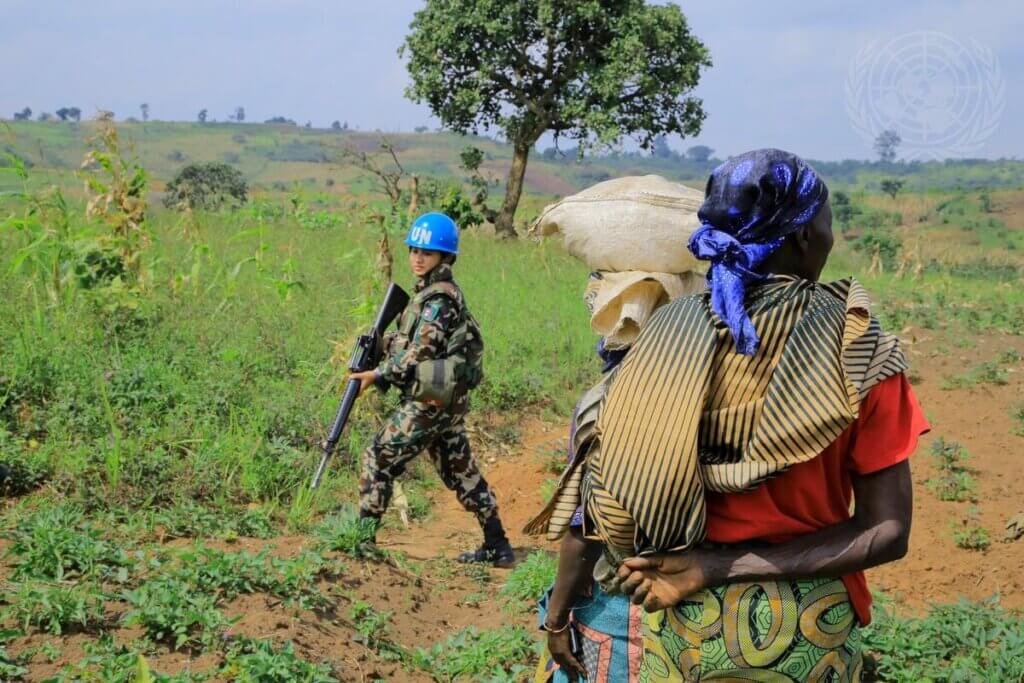
Header image: UN Photo / Jorkim Jotham Pituwa





Community Adaptation for a Water Festival Without Clean Water