

Introduction
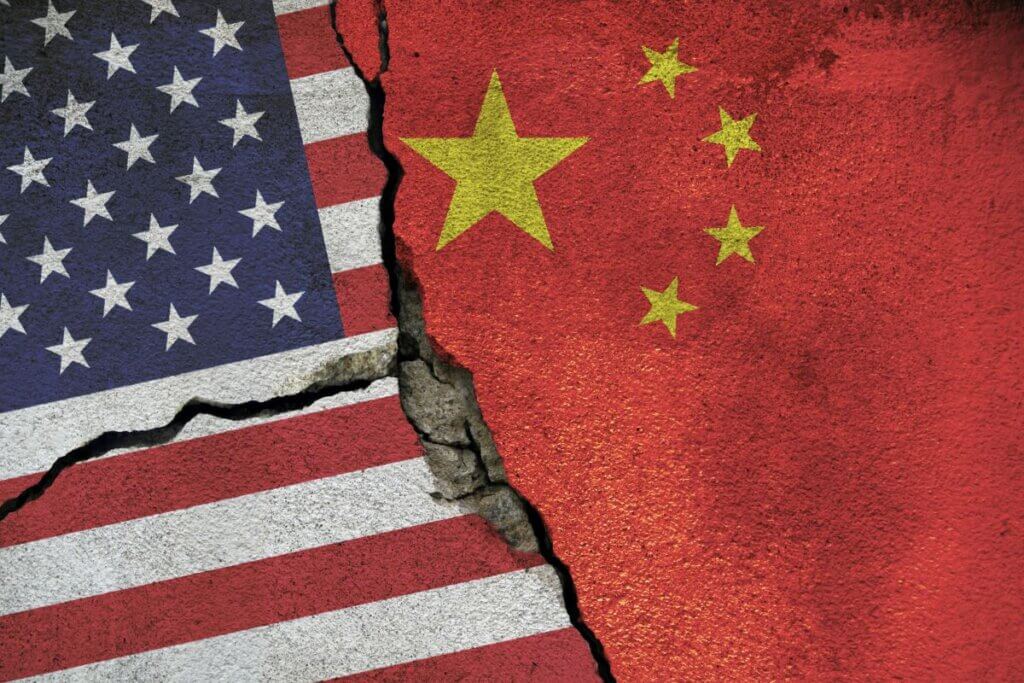
“Great Power Competition” (GPC)1Jonathan M. DiCicco and Tudor A. Onea, “Great-Power Competition,” Oxford Research Encyclopedia of International Studies, 2023, online only. has emerged as a guiding principle for U.S. foreign policy during the last five years. Though contested, GPC is associated with a significant literature in international relations and generally refers to particularly strong states competing for power and influence — either regionally or on the world stage.2See, for example, Robert Gilpin, War and Change in World Politics, (Cambridge, UK: Cambridge University Press, 1983), vii-272; and Abramo FK Organski, World Politics, (New York, NY: Knopf, 1958), xii-461. Overwhelmingly, American foreign policy officials and commentators have rhetorically framed this “new age of Great Power Competition”3Bilahari Kausikan, “Navigating the New Age of Great-Power Competition,” Foreign Affairs, September 12, 2023, https://www.foreignaffairs.com/united-states/china-great-power-competition-russia-guide . as the raison d’être for increased defense and security spending, and analysts often see GPC as primarily applying to military competition. Despite the conflation of defense policy with competition, GPC does not dictate that the military be its primary domain, nor does it mean that war is inevitable. Even accepting that anarchy or the absence of any overarching authority governs international affairs,4See, for example, Hans J. Morgenthau, Politics Among Nations: The Struggle for Power and Peace (New York: McGraw-Hill, 1973); and Kenneth N. Waltz, “The Emerging Structure of International Politics,” International Security 18, no. 2 (1993): 44-79. and, following this, that competition among powerful states is inevitable (which, historically, is not an absolute),5See, for example, David C. Kang, China Rising: Peace, Power, and Order in East Asia, (New York: Columbia University Press, 2007), 1-296. GPC is what states make of it.6The reference is to Alexander Wendt, “Anarchy Is What States Make of It: The Social Construction of Power Politics,” International Organization 46, no. 2 (Spring 1992): 391-425. Although security competition and direct conflict are by no means a foregone conclusion, by fixating on the military realm as the principal vehicle for competition, U.S. policy itself could make war between today’s primary competitors — the United States and China — a self-fulfilling prophecy.
By making competition synonymous with defense policy, decision-makers in Washington are making two mistakes. First, this narrow conceptualization of GPC is ahistorical and discounts the complexity of states’ motivations and the varied instruments and arenas in which competition will play out. Second, the corresponding GPC policy — theoretically a means to ensure long-term stability and preserve U.S. power — might inadvertently increase the likelihood of provoking exactly that which the international community seeks to avoid: a great power war.7Jim Garamone, “Deterrence Ensures Great Power Competition Doesn’t Become War, Milley Says,” U.S. Department of Defense, December 7, 2021, accessed July 24, 2024, www.defense.gov/News/News-Stories/Article/Article/2865253/deterrence-ensures-great-power-competition-doesnt-become-war-milley-says/.
The Military Instrument and Great Power Competition
Since the concept took center stage in the 2017 “National Security Strategy,”8The White House, 2017 National Security Strategy, December 2017, https://trumpwhitehouse.archives.gov/wp-content/uploads/2017/12/NSS-Final-12-18-2017-0905.pdf analyses of GPC have emphasized its implications for force modernization and posture, military technology and weapons systems, and defense budgets.9Rosella Cappella Zielinski and Samuel Gerstle, “Paying the Defense Bill: Financing American and Chinese Geostrategic Competition,” Texas National Security Review 6, no. 2 (June 13, 2023): 57-78, https://tnsr.org/2023/04/paying-the-defense-bill-financing-american-and-chinese-geostrategic-competition/. GPC is not a formal budget line, therefore it is challenging to precisely disentangle patterns of spending dedicated to this end.10U.S. Naval Institute Staff, “Report to Congress on Great Power Competition,” USNI News, January 19, 2024, news.usni.org/2024/01/19/report-to-congress-on-great-power-competition-8. Nonetheless, a 2024 Congressional Research Service report argues, “The emergence of GPC has led to a renewed emphasis on grand strategy and geopolitics as a starting point for discussing U.S. defense funding levels, strategy, plans, and programs.”11“Great Power Competition: Implications for Defense—Issues For Congress,” Congressional Research Service, February 24, 2024, 6, sgp.fas.org/crs/natsec/R43838.pdf. Individual service branches12Charles Pope. “Air Force’s Proposed $169 Billion Budget Focuses on ‘Great Power Competition,’ Readiness, Establishing Space Force,” United States Air Force, February 10, 2020, https://www.af.mil/News/Article-Display/Article/2080164/air-forces-proposed-169-billion-budget-focuses-on-great-power-competition-readi/. and units13Alyxandra Marine, “Great Power Competition Is Back. What Does That Mean for US Special Operations Forces?” Atlantic Council, April 19, 2024, https://www.atlanticcouncil.org/blogs/new-atlanticist/great-power-competition-is-back-us-special-operations-forces/. have framed funding requests in terms of GPC, and most mentions of GPC in recent congressional debates have been made in the context of U.S. military power and defense spending.14“Advanced Searches,” Library of Congress, accessed July 23, 2024, congress.gov/.
These discussions of GPC tend to focus on the threat from China, and the Biden administration and Department of Defense (DOD) have emphasized the need to build up U.S. military capabilities in the Indo-Pacific region. In March, the DOD requested a $9.9-billion budget for its proposed Pacific Deterrence Initiative to make “targeted investments that enhance U.S. force posture, infrastructure, presence, and readiness as well as the capacity and capabilities of U.S. Allies and partners, specifically in the Indo-Pacific region.”15“Pacific Deterrence Initiative,” Fiscal Year 2025 Budget, Department of Defense, March 2024, comptroller.defense.gov/Portals/45/Documents/defbudget/FY2025/FY2025_Pacific_Deterrence_Initiative.pdf, 4. Coming on the heels of the Biden administration’s decision to sell nuclear submarines to Australia,16See Ian Johnson, “Biden’s Grand China Strategy: Eloquent but Inadequate,” Council on Foreign Relations, May 27, 2022, www.cfr.org/in-brief/biden-china-blinken-speech-policy-grand-strategy; and Franco Ordoñez, “Biden Is Selling U.S. Nuclear Submarines to Australia to Counter China.” NPR, March 13, 2023, www.npr.org/2023/03/13/1163153801/biden-is-selling-u-s-nuclear-submarines-to-australia-to-counter-china. the newly minted “Squad” — a group of defense chiefs from the United States, Japan, Australia, and the Philippines — has held meetings to further develop defense cooperation in the Indo-Pacific, most recently in May.17Lucas Myers, “The Squad and the Quad,” Wilson Center, May 14, 2024, https://www.wilsoncenter.org/blog-post/squad-and-quad. As the United States pursues an increasingly complex “latticework” security architecture for the region, both Beijing and Washington have denounced near accidents between their naval vessels, with leaders trading barbs about whose actions were responsible for the close calls.18See “Chinese Warship Passed in ‘Unsafe Manner’ Near Destroyer in Taiwan Strait, US Says,” Reuters, June 4, 2023, www.reuters.com/world/asia-pacific/chinese-warship-passed-unsafe-manner-near-us-destroyer-taiwan-strait-us-2023-06-04/; and Brad Lendon and Eric Cheung, “China Accuses US of ‘Provocation’ After Near Collision of Warships,” CNN, June 4, 2023, www.cnn.com/2023/06/04/asia/china-defense-minister-shangri-la-speech-intl-hnk/index.html. Though by no means an official policy line, some high-ranking U.S. defense officials have even warned that a war with China is likely in the next few years.19See, for example, Dan Lamothe, “U.S. General Michael Minihan Warns War With China Possible in 2025,” Washington Post, January 23, 2023, www.washingtonpost.com/national-security/2023/01/27/us-general-minihan-china-war-2025/.
Analytical Challenges: History of Power Transitions and Great Power Competition
The association between GPC and the inevitability of war is found at best, in a limited reading of the historical record. Policymakers often invoke references to the Power Transition Theory (PTT)20Power transition theory tends to focus somewhat more on hierarchy or asymmetry in capabilities. See Ronald L. Tammen et al., Power Transition Theory (New York: Chatham House, Seven Bridges Press, 2000), 1-244. literature, emphasizing that once a rising state reaches parity with the existing hegemon, war becomes more likely. These discussions often include references to Thucydides’ History of the Peloponnesian War,21Thucydides, History of the Peloponnesian War, trans. Richard Crawley (Mineola, NY: Dover Publications, 2017), 1-432. and the Thucydides Trap, coined by political scientist Graham Allison in 2012. Allison argues that war is likely to occur when an emerging power threatens to displace an existing great power as a regional or global hegemon, noting that historically three out of four of power transitions have led to war.22Though, importantly, since the dawn of the 20th century, a full half of the cases Allison identified did not result in war. See Graham Allison, “The Thucydides Trap,” Foreign Policy, June 9, 2017, 73-80. Though the Thucydides Trap argument has been given a lot of currency in U.S. foreign policy circles, historians and political scientists alike have been critical of this reading of history23See Jonathan Kirshner, “Handle Him With Care: The Importance of Getting Thucydides Right,” Security Studies 28, no. 1 (2019); 1-24; David C. Kang and Xinru Ma, “Power Transitions: Thucydides Didn’t Live in East Asia,” Washington Quarterly 41, no. 1 (2018): 137-154; and Bruce Clark, “Lessons From History: The Real Thucydides Trap,” The World Today, www.chathamhouse.org/sites/default/files/field/field_document/16%20Thucydides%2005.pdf. and its application to US-China relations.24Michael A. Peters, et al., “US–China Rivalry and ‘Thucydides’ Trap’: Why This Is a Misleading Account,” Educational Philosophy and Theory 54, no. 10 (2022): 1,501-1,512.
Although Athens and Sparta did go to war, this is by no means the only account of GPC. The last widely agreed-upon power transition moved the world into the “unipolar moment” and occurred with the collapse of the Soviet Union — a transition that did not provoke a major interstate war. Although the world experienced unprecedented devastation resulting from World Wars I and II, the power transition between the United States and the British Empire occurred largely peacefully.25See Kori Schake, Safe Passage: The Transition From British to American Hegemony (Cambridge, MA: Harvard University Press, 2017), 1-400. Nevertheless, many transitions that involved great powers were undoubtedly contentious and involved military dynamics. Furthermore, the cases that have so often informed the PTT literature are primarily found in the narrow experiences of European states; a review of other regional security orders over time shows that these patterns in power alignment and conflict are by no means a law of nature.26For example, though the Ottoman Empire permanently collapsed during World War I, its power had already radically receded. Also see David Kang, “East Asia When China Was at the Centre: The Tribute System in Early Modern East Asia,” Routledge Handbook of Asian Regionalism (London, Routledge, 2012), 78-93; Dani K. Nedal and Daniel H. Nexon, “Anarchy and Authority: International Structure, the Balance of Power, and Hierarchy,” Journal of Global Security Studies 4, no. 2 (2019): 169-89; and Richard Ned Lebow, Why Nations Fight: Past and Future Motives for War, (Cambridge, UK: Cambridge University Press, 2010), vii-295.
Even in those cases of power transitions that are animated by conflict, scholars of PTT have often disagreed over whether great power wars have historically been initiated by the rising challenger (in this case China) or the declining hegemon (the United States). Far from a consensus on the belligerence of the rising challenger, many researchers have argued that the existing hegemon often starts the conflict.27See, for example, Jack S. Levy, “Declining Power and the Preventive Motivation for War,” World Politics 40, no. 1 (1987): 82-107; Abramo FK Organski, World Politics, (New York, NY: Knopf, 1958), xii-461; and Charles F. Doran and Wes Parsons, “War and the Cycle of Relative Power,” American Political Science Review 74, no. 4 (1980): 947-65.
Despite these debates and the variation in the historical record, the GPC frame used in Washington assumes the rising power, China, will be the one to initiate conflict. As a result, important complexity regarding the history of and variation in GPC has been lost. To some extent this is inevitable, but it also provides a veneer of intellectual credibility to what is potentially a dangerous interpretation — the most significant implication of which is that great power war can become a self-fulfilling prophecy.
Self-Fulfilling Prophecy–a Motivation for War?
While U.S. government documents like the “National Security Strategy”28The White House, National Security Strategy, October 2022, www.whitehouse.gov/wp-content/uploads/2022/10/Biden-Harris-Administrations-National-Security-Strategy-10.2022.pdf. and statements from officials such as former Chairman of the Joint Chiefs of Staff Mark Milley29Jim Garamone, “Deterrence Ensures Great Power Competition Doesn’t Become War, Milley Says,” U.S. Department of Defense, December 7, 2021, accessed July 24, 2024, www.defense.gov/News/News-Stories/Article/Article/2865253/deterrence-ensures-great-power-competition-doesnt-become-war-milley-says/. make the case that building a stronger military is the only way to prevent war between great powers, this approach could very easily produce the opposite effect. Assuming that a catastrophic two-theater war30Or even three theater war. See Thomas G. Mahnken, “A Three-Theater Defense Strategy,” Foreign Affairs, June 5, 2024, https://www.foreignaffairs.com/united-states/theater-defense-war-asia-europe-middle-east. with nuclear-armed states is to be avoided, policymakers need to consider the dangers31This is in addition to the increased risk of irregular war. See Jacob Shapiro and Liam Collins, “Great Power Competition Will Drive Irregular Conflicts,” War on the Rocks, April 8, 2024, warontherocks.com/2024/04/great-power-competition-will-drive-irregular-conflicts/. of an increasingly militarized foreign policy and be wary of conflating GPC with defense.
For example, in today’s discussions of GPC, policymakers often make assumptions — implicitly or explicitly — about China’s motivations. In international relations theory, GPC between the United States and China could be described as following either a spiral or deterrence model. In the spiral model, punishment and competition leads states that are primarily interested in securing their homelands and vital interests — in other words, primarily defensive motivations — to conflict.32See, for example, Robert Jervis, Richard Ned Lebow, and Janice Gross Stein, Psychology and Deterrence. (Baltimore: JHU Press, 1985), 1-288; Stephen Van Evera, “Why Cooperation Failed in 1914,” World Politics 38, no. 1 (1985): 80-117; and Charles L. Glaser, “Political Consequences of Military Strategy: Expanding and Refining the Spiral and Deterrence Models,” World Politics 44, no. 4 (1992): 497-538. Alternatively, in the deterrence model, the threat of conflict stems from failed attempts to appease or establish deterrence against a fundamentally aggressive or revisionist power.33The literature locates the source(s) of misperception in a variety of areas, including anarchy in the international system, human nature, and cognitive biases. The dividing line between these models is the central motivations of the states. A spiral model would imply that China’s goals are primarily defensive, while a deterrence model would suggest that China’s motivations are aggressive.34“Managing the Escalation Risks of U.S. Military Activities in the Indo-Pacific,” RAND, 2023, www.rand.org/content/dam/rand/pubs/research_briefs/RBA900/RBA972-1/RAND_RBA972-1.pdf. American foreign policy elites, it seems, have crossed a cognitive Rubicon in fixating on the deterrence model; though this may be dismissed as merely rhetorical, this mindset has led to tangible effects on policy.35This is not to argue that China’s intentions are by any means strictly pacifist.
Though scholars of international relations have used both the spiral and deterrence models to conceptualize an array of conflicts, these are analytical categories, not road maps for the future.36Even if conceptualizing motivations as on a continuum, rather than as binary, there will be states that operate at the extremes. First, states (and more accurately, their leaders) are motivated by a variety of considerations, some defensive, some aggressive, some electoral or related to political survival, and others ideological. To the extent that analysts can accurately identify leaders’ intentions (as, of course, these are often subjective), almost no state would be classified as purely aggressive or defensive, or single-mindedly revisionist or status quo, as long as it has the capabilities to compete.
Furthermore, leaders’ objectives are not static (even in autocracies), but if China is seen as inherently aggressive, U.S. policymakers will place every one of Beijing’s foreign policy decisions in this framework. Ultimately, states’ goals are determined, refined, and rearticulated through interaction.37Wendt, “Anarchy Is What States Make of It,” 391-425. In categorically viewing China as an aggressive opponent, the United States actually increases the likelihood of conflict and misses opportunities to de-escalate, recalibrate, and avoid war.38Alastair Iain Johnston, Social States: China in International Institutions, 1980-2000 (Princeton, NJ: Princeton University Press, 2008), 1-280.
If US-China relations are better characterized by the spiral model — or at least some place in between the deterrence and spiral model — and the militarization of GPC can increase the likelihood of confrontation, leaders in Washington should adjust — not to abandon conventional security initiatives, but to more broadly conceptualize GPC.
The Case for Diversifying GPC
This issue brief has described some of the analytical challenges and implications of framing GPC as primarily a matter of U.S. defense policy. If GPC does not inevitably mean war, but emphasizing defense could lead to direct confrontation, wouldn’t diversifying the means of competition be wise?
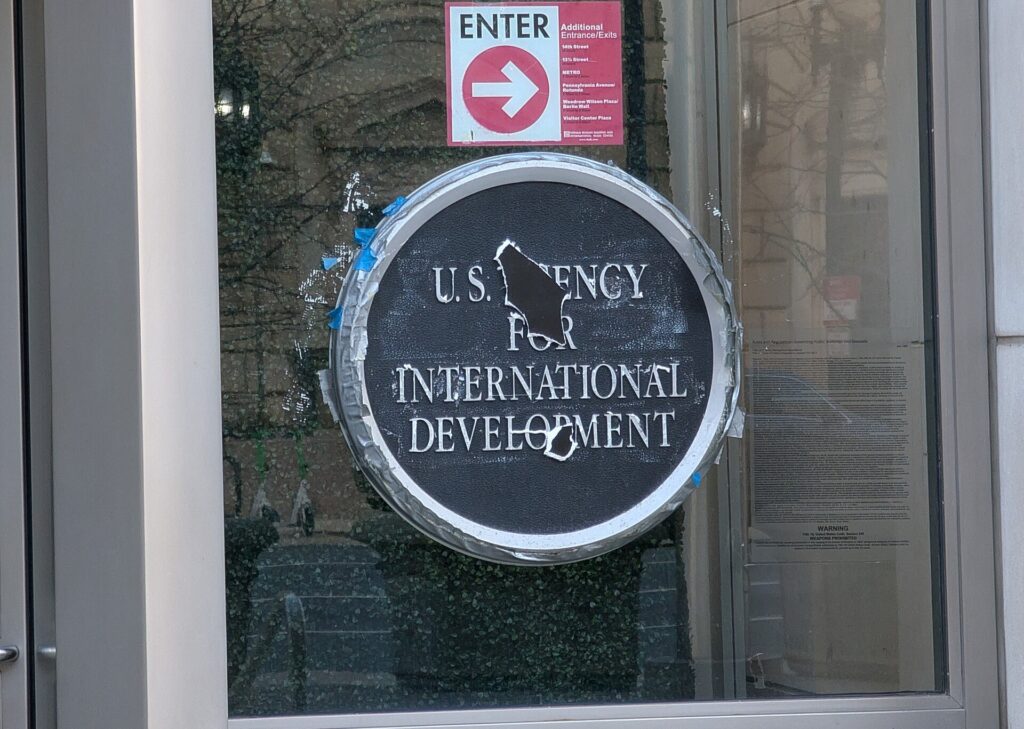
In this regard, U.S. policymakers should broaden their conceptualization of GPC and the sectors in which it will play out.39Political Scientist Jack Snyder, in fact, argued that decline is often a byproduct of over-extension — driven by self-serving bureaucracies, particularly those that justify expansion in terms of national security. See Jack Snyder, Myths of Empire: Domestic Politics and International Ambition (Ithaca, NY: Cornell University Press, 1991), 1-344. Rather than further increasing an already bloated military budget,40Dan Grazier, Julia Gledhill, and Geoff Wilson, “Current Defense Plans Require Unsustainable Future Spending,” Stimson Center, July 24, 2024, stimson.org/2024/current-defense-plans-require-unsustainable-future-spending/. policymakers should strengthen investments in the State Department and diplomatic initiatives such as democratic institutions, infrastructure, and policies to address income inequality. Even in the absence of conflict with China, investing in future generations and building a more resilient society has beneficial second-order effects for the U.S. military — including, for example, improving recruitment and retention, civil-military relations, and the availability of expertise.
Unsurprisingly, decision-makers generally choose to invest resources in large bureaucracies such as DOD that have a disproportionate amount of power and influence. However, if the U.S. military has a monopoly on GPC, the institution will continue to grow to the detriment of instruments better suited to other forms of competition. Ultimately, DOD is not responsible for creating a broader cross-sector plan for competition. Given that the current approach could lead to disastrous and avoidable outcomes, Congress and the president should rethink the United States’ GPC strategy. By increasing investment in the military for poorly defined strategic goals, with potentially catastrophic consequences, Washington has allowed the tail to wag the dog.
Admittedly, much of this critique is premised on the assumption that policy elites in the United States would rather see the country “fall behind” its great power competitors at any point rather than fight a great power war. Critically, there is no discrete threshold of competition at which a great power inevitably declines and a rising challenger emerges victorious. The United States and China will face inevitable setbacks, but both countries will be great powers for the foreseeable future. The most likely paths away from great power status run through a catastrophic direct military engagement or collapse due to overextension.
Apparently, some analysts and policymakers would prefer war to parity or, perish the thought, being second to China, even for a moment. Even the most hawkish pundit would have to concede, however, that any war with China — a nuclear power, roughly the same size in territory as the United States, but with more than four times the population — would most likely be long and arduous,41Brian Kerg, “There Will Be No ‘Short, Sharp’ War. A Fight between the US and China Would Likely Go on for Years,” Atlantic Council, March 22, 2024, www.atlanticcouncil.org/blogs/new-atlanticist/there-will-be-no-short-sharp-war-a-fight-between-the-us-and-china-would-likely-go-on-for-years/. cost both countries dearly in blood and treasure,42Jennifer Welch et al., “Xi, Biden and the $10 Trillion Cost of War Over Taiwan,” Bloomberg, January 9, 2024, www.bloomberg.com/news/features/2024-01-09/if-china-invades-taiwan-it-would-cost-world-economy-10-trillion. and ultimately not guarantee that, when the dust settles, the United States comes out on top.43Jacob Heim et al., “U.S. Military Theories of Victory for a War with the People’s Republic of China,” RAND, February 2024, www.rand.org/pubs/perspectives/PEA1743-1.html. Contrary to those who argue that, when such a time comes, the United States should fight, or at least orient defense planning for such a contingency, in the view of this author, sparking a great power war would be the most catastrophic of blunders. All the more reason, one would think, to find alternatives that make great power competition work in America’s favor rather than hastening its decline.









Community Adaptation for a Water Festival Without Clean Water