
Introduction
United Nations (UN) member states from Latin America and the Caribbean have been long-standing contributors to UN peacekeeping, providing troops and police, political and policy direction, and expert training facilities and courses to support different missions around the globe. The region has also hosted several UN missions (inclusive of special political missions (SPMs) and peacekeeping) in countries such as Haiti, El Salvador, and Colombia. The collective experiences from both the contributions of the region to peacekeeping and a regional history dealing with conflict, armed groups, and threats to civilians, including children, have positioned the region and its personnel as informed practitioners and critical partners in securing stability and peace in Latin America and the Caribbean, as well as globally.
For decades, personnel from Latin American and Caribbean countries have contributed to the protection of civilians in settings where armed actors recruit and use children and perpetrate other grave violations. Previous UN deployments in and from countries in Latin America and the Caribbean have generated decades of lessons learned, and current deployments from the region’s troop- and police-contributing countries (T/PCCs) continue to contribute to protection outcomes in contexts such as the Democratic Republic of the Congo, the Central African Republic, and South Sudan. At the same time, the region itself faces longstanding and new threats to children, particularly in Haiti, where there remains ongoing engagement from Latin American and Caribbean countries, the UN, and other member states. Still, and even where UN-led or UN-mandated missions operate without an explicit child protection mandate, such as in Colombia and Haiti, the existence of armed groups, gangs, and state actors who perpetrate grave violations against children pose a real challenge for all types of missions, from SPMs to peacekeeping operations, and to newer models such as the Gang Suppression Force (GSF) in Haiti. Within this environment, UN missions are further contending with significant funding cuts resulting in the withdrawal of personnel, limiting missions’ ability to track and verify violations, engage conflict parties, and monitor and prevent threats to civilians, including children.
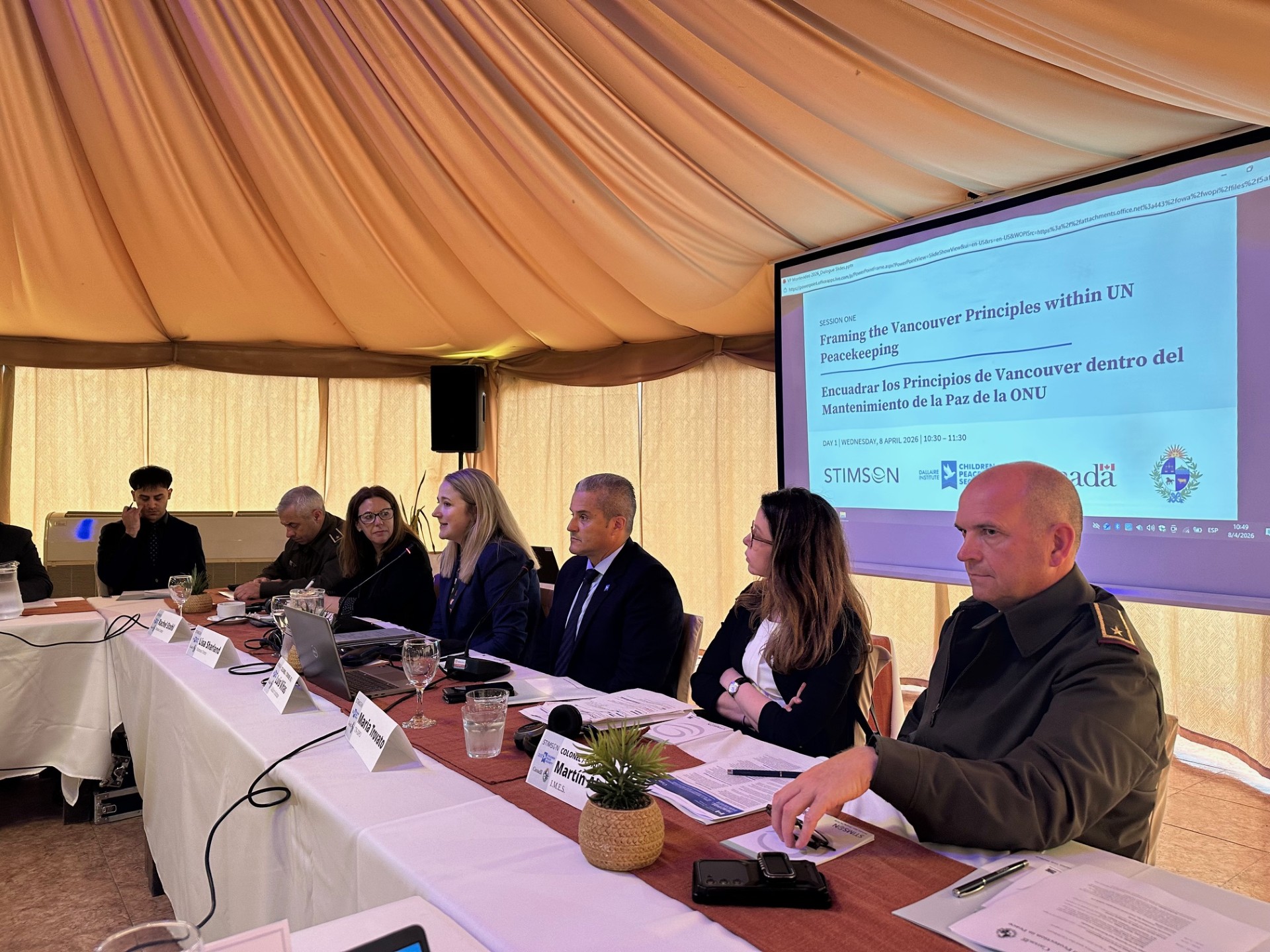
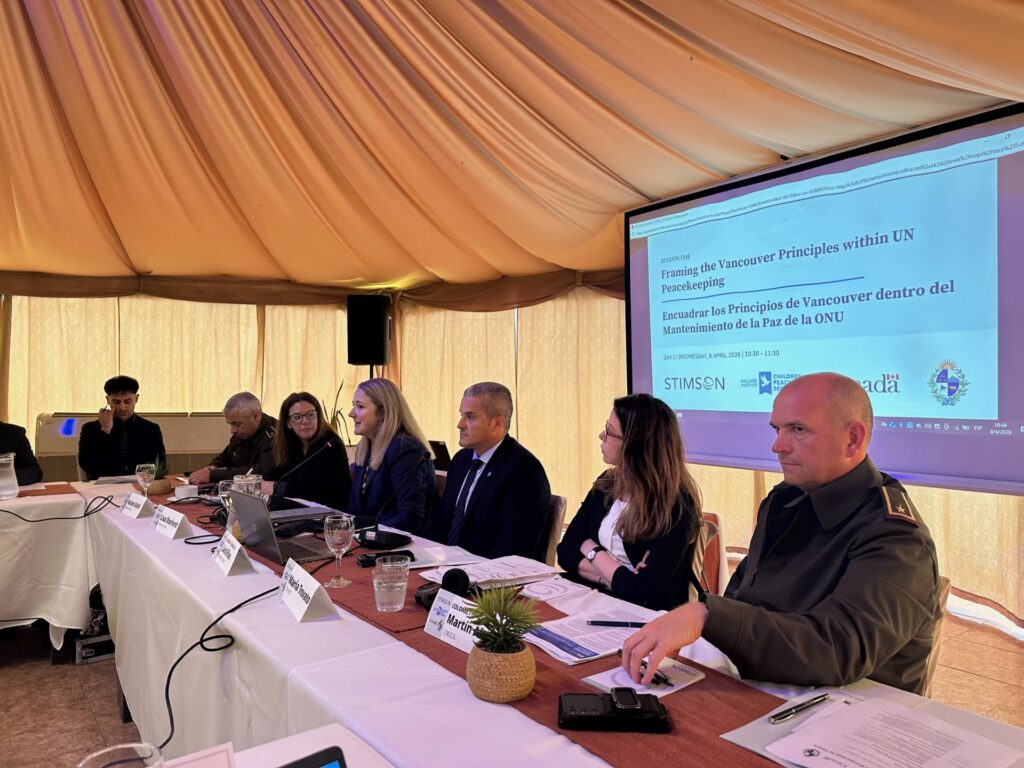
With the aim of gathering lessons learned and perspectives from T/PCCs to further inform child protection efforts in peace operations, the Stimson Center’s Protecting Civilians and Human Security Program and Conventional Defense Program, in partnership with the Dallaire Institute for Children, Peace and Security and Uruguay’s National Support System for Peacekeeping Operations (SINOMAPA), hosted an in-person dialogue on 8-9 April 2026 at the Military Institute of Higher Studies (IMES) in Montevideo, Uruguay with representatives from Latin American T/PCCs and civil society, as well as government representatives from the region, officials from the UN and regional organizations, peacekeeping training centers, and researchers. Guided by the Vancouver Principles on Peacekeeping and the Prevention of the Recruitment and Use of Child Soldiers, participants exchanged views, experiences, and expertise, exploring priority areas for Latin American T/PCCs in implementing the Vancouver Principles in both peace operations settings and in national contexts.
This was the first dialogue in a series of three regional gatherings. The two following dialogues cover perspectives from Africa and the Indo-Pacific. This summary document has been prepared by the Stimson Center and shares the main discussion points raised during the event under the Chatham House rule of non-attribution. It is not reflective of all participants’ views nor those of partners.
Assessing the Threat Environment
Children around the world are facing grave violations with increasing regularity and in new ways.[1] In Haiti, the Democratic Republic of Congo (DRC), Colombia, the Central African Republic (CAR), and elsewhere, state and non-state actors recruit children into combat roles, use children as messengers and cooks, traffic boys and girls, perpetrate other grave violations including rape and other forms of sexual and gender-based violence, and abduct children from their homes. Children in different countries face these threats to varying degrees, and boys and girls are impacted differently. In Haiti, along the border with the Dominican Republic, over 20 gangs have been identified in the involvement of trafficking children.[2] In CAR, several armed groups continue to recruit children. In Colombia, armed dissidents are using technology and online platforms to recruit children. In DRC, non-state armed groups perpetrate human rights violations and abduct children.[3]
Recruitment and use remains one of the primary risks for children living in conflict settings, and an evolving threat environment and the development of new technology have diversified recruitment tactics. One participant noted that “often the ways that children are being recruited is happening in the same pattern, but in different contexts.” Today, in Colombia, children who play video games are primed to find operating drones attractive, artificial intelligence and cyber programs familiarize children with the practice of outsourcing decision-making, and children are being recruited online while mis- and disinformation spread through social media, sowing distrust within communities about institutions like UN peacekeeping missions, which in turn obstructs mandate implementation, directly impacting child protection.
These technological developments compel peacekeeping missions to stay ahead of evolving threats and recruitment tactics. However, in a resource-constrained environment and with fewer personnel, reductions in mission footprints have a major impact on the ability of missions to comprehensively track and respond to threats to children. Moreover, even when resources and personnel are available, peacekeeping may face limitations in adopting measures to combat or prevent grave violations, being bound by strict rules of engagement with the host state. Despite this, and for decades, peacekeepers have been instrumental in gathering credible information for the Monitoring and Reporting Mechanism (MRM), whose data is used to inform the list of countries and situations on the UN Security Council’s Children and Armed Conflict (CAAC) agenda and thus, ultimately, the attention and resources needed to protect children in conflict situations.
Recent action by the UN Security Council, however, risks undermining the gains incurred over the last two decades of the CAAC agenda and has, in fact, positioned missions to be less responsive to address threats to children. In the last year, the Council has dealt with challenging mandate renewal processes (e.g. Colombia), decisions regarding mission closures (e.g. Lebanon), and debates surrounding the removal of long-standing mandate language on gender, climate, and child protection. In 2026, peacekeeping missions are expected to maintain their level of engagement on child protection activities and programming, yet with a reduced number of personnel and fewer field offices. Fewer contingents on the ground and fewer posts result in fewer and less frequent patrols, diminished presence in communities, limited community engagement opportunities, and reduced documentation of grave violations.
National Perspectives on Implementing the Vancouver Principles
National approaches to implementing the Vancouver Principles varied among troop-and police-contributing countries in the region as regional representatives shared specific scenarios, challenges, and lessons learned from efforts to protect children during mission deployments.
In UN operations, countries from Latin America deploy personnel into a range of posts. While some Latin American T/PCCs deploy entire contingents, others deploy military observers, platoons, or a minimal number of police officers. Experience addressing child protection concerns also varied between T/PCCs, depending on the missions that different countries had experience deploying to. Threats to children are context-specific, meaning personnel with experience addressing risks to children in one peacekeeping setting may have some understanding and preparedness in a new mission environment. However, they still faced a knowledge gap when it came to dealing with a new operating environment that consisted of different conflict drivers and armed actors, presenting new challenges to documenting grave violations and protecting children.
Threats to girls and boys also differ in operational settings, requiring gender-sensitive approaches in certain situations where the mission is likely to encounter girls who may be associated with armed groups or gangs. Some participants advocated for a greater number of women to be deployed because they are “the ones who can really reach the most vulnerable population” (i.e., children and other women). Other participants noted that women do not only bring in community engagement expertise but highlighted that women’s skills are sometimes best utilized in intelligence or logistics. Citing the work of the Elsie Initiative, a representative from a Latin American T/PCC noted how the deployment of women in peace operations not only benefits the host communities but also contributes to a positive mindset shift at home by challenging cultural narratives that women do not want to deploy to peace operations.
For many countries, the Vancouver Principles have also been usefully applied to scenarios beyond peacekeeping and peace operations, including in national and regional contexts. Many Latin American countries which contribute to UN peacekeeping have integrated the commitments from the Vancouver Principles into their own national priorities and institutions, including provisions, laws, councils, government offices, and ministries that have either dedicated posts or units to child protection. There are also intergovernmental networks, including civil-military coordination mechanisms, to coordinate on child protection efforts. Occasionally, these efforts are linked to centers of excellence on human rights or embedded into constitutions, as histories of past national conflicts have directly impacted national priorities on child protection. In Peru, for example, national-level child protection policies are implemented at the local level where each municipality has its own office. In Colombia, credible intelligence indicated that a member of the Revolutionary Forces of Colombia (FARC) was going to kidnap and recruit a child, which led to municipal government and police involvement. The authorities were then able to secure the military to retrieve the child and ultimately, the support to remove the entire family from the threat. In addition to instances like these, Latin American countries that are signatories to the Vancouver Principles also refer to UN doctrine for national training purposes and, in concert with previous deployment experience, deliver pre-deployment courses at their national peacekeeping training centers specifically on child protection and related topics such as human rights.
There are several challenges to implementing the Vancouver Principles in multilateral and national contexts. Operating in environments where personnel may not be prepared to respond to or interact with children carrying guns or carrying out tasks for armed groups is one such challenge. For the UN and T/PCCs, preparedness for these situations ultimately comes down training, which can be challenging to secure once in a mission setting, where there are numerous different modules competing for personnel’s training time and an oversaturation of briefings. In these environments, there is often limited time dedicated to focused training on child protection. Moreover, although there is broad awareness of the importance of child protection in UN peacekeeping contexts, the Vancouver Principles are not necessarily widely understood by all personnel operating in different mission settings, even if the deploying country is a signatory.
Addressing Threats to Children in Colombia, Haiti, and the DRC
Lessons from various contexts where Latin American countries have been and continue to deploy — such as in Colombia, Haiti, and the Democratic Republic of the Congo — offered further lessons about the application of the Vancouver Principles, child protection, and the sustainability of lessons emerging from deploying to these varied contexts.
Colombia
Colombia offers important lessons as not only a troop-contributor, but also from the country’s own experience navigating internal armed conflict, with children being recruited and used by armed groups. From a legal perspective, the Colombian conflict is a domestic one with insecurity driven by armed groups with political and criminal motives. Armed groups have capitalized on certain vulnerabilities, particularly as relates to children, across the county to further their agenda against the state. In rural areas, such groups take advantage of children who drop out of school, with social media, online platforms, and video games being exploited to incentivize recruitment. Furthermore, criminal groups which operate in remote areas create emotional bonds with children that ultimately result in recruitment.
The United Nations Verification Mission in Colombia has a visible presence in areas where armed groups are operating. Although it is a UN special political mission that does not include an explicit child protection mandate, the mission is nonetheless engaged directly in addressing issues related to the recruitment and use of children by armed groups, including by its good offices role. Effective approaches have benefited from strong engagement by the mission with clear direction from mission leadership when developments on the ground move faster than mandates are authorized or laws are passed. Effective disarmament, demobilization, and reintegration (DDR) processes also need to integrate unique and dedicated support and processes for children, ensuring that they are separated from adults and incorporate programming and psychosocial support. Some participants acknowledged that such domestic lessons have been integral to informing Colombia’s approach as a peacekeeping contributor.
Haiti
With several international entities operating in and deploying to Haiti, child protection concerns remain paramount as gangs continue to recruit and use children, threaten their livelihoods, and exploit an already highly divided society. While the MRM mechanism is functional in Haiti, abduction, sexual violence, and recruitment have gone up three-fold.
Haiti has had a long history of international support and presence of multinational missions. Perceptions among the local communities have been mixed, given previous instances of sexual exploitation and abuse by deploying forces, including against children. Three missions are currently deployed in country to address the security situation: a Gang Suppression Force (GSF) authorized by the UN Security Council, a special political mission (BINUH), and a UN logistics support mission (UNSOH). T/PCCs in Latin America and the Caribbean have extensive experience serving in Haiti given deployments to previous UN peacekeeping missions (e.g. MINUSTAH); however, many of those countries had not committed to or deployed to the GSF at the time of the workshop.
The GSF is grappling with several challenges as it interacts with children who have been recruited into various gangs and criminal networks as well as self-defense brigades. Some participants expressed concerns that the deployment of the militarized GSF is devoid of civilian expertise and an adequate feedback loop on child protection concerns. Personnel deploying to the GSF will need clear direction and understanding on rules of engagement that protect children. This is difficult in an operating environment where children may be actively firing upon the GSF or civilians, and it may be difficult to determine whether those in gangs are in fact children or not. At the same time, mission personnel may need to engage gang leaders about voluntarily surrendering children under their control, which requires a careful balance of engaging with the gangs without being complicit in the legitimization of these groups.
These efforts are further complicated by the security, economic, and political situation in Haiti. This includes the operation of private military companies that utilize drones to combat the gangs, in addition to challenging operational and resourcing logistics. Disintegrated family structures leave children exposed and abandoned, with many seeking livelihoods, community, and protection, which is often afforded by the gangs. Some children enter armed groups or the self-defense brigades driven by a desire for vengeance and sense of community, making it difficult to leave. Effective DDR processes in Haiti are compounded by the breakdown of the judicial and penitentiary systems. Transitional justice frameworks may assist with demobilizing children who are victims of recruitment and use, but there is also a deep desire within communities to ensure that those who have committed atrocities are held accountable for crimes committed at the behest of adults.
Given the experiences of previous deployments to Haiti and the current challenges facing the civilian population, one participant stressed the importance of seeing the conflict not simply as one in which children feel moved or are forced to be a part of a gang. Rather, given certain neighborhood-based alliances and a sense of self-preservation, children and adults alike may see these groups as self-defense forces. Responding to this environment is only one challenge among a set of many facing child protection actors in Haiti, GSF personnel, and UN agencies.
Democratic Republic of the Congo
Latin American countries have deployed to the mission in the DRC, the United Nations Organization Stabilization Mission in the Democratic Republic of the Congo (MONUSCO), for over three decades. The mission has maintained an explicit child protection mandate throughout that period, focused on preventing violations and abuses against children, monitoring and reporting on violations, and working with the host government to prevent and end the recruitment and use of children, and build state capacity to protect children.
The DRC continues to have some of the highest numbers of verified grave violations against children. This includes the killing and maiming of children, perpetration of sexual violence, attacks on schools and hospitals, and abductions, among others. MONUSCO has faced considerable challenges addressing these threats to children in a more resource-constrained environment due to the smaller footprint of the mission, which has limited capacity to respond.
Many of these challenges were prominent during the Goma crisis in January 2025. Participants reflected on the presence of the Uruguayan contingent in Goma in January 2025 when the M23 infiltrated, providing shelter for civilians during the fall of the city. The contingent was able to draw on its lessons and preparedness to protect parts of the civilian population during the crisis. The dialogue provided critical space to share and reflect on those lessons with regional counterparts.
Conclusion: Perspectives from Latin America and the Caribbean
Personnel from troop- and police-contributing countries from Latin America and the Caribbean have gained invaluable insights regarding child protection from experiences both within their national contexts and through international deployments. The threat of online recruitment is expanding, and armed groups continue to find new ways to recruit and use children. Transnational crime networks exploit children’s vulnerabilities both within Latin America and in places to which Latin American T/PCCs deploy, such as in the DRC. Adapting to the evolving threats to children both at home and abroad will be key as Latin American countries continue to develop national policies on child protection and continue to deploy peacekeepers and personnel to a range of mission settings. Most participants acknowledged that the Vancouver Principles had applicability to settings beyond UN peacekeeping missions, and similarly, that lessons emerging from national and regional contexts could continue to strengthen the application of the Principles in various peace operations.
Latin American countries shared many of the same challenges and lessons in preparing personnel to address child protection threats in peace operations. For instance, many participants expressed a need for scenario-based training, which may help to inform incoming personnel on how to identify the warning signs of grave violations. Additionally, informal and formal networks and forums for peacekeepers to exchange experiences and develop unique skillsets can enhance the maintenance and sustainability of good practices and institutional knowledge. Moreover, information sharing between T/PCCs and training centers around the world, and not just regionally, can strengthen mission effectiveness. Yet there were also differences among T/PCCs. Some had less resources to prepare personnel and stressed the ongoing value of partnerships to strengthen capacity and information-sharing, including lessons to support the implementation of the Vancouver Principles.
Even though missions face and will continue to confront a range of financial and operational challenges, participants agreed that protecting children remains a priority. As member states, including T/PCCs, adapt their policies, training, and preparedness for the challenges of current and future peace operations, the Vancouver Principles continue to offer a framework grounded in a shared commitment to operationalizing sustainable child protection.
This event summary was drafted by Juliet Weis. The Stimson Center’s engagement as part of this project is supported by Global Affairs Canada.
[1] UN General Assembly and Security Council, Report of the Secretary-General: Children and armed conflict, A/79/878-S/2025/247, 17 June 2025. At the time of drafting of this summary, the 2026 Report of the Secretary-General: Children and armed conflict had not yet been released. The latest report, which was released on 16 June 2026, documents an even greater number of grave violations, resulting in the highest number on record since the establishment of the mandate on children and armed conflict.
[2] Children Trafficked By Gangs in Haiti: Rethinking the Responses, Office of the High Commissioner for Human Rights and United Nations Integrated Office in Haiti, February 2026, available at: https://www.ohchr.org/sites/default/files/documents/countries/haiti/children-trafficked-by-gangs-rethinking-responses-en.pdf.
[3] UN Security Council, United Nations Organization Stabilization Mission in the Democratic Republic of the Congo: Report of the Secretary-General, S/2026/208, 19 March 2026.





Community Adaptation for a Water Festival Without Clean Water