
Dear Friend,
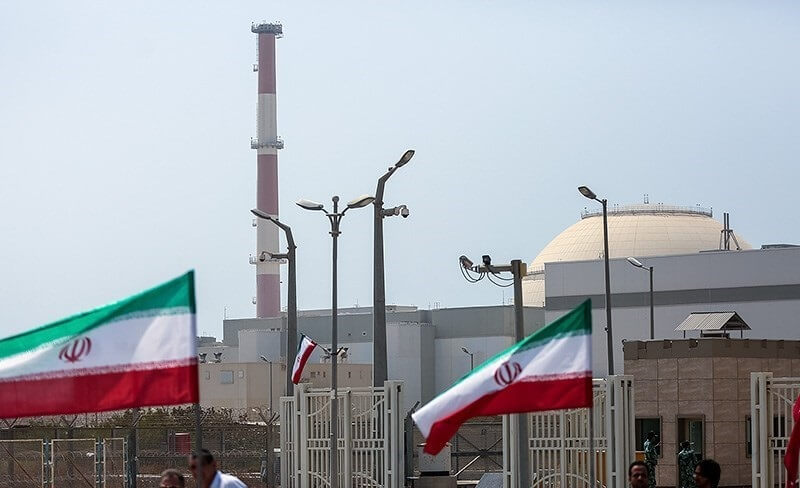
The launch of U.S. and Israeli operations against Iran threatens yet another nuclear security crisis, raising questions amid the fog of war about the ultimate fate of more than 400 kilograms of highly enriched uranium, nuclear enrichment centrifuges, spent fuel at Bushehr nuclear power plant, and the Tehran Nuclear Research Reactor.
The loss earlier this month of a giant of the international nuclear security community, Dr. Igor Khripunov, looms even larger in light of the fresh crisis. Dr. Khripunov, who passed away on February 10, 2026, in Athens, Georgia, made foundational and lasting contributions to the discipline of nuclear security through his work at the University of Georgia, particularly on nuclear security culture. His legacy serves as an inspiration to this community that continues the work every day of supporting and strengthening nuclear security policies and practices all over the world.
Warm wishes,
Christina
Director, International Nuclear Security Forum
Join the conversation on X: @INS_Forum
Follow INSF on LinkedIn here
Updates
The INSF and the Arab Women Network in Chemical, Biological, Radiological and Nuclear Security (AWN-CBRNS) on February 17, 2026, jointly hosted a special webinar, “Nuclear Energy and Security in the Middle East: Regional Perspectives, Emerging Challenges and Capacity Building.” Many thanks to our distinguished speakers Ms. Sarra Moumni, National Center for Nuclear Science and Technology (CNSTN), Tunisia, Prof. Dr. Mohamad Zineddin, Oak Ridge National Laboratory (ORNL), USA, and Dr. Abdulhadi Shoufan, Associate Professor of Computer Information Engineering, Khalifa University, UAE.
FUNDING APPEAL: If you appreciate this newsletter, please consider a donation to ensure sustainability into the future. Donate here and specify where indicated that your gift is intended to support the INSF. Institutional funding for civil society’s nuclear security work is increasingly hard to come by, as many readers already know, and the International Nuclear Security Forum appreciates your support!
Nuclear Security News
Impact: The Russian Invasion of Ukraine
IAEA
27 February 2026
Update 342 – IAEA Director General Statement on Situation in Ukraine
The International Atomic Energy Agency (IAEA) has negotiated a fifth local ceasefire in the conflict, allowing the restoration of the off-site back-up power supply to Ukraine’s Zaporizhzhya Nuclear Power Plant (ZNPP) which was lost on February 10, 2026, Director General Rafael Mariano Grossi said.
UKRAINSKA PRAVDA
6 FEBRUARY 2026
IAEA says Ukrainian nuclear power plants require large-scale repairs
Ukraine’s power grid came under military attack, significantly affecting operations in several regions and at nuclear power plants, making large-scale repair work necessary.
BBC
23 January 2026
Ukraine is Battling to Keep the Lights on, This Nuclear Plant is Vital in the Fight
Ukraine is facing an acute energy crisis after months of relentless Russian attacks on its infrastructure.
Security Culture
THE CHOSUN DAILY
Exclusive: Nuclear Regulatory Agencies’ Lax Security Risks Strategic Technology Leaks
A former director and employees of the Korea Institute of Nuclear Safety face charges of illegally exporting large amounts of technical data related to an advanced pressurized water reactor. An audit revealed serious vulnerabilities in the information security systems of nuclear regulatory agencies.
WORLD NUCLEAR NEWS
US Nuclear Regulatory Commission launches reorganization
The US nuclear regulator is aiming to implement a reorganization which it says will streamline decision-making, consolidate functions, and align with national goals for more efficient licensing and deployment of nuclear technology by the end of September.
NPR
The Trump administration exempts new nuclear reactors from environmental review
The US nuclear regulator is aiming to implement a reorganization which it says will streamline decision-making, consolidate functions, and align with national goals for more efficient licensing and deployment of nuclear technology by the end of September.
NUCLEAR NEWSWIRE
NRC staff proposes ROP, security inspection overhauls
The Nuclear Regulatory Commission staff is recommending proposed changes for the Reactor Oversight Process baseline inspection program that could reduce the number of hours spent annually on direct inspections at U.S. nuclear power plants by 38%.
Emerging Technologies
POWER
Radioactive Zinc ‘Safe’ in Philippines: Official
Idaho National Laboratory has teamed up with NVIDIA to advance “PROMETHEUS,” a first-of-its-kind demonstration of an autonomous nuclear reactor driven by AI, to execute a key challenge under the Department of Energy’s Genesis Mission.
International Architecture
CBS NEWS
The IAEA head urged for a diplomatic agreement to avert a war between the United States and Iran, citing the risk presented by Iran’s enriched nuclear material, which he said remained largely intact despite U.S. strikes on three major facilities last year.
PBS
US and Israel Launch a Major Attack on Iran, Trump Says Supreme Leader Khamenei Killed
A major attack launched by Israel and the United States killed Iran’s Supreme Leader Ayatollah Ali Khamenei, President Donald Trump announced Saturday, confirming an assassination that he said gave Iranians their “greatest chance” to “take back the country” but that also put the future of the Islamic Republic in doubt and raised the risk of regional instability.
CNN
US accuses China of secret nuclear test as Trump admin calls for broader nuclear weapons agreement
The United States accused China of carrying out a secret nuclear test in 2020 as the Trump administration calls for a broader nuclear weapons agreement including both China and Russia.
DISCOVERY ALERT
Niger’s Uranium Mine Dispute Reshapes Global Nuclear Supply Chains
The ongoing uranium mine dispute in Niger has emerged as a defining case study in international mining law. The dispute demonstrates how uranium market volatility extends beyond traditional supply-demand factors to encompass geopolitical instability.
Advanced Reactors
OFFICE FOR NUCLEAR REGULATION (UK)
ONR encourages vendors to engage early in new government Advanced Nuclear Framework
The Office for Nuclear Regulation has welcomed the publication of the government’s Advanced Nuclear Framework and is urging vendors to take advantage of early regulatory guidance to accelerate the safe deployment of new nuclear technologies.
NUCLEAR NEWSWIRE
NSI argues for direct disposal as quickest path to nuclear scaling
The Nuclear Scaling Initiative announced a new campaign promoting the direct disposal of spent nuclear fuel. According to the NSI, direct disposal will enable rapid reactor deployment, minimize environmental and security risks, and avoid the financial pitfalls of reprocessing.
INTERESTING ENGINEERING
Amazon-backed next-gen nuclear company wins first US fuel license in 50 years
The US Nuclear Regulatory Commission has approved a new license that allows TRISO-X to manufacture advanced nuclear fuel in the United States. The approval clears the way for commercial production of a specialized fuel known as TRISO using high-assay low-enriched uranium.
MARINE INSIGHT
US Plans To Deploy Massive 300MW Floating Nuclear Power Plant By 2028
The US Department of Defense is in talks with British start-up Core Power to deploy a 300-megawatt floating nuclear power plant at a US military base by 2028.
Material Minimization
DEPARTMENT OF ENERGY
NNSA removed 68 radioactive devices in 2025, strengthening U.S. radiological security
In a significant achievement, NNSA successfully removed 68 devices containing radioactive materials in 2025. ORS is eliminating risks by removing obsolete or unwanted radioactive devices and replacing them with advanced, safer technologies.
BBC
UK Government buries ‘200 containers of radioactive waste’
A total of 192 containers of low-level radioactive waste have been entombed in an underground vault at the decommissioned nuclear power facility in Dounreay. The radioactive waste once formed part of Britain’s experiment with fast breeder nuclear reactors, where Dounreay was at the center.
NUCLEAR NEWSWIRE
NRC ends work on three proposed rules for securing spent fuel
The Nuclear Regulatory Commission on Wednesday announced it was discontinuing three rulemaking activities intended to enhance the security of a deep geologic repository and the protection of spent nuclear fuel.
Transport
THE AMERICAN JOURNAL OF TRANSPORTATION
The U.S. sets the pace for maritime nuclear
Leaders from the maritime, nuclear and energy sectors gathered in Washington, D.C., for CORE POWER’s largest U.S. summit to date. Discussions focused on floating nuclear power plants for ports and coastal industry, and nuclear propulsion for commercial shipping.
REUTERS
US conducts first air transport of nuclear microreactor in bid to show technology’s viability
U.S. government entities for the first time transported a small nuclear reactor on a cargo plane from California to Utah to demonstrate the potential to quickly deploy nuclear power for military and civilian use.
Analysis
WALL STREET JOURNAL
The Nuclear Threat After Tehran Falls
Should Mr. Trump opt to destabilize—or help topple—Iran’s repressive regime, the country’s stockpiles of highly enriched uranium and operating nuclear reactors could become dangerously unsecured.
NUCLEAR NEWSWIRE
Playing the “bad guy” to enhance next-generation safety
At the Department of Energy’s national laboratories, researchers are channeling their inner saboteurs to discover vulnerabilities in next-generation nuclear reactors, making sure that they’re as safe as possible before they’re even constructed.
JUST SECURITY
In 2026, a Growing Risk of Nuclear Proliferation
Kelsey Davenport argues that with the risks of new nuclear-armed States on the rise, the nuclear non-proliferation regime is in danger of collapse. Beyond Tehran, additional countries are likely to move closer to weaponization as debates about deterrence intensify and technical barriers to proliferation erode.
THE WASHINGTON POST
The Post’s Editorial Board argues that as America’s energy demands grow exponentially, the country won’t be able to keep up without more nuclear power. For decades, the climate-friendly industry has been held back by overly burdensome regulations, but that’s beginning to change.
STIMSON CENTER
Hiding in Plain Sight: Why the Comprehensive Test Ban Treaty Matters After New START
David Kenneth Smith argues that with the expiration of New START, the Comprehensive Nuclear Test Ban Treaty has become central to preventing renewed nuclear testing and curbing unconstrained arms competition.
CARNEGIE ENDOWMENT FOR INTERNATIONAL PEACE
Promoting Responsible Nuclear Energy Conduct: An Agenda for International Cooperation
Ariel Levite and Toby Dalton argue that strengthening the political foundation for nuclear energy is critical if it is to deliver on aspirations for a global resurgence and to meet the expectations of parties pursuing it for peaceful or other non-weapons purposes.
GAO
Nuclear Security Enterprise: Assessments of NNSA Major Projects
The National Nuclear Security Administration is overseeing the design or construction of 28 major construction projects—each estimated to cost $100 million or more—that collectively are estimated to cost more than $30 billion.
Member Organization Announcements and Updates
International Institute for Strategic Studies
Karl Dewey, Chelsey Wiley and Joseph Dempsey, an Online Analysis piece, “On track: India’s rail-based Agni-Prime,” about India’s September 2025 test of a nuclear-capable ballistic missile from a rail-based launcher and ongoing interest in a mobile force design.
Alexander K. Bollfrass and Karl Dewey published an Online Analysis piece, “Cost constraints on the US–Russia strategic nuclear balance after New START,” about the expiration of the 2010 New START
Daniel Salisbury published an Online Analysis piece, “Evolving Iranian nuclear risks: between programme reconstitution and loss of control,” about the future of Iran’s nuclear program
Mikhail Troitskiy published a Survival article “Tacit Coercion and Its Dilemmas: Russia and the West,” about Russia’s use of tacit coercion.
Katarzyna Zysk published a Survival article “Svalbard’s Deterrence Gap,” about Norway’s Svalbard archipelago and its strategic significance.
Vienna Center for Disarmament and Non-Proliferation
The VCDNP welcomed members of the Vienna diplomatic community and experts from the IAEA and the public to the panel discussion: Deployment of Small Modular Reactors: A Pathway for Nuclear Energy Expansion.
VCDNP Senior Fellow, Angela Kane, examines the consequences of the expiration of the New Strategic Arms Reduction Treaty (New START) for Europe in a commentary for Bulletin of the Atomic Scientists.
The VCDNP and the research consortium VeSPoTec convened an expert-level workshop to examine the future of nuclear verification amidst growing times of uncertainty: Prospects for Nuclear Verification in Times of Uncertainty and Crises.
The VCDNP published three new papers addressing the impact of Internet of Things devices in conjunction with artificial intelligence on nuclear facilities, data security, and cybersecurity. Artificial Intelligence and the Internet of Things: nuclear facilities, data security, and cybersecurity
Dr. Natasha Bajema and VCDNP’s Mara Zarka examine the intersections between AI and WMD, with an outlook of how this space may change over the next ten years. The paper offers a guide to thinking about this emerging threat space and provides policy recommendations to mitigate future threats. Revolution or Evolution? How AI is Reshaping the WMD Proliferation Landscape
As a part of the Young Women and Next Generation Initiative, the VCDNP hosted a webinar featuring Véronique Christory, Senior Arms Advisor at the International Committee of the Red Cross, on the ICRC’s role in negotiating the Treaty on the Prohibition of Nuclear Weapons.
Negotiating the Treaty on the Prohibition of Nuclear Weapons: Insights from the ICRC
Nuclear Transport Solutions
NTS’ Director of Nuclear & Assurance, Jonathan Power-Higgins, was a panelist on the IAEA’s webinar “From Here to There: Security During Transport of Nuclear and Other Radioactive Material.” This was part of the webinar series entitled, “Nuclear Security – Looking Beyond ICONS 2024.”
NTS security experts joined King’s College London and other partners to deliver a workshop in South Africa titled “Nuclear Security Cooperation: Mitigating Insider Threats and Promoting Security Culture,” as part of the UK’s Nuclear Security Capacity-Building Programme.
Nuclear Threat Initiative
NTI hosted government officials and experts from a dozen countries in Osaka, Japan for the first NTI Asian Nuclear Security Dialogue from February 2–4, 2026, to chart practical steps for strengthening nuclear security across Asia.
Global Nuclear Security Partners
GNDP announced the delivery of TITAN, the Training Initiative for Technical Assessment of Nuclear Sites, in support of Ukraine. The program is designed to strengthen Ukraine’s national resilience by developing specialist capability for assessing and managing radiological risk in high-risk environments.
Individual Member Updates
Artem Lazarev from the CBRN Terrorism Prevention Programme of the UN Office on Drugs and Crime (UNODC) shared that:
- On 22 January, UNODC conducted an official meeting with representatives of the Marshall Islands in Geneva to facilitate the country’s adherence to the International Convention for the Suppression of Acts of Nuclear Terrorism (ICSANT). Find out more.
- On 30 January, UNODC, in cooperation with the United States, convened a hybrid high-level seminar on ICSANT for diplomats at the United Nations Office at Nairobi. Find out more.
Tahir Azad published, “Hypersonic Shadows over the Channel: Britain’s Strategic Blind Spot in the Next Missile Age” published in the Emerging Threats Group Journal by Oxford University.
Opportunities
CONFERENCE
University of Rome Tor Vergata, Rome, Italy
28 September – 3 October 2026
Non-Conventional Safety and Security Challenges in a Changing World | 4th Edition | 2026. The SICC Series – CBRNe Conference 2026 builds upon the success of its previous editions to strengthen the scientific, institutional, and operational dialogue on non-conventional safety and security.
JOB
International Institute for Strategic Studies, Berlin, Germany
Seeking an Executive Director to lead IISS–Europe. The successful candidate will be responsible for leading and developing the IISS–Europe office and will be a member of the IISS Directing Staff. Candidates for the post should have substantial working experience relevant to European security affairs, whether in the expert community, government, the media or business.
JOB
Octant, Washington, DC
Seeking a Senior International Agreements Analyst to support DTRA’s Cooperative Threat Reduction Program’s mission to prevent the proliferation of Weapons of Mass Destruction and eliminate chemical, biological, and nuclear threats. Specifically, support the Integration Team working Interagency and International Agreements by researching, reviewing, tracking, updating, documenting, filing, organizing, analyzing, and coordinating International Agreements and Interagency Support Agreements intended to be used to support CTR’s mission.
JOB
Systems Planning & Analytics, Arlington, VA
Is seeking a Nuclear Stockpile Expert will provide guidance and recommendations to the Government team on all nuclear stockpile issues and requirements that affect Air Force strategic deterrence efforts and policy. This includes coordination with DoD and other agencies involving the nuclear enterprise, stockpile, weapon systems, and the sustainment thereof.
JOB
Pax Sapiens, Vienna, Austria
Is seeking a Research Analyst within the Office for Research and Analysis at the Open Nuclear Network who will substantially contribute to the development and execution of projects with data collection, research, analysis, and reporting, employing methods such as satellite imagery analysis, trade data interpretation, and technical and policy analysis.
JOB
Pax Sapiens, Vienna, Austria
Is seeking a Research Assistant within the Office for Research and Analysis at the Open Nuclear Network who will support sophisticated research projects aimed at understanding and mitigating potential strategic conflicts and international security issues.
FELLOWSHIP
Institute for Security and Technology, Bay Area, CA
The Andrew Carnegie AI–Nuclear Policy Accelerator is a new, practitioner-focused initiative designed to strengthen decision-making at the intersection of artificial intelligence (AI) and nuclear policy.
FELLOWSHIP
Institute of Current World Affairs, Remote
30 April 2026
The Institute of Current World Affairs is accepting letters of interest for the Rydell-Frisa Disarmament Education Fellowship, a two-year independent writing fellowship focusing on global nuclear disarmament education. Letters are due by April 30, 2026.
INTERNSHIP
Pax Sapiens, Vienna, Austria
Is seeking an Intern in the Office for Research and Analysis at the Open Nuclear Network who will support sophisticated research projects aimed at understanding and mitigating potential strategic conflicts and international security issues.
COURSE
George Washington University, Washington, DC
16 – 25 June 2026
GW Law will host a new two-week virtual summer program on nuclear energy law. The program, which will run in conjunction with the International Atomic Energy Agency aims to educate students on both the legal foundations of nuclear power and latest developments in the field, like space applications and maritime uses of nuclear energy.





Community Adaptation for a Water Festival Without Clean Water