

Dear Friend,
Welcome to 2026, which promises to be at least as dynamic and challenging as 2025. Our review of December nuclear security headlines provides glimpses of how technological advances continue to transform the nuclear sector, from providing better tools for nuclear forensics to focusing attention on the secure transportation of nuclear fuel for advanced reactors and potential maritime applications of nuclear technology. The conflict in Ukraine and its impact on critical infrastructure remains a worrying threat to the country’s nuclear power plants, particularly the Zaporizhzhya plant which experienced its 12th loss of off-site power in December. We also sample some of the analysis of how nuclear energy geopolitics could affect nuclear weapons proliferation risks and close with a roundup of member activities and job opportunities.
Warmest wishes for the new year ahead,
Christina
Director, International Nuclear Security Forum
Join the conversation on X: @INS_Forum
Follow INSF on LinkedIn here
Updates
FUNDING APPEAL: If you appreciate this newsletter, please consider a donation to ensure sustainability into the future. Donate here and specify where indicated that your gift is intended to support the INSF. Institutional funding for civil society’s nuclear security work is increasingly hard to come by, as many readers already know, and the International Nuclear Security Forum appreciates your support!
Nuclear Security News
Impact: The Russian Invasion of Ukraine
BBC
7 December
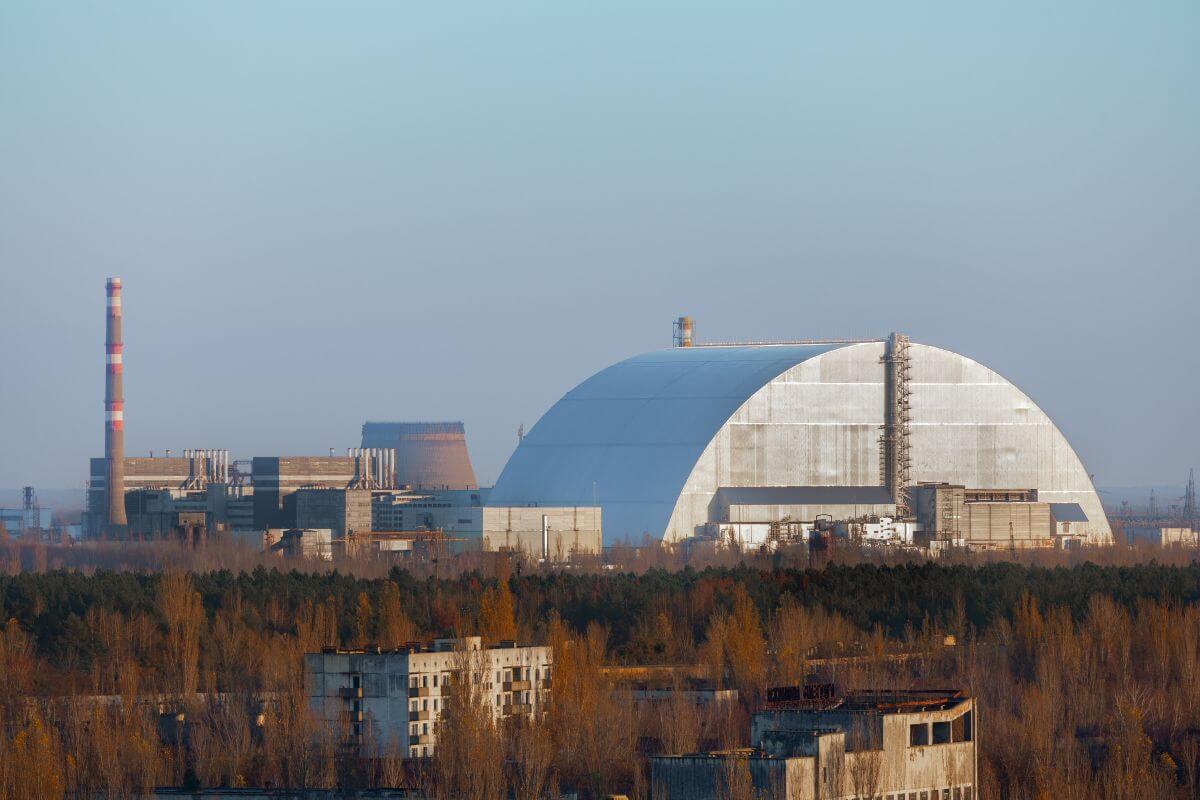
Chernobyl radiation shield ‘lost safety function’ after drone strike, UN watchdog says
A protective shield covering the Chernobyl nuclear reactor in Ukraine can no longer provide its main containment function following a drone strike earlier this year, according to a UN watchdog.
Update 333 – IAEA Director General Statement on Situation in Ukraine
19 December
Ukraine’s Zaporizhzhya Nuclear Power Plant temporarily lost all off-site power for the 12th time since the start of the military conflict, following widespread military activity that disrupted the country’s electrical grid on 13 December. This incident once again underscores the continued fragility of nuclear safety conditions amid the conflict.
Update 334 – IAEA Director General Statement on Situation in Ukraine
23 December
The connection of Ukraine’s Zaporizhzhya Nuclear Power Plant (ZNPP) to its main power line was restored on November 19 although the overall situation remains precarious amid the ongoing military conflict, as several of the country’s operating reactors had to reduce output following overnight attacks on the electrical grid.
KYIV POST
31 December
Rare Russo-Ukraine Local Ceasefire Allows Critical Power Line Repair at Nuclear Power Plant
A rare one-day ceasefire between Russian and the Armed Forces of Ukraine in Ukraine’s southern Zaporizhzhia region held as planned and allowed maintenance crews to repair power lines critical to keeping nuclear activity at Europe’s biggest atomic power station under control.
Weapons, Materials, and Facilities
NUCNET
UK Hails Landmark With Processing Of Plutonium Residue Into Stable Waste For First Time
The UK’s Nuclear Decommissioning Authority group said it has delivered a UK-first nuclear safety milestone by processing a can of plutonium residue into a stable waste form for the very first time.
Security Culture
EXCHANGE MONITOR
NNSA renews grant for R&D in nuclear engineering at universities
The National Nuclear Security Administration said December 23 it was renewing a $25 million grant for five more years to a consortium of nine universities for research and development in nuclear science, engineering and security.
HOMELAND SECURITY TODAY
Coast Guard Establishes Maritime Nuclear Policy Division
The U.S. Coast Guard has established a new Maritime Nuclear Policy Division as part of its broader Force Design 2028 modernization effort. The new division will develop policies related to the safe and secure integration of nuclear technologies into the Marine Transportation System.
NPR
Trump’s rush to build nuclear reactors across the U.S. raises safety worries
Billions of dollars in capital are currently flowing into dozens of companies chasing new kinds of nuclear technologies. These are small modular designs that can potentially be mass produced in the hundreds or even thousands. Their proponents say these advanced designs promise to deliver megawatts of power safely and cheaply.
Emerging Technologies
INTERESTING ENGINEERING
Illegal nuclear material’s origin could be traced in just 30 mins with new trick
A new method developed by researchers at the Los Alamos National Laboratory (LANL) can spot the origins of illegal nuclear material in just 30 minutes with only a simple instrument such as a mass spectrometer.
BIC MAGAZINE
Oklo and Los Alamos National Lab conduct fast spectrum plutonium criticality experiment
The campaign marks the first public technical milestone for Oklo’s Pluto reactor—a plutonium-fueled fast test reactor project selected under the U.S. Department of Energy’s Reactor Pilot Program—and the first step in a larger collaborative program with LANL to qualify surplus plutonium as fuel for commercial advanced reactors.
International Architecture
THE KOREA TIMES
Korea, US hold joint drill on nuclear, radiological terror responses
Korea and the United States began a two-day joint drill on countering nuclear and radiological terrorism as part of efforts to strengthen cooperation in nuclear security. The fourth Winter Tiger involved around 120 officials from related agencies of the two countries.
Advanced Reactors
WORLD NUCLEAR NEWS
Five companies selected for HALEU transport funding
The U.S. Department of Energy’s 2020 HALEU availability program seeks to secure a domestic supply of HALEU for civilian domestic research and commercial use but the higher enrichment levels bring extra challenges for transportation of the material.
ENERGIES MEDIA
Uzbekistan has recently stated that the construction and preparatory work on the site for its first-ever small modular reactor is progressing, thanks to the ongoing relationship with Russia. The unique nuclear facility will combine large and small-scale reactors.
Analysis
THE HILL
A good nuclear deal won’t put Saudi Arabia on a path for the bomb
Peter Doran and Andrea Stricker from the Foundation for Defense of Democracies argue that if President Trump maintains four strict conditions on a Civil Nuclear Accord with Saudi Arabia, the country would be unable develop a weapon.
THE NEW YORKER
Robin Wright describes the career path and challenges facing Rafael Mariano Grossi, head of the IAEA and among the world’s preeminent nuclear experts.
BULLETIN OF THE ATOMIC SCIENTISTS
How nuclear submarines could pave the way for nuclear weapons in South Korea
Sharon Squassoni argues that allowing South Korea to enrich and reprocess nuclear fuel, as part allowing the country access to nuclear submarines, can give the country latent nuclear weapons development capacity and is needlessly destabilizing.
THE NATIONAL INTEREST
Nuclear Energy, Irrational Exuberance, and National Security
At a recent nuclear finance conference, investors expressed wariness about funding unproven new reactors without a strong US government backstop. Their concerns are the inability to quantify timescale and risk and the rapidly dawning reality that “this is going to take longer…[and] cost more” than nuclear supporters are projecting.
Member Organization Announcements and Updates
International Institute for Strategic Studies
Dr. Daniel Salisbury published an Online Analysis piece on drones targeting European nuclear weapons infrastructure.
Dr. Alex Bollfrass and Annemiek Dols published an Online Analysis piece on upgrades to dual-capable aircraft and nuclear weapons modernization.
The latest episodes of the Arms Control Primer podcast discuss the historical nuclear plans of (West) Germany and Libya, with lessons for nuclear non-proliferation.
The IISS organized a webinar on the future of New START, chaired by Dr. Alex Bollfrass, with Łukasz Kulesa, Robert Peters, Dr. Nikolai Sokov and Mallory Stewart as speakers.
Vienna Center for Disarmament and Non-Proliferation
Dr. Sarah Case Lackner and AI safety researcher Zaheed Kara authored a report on the risks of frontier AI to the security of nuclear materials and facilities, featuring insights from a series of consultations held between the nuclear security and AI communities.
The VCDNP and the Frontier Model Forum held a panel discussion to discuss the evolving risks and mitigation strategies at the nexus of frontier AI and nuclear security.
The VCDNP hosted a panel discussion on the impact of UN Security Council Resolution 1540 on non-proliferation education and capacity-building initiatives, in collaboration with UNODA and the Permanent Mission of Türkiye to the United Nations in Vienna.
Noah Mayhew co-authored a Deep Cuts Commission brief with Dr. Tobias Fellah and Daria Selezneva on alternative approaches and formats for nuclear arms control.
The VCDNP held a webinar with Dr. George Moore on the evolution of drone technology, in particular in military operations, discussing regulations, privacy concerns, and potential future developments.
The VCDNP hosted a workshop to explore needs and ways to strengthen capacity-building efforts in the nuclear field, in collaboration with the UN Institute for Disarmament Research and the Permanent Mission of Norway.
Individual Member Updates
Alan Kuperman was interviewed by the White House Chronicle on PBS on preventing nuclear proliferation.
Kuperman was a guest speaker in, “How ‘new nuclear energy’ could increase risks of nuclear proliferation and terrorism” at the University of Bologna, Italy.
Tahir Azad published “Pakistan’s Army Rocket Force: Strategic Leap or Burdened Gamble?” in The Small Wars Journal by Arizona State University.
Artem Lazarev from the CBRN Terrorism Prevention Programme of the UN Office of Drugs and Crime (UNODC) shared that:
- In October 2025, during Diplomatic Week 2025, “Delivering Security, Opportunity, and Justice through Diplomacy,” in Nassau, The Bahamas, UNODC discussed the country’s adherence to the International Convention for the Suppression of Acts of Nuclear Terrorism (ICSANT), including how the Convention improves national, regional and international security. The activity was funded by the government of Canada.
- In October 2025, UNODC conducted a high-level meeting with Sudan to facilitate adherence to ICSANT. The activity was funded by the European Union (EU).
- In November 2025, UNODC strengthened capabilities of the United Arab Emirates to investigate, prosecute and adjudicate cases related to terrorist and other criminal use of CBRN materials. The activity was funded by the EU.
Opportunities
CONFERENCE
University of Rome Tor Vergata, Rome, Italy
28 September – 3 October 2026
Non-Conventional Safety and Security Challenges in a Changing World | 4th Edition | 2026. The SICC Series – CBRNe Conference 2026 builds upon the success of its previous editions to strengthen the scientific, institutional, and operational dialogue on non-conventional safety and security.
JOB
BASIC, Remote, UK
Seeking a project officer to directly support the Project Manager, Dr Lyndon Burford, in delivering the Nuclear Transparency Inventory (NUTRI). NUTRI will catalogue the transparency policies and practices of all nuclear-armed states regarding their nuclear arsenals and related facilities.
JOB
Google Deep Mind, Mountainview, CA
Seeking a nuclear engineer to work on radiological and nuclear safety evaluations and mitigations of GDM’s technology within the Responsible Development & Innovation team (ReDI) at Google DeepMind. These are the evaluations which allow decision-makers to ensure that our model releases are safe and responsible.
JOB
Boston Government Services, LLC, Knoxville, KY
Seeking a Nuclear Safety and Fuel Cycle Analyst toperforms review of what-ifs, hazard and operability analysis, fault trees, event trees, failure modes and effects analysis (FMEAs), reliability analyses, fire hazard analyses, criticality analyses and consequence analyses.
JOB
Nevada National Security Site, Mercury, NV
Seeking an Senior Safeguards & Security Specialist to join the team as an Accountable Nuclear Material Custodian. The Specialist in the role will oversee the implementation and activities of a graded, effective safeguards program for control and accountability of nuclear material.
JOB
Deep Isolation, Remote, US
Deep Isolation is seeking a Safety and Performance Assessment Lead to direct the development, integration, and validation of the company’s Generic Safety Case for deep borehole disposal. This role is central to one of Deep Isolation’s highest-priority strategic objectives: achieving regulatory credibility and international validation for deep borehole disposal as a safe, technically mature solution for spent nuclear fuel and high-level radioactive waste.
FELLOWSHIP
Middlebury Institute for International Studies, Monterey, CA
The James Martin Center for Nonproliferation Studies is seeking fellows to work alongside experts and contribute to ongoing research while also pursuing an independent research project designed to strengthen their analytical and writing skills.
FELLOWSHIP
European Leadership Network, Remote, UK
The European Leadership Network is seeking Early Career Policy Fellows to join two new research and engagement projects examining nuclear deterrence through the lens of cognitive bias, alongside UK democratic accountability debates.
INTERNSHIP
Center for Strategic and International Studies, Washington, DC
CSIS seeks an intern to support the Project on Nuclear Issues with its outreach and communication efforts. The PONI intern will support PONI programming, events, and external communications.





Community Adaptation for a Water Festival Without Clean Water