
Introduction
Twenty-five years ago, the United Nations (UN) Security Council adopted the first thematic resolution on the protection of civilians in armed conflict. One month later, the Security Council authorized the deployment of a UN peacekeeping mission with the first-ever explicit protection of civilians (POC) mandate. Since these landmark resolutions, fifteen UN peacekeeping missions have deployed with an explicit POC mandate, with five still in operation today in complex and evolving conflict settings. Yet despite the consensus that has emerged over the last two decades about the centrality of protection of civilians to UN peacekeeping, there remain significant strategic and operational challenges. Similarly, the role of other UN mission footprints and their contribution to protection remains underexplored at a time when global insecurity demands creative solutions. And the advantages and limitations of regionally led missions—primarily those led-by the African Union—when it comes to protection of civilians requires greater awareness and understanding to realize the commitments on compliance made in Security Council Resolution 2719. All these developments are taking place when civilians are being harmed and killed in conflict-settings at historic levels, and peace operations are one of the tools with the capacity to protect them.
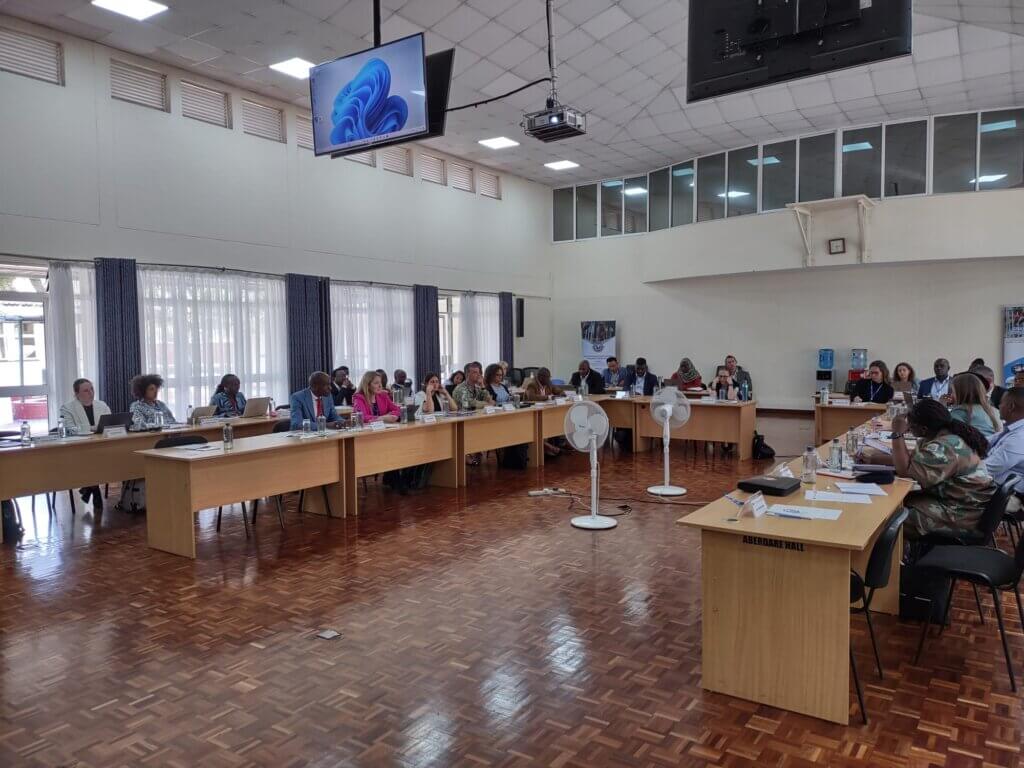
In support of continued efforts to strengthen effective mechanisms for the protection of civilians, the Stimson Center, Center for Civilians in Conflict, and Switzerland co-hosted an in-person dialogue from 6 June to 7 June 2024 in partnership with Kenya’s International Peace Support Training Centre at the Humanitarian Peace Support School in Nairobi, Kenya. This was the first in a series of dialogues reflecting on ‘Protection of Civilians at 25’ throughout 2024. The dialogue’s aims were to assess protection challenges in select UN- and African Union (AU)-led peace operation contexts; debate the comparative advantages and limitations of different peace operation footprints in advancing protection; and generate ideas for future mission models that could support protection aims, building on the Secretary-General’s call for more “nimble, adaptable and effective” peace operations.1”Our Common Agenda Policy Brief 9: A New Agenda for Peace”, United Nations, July 2023.
Fifty people took part in the two-day dialogue including personnel from all five UN peacekeeping missions with an explicit POC mandate,2Those five missions are the United Nations Multidimensional Integrated Stabilization Mission in the Central African Republic (MINUSCA); the United Nations Organization Stabilization Mission in the Democratic Republic of the Congo (MONUSCO); the United Nations Interim Force in Lebanon (UNIFIL); the United Nations Interim Security Force in Abyei (UNISFA); and the United Nations Mission in South Sudan (UNMISS). the AU-led peace support operation in Somalia (ATMIS) and its political counterpart (UNSOM), the Southern African Development Community Force in eastern DRC (SAMIDRC), the former East African Community Regional Force in eastern DRC (EACRF), and the former political mission in Sudan (UNITAMS). Other participants included representatives from peacekeeping training centers, researchers and scholars, civil society from the Democratic Republic of the Congo (DRC) and South Sudan, UN and AU headquarters officials, diplomatic missions, the International Committee of the Red Cross (ICRC) and humanitarian actors.
With an operational focus, the dialogue focused around six sessions, all relating to context-specific operational realities and challenges when it comes to protecting civilians in armed conflict. The sessions focused on framing protection of civilians in peace operations; evaluating emerging threats to civilians; exploring protection of civilians beyond UN peacekeeping; building national and local capacity to protect; coordinating protection across time and actors with working groups focused on Sudan, Somalia, the DRC, and the Central African Republic (CAR); and assessing models of peace operations to protect civilians. The latter session explored the wider contribution of different mission footprints to the protection of civilians, ranging from special political missions through to peace enforcement operations (led by regional organizations or coalition entities). This summary document has been prepared by the Stimson Center and shares the main discussion points raised during the event under the Chatham House rule of non-attribution. It is not reflective of all participants’ views nor those of the co-hosts.
Progress, Operational Realities and Challenges
Over the last 25 years, the UN toolkit to protect civilians has significantly evolved. The failure of UN peacekeeping missions to protect civilians in Srebrenica and Rwanda in the 1990s prompted member states and the Security Council to respond by adding the ‘Protection of Civilians in Armed Conflict’ on the agenda of the Council, and explicitly authorizing the first UN peacekeeping mission to protect civilians in Sierra Leone in 1999. These developments set in motion two decades of debate and institutional learning to develop policies, guidance and training to support peacekeepers in upholding this mandate. Consequently, protection capabilities have developed to more ably prevent, and respond to threats against civilians, drawing on the three tiers of protection of civilians in UN peacekeeping, namely (1) “protection through dialogue and engagement”; (2) “provision of physical protection”; and (3) “establishment of a protective environment”.3See UN Department of Peace Operations, Policy: The Protection of Civilians in United Nations Peacekeeping. UN Department of Peace Operations. 2023. Yet strategic and political pushback from host authorities has resulted in challenging environments for some peace operations to operate, and ultimately prompted their withdrawal (e.g. Mali, Sudan).
Despite the day-to-day successes of peacekeeping missions in fulfilling their mandate to protect civilians, missions continue to face a range of operational obstacles and threats. Restrictions on freedom of movement and Status of Forces Agreement violations by the host authorities limit the ability of missions to project force and reach areas where civilians may be under threat. For example, in the CAR, restrictions over the use of air assets have not only limited the capacity of the mission to respond to threats to civilians from armed groups, but also risked the safety and security of mission personnel. Such threats are compounded by ongoing encounters with improvised explosive devices (IED) and other explosive ordnance, which pose a risk during ground movement and to civilians more broadly.
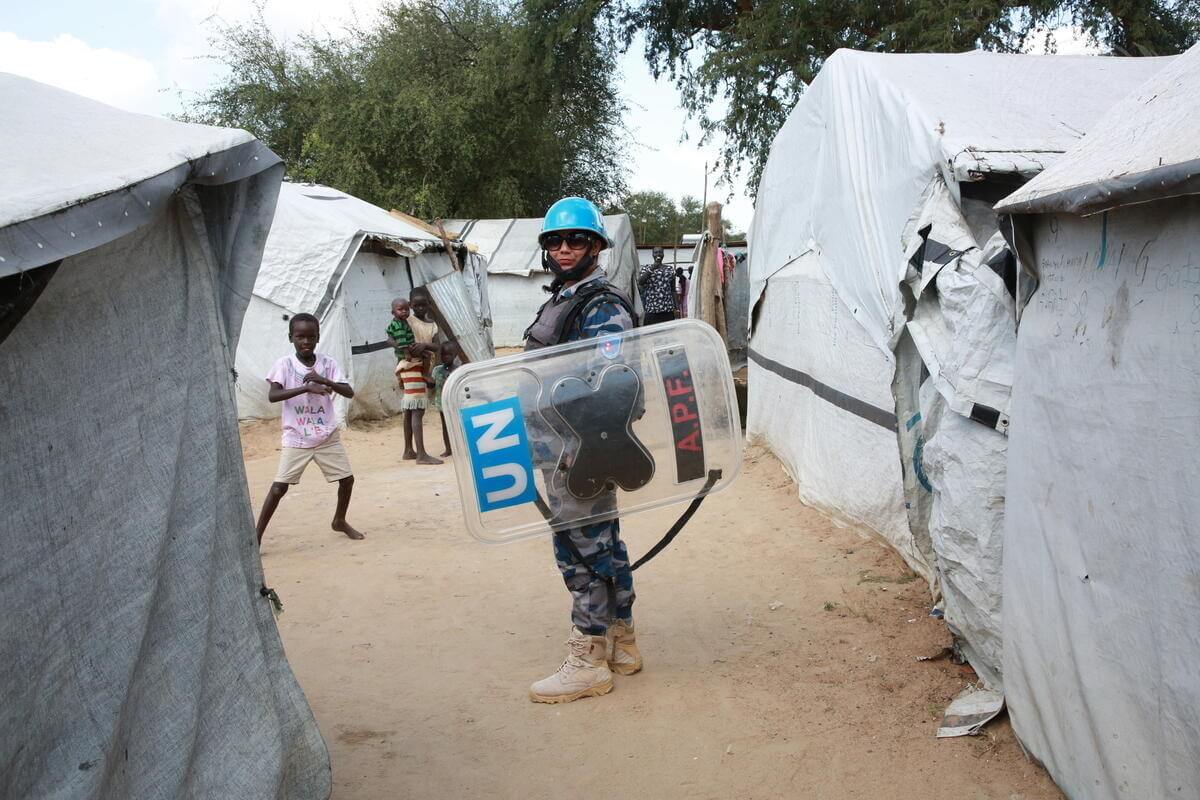
Missions continue to grapple with the need to project force while balancing resource and political constraints, as well as efforts to support national capacity building by working with the host authorities. For instance, this was illustrated in South Sudan with the transition of some of the POC sites.4The POC sites on UN bases were created in December 2013 following the outbreak of civil war in South Sudan. The redesignation and transition of most of the POC sites to the host authorities started in 2020. One POC site remains in Malakal. Some participants argued that civilians remained in POC sites for years on end because of the provision of available services (e.g. schools, medical support), rather than a need for protection of external threats. Consequently, one participant proposed the idea of a sunset clause on future POC sites. However, this suggestion was also disputed by some participants, pointing to a need to consider the protection needs in such scenarios on a case-by-case basis. Nonetheless, the recent transition of a majority of the POC sites had freed up mission capacity to move beyond static protection measures and project force into parts of the country including through the establishment of temporary operation bases. Such measures, combined with the use of long-range patrols, reassured communities that a protective force is in operation. The challenge, however, remains in establishing a longer-term protective environment, to ensure that displaced civilians feel safe returning to their homes.
Discussions also focused on the varying protection needs throughout the lifecycle of a mission, particularly during transitions and drawdowns. MONUSCO was grappling with this reality having recently withdrawn from South Kivu at the time of the dialogue. The drawdown was taking place when MONUSCO was still engaging armed groups with heavy weapons and operating alongside parallel forces such as the SAMIDRC mission. As one participant noted, “disengaging from a location where you do not have the conditions in place to confidently know that civilians will be protected is extremely challenging.” The challenge is then in implementing the second tier of POC, which was being handed over to the state security forces. There is an operating assumption that the mission will simply be able to handover tasks to the UN Country Team, yet they are not resourced, tasked or funded to take them on. While it is the responsibility of the host authorities to ensure there are mechanisms to fulfil their commitments to protect the civilian population, civilians (and even some member states) often expect UN agencies, funds and programs to provide support.
Discussions also turned to the AU’s approach to POC. AU peace support operations draw on many of the same conceptual elements when it comes to POC in their operations. The main conceptual difference to the UN relates to the inclusion of four tiers instead of three (with a tier on human rights). Furthermore, AU-led peace support operations may undertake peace enforcement operations which do not require the consent of the parties (although it is often preferred). This distinction means AU-led peace support operations may undertake offensive activities directly targeting armed groups going beyond the traditional remit of self-defense. This provides the AU with a comparative advantage in more hostile conflict settings, but also means these operations come with more significant risks for civilians (and those deployed). In responding to these conditions, the AU, unlike the UN, is not required to abide by the principle of impartiality. Instead, AU-led PSOs may work actively alongside host security forces on their own territory to neutralize armed actors. Since the AU also anticipates the potential consequences of belligerents’ operations, the AU sees protection activities as a two-pronged operation, protecting civilians from both belligerent activity as well as the AU’s own operations, meaning the AU does not distinguish between POC and civilian harm mitigation.5Civilian harm mitigation (CHM) is defined as a strategy that “includes all measures taken by armed actors to prevent, minimize, and address civilian harm resulting from their operations.” A Primer on Civilian Harm Mitigation in Urban Operations, Center for Civilians in Conflict (CIVIC), June 2022. Importantly, as one participant acknowledged, the AU—like the UN—also recognizes the imperative of the host nation taking ownership of POC.
Evaluating Emerging Threats to Civilians
Contemporary conflicts are exacerbated by a range of evolving threats. In the context of peace operations, threats include the proliferation of different types of armed actors, exploitation of natural resources, climate change, organized crime, evolving technologies, and mis- and disinformation and hate speech. Fragmentation and compounding geopolitical interests have created a threat landscape that undermines humanitarians’ ability to protect. Humanitarian action has become more politicized. There is a lack of respect for IHL, evidenced by attacks on humanitarian workers, medical facilities, and civilians. There are also serious threats to children who experience grave violations during times of conflict, including but not limited to the recruitment and use of children as soldiers.
Regional dynamics and non-state armed groups have intensified the complexity of challenges peace operations need to contend with. In Lebanon, UNIFIL continues to implement the three tiers of protection despite heightened conflict since October 2023. UNIFIL maintains a presence in vulnerable contexts, pursuing patrols despite a highly volatile situation. With these compounding factors, UNIFIL has had to adjust its profile, presence, and posture, all while prioritizing the protection of civilians. The nature of conflict has also changed, with more civil wars and blurred lines between civilians and combatants. For example, in Somalia, the AU is deployed to counter actions by Al-Shabaab. The armed group, however, has no uniform and given it is impossible to distinguish belligerents from civilians, POC is a challenge. One day civilians might be working with the mission, then another day they are working with a non-state armed group. As one participant noted, “Protecting civilians is difficult when they are occasionally the ones that pick up the weapons.”
Conflict dynamics and the implementation of mandates are increasingly exacerbated by mis- and disinformation, which impacts not only the mission and safety and security of personnel, but also poses a threat to civilians where UN peacekeeping missions are deployed. Mis- and disinformation is not a new issue. However, online settings, advancements in technology, and maligned actors have weaponized it and expanded its reach and scope, with consequences for civilians seeking protection from peace operations. Peace operations are frequently deployed into settings where the information ecosystem and media are limited, and grievances and divisions can be more easily fueled, both against the mission and other ethnic groups in the population. Often, mis- and disinformation can reflect underlying political issues which require attention as part of the political process. Ultimately, missions need to take a whole of mission approach to address the threat of harmful information in their operating environment and consider such approaches as part of efforts to protect civilians.
Protection of Civilians and the East African Community Regional Force
The East African Community Regional Force deployed to eastern DRC in November 2022 with a mandate to (1) jointly plan and conduct operations with armed forces of the DRC in order to diffuse armed group elements in eastern DRC; (2) support the FARDC in the maintenance of law and order; (3) support the government of the DRC in collaboration with other agencies to continue humanitarian relief to populations affected by armed groups including internally displaced persons; and (4) support disarmament, demobilization and community stability. Notably, there was no explicit mandate to protect civilians, although it was implied with the deployment of the emission.
The EACRF undertook a range of activities to protect civilians in their areas of operations. For instance, this included communication with the FARDC on respecting communities when navigating through towns on the roads. The mission also shared information to support the political track taking place through the Nairobi process. The force also drew on the Kenyan concept of Nyumba Kumi (i.e. introduced households as groups that take care of their community).
Yet the force encountered a range of challenges. This included a lack of situational awareness and early warning mechanisms. It was difficult to identify which armed groups were responsible for attacks and how they would be held accountable (complicated further with the operation of the Wazalendo). There was fear from civilians that if they shared information with the EACRF that they would be reprimanded. The EACRF also grappled with the unrealistic expectations of the host authorities when it came to the regional mission. In the view of one participant, people turned on the EACRF due to a lack of good will, exacerbated by hostilities from the host nation.
To address these challenges, several recommendations and reflections were shared by participants. These included strengthening host nation capacities, the use of more modern technology and civilian advisors, and the creation of more camps and safe zones for IDPs. Unfortunately, the withdrawal of the EACRF resulted in a vacuum prior to the deployment of the Southern African Development Community regional force (SAMIDRC), meaning that armed groups moved into these areas.
Although there was acknowledgment that POC was an inherent and implied activity of the EACRF, it was limited by the lack of consideration and priority attached to the issue as part of the planning process for the mission and became difficult to resource it adequately. Efforts to protect civilians in the context of peace operations need to be considered and planned for at the very outset of any planned deployment.
Building National and Local Capacity to Protect
Discussions also focused on the development of national and local capacities to protect civilians, with a focus on the transition of protection responsibilities to host authorities and other protection actors. Protection of civilians is the primary responsibility of the host authorities, however often they lack the capacity or the willingness to uphold this responsibility. Part of the three-tiered approach to POC therefore requires missions to work with governments, including the security sector and rule of law institutions, to build national capacity to protect the civilian population, thereby positioning a mission to transition. Yet often this remains a key gap in capacity, due to the reliance on other stakeholders and partners to assist.
In the case of DRC, the withdrawal of the mission from South Kivu resulted in a security vacuum. Several participants noted that the disengagement of MONUSCO in South Kivu had been rushed. Consequently, political stability and the practice of good governance remained dangerously precarious. One participant noted that while in South Sudan politics might be militarized, “in DRC, security is politicized.” To navigate these challenges the host authorities in cooperation with partners needed to strengthen the capacity of the security forces, undertake judicial reform and prioritize access to justice, and support gender-responsive approaches to protection, with women and girls remaining the most vulnerable. By contrast in contexts such as Abyei where UNISFA was deployed, the UN Police (UNPOL) mentors and supports a community of unarmed civilians to maintain law and order, building local capacity. Depending on the need and available resources, UNPOL has expanded deployments across sectors, working with troop- and police-contributing countries (T/PCCs), to better respond to crises.
In the case of mission transitions, participants acknowledged the importance of conditions-based drawdowns with timely and sustainable handovers of protection responsibilities to the host authorities, engagement with local communities and civil society organizations, and adequate consultation and consideration of the role of the UN country team post-transition. Furthermore, missions need to work with partners to assess and understand the capacity of security forces to protect civilians. Security sector capacity is often overlooked to avoid offending the host authorities or disrupt transition timelines. Ultimately, the goal is to handover to national institutions and local authorities in a manner that ensured civilians were adequately protected. Often the fear is that the only legacy left will be infrastructure, captured by one participant as “they will leave for us their cars; they will leave for us their buildings”.
These challenges are even more stark in situations where conflict brakes out or the UN mission is asked to depart abruptly. The UN special political mission in Sudan (UNITAMS) deployed in 2020 with a mandate focused on ‘civilian protection’. Part of its mandate involved supporting the Sudanese authorities with the implementation of their national protection of civilians strategy, which had been developed in consultation with internally displaced people (IDPs), refugees, and UN agencies. However, before UNITAMS was fully operational in 2021, the national protection strategy fell apart. Efforts by UNITAMS to support protection were limited due to a lack of guidance (specific to the context of the limited resources in an SPM) and eventually, the outbreak of full civil war and withdrawal of the mission. Unlike multidimensional peacekeeping missions, SPMs have historically been limited in their ability to undertake ‘Tier 2’ physical protection due to an absence of substantive military and police components. Nonetheless, the mission demonstrated the potential benefits that an SPM could contribute by working with national authorities to advance protection.
Several participants also highlight the role of international and local NGOs to protection efforts, emphasizing their important contribution often living and working with the communities to understand and support their protection needs. Relationship-building and capacity-building activities with local communities are two activities undertaken by NGOs to engage community, address root causes, and implement protection strategies. In South Sudan, NGOs work alongside UNMISS to patrol and accompany women in areas where intercommunal violence is prominent. Despite being unarmed, NGOs may be better positioned to accompany civilians engaged in tasks such as collecting firewood, which is often a high-risk activity for women who may be subject to gender-based violence. One key question regarding transitions relates to how missions share tasks not only with the government, but civil society and local communities as part of those transitions. In some contexts, entities such national human rights institutions (or human rights commissions) may be in place, supported by a strong civil society, but these efforts need to be invested in and supported.
Ultimately missions need to be prepared to work collaboratively and in partnership with civilians affected by conflict and be guided by their protection concerns where possible. In the words of one participant, “We don’t asked civilians how they want to be protected. We tell them how we will protect them.” Ensuring two-way communication between peace operations and civilians as part of protection efforts is essential in building local capacity and supporting the mission’s overall mandate.
Coordinating Protection Across Time and Actors
On the second day of the dialogue, four working groups examined the protection challenges facing missions that had deployed to the Central African Republic; Democratic Republic of the Congo, Somalia, and South Sudan.
Central African Republic. The security situation in CAR remains fluid due to the operation of a range of armed groups as well as other security personnel, such as the Wagner Group. Civilians continue to be targeted based on ethnic and religious affiliations. Current protection challenges include a lack of understanding about community needs; unresolved issues relating to identity and citizenship; mis- and disinformation campaigns that undermine MINUSCA and its operations; illegal exploitation of natural resources fueling conflict; use of improvised explosive devices that harm civilians and personnel; limited capacity of the national security forces to protect civilians; and tensions between political strategy and the use of force (i.e., mission activities often face challenges in terms of coordination with the Central African Armed Forces (FACA), who may be working alongside other security personnel). Some participants noted that the civilian population expected MINUSCA to take an offensive posture against armed groups, although this was beyond the mission’s mandate and armed groups continue to operate across the country.
MINUSCA has several mechanisms in place to implement its POC mandate. These include the Senior Management Group on Protection (to integrate planning and coordination across the mission); the Protection Working Group (provides technical advice); the use of the Joint Operations Center for early warning (working with community alert networks and community liaison assistants); joint committees with host communities and authorities to follow up on human rights’ violations; the Protection Cluster; implementation mechanisms for the peace agreement at the local level which include civil society, women, youth and religious leaders; and direct community engagement.
Nonetheless, MINUSCA continues to face a range of internal and external challenges to the implementation of its POC mandate. These include different prioritization and understanding of protection priorities among the civilian and uniformed components; accessibility constraints across the country due to limited roads and a lack of air assets (which can limit responses to transhumance incidents in particular); poor telecommunication infrastructure to support early warning mechanisms with communities; the use of self-defense groups by the FACA and other security personnel; no clear directives on how to deal with the threat from other security personnel; need for more strategies to deal with explosive ordnance; and the exploitation and trade of illicit natural resources.
Democratic Republic of the Congo. Throughout its 25-year lifecycle, the UN mission in the DRC has grappled with different perceptions about its effectiveness from local communities and the host authorities. This has been compounded more recently with the deployment of a range of sub-regional and bilateral forces in eastern DRC. Perceptions about various peace operations often start positively during the initial deployment phase, then shift to oppose the deployment when expectations are not met (e.g., failure to engage armed groups such as M23). Similarly, civilians are frequently frustrated by the failure of the host authorities to deliver basic services and improve the livelihoods of civilians (although this is often misdirected to MONUSCO).
Participants noted that the POC mandate in MONUSCO could be enhanced through greater trust. Clearer communication, consultation and coordination between the mission, host authorities and communities about MONUSCO’s activities could strengthen trust and serve as a bulwark against mis- and disinformation. This could be enhanced by more substantive consultation on how activities ought to be conducted and coordination. Furthermore, civilian perception surveys (often constrained by time and resources) and initiatives targeted at the drivers of conflict could enable a more comprehensive response to threats against civilians. Ongoing expectation management with the host authorities and communities remains essential to strengthen any POC efforts.
Somalia. ATMIS has a mandate to support protection activities. The UNSOM/ATMIS framework covers all three tiers of POC, however there is a need to strengthen political mechanisms to support the host authorities with their protection responsibilities, and security sector reform to build national capacity to address Al-Shabaab. Notably, Al-Shabaab does not engage in conventional warfare and has often engaged communities without active confrontation or attacks. The infiltration among the local population makes it difficult for ATMIS to target Al-Shabaab without further harm to civilians. In the view of some participants, the Federal Government of Somalia has come to understand the importance of protection to avoid increasing sympathy amongst the population for Al-Shabaab, recognizing that lack of governance across the country has created the conditions for Al-Shabaab to provide other governance options.
Discussions also focused on the challenges of addressing existing threats to civilians and supporting a gradual transition process. ATMIS working with the UN has invested in threat mitigation (e.g. explosive weapons) and logistics capacity, however this will only be sustainable with ongoing political support from the host authorities. Humanitarian assistance remains essential across the country, but access is hampered by limited accessibility and pending further security drawdowns in the country. Increased coordination between UNSOM, ATMIS and the Federal Government of Somalia will be essential as the international and regional presence in Somalia starts to draw down.
Sudan. UNITAMS struggled to implement its protection mandate, with limited flexibility to address conflict and tasked with supporting a non-democratic transition. There was no protection strategy despite a mandate in the country to undertake civilian protection. The mission instead fell back on Sudan’s national protection strategy. Consequently, UNITAMS illustrated a paradox when missions are not provided with the political support and resources necessary to implement an ambitious mandate (i.e., as violence went up in Sudan, protection from the international community comparatively decreased). In the context of the current civil war in Sudan, participants expressed concerns about the lack accountability and willingness by different actors to outsource the problem to others, whether the UN, AU or Intergovernmental Authority for Development (IGAD). The adoption of UN Security Council Resolution 2719 offered some flexibility in terms of options and funding support, however even though the AU could deploy a mission without consent from the Sudanese authorities going forward, there was no political will to support that option, illustrating a significant limitation on mobilizing options to protect civilians in current conflict settings.
Looking Ahead: Peace Operations and Protection of Civilians
UN peacekeeping is only one tool along the spectrum of peace operations that can protect civilians. However, the concept of protection is interpreted and implemented differently across this spectrum, depending on the mandate (whether Chapter VI or Chapter VII), whether the mission is deployed by the UN, AU, sub-regional organization or coalition (all of which are guided by different principles and rules of engagement); the capabilities and resources deployed to the mission; as well as the relationship with the host authorities and threat environment. The adoption of UN Security Council Resolution 2719 in December 2023— which authorized the use of some UN-assessed funds to support the deployment of AU-led peace support operations—broadened the conversation about protection considerations and requirements for peace operations. The dialogue in Nairobi offered a timely opportunity to reflect on past successes, lessons learned, and challenges, as well as ways to best prepare for and anticipate the future of conflict and the protection of civilians.
Protection requirements in mission settings continue to evolve. The impartiality of the UN can provide an important comparative advantage. However, this has face challenges in more recent multidimensional peacekeeping missions that have risked being instrumentalized by host authorities. For instance, some missions have struggled with the perception that they are not being impartial by other parties to the conflict (particularly in situations where they work alongside host security forces) or not exerting enough force against security threats (where the host authorities prefer securitized solutions). Alternatively, peace enforcement operations undertaken by regional entities such as the AU may respond to these concerns but may antagonize relationships with local communities if civilian casualties and harm are not mitigated appropriately. As one participant noted, “if you’re doing offensive operations, it’s hard to do POC by force. It means something else is being left behind.”
With the future of peace operations under consideration, participants reflected on some of the current challenges affecting the capacity of peace operations to protect civilians: from the strategic geopolitical divisions and lack of unanimity in the Security Council to authorize missions to protect civilians and the withdrawal of host country consent, through to a lack of adequate preparedness and resourcing to support protection through mission transition processes. Missions continue to adapt and grapple with these challenges. At the same time, frustration exists with the repeated use of a toolbox that is not adapting quickly to the change in nature of threats to civilians. Regardless of the mission model, footprint or mandate, many participants stressed that peace operations must center protection in their activities, recognizing that civilians expect to be protected. It means peacekeepers must be prepared to address threats on the ground and engage civilians about their expectations for protection. As debates continue over the future of peace operations, protection must remain front and center.
This dialogue was funded with support from the Government of Switzerland.



Community Adaptation for a Water Festival Without Clean Water