

Introduction
The 25th anniversary of the Security Council’s first consideration of the ‘Protection of Civilians in Armed Conflict’ and adoption of its first thematic resolution on the issue coincided with the 75th anniversary of the Geneva Conventions. Rather than standing as a moment to herald the achievements associated with these milestones, these anniversaries coincided with a “resoundingly grim” state of protection of civilians.1Protection of civilians in armed conflict: Report of the Secretary-General. United Nations Security Council. S/2024/385. 14 May 2024. Conflicts persist around the globe with diminishing adherence to international humanitarian law (IHL) and international human rights law (IHRL). Humanitarian personnel and aid workers are confronted with an increasing number of attacks, undermining their work and efforts to protect civilians. These developments—coupled with divisions in the Security Council on the role of UN peacekeeping and deployment of peace operations, and a preference by states towards other security partnerships—have further challenged efforts to effectively utilize peace operations to protect civilians.
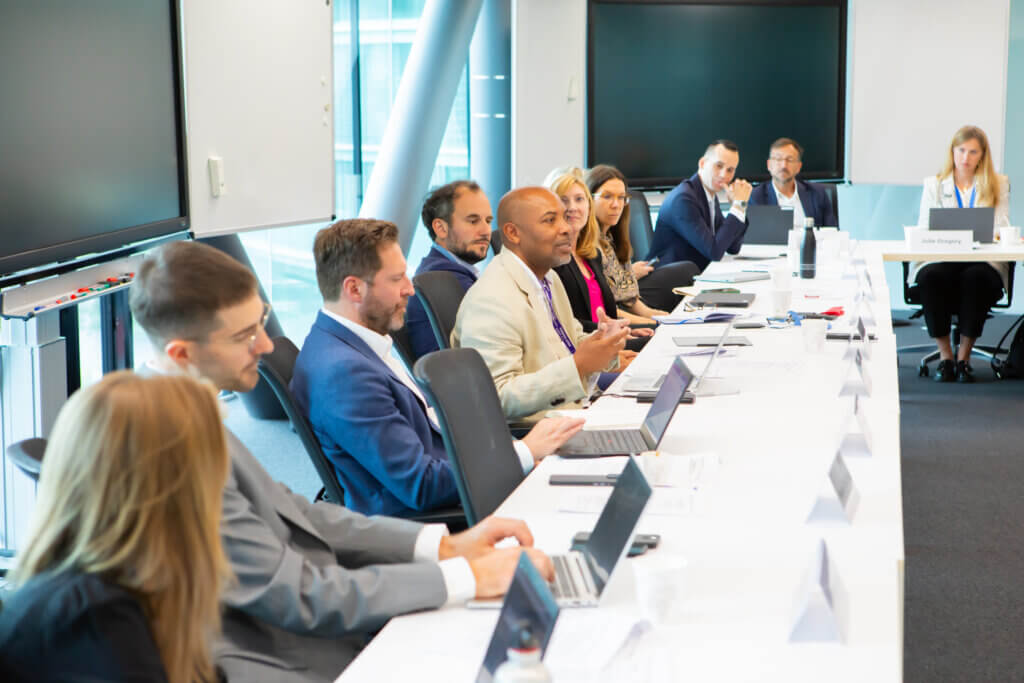
To address these challenges and strengthen effective mechanisms to protect civilians, the Stimson Center, Center for Civilians in Conflict, Switzerland, and Canada co-hosted an in-person dialogue on 9 September 2024 at the Geneva Center for Security Policy in Geneva, Switzerland. This was the second in a series of dialogues reflecting on ‘Protection of Civilians at 25’ in the context of peace operations. The aim of the second dialogue in Geneva was to identify opportunities to strengthen compliance with IHL and protection of civilians during and after peace operations; share lessons among different protection actors working in support of or alongside peace operations; and to inform new ideas for the future of peace operations, building on the Secretary-General’s call for more “nimble, adaptable and effective” peace operations.2”Our Common Agenda Policy Brief 9: A New Agenda for Peace”, United Nations, July 2023. The one-day dialogue convened approximately thirty peacekeeping and human rights experts, humanitarian actors, international legal experts, researchers and civil society actors, to consider the role of humanitarian principles, IHL, and IHRL in the context of current and future peace operations.
The dialogue provided a platform to exchange views on the challenges and opportunities to strengthen the capacity of peace operations to protect civilians, with a focus on human rights and humanitarian roles throughout mission lifecycles and across the triple nexus of humanitarian, development and peace actors. Participants took part in four sessions focused on: humanitarian action and human rights; engaging communities and people-centered approaches; compliance frameworks and accountability; and protection priorities in future models of peace operations. This summary document has been prepared by the Stimson Center and shares the main discussion points raised during the event under the Chatham House rule of non-attribution. It is not reflective of all participants’ views nor those of the co-hosts.
The State of Protection, Humanitarian Action and Human Rights
Protection actors find themselves at an inflection point in 2024 with the erosion of IHL and human rights taking place at a contagion level. Civilian deaths in armed conflict increased by 72 percent in 2023 compared to the year prior.3Protection of civilians in armed conflict: Report of the Secretary-General. United Nations Security Council. S/2024/385. 14 May 2024. Medical facilities and humanitarian actors continue to be targeted and attacked in conflict settings. Explosive weapons are utilized by parties to conflict with disregard for their impact on civilians. Something has changed at a fundamental level. The adoption of resolution 2730 (2024)—led by Switzerland—on the protection of humanitarian workers and UN personnel—codified and advanced political commitment on the protection of such actors. Yet participants stressed that those commitments need to be followed through in practice as a lack of respect for IHL remains.
Protection of civilians in armed conflict settings requires parties to a conflict to adhere to IHL and IHRL, but we should also expect them to go above and beyond compliance, addressing the full range of harms and the wider impacts of conflict on civilians. The political declaration addressing the harms from explosive weapons in populated areas (EWIPA) and Safe Schools Declaration provide useful examples. Several participants noted that the Inter-Agency Standing Committee (IASC) Policy on Protection in Humanitarian Action provides clarity on the different activities of humanitarian actors as relates to protection and remains a useful tool to inform future work. More recently, the Agenda for Protection offers an important guide for what is meant by protection across the UN system.
Discussions focused on the role of civil-military cooperation as a fundamental component of POC in multidimensional peacekeeping missions. Uniformed components can directly intervene to protect civilians and foster a protective environment. Importantly, in more contested security settings they frequently enable the work of civilians, including human rights components in missions. Yet in several UN peacekeeping missions, constraints put in place by host authorities and obstructions to freedom of movement hamper efforts to protect civilians. Furthermore, in some contexts the spread of mis- and disinformation has an impact on perceptions of the mission and host country consent, creating tensions and opening space for other security actors. These developments make it impossible to conduct human rights monitoring and reporting work in cases where violations may have been committed due to a lack of access.
Although multidimensional peacekeeping mandates routinely include provisions to prevent and respond to sexual and gender-based violence, address and prevent grave violations against children, and mitigate climate insecurity, several participants noted that the resources authorized and provided are generally insufficient to comprehensively address these threats and challenges. Consequently, this results in a gap of expectations between the mission and the host authorities about what a mission may be able to deliver and creates space for communities to question the ongoing effectiveness and deployment of missions. To address this gap, member states need to consider whether they were willing to accept more limited mandates or provide more resources to respond to the protection needs on the ground.
There are a range of actors protecting civilians in contexts where peace operations are deployed, yet often limited analysis about which protection actors may be best placed to engage in certain activities. For instance, protection is a part of humanitarian action. Yet, one participant noted that while 95% of peacekeepers have a mandate to protect civilians, only 9% of humanitarian response plans (the primary strategic planning process for humanitarian activities in country) speak to the protection of civilians or refer to community self-protection. In their view, there was a need for humanitarian response plans to more comprehensively consider protection of civilians as part of their activities. Within the Global Protection Cluster, that would mean not only looking at how to provide service delivery, but also looking for access that protects, or zones or areas that could result in protection outcomes. This requires more ‘risk-forward’ humanitarian advocacy rather than focusing on risk reduction. And it requires a ‘protection continuum’ that considers the intersection of different people and areas of expertise, drawing on coordination mechanisms, sustained presence, and information-sharing.
Sustainable protection of civilians is not the sole responsibility of peacekeeping missions nor humanitarian actors. An ongoing challenge is the failure of ‘duty bearers’—such as host authorities and parties to the conflict—to take their responsibilities to protect civilians seriously. This requires investment in building the capacity of local authorities through bilateral and multilateral cooperation. In the context of peacekeeping missions, participants acknowledged the importance of maintaining protective capacities during and beyond mission drawdowns. Human rights advocates noted the immense challenge of filling certain gaps once the mission is gone. Citing examples in Mali and Sudan, one participant noted that significant periods of time often pass with no human rights presence on the ground. This means that human rights teams may have to operate remotely from Geneva while attempting to make a case for a human rights presence to UN country teams.
Engaging Communities and People-Centered Approaches
Engaging communities as part of their own protection is essential, yet interpretations of what it means to be ‘people-centered’ in approach often differ. In many instances, civilians are simply viewed as beneficiaries rather than stakeholders and advocates for their own protection. Several participants emphasized the importance of meaningfully engaging local communities and civil society as the main actors of sustainable protection. Others also highlighted the important role of having the right staff in peacekeeping missions to support such approaches, including civil affairs components, community liaison assistants, and women protection advisors, among many others.
Shifting away from a ‘beneficiary’ mindset focuses on working as partners with communities instead. In certain situations, this might mean an operational shift for organizations away from outsourcing protection activities to more of a risk-sharing model in partnership with affected civilians. In other cases, it might mean more intentional and meaningful engagement through forums, town halls, and independent perception surveys, through which civilian feedback informs meaningful protection action. Participants noted that such efforts need to be underpinned by a rights-based framework that aligns with interpretations and understandings of local approaches. Unfortunately, it’s not always clear whether international actors are working with local stakeholders that can influence systems and protection on the ground, and sometimes that means that faulty systems and service delivery get replicated.
Many participants also acknowledged the importance of aligning the meaning of success to the perceptions of affected communities whose understanding of successful protection activities will often differ from international protection actors. It also means identifying and engaging with stakeholders that are trusted by communities. For example, when the East African Community Regional Force (EACRF) was deployed to the eastern Democratic Republic of the Congo (DRC) in 2023, there were perceptions among the community that the mission was not contributing to protection and even rumors that the mission was collaborating with the M23. There was a lack of clarity and transparency about the mission’s mandate when it came to any activities undertaken including the Nyumba Kumi initiative (which relied on community support to aid protection). Communities did not understand these approaches and this undermined the trust in the EACRF to provide protection.
Discussion also focused on the contribution of unarmed civilian protection as an approach to supporting civilians in their own protection. Sometimes this will require actors to engage in protective accompaniment or inter-positioning between groups. In other situations, it may mean interrupting cycles of violence and stabilizing long-term mechanisms for civilian protection as part of efforts to build a protective environment. Central to these approaches is relationship-building and working and living in conflict-affected communities. For example, in Ukraine, where local NGOs are generally the only organizations with frontline access, this has required an understanding of various needs in terms of protective equipment, psycho-social support and trauma-informed care. Importantly, participants noted that there is a duty of care that international NGOs need to uphold when partnering with local organizations and relying on their frontline access or networks in the community.
Notwithstanding the different approaches of protection actors, there was a consistent view that there are various protection mechanisms and tools in place to draw on in conflict settings, yet these efforts continued to be hampered by a lack of sustainable resourcing and funding. Some participants suggested that donors needed to move away from funding single projects to multi-year strategic partnerships to work with local partners in delivering protection. For example, as the peacekeeping mission in the DRC (MONUSCO) transitions, there is a growing expectation that NGOs and civil society organizations will be among the actors filling some of these gaps due to limited host state capacity. Unfortunately, the funding that is provided to peacekeeping missions is not reallocated by member states to support other actors during transitions, leaving a significant gap compounded by the departure of the security and logistics umbrella that a peacekeeping mission may provide. Overall, participants agreed that there is a need for more flexibility in the way that funding is disbursed and provided to support protection activities, particularly in the context of peacekeeping missions where mission leadership often must invest energy in debates over posts and resources in missions. This would require more innovative approaches to address the bureaucratic hurdles in the UN General Assembly’s Fifth Committee going forward.
Compliance Frameworks and Accountability
Peacekeeping missions operate in settings where there is frequently a lack of compliance with IHL and IHRL. This has become more complex in some peacekeeping settings where private military and security companies and mercenaries are operating. The use of such companies is not new to UN peacekeeping; in fact, the UN has engaged the services of private security providers to provide safety and security to mission facilities. However, the selection and use of such entities by host states to undertake bilateral security training and operations in contexts where peacekeeping missions also operate has increased in recent years. These actors often provide combat services for hire to host governments, undermining many of the tenants of good security sector governance that have been established over the last two decades, and which if appropriately undertaken, can contribute to building a protective environment. This means local security forces may be trained by other entities that are not compliant with IHL and have little to no accountability to anyone. Sovereign decisions to utilize private security companies require greater scrutiny and accountability by host states to support compliance with IHL on their territory. While states are often quick to name armed groups and weapon-bearers as those who choose not to respect IHL, the same attention is also required on state actors who have obligations under international law.
Compliance frameworks have become an important accountability tool for the UN when operating alongside host security forces and regional peace support operations, particularly in contexts where the UN may be providing support. The UN’s Human Rights Due Diligence Policy on Support for Non-United Nations Security Forces (HRDDP) was developed more than a decade ago following concerns in eastern DRC about support provided by the UN peacekeeping mission to the Congolese Armed Forces (FARDC), with the International Committee of the Red Cross and other actors critical of UN action in the area. The HRDPP has provided a useful model in the development of other compliance frameworks to support the operations of non-UN peace operations or partners that rely on UN support. For instance, in Mali, the Security Council called upon the G5 Sahel Force to develop a compliance framework to address abuses of human rights and IHL. This developed traction with member states. The importance of human rights monitoring and compliance has also arisen with the deployment of the Multinational Security Support (MSS) mission in Haiti with the Trust Fund providing a source of potential leverage on compliance. OHCHR has also been working with African Union (AU) colleagues in Addis Ababa to develop compliance frameworks to support AU-led peace support operations.
Important work has been undertaken with the support of OHCHR to develop frameworks to address the screening and selection of troop-contributing countries, conduct after-action reviews, support monitoring and reporting on abuses, and casualty tracking as a means of monitoring civilian harm by forces. However, several participants noted that responsibility for compliance and accountability rests with entities across the UN system, not just OHCHR, and that there needed to be more engagement from the UN system on how to strengthen compliance.
With pushback against some of the well-established norms related to IHL compliance occurring in parts of the globe, participants stressed that responsibility rests with member states to support efforts to strengthen compliance and accountability of their security forces. National protection of civilian policies could offer another vehicle to promote a culture of compliance and accountability. Ultimately, participants acknowledged that efforts to enhance compliance in armed conflict settings and where peace operations are deployed requires political will.
Conclusion: Protection Priorities in Future Models of Peace Operations
In the last session, participants examined the comparative advantages between different models of peace operations based on their authority to use force, whether they have a significant uniformed component or civilian component with particular skills, and the types of activities the mission might be mandated to undertake. The session drew on some of the ideas under consideration as part of the study on ‘The Future of Peacekeeping, New Models and Related Capabilities’ (which was under development at the time). The session was framed with discussion about the differences in approach to protection of civilians between UN peacekeeping missions and AU-led peace support operations.
Future peace operations can draw on the lessons learned by the UN and member states from deploying peacekeeping missions over the last seven decades, as well as the experiences of regional and sub-regional forces. Discussions considered several potential models focused on regional security, countering transnational organized crime, responding to humanitarian disasters, supporting the work of international tribunals or conduct of elections, providing security in urban warfare contexts, or preventatively curbing the onset of a new armed conflict or escalation of an existing armed conflict. These models each have specific protection challenges and may require different combinations of civilian, military, and police capabilities to prevent or respond to threats to civilians. Depending on the type of threats to civilians and the conflict setting, participants noted that decisions to deploy a particular peace operation should be guided by which organization is best suited or has a comparative advantage (e.g., UN, AU, or a regional economic community), rather than the supply-side of the tools and capacities which may be available to provide support.
Protection considerations and advantages of different models of peace operations will vary depending on context and the type of mission deployed, with several different suggestions and recommendations from participants building on existing practice in peace operations. These included the establishment of an independent POC body or capacity which handles monitoring, de-escalation, mediation, advocacy as part of a peace operation; creating peace operations that more comprehensively integrate investigators, police, and national capacities to build dialogue and accountability structures; forming protection teams to monitor incidents and eventually develop into communities of practice; or reconfiguring the role and responsibilities of special envoys to focus more substantively on protection concerns. Bridging the gap between Geneva and New York, several participants noted that peace operations could more effectively consider and engage with various special procedures of the Human Rights Council to fill gaps and support protection mandates as part of peace operations.
The discussions in Geneva highlighted the ongoing value and importance of convening a range of different actors engaged in the protection of civilians. Many of the discussions focused on the partners that operate alongside peace operations and were illustrative of the need to understand the mandates, comparative advantages and principles that guide the work of different protection actors. Peace operations are only one tool in the protection toolbox. Central to these efforts is the need to build more meaningful partnerships with civilians affected by conflict and understanding their protection concerns.
This dialogue was funded with support from the Governments of Canada and Switzerland. Ce projet a été financé par les gouvernements du Canada et de la Suisse.




Community Adaptation for a Water Festival Without Clean Water