

Introduction
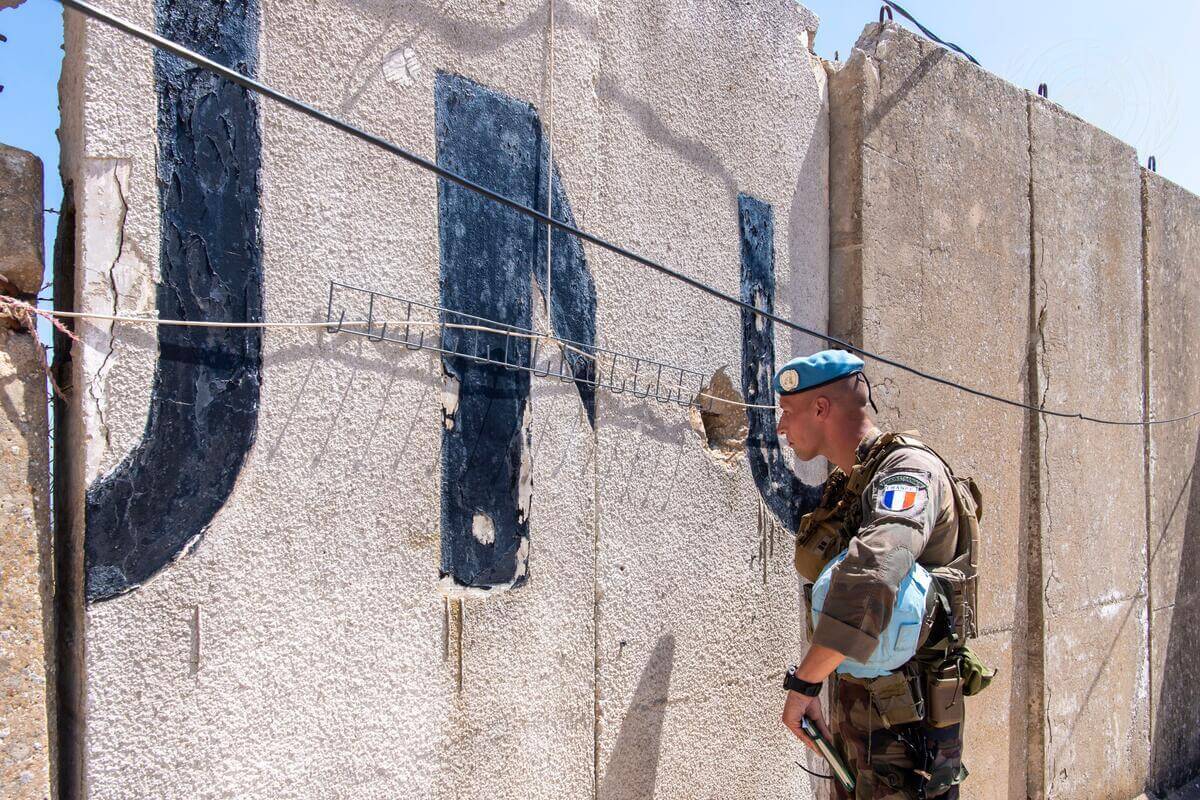
Over the last 25 years, UN peacekeeping and peace operations more broadly have become central instruments as part of the international toolbox to protect civilians. From contexts such as South Sudan to the Democratic Republic of the Congo (DRC), from Lebanon to Somalia, peacekeepers work with host governments and civilians to create a protective environment and intervene in situations where civilians are under threat of violence. Yet even with the progress that has been made over the last two decades to strengthen the capacity of UN peacekeeping to protect civilians, these missions remain beset by a range of challenges that affect their capacity to protect civilians, and broader questions about the future of peacekeeping.
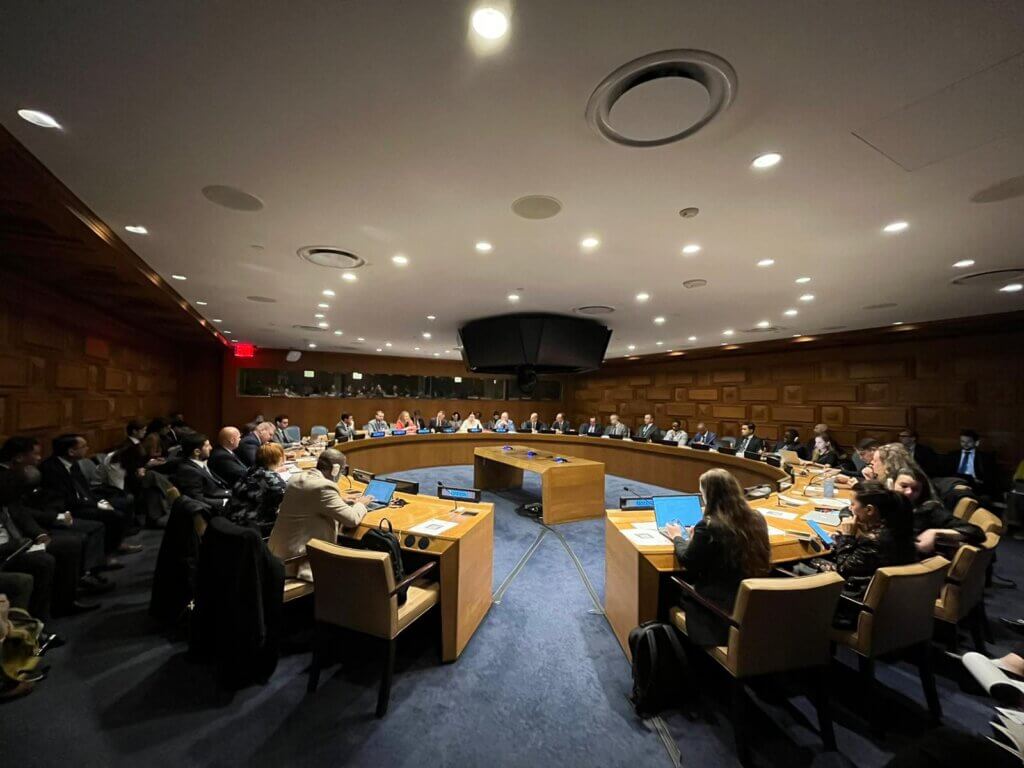
It was in this context that the Stimson Center, Center for Civilians in Conflict, and the Permanent Missions of Switzerland, Canada, and Uruguay to the United Nations co-hosted two in-person dialogues at the United Nations Headquarters in New York. These discussions comprised the third set of gatherings over the course of 2024, building on previous dialogues that had taken place in Nairobi (in June) and Geneva (in September). The first segment of the New York dialogues, a High-Level lunchtime discussion, was held on 21 October 2024 for Ambassadors and Permanent Representatives from member states. The second segment, held on 19 November 2024, provided a platform for peacekeeping experts, UN representatives, and researchers from non-governmental organizations (NGOs) to engage on challenges to efforts by peace operations to protect civilians and future opportunities for strengthened engagement.
The discussions were particularly timely given strategic developments underway to reform UN peace operations, with commitments in the Pact for the Future, and member states considering the findings of a recently released new report The Future of Peacekeeping, New Models, and Related Capabilities (the ‘Wane Report’).1El-Ghassim Wane, Paul D. Williams and Ai Kihara-Hunt, The Future of Peacekeeping, New Models and Related Capabilities, October 2024, available here: https://peacekeeping.un.org/sites/default/files/future_of_peacekeeping_report_rev30jan_1.pdf. Participants were encouraged throughout the two dialogues to share their reflections on the successes and challenges faced by UN and African Union-led peace operations over the last 25 years in their efforts to protect civilians. Furthermore, participants were also invited to reflect on the comparative advantages of different models of peace operations—from UN-led special political missions and multidimensional peacekeeping operations, through to African Union (AU) or regionally-led peace support operations—to prioritize the protection of civilians (POC) in complex conflict settings. This summary document has been prepared by the Stimson Center and shares the main discussion points raised during the events under the Chatham House rule of non-attribution. It is not reflective of all participants’ views nor those of the co-hosts.
High-Level Dialogue: Shared Commitment to Protection of Civilians
As one of many mechanisms in the multilateral toolbox, UN peacekeeping remains a vital tool to protect civilians in conflict affected settings. Over the last 25 years, the UN and its member states have made great strides to develop coherence around what it means for peacekeeping missions to protect civilians, with peacekeepers continuing to intervene in settings where civilians are under threat. As one participant noted, a recent appeal by the Haitian government for the deployment of a UN mission suggests that peacekeeping is “irreplaceable”.
UN peacekeeping continues to demonstrate a range of comparative advantages, including the deployment of integrated and multidimensional missions with military, police and civilian components in response to crises. The nature and principles of peacekeeping—namely consent of the parties, impartiality, and non-use of force except in self-defence and defence of the mandate—distinguish UN peacekeeping missions from other forms of peace operations such as AU-led peace support operations and enforcement missions. This can give UN peacekeeping a unique advantage when it comes to protecting civilians, in terms of trust and credibility among the local population. However, this can quickly be undermined when there is a lack of understanding, miscommunication or disinformation about what peacekeeping missions can and cannot do as part of their mandate. Furthermore, political solutions remain elusive in many of the contexts where peacekeeping missions are deployed. Coupled with the evolving nature of modern conflict, these conditions can result in dangerous situations for peacekeepers and the civilians they are deployed to protect.
Discussions explored the evolving nature of conflict and its impact in a range of settings on the capacity and willingness of peacekeeping missions to protect civilians. Several participants expressed concern about the impact of escalating conflict in UN peacekeeping mission settings on the safety and security of personnel and their capacity to implement their protection mandate. This was of particular concern in Lebanon, where conflict had escalated in the weeks prior to the dialogue. The conflict had resulted in direct attacks on peacekeepers, yet the Security Council took several days to agree on a statement to the press (generally viewed as the weakest Council product). In the words of one participant, “when the safety and security of peacekeepers are at risk, then the safety of civilians are more at risk”. Ongoing political support at the highest levels from New York—including the Security Council and UN leadership—was essential to provide mission leadership in Lebanon with the confidence in their decisions at times of crisis, particularly when intervening to protect civilians. One participant also noted that missions under attack have the right to defend themselves from attack through force, but that this is not often discussed. In effect, “the mandate is only as strong as the will of the leadership”. Personnel need the confidence that they will be supported when carrying out their mandate.
Peacekeeping missions are not always the only actors operating in settings where civilians are under threat of violence. In some settings, UN peacekeeping missions or special political missions are operating alongside and providing logistical support to regional peace operations. This is the case in eastern DRC, where the Southern African Development Community mission (SAMIDRC) operates alongside the UN peacekeeping mission (MONUSCO), and in Somalia, where the UN political mission in Somalia (UNSOM) provides support to the African Training Mission in Somalia (ATMIS). These settings raise unique challenges and can complicate efforts to protect civilians, particularly in contexts where there are differing expectations from host authorities and local populations regarding mission mandates and securitized approaches (i.e. that a mission will push back or attack armed groups). Local populations do not necessarily distinguish between missions. Similarly, in contexts where missions deployed in parallel to the UN are undertaking operations which incur significant civilian casualties, there are risks that this may undermine perceptions regarding the UN peacekeeping mission and its impartiality. As one participant noted, “there are difficulties maintaining impartiality on the ground where a regional or multinational force is operating with a different mandate.” Peace operations can risk becoming part of the problem if there are not appropriate safeguards in place.
Discussions also focused on the difficulty of reaching consensus around the deployment of peace operations where there is a need for civilian protection. This was particularly acute regarding the Sudan context. The Secretary-General’s report into protection options in Sudan had just been shared with Security Council members at the time of the discussion,2See United Nations Security Council, Report of the Secretary General – Recommendations for the protection of civilians in Sudan, UN Doc. S/2024/759, 21 October 2024. yet the entire situation demonstrated the difficulty of finding common ground in terms of when and where to deploy a peace operation, generally due to the opposition of the parties to the conflict and lack of unanimity in providing political pressure from within the Council. In the words of one participant, the “best way to avoid threats to civilians is to end the conflict in the first place”. In many instances, there is a need for a ceasefire to enable a path forward. However, even if a ceasefire is reached or parties agree to a UN mission presence, there is a lack of coherence around the modes by which civilians are protected, and what potentially more acceptable footprints of missions can deliver when it comes to protection. Some participants highlighted the need for the UN and partners to examine how other tools, such as special political missions, can protect civilians.
With conflicts ongoing across the globe, one participant noted that we can expect some of these will end or have ceasefires sooner rather than later, and that the UN or regional organizations will be asked to monitor ceasefire agreements and protect civilians. The UN secretariat, troop- and police-contributing countries (T/PCCs) and regional organizations may be asked to deploy missions quickly. But institutions such as the UN are often prevented from contingency planning for these scenarios. This means organizations are not prepared to deploy peace operations to protect civilians when they are called upon to do so. This needs to shift. Organizations such as the UN and AU need to be proactive in planning to ensure that the critical early window when missions have political goodwill and momentum to intervene and protect civilians is not lost.
Expert-Level Dialogue: Adapting Policies, Evolving Partnerships and Engaging Civilians
The expert dialogue engaged members of the UN General Assembly’s Special Committee on Peacekeeping Operations (C-34), along with UN officials, NGOs and researchers. While the Security Council has guided the direction of peacekeeping missions with POC mandates, debates and consideration about policy, guidance and training for T/PCCs have largely taken place in bodies such as the C-34. In these settings, member states have convened to consider the various policy considerations of protection mandates and reach consensus around expectations for peacekeeping missions. More recently, these debates have been informed by the release of several strategic reports. This included the Wane Report, which examined the history and trajectory of peacekeeping to propose 30 different models for future peacekeeping missions, and the recently released UN Department of Peace Operations and McGill University paper on 25 Years of Protecting Civilians Through UN Peacekeeping: Taking Stock and Moving Forward.3United Nations Department of Peace Operations and McGill University, 25 Years of Protecting Civilians Through UN Peacekeeping, October 2024, available here: https://static1.squarespace.com/static/6148c6f30e55dd0cf2541f5a/t/671bacb87dfdf95e571cc86a/1729866937637/20241024+Final+DPET+McGill+POC25+Paper.pdf. The latter research publication reflected on the important contribution of UN peacekeeping to the protection of civilians over the last two decades, and provided opportunities to consider how peace operations could adapt to protect civilians going forward. Notably, these studies raise important questions about the contribution of different types of peace operations to protection, and what enables them to meet these expectations in terms of capacities, resources, mandates and political support. This requires further examination and consideration by peacekeeping stakeholders.
Echoing the conversations in the High-level dialogue, several participants highlighted the comparative advantages of different models of peace operations. One participant stressed the valuable contribution of UN peacekeeping in providing direct physical protection through the use and threatened use of force. This generally distinguishes peacekeeping missions from other mission footprints such as special political missions. At the same time, limits on the use of force and use of unarmed approaches to protection contributed to a comprehensive and integrated approach to POC, drawing on the strengths of military, police and civilian components. Ultimately, the multilateral approach to peacekeeping through the UN means these missions are bestowed with impartiality. In the view of some participants, other organizations could “approximate this impartiality” but are unable to replicate it.
Discussions also focused on the scope of the protection of civilians in UN peacekeeping and efforts to engage local populations. Peacekeeping is not just about physical protection, but also about engaging communities and civil society, and understanding local expectations of a UN mission through sustained dialogue and partnership. However, in some contexts where peacekeeping missions are deployed, civil society feels sidelined. Furthermore, in the view of some participants, there was an identifiable lack of civilian understanding of the peacekeeping mission’s mandate in contexts such as the DRC, which leads to skewed perceptions and frustration. Throughout the dialogue series, civil society expressed concerns that although peacekeeping missions undertook significant efforts to engage with local populations, many civil society actors do not feel included or consulted where the UN and other international actors are operating.
For peace operations to be accountable to the populations they serve, they also need to build trust. This is particularly important when considering the role of women serving in peace operations, as well as mechanisms established to engage women as stakeholders in peace processes and their own protection. In the words of one participant “women are not just victims who need protection, but agents who have understanding of cultural contexts”. When this understanding is sidelined in peace processes and in protection efforts, women are made even more vulnerable. When women’s concerns and perceptions of their own security are not considered and addressed, protection is not comprehensive.
The importance of strategic communications was also raised. Clear communication of mission mandates can enhance local comprehension of the aims, purposes, and capabilities of a mission and thus, strengthen relations with local populations and mitigate the risks of reduced trust. While acknowledging that communication of expectations and mandated tasks has been a challenge over time, one participant stressed that the UN has struggled to provide clarity to populations needing protection. Mission roles such as civil affairs, community liaison assistants and language assistants have been critical enablers for building these relationships with communities, but this requires support and investment across the mission. It also requires investment of political capital in New York as part of the budgetary negotiations in the Fifth Committee, where these posts have been debated and fear cuts from mission budgets. Concerns were also expressed about the lack of opportunity for civilians affected by conflict to have their voices heard or meaningfully contribute as part of mandating processes, despite efforts to have more civil society briefers take part in briefings of the Security Council.
Despite over two decades of strengthening the capacity of peace operations to protect civilians, there is still a lack of clarity among some stakeholders regarding what is expected of different actors when it comes to protection. Civilians do not distinguish between the actors providing them with protection; they simply expect someone to serve in that capacity. Over the last two decades, the UN Department of Peace Operations and other actors have developed policies, guidance, and training materials to support T/PCCs and personnel deploying on missions to understand their responsibilities and those of other actors. Nonetheless, there remains a lack of clarity that needs to be overcome, highlighting the importance of communication to manage expectations on POC.
Discussions also focused on the importance of training to prepare peacekeepers for the different contexts they may deploy into. The nature of threats to civilians continues to evolve. It includes everything from sexual and gender-based violence to the use of improvised explosive weapons and more recently the spread of disinformation. Peacekeeping training centers need to be continuously evaluating: “does the current training package suffice?”. One participant acknowledged the importance of the dialogue series in facilitating an exchange of ideas with peacekeeping training centers to inform the development and revision of training courses and ongoing research on peacekeeping.
Peace operations also continue to struggle with protection of civilians during transitions. Often transitions are viewed as something for “a moment in time” rather than an ongoing process once a mission deploys. This has been demonstrated most recently with MONUSCO’s withdrawal from South Kivu. One participant noted that since the mission was withdrawn, human rights violations are on the rise and institutions that were meant to take over protection functions (i.e. state security forces) have not been prepared to do so. From the outside, it looks like there was no collaboration with other UN entities or humanitarian actors as part of the transition process. Importantly, as one participant noted, throughout the lifespan of a peace operation, the mission needs to focus on the eventual transfer of protection responsibilities, building national and local ownership of protection, and building space for civil society to support protection after the mission departs. Unarmed civilian protection can contribute to these efforts. More needs to be done to bolster these partnerships to ensure there is not a protection vacuum as missions depart.
AU peace support operations are often part of the conflict where they are deployed, supporting efforts by the government to restore host state security. This means that AU-led peace support operations are often better placed to undertake missions required for counterterrorism, for instance. Yet, because AU missions often grapple with contentious armed groups, they are not always impartial, and consequentially, may become a legitimate target in contexts where they are deployed. Furthermore, these scenarios have required AU peace support operations to have firm policies in place for civilian harm mitigation. Participants acknowledged that the adoption of Security Council Resolution 2719 on the use of UN-assessed funds for African Union-led peace support operations offered a valuable opportunity to continue deepening the partnership between the AU and UN as relates to protection of civilians. That will require ongoing discussions to develop policies in support of accountability mechanisms and to draw on the lessons of past AU-led peace support operations to inform future guidance and approaches on protection of civilians, particularly in peace enforcement contexts.
Next Steps: Future of Protection of Civilians in Peace Operations
Throughout the last 25 years, the UN, regional organizations and member states have invested considerable efforts in strengthening the capacity of peace operations to protect civilians. While host governments have the primary responsibility to protect civilians, when they have been unable or unwilling to fulfill that responsibility, peacekeeping missions have stepped in to protect civilians from the threat of violence, all the while contributing to efforts to build a protective environment and facilitate engagement in support of protection. The messaging from the Security Council and the Special Committee on Peace Operations has been clear that POC needs to be prioritized, and that resources should be allocated to missions to support such mandates.
Peacekeeping missions have been explicitly mandated to protect civilians, and this has driven reforms and guidance over the past two decades. However, there may be scenarios going forward where there is limited political space to support an explicit protection mandate. Nonetheless, civilians will expect to be protected regardless of whether a peace operation has an explicit protection mandate. Furthermore, it is foreseeable that the UN and regional organizations will continue to be called upon to deploy peace operations to support ceasefires and peace processes in a range of conflict settings in the future. The UN, the AU and other actors will need to be prepared to protect civilians in a range of different mission settings, at times in constrained operating environments.
Over the course of 2024, the dialogue series convened stakeholders to consider the contribution of different types of peace operations to the protection of civilians, exploring the contribution of the full spectrum of peace operations—from special political missions to UN-led multidimensional peacekeeping missions through to AU-led or regional peace support operations. Participants reflected on the gaps that remain in the understandings of protection in different mission settings, drawing on lessons from a range of UN, AU and coalition mission contexts. There was a need to not only understand the role of peace operations and their contribution to protection of civilians, but to integrate that understanding as part of a wider understanding of protection that works in partnership with local populations and conflict-affected civilians, host authorities and humanitarian actors.
The UN, member states, T/PCCs, regional organizations and peacekeeping stakeholders will spend the months ahead considering the future of peace operations in the lead up to the next Peacekeeping Ministerial in Berlin in 2025, as well as the Secretary-General’s “review on the future of all forms of peace operations”.4United Nations, Pact for the Future, Global Digital Compact and Declaration on Future Generations, September 2024, https://www.un.org/sites/un2.un.org/files/sotf-pact_for_the_future_adopted.pdf. This dialogue series has demonstrated that as part of those efforts, they will need to reflect on how the next generation of peace operations can support efforts to strengthen protection of civilians, building on the lessons, challenges and successes of the last 25 years.
This dialogue was funded with support from the Governments of Canada and Switzerland. Ce projet a été financé par les gouvernements du Canada et de la Suisse.


Community Adaptation for a Water Festival Without Clean Water