
Dear Friend,
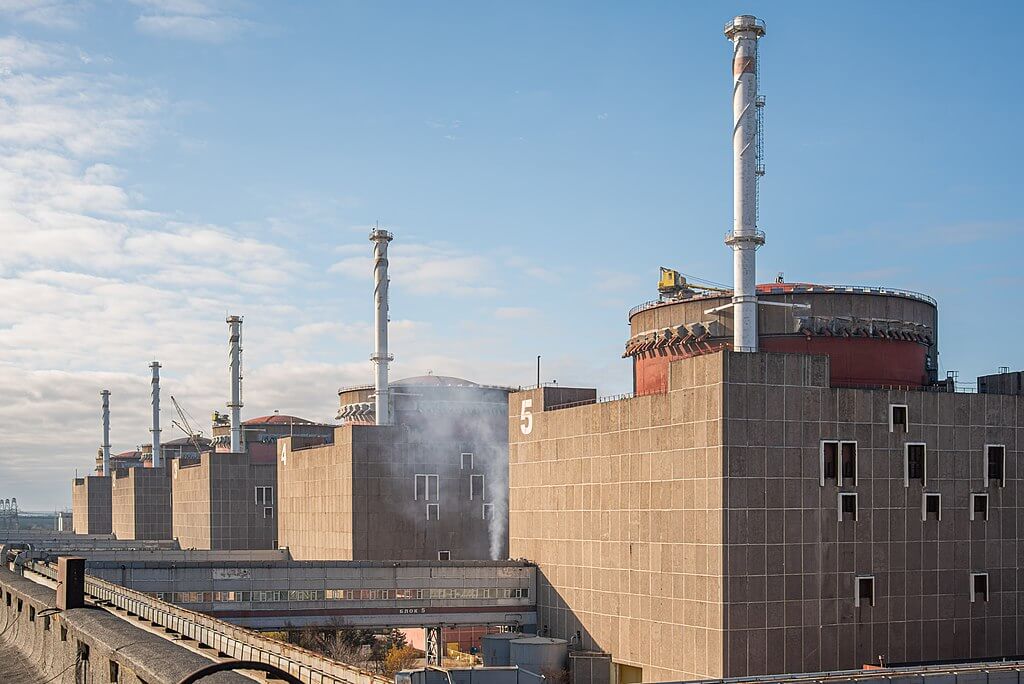
I had the honor last month of participating in the 2025 EU Non-Proliferation and Disarmament Conference, chairing a virtual keynote speech by and attendee discussion with the Director General of the International Atomic Energy Agency, Rafael Mariano Grossi. The precarious position of Ukraine’s Russian-occupied Zaporizhzhya Nuclear Power Plant, caught in the middle of Russia’s conflict with its western neighbor, was a top agenda item for that session, along with negotiations over Iran’s nuclear program, with little to cheer in the headlines this past month. From there I was fortunate to also attend the second semi-annual meeting this year of the G7 Global Partnership Against the Spread of Weapons and Materials of Mass Destruction, always an inspiring gathering of champions of chemical, biological, radiological, and nuclear (CBRN) material security and threat reduction from many different disciplines and walks of life. Among the efforts highlighted at the meeting were the IAEA’s nuclear security capacity building, the Global Partnership’s initiative to counter CBRN disinformation, and an initiative exploring nexus of weapons of mass destruction with disruptive technologies such as artificial intelligence, synthetic biology, quantum technology, and additive manufacturing and charting a plan of action for addressing risks and opportunities. It’s been meaningful to re-connect with so many of you and to meet so many new colleagues engaged in the work of supporting and strengthening nuclear security during these events. Despite the change and uncertainty of this year, these connections have been a bright spot and, I think, remind us all of the power of everyone’s collective work. Wishing a festive season ahead to those who celebrate and a happy new year to all.
Warmest wishes,
Christina
Director, International Nuclear Security Forum
Join the conversation on X: @INS_Forum
Follow INSF on LinkedIn here
Updates
FUNDING APPEAL: If you appreciate this newsletter, please consider a donation to ensure sustainability into the future. Donate here and specify where indicated that your gift is intended to support the INSF. Institutional funding for civil society’s nuclear security work is increasingly hard to come by, as many readers already know, and the International Nuclear Security Forum appreciates your support!
Nuclear Security News
Impact: The Russian Invasion of Ukraine
Update 330 – IAEA Director General Statement on Situation in Ukraine
The International Atomic Energy Agency (IAEA) deployed additional staff to Ukraine’s Chornobyl Nuclear Power Plant (NPP) at the end of November to conduct a comprehensive safety assessment of the damaged New Safe Confinement (NSC) following a drone strike in February.
Update 329 – IAEA Director General Statement on Situation in Ukraine
The connection of Ukraine’s Zaporizhzhya Nuclear Power Plant (ZNPP) to its main power line was restored on November 19 although the overall situation remains precarious amid the ongoing military conflict, as several of the country’s operating reactors had to reduce output following overnight attacks on the electrical grid.
REUTERS
Russian attacks target nuclear substations, kill seven, Ukraine says
Russia launched a barrage of drones and missiles in overnight attacks on Ukraine, targeting substations that supply two nuclear power plants and killing seven people, Ukrainian officials said on November 8.
Weapons, Materials, and Facilities
BULLETIN OF THE ATOMIC SCIENTISTS
Declassified cable reinforces proliferation concerns about HALEU fuel
A recently declassified document provides an important piece of the puzzle to understand the IAEA system for safeguarding against the diversion of civil nuclear materials for weapons and reinforces concerns about the proliferation potential of small modular reactors that HALEU fuel.
BBC
The US will help South Korea build nuclear ‘attack’ submarines – here’s what that means
South Korea has finalized an agreement to build nuclear-powered submarines in partnership with the United States. The US has approved the “attack submarines” and agreed to cooperate in sourcing fuel, according to the White House.
WASHINGTON POST
China rapidly expands nuclear test site as Trump revives Cold War tension
President Trump’s announcement that the United States would restart nuclear weapons testing on an “equal basis” with other nations has sowed confusion among the world’s nuclear powers and revived echoes of the Cold War arms race.
38 NORTH
Yongbyon Nuclear Scientific Research Center: Modernization and Expansion in 2025
Commercial satellite imagery of North Korea’s Yongbyon Nuclear Scientific Research Center from October and November 2025 shows modernization and expansion efforts throughout the site, including construction of probable new enrichment and waste storage facilities.
Threats
CYBERNEWS
Attackers breach nuclear waste plant, allegedly stealing its entire database
Radon, a nuclear waste management plant operated by Russia’s Rosatom, allegedly had its systems breached with attackers stealing testing data and user information. The breach netted attackers sensitive data from names of people conducting tests as well as test statistics.
Security Culture
REUTERS
Japan nuclear watchdog says confidential documents mishandled at Kashiwazaki-Kariwa plant
Japan’s nuclear watchdog said inadequate management of confidential security documents had occurred at the Kashiwazaki-Kariwa nuclear power plant in Niigata, where Tokyo Electric Power Company Holdings aims to restart operations.
NEW YORK TIMES
The US will help South Korea build nuclear ‘attack’ submarines – here’s what that means
Brandon Williams, head of the National Nuclear Security Administration, has ordered his subordinates to step up their vigilance against leaks of classified information, signaling a need to preserve the secrets that empower the world’s deadliest weapons.
IAEA
Cross-border collaboration advances nuclear security on land and sea in Southeast Asia
Driven by a common quest to strengthen nuclear security at their maritime and land borders, Indonesia, Malaysia, Singapore and Thailand joined forces to test cross-border collaboration and communication in recovering radioactive sources.
Emerging Technologies
BIOENGINEER.ORG
Digital Twin System Enhances Nuclear Safety Management
In a groundbreaking advancement in the realm of nuclear energy, the application of digital twin technology is poised to revolutionize the way safety is managed and risks are assessed throughout the lifecycle of nuclear power plants.
NUCLEAR ENGINEERING INTERNATIONAL
China achieves thorium-uranium conversion
China has achieved the first-ever thorium-to-uranium nuclear fuel conversion in its experimental Thorium Molten Salt Reactor. The 2 MW TMSR, is currently the only operational molten-salt reactor in the world loaded with thorium fuel.
Transport
SOUTH CHINA MORNING POST
China unveils power of thorium reactor for world’s largest cargo ship
China has unveiled critical details of a nuclear-powered vessel that can carry 14,000 standard shipping containers. It will be powered by a thorium-based reactor matching the power level of the pressurized water reactor used in the US Navy’s most advanced nuclear attack submarines.
Advanced Reactors
ENERGY ONLINE
X-energy Commences First Irradiation Tests of Advanced TRISO-X Nuclear Fuel
X-energy and the U.S. Office of Nuclear Energy today announced the start of confirmatory irradiation testing at Idaho National Laboratory to qualify X-energy’s proprietary TRISO-X fuel pebbles for commercial use in the Xe-100 Small Modular Reactor.
NUCNET
Clean Core’s Export Licence ‘A Milestone’ In Development of Thorium as Alternative to Uranium
The recent granting of an export license for US-based Clean Core Thorium Energy is a major step towards closer cooperation with India on nuclear energy and marks a milestone in the development of thorium as an alternative to uranium for fueling reactors.
US ARMY
Army announces next steps on Janus Program for next-generation nuclear energy
As part of next steps for the Janus Program, the Department of the Army has selected nine installations for consideration in which to site microreactor power plants, solicits commercial solutions for advanced nuclear power technologies.
IAEA
IAEA Launches Pilot School for Regulating Small Modular Reactor
The IAEA recently launched a pilot school on regulating small modular reactors (SMRs) to educate regulatory specialists about safety infrastructure and regulation for this emerging technology.
Analysis
THE NATIONAL INTEREST
Regulating Nuclear-Powered Ships on the High Seas
Shipping companies, who are facing steep decarbonization targets, are the latest industry to revisit nuclear power’s allure, with its immense energy density, zero greenhouse gas emissions at the point of use, and round-the-world endurance without bunkering.
NUCLEAR THREAT INITIATIVE
How the U.S. Maintains Its Nuclear Arsenal—Without Explosive Testing
The U.S. ended explosive nuclear testing in the 1990s, but that does not mean it is unprepared. The former Chief Scientist for the National Nuclear Security Administration explains how the U.S. ensures proper stewardship of its nuclear stockpile.
BULLETIN OF THE ATOMIC SCIENTISTS
Trump’s new radiation exposure limits could be ‘catastrophic’ for women and girls
In a May executive order President Trump declared moot the science underpinning decades-old radiation exposure standards set by the federal government. In doing so, it considers throwing out the foundational model used by the government to determine “safe” exposure limits.
GLOBAL SECURITY REVIEW
Energy Security and Strategic Ambition: Evaluating the UAE’s Nuclear Journey
The first commercial nuclear power plant in the Arab world is now fully operational, with all four units online and providing roughly a quarter of the country’s electricity. In a region traditionally defined by oil wealth, Barakah represents an intentional shift toward a diversified, low-carbon economy aligned with long-term sustainability goals.
Member Organization Announcements and Updates
International Institute for Strategic Studies
Zuzanna Gwadera published a Missile Dialogue Initiative piece on Russia’s Burevestnik and Poseidon tests, about the successful tests of two of its novel nuclear-weapons delivery vehicles.
Daniel Salisbury published an Online Analysis piece titled A return to nuclear testing in an unstable age? about President Trump’s announcement to resume testing.
Mark Fitzpatrick published an Online Analysis piece titled Could Iran buy nuclear weapons from North Korea? about the DPRK as a potential supplier of nuclear technology or materials to Iran.
The latest episode of the Arms Control Primer podcast discusses the nuclear disarmament of South Africa.
Nuclear Transport Solutions
International nuclear shipment safely delivered by NTS
The shipment, carried by Pacific Nuclear Transport Ltd’s purpose-built vessels containing MOX fuel assemblies departed Cherbourg in France in early September and arrived safely at the Takahama Nuclear Power Station, in Japan, this week.
Vienna Center for Disarmament and Non-Proliferation
VCDNP’s Gaukhar Mukhatzhanova and Federica Dall’Arche, on behalf of the EU Non-Proliferation and Disarmament Consortium (EUNPDC), visited the University of Malta to engage with students and scholars on non-proliferation, disarmament, and arms control issues.
VCDNP Executive Director Elena Sokova and Senior Research Associate Federica Dall’Arche participated in the Annual Conference of the EU Non-Proliferation and Disarmament Consortium (EUNPDC) and held a series of activities with Mentors and Mentees of the YWNGI Mentorship Programme.
Individual Member Updates
Daniel Ajoudeonu announced the latest publication to the Africa Nuclear Digital Hub Research Library, “Nuclear Energy in Africa and the Threat of Nuclear Terrorism: Trends, Risks and Policy Implications,” by Pablo José Pérez Cañavate, examining how Africa’s growing nuclear energy ambitions intersect with the threat of nuclear terrorism, and recommending comprehensive policy measures to address emerging security vulnerabilities on the continent.
Read the full paper here.
Tom Sauer published “Two-level game: Explaining the Failed Negotiations to Resurrect the JCPOA during the Biden administration,” in: Isak Svensson and Ulrike Möller (eds), Nuclear Negotiations, Springer, November 2025, pp.221-236.
Artem Lazarev participated in a mock criminal investigation and trial exercise on the International Convention for the Suppression of Acts of Nuclear Terrorism (ICSANT) for selected African States parties, at the United Nations Office at Nairobi.
In addition, Lazarev participated in an UNODC online workshop on ICSANT for CARICOM countries.
Opportunities
CALL FOR PAPERS
International Journal of Nuclear Security is relaunching on January 1st, 2026, and will issue a new call for papers on nuclear physical security at that time.
JOB
Royal United Services Institute, London, UK
Seeking Director of Proliferation and Nuclear Policy with a strong background in WMD issues to provide strategic direction to our team. The post holder will lead in business development, deepen the team’s reputation for high quality and independent research.
FELLOWSHIP
Berkeley Lab – US Department of Energy, Mountainview, CA
The Darleane C. Hoffman Distinguished Postdoctoral Fellowship is a premier path for early-career scientists to lead independent research that supports NNSA. Fellows conduct their own project, build cross-lab networks, and receive targeted career and leadership development through the NextGen program.
FELLOWSHIP
Vienna Center for Disarmament and Non-Proliferation, Vienna, Austria
The Fellow will work alongside the Japan Chair and other VCDNP researchers and interact with experts from the IAEA, CTBTO, other international organizations in Vienna, as well as representatives from national governments and academia.
INTERNSHIP
Center for Strategic and International Studies, Washington, DC
CSIS seeks an intern to support the Project on Nuclear Issues with its outreach and communication efforts. The PONI intern will support PONI programming, events, and external communications.
INTERNSHIP
Wisconsin Project on Nuclear Arms Control, Washington, DC
Interns gain experience in conducting open-source research on proliferation and sanctions evasion supply networks. Candidates should be adept at doing in-depth research on the Internet and using commercial and trade databases.





Community Adaptation for a Water Festival Without Clean Water