
Editor’s Note: Since 2023, Microsoft’s Office of Responsible AI has partnered with the Strategic Foresight Hub at the Stimson Center to convene a diverse group of experts from the Global South to evaluate the impacts of AI in emerging markets. Guided by the question of how AI-related risks and benefits might manifest in various social, cultural, economic, and environmental contexts, program participants identify technological and regulatory solutions that can help mitigate risks and maximize opportunities across the globe. Fellows also have the opportunity to publish at Stimson; in the RAI Case Studies, Fellows share insights about responsible AI governance from within their own thematic and geographic areas of expertise.
By Giulia Neaher, Managing Editor for RAI Case Studies
Thailand has been working to improve public administration efficiency for over two decades. Section 3/1 of the Public Administrative Rule 2002 Act defines efficiency as a mix of public happiness, successful legislative implementation, cost-effectiveness, reduced compliance costs, resource allocation, decentralized decision-making, service facilitation, and user satisfaction. These efforts followed the late 1990s Asian Financial Crisis and were intended to help Thailand avoid the middle-income trap. Despite efforts like deregulation, decentralization, and government reconstruction, challenges remain due to the government’s inability to make crucial policy choices.
This case study looks at using emerging AI technology, especially semantic models, to modernize public administration and address coordination issues that weaken Thai institutions. Over four sections — introduction, public administration challenges, AI solutions, and future governance concerns — this piece explores how AI supports Thailand’s international regulatory cooperation and accelerates the OECD accession process for Thailand.
The Challenge of Public Administration: A Coordination Problem
Institutions play a key role in sustainable socio-economic development. Conversely, administrative sluggishness can lead to corruption, higher business costs, lower international competitiveness, and reduced quality of life. In Thailand, institutional weakness is tied to the government’s administrative structure outlined in the Public Administration Act B.E. 2535 (1992), whereby the central government operates based on missions and expertise domains, with each unit reporting to top officials like the permanent secretary and minister. A similar hierarchy exists in regional administration, limiting horizontal or interdisciplinary coordination. Despite attempts over the past 20 years to address this issue, such as committee-based decision-making, these efforts have often been ineffective due to biases, lack of accountability, and commitment issues.
Additionally, Thailand faces a coordination problem in public institutions as it adopts OECD’s principles of International Regulatory Cooperation (IRC), an approach to public policy development that encourages countries to avoid isolated regulatory responses and adopt consistent international rules. However, Thailand faces three challenges that hinder the country’s participation in international policy fora and its efforts to internalize global standards. First, administrative silo: Each government agency operates in isolation, hoarding information and resources, leading to poor communication, duplicated efforts, and inefficiency because they focus on narrow departmental goals rather than the country’s big picture. Second, many agencies are resource deprived, lacking both sufficient budgets and qualified persons. Last but not least, while most international organizations adopt English as their official language, English proficiency in Thailand falls below the global average, according to EF English Proficiency Index.1See more information <https://www.ef.co.th/epi/regions/asia/thailand/> All three factors significantly limit the country from making meaningful contributions on the global stage.
The AI Solution
Thailand is introducing various AI applications to improve public administration. In particular, the AI Solution aims to solve coordination issues in international regulatory cooperation to support the Thailand accession to the OECD. The process, which typically takes several years, commences with a self-assessment by the accession country. For Thailand, this can be done by analyzing gaps between over 250 OECD legal instruments and Thai laws, policies, and practices. This gap analysis is part of the OECD Accession Roadmap published on July 10, 2024.
| OECD Legal Instruments | Thai Instrument | |
|---|---|---|
| Number (files) | 250 (approx.) | Over 100,000 (approx.) |
| Language | Formal English | Formal Thai |
| File types | Machine-readable texts | Mix of machine-readable and non-machine-readable files |
| Source location | OECD official website | Thai government official websites and local/physical storage locations |
| Number of counterparties | 26 OECD committees | 50 government agencies (approx.) responsible for each policy area |
| Limitation | Thai is not an official language | Officials have varying degree of English proficiency |
The AI Solution can address the issues mentioned in Section 2 and assist Thai government agencies on the international stage. It also helps international partners to work more effectively with Thai agencies and local stakeholders by reducing language and cultural barriers. The solution includes the following AI capabilities:
- Technical translation between the original texts (English, with technical jargon) and the target texts (Thai, formal/governmental style), based on large language models which have been trained with a glossary of English and Thai technical terms;
- Search-keyword generation in the target texts;
- Semantic expansion to find relevant terms in the target texts;
- Gap analysis between the international standards (already translated to the target texts) and domestic laws, policies, and practices (originally in the target texts);
- Augmented communication between OECD staff members and Thai government officials to support real-time translation and summarization.
It is possible to break down the AI Solution into three parts: 1) technical translation; 2) keyword generation; and 3) analytical comparison. They will be discussed in turn.
Technical Translation
While machine translation has existed for some time, its accuracy in technical contexts is often lacking for professional use. Large language models (LLMs) are preferred over rules-based, statistical, or neural machine translation due to their superior ability to generate natural language outputs. LLMs provide more human-like translations and can be fine-tuned for technical legal terms between English and formal Thai.
The translation module in the AI Solution begins by identifying the original English texts from selected OECD legal instruments and stripping away publishing formats to focus solely on content. Texts are translated one section or paragraph at a time and stored on a cloud server for public reference.
The training approach for LLMs involves two steps:
- Maintaining consistent translations of commonly used terms across all OECD legal instruments to avoid ambiguity. This is supported by an Official Glossary developed by Thai legal expert translators.
- Having human subject matter experts review all translations before they are used for gap analysis or published online.
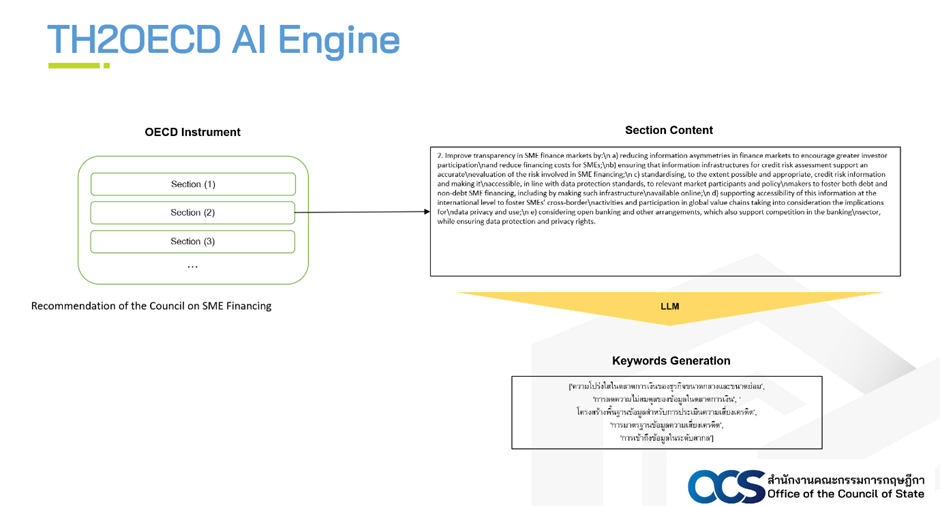
Figure 1 Technical translation (Source: Office of the Council of State, 2024)
Keyword Generation
Keyword generation involves three features of LLMs: semantic extraction (keyword identification), contextual awareness (keyword rationalization), and semantic expansion (keyword synonymizing). Capitalizing on recent updates to the leading multilingual generative pre-trained language models, the AI Solution extracts the most important information before presenting it in a concise format in the target texts. The keywords are generated based on the frequency of occurrences and degree of association with other words in the selected text.
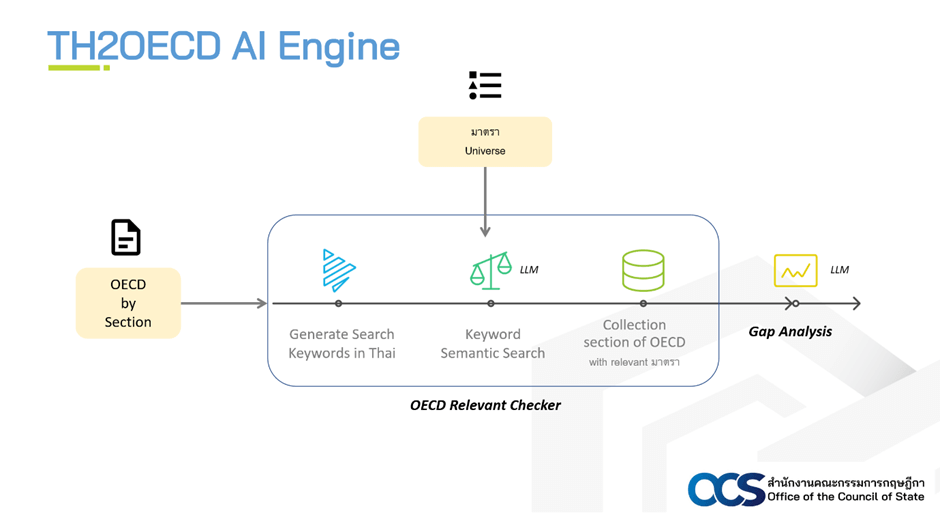
Figure 2 Keywords generation process (Source: Office of the Council of State, 2024)
The models thereby analyze source texts to obtain contextual embeddings for each word or phrase, capturing their semantic meaning. This enables more natural and accurate phrasal constructions for the chosen keywords. LLMs expand the keyword set with additional contextually relevant words, ensuring minimal loss in translation between original and target language texts. The Solution ranks keywords based on relevancy and contextual scores before proposing the final group of words according to predefined rules. Finally, the Solution performs technical translation for both instruments and expanded keyword lists.
Technical translation and keyword generation occur simultaneously. As shown in Figure 1, Thai keywords are extracted from the original texts using LLMs. They undergo semantic search to produce a set of direct and expanded terms. The solution then compares these keywords to analyze gaps between OECD legal instruments and Thai laws, policies, and practices.
Analytical Comparison
Advanced LLMs such as GPT-4o, Llama 3, and Qwen2.5-Max excel in semantic similarity assessment. The Solution uses technical translation and keyword generation to compare processed keywords with a domain or preselected documents in the target language. LLMs use textual matching techniques to find exact matches of identical keywords or perform contextual analysis and other semantic techniques for lesser degree matches.
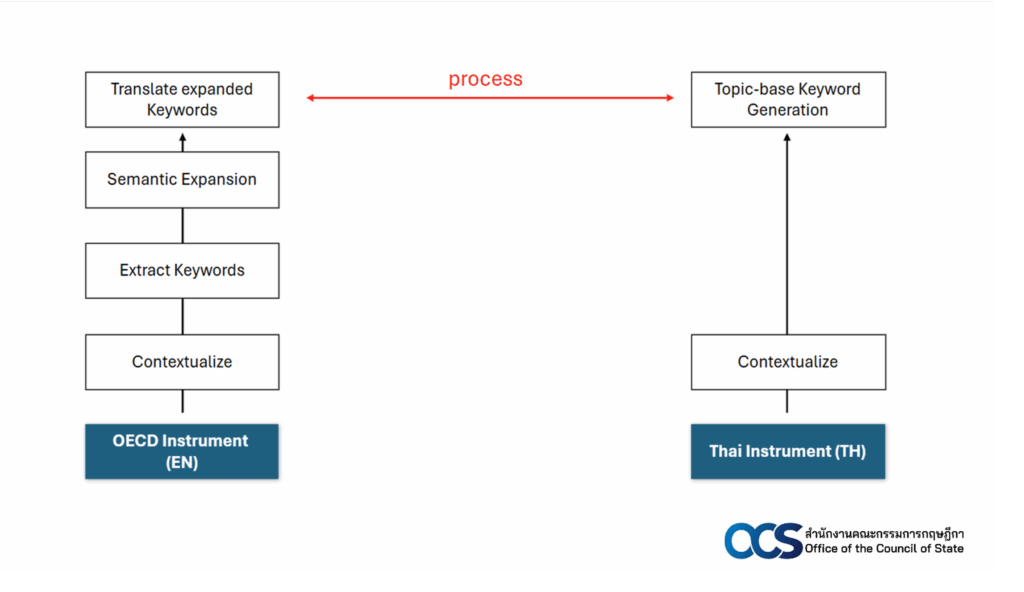
Figure 3 Analytical comparison (Source: Office of the Council of State, 2024)
Figure 3 illustrates the framework implemented in the Solution, where the system processes approximately 1,000 pieces of Thai primary legislation, converted into machine-readable text files, to match with over 250 OECD legal instruments. After matching an OECD instrument, the system provides a list of corresponding sections from the matched Thai legislation. A textual comparison is then conducted between the two sets of documents, resulting in a gap analysis report, which is reviewed for accuracy and subject to further manual edits by in-house legal experts. The next stage of the development will see the AI Solution perform the gap analysis on over additional 100,000 Thai statutory instruments, subordinate rules, policies, and practices.
The AI Solution will help OECD staff and Thai officials communicate more effectively by translating and analyzing their messages. It will generate standardized reports for gap analysis, allowing Thai officials to write in Thai and have their messages translated into English for review by the OECD. This enables both parties to work in their preferred languages.
Initial Concerns and Future Governance Design
AI technology has the potential to improve coordination in public administration, especially as Thailand begins the OECD Accession process. If this approach is successful, it may serve as a model for international regulatory cooperation. However, three concerns must be addressed from the outset:
- Quality control. Using AI in public administration has significant socio-economic impacts, especially if the models produce inaccurate or misleading results. It’s essential to ensure models are well-trained in both original and target languages, with expert-translated glossaries of technical terms. These proprietary datasets are what set the project apart from other Thai AI development projects, which are typically hampered by the quality of local datasets (or lack thereof). Limitations should be disclosed before deployment. Quality reviews must focus on linguistic quality and adequacy, as LLMs may introduce fabrications or hallucinations, which can be misleading even if they appear plausible at first.
- Role of humans. Humans should perform final checks on all output documents to address quality control and accuracy. A framework for accountability is needed if machines produce low-quality documents. Despite advances, technology cannot replace civic engagement in policymaking, which is essential in a democratic system.
- Transparency. A successful AI solution must build trust among stakeholders by ensuring transparency in both process and outcome. Stakeholders should access information on adopted LLMs, methodologies, limitations, and potential unintended consequences. Additionally, incorporating a simple, low-risk alternative can accommodate those with reservations about the main AI approach.
Using AI to enhance public administration should be a step-by-step process, tailored to the specifics of each goal, content type, objective, and stakeholder expectations. A global toolkit is needed to independently validate AI system performance using standardized tests and principles. High-impact public AI projects must pass such verification mechanisms. The toolkit should be developed by a global consortium of governments, international organizations, private sector entities, and civil society agencies. Similar standardized tests exist in other industries, like COSC for Swiss watches. Examples in AI, such as Singapore’s AI Verify, can also serve as role models.









Community Adaptation for a Water Festival Without Clean Water