
Dear Friends,
The situation at Ukraine’s Zaporizhzhia nuclear power plant (ZNPP) and other nuclear energy facilities remains a focus of the International Atomic Energy Agency amid chronic stress on Ukraine’s power infrastructure. Elsewhere, cybersecurity lapses at the UK’s Sellafield site make headlines, a recent National Academies of Sciences, Engineering, and Medicine report makes a case for the continuing need to strengthen defenses against nuclear terrorism, while a Science article finds terrorism and proliferation risks associated with the enriched uranium fuel new advanced reactor technology is expected to use. Please read on for news and member updates. New this month, we are highlighting member efforts to foster greater diversity, equity, and inclusion in the nuclear security field. Please let us know what you think!
Best wishes,
Christina
Director, International Nuclear Security Forum
Join the conversation on X: @INS_Forum
Follow INSF on LinkedIn.
Updates
- FUNDING APPEAL: If you appreciate this newsletter, please consider a donation to ensure sustainability into the future. Donate here and specify where indicated that your gift is intended to support the INSF. Institutional funding for civil society’s nuclear security work is increasingly hard to come by, as many readers already know, and the International Nuclear Security Forum appreciates your support!
Nuclear Security News
Impact: The Russian Invasion of Ukraine
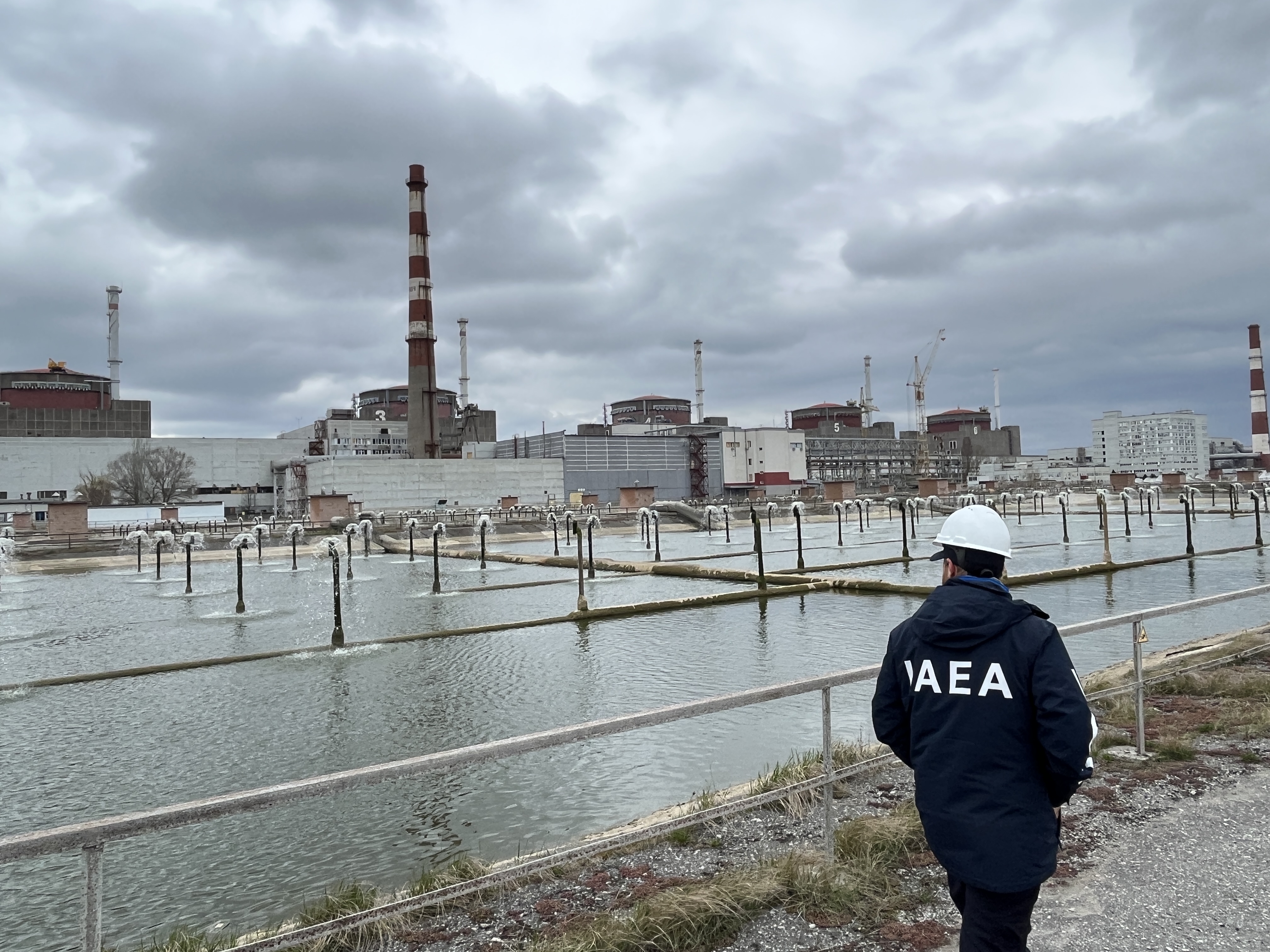
- IAEA’s Grossi Says It’s Far from Safe to Restart Zaporizhzhia Nuclear Plant (June 3): “It will be unsafe to restart the Russian-held Zaporizhzhia Nuclear Power Plant (ZNPP) in Ukraine as long as war rages around it despite Moscow’s hopes to fire up the complex, UN nuclear watchdog chief Rafael Grossi said on [May 27]. Grossi held a meeting with Russia on the issue…after officials including President Vladimir Putin told him Moscow hopes to restart Europe’s biggest nuclear power plant, where the six reactors are now shut down as the International Atomic Energy Agency [IAEA] has recommended on safety grounds. ‘The idea, of course, they have is to restart at some point. They are not planning to decommission this nuclear power plant. So this is what prompts the need to have a discussion about that,’ Grossi told a news conference on the first day of a quarterly meeting of the IAEA’s 35-nation Board of Governors. Russia said after last week’s meeting it is not currently planning to reactivate the plant. Grossi said some important steps need to be taken before it can restart safely. ‘In terms of what needs to happen …, there shouldn’t be any bombing or any activity of this type,’ Grossi said. ‘Then there should be a more stable assurance of external power supply. This requires repairs, important repairs of existing lines, which at the moment, and because of the military activity, are very difficult to envisage.”’
- Update 231 – IAEA Director General Statement on Situation in Ukraine (June 6): “The challenging nuclear safety and security situation in Ukraine was in the spotlight again this week at the [IAEA], with its Board of Governors discussing recent developments detailed in a new IAEA report and Director General Rafael Mariano Grossi meeting the country’s energy minister. Director General Grossi and Energy Minister German Galushchenko discussed the IAEA’s ongoing efforts to support nuclear safety and security in Ukraine in their meeting [on June 6] on the sidelines of the regularly scheduled June Board session at IAEA headquarters, where the Director General earlier in the week made clear his continued deep concerns about the situation. Nuclear safety and security remains especially precarious at the [ZNPP], and is potentially also fragile elsewhere in Ukraine following attacks on its energy infrastructure in recent months, including on electricity sub-stations which are vital in providing off-site power to the operating nuclear power stations, as well as to the ZNPP, Director General Grossi said after his talks with Minister Galushchenko.”
- Update 232 – IAEA Director General Statement on Situation in Ukraine (June 13): “The [IAEA] rotated its teams at Ukraine’s [ZNPP on June 13]. Since the Agency established a continued presence at the site in September 2022, 20 teams of experts have crossed the frontline of the conflict in Ukraine to reach the plant, Director General Rafael Mariano Grossi said. The rotation took place one day after Director General Grossi met with Swiss Foreign Minister Ignazio Cassis, ahead of the Swiss-hosted Summit on Peace in Ukraine, scheduled for June 15 and 16. Director General Grossi briefed Foreign Minister Cassis on the IAEA’s unique role in preventing a nuclear or radiological accident amid the ongoing military conflict. ‘The IAEA is the only international organization with a permanent presence at nuclear facilities in Ukraine, including the [ZNPP]. We continue to provide technical support and independent information to the world,’ said Director General Grossi. ‘I urge all states attending the Peace Summit to strengthen and support the unique, independent, and technical role of the IAEA.’ On the ground, the IAEA team at ZNPP reported hearing explosions, including close to the plant, on several days over the past week. They confirmed with the plant that one of the mines located next to the ZNPP cooling pond area exploded on [June 11]. There were no physical damage or casualties from the explosion and the cause of the explosion was not shared with the IAEA team.”
- Monkeys With a Grenade: Inside the Nuclear-Power Station on Ukraine’s Front Line. Former Employees Say the Plant is Being Dangerously Mismanaged by the Russians (June 14): “Zaporizhia nuclear-power station, Europe’s largest, fell into Russian hands in the first days of the full-scale invasion of Ukraine in 2022. This April a drone reportedly exploded on the roof of one of the reactors. The Russians blamed the Ukrainians; the Ukrainians said it was a Russian ‘false-flag’ operation. After the explosion, one of many such incidents over the past two years, Rafael Grossi, director-general of the International Atomic Energy Agency (IAEA), said: ‘We are getting dangerously close to a nuclear accident.’ The IAEA has had observers at the station since summer 2022, but its access is restricted by the Russian army, whose armoured vehicles are parked in the turbine halls. Petro Kotin, head of EnergoAtom, the Ukrainian nuclear authority, is worried that the plant, now poorly maintained and dangerously near the front line, risks deteriorating to the point where it has to be decommissioned. Nuclear fuel on site has exceeded its expiration date. ‘We could lose this plant forever,’ he said. ‘Nobody knows what to do next. No other nuclear-power plant has gone beyond these limits.’”
- Update 233 – IAEA Director General Statement on Situation in Ukraine (June 21): “A recent Swiss-hosted ‘Summit on Peace in Ukraine’ has highlighted wide international recognition of the crucial role of the [IAEA] in preventing a nuclear accident during the conflict in Ukraine, Director General Rafael Mariano Grossi said [on June 21]. ‘I appreciate the strong support for the indispensable work of the IAEA expressed by the many countries and organizations attending the summit,’ Director General Grossi said. At the largest of Ukraine’s nuclear facilities – the [ZNPP] – the IAEA team stationed at the site has continued to hear indications of military activity over the past week, including an explosion close to the site on 16 and again on [June 17]. The ZNPP informed the IAEA experts that there had been no impact on or near the site itself. On most days, the IAEA experts also heard explosions further away from the site. Persistent risks related to the availability of off-site power remain a source of deep concern for nuclear safety and security, as Ukraine’s electricity grid has been severely impacted by the conflict, including extensive damage caused by infrastructure attacks in recent months. In the latest indication of such dangers, the Luch sub-station in the city of Enerhodar was destroyed on [June 19]. The ZNPP informed the IAEA team that the cause of the destruction was a drone attack.”
- Update 234 – IAEA Director General Statement on Situation in Ukraine (June 23): “The city where most staff of Ukraine’s [ZNPP] live was left without electricity for 16 hours [on June 21 and 22] after a second sub-station in the area sustained damage and was taken out of operation, Director General Rafael Mariano Grossi of the [IAEA] said [on June 23]. The IAEA team of experts stationed at the ZNPP on [June 22] visited the site of the latest affected sub-station, Raduga, in the city of Enerhodar to observe damage to one of its two transformers that the plant said was caused by a drone attack the previous evening. Coming just a few days after one of Enerhodar’s other sub-stations – Luch – was destroyed, Director General Grossi said it further deepened his serious concerns about the fragility and vulnerability of Ukraine’s electricity infrastructure, which is crucial also for nuclear safety and security, even though the power supplies to the ZNPP’s six reactors were not affected this time. As a result of recent days’ damage to the electrical infrastructure, the IAEA was informed that Enerhodar had no electricity from around 8pm on [June 21] to noon on [June 22], when power was restored in the city, which is located next to the ZNPP. Sub-stations form vital parts of a country’s electrical production, transmission, and distribution system. ‘Whoever is behind this, it must stop. Drone usage against the plant and its vicinity is becoming increasingly more frequent. This is completely unacceptable, and it runs counter to the safety pillars and concrete principles which have been accepted unanimously,’ Director General Grossi said. After [June 19]’s destruction of the Luch sub-station – which had provided electricity to parts of Enerhodar and other areas – the Raduga sub-station was used to supply some of the lost power to five districts of Enerhodar, before it too was damaged.”
International Architecture
- Import and Export of Radioactive Sources: 20 Years of Safety and Security Guidance: “Tens of thousands of sealed radioactive sources consignments are shipped around the world every year for use in industry, medicine, research, agriculture and education. [From May 27 to 31], regulators and industry experts convened in Vienna to discuss the safe and secure import and export of radioactive sources. Radioactive sources are used in industry to sterilize and disinfect medical equipment, to inspect gas and water pipelines for cracks and flaws, to make food safe to eat and in environmental applications to assess contamination in earth, water and air, as well as other areas. They are also integral to the IAEA’s efforts to address global disparities in access to radiation medicine to diagnose and treat cancer through the flagship Rays of Hope initiative, as well as the Programme of Action for Cancer Therapy (PACT). Since the establishment of the Guidance on the Import and Export of Radioactive Sources in 2004, countries have been focusing on bringing greater consistency to national programs for the safe and secure movement of radioactive sources; robust regulatory infrastructure; effective global cooperation; and communication and enhanced national and transnational border control.”
- Jordan’s National Centre for Nuclear and Radiological Security Designated as IAEA Collaborating Centre: “Jordan’s National Centre for Nuclear and Radiological Security has become an IAEA collaborating center for capacity building in nuclear security detection and response. The main areas of engagement will focus on the development of training materials, hosting workshops and technical visits, and cooperation in coordinated research activities. ‘The designation of the National Centre for Nuclear and Radiological Security (NCNRS) as an IAEA collaborating center builds on its well-recognized expertise and state-of-the-art facilities in nuclear security detection and response capacity building,’ said Lydie Evrard, IAEA Deputy Director General and Head of the Department of Nuclear Safety and Security, at the signing ceremony in Vienna. ‘Under this agreement, the NCNRS will further engage with the IAEA to contribute to the Agency’s efforts to support countries to enhance their detection and response capabilities for nuclear security,’ she added.”
Weapons, Materials, and Facilities
- Bag of Radioactive Clothing Found on Oak Ridge Roadway: “Oak Ridge officials said there was no threat to the public [on June 20] after a bag of radioactive material was found on Highway 58. Oak Ridge Fire Department was dispatched just before 8 a.m. after a caller told dispatchers they stopped and moved a bag from the center of the road to the guardrail, according to officials. The bag was intact and meters indicated very low radioactivity, consistent with protective clothing, officials said. ‘Thanks to the swift response by the caller and our firefighters, there was never any threat to the public or environment,’ Oak Ridge Fire Chief Travis Solomon said. The bag was disposed of properly. An investigation is underway.”
Threats
- Sellafield Pleads Guilty to Criminal Charges Over Cybersecurity Failings: “The UK’s most hazardous nuclear site, Sellafield, has pleaded guilty to criminal charges related to cybersecurity failings brought by the industry regulator. Lawyers acting for Sellafield told Westminster magistrates’ court on Thursday that cybersecurity requirements were ‘not sufficiently adhered to for a period’ at the vast nuclear waste dump in Cumbria. The charges relate to information technology security offences spanning a four-year period from 2019 to 2023. It emerged in March that the Office for Nuclear Regulation (ONR) intended to prosecute Sellafield for technology security offences. Late last year the Guardian’s Nuclear Leaks investigation revealed a catalogue of IT failings at the site dating back several years.”
Security Culture
- New Reports Evaluate U.S. Readiness to Prevent, Counter, and Respond to Threats of Nuclear and Chemical Weapons of Mass Destruction: “Two new reports from the National Academies of Sciences, Engineering, and Medicine review the adequacy of U.S. strategies to prevent, counter, and respond to the threat of nuclear and chemical terrorism and highlight the strengths and limitations of U.S. efforts to prevent and counter threats from weapons of mass destruction (WMD), particularly in a changing terrorism threat landscape. The reports provide recommendations for government leadership and interagency partners to better coordinate and communicate across counterterrorism efforts and to support prevention, countermeasure, response, and recovery programs.”
Emerging Technologies
- New Railcar Designed to Transport Spent Nuclear Fuel Cleared for Operation: “The Association of American Railroads (AAR) certified the Atlas railcar system to operate on all major freight railroads in the United States. The high-tech railcar was developed by the U.S. Department of Energy (DOE) and will be used to transport the nation’s commercial spent nuclear fuel and high-level radioactive waste. The certification is the highest safety standard set by the AAR for transporting high-level radioactive material.”
- Analysis Published in Science Finds High Assay Low-Enriched Uranium Fuel to be Produced for Small Nuclear Power Reactors Poses a Greater Proliferation Threat than Previously Acknowledged: “An analysis published today in the journal Science found that, contrary to a widely held assumption, the high assay low-enriched uranium (HALEU) now being produced with federal subsidies to fuel the next generation of small nuclear power reactors can be used directly to make nuclear weapons, and thus presents greater terrorism and nuclear proliferation threats than publicly acknowledged by the federal government and industry.”
Member Organization Announcements and Updates
Spotlight: Diversity, Equity, and Inclusion Lines of Effort
- The James Martin Center for Nonproliferation Studies (CNS), jointly with the U.S. Department of Energy’s National Nuclear Security Administration (DOE/NNSA), and Los Alamos and Sandia National Laboratories, co-hosted a technical exchange to the United States for over 20 professionals from the Black Sea Women in Nuclear Network (BSWN) and Women in Nuclear Central Asia Network (WINCA). Program participants represented government bodies, training and research facilities, academia, industry, and civil society. BSWN and WINCA networks were established in partnership with the DOE/NNSA Nuclear Security Women Initiative (NSW) and Los Alamos National Laboratory (LANL). The technical exchange took place on April 1-12 in the form of two modules: the Washington, DC module and the New Mexico module (Los Alamos and Sandia National Laboratories). The program’s objectives were twofold: to introduce the BSWN and WINCA networks to a wide range of stakeholders within the U.S. policy and nuclear security science and research communities, and to engage in dialogue and professional exchanges with U.S. peers on recent developments in these fields and share good practices in promoting diversity, equity, inclusion, and accessibility (DEIA) policies in their respective organizations. The visit was supported and co-hosted by DOE/NNSA, LANL, and Sandia. Read more about the exchange.
International Institute for Strategic Studies
- Zuzanna Gwadera and Timothy Wright published ‘Missile transfers to Ukraine and wider NATO targeting dilemmas’ for the Missile Dialogue Initiative. Read the paper.
- Dr. Jeffrey Lewis and Kolja Brockmann published the research paper ‘Missile Proliferation and Control in the Asia-Pacific Region.’ Read the paper.
James Martin Center for Nonproliferation Studies, Middlebury Institute of International Studies at Monterey
- On June 27, 2024, at 4:00pm (CEST) Black Sea Women in Nuclear Network (BSWN) and Women in Nuclear Central Asia (WINCA) networks will hold a joint webinar titled “The Legacy of Soviet Uranium Production.” Speakers will include Zarrina Shoimardonova, Senior Research Officer, Public and International Relations Department, CBRN Safety and Security Agency, Tajikistan (WINCA), presenting “Uranium Legacy Sites of the Soviet Union in Tajikistan: Problems and Ways Forward,” and Svitlana Kulchytska, Technical Expert, Joint Support Office, Ukraine (BSWN) presenting “Developing Remediation and Infrastructure Reconstruction for Former Uranium Production Facilities in Ukraine.” Register for the webinar.
- Dr. Hanna Notte, CNS Eurasia Nonproliferation Program Director, published a commentary in Survival Global Politics and Strategy entitled “Russia, the Global South and the Mechanics of the Nuclear Order.” It argues that Russia’s war against Ukraine has reverberated across the global nuclear order. The heightened tensions between Russia and Western states have paralyzed and politicized processes in various multilateral nuclear forums and governance bodies, such as the International Atomic Energy Agency (IAEA), the Nuclear Non-Proliferation Treaty (NPT) and the United Nations First Committee. The earthquake in procedure has further exacerbated frustrations with the state of the nuclear order, particularly among the non-nuclear-weapons states of the Global South. These states have long lamented insufficient progress towards nuclear disarmament, the prospects for which were rendered even more remote by the war. Russia, for its part, has pursued a dual strategy in multilateral nuclear diplomacy: it has undermined non-proliferation efforts and chipped away at trust in the legacy forums on the one hand, while leveraging them in pursuit of greater alignment with the Global South on the other. These dynamics have combined to drive the further fragmentation of the nuclear order in ways that, while taking time to fully play out, promise to be profound. Continue reading.
- In this episode of the podcast “Machiavelli in the Ivory Tower,” hosts Sarah Bidgood and Dr. Hanna Notte speak with Ulrich Kühn, who is head of the research area “Arms Control and Emerging Technologies” at the Institute for Peace Research and Security Policy at the University of Hamburg (IFSH) and a Non-Resident Scholar of the Nuclear Policy Program, Carnegie Endowment for International Peace. They discuss “Germany and Nuclear Weapons in the 21st Century: Atomic Zeitenwende?”, a new book Ulrich edited and published with Routledge in early 2024. Listen to the podcast.
Nuclear Transport Solutions
- On the margins of the International Conference on Nuclear Security (ICONS), NTS signed a Practical Arrangement with the IAEA to support nuclear security and transport security of nuclear and other radioactive material. Recognizing the UK and NTS’s world-leading capabilities in the field of nuclear transport safety and security, the three-year agreement will enable the IAEA and NTS to cooperate in research activities, to develop training materials, and deliver capacity-building workshops and expert missions around the world to address the transport security challenges of tomorrow. Find out more about the agreement.
Odesa Center for Nonproliferation
- Ali Alkis presented ‘Nuclear Security in Crisis: Nuclear Piracy’ at Uppsala University’s Alva Myrdal Centre for Nuclear Disarmament’s third annual conference in Sweden. The presentation argues that the Russian occupation of ZNPP poses unprecedented risks, blurring the lines between conventional warfare and nuclear security threats and highlights the importance of paradigm shift for a robust nuclear security framework. Read more about the conference and his presentation.
Open Nuclear Network
- Hyuk Kim, a non-resident Senior Fellow at the Korea Research Institute for National Strategy (KRINS) and Consultant for 38 North at the Stimson Center, has recently published a compelling analysis in Open Nuclear Network’s (ONN) new Thought Room. His piece dives into the critical role of AI in enhancing nuclear safety, security, and safeguards. Read more.
Vienna Center for Disarmament and Non-Proliferation
- VCDNP Non-Resident Senior Fellow John Carlson calls for urgent action to reduce the risk of nuclear war and work towards nuclear disarmament in The Korea Times. Read the full article.
- For its annual diplomatic workshop, the VCDNP convened 55 ambassadors, senior diplomats, and experts for intensive discussions on challenges for multilateral nuclear diplomacy, expectations for the 2024 NPT PrepCom, the nuclear security regime after ICONS 2024, and the impact of artificial intelligence in the nuclear domain. Find out more about the workshop.
- VCDNP experts Mara Zarka and Dr. Sarah Case Lackner contributed to the 1540 Compass e-journal published by UNICRI in its special 20-years edition commemorating the adoption of UNSCR 1540. Read their article.
- The VCDNP organized a visit for the 2024 UN Disarmament Fellows to Brussels on behalf of the EUNPDC to learn more about the European institutions and their work on non-proliferation and disarmament matters. Read more about the visit.
- The VCDNP hosted a seminar on State radiological weapons programs, informed by the recently published book “Death Dust” by Dr. Hanna Notte and Dr. William Potter, including past case studies and prospects for their future regulation. Read more about the seminar.
- The VCDNP held a side event at the ICONS that focused on engaging parliamentarians and other high-level officials to advance nuclear security around the world. Learn more about the event.
Individual Member Updates
- Kenneth C. Brill and John H. Bernard presented a paper at ICONS 2024 that argues the process for the next A/CPPNM Review Conference (RevCon) needs to be more substantive than the preparatory process for the first RevCon and describes ways to achieve this goal. Read the paper.
- Tom Sauer published the research article ‘How Useful Are Nuclear Weapons in Practice? Case-study: The War in Ukraine,’ in the Journal for Peace and Nuclear Disarmament. It discusses the real-world utility of nuclear deterrence, responsibility, and coercion using the war in Ukraine as a case study. Read the article.
- Tom Sauer published the research article ‘The Failed Negotiations to Restore the Iran Nuclear Deal’ in Global Policy. The article discusses how liberal theory and Putnam’s two-level game helps explain the Iran nuclear deal’s failure. Read the article.
Opportunities
- Parsons Corporation is seeking a Project Manager for their Global Nuclear Security Projects portfolio – a U.S. Government contract. The Project Manager will provide direction and management for small to medium-sized international nuclear security projects. The projects work with nuclear material security, including efforts to ensure the secure storage and transportation of nuclear warheads, weapons-usable nuclear material, and high-threat radiological material. Read more.
- CRDF Global is seeking a Senior Program Manager for the Nuclear Technologies profile under the supervision of the Director of Nonproliferation and Counterproliferation Programs. The Senior Program Manager will be responsible for managing CRDF Global activity on one or more significant programs, has supervisory experience as well as program or project management experience, and experience managing high-impact activities. Read more.
- The Partnership for Global Security (PGS) is seeking applicants for their Research Internship. The intern will primarily focus on researching nuclear security, nuclear energy, and transnational governance issues. Current research projects that interns will support include: exploring the nexus of climate change, nuclear power growth and global security; understanding the growth of nuclear energy in the Middle East and East Asia; tracking the evolution of nuclear security policies and governance structures; using existing voluntary frameworks as a model for nuclear security governance structures; and examining cybersecurity and other potential threats prompted by new technology developments. Read more.
- The Nuclear Threat Initiative (NTI) is seeking interns for their Fall 2024 cohort. The program offers internship opportunities to undergraduate students with at least two years of study, graduate students, and/or those who demonstrate co-equal qualifying experience. NTI interns play a critical role within each of our teams by working to advance our mission objectives while learning more about existential risks to humanity. Our internships are substantive opportunities where interns are deeply embedded into NTI’s teams, contributing research and analysis to ongoing projects, but do include administrative components as needed. NTI’s internship program prioritizes building skills and experience and includes structured professional development opportunities. Read more.
- NTI is seeking a Program Officer/Senior Program Officer for their Nuclear Materials Security program. This selected candidate will help lead NMS efforts to improve global nuclear materials security, including in the area of nuclear energy. Responsibilities will include: developing and implementing activities related to securing, reducing, and safeguarding special nuclear materials; developing and implementing activities related to the responsible expansion of nuclear energy; developing and implementing activities related to building capacity in international institutions related to nuclear security; representing NTI at professional conferences and international diplomatic meetings; planning and implementing NMS program activities, including establishing milestones and mitigating project risks, as well as other project management tasks. Read more.
- The Laboratory of Applied Nuclear Physics (LANPh) is announcing two openings at the level of a postdoc and/or research scientist. The selected scientists will have the chance to work on groundbreaking research in nuclear physics applied to problems in nuclear security, such as arms control, cargo security, and nuclear detection. The principal duties include contributing to existing projects at LANPh in leading/co-leading roles’ guiding graduate and undergraduate students in their research, designing experiments and new engineering concepts, and co-authoring papers and proposals.Read more.
- ANSER is seeking a Nuclear Security Analyst providing support to the Office of the Deputy Assistant Secretary of Defense for Nuclear Matters (OASD(NCB/NM)) Directorate of Nuclear Forensics, Energy, and Survivability. The candidate will perform a variety of multifaceted scientific, technical, and analytical tasks regarding the national strategic deterrent and nuclear security. Read more.
- HunaTek is seeking a Washington, DC based full-time International Nuclear Security Portfolio Manager to support the management and implementation of international nuclear security projects in support of the National Nuclear Security Administration (NNSA), Office of Global Material Security, Office of International Nuclear Security (INS). The International Nuclear Security Portfolio Manager will support INS federal staff with the oversight of international projects and portfolios, as assigned. The manager should be able to work in a fast-paced environment and have a background and experience in international affairs, national security, public policy, communications, or a related field. The manager will work closely with various stakeholders to implement strategies aimed at strengthening nuclear security measures, mitigating risks, and promoting international cooperation in nuclear security efforts. Read more.
- GDIT is seeking a candidate who will assist the Department of State’s Bureau of International Security and Nonproliferation, Office of Cooperative Threat Reduction (ISN/CTR) in developing, implementing, and coordinating the Foundational Infrastructure for the Responsible Use of Small Modular Reactor (SMR) Technology (FIRST) program and related nonproliferation capacity-building efforts. The candidate will be responsible for providing strategic diplomatic and programmatic advice, including on financial management, and advising team members and technical experts on ways to execute program activities and advance the FIRST team’s strategy. The candidate will also be responsible for supporting relevant policy development and implementation within the State Department and coordinating with other U.S. Government departments and agencies as needed. In addition, the candidate will be responsible for ISN/CTR’s civil nuclear security programming efforts, which focus currently on the Asia/Pacific region, Africa, Eastern Europe, Central Asia, Latin America, and the Middle East. Read more.






Community Adaptation for a Water Festival Without Clean Water