
Dear Friend,
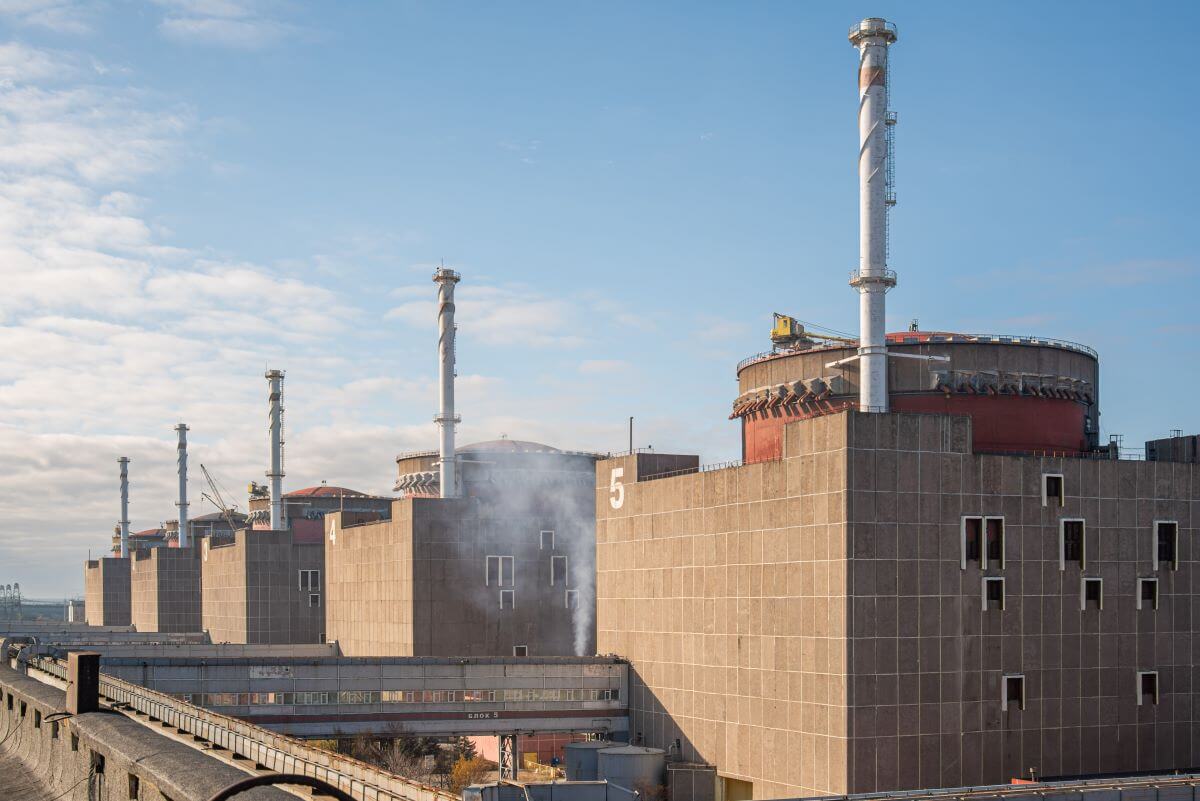
Despite the summer lull in some parts of the world, debates over nuclear reactor fuel are making headlines this month, with a fresh article about the security and proliferation risks of the High Assay Low Enriched Uranium (HALEU) fuel required by some advanced reactor designs, and two Democratic Senators in the United States adding their voices to those urging President Biden’s administration not to fund fuel reprocessing plants due to proliferation concerns. Meanwhile, the IAEA continues to document disturbing conditions at the Zaporizhzhia Nuclear Power Plant, even as the UN General Assembly approved a resolution by a vote of 99-9 on Russia returning the plant to Ukraine. Finally, we are also pleased to continue to spotlight news and programming on diversity, equity, and inclusion in the field.
Wishing everyone a productive month ahead.
Christina
Director, International Nuclear Security Forum
Join the conversation on X: @INS_Forum
Follow INSF on LinkedIn
Updates
- FUNDING APPEAL: If you appreciate this newsletter, please consider a donation to ensure sustainability into the future. Donate and specify where indicated that your gift is intended to support the INSF. Institutional funding for civil society’s nuclear security work is increasingly hard to come by, as many readers already know, and the International Nuclear Security Forum appreciates your support!
Nuclear Security News
Impact: The Russian Invasion of Ukraine
- Update 235 – IAEA Director General Statement on Situation in Ukraine (June 27):“The International Atomic Energy Agency (IAEA) has been informed by the Zaporizhzhya Nuclear Power Plant (ZNPP) that an external radiation monitoring station was destroyed by shelling and fire [during the week of June 24], further reducing the effectiveness of its off-site capability to detect and measure any radioactive release during an emergency, Director General Rafael Mariano Grossi said [on June 27]. The ZNPP informed the team of IAEA experts at the site that it lost the connection to this monitoring station – located around 16 kilometres south-west of the plant – on [June 24]. Due to the security situation, the team was unable to access the location to confirm the damage.”
- Update 236 – IAEA Director General Statement on Situation in Ukraine (July 3): “The [IAEA] has been informed by the [ZNPP] that several drones struck locations in the vicinity of the site [on July 3], injuring workers and causing forest fires. These repeated drone attacks are a threat to nuclear safety and people’s lives and must stop, IAEA Director General Rafael Mariano Grossi said. The IAEA experts stationed at the ZNPP said they saw thick smoke and heard explosions coming from near the plant’s 750 kilovolt (kV) switchyard after they were told that drones had hit an adjacent forest, starting fires in windy conditions. Firefighters were working to control the flames. The switchyard is located outside the ZNPP site itself. For now, the IAEA experts do not report any impact on-site.”
- Update 237 – IAEA Director General Statement on Situation in Ukraine (July 11): “The city that is home to most staff of Ukraine’s [ZNPP], Enerhodar, has continued to suffer temporary power cuts, water shortages and nearby forest fires following reports of military activities in the area, adding to the many challenges facing plant personnel during the armed conflict, Director General Rafael Mariano Grossi of the [IAEA] said [on July 11]. Over the past several months, a series of drone attacks has further fueled deep concerns about the dangers facing the ZNPP, which is located on the frontline. In recent days, the IAEA experts stationed at the site observed smoke coming from nearby locations where they were told that such strikes had occurred. Earlier [on July 11], they also reported about the presence of fires near Enerhodar though the cause was not immediately clear. The IAEA team was informed of an attack [on July 5] that damaged an electrical transformer in a sub-station of Enerhodar, leading to an hours-long power outage. The ZNPP also told the IAEA experts that shelling near the city [on July 10] impacted a water pumping station and another electrical sub-station, leaving the residents without tap water and electricity during the day. The ZNPP remained connected to its two off-site power lines and was not affected by this reported attack.”
- UN Demands Russia Immediately Return Europe’s Biggest Nuclear Plant to Ukraine (July 12): “The U.N. General Assembly adopted a resolution [on July 11] demanding that Russia urgently withdraw its military and personnel from Europe’s largest nuclear power plant and immediately return the facility to Ukraine. The resolution also reiterates the assembly’s demands for Russia to immediately ‘cease its aggression against Ukraine’ and withdraw all troops, and again reaffirms the 193-member world body’s commitment to Ukraine’s ‘sovereignty, independence, unity and territorial integrity.’ The resolution was approved by a vote of 99-9 with 60 countries abstaining and 25 countries not voting. Russia was joined by Belarus, Cuba, Eritrea, Mali, Nicaragua, Syria, Burundi and North Korea in opposing the resolution. China, India, South Africa and many Middle Eastern countries were among those abstaining.”
- Update 238-IAEA Director General Statement on Situation in Ukraine (July 19): “Staff of Ukraine’s [ZNPP] experienced further hardships because of the military conflict [during the week of July 15], with yet another power outage in the nearby city of Enerhodar and a shortage of tap water also affecting their workplace, Director General Rafael Mariano Grossi of the [IAEA] said [on July 19]. In the latest incident, the IAEA team stationed at the ZNPP was informed by the plant that a military strike damaged a regional sub-station on [July 17], cutting electricity to Enerhodar and also impacting water supplies. For the second time [during the week of July 15], the IAEA experts reported that there was no tap water available in some buildings at the site. People living in Enerhodar, including most ZNPP employees, have faced several such privations in recent weeks, in some cases following reports of drone attacks on electrical sub-stations in the city, located around 5 kilometers from the ZNPP. Enerhodar remained without power yesterday, while water supplies were partially restored.”
- Update 239-IAEA Director General Statement on Situation in Ukraine (July 26): “The nuclear safety and security situation at the [ZNPP] remains highly challenging during the military conflict, including efforts to ensure adequate maintenance of key safety systems and other vital equipment, Director General Rafael Mariano Grossi of the [IAEA] said [on July 26]. Over the [week of July 22], the IAEA experts stationed at the ZNPP have conducted several walkdowns focused on monitoring maintenance activities across the site, as well as the availability of necessary spare parts for the plant. ‘These are areas which are of vital importance for sustainable nuclear safety and security, even though they are often overshadowed by more urgent difficulties, including the extremely vulnerable off-site power situation at the [ZNPP],’ Director General Grossi said.”
International Architecture
- Pakistan Cracks Down on Nuclear Smuggling with New Laws: “Pakistan has taken a significant step towards bolstering national and international security by introducing stricter penalties for the smuggling of nuclear and radioactive materials. The Federal Board of Revenue (FBR) announced these amendments as part of the recently implemented Finance Act, 2024. Coming into effect on July 1, 2024, these amendments strengthen the Customs Act, 1969. The new measures establish a tiered system of punishments designed to deter and penalize smuggling attempts based on the quantity and type of nuclear material involved. FBR sources emphasize that these stricter regulations demonstrate Pakistan’s unwavering commitment to maintaining robust control over nuclear materials and prioritizing public safety. The penalties for smuggling offenses vary depending on the severity of the transgression.”
Weapons, Materials, and Facilities
- Yale New Haven Hospital May Be Fined $9,000 for Improper Handling of Nuclear Materials, Feds Say: “Yale New Haven Hospital could be…fined by a federal agency for improperly handling nuclear materials, officials say. The material was noticed when radiation alarms went off at a lead disposal facility in December, according to a release from the U.S. Nuclear Regulatory Commission. What was found was an unused vial of lutetium-177, it said, noting it is an isotope used for targeted nuclear medicine therapy for certain types of tumors and prostate cancer. The NRC has proposed Yale New Haven Hospital be…fined $9,000 for the offense. Yale did not contest the violations, the NRC said in its release. In a statement, a Yale New Haven Hospital Spokesperson said the hospital ‘appreciates our partnership with the NRC and the opportunity to promptly rectify the matter noted by the NRC in its review.’”
Threats
- Radiation Material Intercepted at the Border, National Nuclear Security Committee Alerted: “The Radiation Protection Authority of Zimbabwe (RPAZ) has intercepted an assortment of radioactive material that was being shipped from South Africa via the Beitbridge Border Post. RPAZ spokesperson, Mr. Shingirai Huni said the material has been taken to the local animal plant and quarantine facility for further management.”
- Radioactive Material Stolen in Sao Paulo, Officials Issue Public Alert: “Brazil’s National Nuclear Energy Commission (CNEN) affiliated with the Science and Technology Ministry, has issued a public alert following the theft of a pickup truck carrying radioactive material in Sao Paulo. The incident, involving a private company, occurred a few days ago. The stolen material was securely packaged in lead containers to prevent environmental irradiation. However, CNEN warns that improper handling of the material poses significant health risks…There is still no public information on the level of radioactivity of the materials stolen in Sao Paulo.”
- Radioactive Material Stolen in Argentina…Again: “On Tuesday, July 2, Argentina’s Nuclear Regulatory (ARN) alarmed the public about a stolen radiopharmaceutical container in Buenos Aires. The incident occurred only six weeks after the theft of a container with the same radiopharmaceutical. The container was stolen from a parked vehicle in front of the British Hospital in Barracas in southeastern Buenos Aires. The van driver told the Argentine news outlet Infobae that they noticed the missing container upon returning to their vehicle. Moreover, they linked the theft to rising insecurity in the area and doubted that the thief knew what they were stealing.”
- US Senators Urge Biden Admin to Not Fund Nuclear Fuel Reprocessing: “Two Democratic U.S. senators have urged the administration of President Joe Biden to not fund proposals for reprocessing spent nuclear fuel, saying such plants produce weapons-usable nuclear material and could encourage other countries to fund them abroad. Senators Jeff Merkley and Edward Markey, both Democrats, said in a letter dated [July 17] that reprocessing plants violate U.S. nuclear security policy which states that civil nuclear research and development must focus on approaches that avoid producing and accumulating weapons-usable nuclear material. They sent the letter to Energy Secretary Jennifer Granholm and Nuclear Regulatory Commission Chair Christopher Hanson.”
- The UK Needs to Move Faster on Nuclear Energy Cybersecurity: “The new Labour government’s ‘Great British Energy’ bill sets out an ambitious agenda for the UK’s transition to net zero. The bill establishes a new publicly owned energy company to own and advance clean energy projects, including new nuclear power plants. The government has said that it wants to invest in the long-term security of the nuclear power sector, focusing on its role as an engine for good jobs and for helping the UK achieve energy security and advancing towards its net-zero goals…While the renewed and more energetic focus on nuclear energy is good news for UK industry, the cybersecurity of the UK’s nuclear energy industry has been called into question. This has been highlighted by the repeated gaps found during inspections by the Office of the Nuclear Regulator (ONR) at the Sellafield nuclear storage site.”
Emerging Technologies
- High Hopes and Security Fears for Next-Gen Nuclear Reactors: “Next-generation nuclear reactors are heating up a debate over whether their fuel could be used to make bombs, jeopardizing efforts to prevent the proliferation of nuclear weapons. Uranium in the fuel could theoretically be used to develop a nuclear weapon. Older reactors use such low concentrations that they don’t really pose a weapons proliferation threat. But advanced reactors would use higher concentrations, making them a potential target of terrorist groups or other countries wanting to take the fuel to develop their own nuclear weapons, some experts warn. They argue that the US hasn’t prepared enough to hedge against that worst-case scenario and are calling on Congress and the Department of Energy to assess potential security risks with advanced reactor fuel.”
Material Minimization
- Recycling Radioactive Sources to Support Cancer Treatments: “Canada will recycle disused radioactive sources from Thailand in order to support innovative cancer treatments, as part of an international IAEA initiative. The Global Radium-226 Management Initiative is designed to connect countries in possession of old radiotherapy sources with those interested in recycling or reusing them. As part of this initiative, over 65 countries are participating as holders of disused radium-226 sources, coordinating this legacy to be transferred to partners with advanced technology to recycle the radium-226 and produce lifesaving radioisotopes.”
Spotlight: Diversity, Equity, and Inclusion Lines of Effort
- NNSA Hosts Workshop in Argentina to Promote Gender Equality in the Nuclear Industry: “NNSA’s Office of International Nuclear Security (INS) Nuclear Security Women (NSW) initiative, in collaboration with Women in Nuclear Global, hosted “Powering Up: Women in Nuclear Advancing Gender Equality,” earlier this year in Buenos Aires, Argentina. The workshop gathered 30 participants from 17 countries. Powering Up provided a forum for women to showcase their technical work, develop leadership skills, and deepen their worldwide network. The program featured keynote lectures on gender equality and leadership by Dr. Maryann Gallagher from the University of Georgia and Dr. Carly Speranza from Marymount University. It also included presentations on gender mainstreaming led by Dr. Veronica Garea from INVAP (a major builder of nuclear reactors based in Argentina) and Melina Belinco from the Comisión Nacional de Energía Atómica of Argentina.”
- Gender Equality: Why is it Still Up for Debate?: “In a piece for the Bulletin of the Atomic Scientists, Vienna Center for Disarmament and Non-Proliferation’s (VCDNP) Senior Research Associate Federica Dall’Arche highlights how the G7 debate over abortion rights is the latest example of a regressive trend on gender equality issues, including in the nuclear field.”
Member Organization Announcements and Updates
James Martin Center for Nonproliferation Studies, Middlebury Institute of International Studies at Monterey
- CNS Director Dr. William Potter gave three presentations at the Summer School on Nonproliferation and Disarmament in Mexico City. The topics were: “The Importance of Nonproliferation Education and Training for Global and Regional Security;” “Nuclear Proliferation Challenges and Opportunities;” and “The NPT and Its Role in Regional and International Security.” The summer school was conducted by CNS jointly with the Mexican Foreign Ministry and OPANAL on July 1-5, 2024.
- Dr. Potter moderated a discussion at CNS with CTBTO Executive Secretary Robert Floyd on July 5, 2024. Dr. Floyd discussed the positive performance of the international organization during a time of turbulent international politics, and the challenges that lie ahead. Find out more about the discussion.
Vienna Center for Disarmament and Non-Proliferation
- VCDNP’s Laura Rockwood and John Carlson spoke about the history and future of nuclear safeguards in the context of Iran’s nuclear program during a webinar organized by the Institute of Nuclear Materials Management (INMM). Watch their conversation.
- The VCDNP welcomed representatives from Brazil and Norway for an open discussion with the Vienna diplomatic and expert communities on the proposal to establish a Group of Scientific and Technical Experts on Nuclear Disarmament Verification. Find out more and read the concept note and draft resolution.
- The VCDNP hosted Dr. Ulrich Kühn presenting the new book “Germany and Nuclear Weapons in the 21st Century: Atomic Zeitenwende?” focusing on Germany’s changing nuclear policies vis-à-vis profound shifts in the international security domain. Read about the book and seminar.
Individual Member Updates
- Professor James Larkin, Director of the Radiation and Health Physics Unit (RHPU) at the University of the Witwatersrand and his team at The Rhisotope Project have implemented a novel use of nuclear security infrastructure by injecting radioactive material into the horns of 20 rhinos as part of a research project aimed at reducing poaching. Radiation detectors already in place at national borders can detect the horns and help authorities arrest poachers and traffickers. Read more about the project.
- Artem Lazarev from the UN Office on Drugs and Crime (UNODC) shared that the UNODC held a high-level side-event in the margins of IAEA’s International Conference on Nuclear Security (ICONS 2024) to illustrate the importance of adhering to and effectively implementing the International Convention for the Suppression of Acts of Nuclear Terrorism (ICSANT) through selected tools and activities developed under projects funded by the Government of Canada and the European Union (EU). Find out more.
- UNODC launched its Canada-funded Repository of National Legislation for Implementing the Criminalization Provisions of ICSANT, the Convention on the Physical Protection of Nuclear Material (CPPNM) and its Amendment (A/CPPNM) at the ICONS 2024. Read more about the repository.
- On June 7 and July 5, UNODC held two events of the EU-funded webinar series on various aspects of ICSANT. The two events focused on extradition and mutual legal assistance and nuclear forensics.
- On June 18‑20, UNODC and the IAEA jointly held a seminar which aimed to encourage universal adherence to and effective implementation of ICSANT and A/CPPNM. The event was funded by the EU, the Government of Canada and the USA. Find out more about the seminar.
- On June 25, UNODC contributed virtually to the 27th Nuclear Forensics International Technical Working Group annual meeting, which took place on 25-27 June in Manchester, United Kingdom.Read more about the meeting.
- On June 25‑27, UNODC organized a regional training activity entitled “Criminal Investigation and Mock Trial on ICSANT for States parties from South-Eastern Europe.” The event, which was held in Tirana, Albania, with the financial and in-kind support of the Government of Canada, was co-hosted by the Government of Albania. Find out more about the training.
Opportunities
- Parsons Corporation is seeking a Project Manager for their Global Nuclear Security Projects portfolio – a U.S. Government contract. The Project Manager will provide direction and management for small to medium-sized international nuclear security projects. The projects work with nuclear material security, including efforts to ensure the secure storage and transportation of nuclear warheads, weapons-usable nuclear material, and high-threat radiological material. Read more.
- CRDF Global is seeking a Senior Program Manager for the Nuclear Technologies profile under the supervision of the Director of Nonproliferation and Counterproliferation Programs. The Senior Program Manager will be responsible for managing CRDF Global activity on one or more significant programs, has supervisory experience as well as program or project management experience, and experience managing high-impact activities. Read more.
- The Partnership for Global Security (PGS) is seeking applicants for their Research Internship. The intern will primarily focus on researching nuclear security, nuclear energy, and transnational governance issues. Current research projects that interns will support include: exploring the nexus of climate change, nuclear power growth and global security; understanding the growth of nuclear energy in the Middle East and East Asia; tracking the evolution of nuclear security policies and governance structures; using existing voluntary frameworks as a model for nuclear security governance structures; and examining cybersecurity and other potential threats prompted by new technology developments. Read more.
- NTI is seeking a Program Officer/Senior Program Officer for their Nuclear Materials Security program. This selected candidate will help lead NMS efforts to improve global nuclear materials security, including in the area of nuclear energy. Responsibilities will include: developing and implementing activities related to securing, reducing, and safeguarding special nuclear materials; developing and implementing activities related to the responsible expansion of nuclear energy; developing and implementing activities related to building capacity in international institutions related to nuclear security; representing NTI at professional conferences and international diplomatic meetings; planning and implementing NMS program activities, including establishing milestones and mitigating project risks, as well as other project management tasks. Read more.
- The Laboratory of Applied Nuclear Physics (LANPh) is announcing two openings at the level of a postdoc and/or research scientist. The selected scientists will have the chance to work on groundbreaking research in nuclear physics applied to problems in nuclear security, such as arms control, cargo security, and nuclear detection. The principal duties include contributing to existing projects at LANPh in leading/co-leading roles’ guiding graduate and undergraduate students in their research, designing experiments and new engineering concepts, and co-authoring papers and proposals.Read more.
- ANSER is seeking a Nuclear Security Analyst providing support to the Office of the Deputy Assistant Secretary of Defense for Nuclear Matters (OASD(NCB/NM)) Directorate of Nuclear Forensics, Energy, and Survivability. The candidate will perform a variety of multifaceted scientific, technical, and analytical tasks regarding the national strategic deterrent and nuclear security. Read more.
- HunaTek is seeking a Washington, DC based full-time International Nuclear Security Portfolio Manager to support the management and implementation of international nuclear security projects in support of the National Nuclear Security Administration (NNSA), Office of Global Material Security, Office of International Nuclear Security (INS). The International Nuclear Security Portfolio Manager will support INS federal staff with the oversight of international projects and portfolios, as assigned. The manager should be able to work in a fast-paced environment and have a background and experience in international affairs, national security, public policy, communications, or a related field. The manager will work closely with various stakeholders to implement strategies aimed at strengthening nuclear security measures, mitigating risks, and promoting international cooperation in nuclear security efforts. Read more.
- GDIT is seeking a candidate who will assist the Department of State’s Bureau of International Security and Nonproliferation, Office of Cooperative Threat Reduction (ISN/CTR) in developing, implementing, and coordinating the Foundational Infrastructure for the Responsible Use of Small Modular Reactor (SMR) Technology (FIRST) program and related nonproliferation capacity-building efforts. The candidate will be responsible for providing strategic diplomatic and programmatic advice, including on financial management, and advising team members and technical experts on ways to execute program activities and advance the FIRST team’s strategy. The candidate will also be responsible for supporting relevant policy development and implementation within the State Department and coordinating with other U.S. Government departments and agencies as needed. In addition, the candidate will be responsible for ISN/CTR’s civil nuclear security programming efforts, which focus currently on the Asia/Pacific region, Africa, Eastern Europe, Central Asia, Latin America, and the Middle East. Read more.
- GDIT is seeking a candidate to serve as a FIRST Nuclear Security, Scientist Engagement, and Science Centers Program Analyst in support of the Bureau of International Security and Nonproliferation’s Office of Cooperative Threat Reduction (ISN/CTR) at the U.S. Department of State. ISN/CTR manages several nonproliferation assistance programs to reduce the threats posed by proliferator states and terrorist groups seeking to develop or acquire Weapons of Mass Destruction (WMD) material, equipment, or expertise, advanced conventional weapons, and delivery systems. It is a “dual-hatted” position with the candidate serving as a Program Analyst for both the Foundational Infrastructure for the Responsible Use of Small Modular Reactor (SMR) Technology (FIRST) and Science Centers programs. Read more.
- The IAEA’s Marie Sklodowska-Curie Fellowship Program (MSCFP) aims to help increase the number of women in the nuclear field, supporting an inclusive workforce of both men and women who contribute to and drive global scientific and technological innovation. Named after pioneer physicist and twice Nobel Prize laureate Marie Skłodowska-Curie, the Program aims to inspire and encourage young women to pursue a career in the nuclear field, by providing highly motivated female students with scholarships for master’s programs and an opportunity to pursue an internship facilitated by the IAEA. Selected students receive a scholarship for master’s programs in nuclear-related studies at accredited universities. They are also provided with an opportunity to pursue an internship facilitated by the IAEA for up to 12 months. Read more.
- The IAEA’s Division of Nuclear Security (NSNS) is seeking a Data Scientist Consultant. Under the supervision of the Information Management Section Head and in close collaboration with the Analytics and IT Teams, as well as the Program Management Officer overseeing the results-based management portfolio, the Consultant – Data Scientist will be instrumental in developing and refining proof of concepts (PoCs) for the division’s initiatives in Data Science, Machine Learning (ML), and Artificial Intelligence (AI). This role focuses on safe, secure, and trustworthy AI, integrating a results-based approach and a need for structured analytics. Responsibilities include identifying high-value use cases, collaborating with stakeholders, and creating data-driven prototypes to demonstrate the potential of AI/ML technologies for enhancing nuclear security processes and decision-making. The Consultant will offer technical expertise to promote the use of advanced analytical tools and methodologies, aiming to make significant progress towards the division’s operational and strategic objectives in implementing an evidence- and results-driven Nuclear Security Program. Read more.






Community Adaptation for a Water Festival Without Clean Water