
TOPLINE
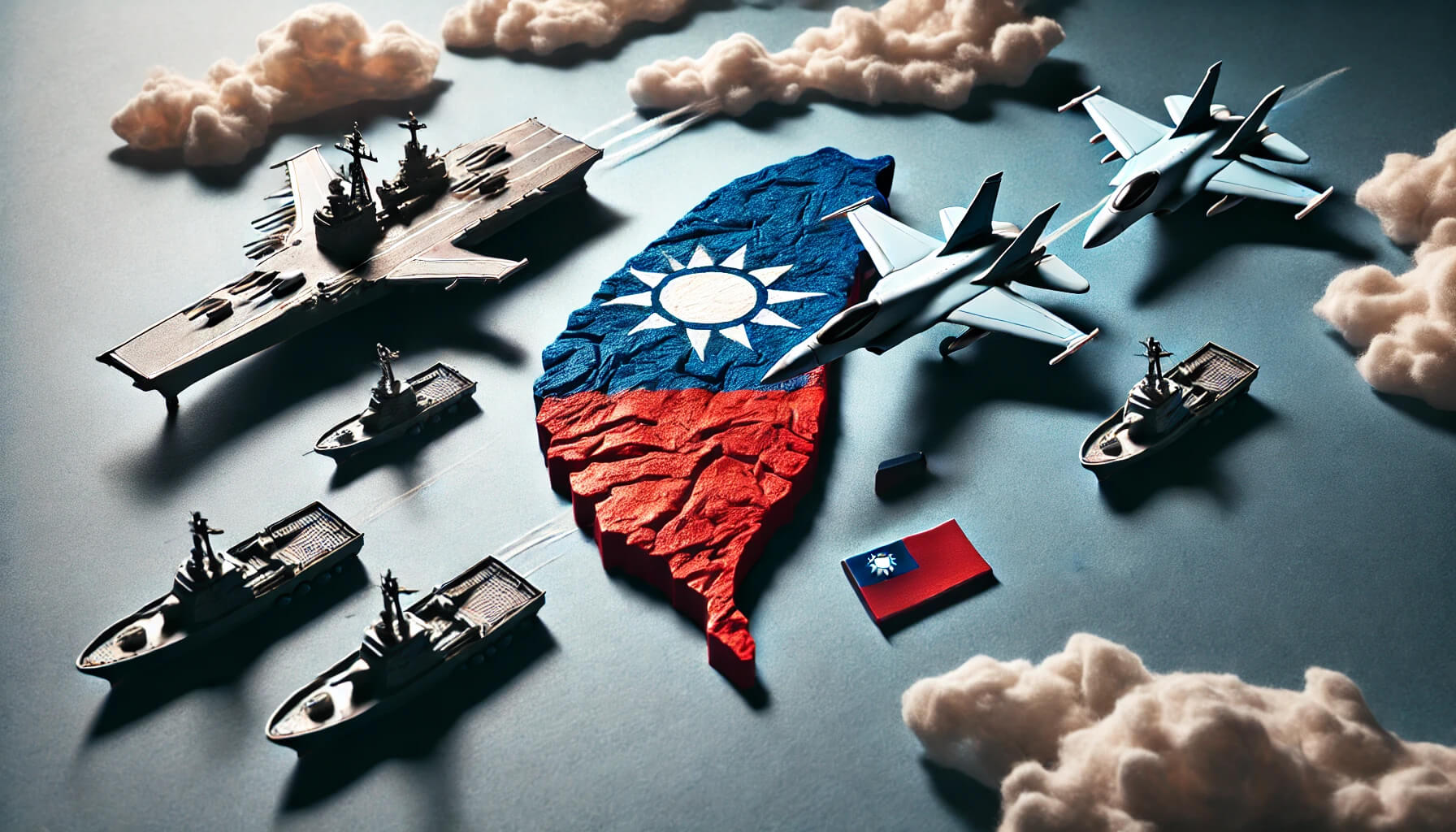
The United States is currently on course for sustained competition with the People’s Republic of China (PRC) in which both sides recognize the dangers of a potential great-power conflict — something both sides say they hope to avoid. As the United States shifts from a strategy of engagement toward a strategy of confrontation and competition with the PRC, it is even more important to sustain the meaningful bilateral diplomacy and respect for long-standing policies and principles that have prevented the relationship from gravitating toward conflict for the past half century. This will require developing more, not less, diplomatic engagement and informal communication between defense communities to better understand and prevent the potential triggers for direct conflict between the world’s two most powerful countries. The most significant and dangerous such trigger is the issue of Taiwan and the potential mismanagement of cross-Strait relations.
The Problem
The United States is now consciously engaged in sustained, protracted competition with the People’s Republic of China (PRC), a country with which it has developed deep economic interdependence over the course of several decades, and with which it shares many important linkages, including in the institutions of global governance. The rising antagonism in US-China relations has thus had knock-on effects on the basic functioning of the international system and reinvigorated the basis for balance of power politics in international affairs. As definitively stated in the 2022 National Security Strategy, the United States regards the PRC as “the only country with both the intent to reshape the international order, and, increasingly, the economic, diplomatic, military, and technological capability to do so.” Likewise, the 2022 National Defense Strategy describes China as the United States’ “most consequential strategic competitor for the coming decades.”
The primary elements of the new U.S. approach to China bear striking resemblance to the strategy of “containment” that the United States pursued against the Soviet Union, prompting frequent comparisons with the Cold War and leading some to characterize the present dynamic as a “new Cold War.” As with the US-Soviet Cold War, a key feature of the US-China relationship is the potential for a catastrophic conflict that could include the use of nuclear weapons. Thus, while both sides share a stated desire to avoid nuclear war, they also share mutual suspicion and mistrust, and increasingly view one another as hostile. Both sides therefore seek to deter one another from taking actions that could violate vital national interests and thereby lead to direct conflict and undesirable escalation.
As the United States continues to shift away from a strategy of engagement and toward a strategy of confrontation and competition with the PRC, it is even more important to sustain meaningful bilateral diplomacy and understanding. It is particularly important that both sides respect and cleave to the long-standing policies and principles that have prevented the relationship from gravitating toward conflict for the past half-century. The most fundamental issue for the PRC is the status of Taiwan – the PRC’s leaders have described Taiwan as “the very core of China’s core interests.” For its part, the United States has made clear that it regards the status of Taiwan to be a matter for people on both sides of the Taiwan Strait to decide, free from force and coercion. However, successive U.S. administrations have in recent years demonstrated conceptual and rhetorical inconsistency and slippage in their approach to managing relations with Taiwan and mainland China, contributing to the sense of insecurity on all sides.
Rather than continuing to drift towards conflict or using the issue of Taiwan as a bargaining chip in dealing with mainland China, the Trump administration will need to go back to first principles on the issue of Taiwan and attempt to reestablish the credibility of past U.S. diplomatic commitments to the PRC as a vital component of deterring war.
Essential Context
Since 1949, the PRC has aimed to unify Taiwan with mainland China, viewing Taiwan’s de facto independence and U.S. protection of Taiwan as challenges to its sovereignty. At the outbreak of the Korean War in 1950, the United States effectively froze the Chinese Civil War through a naval intervention in the Taiwan Strait, thus establishing the conditions for preserving the Republic of China’s (ROC) separate existence on Taiwan and several outlying islands. In 1954, the United States formalized its defense commitment to the ROC, repeatedly supporting it against PRC attacks on ROC-held islands. Tensions persisted, but in the 1970s, the United States negotiated to normalize relations with the PRC, in part by severing official relations with the ROC. In the 1972 “Shanghai Communiqué”, the United States acknowledged the PRC’s claim that Taiwan was part of China and stated that it “does not challenge that position,” even as it carefully avoided taking a clear position on the island’s legal status.
In 1979, Washington recognized the PRC as the sole legal government of China, and severed diplomatic relations with the ROC. However, the Taiwan Relations Act (TRA) was passed to formally insist that any effort to resolve Taiwan’s status would be peaceful and without coercion, and to commit the United States to maintaining the ability to oppose threats against Taiwan and providing arms for Taiwan’s defense. While the TRA implied broad support for Taiwan’s security and political and economic system, the United States avoided making a clear commitment to intervene directly in its defense. In 1982, the United States and the PRC issued another communiqué reaffirming the prior understandings and declaring that U.S. arms sales to Taiwan were not intended to be increased, nor were they intended to be a long-term policy.
The historical success of the one-China policy has been due to a delicate balancing act of cross-Strait relations. Until recently, the U.S. approach to managing cross-Strait relations was rooted in policies of “strategic ambiguity” and carefully balanced “dual deterrence.” The U.S. has aimed to avoid open conflict by warning mainland China against aggression while advising Taiwan to avoid actions that would provoke a war – thus deterring both sides from taking actions that would escalate tensions. This approach requires credibly reassuring mainland China (and cautioning Taiwan) that the U.S. does not support Taiwan’s independence, while also supporting Taiwan’s security and freedom from coercion. This stance has maintained relative stability in the Taiwan Strait amid the PRC’s firm opposition to official interactions between the U.S. government and the ROC, or signals of support for the ROC’s de jure sovereignty and independence.
However, in recent years, the United States has veered toward increasingly overt forms of support for Taiwan, including conspicuous displays of both official and unofficial political, military, and diplomatic support for its elected leaders. While these changes in official policy and practice have generally been rationalized as responses to the threat from China, they have occurred in the context of a sharp downturn in US-China relations that began during the first Trump administration and continued through the Biden administration. The United States’ more confrontational tack is perhaps best exemplified by the Biden administration’s initial framing of its worldview as “democracy vs. autocracy,” as well as the U.S. Congressional focus on “strategic competition between the United States and the Chinese Communist Party.” Since the Biden-Xi Summit in November 2023, the Biden administration has taken a relatively more disciplined approach to cross-Strait relations, and has carefully rebuilt working relationships with key ministries of the PRC., However, these relationships may be difficult to maintain if the Trump administration does not respect the sensitivity of the Taiwan issue, and pursue a “diplomacy first” approach to managing related trade and security issues.
Policy Recommendations
The challenge for the second Trump administration will be to restore discipline and coherence to U.S. conduct toward Taiwan, and to dissuade Taiwan’s leaders from taking any further actions or making official moves that would predictably provoke an escalatory response from mainland China. Most essentially, to avoid conflict, the U.S. must convince Taiwan to refrain from officially declaring independence, changing its official name (Republic of China), or altering its constitution to disavow its shared lineage to China.
In order to successfully manage U.S. relations with Taiwan and mainland China, Washington should move away from ad hoc policy innovation and instead explicitly articulate and rigorously apply a set of principles to guide its military and diplomatic behavior toward the cross-Strait relationship, consistent with the Three U.S.-China Joint Communiques and the TRA. These principles include:
Non-interference in domestic politics in China. Most importantly, non-interference would mean not expressing or implying a U.S. strategic objective of regime change in China. However, the U.S. should also avoid expressing or implying support for any party, politician, or electoral process in Taiwan’s elections. Even unofficial comments about U.S. preferences in the outcome of elections in Taiwan risk having an inappropriate influence on their political debate and discourse, the consequences of which are unpredictable. Aside from long-standing concerns over human rights, domestic politics in mainland China and Taiwan should be treated with strict indifference by U.S. government officials.
Non-interference in peaceful cross-Strait relations. Related to the first point, the United States should neither publicly pressure Taiwan to engage in negotiations with the mainland, nor publicly oppose such negotiations. The United States should be explicit and consistent in its position that it does not oppose any solution to the cross-Strait dilemma that is reached peacefully through mutual agreement, without force or coercion.
Allowing mutually beneficial economic exchange across the Taiwan Strait. Related to the second point, even as the United States is adjusting to a more restrictive and security-conscious form of trade, with special focus on avoiding and preventing the transfer of leading-edge dual-use technologies to China, it should not stand in the way of mutually beneficial trade between Taiwan and mainland China. Taipei must continue to carefully manage its economic engagement with the mainland, but any overt U.S. effort to restrict mainland China’s access to trade with Taiwan could easily weaken deterrence, rather than strengthen it, by exacerbating cross-Strait antagonism.
Respecting and abiding by an intelligible, consistent one-China policy. This essentially means no public U.S. support for Taiwan’s independence, formal separation from China, or official representation in international organizations for which de jure statehood is a requirement. These points are at the core of a long-standing compromise that was previously respected by U.S. administrations, but which has more recently fallen into disarray. The United States can, and should, continue robust support for Taiwan through a variety of means, but it must not increase or publicize grand symbolic gestures of political support, or government-to-government (i.e., “official”) cooperation, let alone establish formal diplomatic relations, declare Taiwan a U.S. ally, or describe U.S. objectives as preventing unification under any circumstances or otherwise guaranteeing Taiwan’s sovereignty and independence. While many in the U.S. Congress and in the broader public evidently do not understand or care that these points are essential to maintaining regional peace and stability, China experts do. An American president who understands the importance of mutual respect in managing relations with China will be empowered to insist upon reciprocal respect for vital U.S. interests by adhering to these principles.
Finally, President Biden chose to communicate strategic clarity on the question of whether or not he would order U.S. forces to war with the PRC over Taiwan. This was uniquely his decision and prerogative as president of the United States. As he returns to the White House, President Trump will have a choice about how he communicates his position on defending Taiwan, and under what conditions or circumstances. Whatever stance the Trump administration takes, the only true test of whether the policy is successful or not will be whether U.S. policy prevents a war over Taiwan. The principles outlined above provide the surest path to preserving the peace and prioritizing U.S. interests.







Community Adaptation for a Water Festival Without Clean Water